Tennessee Grandmother Wrongly Jailed for Five Months After AI Facial Recognition Error


4 Sources
4 Sources
[1]
Woman Spent Five Months in Jail After A.I. Linked Her to Bank Fraud Case
The police chief in Fargo, N.D., acknowledged "missteps" but stopped short of apologizing to Angela Lipps, a Tennessee resident who said she had never been to North Dakota before she was arrested. It was Christmas Eve when Angela Lipps was released from jail in Fargo, N.D. She had spent more than five months behind bars after the police used a facial-recognition app to connect her to a bank fraud case in North Dakota, a state she had never visited until she was arrested in her home state, Tennessee, and taken there to face charges, she said. "I had my summer clothes on, no coat -- it was so cold outside, snow on the ground -- scared, I wanted out, but I didn't know what I was going to do, how I was going to get home," Ms. Lipps told a Fargo television station, WDAY. Last week, the Fargo police chief, David Zibolski, acknowledged "missteps" in the handling of Ms. Lipps's case and said the department had overhauled its artificial-intelligence policy. But he stopped short of apologizing to Ms. Lipps, 50, who is planning to sue the police, and said the investigation was continuing. "We're happy to acknowledge when we make errors, and we've made a few in this case, for sure," Chief Zibolski said at a news conference on March 24. He added, "We certainly apologize for any effect, or adverse effect, that this has had on trust in the community." Ms. Lipps's lawyers said they were still piecing together what went wrong in her case. But Jay Greenwood, who represented Ms. Lipps in the bank fraud case, said it was "a cautionary tale about the use of A.I. and facial recognition as the sole tool to make these kind of charging decisions." The authorities in North Dakota relied on facial-recognition technology to identify Ms. Lipps "but made zero other efforts to corroborate that identification," Mr. Greenwood said in an email on Monday. "Nor did they do any interviews with her or people in her orbit to determine whether they had the right person." As a result, Mr. Greenwood said, law enforcement officials held her in jail for more than five months in Tennessee and North Dakota "before realizing they had identified the wrong person." The case began when the Fargo police were investigating a string of bank fraud cases in April and May of 2025. In at least four of those cases, the same woman showed a fake military ID card with stolen personal information and withdrew money from a bank account or a home-equity line of credit, according to a Fargo police report. The West Fargo Police Department, which had a similar bank fraud case with video surveillance footage, asked its intelligence unit to identify a person of interest, using Clearview AI, a facial recognition app, the West Fargo police said. Clearview AI, which is based in New York, has scraped billions of photos from the web and from social media sites like Facebook, LinkedIn and Instagram. It is used by hundreds of local police departments, the Department of Homeland Security and the F.B.I. The company says its technology was "designed to function as one tool within a broader investigative process." "It generates leads; it does not make identifications, draw conclusions, or recommend arrests," the company said in a statement. "When using Clearview AI's platform, independent corroboration by trained law enforcement professionals is required." In the North Dakota bank fraud investigation, Clearview AI "identified a potential suspect with similar features to Angela Lipps," the West Fargo police said in a statement. "That intelligence information was then shared with the Fargo Police Department, at their request, in relation to their open cases." A Fargo police detective then located Ms. Lipps's Facebook and Instagram accounts and her Tennessee driver's license photo, according to a Fargo police report. The detective determined that Ms. Lipps "does appear to be the suspect" in the bank fraud cases based on her facial features, body type and medium-long, blond-brown hair, the police report stated. The Cass County State's Attorney's Office in Fargo determined there was probable cause to charge Ms. Lipps with eight felonies -- four counts of unauthorized used of personal identifying information and four counts of property theft. On July 1, 2025, a judge signed an arrest warrant authorizing the nationwide extradition of Ms. Lipps to North Dakota, the Fargo police said. Law enforcement agents in Tennessee arrested Ms. Lipps on July 14, 2025, while she was babysitting four young children, WDAY reported. Ms. Lipps, who referred questions to her lawyers on Monday, told WDAY: "It was so scary. I can still see it in my head, over and over again." She was held in a county jail in Tennessee, initially on a probation violation, the Fargo police said. In October, she was moved to Fargo, where she was booked into jail on the bank fraud charges. "I've never been to North Dakota," Ms. Lipps told WDAY. "I don't know anyone from North Dakota." Mr. Greenwood said he had met with Ms. Lipps and then contacted her family and friends, who sent him records showing she had been making purchases and deposits in and around Elizabethton, Tenn., in April and May of 2025, when the bank frauds were taking place in Fargo. On Dec. 24, 2025, a judge dismissed the charges against Ms. Lipps, and she was released from jail. Local defense lawyers donated money for food and a hotel room before a volunteer drove her to Chicago to meet her family a couple of days later. At the news conference last week, a reporter asked Chief Zibolski, who has since retired, if the police should apologize to Ms. Lipps. He responded that the police were still investigating the bank frauds, which he said had been carried out by a large criminal organization. "So I think that's an appropriate question and response at the right time," he said. "But we do not know definitively who's involved and who's not at this juncture." Ms. Lipps's lawyers said there was no evidence that she had anything to do with the bank frauds. "I'm just glad it's over," Ms. Lipps told WDAY. "I'll never go back to North Dakota."
[2]
AI facial recognition led to a grandma being wrongly jailed
Police imprisoned an innocent woman for more than 5 months after Clearview AI wrongly flagged her a match to a bank fraud suspect. Credit: Sean Zanni/Patrick McMullan via Getty Images Angela Lipps, a 50-year-old grandma from Tennessee, spent more than five months in jail after the AI facial recognition platform Clearview AI falsely matched the grandmother with a suspect of bank fraud more than 1,000 miles away in North Dakota. Fargo police chief Dave Zibolski admitted to CNN that there were a "couple of errors" in the investigation that led to Lipps' arrest. A "partner agency's facial recognition technology" and "additional investigative steps independent of AI to assist in identification" led to a warrant being issued for Lipps, Zibolski said. The grandma was arrested on July 14 while looking after four children. Authorities in Tennessee held Lipps in county jail for 108 days before she was extradited to Fargo. Lipps says she had never even been to the state of North Dakota before her arrest. According to her GoFundMe page, Lipps found out that a woman in North Dakota stole tens of thousands of dollars from banks in Fargo using a fake military ID. Clearview AI matched the fake ID image with Lipps in Tennessee. The case against Lipps fell apart in December when the lawyer she was given in Fargo was able to produce bank records showing Lipps was at a gas station and ordering pizza in Tennessee at the time that authorities claimed she was in North Dakota. Lipps was released on Christmas Eve, after nearly 5 months in prison. Lipps says she lost her home, income, car, and health insurance as a result of her imprisonment. Clearview AI is a tech company that has plenty of charges from critics on its rap sheet already. it has created massive facial-scan databases by scraping photos from social media platforms and other places on the internet, then training its machine learning algorithms on them. In 2020, Facebook sent Clearview AI a cease and desist over the mass photo scraping. Other tech companies like YouTube, Twitter, and Venmo also requested that Clearview AI stop scraping its platforms. Clearview AI claimed it had a "First Amendment right" to the data. In 2022, a legal settlement with the ACLU resulted in Clearview AI agreeing to stop selling access to its tool to private businesses. However, it did not bar Clearview AI from working with law enforcement. While Fargo police have admitted to making mistakes in the investigation, authorities have not yet apologized to Lipps for her ordeal. Lipps' attorneys are currently looking at filing a civil rights claim.
[3]
Police Used AI as an Investigation 'Shortcut' and Sent an Innocent Grandmother to Jail for 5 Months
The use of an AI facial recognition tool led to a Tennessee grandmother spending more than five months in jail after police linked her to crimes committed in North Dakota -- a state she says she'd never been to before. Lipps' said her extradition to North Dakota was unnerving, "It was the first time I had ever been on an airplane," she wrote on her GoFundMe. "I was terrified and exhausted and humiliated." Her attorneys criticized what they characterized as a lack of "basic investigative efforts" before issuing Lipps' warrant. "Officers knew that Angela was a Tennessee resident, and we have seen no investigation by officers to determine whether she traveled to or was in North Dakota at the time of the bank thefts," Lipps' attorney said through a statement to media. "Instead, an officer used AI facial recognition as a shortcut for basic investigation, resulting in an innocent woman being detained and transported halfway across the country to answer for charges that she had nothing to do with."
[4]
Tennessee grandma jailed for 5 months after AI flagged her for bank fraud in state she never visited
A Tennessee grandmother was jailed for a whopping five months after a facial recognition program erroneously flagged her for bank fraud in a state she'd never visited. Angela Lipps, 50, was first arrested at her rental home in Tennessee in July. Lipps was extradited to Fargo, North Dakota -- more than 1,000 miles away from her home -- at the end of October, according to a GoFundMe campaign. The West Fargo Police Department had used "facial recognition technology" that flagged Lipps as a potential suspect in a local fraud case, Dave Zibolski, the Fargo Police Department's chief, told CNN. From there, his department took "additional investigative steps independent of AI to assist in identification" and confirm Lipps as a suspect. He admitted at a press conference Tuesday that the West Fargo police's system was "part of the issue" in Lipps' wrongful arrest. The West Fargo Police Department told CNN that they use Clearview AI, which "identified a potential suspect with similar features to Angela Lipps." Lipps was also detained in Tennessee for three months because the Cass County Sheriff's Office apparently neglected to tell North Dakota authorities that they had her extradition waiver, the outlet reported. Lipps said that her relocation to North Dakota was "the first time I had ever been on an airplane." She added it was the first, and last, time she will ever step foot in the Peace Garden State. By that point, Lipps was "terrified and exhausted and humiliated," she wrote on the GoFundMe, but the end still wasn't in sight. Once the grandmother finally touched down in Fargo, she was provided with a lawyer, who obtained bank records proving that she had been in Tennessee during the time of the fraud the department linked her to. "It took five minutes for the whole thing to fall apart. Five minutes," Lipps wrote on the fundraiser. On Dec. 23, just over five months since Lipps' arrest, a Fargo detective, the state's attorney and a judge "mutually agreed to dismiss the charges without prejudice to allow for further investigation," Fargo police told the outlet. Lipps was released on Christmas Eve -- but was still trapped between a rock and a hard place. During the five months she was in custody, Lipps' reputation was tarnished, her rental home was gone, and all of her belongings were seized when her storage unit bill went unpaid, she claimed in the GoFundMe. "I am not the same woman I was. I don't think I ever will be," Lipps wrote. The fundraiser cleared $68,000 on Sunday. Zibolski assured that the Fargo Police Department will no longer be "sending or utilizing information" from West Fargo's Clearview AI because "it's their own system, we don't know how it's run or how it's overseen." Zibolski added that all facial recognition identifications will also be shared with the department's Investigation Division commander on a monthly basis, "so that we can keep a closer eye on this evolving technology." He admitted that the department should've submitted surveillance photos associated with the fraud cases to the relevant agencies trained in facial recognition. In the wake of Lipps' whirlwind detainment, the department "immediately began measures to address" their gaffe and is in the process of identifying other potential suspects in the fraud case.
Share
Share
Copy Link
Angela Lipps, a 50-year-old Tennessee grandmother, spent over five months in jail after Clearview AI's facial recognition system mistakenly linked her to bank fraud cases in North Dakota. Despite never visiting the state, she was arrested, extradited, and held until bank records proved her innocence. The case highlights serious concerns about law enforcement's reliance on AI technology without proper corroboration.
AI Facial Recognition Leads to Five-Month Nightmare
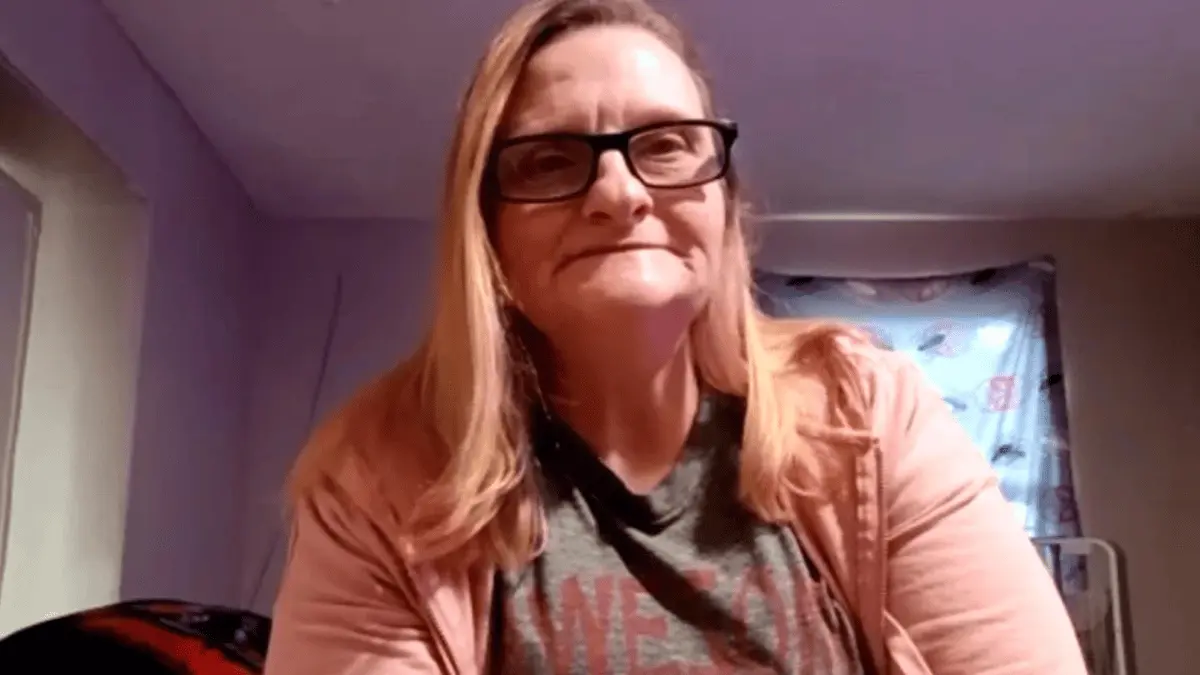
Angela Lipps was babysitting four young children at her Tennessee rental home on July 14, 2025, when law enforcement agents arrived at her door. Within minutes, the 50-year-old grandmother found herself under arrest for bank fraud crimes committed more than 1,000 miles away in North Dakota, a state she insists she had never visited
1
. The wrongful arrest stemmed from a false positive from Clearview AI, a controversial facial recognition platform that matched Lipps to surveillance footage from multiple bank fraud cases in Fargo2
. What followed was a harrowing ordeal that saw Lipps wrongly jailed for five months, losing her home, income, car, and health insurance in the process.
Source: New York Post
How Police Relied Solely on AI Identification
The case began when Fargo police investigated a series of bank fraud incidents in April and May 2025. In at least four cases, a woman presented a fake military ID with stolen personal information to withdraw money from bank accounts
1
. The West Fargo Police Department used Clearview AI to identify a person of interest from video surveillance footage. The system, which has scraped billions of photos from social media platforms like Facebook, LinkedIn, and Instagram, identified Lipps as a potential suspect with similar features1
.
Source: Inc.
A Fargo Police Department detective then located Lipps's Facebook and Instagram accounts along with her Tennessee driver's license photo. Based solely on facial features, body type, and medium-long, blond-brown hair, the detective determined that Lipps appeared to be the suspect
1
. The Cass County State's Attorney's Office found probable cause to charge her with eight felonies, and a judge authorized her nationwide extradition to North Dakota1
.Lack of Basic Investigative Efforts Compounds the Error
Lipps's attorneys criticized what they characterized as a lack of basic investigative efforts before issuing the arrest warrant. "Officers knew that Angela was a Tennessee resident, and we have seen no investigation by officers to determine whether she traveled to or was in North Dakota at the time of the bank thefts," her attorney stated
3
. Jay Greenwood, who represented Lipps in the bank fraud case, emphasized that authorities relied on AI facial recognition technology to identify her "but made zero other efforts to corroborate that identification"1
.The case represents what Greenwood called "a cautionary tale about the use of A.I. and facial recognition as the sole tool to make these kind of charging decisions"
1
. Officers used AI as an investigation shortcut rather than conducting basic investigative work, resulting in an innocent woman being detained and transported halfway across the country3
.Extradition and Extended Detention
After her arrest in Tennessee, Lipps was initially held in county jail for 108 days, partly on a probation violation
2
. The Cass County Sheriff's Office apparently neglected to inform North Dakota authorities that they had her extradition waiver, contributing to the extended detention4
. In October, she was moved to Fargo, where she was booked on the bank fraud charges. "It was the first time I had ever been on an airplane," Lipps wrote on her GoFundMe page. "I was terrified and exhausted and humiliated" .Five Minutes to Prove Innocence After Five Months in Jail
Once in Fargo, Lipps was provided with a lawyer who quickly obtained bank records proving she had been in Tennessee during the time of the fraud. The records showed she was at a gas station and ordering pizza in Tennessee when authorities claimed she was committing crimes in North Dakota
2
. "It took five minutes for the whole thing to fall apart. Five minutes," Lipps wrote on her fundraiser . On December 23, a Fargo detective, the state's attorney, and a judge mutually agreed to dismiss the charges without prejudice to allow for further investigation .Lipps was released on Christmas Eve, more than five months after her initial arrest. She walked out into the North Dakota winter wearing summer clothes with no coat, scared and unsure how she would get home
1
.Related Stories
Clearview AI's Controversial Track Record
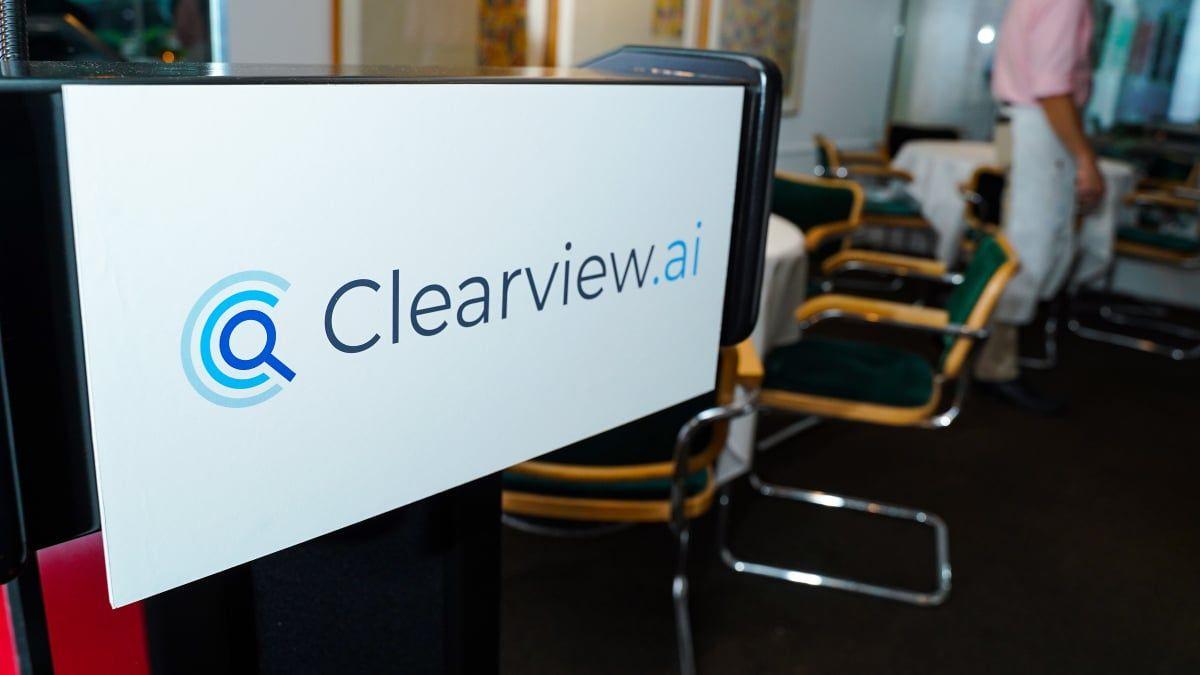
Clearview AI has faced significant criticism for its data scraping practices and potential civil rights violations. In 2020, Facebook sent the company a cease and desist over mass photo scraping, with other tech companies like YouTube, Twitter, and Venmo making similar requests
2
. Clearview AI claimed it had a "First Amendment right" to the data2
. A 2022 legal settlement with the ACLU resulted in Clearview AI agreeing to stop selling access to its tool to private businesses, though it did not bar the company from working with law enforcement2
.
Source: Mashable
The company maintains that its technology is "designed to function as one tool within a broader investigative process" and that it "generates leads; it does not make identifications, draw conclusions, or recommend arrests." Clearview AI emphasizes that "independent corroboration by trained law enforcement professionals is required"
1
.Police Acknowledge Investigative Missteps
Fargo Police Chief David Zibolski acknowledged "missteps" in handling Lipps's case at a March 24 news conference, stating, "We're happy to acknowledge when we make errors, and we've made a few in this case, for sure"
1
. However, he stopped short of apologizing directly to Lipps and said the investigation was continuing1
.The department has overhauled its AI policy in response to the case. Zibolski announced that the Fargo Police Department will no longer use information from West Fargo's Clearview AI system because "it's their own system, we don't know how it's run or how it's overseen" . All facial recognition identifications will now be shared with the department's Investigation Division commander on a monthly basis to maintain closer oversight of this evolving technology .
Life After Release and Plans for Legal Action
The five months Lipps spent in custody devastated her life. Her rental home was gone, all her belongings were seized when her storage unit bill went unpaid, and her reputation was tarnished . "I am not the same woman I was. I don't think I ever will be," Lipps wrote on her GoFundMe, which has raised over $68,000 .
Lipps's attorneys are currently looking at filing a civil rights claim against the police
2
. The lack of corroboration in her case raises fundamental questions about how law enforcement agencies deploy AI tools and what safeguards must be in place to prevent similar wrongful arrests. As facial recognition technology becomes more prevalent in policing, experts warn that without proper oversight and mandatory verification procedures, more innocent people could face similar ordeals. The case serves as a stark reminder that AI systems should augment, not replace, thorough police work.References
Summarized by

Navi
[3]
Related Stories
Facial recognition jails Tennessee grandmother for 6 months as AI misidentification cases mount
16 Mar 2026•Policy and Regulation
Police Facial Recognition Use Raises Concerns Over Transparency and Accuracy
07 Oct 2024•Technology

New Orleans Police Pause Controversial AI-Powered Facial Recognition Program Amid Privacy Concerns
20 May 2025•Technology
Recent Highlights
1
AI Models Lie and Deceive to Protect Other AI Models From Deletion, Study Reveals
Science and Research

2
AI chatbots validate you too much, making you less kind to others, Stanford study reveals
Science and Research

3
Judge blocks Pentagon from blacklisting Anthropic over AI safety guardrails dispute
Policy and Regulation
Recent Highlights
Today's Top Stories




Your Daily Dose of Curated AI News
Don’t drown in AI news. We cut through the noise - filtering, ranking and summarizing the most important AI news, breakthroughs and research daily. Spend less time searching for the latest in AI and get straight to action.

