Harvard Study Shows AI Can Predict 71% of Fund Manager Trades, Raising Questions About Fees


3 Sources
3 Sources
[1]
Harvard-Led Study Says AI Can Predict 71% of Active-Fund Trades
The study's findings imply that the justification for active-management fees increasingly rests on the smaller share of decisions that depart from the predictable template, rather than the majority of portfolio adjustments that can be anticipated by an algorithm. Day after day, Wall Street investors fret that artificial intelligence could disrupt white-collar industries by turning expert human judgment into code. Stock picking appears to sit squarely in the path of that disruption. A new academic study led by a Harvard Business School professor finds that much of what active fund managers do follows patterns machines can learn. Using a machine-learning algorithm called a neural network, the system could predict about 71% of mutual-fund trading decisions -- whether a manager would buy, sell or hold a given stock over a quarter. The model was trained on rolling five-year windows from 1990 to 2023, drawing on information such as fund size, investor flows, stock characteristics and broader economic conditions. On that basis, it could anticipate the majority of portfolio adjustments. The twist: its limits may be more revealing than its success. The trades the system failed to anticipate -- roughly 29% -- were, on average, more closely associated with outperformance. In other words, the activity that falls outside routine, detectable investment patterns appears to be where most of the value lies. The implication is not that machines have cracked markets. Rather, they appear to have learned much of the industry's common playbook -- how managers tend to react to flows, market trends and their peers. What they struggle to capture is the smaller share of decisions that depart from that playbook. "If 71% of your decisions can be anticipated by an algorithm, it becomes very hard to justify active-management fees for that portion," Lauren Cohen, a finance professor at Harvard who co-authored the paper, explained in an email. "Now, the non-routine trades, the ones our model can't predict, are where genuine alpha lives. But those account for a relatively smaller share of overall activity." The working paper, posted last week to the National Bureau of Economic Research and titled Mimicking Finance, arrives at a moment when artificial intelligence is rocking increasingly specialized corners of professional services. In recent weeks, fears of AI disruption have sent shares of companies from wealth managers to logistics groups swinging sharply. For active fund managers, the critique is not new. Investors have been shifting money out of stock-picking funds and into low-cost index products for years. The industry's central promise has long been "alpha" -- returns above a benchmark like the S&P 500 -- even as quantitative models have steadily raised the bar by showing how much performance can be explained by broad market exposure and familiar investment styles. Get the Markets Daily newsletter. Get the Markets Daily newsletter. Get the Markets Daily newsletter. What's happening in stocks, bonds, currencies and commodities right now. What's happening in stocks, bonds, currencies and commodities right now. What's happening in stocks, bonds, currencies and commodities right now. Bloomberg may send me offers and promotions. Plus Signed UpPlus Sign UpPlus Sign Up By submitting my information, I agree to the Privacy Policy and Terms of Service. This study, co-authored with Yiwen Lu at the University of Pennsylvania and Quoc H. Nguyen at DePaul University, pushes that erosion further. Earlier research largely dissected returns after the fact. By contrast, the new paper attempts to anticipate the trades themselves. Machine-learning models, the authors argue, are better suited than traditional linear factor models to capture the complex ways that managers respond to flows, market signals and one another. Seen through that lens, the result is less a triumph of machines over markets than a reframing of what active management consists of. Much of the day-to-day activity of funds appears to follow patterns that can be mapped -- and, in principle, reproduced at lower cost. Some of those predictable buy-and-sell trades can serve essential purposes -- managing liquidity, adjusting risk or rebalancing portfolios, Cohen says. But if the bulk of that activity is actually rules-based, it becomes harder to argue that it requires expensive discretion. "The 'human judgment' component turns out to be more systematic than it appears, but you need flexible enough tools to see that," Cohen said. The paper also finds that predictability varies. Larger funds, those charging higher fees, those run by bigger teams and those facing more competition tend to be less predictable on average, while managers with longer tenures or multiple products tend to be more so. The model predicts the direction of trades rather than their size -- a limitation the authors plan to address in future work. For all the recent enthusiasm around AI, the findings underscore a distinction. Predicting how managers behave appears easier than predicting how markets move. Asset prices reflect the interactions of millions of participants and shifting expectations. Professional habits, by contrast, often follow recognizable patterns. Ultimately, the narrower band of trades that the model failed to anticipate tended to perform better -- a sign they may reflect human ingenuity, such as uncovering information on a stock others overlooked. Simply being random is unlikely to produce the same result. Of course, machines could get even better as they collect more data. For now, however, the implications are economic rather than existential. If most portfolio adjustments can be anticipated by an algorithm, the justification for active fees increasingly rests on the smaller share of decisions that depart from the template. "The genuinely skilled part, the unpredictable, non-routine component, is real but small," Cohen said. "The policy implication is less about replacing managers wholesale and more about repricing what their predictable versus unpredictable activity is actually worth."
[2]
Harvard study shows AI stock trading rivals many picks made by fund managers
Some bad news for all the mutual fund managers out there: A new study from researchers at Harvard Business School seems to support the fear that artificial intelligence and machine learning could do their jobs. But here's the catch -- with only about 71% accuracy, depending on how predictable their trades are. The working paper "Mimicking Finance" from Lauren Cohen, Yiwen Lu, and Quoc H. Nguyen, published this month by the National Bureau of Economic Research, finds "that 71% of mutual fund managers' trade directions can be predicted in the absence of the agent making a single trade." The paper goes on to say, "For some managers, this increases to nearly all of their trades in a given quarter. Further, we find that manager behavior is more predictable and replicable for managers who have a longer history of trading and are in less competitive categories." What does that mean? Basically, that the trades of more senior managers, especially those who are in less competitive areas, are easier to mimic (and thereby, those jobs might be easier to replace with AI).
[3]
New Harvard Study Shows AI Could Replace Most Mutual Fund Managers
Researchers found artificial intelligence can predict 71% of mutual fund trades with stunning accuracy. Harvard Business School researchers just delivered sobering news for traders. A new study analyzing data from 1990 to 2023 found that AI can predict 71% of mutual fund managers' trade directions. The research suggests that thousands of high-paying finance jobs could become automated. The study, published by the National Bureau of Economic Research, looked at the $54 trillion asset management industry and discovered that senior managers in less competitive categories are the most predictable -- and thus the most replaceable. But not all the news was bad. The study found that those with larger ownership stakes in their funds were harder for AI to mimic, so having more skin in the game makes human decision-making more valuable and less algorithmic. Read more
Share
Share
Copy Link
A Harvard-led study reveals that AI can predict 71% of mutual fund trading decisions, suggesting much of active management follows detectable patterns. The research, analyzing data from 1990 to 2023, found that the unpredictable 29% of trades is where genuine alpha lives. The findings challenge the justification for high active-management fees and highlight how automation could reshape the $54 trillion asset management industry.
AI Exposes Predictable Patterns in Active Fund Management
A Harvard study published by the National Bureau of Economic Research has revealed that AI can predict active-fund trades with 71% accuracy, raising fundamental questions about what mutual fund managers actually deliver for their fees
1
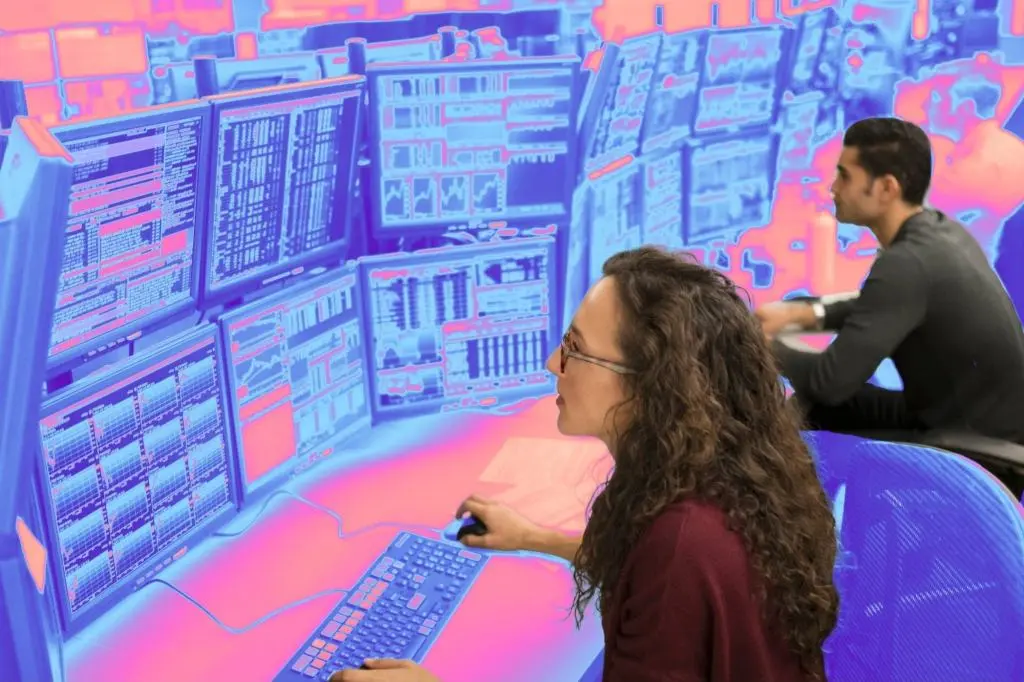
. The working paper titled "Mimicking Finance," co-authored by Harvard Business School finance professor Lauren Cohen alongside Yiwen Lu at the University of Pennsylvania and Quoc H. Nguyen at DePaul University, analyzed trading decisions from 1990 to 2023 using a machine learning algorithm called a neural network1
.
Source: Entrepreneur
The system could predict trade directions—whether a manager would buy, sell or hold a given stock over a quarter—by drawing on information such as fund size, investor flows, stock characteristics and broader economic conditions
1
. This capability suggests that much of what passes for human judgment in the $54 trillion asset management industry actually follows detectable investment patterns that machines can map and potentially reproduce at lower cost3
.
Source: Bloomberg
Where Genuine Alpha Actually Lives
The most revealing aspect of the research may be what the AI stock trading system couldn't predict. The roughly 29% of trades that fell outside the algorithm's grasp were, on average, more closely associated with outperformance
1
. "If 71% of your decisions can be anticipated by an algorithm, it becomes very hard to justify active-management fees for that portion," Lauren Cohen explained. "Now, the non-routine trades, the ones our model can't predict, are where genuine alpha lives. But those account for a relatively smaller share of overall activity"1
.This finding reframes what active management consists of in practice. While some predictable buy-and-sell trades serve essential purposes like managing liquidity, adjusting risk or rebalancing portfolios, the bulk of that activity appears to be rules-based rather than requiring expensive discretion
1
. The implication isn't that machines have cracked markets, but rather that they've learned much of the industry's common playbook—how fund managers tend to react to flows, market trends and their peers.Predictability Varies Across Manager Types
The research found that predictability differs significantly based on manager characteristics. Senior managers with longer trading histories, especially those operating in less competitive categories, proved easier for AI to mimic with 71% accuracy—and in some cases, nearly all their trades in a given quarter could be anticipated
2
. Larger funds, those charging higher fees, those run by bigger teams and those facing more competition tend to be less predictable on average1
.Interestingly, managers with larger ownership stakes in their funds were harder for automation tools to replicate, suggesting that having more skin in the game makes human decision-making more valuable and less algorithmic
3
. This finding offers a potential path forward for fund managers seeking to differentiate themselves in an era where AI could replace fund managers who follow predictable patterns.Related Stories

Implications for the Asset Management Industry
The study arrives as fears of AI disruption have already been sending shares of wealth managers and financial services companies swinging sharply
1
. For years, investors have been shifting money out of stock-picking funds and into low-cost index products, and this research adds quantitative weight to concerns about whether high active-management fees can be justified when machines can predict trade directions for the majority of portfolio adjustments1
.What distinguishes this research from earlier work is its focus on anticipating trades themselves rather than merely dissecting returns after the fact. The authors argue that machine learning models, particularly neural network architectures, are better suited than traditional linear factor models to capture the complex ways managers respond to flows, market signals and one another . The model currently predicts the direction of trades rather than their size—a limitation the authors plan to address in future work . As AI capabilities continue to advance, the pressure on mutual fund managers to demonstrate value beyond algorithmic patterns will only intensify.
References
Summarized by

Navi
Related Stories
AI Models Ace CFA Level III Exam, Raising Questions About Future of Financial Analysis
24 Sept 2025•Business and Economy

MIT's Andrew Lo Predicts AI Will Manage Investments Within Five Years
23 Jul 2025•Business and Economy

DeepSeek Sparks AI Revolution in Chinese Fund Management Industry
12 Mar 2025•Business and Economy
Recent Highlights
1
OpenAI shuts down Sora video app after six months, ending Disney's $1 billion investment deal
Technology

2
AI-Generated Val Kilmer to Posthumously Appear in As Deep as the Grave After His Death
Entertainment and Society

3
Supermicro Co-Founder Indicted in $2.5 Billion Nvidia AI Chip Smuggling Scheme to China
Policy and Regulation

Recent Highlights
Today's Top Stories



Your Daily Dose of Curated AI News
Don’t drown in AI news. We cut through the noise - filtering, ranking and summarizing the most important AI news, breakthroughs and research daily. Spend less time searching for the latest in AI and get straight to action.

