China's No. 2 chipmaker advances 7 nm production for AI chips amid self-sufficiency push


5 Sources
5 Sources
[1]
Exclusive: China's No. 2 chipmaker readies 7 nm production as Beijing ramps up self-suffiency drive
SINGAPORE, March 16 (Reuters) - China's Hua Hong Group has developed advanced chip manufacturing technologies that can be used to produce artificial intelligence chips, four people familiar with the matter said, a major milestone in Beijing's efforts to boost tech self-sufficiency. The group's contract chipmaking business, Huali Microelectronics, is readying a 7-nanometre (nm) chipmaking process at its plant in Shanghai, the people said, which would make it the second Chinese chipmaker with such advanced technologies. Hua Hong is China's second-largest chipmaker. China's largest contract chipmaker, SMIC (0981.HK), opens new tab, is at present the only domestic producer capable of making chips with 7 nm technologies. The development comes after Washington eased some of its tech export controls since last year, allowing Nvidia (NVDA.O), opens new tab to sell its second-most-powerful AI chips to China. Despite the easing, Beijing has encouraged domestic firms to purchase homegrown alternatives, as it seeks to wean itself off foreign suppliers. Reuters could not determine how Hua Hong achieved the advanced manufacturing capability, its manufacturing efficiency and which major equipment suppliers were involved in the development. Hua Hong's development of a 7 nm chipmaking process has not been previously reported. But Chinese tech giant Huawei Technologies has been in collaboration with the chipmaker for the 7 nm technologies, three of the sources said. All of the sources declined to be named, because the information is not meant to be public. Hua Hong Group, Huali, its sister company Hua Hong Semiconductor (688347.SS), opens new tab and Huawei did not respond to requests for comment. SMIC uses Dutch chip equipment maker ASML's (ASML.AS), opens new tab immersion machines to make 7 nm chips, but production yields - the number of good chips made per silicon wafer - have remained weak, analysts have said. ASML said it does not comment on questions related to deliveries. TEST PRODUCTION UNDER WAY Huali's research and development on 7 nm chips at its Hua Hong Fab 6 began last year, with support from domestic equipment suppliers including Huawei-backed SiCarrier, which tested its equipment at a facility in Shenzhen last year, a separate source said. SiCarrier did not respond to a request for comment. The development followed an announcement by Hua Hong Semiconductor in December that it planned to acquire a controlling stake in Huali and raise a further 7.56 billion yuan ($1.10 billion) to fund technological upgrades and research at the foundry. Huali is planning initial 7 nm chip production capacity of a few thousand wafers per month by the end of the year, with a goal to ramp up more later, two of the sources said. Chinese graphics processing unit designer Biren (6082.HK), opens new tab is using Huali's 7 nm line for tape-out, a process in which a chip design is committed to a physical prototype for testing before mass production begins, one of the sources said. Placed on a U.S. trade blacklist in 2023, Biren lost access to TSMC's (2330.TW), opens new tab contract manufacturing service shortly after. Biren did not respond to requests for comment. The Hua Hong Fab 6 is the most advanced of seven foundries within the Hua Hong Group and currently manufactures logic chips using 22 nm and 28 nm process nodes, according to the company's website. By contrast, its Fab 5 produces chips using mature technologies ranging from 40 nm to 55 nm. ($1 = 6.8855 yuan) Reporting by Fanny Potkin; Editing by Miyoung Kim and Thomas Derpinghaus Our Standards: The Thomson Reuters Trust Principles., opens new tab
[2]
China's No. 2 chipmaker readies 7 nm production as Beijing ramps up self-suffiency drive
The group's contract chipmaking business, Huali Microelectronics, is readying a 7-nanometre (nm) chipmaking process at its plant in Shanghai, the people said, which would make it the second Chinese chipmaker with such advanced technologies. Hua Hong is China's second-largest chipmaker. China's Hua Hong Group has developed advanced chip manufacturing technologies that can be used to produce artificial intelligence chips, four people familiar with the matter said, a major milestone in Beijing's efforts to boost tech self-sufficiency. The group's contract chipmaking business, Huali Microelectronics, is readying a 7-nanometre (nm) chipmaking process at its plant in Shanghai, the people said, which would make it the second Chinese chipmaker with such advanced technologies. Hua Hong is China's second-largest chipmaker. China's largest contract chipmaker, SMIC, is at present the only domestic producer capable of making chips with 7 nm technologies. The development comes after Washington eased some of its tech export controls since last year, allowing Nvidia to sell its second-most-powerful AI chips to China. Despite the easing, Beijing has encouraged domestic firms to purchase homegrown alternatives, as it seeks to wean itself off foreign suppliers. Reuters could not determine how Hua Hong achieved the advanced manufacturing capability, its manufacturing efficiency and which major equipment suppliers were involved in the development. Hua Hong's development of a 7 nm chipmaking process has not been previously reported. But Chinese tech giant Huawei Technologies has been in collaboration with the chipmaker for the 7 nm technologies, three of the sources said. All of the sources declined to be named, because the information is not meant to be public. Hua Hong Group, Huali, its sister company Hua Hong Semiconductor and Huawei did not respond to requests for comment. SMIC uses Dutch chip equipment maker ASML's immersion machines to make 7 nm chips, but production yields - the number of good chips made per silicon wafer - have remained weak, analysts have said. ASML said it does not comment on questions related to deliveries. Test production under way Huali's research and development on 7 nm chips at its Hua Hong Fab 6 began last year, with support from domestic equipment suppliers including Huawei-backed SiCarrier, which tested its equipment at a facility in Shenzhen last year, a separate source said. SiCarrier did not respond to a request for comment. The development followed an announcement by Hua Hong Semiconductor in December that it planned to acquire a controlling stake in Huali and raise a further 7.56 billion yuan ($1.10 billion) to fund technological upgrades and research at the foundry. Huali is planning initial 7 nm chip production capacity of a few thousand wafers per month by the end of the year, with a goal to ramp up more later, two of the sources said. Chinese graphics processing unit designer Biren is using Huali's 7 nm line for tape-out, a process in which a chip design is committed to a physical prototype for testing before mass production begins, one of the sources said. Placed on a U.S. trade blacklist in 2023, Biren lost access to TSMC's contract manufacturing service shortly after. Biren did not respond to requests for comment. The Hua Hong Fab 6 is the most advanced of seven foundries within the Hua Hong Group and currently manufactures logic chips using 22 nm and 28 nm process nodes, according to the company's website. By contrast, its Fab 5 produces chips using mature technologies ranging from 40 nm to 55 nm.
[3]
China 'Homegrown' Gamble: Can New 7nm Chips Finally Replace Nvidia, TSMC? - NVIDIA (NASDAQ:NVDA), Taiwan Semiconductor (NYSE:TSM)
China Advances Domestic 7-Nanometer Chip Technology Hua Hong Group has reportedly developed a new 7-nanometer chip manufacturing technology that can support the production of artificial intelligence chips. Its contract manufacturing arm, Huali Microelectronics, is preparing the process at its Shanghai facility, which could make it only the second Chinese chipmaker capable of producing chips at that level, alongside SMIC. According to Reuters, Huawei is collaborating with Hua Hong on the 7-nm technology, while domestic equipment providers have supported development. Beijing Pushes Chip Self-Reliance Beijing has encouraged domestic companies to rely more on homegrown chip suppliers as it works to reduce dependence on foreign technology. Restrictions have limited Chinese companies' access to Taiwan Semiconductor Manufacturing Company Ltd's (NYSE:TSM) manufacturing services and constrained the supply of advanced AI chips from companies such as Nvidia. These pressures have pushed Beijing to accelerate the development of its own semiconductor ecosystem. Chinese Firms Seek Nvidia Chips Through Overseas Data Centers At the same time, Chinese tech companies are expanding AI infrastructure outside China to access Nvidia hardware despite export restrictions. Reports indicate that ByteDance plans a large AI deployment in Malaysia through its cloud partner, Aolani Cloud, involving about 500 Nvidia Blackwell systems, or roughly 36,000 B200 chips. Demand for Nvidia chips from Chinese companies remains strong. Firms have reportedly ordered more than 2 million H200 chips for 2026, exceeding Nvidia's current supply capacity. Nvidia has asked Taiwan Semiconductor to increase production to meet demand, though some manufacturing capacity is shifting toward its next-generation Vera Rubin hardware. NVDA Price Action: Nvidia shares were up 1.81% at $183.52 during premarket trading on Monday, according to Benzinga Pro data. Image via Shutterstock Market News and Data brought to you by Benzinga APIs To add Benzinga News as your preferred source on Google, click here.
[4]
Hua Hong shares jump on report of 7 nm AI chip production plans By Investing.com
Investing.com-- Shares of Hua Hong Semiconductor (HK:1347) rose after a report said its parent group had made progress in developing advanced chip manufacturing technologies that can be used to produce artificial intelligence chips. China's Hua Hong Group has developed manufacturing technologies capable of producing 7-nanometre (nm) chips, with its contract chipmaking arm Huali Microelectronics preparing the process at a plant in Shanghai, Reuters reported, citing four people familiar with the matter. Get real-time updates on AI advancements with InvestingPro subscription If commercialized, the development would make Hua Hong the second Chinese chipmaker able to produce chips using 7 nm technology, after Semiconductor Manufacturing International Corp (HK:0981), according to the report. Hong Kong-listed Hua Hong shares jumped 5.3% to HK$92.65, while the Shanghai-listed stock rose 2.1% to 121.65 yuan. The move comes as Beijing pushes domestic semiconductor capabilities to reduce reliance on foreign suppliers, even after Washington eased some export restrictions that allowed Nvidia (NASDAQ:NVDA) to resume sales of certain AI chips to China. According to Reuters, China's tech giant Huawei Technologies has collaborated with the chipmaker on the 7 nm technology. Test production is already underway, with initial capacity expected to reach a few thousand wafers per month by year-end, Reuters reported. Chinese GPU designer Biren Technology (HK:6082) is also reportedly using the line for chip prototype testing.
[5]

China's No. 2 chipmaker readies 7 nm production as Beijing ramps up self-sufficiency drive
SINGAPORE, March 16 (Reuters) - China's Hua Hong Group has developed advanced chip manufacturing technologies that can be used to produce artificial intelligence chips, four people familiar with the matter said, a major milestone in Beijing's efforts to boost tech self-sufficiency. The group's contract chipmaking business, Huali Microelectronics, is readying a 7-nanometre (nm) chipmaking process at its plant in Shanghai, the people said, which would make it the second Chinese chipmaker with such advanced technologies. Hua Hong is China's second-largest chipmaker. China's largest contract chipmaker, SMIC, is at present the only domestic producer capable of making chips with 7 nm technologies. The development comes after Washington eased some of its tech export controls since last year, allowing Nvidia to sell its second-most-powerful AI chips to China. Despite the easing, Beijing has encouraged domestic firms to purchase homegrown alternatives, as it seeks to wean itself off foreign suppliers. Reuters could not determine how Hua Hong achieved the advanced manufacturing capability, its manufacturing efficiency, and which major equipment suppliers were involved in the development. Hua Hong's development of a 7 nm chipmaking process has not been previously reported. But Chinese tech giant Huawei Technologies has been in collaboration with the chipmaker for the 7 nm technologies, three of the sources said. All of the sources declined to be named, because the information is not meant to be public. Hua Hong Group, Huali, its sister company Hua Hong Semiconductor and Huawei did not respond to requests for comment. Shares in Hua Hong Semiconductor surged 12% on Monday after the Reuters report. SMIC uses Dutch chip equipment maker ASML's immersion machines to make 7 nm chips, but production yields - the number of good chips made per silicon wafer - have remained weak, analysts have said. ASML said it does not comment on questions related to deliveries. TEST PRODUCTION UNDERWAY Huali's research and development on 7 nm chips at its Hua Hong Fab 6 began last year, with support from domestic equipment suppliers including Huawei-backed SiCarrier, which tested its equipment at a facility in Shenzhen last year, a separate source said. SiCarrier did not respond to a request for comment. The development followed an announcement by Hua Hong Semiconductor in December that it planned to acquire a controlling stake in Huali and raise a further 7.56 billion yuan ($1.10 billion) to fund technological upgrades and research at the foundry. Huali is planning initial 7 nm chip production capacity of a few thousand wafers per month by the end of the year, with a goal to ramp up more later, two of the sources said. Chinese graphics processing unit designer Biren is using Huali's 7 nm line for tape-out, a process in which a chip design is committed to a physical prototype for testing before mass production begins, one of the sources said. Placed on a U.S. trade blacklist in 2023, Biren lost access to TSMC's contract manufacturing service shortly after. Biren did not respond to requests for comment. The Hua Hong Fab 6 is the most advanced of seven foundries within the Hua Hong Group and currently manufactures logic chips using 22 nm and 28 nm process nodes, according to the company's website. ($1 = 6.8855 yuan) (Reporting by Fanny Potkin; Editing by Miyoung Kim, Thomas Derpinghaus and Jan Harvey) By contrast, its Fab 5 produces chips using mature technologies ranging from 40 nm to 55 nm.
Share
Share
Copy Link
Hua Hong Group has developed advanced chip manufacturing technologies capable of producing AI chips using 7-nanometre processes at its Shanghai plant. The breakthrough makes it China's second chipmaker with such capabilities, alongside SMIC, as Beijing intensifies efforts to reduce dependence on foreign semiconductor suppliers despite ongoing U.S. export restrictions.
Hua Hong Group Achieves 7 nm Production Milestone
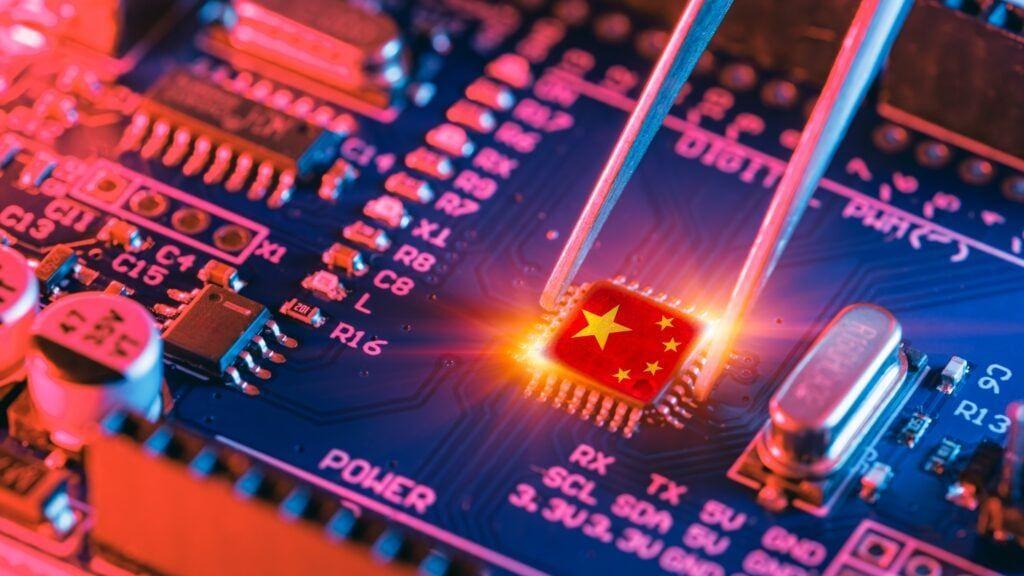
China's Hua Hong Group has developed advanced chip manufacturing technologies capable of producing AI chips, marking a significant step in Beijing's self-sufficiency drive to reduce reliance on foreign semiconductor suppliers
1
. The group's contract chipmaking business, Huali Microelectronics, is preparing a 7-nanometre (nm) chipmaking process at its plant in Shanghai, which would make China's No. 2 chipmaker the second domestic producer with such advanced capabilities2
. Currently, SMIC remains the only other Chinese chipmaker capable of 7 nm production, though analysts note its production yields have remained weak1
.
Source: Benzinga
Huawei Technologies Collaboration Drives Development
Chinese tech giant Huawei Technologies has been collaborating with the chipmaker on the 7 nm technologies, according to three sources familiar with the matter
1
. Research and development on 7 nm chips at Hua Hong Fab 6 began last year, with support from domestic equipment suppliers including Huawei-backed SiCarrier, which tested its equipment at a facility in Shenzhen2
. This development followed an announcement by Hua Hong Semiconductor in December that it planned to acquire a controlling stake in Huali and raise a further 7.56 billion yuan ($1.10 billion) to fund technological upgrades and research at the foundry5
. The Huawei Technologies collaboration underscores how domestic semiconductor capabilities are being built through strategic partnerships within China's tech ecosystem.Production Capacity and Market Response
Huali is planning initial 7 nm chip production capacity of a few thousand wafers per month by the end of the year, with a goal to ramp up more later, two sources confirmed
1
. Chinese graphics processing unit designer Biren Technology is using Huali's 7 nm line for tape-out, a process in which a chip design is committed to a physical prototype for chip prototype testing before mass production begins2
. Placed on a U.S. trade blacklist in 2023, Biren lost access to TSMC's contract manufacturing service shortly after, making domestic alternatives critical4
. Shares in Hua Hong Semiconductor surged 12% on Monday after the Reuters report, reflecting investor confidence in the breakthrough5
.Related Stories

U.S. Export Restrictions Shape Chip Self-Reliance Strategy
The development comes after Washington eased some of its tech export controls since last year, allowing Nvidia to sell its second-most-powerful AI chips to China
1
. Despite this easing of U.S. export restrictions, Beijing has encouraged domestic firms to purchase homegrown alternatives as it seeks to wean itself off foreign suppliers2
. These export controls have limited Chinese companies' access to advanced manufacturing services and constrained the supply of advanced AI chips from companies such as Nvidia, pushing Beijing to accelerate development of its own semiconductor ecosystem3
. Meanwhile, Chinese tech companies continue expanding AI infrastructure outside China to access Nvidia hardware, with reports indicating ByteDance plans a large AI deployment in Malaysia involving about 500 Nvidia Blackwell systems, or roughly 36,000 B200 chips3
.Advanced Manufacturing Capabilities at Hua Hong Foundries
The Hua Hong Fab 6 is the most advanced of seven foundries within the Hua Hong Group and currently manufactures logic chips using 22 nm and 28 nm process nodes, according to the company's website
1
. By contrast, its Fab 5 produces chips using mature technologies ranging from 40 nm to 55 nm5
. While SMIC uses Dutch chip equipment maker ASML's immersion machines to make 7 nm chips, Reuters could not determine how Hua Hong achieved the advanced manufacturing capability, its manufacturing efficiency, and which major equipment suppliers were involved in the development2
. This uncertainty raises questions about whether China can scale production effectively and compete with established players like TSMC in the global semiconductor market while navigating ongoing technology transfer restrictions.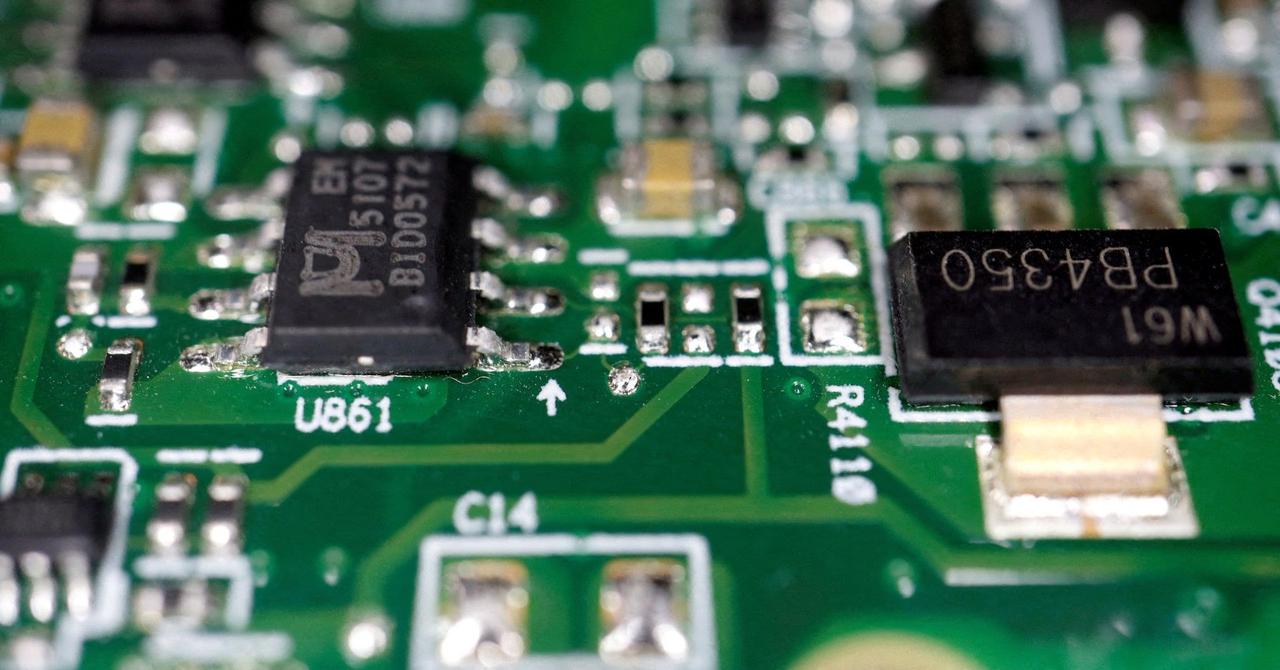
Source: Reuters
References
Summarized by

Navi
[1]
Related Stories
China targets 5x increase in advanced chip output to fuel AI ambitions despite equipment constraints
25 Feb 2026•Business and Economy
Nvidia's AI Chip Dominance Challenged as China Accelerates Domestic Production
23 Sept 2025•Technology

Huawei's AI Chip Ambitions Stalled by US Sanctions, Mass Production Planned for 2025
19 Nov 2024•Technology

Recent Highlights
1
Meta unveils Muse Spark AI model as Superintelligence Labs makes its debut
Technology

2
Anthropic restricts Mythos AI model release, citing unprecedented cybersecurity capabilities
Technology

3
Anthropic sends Claude AI to psychiatrist, discovers functional emotions that shape behavior
Science and Research

Recent Highlights
Today's Top Stories






Your Daily Dose of Curated AI News
Don’t drown in AI news. We cut through the noise - filtering, ranking and summarizing the most important AI news, breakthroughs and research daily. Spend less time searching for the latest in AI and get straight to action.

