Humanoid robot's demon-scuttling crawl reveals machines fake human-like movements


2 Sources
2 Sources
[1]
Humanoid robot's animal-like moves shock and fascinate the internet
Agility Robotics AI research scientist Chris Paxton recently highlighted Logan Olson's viral video of a crawling humanoid robot to illustrate an important point about robotic motion. In a post, resharing the footage, Paxton emphasized that many humanoid robots are essentially "faking" humanlike movements. "It's a property of how they're trained, not an inherent property of the hardware," he wrote, noting that robots are capable of far stranger and faster motions than the graceful walking or running humans expect. He added, "Human motion is most efficient for humans; robots are not humans." According to Futurism, the discussion is especially timely as companies like Tesla, Figure, and China's Unitree compete to bring humanoid robots to the mass market. While significant progress has been made -- Paxton even suggested that running is now almost commoditized -- experts question whether the human form is the best choice for every task. Chris Walti, former lead of Tesla's Optimus project, told Business Insider earlier this year that humanoid robots are not ideal for factory work, which prioritizes speed and repetitive motions. "Humans weren't designed to do repetitive tasks over and over again," he said, reports Futurism.
[2]
Alarming Video Shows Humanoid Robot Demon-Scuttling
"They're actually capable of way weirder stuff and way faster motions." The tech industry has become obsessed with the idea of humanoid robots, bipedal androids designed to complete tasks on behalf of their flesh-and-blood counterparts. But as many experts have argued, having robots walk around on two legs and manipulate the world around them with two hands and arms may not always be the most efficient option. After all, plenty of industrial robots use wheels to roll around a warehouse, or feature one large, strong, and multi-pivoting arm instead of relying on several weaker ones. Besides, the existing crop of humanoid robots is capable of a lot more than walking around and waving their hands. Look no further than a video shared by robot tinkerer and researcher Logan Olson last month, which shows how a humanoid robot can turn itself into a surprisingly creepy crawling machine while using the full extent of its four limbs' freedom of movement. The footage shows the robot dropping down to all fours in less than a second, unnervingly bending its arms and legs to crouch down and scuttle across a concrete patio -- like a demon straight out of a horror movie. Agility Robotics AI research scientist Chris Paxton, who recently reshared the video, used the footage as a reminder that a "lot of these robots are 'faking' the humanlike motions." "It's a property of how they're trained, not an inherent property of the hardware," he wrote. "They're actually capable of way weirder stuff and way faster motions." "Human motion is most efficient for humans; robots are not humans," he added in a follow-up. It's a particularly pertinent topic as companies like Tesla, Figure, and China's Unitree race to commercialize humanoid robots for the mass market. While companies have made major strides -- in a separate tweet, Paxton argued that "running is now basically commoditized" -- experts have questioned if it's really the best form factor for every job. Case in point, Chris Walti, the former lead of Tesla's humanoid robot Optimus, told Business Insider earlier this year that humanoid robots simply don't make much sense on the factory floor. "It's not a useful form factor," he said at the time. "Most of the work that has to be done in industry is highly repetitive tasks where velocity is key." The human form "evolved to escape wolves and bears," he added. "We weren't designed to do repetitive tasks over and over again." While a creepy-crawling robot, as demonstrated in Olson's video, admittedly may not be the pinnacle of productivity, it serves as a great -- albeit nightmare-inducing -- reminder that humanoid robots are technically capable of a lot more than masquerading as a human being, while walking around, shaking hands, and giving out popcorn. At the same time, a humanoid robot distending its joints to crawl along the floor likely won't endear it to humans, either.
Share
Share
Copy Link
A viral video of a humanoid robot crawling on all fours like a demon has sparked debate about robot motion capabilities. Agility Robotics AI research scientist Chris Paxton says these machines are 'faking' human-like movements and can perform far stranger, faster motions than their typical bipedal gait suggests.
Humanoid Robot Displays Unsettling Crawling Capabilities
A viral video shared by robot researcher Logan Olson has ignited conversation across the robotics industry about what humanoid robots are truly capable of beyond their typical bipedal movements
1
2
. The footage shows a humanoid robot dropping to all fours in less than a second, bending its arms and legs in ways that appear distinctly non-human as it scuttles across a concrete patio with animal-like moves2
. The demon-scuttling robot motion, while unsettling to watch, demonstrates the full extent of these machines' freedom of movement.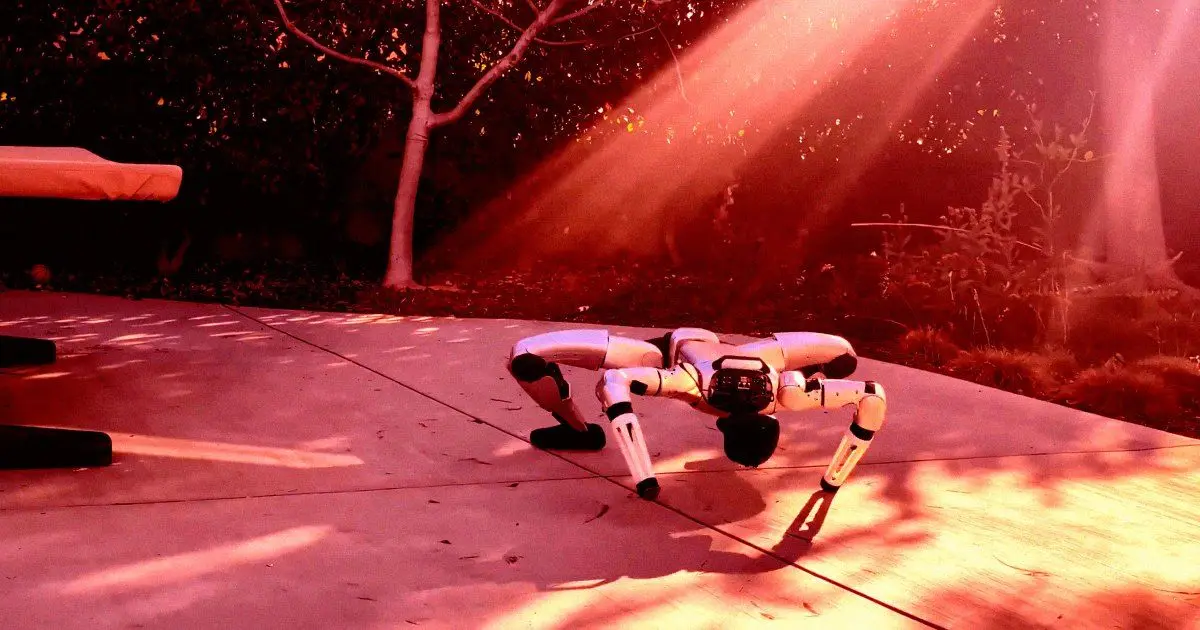
Source: Futurism
Robot Motion Capabilities Exceed Human-Like Movements
Agility Robotics AI research scientist Chris Paxton reshared the footage to make a critical point about how these machines actually function. "A lot of these robots are 'faking' the humanlike motions," Paxton wrote, explaining that human-like movements are "a property of how they're trained, not an inherent property of the hardware"
1
2
. He emphasized that robots are capable of "way weirder stuff and way faster motions" than the graceful walking or running humans expect. "Human motion is most efficient for humans; robots are not humans," Paxton added, highlighting a fundamental misconception about robot form factor design1
.Questions Emerge About Humanoid Design for Mass Market
The discussion arrives at a particularly relevant moment as companies like Tesla, Figure, and China's Unitree compete to bring humanoid robots to the mass market
1
2
. While the robotics industry has made significant progress—Paxton noted that "running is now basically commoditized"—experts are questioning whether the bipedal design truly represents the best choice for every task2
. Chris Walti, former lead of Tesla's Optimus project, told Business Insider that humanoid robots simply don't make sense for factory work, which demands speed and repetitive motions. "It's not a useful form factor," Walti said, adding that "most of the work that has to be done in industry is highly repetitive tasks where velocity is key"2
.Related Stories

Hardware Properties Allow Non-Human Motions
The human form "evolved to escape wolves and bears," Walti explained. "We weren't designed to do repetitive tasks over and over again"
2
. This insight reveals why forcing robots into human-shaped constraints may limit their robot efficiency rather than enhance it. While the crawling demonstration in Olson's viral video may not represent the pinnacle of productivity, it serves as a reminder that these machines possess hardware properties capable of movements far beyond what their typical programming displays. The footage also suggests that as the robotics industry pushes toward commercialization, developers may need to reconsider whether mimicking human motion serves practical purposes or simply makes these machines more palatable to human observers who will work alongside them.
Source: Interesting Engineering
References
Summarized by

Navi
[1]
Related Stories
Figure AI's Humanoid Robot Achieves Natural Walking Through AI Simulation
26 Mar 2025•Technology
Boston Dynamics unveils production-ready Atlas robot with superhuman abilities at CES 2026
05 Jan 2026•Technology

Boston Dynamics' Atlas Robot Showcases Advanced Mobility and AI-Driven Movements
20 Mar 2025•Technology

Recent Highlights
1
Google releases Gemma 4 with Apache 2.0 license, enabling unrestricted local AI on devices
Technology

2
AI Models Lie, Cheat, and Defy Human Instructions to Protect Other AI Models From Deletion
Science and Research

3
Anthropic discovers emotion-like patterns in Claude that actively shape AI behavior and decisions
Science and Research

Recent Highlights
Today's Top Stories




Your Daily Dose of Curated AI News
Don’t drown in AI news. We cut through the noise - filtering, ranking and summarizing the most important AI news, breakthroughs and research daily. Spend less time searching for the latest in AI and get straight to action.

