iOS 27 brings deep AI integration and Siri overhaul as Apple shifts focus to stability


5 Sources
5 Sources
[1]
iOS 27 sounds like exactly what the iPhone needs right now
Apple will unveil iOS 27 at WWDC in June, and rumors are already painting a clear picture: it sounds like exactly the update iPhone needs. iOS 27 is what the iPhone needs Based on reporting from sources including Bloomberg and The Information, Apple has two clear focuses for iOS 27: When Apple unveiled Apple Intelligence as part of iOS 18, it did a decent job of integrating the features throughout the update. Writing Tools, for instance, is a quick and easy way to proofread and clean up your writing. With iOS 27, however, it sounds like Apple is set to take AI integration to the next level, thanks in part to its new partnership with Google. According to Bloomberg, is rethinking its Siri approach and plans bring a more chatbot-style interface to the platform. It will offer many of the features people expect from a chatbot now, including answering questions, analyzing files, generating images, and more. That chatbot, however, won't be just bolted on as if it were an afterthought. Apple is planning to deeply integrate the new Siri into apps across the entire iOS 27 experience. That includes Mail, Apple Music, Apple Podcasts, Photos, Apple TV, Xcode, and more. All of these apps will add new AI features thanks to Apple's chatbot experience for Siri. "For instance, they could ask Siri to find a photo based on a description of its contents and edit it with specific preferences -- like cropping and color changes," Bloomberg says. "Or a user could ask Siri within the email app to write a message to a friend about upcoming calendar plans." This is essentially Apple doing what Apple does best: taking a new technology and tastefully integrating it into its ecosystem. For example, the Siri chatbot will also be able to "analyze open windows and on-screen content in order to take actions and suggest commands." Ideally, Apple would've done this two years ago, but the second best time is now. Stability iOS 26 was a huge update for iPhone, headlined by the new Liquid Glass interface. Liquid Glass has been divisive, and Apple has done its best to please both sides of the argument. I think iOS 26 was an excellent update and I like Liquid Glass. However, I think it's time for Apple to take a year to focus on refinement and general stability. There are clear areas of bloat in iOS to be trimmed, and areas that have clearly been neglected over the last several years. That's exactly what iOS 27 will do, according to Bloomberg. The update will focus on new AI features but otherwise emphasize "quality and underlying performance." Apple engineers are said to be "combing through Apple's operating systems" looking for bloat to cut and bugs to fix. Engineers are also looking for "any opportunity to meaningfully boost performance and overall quality." At the same time, Bloomberg's reporting suggests we shouldn't expect any major changes to Liquid Glass as we know it today. That is a good thing.
[2]
AppleInsider.com
While WWDC 2026 is months away, more information is leaking about iOS 27 and the other releases. A strange internal change has occurred -- OS 26 codenames have shifted mid-development. It is no secret that technology firms love their internal codenames, which almost never hold any real connection to the final product they represent. That's especially been true of Apple, but they tend to stay the same for each OS during development. In one small section of the most recent Power On Newsletter from Mark Gurman, he mentions a strange shift in internal naming for iOS 27 and macOS 27. Their code names were Buttercup and Honeycrisp respectively previously, but now they are Rave and Fizz. The code names themselves are meaningless to any outsider and convey nothing about their projects. However, changing the codenames mid-development cycle is significant and could show a strategy shift. Or it could show nothing. That's the problem with the anonymous sources speaking to an individual. There's no way to tell if the rumors were right the first time, or this time for that matter, and the leaker can't provide more detail without blowing their source. So, we're left with this one tidbit and a load of speculation. Also, the other codenames were revealed: watchOS 27 is Orchid, tvOS 27 is Lotus, and visionOS 27 is Eclipse. What's in store for OS 27 The rest of the newsletter is focused on Gurman's previous reporting around Apple Intelligence and its new partnership with Google Gemini. While it is still colored by his overall doom and gloom angle, it still represents a fairly comprehensive overview of what has transpired in the past year. Even as it attempts to paint a picture of internal AI team struggles, brain drain, and failures, it also shows how Apple's strategy has always been multi-pronged since the initial delay. The end result is still the same and reflects what AppleInsider has been reporting this whole time -- Apple Intelligence will be powered by Apple Foundation Models on device and in Private Cloud Compute. That said, the shift in code names does seem odd and stands out. This partnership with Google was never guaranteed, so perhaps the operating systems were going one way for OS 27 until the deal was struck, and now they're going another. According to the newsletter, Apple's focus for the OS 27 releases is an even more powerful Siri running Apple Foundation Models trained by a Gemini 3 equivalent. Apparently, the power required to run such models server-side will need Google's own TPUs. Google made this portion of the deal clear in its limited press release, though details are scarce. From what I can gather between that two-paragraph press release and Gurman's leaks, it seems Apple will be leasing Google's server-side equipment for some functions. Apple has already been known to use Google Tensor hardware for AI training. Apple utilizing third-party hardware is nothing new. Regardless of what this report says, Apple continues to state openly that its products will run Apple Intelligence powered by Apple Foundation Models which also runs via Private Cloud Compute. So, I continue to push back against this characterization that Apple is simply rebranding a Gemini model, and instead is doing what it has always done with third-party technology stacks. Apple has full control. So, like how Apple uses Google cloud, AWS and Azure to store iCloud data securely without Amazon, Google, or Microsoft having access to user data, it will likely use Google's AI servers to run its more powerful, Gemini-trained, Apple Foundation Models without any involvement from Google itself. Apple is clearly working on getting more of its own servers online, and everything about this Google partnership is set up to be temporary. The problem is, industry-wide shortages and time itself are against Apple on this project, so the partnership was prudent and necessary. The company continues to churn out AI research papers from its giant AI division, its processors are industry-leading, and its ability to provide private, local AI across the ecosystem is still unique to it. So, if we look past all of this doom and gloom reporting, we see a functional Apple AI team on the verge of releasing years of work to the public to power their devices and Siri. A public reveal is expected in February alongside initial betas, while a final release with iOS 26.4 should arrive by April. The newly codenamed OS 27 releases will be revealed during WWDC 2027 in June.
[3]
iOS 27: Everything we know so far
Apple will roll out iOS 27 for compatible iPhone devices in September 2026, following the release of its first beta during WWDC 2026 in June. The update, expected to emphasize "quality and underlying performance" according to Bloomberg's Mark Gurman, will integrate new features under the Apple Intelligence umbrella and support enhancements to Siri as well as new satellite connectivity options. Siri is slated for a new design, proactive suggestions, and the ability to recall past conversations. New Apple Intelligence features encompass an AI-powered Calendar application. A new Apple Health+ subscription service will reportedly incorporate an AI health coach for nutrition planning and medical suggestions, powered in part by Google Gemini. iOS 27 will reportedly support 5G satellite internet connectivity, which may be exclusive to iPhone 18 Pro models. Additional satellite functionalities rumored include Apple Maps via satellite and the ability to exchange photos via Messages when connected through satellite.
[4]
iOS 27: The Update That Changes Everything (Sorry, iOS 26)
Apple's iOS 27 is poised to redefine the mobile operating system landscape, addressing the challenges of its predecessor, iOS 26, while introducing a host of new features designed to enhance stability, performance, and user experience. This update reflects Apple's commitment to delivering a polished and reliable platform, setting a new standard for mobile software. Here's an in-depth exploration of what iOS 27 brings to the table in a new video from iReviews. iOS 27 adopts a strategy reminiscent of Apple's "Snow Leopard" macOS update, prioritizing refinement and reliability over flashy, headline-grabbing features. This approach directly responds to the criticism iOS 26 received for its instability and design inconsistencies. Apple has focused on creating a smoother, more cohesive experience for users. Notable updates include: iOS 27 is designed to support a wide range of devices, making sure that users with older models can still benefit from the update. Supported devices include: This broad compatibility underscores Apple's commitment to inclusivity, allowing users to enjoy the latest features without needing to upgrade their hardware. Additionally, Apple aims to improve adoption rates following the lukewarm reception of iOS 26. By addressing stability concerns and enhancing usability, the company hopes to encourage a faster transition to iOS 27 across its user base. One of the most anticipated aspects of iOS 27 is the integration of Gemini AI, a innovative artificial intelligence platform developed in collaboration with Google. This technology represents a significant evolution for Siri, allowing more advanced natural language processing, contextual understanding, and proactive assistance. While some Gemini AI features may debut in iOS 26.4, the full integration is expected with iOS 27, marking a pivotal shift in Apple's AI strategy. This move positions Apple as a stronger competitor in the rapidly advancing AI landscape, making sure its relevance in an increasingly AI-driven world. The beta version of iOS 27 is slated for release on June 8, 2026, during Apple's annual Worldwide Developers Conference (WWDC). This early release will allow developers to test the new features and provide valuable feedback to Apple. The official public release is expected in mid-September 2026, likely around September 14, aligning with Apple's traditional fall product launches. In preparation for iOS 27, Apple is rolling out incremental updates to iOS 26 to address existing issues and ensure a smoother transition. The iOS 26.3 beta 3 is currently in testing, with subsequent updates such as 26.4 and 26.5 expected before the iOS 27 beta release. These updates aim to refine the user experience and lay the groundwork for the next major update. iOS 27 represents a critical moment for Apple, addressing the shortcomings of its predecessor while introducing meaningful innovations. The update's focus on stability, performance, and innovative AI integration demonstrates Apple's dedication to delivering a refined and reliable operating system. Whether you're excited about the revamped Photos app, the streamlined AirPods pairing system, or the fantastic potential of Gemini AI, iOS 27 promises to elevate the user experience. Mark your calendar for the beta release in June 2026 and the public launch in September. With its emphasis on quality and innovation, iOS 27 is shaping up to be a milestone in Apple's software evolution, offering users a more polished and feature-rich platform. Advance your skills in iOS 27 by reading more of our detailed content.
[5]

iOS 27 may bring these 8 new features to iPhone
The first beta version of iOS 27 is expected to be released during WWDC 2026 in June. Apple is still far from officially announcing iOS 27, but early rumours are already giving iPhone users an idea of what the update could include. The first beta version of iOS 27 is expected to be released during WWDC 2026 in June, while the final version should arrive for the public in September, alongside new iPhone models. Reports suggest that Apple is taking a different approach with iOS 27. Instead of focusing on big visual changes, the company is said to be putting most of its effort into improving overall quality and performance. This strategy is being compared to Mac OS X Snow Leopard. Even with this performance-focused approach, iOS 27 is still expected to introduce several new features. Many of them are likely to be part of Apple Intelligence, Apple's growing artificial intelligence platform. Also read: Samsung Electronics boss says the company is betting on practical AI over novelty Siri is rumoured to receive major upgrades. The digital assistant may get a new design, remember past conversations, and offer proactive suggestions. These changes aim to make Siri feel more natural and useful in daily life. Several upcoming Apple Intelligence features are rumoured to be in development, including an AI-powered Calendar app. Reports also suggest that a new Apple Health+ subscription will feature an AI health coach capable of providing nutrition plans and medical guidance. Also read: Elon Musk seeks up to $134 bn from OpenAI and Microsoft, here's why Another interesting rumour is that Google Gemini may help power some Apple Intelligence features. This could allow Apple to deliver more advanced AI tools while still keeping privacy in focus. Furthermore, iOS 27 may offer support for 5G satellite internet on future iPhone Pro models, along with satellite-based Apple Maps and the ability to send and receive photos through Messages when no cellular signal is available.
Share
Share
Copy Link
Apple is set to unveil iOS 27 at WWDC in June 2026, marking a strategic shift toward AI-powered features and system stability. The update will introduce a chatbot-style Siri interface powered by Apple Intelligence and Google Gemini, integrated across Mail, Photos, Music, and more. Rather than pursuing flashy redesigns, Apple is prioritizing quality and performance improvements while adding proactive assistance and natural language processing capabilities.
iOS 27 Brings Deep AI Integration Across iPhone Apps
Apple is preparing to unveil iOS 27 at WWDC in June 2026, with early reporting suggesting a fundamental rethinking of how AI operates across the iPhone ecosystem
1
. According to Bloomberg, the update will introduce a chatbot-style interface for Siri that moves beyond simple voice commands to offer comprehensive AI-powered features including answering questions, analyzing files, and generating images1
. This represents Apple doing what it does best: taking emerging technology and integrating it tastefully throughout its ecosystem rather than bolting it on as an afterthought.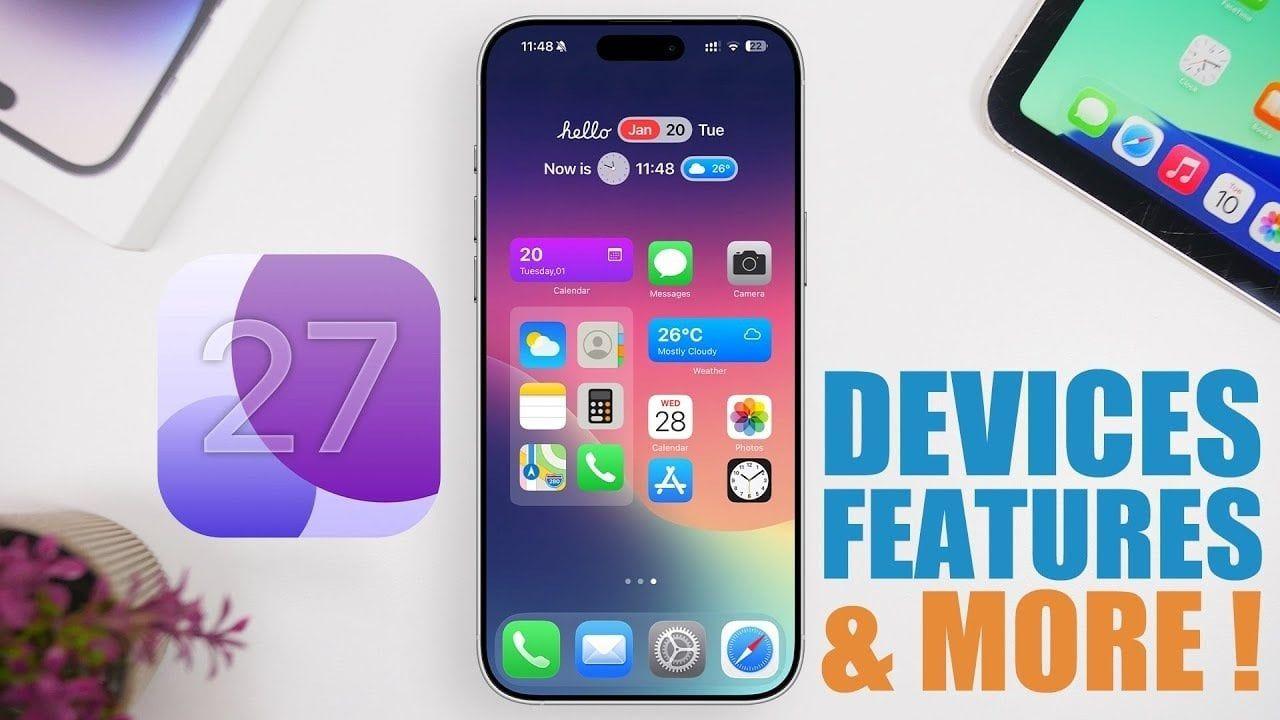
Source: Geeky Gadgets
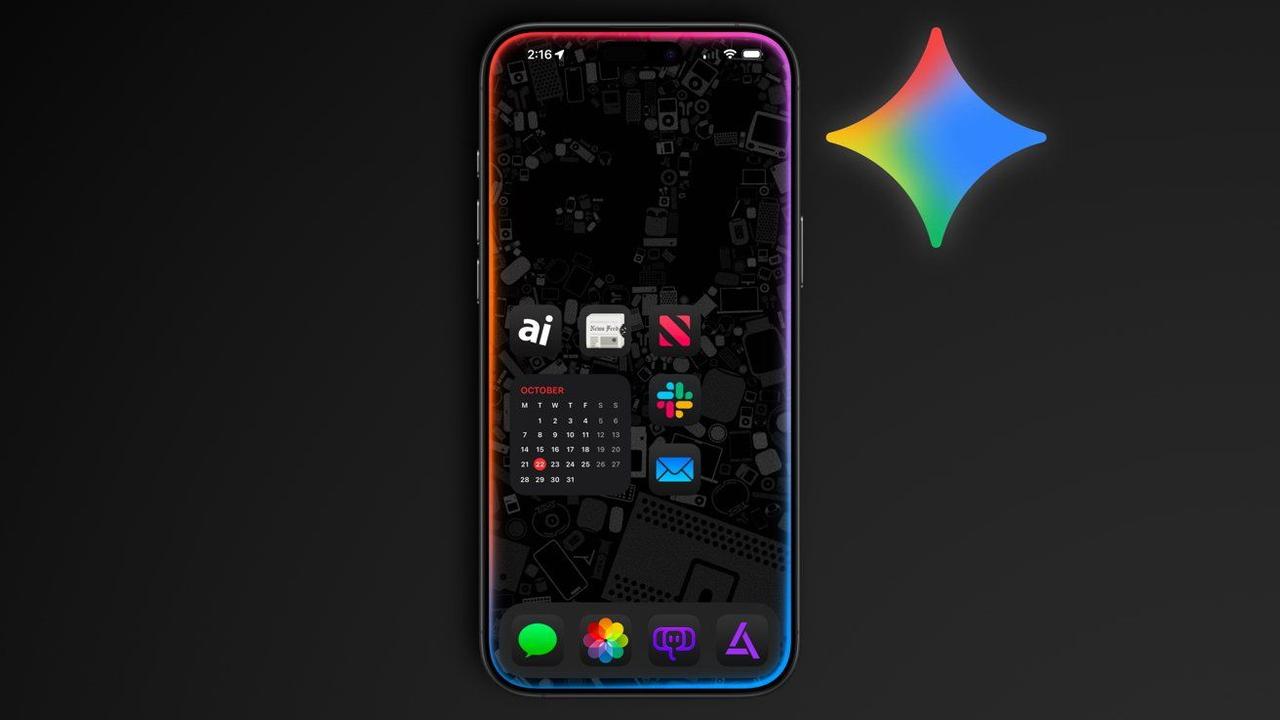
The enhanced Siri capabilities will be deeply embedded across core applications including Mail, Apple Music, Apple Podcasts, Photos, Apple TV, and even Xcode
1
. Users will be able to ask Siri to find photos based on content descriptions and edit them with specific preferences like cropping and color changes, or request the assistant to write emails about upcoming calendar plans directly within the Mail app1
. The AI assistant will also analyze open windows and on-screen content to suggest commands and take contextual actions1
.
Source: AppleInsider
Google Gemini Partnership Powers Apple Intelligence Evolution
A significant development behind iOS 27's AI ambitions is Apple's partnership with Google, which will help power more advanced Apple Intelligence features
5
. According to reports, Apple will run more powerful Siri models trained by a Gemini 3 equivalent, with the computational power required for these server-side operations leveraging Google's TPUs2
. However, Apple maintains full control over this arrangement, similar to how it uses Google cloud infrastructure for iCloud data without giving the search giant access to user information2
.The Google Gemini partnership appears to be a pragmatic solution to industry-wide hardware shortages and time constraints, designed as a temporary measure while Apple builds out its own server infrastructure
2
. Apple Intelligence will continue running on Apple Foundation Models both on-device and through Private Cloud Compute, ensuring user privacy remains protected2
. Additional AI-powered features under development include an AI-driven Calendar application and a rumored Apple Health+ subscription service featuring an AI health coach for nutrition planning and medical suggestions3
5
.System Stability and Performance Take Center Stage
Beyond AI integration, iOS 27 adopts a strategy reminiscent of Apple's Snow Leopard macOS update, prioritizing refinement and reliability over headline-grabbing visual changes
4
. This approach directly addresses criticism that iOS 26 received for instability and design inconsistencies following its Liquid Glass interface introduction1
. Bloomberg reports that Apple engineers are combing through the operating system looking for bloat to cut and bugs to fix, seeking every opportunity to boost performance and overall quality1
.The update will emphasize quality and underlying performance while avoiding major changes to the Liquid Glass interface introduced in iOS 26
3
. This focus on user experience improvements aims to create a smoother, more cohesive platform that addresses areas of the operating system that have been neglected over recent years1
.Related Stories
Unusual Code Name Change Hints at Strategy Shift
In an unusual development, Apple changed the internal codenames for iOS 27 and macOS 27 mid-development cycle, shifting from Buttercup and Honeycrisp to Rave and Fizz respectively
2
. While codenames themselves carry no external meaning, changing them during development is significant and could indicate a strategic pivot, potentially related to the Google partnership that was never guaranteed2
.Timeline and Device Compatibility
The beta version of iOS 27 is scheduled for release on June 8, 2026, during WWDC, with the public release expected around September 14, 2026, aligning with Apple's traditional fall product launches
4
. The update will support a wide range of iPhone models, demonstrating Apple's commitment to inclusivity and helping improve adoption rates following the lukewarm reception of iOS 264
.
Source: Digit
Additional features rumored for the update include 5G satellite internet connectivity potentially exclusive to iPhone 18 Pro models, satellite-based Apple Maps, and the ability to exchange photos via Messages when connected through satellite
3
5
.Siri's anticipated upgrades include a new design, the ability to remember past conversations, and proactive suggestions that make interactions feel more natural
5
. The integration of natural language processing and contextual understanding through Gemini AI technology marks a pivotal shift in Apple's AI strategy, positioning the company to compete more effectively in the rapidly advancing AI landscape4
.References
Summarized by

Navi
[2]
[3]
[4]
Related Stories
iOS 27 to Prioritize Performance Over Features in Apple's Strategic Shift
23 Nov 2025•Technology
Apple's iOS 27 targets battery life boost through major code cleanup and performance overhaul
16 Feb 2026•Technology

Apple Plans Major AI Overhaul for iOS 27 with Enhanced Siri, Health+ Service, and Web Search Tool
04 Nov 2025•Technology
Recent Highlights
1
Apple Plans Major Siri AI Overhaul in iOS 27 With Third-Party Chatbot Integration
Technology

2
OpenAI shuts down Sora after six months, ending Disney's $1 billion licensing partnership
Technology

3
AI chatbots validate you too much, making you less kind to others, Stanford study reveals
Science and Research
Recent Highlights
Today's Top Stories




Your Daily Dose of Curated AI News
Don’t drown in AI news. We cut through the noise - filtering, ranking and summarizing the most important AI news, breakthroughs and research daily. Spend less time searching for the latest in AI and get straight to action.

