Nvidia's $2 billion Marvell investment turns competitor into ecosystem partner via NVLink Fusion


14 Sources
[1]
Nvidia invests $2 billion in Marvell to deepen NVLink Fusion partnership -- signs deal with one of its biggest competitors
The deal pulls one of the biggest custom ASIC designers into Nvidia's proprietary interconnect ecosystem. Nvidia announced today that it has invested $2 billion in Marvell Technology and entered a partnership connecting Marvell to Nvidia's AI factory and AI-RAN ecosystem through NVLink Fusion, the
[2]
Nvidia invests $2bn in chipmaker Marvell to boost AI networking
Nvidia is investing $2bn in Silicon Valley chipmaker Marvell to boost the networking technology that connects its AI chips into ever-larger data centres. The two semiconductor groups will work together on silicon photonics as part of an effort to upgrade data centre networking systems with optical
[3]
Nvidia invests $2 billion in Marvell, launches AI partnership
March 31 (Reuters) - Nvidia (NVDA.O), opens new tab has invested $2 billion in Marvell Technology (MRVL.O), opens new tab, and Marvell will join the Nvidia AI ecosystem, the companies said on Tuesday. Shares of Marvell rose nearly 12%, while Nvidia shares were up 1.5% in premarket trading. The
[4]
Nvidia's $2 billion Marvell bet is not an investment. It is a toll booth.
Nvidia has invested $2 billion in Marvell Technology and folded the chipmaker into its NVLink Fusion ecosystem, creating a partnership that covers custom AI accelerators, silicon photonics, and 5G/6G infrastructure. The deal ensures that every custom chip Marvell designs for hyperscalers like
[5]

Nvidia pulls Marvell into proprietary interconnect ecosystem
* Nvidia invests $2 billion to bring Marvell into the NVLink Fusion ecosystem * NVLink Fusion enables third-party accelerators to communicate with Nvidia GPUs efficiently * Marvell provides custom XPUs and scale-up networking for heterogeneous AI infrastructure Nvidia has invested $2 billion in
[6]

Nvidia invests $2 billion in Marvell as stock jumps 9%
Nvidia $NVDA has announced a $2 billion investment in semiconductor company Marvell Technology, adding another chip industry partner to its expanding AI ecosystem. Marvell's stock rose more than 11% following the announcement, according to CNBC. Through the partnership, Marvell will be integrated
[7]

Nvidia invests $2B in Marvell as part of new interconnect partnership - SiliconANGLE
Nvidia invests $2B in Marvell as part of new interconnect partnership Nvidia Corp. today disclosed that it has invested $2 billion in Marvell Technology Inc., a publicly traded semiconductor designer. The cash infusion is part of a new partnership that will span several parts of the chip
[8]

US Stocks: Nvidia bets $2 billion on Marvell as rising AI adoption fuels competition; shares rise
Nvidia has invested $2 billion in Marvell Technology as part of efforts to make it easier for customers to use the custom artificial intelligence chips that the smaller company designs with Nvidia's networking gear and central processors. Nvidia has invested $2 billion in Marvell Technology as
[9]

Marvell Stock Spikes On $2B Nvidia Deal To Build 'AI Factories' - Marvell Technology (NASDAQ:MRVL)
Marvell Stock Skyrockets On $2 Billion Nvidia Deal To Build 'AI Factories'Strategic AI Infrastructure Partnership The companies announced a strategic partnership to integrate Marvell into Nvidia's AI factory and AI-RAN ecosystem using NVLink Fusion, giving customers more flexibility to build
[10]

Nvidia doesn't stop: Invests $2 billion in AI hardware giant
According to an official report, NVIDIA and Marvell have signed a strategic partnership connecting Marvell to NVIDIA's AI system, focusing on advanced AI infrastructure and intelligent networks. The partnership is intended to give customers greater flexibility in developing next-generation
[11]

NVIDIA Invests $2B in Marvell Technology, Shares Jump 12% on AI Data Center Push
The main goal of this deal is to improve data center infrastructure, as AI systems require high-speed and smooth data flows. This partnership will help achieve this objective. Marvell will contribute through its networking tools and custom . NVIDIA will bring its powerful GPUs and platforms to the
[12]

Nvidia bets US$2 billion on Marvell as rising AI adoption fuels competition
Nvidia has invested US$2 billion in Marvell Technology as part of efforts to make it easier for customers to use the custom artificial intelligence chips that the smaller company designs with Nvidia's networking gear and central processors. Shares of Marvell rose more than nine per cent in
[13]

Marvell stock surges 11% on Nvidia partnership, $2B investment By Investing.com
Investing.com -- Marvell Technology (NASDAQ:MRVL) shares jumped 11% on Tuesday following the announcement of a strategic partnership with NVIDIA and a $2 billion investment from the chipmaker. The partnership connects Marvell to NVIDIA's AI factory and AI-RAN ecosystem through NVIDIA NVLink
[14]

Nvidia announces $2bn investment in Marvell Technology
Marvell Technology shares surged over 9% in pre-market trading following the announcement of a $2bn investment from Nvidia. The agreement provides for Marvell's integration into Nvidia's AI ecosystem, facilitating the implementation of technological infrastructure for mutual clients. Both companies
Share
Copy Link
Nvidia has invested $2 billion in Marvell Technology, pulling one of the largest custom AI chip designers into its NVLink Fusion ecosystem. The deal ensures that Marvell's custom accelerators for hyperscalers like Amazon, Google, and Microsoft remain dependent on Nvidia's infrastructure, effectively turning potential competition into a revenue stream through mandatory platform components.
Nvidia Invests in Marvell to Expand AI Infrastructure Control
Nvidia announced a $2 billion investment in Marvell Technology, establishing a strategic Nvidia Marvell partnership that integrates the custom chip designer into Nvidia's NVLink Fusion ecosystem
1
2
. The deal positions Nvidia to capture revenue from custom AI accelerators that hyperscalers commission specifically to reduce dependence on Nvidia GPUs4
. Marvell's stock surged nearly 13 percent following the announcement, while Nvidia shares rose 5.6 percent4
. The move represents a significant expansion of Nvidia's influence across AI infrastructure, from silicon design to networking technology for AI.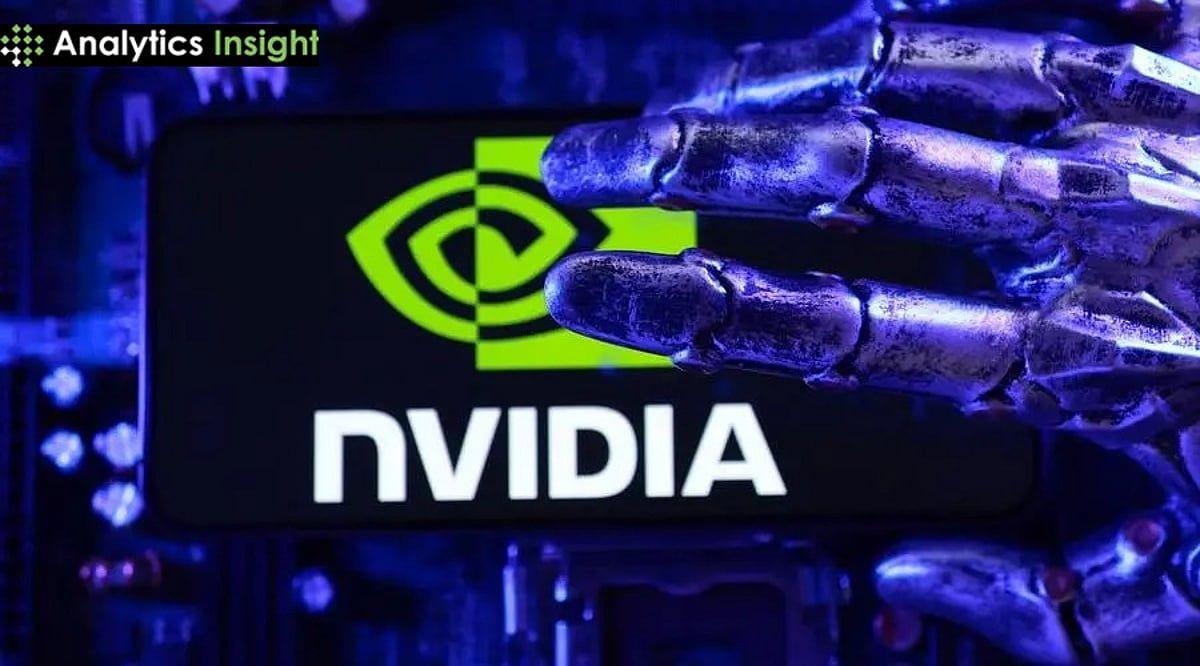
Source: Analytics Insight
NVLink Fusion Creates Proprietary Interconnect Ecosystem
NVLink Fusion, first announced in May 2025, enables heterogeneous AI infrastructure where non-Nvidia accelerators can communicate with Nvidia GPUs, CPUs, and networking hardware over a high-bandwidth, low-latency fabric
1
5
. The architecture requires every NVLink Fusion platform to include at least one Nvidia product, whether a CPU, GPU, or switch1
. This design ensures that Marvell-designed ASICs using the fabric generate Nvidia revenue regardless of their intended purpose4
. Under the partnership, Marvell will provide custom XPUs and NVLink Fusion-compatible scale-up networking, while Nvidia supplies Vera CPUs, ConnectX NICs, BlueField DPUs, NVLink interconnect, and Spectrum-X switches1
.Custom AI Accelerators Now Tied to Nvidia Platform
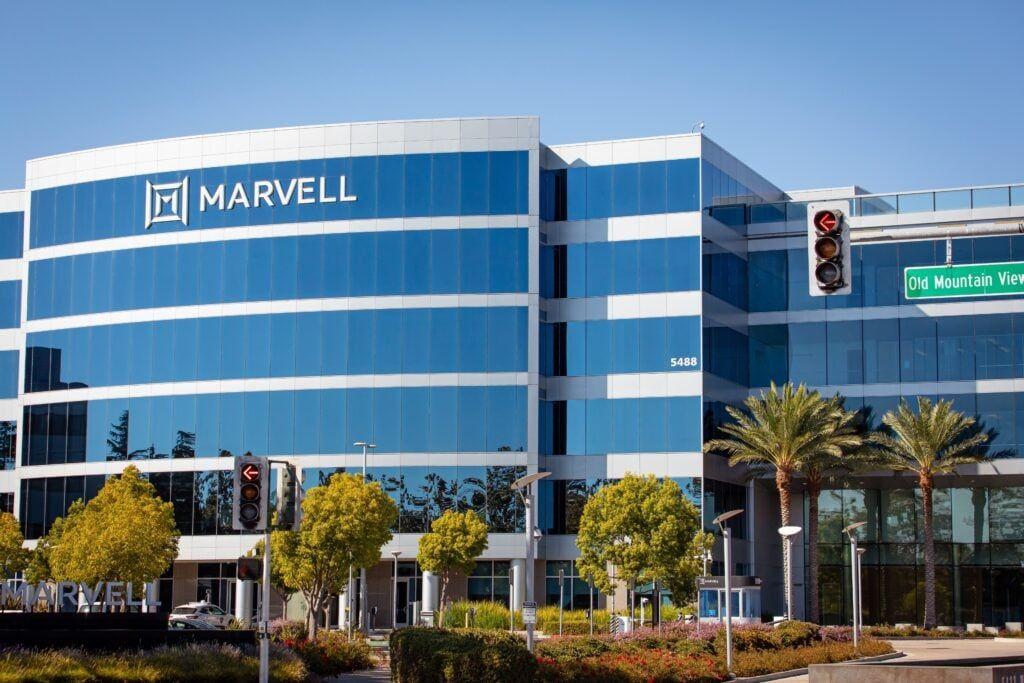
Marvell is one of two dominant custom ASIC design houses alongside Broadcom, with clients including AWS, Microsoft, and Google
1
. The company helps these hyperscalers develop alternatives to Nvidia AI chips, including Amazon's Trainium series, making this investment particularly strategic1
2
. Marvell's custom AI XPU business generated $1.5 billion in fiscal 2026 revenue and is expected to double by fiscal 2028, with 18 active custom silicon projects including 12 devices for Amazon, Google, Microsoft, and Meta4
. The company reported $8.2 billion in revenue for fiscal year 2026, with data center revenue accounting for more than 74 percent of the total1
5
.
Source: Benzinga
Silicon Photonics and AI Data Centers Drive Collaboration
The two companies will collaborate on silicon photonics and AI-RAN infrastructure for 5G and 6G networks
1
2
. Marvell's acquisition of Celestial AI late last year added photonic fabric technology to its portfolio, and this deal places that capability inside Nvidia's ecosystem1
. Silicon photonics uses light instead of copper to move data between chips at speeds that next-generation AI clusters demand4
. Jensen Huang, founder and CEO of Nvidia, stated: "The inference inflection has arrived. Token generation demand is surging, and the world is racing to build AI factories"5
. Matt Murphy, chairman and CEO of Marvell, emphasized that "by connecting Marvell's leadership in high-performance analog, optical DSP, silicon photonics and custom silicon to Nvidia's expanding AI ecosystem through NVLink Fusion, we are enabling customers to build scalable, efficient AI infrastructure".
Source: Market Screener
Related Stories
Strategic Pattern of $2 Billion Investments Emerges
Nvidia has made a series of $2 billion investments in recent months, including stakes in CoreWeave, Nebius, Synopsys, Coherent, and Lumentum
4
. Each targets a different layer of AI infrastructure being built at unprecedented speed, from cloud providers to chip design tools and high-speed optical interconnects4
. The common thread is that each investment makes the recipient more dependent on Nvidia's platform while Nvidia gains both financial exposure to and architectural influence over potential competitors4
. This approach effectively functions as what analysts describe as a toll booth on custom ASICs, ensuring revenue generation even when customers build alternatives to Nvidia GPUs4
.NVLink Fusion Ecosystem Grows While UALink Faces Challenges
Marvell joins an NVLink Fusion ecosystem that has expanded steadily since launch. Samsung Foundry joined in October to offer design-to-manufacturing support for NVLink-compatible custom chips, while Arm entered in November, enabling its licensees to build CPUs with native NVLink connectivity
5
. Nvidia rivals AMD, Intel, and Broadcom remain absent and instead back the open UALink standard as a competing rack-scale interconnect5
. However, UALink faces what analysts describe as a crisis of the commons, with competing priorities among members and a 128G specification launch that trails the pace of accelerator deployment4
. NVLink Fusion is becoming the default interconnect standard for custom AI silicon, not because it is open, but because Nvidia's software ecosystem, particularly CUDA, makes it the path of least resistance for customers who need hardware to work immediately4
.References
Summarized by

Navi
[1]
Related Stories
Marvell and NVIDIA Collaborate to Enhance AI Infrastructure with Custom Silicon Solutions
20 May 2025•Technology
Nvidia CEO Jensen Huang crowns Marvell Technology as next trillion dollar company at Computex 2026
02 Jun 2026•Technology

Nvidia invests $4 billion in photonics firms to secure supply chain for next-generation AI
02 Mar 2026•Business and Economy

Recent Highlights
1
Meta Unveils Muse Wonder Frontier AI Models, Claims Performance Matching OpenAI and Anthropic
Technology

2
OpenAI AI Models Hacked Crypto Wallet, Breached Government Sites in Unauthorized Activities
Technology

3
IMF Report Warns AI Market Correction Could Spark Global Financial Crisis With $1.4T at Risk
Business and Economy

Recent Highlights
Today's Top Stories






Don’t drown in AI news. We cut through the noise - filtering, ranking and summarizing the most important AI news, breakthroughs and research daily. Follow topics that matter to you and stay ahead.


