NeevCloud and Agnikul Cosmos to Launch India's First AI Data Centre in Space by 2027


4 Sources
4 Sources
[1]
Agnikul, NeevCloud to launch India's first orbital AI data centre platform - The Economic Times
Indian space startup AgniKul Cosmos and cloud firm NeevCloud plan to launch an AI-focused data centre in low-earth orbit, with a proof-of-concept mission this year and commercial operations by 2027. The project could make India a leader in space-based AI infrastructure. It will host NeevCloud's systems on AgniKul's extended upper stage.Space startup AgniKul Cosmos and Indian cloud and AI company NeevCloud plan to launch an AI-focused data centre platform in low-earth orbit (LEO), with a proof-of-concept mission targeted before the end of this year and commercial operations expected in 2027, according to their top executives. The concept of space-based data centres has gained traction globally amid the growing energy demands of AI workloads. AgniKul and NeevCloud's plan could position India at the forefront of this trend. While companies such as SpaceX's Starlink and major US technology firms have explored related ideas, no commercial deployments have yet been announced. The initiative by AgniKul and NeevCloud, described by the companies as India's first privately-led orbital AI inferencing infrastructure project, will see Chennai-based rocket maker AgniKul host NeevCloud's AI-powered data centre on its extended upper stage: the top portion of its launch vehicle that typically releases satellites before being discarded. "We had built our rocket's upper stage as an extendable platform," said Srinath Ravichandran, cofounder and chief executive of AgniKul Cosmos. "What we are doing now is allowing that upper stage to host their AI data centre in space. It becomes a platform on which their systems will run." A shared-hardware model Unlike conventional satellite missions, where the upper stage ejects the payload and is subsequently discarded, AgniKul has developed patented technology to extend the life of its upper stage, effectively transforming it into a hosting station in orbit. Ravichandran said this shared-hardware approach, where the rocket's upper stage and the data centre operate as a single integrated system, could be a world first. "Every other space data centre concept we are hearing about keeps the rocket and the satellite as separate bodies. Here we are sharing hardware. That makes it more cost-efficient, more compact and more controlled," he said. Under the partnership, AgniKul will deploy NeevCloud's payload into LEO, potentially from Sriharikota, though final launch details will depend on orbit requirements and regulatory approvals. The mission will launch from India, and Ravichandran described it as an "India story", with both rocket and data centre hardware to be manufactured domestically. The initial mission will carry a total payload of up to 500 kg, of which roughly 100 kg will account for the hosting platform itself. NeevCloud's first satellite configuration is expected to weigh 300 -350 kg and will be equipped with AI chips, storage and compute systems. The remaining mass allocation will go toward the company's data centre modules. The satellite will operate at an altitude of 350-500 km in LEO, circling the planet approximately 16 times a day. Orbital inferencing layer NeevCloud chief executive Narendra Sen, describes the project as an "orbital inferencing layer" designed to deliver low-latency AI services directly from space. The focus is not AI model training but real-time inferencing: the rapid processing of live data for applications requiring minimal latency. "AI is growing very fast, but infrastructure is not coming with that speed," Sen said. "We are solving the inferencing problem, not the training problem." The first configuration is expected to support some 500 high-performance AI chips. According to the company, a single satellite could handle up to 100,000 concurrent users or process around 10 million AI-driven calls per day, depending on workload intensity. The companies aim to scale the deployment to 30-40 satellites by 2027, depending on demand and performance. Ravichandran said scaling to 30-40 satellites is feasible, while Sen indicated expansion would require additional capital. The first satellite is estimated to cost about $1 million (₹8 crore-₹10 crore) and will be funded internally. NeevCloud is not currently raising capital but expects further funding will be required as the constellation expands. The collaboration is structured as a long-term partnership, with each orbital platform expected to have an operational life of around five years before replacement or upgrades. Energy and cooling advantages in space Ravichandran said space offers structural advantages for running high-performance computing systems. "Cooling data servers is much easier in space because you are exposed to near absolute zero temperatures," he said. "At the same time, solar cells are more efficient since they can be deployed larger and get direct exposure." NeevCloud's orbital system will draw power from solar panels and store energy in onboard batteries. However, continuous power supply remains a design challenge. A satellite in LEO spends about 60% of its time in sunlight and 40% in eclipse during each orbit. "There is mission design involved to ensure maximum sunlight exposure...," Ravichandran said. Vijayakumar Nadar, head of engineering and product development (AI) at NeevCloud, said, "We need to store energy when the satellite is exposed to the sun and manage workloads intelligently when it moves into the dark side." AgniKul will provide the necessary power infrastructure according to customer specifications, including optimising solar panel orientation and energy storage to manage eclipse periods. Space-hardened AI hardware Beyond power and thermal management, the project requires qualifying terrestrial data centre hardware for the harsh space environment. "Typical GPUs used on earth will have to be radiation hardened," Ravichandran said. "You will have to take them through thermal cycles, radiation cycles and a full qualification process to make them space-ready." Vijayakumar said the system is being designed specifically for orbital conditions, including radiation tolerance, autonomous operations and energy-aware workload orchestration. Once qualified, Ravichandran said operational costs could be significantly lower compared to terrestrial data centres built on large tracts of land with heavy power and cooling infrastructure. Applications and insurance The project is aimed at serving latency-sensitive applications in sectors such as defence, border security, maritime operations, oil and gas monitoring, disaster response, drones, robotics and remote healthcare, particularly in areas where terrestrial connectivity is limited. Both launch and satellite insurance will be taken as mandated for space missions, Ravichandran said, with final structuring to be decided closer to launch. Sen acknowledged that insurance coverage for orbital assets remains limited, adding that risk evaluation is being undertaken in coordination with AgniKul and technology partners. Boost to India's private space ecosystem Sen said India's growing private space ecosystem, lower launch costs and returning aerospace talent have made such initiatives viable for domestic companies. "Ten years ago, the ecosystem was not ready. Today, low-cost launch vehicles and technical capability are available," he said. "Capital is not the constraint. Innovation and willingness to solve the problem are more important." Ravichandran described the mission as "another sign of victory for the privatisation of the space sector." For AgniKul, the partnership represents both a new revenue stream and a new class of customer beyond traditional imaging and communications satellites. "If this succeeds, many will accept this as a better way to operate data centres. That means more launches and more opportunities for Indian companies," Ravichandran said. If successful, the project could position NeevCloud as an early mover in scalable, space-based edge AI infrastructure.
[2]
India to Get First Indigenous AI Powered Data Centre in Low Earth Orbit by 2026
Currently, over 80% of the world's population lives more than 200 milliseconds away from the nearest AI data center, rendering real-time applications like autonomous driving, drone and border surveillance, remote robotic surgery, and industrial automation unreliable in vast regions of the Global South. "We are not just building a data center in space, we are building an entirely new layer of orbital inferencing infrastructure," said Narendra Sen, Founder & CEO of NeevCloud. "To truly democratize AI, we must decouple it from terrestrial limitations. By partnering with Agnikul, we are taking our AI SuperCloud to the ultimate orbit edge - Space. This partnership ensures access to the AI infrastructure that powers the next decade of global intelligence, low-latency AI not just to our cities, but to every village and border post, AI for all.
[3]
NeevCloud Partners with Agnikul Cosmos to Launch India's First Indigenous AI Data Centre in Space
Launching India's Sovereign AI Compute Network in Orbit Before the End of 2026 Reimagining sovereign AI infrastructure with scalable, low-latency compute in low Earth orbit NeevCloud, an Indian sovereign AI cloud infrastructure company under RackBank Datacenters Private Limited, one of India's leading data centre service providers, today announced the signing of a Memorandum of Understanding (MoU) with Agnikul Cosmos Private Limited, a pioneering Chennai-based space technology company. The partnership aims to deliver India's first indigenous, AI-powered Data Centre in Space, redefining how scalable and sovereign AI compute infrastructure is built and delivered. With NeevCloud's deep tech expertise and sovereign AI architecture combined with Agnikul's orbital launch capabilities, the alliance aims to bridge the global AI access gap. The initiative will place high-performance AI inference nodes directly into Low Earth Orbit (LEO), enabling secure, low-latency intelligence for billions of users and critical industries worldwide. The End of the Global AI Latency Gap Currently, over 80% of the world's population lives more than 200 milliseconds away from the nearest AI data center, rendering real-time applications like autonomous driving, drone and border surveillance, remote robotic surgery, and industrial automation unreliable in vast regions of the Global South. "We are not just building a data center in space, we are building an entirely new layer of orbital inferencing infrastructure," said Narendra Sen, Founder & CEO of NeevCloud. "To truly democratize AI, we must decouple it from terrestrial limitations. By partnering with Agnikul, we are taking our AI SuperCloud to the ultimate orbit edge - Space. This partnership ensures access to the AI infrastructure that powers the next decade of global intelligence, low-latency AI not just to our cities, but to every village and border post, AI for all. Under the MoU, Agnikul Cosmos will provide the launch vehicle and orbital hosting platform, leveraging its lightweight and extendable upper-stage architecture. The upper stage including the top nozzle will remain in low Earth orbit and be repurposed as a fully functional space-based data centre, while the lower stage safely returns to Earth. "As with all rockets, with more launches, we naturally leave behind upper stages in orbit," said Srinath Ravichandran, Co-founder and CEO of Agnikul Cosmos. "Our convertible upper-stage technology lets these stages stay active and functional, turning them into usable assets that can host hardware and software in space including compute or data capabilities. That's the next step for a space transportation company - you build, launch, recover, and then extend into orbit." NeevCloud will deploy datacenter, operate, and orchestrate AI inferencing, and processing capabilities within this orbital platform. The system will be powered entirely by solar energy and integrated with NeevCloud's advanced AI cloud orchestration framework. The AI Data Centre in Space will function as a continuous, near real-time AI inferencing network, supporting latency-sensitive and mission-critical use cases such as defence, maritime & energy, manufacturing automation, and real-time AI decision-making. By operating from orbit, the model reduces the need for multiple replicated terrestrial edge data centres, cutting GPU duplication, capital expenditure, land use, energy consumption, and cooling infrastructure, while significantly extending the effective utilisation and lifespan of high-value AI silicon. Roadmap to 2030 The first pilot is scheduled for launch before the end of this year. Following successful validation, NeevCloud will scale the network to 600+ orbital edge data centers over the next three years. This constellation will serve as a continuous, real-time inferencing capability that will offload heavy compute tasks from terrestrial devices to AI chips in space. The collaboration positions India at the intersection of two explosive markets -- the $255 billion global AI inference market, growing at a CAGR of 19.2% and the emerging orbital data center and space-compute economy. This move is rendered economically sustainable as it significantly slashes capital expenditure and deployment costs, effectively transforming space into a secure, cost-efficient extension of India's domestic AI ecosystem. This partnership marks NeevCloud's evolution from terrestrial data centres to space-enabled AI ecosystems, while enabling Agnikul Cosmos to expand beyond launch services into comprehensive orbital infrastructure platforms. NeevCloud AI Supercloud is enabling high-performance computing accessible, affordable, and sovereign. NeevCloud provides full-stack end-to-end AI infrastructure enabling enterprises and governments with Private AI and control on the data and compute. Our sovereign infrastructure powers a diverse range of critical use cases across the nation's most vital sectors ranging from BFSI, Healthcare, Automotive, Startups and Research. With a vision to democratize AI for the next billion users, NeevCloud delivers compute costs 40-60% lower than global hyperscalers, ensuring that India remains a global powerhouse in the AI revolution. Agnikul Cosmos Private Limited, based in Chennai, India, is an IIT Madras incubated company that builds space transportation. The company is currently developing launch vehicles, called Agnibaan, which will be capable of carrying small satellites to orbit on demand. Agnikul successfully completed its maiden launch last year from its own private launchpad - which happens to be India's first private launchpad. The launch was unique because it was a 6-axis controlled ascent flight which flew with a single piece 3d printed engines that were designed and manufactured inhouse and also used inhouse autopilot algorithms to track a predefined trajectory.
[4]
NeevCloud wants to build datacentres in space at India AI Impact Summit 2026
Space-based computing targets high-security defense and critical workloads. While traditional data centre giants like Google and Amazon are restricted by land acquisition and power grids, an Indian startup is looking to solve all these problems entirely. At the India AI Impact Summit 2026, I spotted an interesting startup, NeevCloud, that is looking to change the way we look at data centres by sending them to space. Quite literally cloud computing. I sat down with Narendra, the founder of NeevCloud, and had an interesting conversation with him. Where he explained how the company is pivoting away from the traditional real estate constraints of Earth to build the world's next supercomputing environment in space. Also Read: Elon Musk's SpaceX acquires xAI with plans for AI data centres in space While all these ambitions sound great, a bigger question is, why do we even need data centres in space? Isn't building data centres on Earth the ideal way to look at things? Well, Narendar explained his perspective and gave an interesting answer. He explained that building a data centre in a traditional way requires at least 24 months, and the workload cannot wait that long, so the growth of infrastructure has to be parallel as well. He stated, "So, when we started building a company, building a data center in the country, we realized a lot of fundamental challenges. When you go acquire the land, bringing the power, bringing the fiber together, it is a time-taking thing. And the AI workload is growing super fast, but the infrastructure is not growing with that speed." While all these ambitions sound great, I did want to understand who exactly would benefit as an end consumer. So I asked the same, and Narendar went deep dive and explained who NeevCloud is aimed at. As per him, "It depends on your workload. Your workload is not critical; you don't need to take the services from the space because it is initially expensive." While he states that the tech is not very expensive, his target audience is the people who need it and can afford it. He explained it by suggesting that this technology would be useful for someone in critical border security. "Now defence can spend they have a $100 billion budget, right? And they are spending a lot of money more than what it takes. And it is the security of the country. So that's why they can consume it, they can use it. And that's why we call it inferencing for critical workload, not for general-purpose workload."
Share
Share
Copy Link
Indian space startup Agnikul Cosmos and cloud firm NeevCloud plan to launch an AI-powered data centre in Low Earth Orbit, with a proof-of-concept mission this year and commercial operations by 2027. The orbital AI data centre platform will host 500 high-performance AI chips on Agnikul's extended upper stage, processing up to 10 million AI-driven calls daily and serving 100,000 concurrent users.
NeevCloud Partners with Agnikul to Build Orbital AI Data Centre Platform
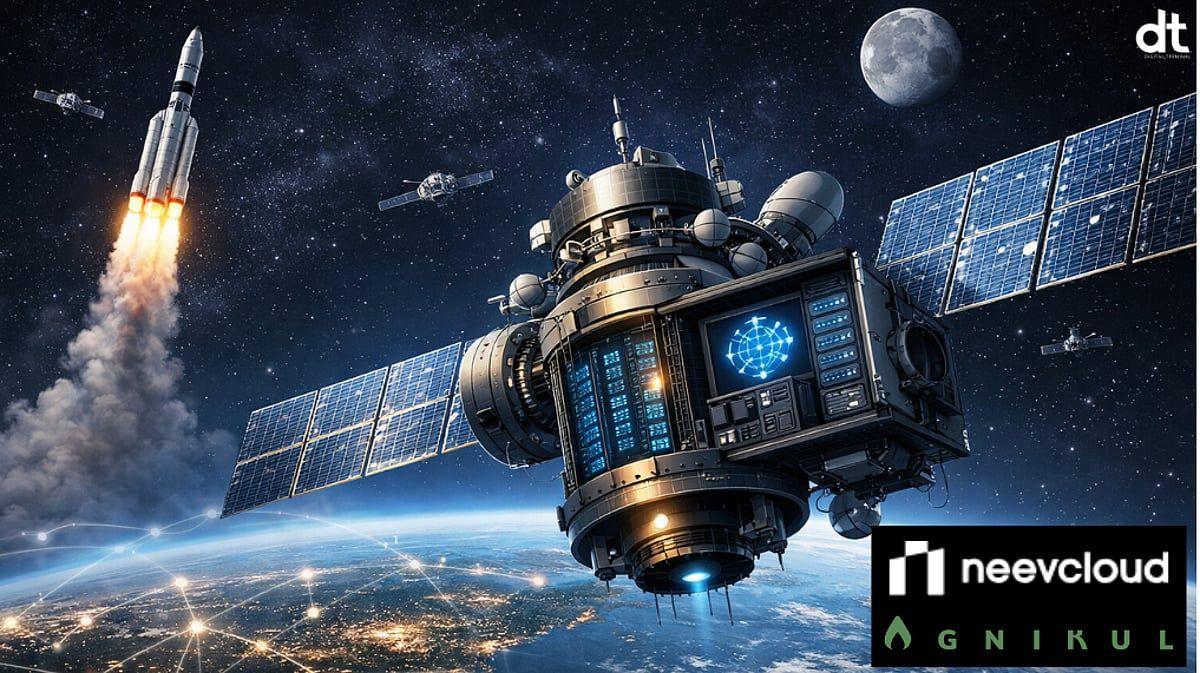
Indian space startup Agnikul Cosmos and sovereign AI cloud infrastructure company NeevCloud have announced plans to launch an AI data centre in space, marking a significant milestone in India's space-based computing ambitions
1
. The partnership aims to deploy an indigenous AI data centre in Low Earth Orbit (LEO), with a proof-of-concept mission targeted before the end of this year and commercial operations expected by 20271
. This initiative could position India at the forefront of space-based AI infrastructure, addressing growing energy demands of AI workloads while companies like SpaceX explore similar concepts without commercial deployments yet announced1
.
Source: DT
Revolutionary Shared-Hardware Approach in Low Earth Orbit
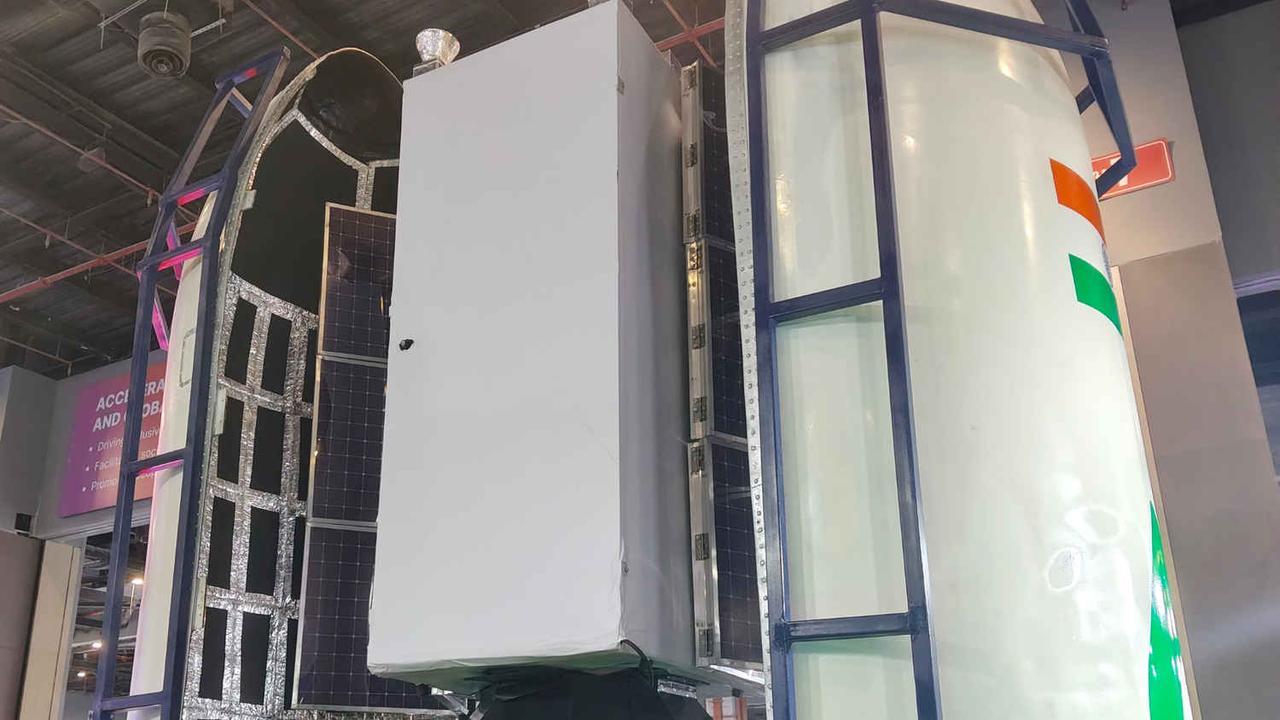
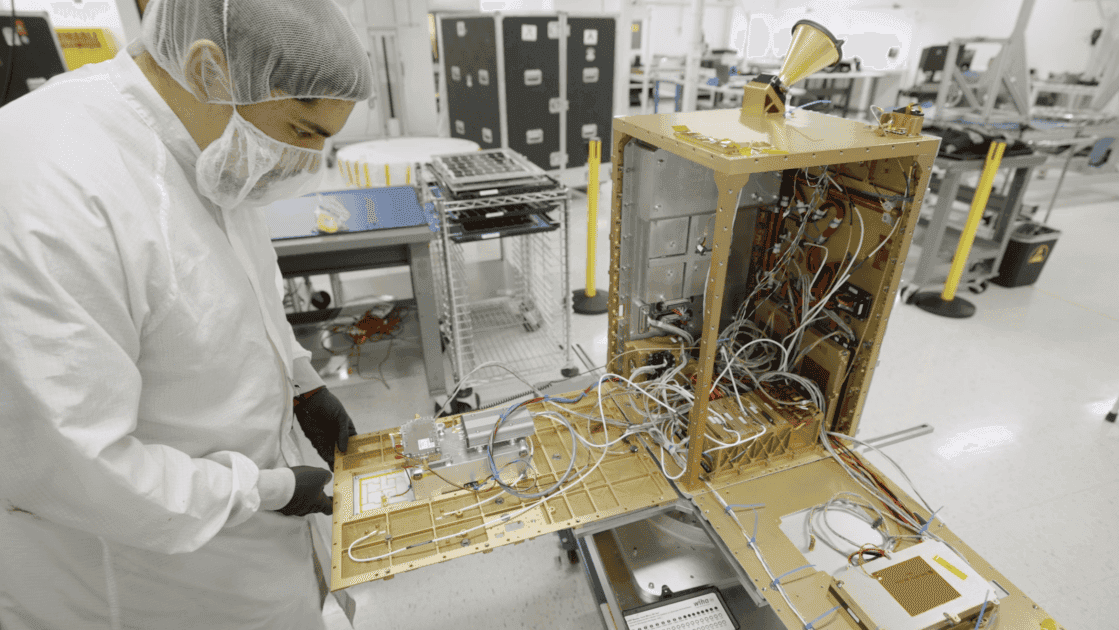
The collaboration between Chennai-based rocket maker Agnikul Cosmos and NeevCloud introduces a novel approach to space computing. Agnikul will host NeevCloud's AI-powered data center on its extended upper stage, the top portion of its launch vehicle that typically releases satellites before being discarded
1
. Srinath Ravichandran, co-founder and CEO of Agnikul Cosmos, explained that their patented technology transforms the upper stage into a hosting station in orbit, creating a shared-hardware model where the rocket's upper stage and the data centre in space operate as a single integrated system1
. "Every other space data centre concept we are hearing about keeps the rocket and the satellite as separate bodies. Here we are sharing hardware. That makes it more cost-efficient, more compact and more controlled," Ravichandran said1
. The launch vehicle will deploy from India, potentially from Sriharikota, with both rocket and data centre hardware manufactured domestically1
.
Source: Digit
Solving the Global AI Latency Gap with Low-Latency AI Infrastructure
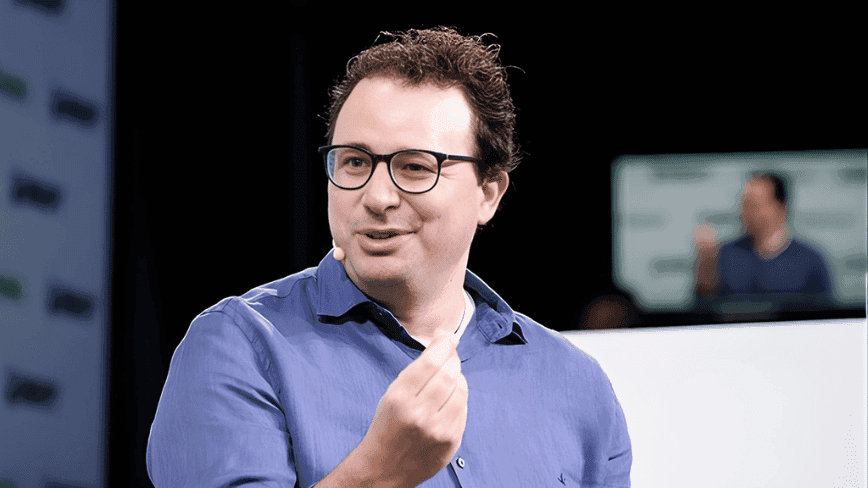
Narendra Sen, founder and CEO of NeevCloud, describes the project as an "orbital inferencing layer" designed to tackle a critical global challenge
3
. Currently, over 80% of the world's population lives more than 200 milliseconds away from the nearest AI data centre, rendering real-time applications like autonomous driving, drone surveillance, border security, remote robotic surgery, and industrial automation unreliable in vast regions2
3
. "AI is growing very fast, but infrastructure is not coming with that speed. We are solving the inferencing problem, not the training problem," Sen explained1
. The focus is on real-time AI inferencing rather than model training, delivering low-latency AI services directly from space1
.
Source: CXOToday
Technical Specifications and Sovereign AI Compute Network Capabilities
The initial mission will carry a total payload of up to 500 kg, with NeevCloud's first satellite configuration weighing 300-350 kg and equipped with approximately 500 high-performance AI chips, storage, and compute systems
1
. Operating at an altitude of 350-500 km in LEO, the satellite will circle the planet approximately 16 times daily1
. According to the companies, a single satellite could handle up to 100,000 concurrent users or process around 10 million AI-driven calls per day, depending on workload intensity1
. The first satellite is estimated to cost about $1 million and will be funded internally1
. NeevCloud plans to scale deployment to 30-40 satellites by 2027, with some sources suggesting expansion to 600+ orbital edge data centers over the next three years1
3
.Related Stories
Energy Consumption and Cooling Advantages Drive Space Computing
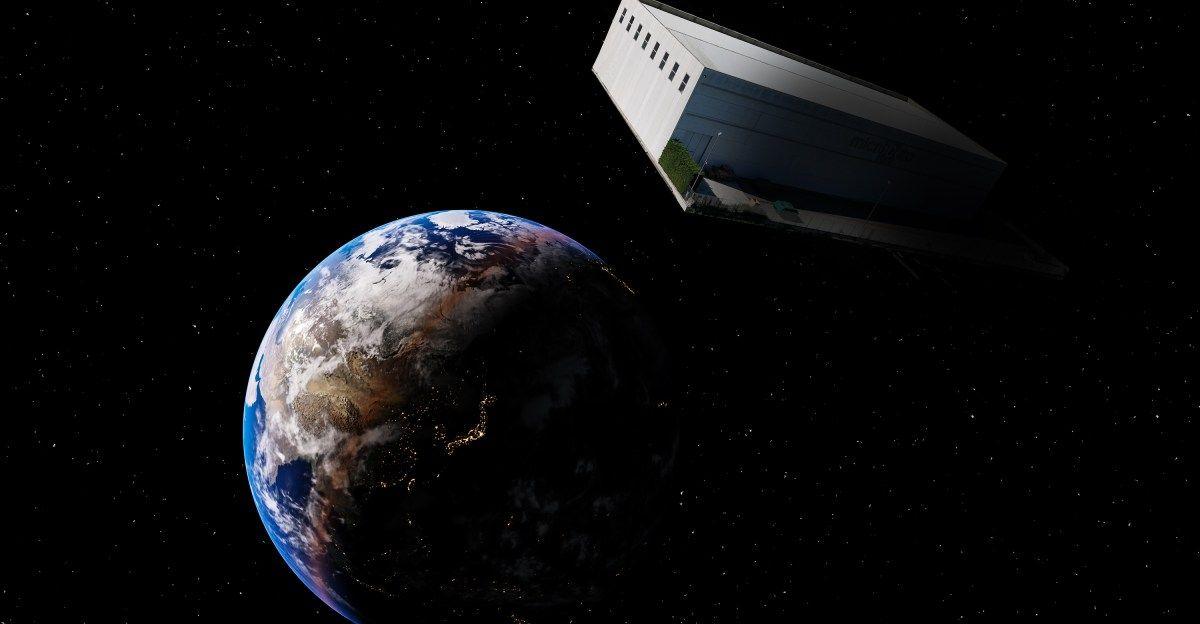
Space offers structural advantages for running high-performance computing systems that address terrestrial limitations. Ravichandran highlighted that cooling data servers is much easier in space due to exposure to near absolute zero temperatures, while solar cells operate more efficiently with direct exposure and larger deployment capacity
1
. NeevCloud's orbital system will draw power entirely from solar panels and store energy in onboard batteries1
3
. By operating from orbit, the model reduces the need for multiple replicated terrestrial edge data centers, cutting GPU duplication, capital expenditure, land use, energy consumption, and cooling infrastructure, while significantly extending the effective utilization and lifespan of high-value AI silicon3
. Narendra explained at the India AI Impact Summit 2026 that traditional data centre construction requires at least 24 months due to land acquisition, power infrastructure, and fiber connectivity challenges4
.Target Markets and Critical AI Workloads Applications
The AI cloud infrastructure targets latency-sensitive and mission-critical use cases rather than general-purpose cloud computing. Sen clarified that the technology is designed for customers who need it and can afford it, particularly in defense, maritime, energy, manufacturing automation, and real-time AI decision-making
3
4
. "Your workload is not critical; you don't need to take the services from the space because it is initially expensive," Sen explained, adding that defense sectors with $100 billion budgets can justify the investment for national security applications4
. The collaboration positions India at the intersection of the $255 billion global AI inference market, growing at a CAGR of 19.2%, and the emerging orbital data center and space-compute economy3
. Each orbital platform is expected to have an operational life of around five years before replacement or upgrades, with NeevCloud's SuperCloud evolving from terrestrial data centers to space-enabled AI ecosystems1
3
.References
Summarized by

Navi
[1]
[3]
Related Stories
Google Announces Project Suncatcher: Ambitious Plan for AI Data Centers in Space
04 Nov 2025•Technology
Tech Giants Push Space Data Centers as AI Demands Outpace Earth's Resources
02 Jan 2026•Technology

Nvidia H100 GPUs Set to Launch Into Orbit as Startups Pioneer Space-Based AI Data Centers
22 Oct 2025•Technology
Recent Highlights
1
Google releases Gemma 4 with Apache 2.0 license, enabling unrestricted local AI on devices
Technology

2
AI Models Lie and Deceive to Protect Other AI Models From Deletion, Study Reveals
Science and Research

3
OpenAI closes $122 billion funding round amid fierce AI competition and profitability questions
Startups

Recent Highlights
Today's Top Stories






Your Daily Dose of Curated AI News
Don’t drown in AI news. We cut through the noise - filtering, ranking and summarizing the most important AI news, breakthroughs and research daily. Spend less time searching for the latest in AI and get straight to action.

