Google Announces Project Suncatcher: Ambitious Plan for AI Data Centers in Space


24 Sources
[1]
Meet Project Suncatcher, Google's plan to put AI data centers in space
The tech industry is on a tear, building data centers for AI as quickly as they can buy up the land. The sky-high energy costs and logistical headaches of managing all those data centers have prompted interest in space-based infrastructure. Moguls like Jeff Bezos and Elon Musk have mused about
[2]
Google has a 'moonshot' plan for AI data centers in space
Google has dreamed up a potential new way to get around resource constraints for energy-hungry AI data centers on Earth -- launching its AI chips into space on solar-powered satellites. It's a 'moonshot' research project Google announced today called Project Suncatcher. If it can ever get off the
[3]
Google exploring putting AI data centers in space -- Project Suncatcher wants to harness in-orbit solar power to scale AI compute
Solar power is much more efficient if there's no atmosphere in the way. Google just announced that it's exploring the idea of putting AI data centers into orbit to take advantage of the sun's solar output for power. According to Google Research, Project Suncatcher aims to have a constellation of
[4]
Google Eyes Space-Based Data Centers With 'Project Suncatcher'
When he's not battling bugs and robots in Helldivers 2, Michael is reporting on AI, satellites, cybersecurity, PCs, and tech policy. Will the next space race feature tech giants rushing to deploy data centers in the sky? Google today announced an effort to launch satellites equipped with the
[5]

Google launches AI hype to the moon with Project Suncatcher
Chocolate Factory's latest moonshot aims to put AI supercomputing cluster in sun-sychronous orbit Google on Tuesday announced a new moonshot - launching constellations of solar-powered satellites packed to the gills with its home-grown tensor processing units (TPUs) to form orbital AI
[6]

Google contemplates putting giant AI installations in low-earth orbit
Putting AI in space may sound like a sci-fi nightmare, but Google is thinking about the idea with a research endeavor called Project Suncatcher. The idea is to put power-hungry data centers into orbit on solar-powered satellites, so they can be powered by unlimited, clean energy available 24 hours
[7]

Google plans orbital AI data centers powered directly by sunlight
Imagine data centers floating in orbit, powered directly by the Sun and running machine learning models beyond Earth's energy constraints. That's Google's bold new moonshot, Project Suncatcher, a research initiative exploring how constellations of solar-powered satellites could one day scale
[8]

Google wants to build AI data centers in space using satellites
A network of solar-powered satellites orbiting the Earth could perform AI computing in the future. It's been hard to avoid tech giant Google's AI ventures lately. You might find all those new AI services and features useful, or you might find them annoying -- but either way, one thing is
[9]

Google's next moonshot is putting TPUs in space with 'Project Suncatcher'
Google is starting a new research moonshot called Project Suncatcher to "one day scale machine learning in space." This would involve Google Tensor Processing Unit (TPU) AI chips being placed onboard an interconnected network of satellites to "harness the full power of the Sun." Specifically, a
[10]

Orbiting AI data centers could become reality following Google's tests
Bench tests achieved 1.6 terabits per second between transceivers in controlled conditions Google's "Project Suncatcher" introduces an ambitious idea: to place fully functional AI data centers in orbit. These orbital platforms would consist of a constellation of compact satellites operating in a
[11]

Google plans to put datacentres in space to meet demand for AI
US technology company's engineers want to exploit solar power and the falling cost of rocket launches Google is hatching plans to put artificial intelligence datacentres into space, with its first trial equipment sent into orbit in early 2027. Its scientists and engineers believe tightly packed
[12]

Eyes turn to space to feed power-hungry data centers
Tech firms are floating the idea of building data centers in space and tapping into the sun's energy to meet out-of-this-world power demands in a fierce artificial intelligence race. US startup Starcloud this week sent a refrigerator-sized satellite containing an Nvidia graphics processing unit
[13]

Meet Project Suncatcher, a research moonshot to scale machine learning compute in space.
Artificial intelligence is a foundational technology that could help us tackle humanity's greatest challenges. Now, we're asking where we can go next to unlock its fullest potential. Today we're announcing Project Suncatcher, our new research moonshot to one day scale machine learning in space.
[14]

Eyes turn to space to feed power-hungry data centers
New York (AFP) - Tech firms are floating the idea of building data centers in space and tapping into the sun's energy to meet out-of-this-world power demands in a fierce artificial intelligence race. US startup Starcloud this week sent a refrigerator-sized satellite containing an Nvidia graphics
[15]

Google to launch TPU-equipped satellites in 2027 - SiliconANGLE
Google LLC today detailed Project Suncatcher, an initiative to launch artificial intelligence chips into orbit aboard satellites. One of the main motivations behind the project is that solar panels generate significantly more power in space than on Earth. Moreover, there's no need for batteries.
[16]

Google Is Sending Its TPUs to Space to Build Solar-Powered Data Centres | AIM
Google has announced a new research initiative, Project Suncatcher, which aims to explore the feasibility of scaling artificial intelligence (AI) compute in space using solar-powered satellite constellations equipped with Tensor Processing Units (TPUs). "Inspired by our history of moonshots, from
[17]

A startup backed by Nvidia wants to build AI data centers in space
The company argues that space offers cheaper energy and cooling compared to Earth's resource-hungry data centers. Starcloud plans a November launch of an Nvidia H100 GPU into orbit to test its functionality, aiming for extraterrestrial data centers as an alternative to Earth-based
[18]

Google aims for the stars - literally - with new 'moonshot' project
TL;DR: Google's Project Suncatcher aims to develop space-based data centers to leverage unlimited solar energy and the vacuum of space as a natural heatsink, reducing energy costs significantly. Overcoming challenges like high-speed satellite connections and radiation-hardened hardware is key to
[19]
Google plans orbital AI data centers powered by the sun
Project Suncatcher explores using space-based solar energy to run AI workloads, reducing emissions and energy costs from Earth's data centers. Google announced Project Suncatcher, a research initiative to launch AI chips into space aboard solar-powered satellites, aiming to establish orbital data
[20]

Google to test building AI data centres in space
Google plans to launch AI data centers into space by 2027. These solar-powered satellites will use proprietary AI chips. The project aims to leverage constant sunlight and vacuum cooling for efficiency. This initiative pushes Google's deeptech research boundaries. Other companies like SpaceX are
[21]

'Great Idea Lol,' Says Elon Musk As Sundar Pichai Reveals Plan To Launch Google's AI Data Center Into Space - Alphabet (NASDAQ:GOOG), Alphabet (NASDAQ:GOOGL)
A lighthearted exchange between Alphabet Inc. (NASDAQ:GOOG) (NASDAQ:GOOGL) CEO Sundar Pichai and SpaceX chief Elon Musk followed Google's bold new plan to build the world's first AI data center in space. Google's Project Suncatcher Takes AI Beyond Earth On Tuesday, in a post on X, formerly
[22]
Google unveils 2027 plan: Launch solar-powered AI data centres into space - here's how it'll work
Google AI data centres in space: Google is planning to launch AI datacenters into space with solar-powered satellites by early 2027, aiming to address the growing demand for AI computing power. This initiative, Project Suncatcher, could offer cost-effective and environmentally beneficial solutions
[23]

Project Suncatcher: Google's crazy plan to host an AI datacenter in space explained
Google tests satellite-linked TPUs to run machine learning in space When Google calls something a "moonshot," it's rarely just a metaphor. Its latest experiment - Project Suncatcher - quite literally looks beyond Earth. Google has outlined an idea that sounds like it's ripped from a sci-fi
[24]
Google wants to take AI to space with solar-powered data centres
Google plans to launch two prototype satellites with Planet Labs by 2027 to test the system in orbit. Google has announced Project Suncatcher, a research initiative that explores the concept of solar-powered AI data centres orbiting in space. The concept proposes compact constellations of
Share
Copy Link
Google unveils Project Suncatcher, a moonshot initiative to deploy solar-powered satellites equipped with TPUs in space-based data centers. The project aims to harness continuous solar power and overcome terrestrial energy constraints for AI computing.
Google's Ambitious Space-Based AI Vision
Google has unveiled Project Suncatcher, an ambitious "moonshot" initiative aimed at deploying AI data centers in space using solar-powered satellites equipped with the company's Tensor Processing Units (TPUs). The project represents a bold attempt to address the mounting energy constraints and infrastructure challenges facing terrestrial AI data centers
1
.
Source: Digit
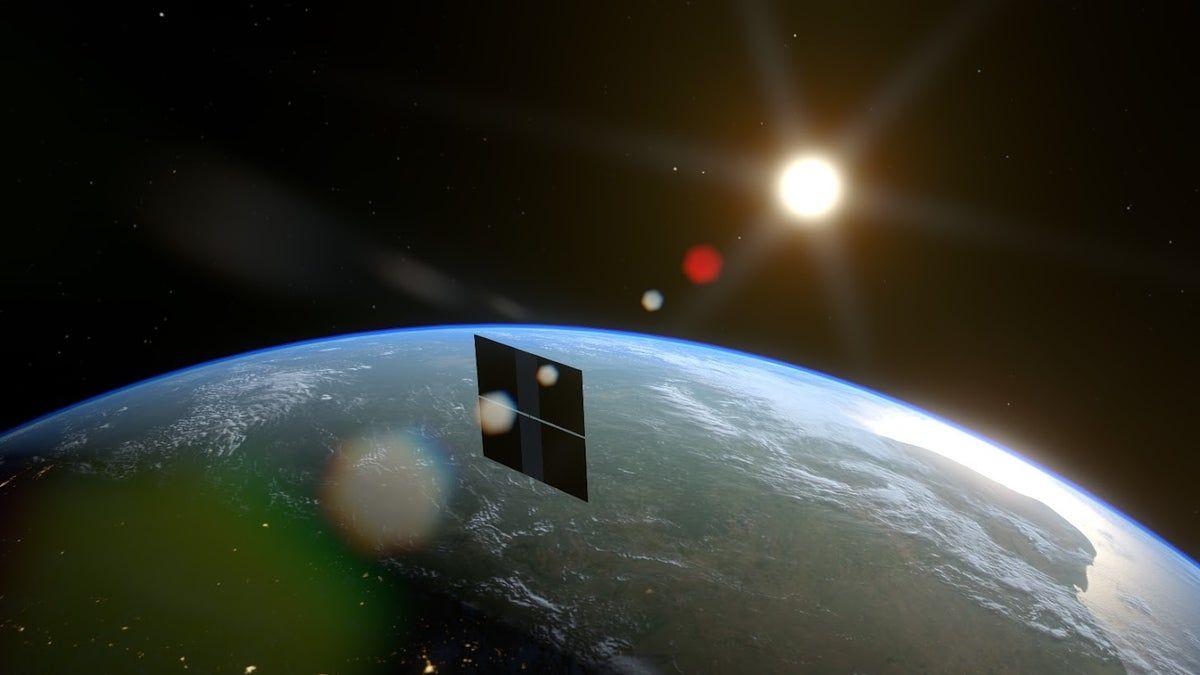
The concept involves placing satellites in a dawn-dusk sun-synchronous low-earth orbit, ensuring nearly constant sunlight exposure. This orbital positioning would allow solar panels to operate at up to eight times the efficiency of Earth-based installations, providing a continuous source of clean energy for power-hungry AI computations
3
.
Source: The Register
Technical Challenges and Engineering Solutions
The project faces significant engineering hurdles that Google acknowledges will require years to overcome. One of the primary challenges involves maintaining high-speed communication between orbiting satellites. Unlike terrestrial data centers that rely on optical fiber connections, Project Suncatcher would need wireless solutions capable of operating at tens of terabits per second
1
.Google has demonstrated early success with bidirectional speeds up to 1.6 Tbps in Earth-based testing, but scaling this technology for space presents unique obstacles. The physics of signal transmission requires satellites to maintain extremely close proximity—within a kilometer or less—to achieve the necessary power levels. Google's simulations suggest satellites positioned several hundred meters apart would require only "modest station-keeping maneuvers"
1
.
Source: Tom's Hardware
Radiation resistance represents another critical challenge. Space-based electronics face constant bombardment from solar radiation and cosmic rays. Google has been testing its latest v6e Cloud TPU (Trillium) chips using a 67MeV proton beam to simulate space conditions. Results showed that while memory components were most vulnerable, TPUs could handle approximately three times the expected radiation dose before experiencing data corruption
1
.Timeline and Economic Projections
Google plans to launch two prototype satellites by early 2027 in partnership with satellite company Planet Labs
4
. These initial missions will test the viability of TPUs in space and validate the communication systems necessary for distributed computing.The economic feasibility of the project hinges on dramatic reductions in launch costs. Current launch prices make space-based data centers prohibitively expensive, but Google projects that costs could fall to as low as $200 per kilogram by the mid-2030s. At this price point, space-based data centers could become economically comparable to terrestrial facilities on a per-kilowatt basis
4
.Related Stories

Industry Context and Competition
Google's announcement comes amid growing interest from other tech giants in space-based computing infrastructure. SpaceX CEO Elon Musk recently indicated his company's intention to build orbiting data centers, leveraging the existing Starlink satellite constellation
4
. Amazon founder Jeff Bezos has also predicted that gigawatt-scale data centers will fill Earth's orbit within two decades5
.The startup Starcloud has already achieved a milestone by successfully launching its first test satellite equipped with an Nvidia AI GPU, demonstrating that the concept is moving from theoretical to practical implementation
4
.Environmental and Practical Implications
Project Suncatcher addresses several pressing issues with terrestrial data centers, which are increasingly viewed as environmentally problematic due to their massive energy consumption and water usage. Many communities now oppose new data center construction due to concerns about power grid strain and utility cost increases
3
.However, space-based solutions introduce their own concerns, including increased orbital debris and potential interference with astronomical observations. The project would require managing dense satellite constellations in formations tighter than any currently operational system
5
.References
Summarized by

Navi
[3]
[5]
Related Stories
Nvidia H100 GPUs Set to Launch Into Orbit as Startups Pioneer Space-Based AI Data Centers
22 Oct 2025•Technology
AI Trained in Space as Tech Giants Race to Build Orbiting Data Centers Powered by Solar Energy
11 Dec 2025•Technology
Google Plans Space Data Centers to Power AI with Solar Energy, Targets 2027 Launch
02 Dec 2025•Technology
Recent Highlights
1
Meta Unveils Muse Wonder Frontier AI Models, Claims Performance Matching OpenAI and Anthropic
Technology

2
IMF Report Warns AI Market Correction Could Spark Global Financial Crisis With $1.4T at Risk
Business and Economy

3
OpenAI Releases 722 AI-Generated Math Solutions, Triggering Existential Crisis in Mathematics
Technology

Recent Highlights
Today's Top Stories








Don’t drown in AI news. We cut through the noise - filtering, ranking and summarizing the most important AI news, breakthroughs and research daily. Follow topics that matter to you and stay ahead.


