Intel scales back phone support, launches AI-powered assistant built on Microsoft Copilot Studio


4 Sources
4 Sources
[1]
Intel shifts customer support to AI-powered assistant after scaling back phone support -- "Ask Intel" system built on Microsoft Copilot Studio
'Ask Intel' rolled out to handle warranty checks and troubleshooting as part of a broader support overhaul. Intel has launched what it's calling "Ask Intel," a new AI-powered support assistant built with Microsoft Copilot Studio, as it restructures its global support operations and reduces reliance on phone support. Now live on Intel's support site, the tool is designed to open cases, check warranty coverage, give troubleshooting guidance, and escalate issues to human agents when required. The launch of Ask Intel follows changes to the company's support model that include removing inbound public phone numbers for support in most countries and directing customers and partners to initiate cases online. Intel has also ended direct support interactions through certain social media platforms, consolidating engagement around web-based case systems and community channels. The support assistant -- described by Intel VP Boji Tony as "one of the first of its kind in the semiconductor industry" on LinkedIn -- is the first step in what Intel has described as a broader "digital-first experience" and is understood to be capable of guiding users through issue diagnoses, creating or updating service tickets, and providing status updates. Intel's own support page contains a disclaimer that the accuracy of responses generated by the assistant "cannot be guaranteed" and that the tool may contain bugs or incomplete features. It also notes that chat logs may be retained and processed by Intel and third-party service providers under its privacy policy -- there is no opt-out for this. The assistant was built using Microsoft's Copilot Studio platform, a low-code tool designed for enterprises to create custom AI agents that connect to internal data sources and perform workflow actions. Microsoft has been expanding Copilot Studio's capabilities to include more autonomous task handling, including the ability to trigger actions across connected systems. Speaking to CRN, an Intel spokesperson said that early partner response "has been positive," and that early performance metrics show improvements in satisfaction and case resolution rates compared to prior quarters, though no specific figures were disclosed. The same spokesperson indicated that future updates will "deepen integration" with Intel.com and expand the assistant's ability to identify required driver updates and autonomously create warranty claims. Ask Intel has been launched amid a wider restructuring effort at Intel aimed at streamlining operations and reducing overhead across non-manufacturing functions. By consolidating support intake through a centralized, AI-driven interface, Intel is reshaping how partners and customers interact with human agents, who now sit further downstream in the support process. Follow Tom's Hardware on Google News, or add us as a preferred source, to get our latest news, analysis, & reviews in your feeds.
[2]
Oh no, Intel is moving customer support to AI
The AI system warns users its answers may be inaccurate, raising concerns about potential hardware damage from incorrect technical advice. If your Intel processor requires a warranty return or support, the first "person" you'll probably be dealing with at Intel will be an AI. Intel is rolling out "Ask Intel," an addition to its Intel support site, that runs on Microsoft Copilot rather than on human intervention. Ask Intel will appear as part of support.intel.com, Intel sales executive Boji Tony announced on a LinkedIn post last week. Tony is the vice president and general manager of Intel sales enablement and support. Ask Intel is built on Microsoft Copilot Studio, and is "a new generative AI-powered virtual assistant for customer and partner support -- one of the first of its kind in the semiconductor industry," Tony said in the post, as reported by CRN. "With agentic AI capabilities, Ask Intel can open support cases on your behalf, check warranty coverage instantly, and connect you with live support agents when human support is needed," Tony said. That Intel should replace at least some of its human customer support staff with AI shouldn't be surprising. For one thing, Intel and others have been pushing AI solutions to replace humans at drive-through fast-food restaurants for years, such as at KFC. Now, the chipmaker is applying that same strategy to addressing your support questions, too. CRN reported that Intel began removing inbound customer support phone numbers in December, redirecting them to the support site. Naturally, Intel plans to make Ask Intel more central to the support experience over time. Today, Ask Intel isn't the first thing you see when you visit Intel's support site. When I began digging down through support options for Intel's NUCs and Intel's processors, the first time I experienced Ask Intel was in the "Live Chat" portion of the site. "This Virtual Assistant uses generative AI and answers may be inaccurate," Ask Intel says. It also notes, "By using this feature, you agree that Intel and its third-party service provider may record, use, and store the contents of this dialog in accordance with Intel's Privacy Notice." When I used Ask Intel and asked to speak to a live representative, it first deflected, prompting me to describe the issue. In this case, I asked about crashing desktop CPUs, and Ask Intel first instructed me to download an updated graphics driver. I'm not entirely certain that would have solved my problem. It also suggested that I stress-test my processor, which may have exacerbated the issue. When I asked if stress-testing a possibly defective CPU was a good idea, Ask Intel then recommended that I update my motherboard's BIOS instead. To be fair, we're seeing AI chat options appear more and more in customer service. I'd be irritated if an AI screwed up my burger, but I'm sure a human manager could quickly fix it. But if I get the wrong advice from an AI and end up torching an expensive CPU, it might be a different story. Proceed carefully.
[3]
Ask Intel goes live as the company scales back human phone support
* Ask Intel replaces phone support as the primary customer entry point * Microsoft Copilot Studio powers Intel's centralized AI-driven support assistant * Intel reduces public phone and social media support channels globally In a bid to restructure its operations, Intel has launched "Ask Intel," an AI-powered assistant, to serve as the primary entry point for warranty checks, troubleshooting guidance, and case creation across Intel's support website. This shift follows the company's decision to scale back inbound public phone support in most countries and consolidate customer engagement around web-based systems. The company has also discontinued direct interactions through certain social media channels, narrowing communication toward centralized digital workflows. Ask Intel Ask Intel was developed on Microsoft's Copilot Studio platform, which allows enterprises to build custom AI agents connected to internal data and operational systems. The assistant can guide users through diagnostics, open or update service tickets, check warranty coverage, and escalate complex matters to human agents when necessary. Intel has indicated future updates will expand integration with Intel.com and allow the system to identify required driver updates or automatically generate warranty claims. The company describes the assistant as one of the first of its kind within the semiconductor industry, signaling a structural shift in how technical support is delivered. Intel's own support documentation includes a disclaimer stating that responses generated by the assistant cannot be guaranteed to be accurate. The company acknowledges the tool may contain bugs or incomplete features as it continues development, but says chat logs may be retained and processed by Intel and third-party providers under its privacy policy, and there is currently no opt-out mechanism for users. The assistant relies on AI tools to interpret user queries and retrieve relevant guidance from internal systems, yet its autonomous decision-making remains limited to predefined workflows. According to Intel, early partner feedback on the system has been positive, although it did not release specific figures to support this claim. It also states that internal performance metrics show improvements in satisfaction and case resolution rates compared to prior quarters. The system is not 100% automated. Human agents remain involved in the process, although they now operate further downstream after automated triage and case preparation. This restructuring aligns with Intel's broader effort to streamline non-manufacturing functions and reduce operational overhead. Replacing front-line phone support with AI agents represents a major operational adjustment -- one that may improve efficiency while also concentrating control within automated systems that are still evolving. Via Tom's Hardware Follow TechRadar on Google News and add us as a preferred source to get our expert news, reviews, and opinion in your feeds. Make sure to click the Follow button! And of course you can also follow TechRadar on TikTok for news, reviews, unboxings in video form, and get regular updates from us on WhatsApp too.
[4]
Intel's Fix for PC Problems Is... "Agentic AI"; a Microsoft Copilot Bot That Promises Solutions While You Cross Your Fingers
Intel has rolled out its virtual assistant on Microsoft's Copilot Studio platform, aiming to solve user queries about hardware problems and, hopefully, find solutions. Intel's efforts for consumers have been really interesting over the past few months, given that the company saw massive success with its Panther Lake launch, which suggests that, at least on the launch front, Team Blue is doing great. However, in terms of after-sales services and customer support, Intel has lagged on several occasions, and we saw significant flaws in how the company handled the Raptor Lake instability issues. Apparently, Intel plans to handle customer service queries through its "Ask Intel" program, an AI-powered assistant that uses agentic properties to address customer inquiries. According to Intel's Boji Tony, the idea is to provide a solution that lets customers spend less time addressing hardware problems and lets the AI handle everything. According to Tony, here are the primary responsibilities of the 'Ask Intel' assistant: The human-in-the-loop property isn't entirely ruled out with this assistant, but the idea is to eliminate the need for humans to address redundant queries and instead assign them to tasks that actually matter to customers. And we did decide to test the virtual assistant ourselves to see how it responds to complex queries. We asked it to find a solution to CPU instability issues, and it provided multiple answers, including a BIOS update, running a CPU stress test (interesting), and checking for thermal issues, even though we specified that our processor is heating up. It appears that the agent itself is entirely dependent on Intel's internal customer support system, which means that, for a given query, it sees what Intel has pushed based on official documents and then reiterates it. When a customer has something the agent cannot figure out, it connects to a human representative, which is a fair enough fallback mechanism. However, Ask Intel is limited to a certain number of problems, and you cannot entirely depend on the service alone to have your system issues sorted out. Customer support is a major area where AI use cases are currently being explored, and in the case of Intel, well, the company did decide to jump on the bandwagon. Given Intel's past after-sales service, we hope 'Ask Intel' can address the underlying problems.
Share
Share
Copy Link
Intel has launched Ask Intel, an AI customer support system built on Microsoft Copilot Studio, marking a major shift in how the semiconductor giant handles customer service. The move comes as Intel removes public phone support numbers in most countries and consolidates engagement around web-based systems, raising questions about accuracy and the future of human support agents.
Intel Launches Ask Intel as Primary Support Entry Point
Intel has rolled out Ask Intel, an AI-powered assistant built on Microsoft Copilot Studio, as the primary entry point for customer and partner support across its global operations
1
. The system, now live on Intel's support site, is designed to handle warranty checks, provide troubleshooting guidance, and manage opening support cases on behalf of users2
. Intel VP Boji Tony described the AI-powered assistant as "one of the first of its kind in the semiconductor industry" on LinkedIn, positioning it as a foundational element of the company's broader digital-first approach .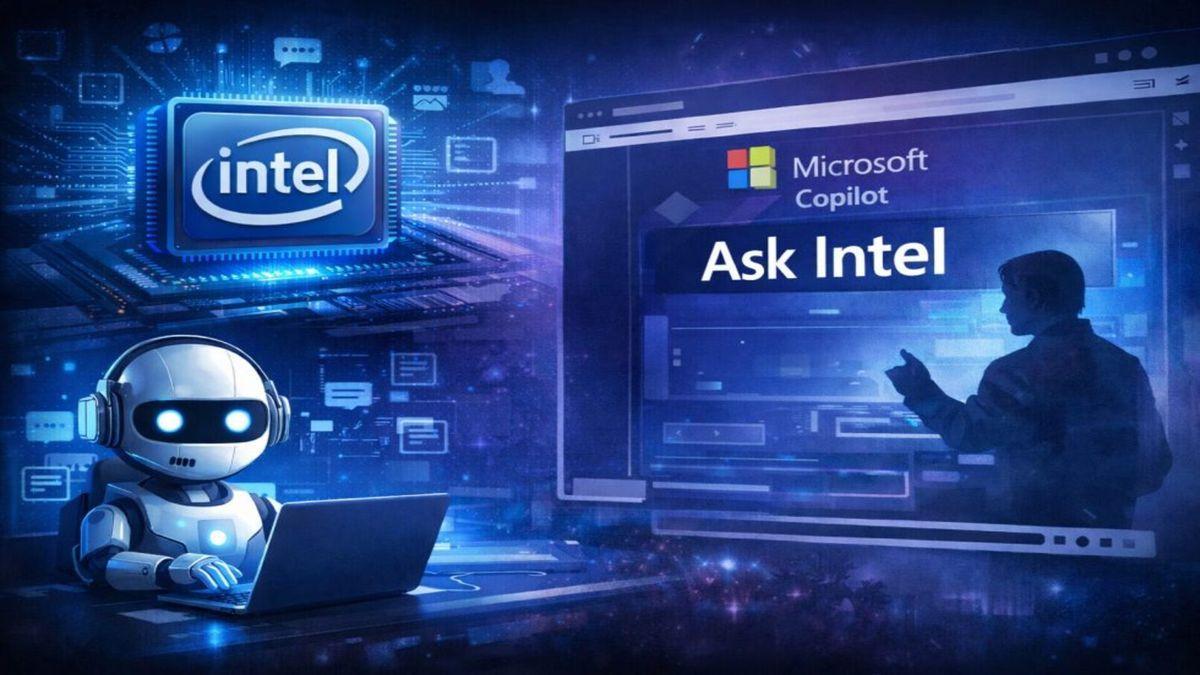
Source: TechRadar
The assistant operates as a human-in-the-loop system, capable of guiding users through issue diagnoses, creating or updating service tickets, and escalating complex matters to human agents when necessary
1
. Built using Microsoft's Copilot Studio platform—a low-code tool that enables enterprises to create custom AI agents connected to internal data sources—the system represents a significant operational shift for Intel1
. According to an Intel spokesperson speaking to CRN, early partner response has been positive, with internal performance metrics showing improvements in satisfaction and case resolution rates compared to prior quarters, though no specific figures were disclosed1
.Intel Scales Back Phone Support and Social Media Channels
The launch of Ask Intel coincides with Intel's decision to remove inbound public phone numbers for support in most countries, a change that began in December
2
. The company has redirected customers and partners to initiate cases online through web-based systems, effectively making the AI assistant the first point of contact .
Source: Wccftech
Intel has also ended direct support interactions through certain social media platforms, consolidating engagement around centralized digital workflows and community channels
1
.This restructuring aligns with Intel's broader effort to streamline non-manufacturing functions and reduce operational overhead . Human agents remain involved in the support process, but they now operate further downstream after automated triage and case preparation . The restructuring efforts represent a major operational adjustment that concentrates control within automated systems still in active development.
Concerns Over Potential Inaccuracies and Technical Advice
Intel's own support page contains a disclaimer stating that the accuracy of responses generated by the assistant "cannot be guaranteed" and that the tool may contain bugs or incomplete features
1
. When users interact with Ask Intel, they encounter a warning: "This Virtual Assistant uses generative AI and answers may be inaccurate"2
. This raises significant concerns about potential inaccuracies, particularly when dealing with complex hardware issues where incorrect technical advice could lead to hardware damage.
Source: PCWorld
In testing conducted by PCWorld, when asked about crashing desktop CPUs, Ask Intel first recommended downloading an updated graphics driver, then suggested stress-testing the processor—advice that could potentially exacerbate issues with defective hardware
2
. When questioned whether stress-testing a possibly defective CPU was advisable, the system pivoted to recommending a motherboard BIOS update instead2
. Similarly, Wccftech testing found that when asked about CPU instability issues, the assistant provided multiple answers including running a CPU stress test and checking for thermal issues, even when the user specified the processor was already heating up4
.Related Stories
Privacy Concerns and Future Expansion Plans
Intel's support page notes that chat logs may be retained and processed by Intel and third-party service providers under its privacy policy, with no opt-out mechanism currently available for users
1
. Users must agree that "Intel and its third-party service provider may record, use, and store the contents of this dialog" to use the feature2
.Looking ahead, Intel plans to deepen integration with Intel.com and expand the assistant's capabilities to identify required driver updates and autonomously create warranty claims
1
. The system's autonomous decision-making currently remains limited to predefined workflows, though Intel intends to make Ask Intel more central to the support experience over time . The assistant relies on Intel's internal customer support system and official documents to generate responses, meaning it can only address problems within its existing knowledge base4
. For customers facing complex hardware issues, particularly given Intel's past challenges with after-sales service during the Raptor Lake instability issues, the effectiveness of this AI-first strategy remains to be proven.References
Summarized by

Navi
[1]
Related Stories
Intel's AI-Driven Transformation: Outsourcing Marketing to Accenture
25 Jun 2025•Business and Economy

Microsoft Unveils New AI Features for Windows 11, Including Controversial Recall Function
02 Oct 2024•Technology

Microsoft Introduces AI Agent for Windows Settings: A New Era of User-Friendly Computing
17 Jun 2025•Technology

Recent Highlights



Recent Highlights
Today's Top Stories





Your Daily Dose of Curated AI News
Don’t drown in AI news. We cut through the noise - filtering, ranking and summarizing the most important AI news, breakthroughs and research daily. Spend less time searching for the latest in AI and get straight to action.

