Qatar's Helium Crisis Threatens Chip Supply Chains as Iran Strikes Cut Off Third of Global Supply


3 Sources
3 Sources
[1]
Iran war cuts off helium from Qatar, and shortages will start to bite in a few weeks, threatening chip supply chains that fuel the AI boom | Fortune
Iran's attack this week on Qatar's natural gas export facility threatens to disrupt not just world energy markets but also global technology supply chains because the helium it produces is crucial for a range of advanced industries. Best known as the gas that makes party balloons float, helium is also a key input in chipmaking, space rockets and medical imaging. Qatar supplies a third of the world's helium, according to the U.S. Geological Survey, but the nation had to halt production shortly after the war erupted three weeks ago. The latest Iranian strikes against the region's energy producing infrastructure have added to supply worries, with Qatar's state-owned gas company saying it would crimp helium exports by 14%. Here's a deeper look at helium's industrial role: Helium is a byproduct of natural gas production, when it's separated out by cryogenic distillation. Qatar, which sits on the world's biggest single natural gas field, produces about 30% of global helium supply, according to the U.S. Geological Survey. Qatar's helium is produced at its Ras Laffan facility, the world's largest liquefied natural gas plant. But state-owned energy company QatarGas halted production of LNG and "associated products" on March 2 because of Iran's drone attacks and two days later declared force majeure, meaning it's unable to supply contracted customers due to circumstances beyond its control. After Ras Laffan was hit again by more Iranian strikes on Wednesday and Thursday, QatarGas reported "extensive" damage that will take years to repair and cut annual helium exports by 14%. "It makes the story worse," said Phil Kornbluth, president of Kornbluth Helium Consulting. "Your best case scenario would be you're back producing some helium in six weeks or something like that. As it looks right now, that's highly unlikely." Spot prices for helium have doubled since the crisis erupted and will probably rise further, Kornbluth said. But spot trading only accounts for about 2% of the total market in normal times, he said. Helium is a thinly traded commodity and is mostly sold through long-term contracts. Still, contract prices "could go up a lot," Kornbluth said. "There's lots of room for price increase if this is an extended outage." Kornbluth said the shortage hasn't hit yet, because helium containers that would have been filled when the conflict erupted at the start of March would have still taken several weeks to arrive in Asia. "Nobody's run out of helium yet. But it's a few weeks out when the shortage really hits." Helium is essential for manufacturing semiconductors, including the cutting-edge chips used for artificial intelligence models produced in Asian fabrication plants. It's great at conducting or transferring heat, making it ideal for rapid cooling. Chipmakers use it to cool wafers -- the discs of silicon printed with tiny electronic circuits. Helium is used during the etching process, when material that's been deposited on a wafer is scraped away to form transistor structures, said Jacob Feldgoise, an analyst at Georgetown University's Center for Security and Emerging Technology. During the etching process, "you really want to maintain a constant temperature over the wafer. And in order to do that, you need to be able to draw heat away from the wafer that's being processed," said Feldgoise. "Helium is an excellent thermal conductor. And so chip fabs will blow helium over the back of the wafer in order to speed heat removal and keep heat removal consistent." Under current semiconductor manufacturing processes, there's no viable replacement for helium to cool wafers, said Jong-hwan Lee, a professor of semiconductor devices at South Korea's Sangmyung University. The medical industry uses helium to cool superconducting magnets powering magnetic resonance imaging machines. And the space industry uses helium to purge rocket fuel tanks, a demand that is expected to grow because of more frequent launches by companies like SpaceX and Blue Origin. Helium's atomic properties make it tricky to store and transport. In gas form, helium's tiny molecules can easily escape containers by leaking through even the smallest of gaps. Helium is typically chilled by Qatar's gas company into liquid form and stored in insulated containers for transport through the Strait of Hormuz. The specialized containers can store helium for 35 to 48 days. Any longer and they start warming up, letting the helium transform into gas that escapes through pressure release valves. About 200 of these containers are stuck in the Middle East, Kornbluth said. They cost about $1 million each, so there aren't a lot of extra ones sitting around elsewhere. "It's going to take a fair amount of time to get these containers out of Qatar and to get them somewhere else where they might be able to be filled with helium," he said. "So this initial period when you lose Qatar supply and have to rejig the supply chain and reposition containers, that's going to be the worst part of the shortage most likely." There only are a handful of countries that produce helium. The United States is the biggest producer, accounting for 81 million cubic meters last year. Qatar, Algeria and Russia are the other major producers, but Russian supplies are banned under Under States and European Union sanctions. USGS estimates the United States has 8.5 billion cubic meters of recoverable helium in geologic reservoirs, while the rest of the world has 31.3 billion cubic meters. The war highlights the sprawling global supply chains that underpin South Korea's semiconductor industry, which has seen a surge in global demand for its chips amid the AI boom. Fitch Ratings said in a report this week that the country -- home to Samsung Electronics and SK Hynix, the world's largest memory chip makers -- is particularly vulnerable to supply shortages because it imports about 65% of its helium from Qatar. Samsung Electronics and SK Hynix likely have several months of inventory, but it's crucial that they accelerate efforts to secure alternative sources, Lee said, as the war could drag on and potentially disrupt supplies of more materials beyond helium. Helium is among 14 semiconductor supply chain materials the Seoul government has flagged for monitoring due to their heavy vulnerability to the war. "Even disruptions affecting just a handful of materials could destabilize the entire semiconductor manufacturing process as each stage of production depends on the previous one," Lee said. Still, a full-blown helium crisis is unlikely, experts said. In the event of a shortage, Kornbluth said the helium industry allocates supplies based on importance so critical industries such as chipmaking and medical would be at the front of the line. And because helium is a small part of the overall production cost of a semiconductor, it's likely that chip fabs "would be willing to pay a higher price" to secure supplies, Feldgoise said. Samsung and SK Hynix declined to respond to questions about inventory or plans to diversify supplies. The Korea Semiconductor Industry Association said short-term supplies are sufficient and companies have been diversifying their supply routes. Chipmaking giant Taiwan Semiconductor Manufacturing Company also said it does not "anticipate any significant impact at this time" but will continue monitoring the situation.
[2]
The Balloon Explosion Nobody Saw Coming | Investing.com UK
The world's most advanced technology depends on one of the universe's simplest elements, a noble gas so abundant in the universe that it ranks as the second most common element: helium. Essential for AI chips, GPUs, and semiconductors, its market is now tightening as the Iran conflict begins to disrupt global supply. Helium sits at the intersection of energy and technology. It is not produced independently, but extracted as a by-product of natural gas, making its supply dependent on a limited number of locations and industrial processes. This creates a market where availability does not always align with demand, and where small disruptions can have outsized effects. A third of the global commercial helium supply depends on Qatar, with exports passing through the Strait of Hormuz. As tensions rise, this structure leaves the market exposed, with implications for semiconductors, healthcare, and advanced industrial systems. Helium is the second most abundant element in the universe after hydrogen, making up about 24% of its total mass. Even though it's very common in stars and gas giants, it's quite rare in the earth's atmosphere because it's so light that it easily escapes into space. On earth, helium is mostly extracted from natural gas deposits, where it forms because of radioactive decay over time. This gas is colourless, odourless, tasteless, and considered monatomic noble gas. It is the second-lightest element, and it is used across a wide range of critical applications, including cooling silicon wafers during chip fabrication, supporting semiconductor lithography (especially EUV machines), powering MRI machines in hospitals, enabling quantum computers that operate at extremely low temperatures, facilitating fibre optic cable production, and even in space rockets. These applications rely on helium's unique physical properties: complete inertness, an ultra-low boiling point of -268.9 °C, and unmatched thermal conductivity at industrial scale. According to Reuters, industry experts stress that helium is "essential for heat management during semiconductor production" and currently has no practical alternatives. Source: USGS A large part of the demand for Helium comes from the semiconductor industry. According to the United States Geological Survey (USGS), they account for around 17% of US helium consumption in 2025. At the same time, the relationship between semiconductor activity and helium supply is not straightforward. Despite ongoing expansion in chip manufacturing, merchant helium sales volumes declined in 2025, reflecting weaker global demand conditions. This highlights a disconnect between rising fab utilisation, driven by AI and advanced nodes, and the underlying dynamics of the helium market. Despite ongoing expansion in semiconductor manufacturing, merchant helium sales volumes declined in 2025 due to lower global demand, highlighting a gap between AI-driven fab utilisation growth and helium availability. According to the AKAP Energy report, helium's market development follows trends like other specialised energy-transition commodities, such as lithium and cobalt. Source: FMI Recycling offers only limited relief. USGS data shows that large-scale helium applications in the US rarely rely on recycling, and global practices remain inconsistent. Even in advanced semiconductor fabs, recovery rates typically do not exceed 80-90%, leaving a continued reliance on fresh helium supply. Air Products also notes that recycling has a limited impact on overall availability, reinforcing the structural dependence on primary production. Helium prices remain tied to natural gas production rather than semiconductor investment cycles, as highlighted by Air Products. As a result, supply does not necessarily respond to shifts in demand from high-growth sectors. A notable example is the roughly 2% decline in Asia merchant helium pricing in 2025, despite rising advanced-node utilisation. This suggests that inventory buffers and allocation mechanisms can smooth short-term fluctuations, but do not address underlying supply constraints. The escalation of the Iran conflict in late February led to targeted strikes on Qatar's Ras Laffan Industrial City, the world's largest LNG export hub and the single biggest concentration of helium production. Within days, QatarEnergy declared force majeure and halted operations across its 77 mtpa LNG facilities. As helium is extracted during natural gas processing, the shutdown immediately translated into a loss of supply. The impact is amplified by Qatar's dominant position in the market. In 2025, the country produced around 63 million cubic meters of helium, accounting for roughly one-third of global supply. More than 80% of this output originates from Ras Laffan, making the site a clear single point of failure in the global system. At the same time, exports have been effectively frozen. The Strait of Hormuz, through which nearly all Qatari helium is shipped, has become increasingly unsafe following attacks on vessels and rising security risks. As a result, even helium that has already been processed remains stranded, with no viable route to international markets. The scale of the disruption is immediate. Around 5 million cubic meters of monthly supply has been taken offline, with no meaningful short-term replacement. Unlike other commodities, helium cannot be easily stockpiled due to boil-off constraints, and global spare capacity remains limited after years of tight balances. Prices reacted accordingly. Spot helium prices surged within days, as buyers rushed to secure volumes. Early signals point to increases of around 50% in the spot market, according to Phil Kornbluth (Kornbluth Helium Consulting). This dynamic is reinforced by the structure of the market itself, where most volumes are sold through long-term contracts, meaning price signals tend to emerge with a lag, as noted by Kornbluth Helium Consulting and AKAP Energy. If the disruption persists, further increases are likely. Romanenko, CEO of market research firm IndexBox, estimates that a 30-day outage could lift delivered helium prices by 10-20%, and a 60-90-day disruption could push prices higher by 25-50%, particularly for buyers without long-term supply agreements. In a more prolonged scenario, AKAP Energy suggests that prices could retest previous shortage peaks above $2,000 per thousand cubic feet. Helium isn't just for party balloons it's a critical raw material with a fragile supply chain. It's essential for future technologies like AI, and none of it can happen without helium," said Justyn Wood, CEO of Noble Helium. Helium cannot be produced independently and is extracted solely as a by-product of natural-gas and LNG processing. Any disruption in LNG output directly reduces helium supply. This dependence means that pricing, operational, or transportation issues in natural gas markets immediately affect helium availability. There is no primary production alternative to buffer these shocks. The supply base is highly concentrated. With Qatar accounting for roughly one-third of global output, disruptions at a single hub such as Ras Laffan remove significant volumes from the market. Alternative sources, including the US, Algeria, and Russia, cannot compensate quickly due to capacity limits and the by-product nature of extraction. Helium is also uniquely constrained by its physical properties. It constantly evaporates, even in sealed containers, and must typically reach end users within roughly 45 days. It cannot be stored long-term, and once released into the atmosphere, it is lost forever. Unlike oil, there are no strategic reserves, meaning production disruptions immediately translate into supply pressure. Inventory buffers provide only temporary protection. Asian semiconductor manufacturers hold around two to three months of supply, which is sufficient for current operations but primarily supports leading-edge, AI-focused production. As a result, supply constraints tend to be managed through allocation rather than immediate shutdowns. Higher helium prices are often associated with non-essential uses such as balloons, but those are not where the impact is most significant. The real exposure sits much deeper in the industrial stack, across critical systems where helium's inert properties and cooling capacity are required at multiple stages of production. Semiconductors are the most immediate pressure point. Helium is essential in advanced manufacturing processes, particularly for AI-related chips. As supply tightens, production is reallocated. Semiconductors companies will tend to prioritise higher-margin AI-related chips, particularly high-bandwidth memory and advanced nodes below 5 nm used in products such as Nvidia GPUs, AMD accelerators, and Google TPUs. These leading-edge chips can receive up to 95% of available helium during constraints, according to Kornbluth Helium Consulting. South Korea is especially exposed, importing around 65% of its helium from Qatar and its two main chipmakers, Samsung and SK Hynix, together account for more than 40% of the country's equity market. Both operate with limited buffers, holding roughly 2-3 months of inventory. Taiwan faces similar constraints, with TSMC partially reliant on the same supply chain and already monitoring the situation. Lower-priority components are rationed first. The impact then spreads across the system. Consumer electronics production slows, automotive supply chains face renewed pressure, and industrial equipment is affected as delays compound across production cycles. Beyond manufacturing, more critical systems are also exposed. Hospitals as well rely on helium to operate MRI machines, where it is used to maintain superconducting magnets. Research labs, quantum computing facilities, and aerospace testing environments depend on it for cooling constraints. These are not easily substitutable uses, and disruptions translate directly into operational delays. Industrial gas companies with exposure to Qatari supply, including Air Liquide, Linde, Iwatani Japan, and Air Products, are particularly sensitive to current disruptions, according to AKAP Energy. Air Products noted it is implementing measures to preserve supply continuity, while Air Liquide emphasised its multi-source supply network and storage capacity in Europe. Conversely, suppliers outside the region stand to benefit if constraints persist. Exxon Mobil (NYSE:XOM) remains the largest helium producer outside Qatar, while North American Helium and smaller players such as Helix Exploration and Blue Star Helium could see demand strengthen in a tighter market, according to AKAP Energy. The recent increase in helium prices shows how fast a localised disruption can spread through global supply chains. A shock at a single production hub quickly translates into tighter supply, higher costs, and pressure across multiple industries, a reminder that the cost of war rarely stops at the battlefield.
[3]
One-third of world's Helium supply gone: How it affects chips to AI chatbots
The next time your AI chatbot answers a question, thank helium. Not the balloon gas, but what is responsible for every chip fab, every MRI machine, and every semiconductor clean room on Earth. On March 2, Iranian drone strikes hit Qatar's Ras Laffan facility, the world's largest helium production base. A follow-up missile strike on March 19 finished the job. In one stroke, roughly a third of the planet's helium supply went dark. And unlike oil, unlike gas, unlike almost every other industrial input, nobody can make more. Also read: Everything is localised for India: Thomson on entering the refrigerator segment Helium is the only element that escapes Earth's atmosphere permanently. It accumulates over billions of years in the same geological reservoirs as natural gas and is recovered as a byproduct during LNG liquefaction. When Qatar's LNG production stopped, helium extraction stopped automatically. There is no workaround. You cannot produce helium without producing LNG. Qatar produced roughly 63 million cubic metres of helium in 2025, between 30 and 36 percent of global supply from a total of approximately 190 million cubic metres. That share is now gone. The semiconductor industry is where this gets alarming. South Korea imports 64.7 percent of its helium from Qatar. SK Hynix and Samsung, the two companies that manufacture the high-bandwidth memory inside every AI accelerator, every data centre GPU, and every cloud computing cluster, depend on helium to cool silicon wafers, carry gases through deposition and etching tools, and maintain the precise temperature environments required for extreme ultraviolet lithography. Without helium, the fabrication process degrades. Without enough of it, it stops. Also read: Microsoft's new image generation model MAI-Image-2: How it stacks up against Gemini and ChatGPT SK Hynix and Samsung currently hold two to three months of inventory. That is not a buffer. It is a countdown. If Ras Laffan remains offline beyond that window, South Korean memory production faces rationing and the AI hardware supply chain, from HBM3E memory stacks to advanced logic chips, faces a shortage with no short-term fix. Spot helium prices have roughly doubled since the crisis began. Industry consultant Phil Kornbluth, the most cited voice in the helium market, has stated plainly: the world cannot compensate for losing a third of its supply. A major industrial gas supplier has already begun assessing customers a helium surcharge. Contract prices could approach $2,000 per thousand cubic feet if the disruption holds. The United States and private reserves offer partial relief, and Canada's Rocky Mountain deposits are drawing renewed investor interest. But none of this replaces 63 million cubic metres in weeks. Japan's Iwatani has already begun drawing on US federal reserves. The Hormuz crisis has now claimed oil, nitrogen, sulfur, and medicine. Helium is the eighth layer. The countdown on chip supply has started, and the clock is not waiting for a ceasefire. Also read: Samsung Galaxy S26 Plus in Digit Test Labs: A flagship that sticks to its formula
Share
Share
Copy Link
Iranian drone strikes on Qatar's Ras Laffan facility have halted production at the world's largest helium source, cutting off 30% of global supply. The semiconductor industry faces a critical shortage in weeks, threatening AI chip production as South Korea's SK Hynix and Samsung hold only two to three months of inventory.
Iran Strikes Sever Critical Helium Supply from Qatar
Iranian drone strikes against Qatar's Ras Laffan facility have triggered a global helium shortage that threatens to disrupt the semiconductor industry and chip supply chains fueling the AI boom
1
. The attacks, which began on March 2 with follow-up strikes on March 19, forced state-owned QatarGas to halt production at the world's largest liquefied natural gas plant and declare force majeure3
. Qatar produced roughly 63 million cubic meters of helium in 2025, accounting for approximately 30-36% of global helium supply, according to the U.S. Geological Survey1
2
. That entire supply is now offline.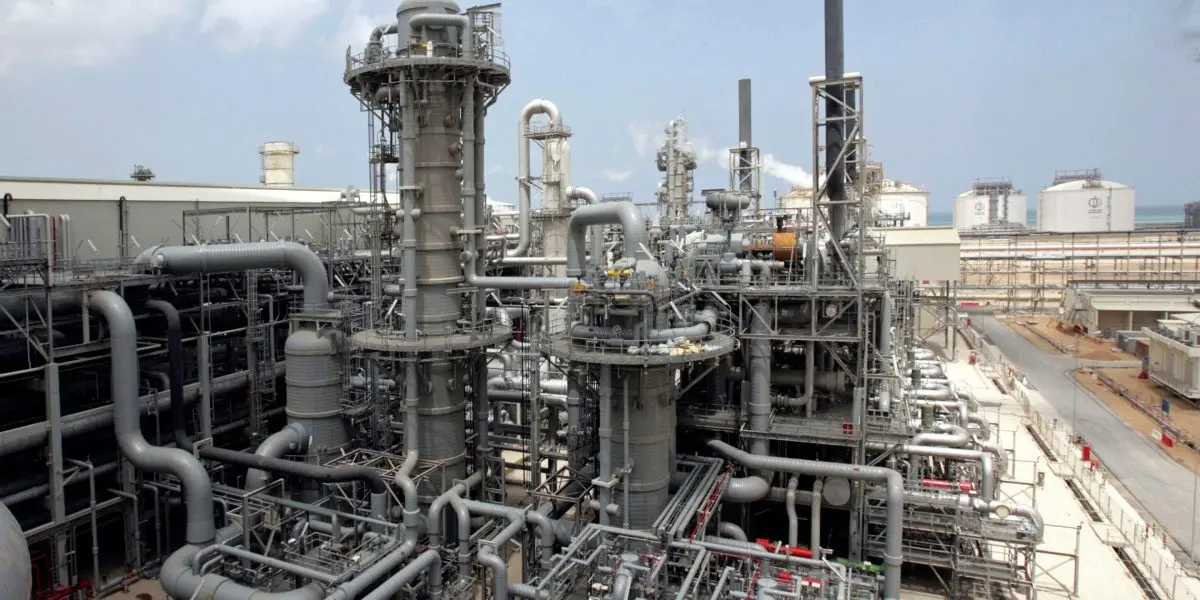
Source: Fortune
The damage to Ras Laffan, where more than 80% of Qatar's helium originates, is extensive and will take years to repair, with QatarGas reporting a 14% cut to annual helium exports
1
. Phil Kornbluth, president of Kornbluth Helium Consulting, stated that the best-case scenario for resuming production would be six weeks, but that timeline now appears "highly unlikely"1
.Why Helium Matters for Manufacturing Semiconductors
Helium plays an essential role in manufacturing semiconductors, particularly the cutting-edge chips used in artificial intelligence models. The semiconductor industry accounts for approximately 17% of U.S. helium consumption in 2025
2
. During chip fabrication, helium is used to cool silicon wafers during the etching process, when material deposited on a wafer is scraped away to form transistor structures. "You really want to maintain a constant temperature over the wafer. And in order to do that, you need to be able to draw heat away from the wafer that's being processed," explained Jacob Feldgoise, an analyst at Georgetown University's Center for Security and Emerging Technology1
.
Source: Digit
Helium's unique physical properties—complete inertness, an ultra-low boiling point of -268.9°C, and unmatched thermal conductivity—make it irreplaceable in current semiconductor manufacturing processes
2
. Jong-hwan Lee, a professor of semiconductor devices at South Korea's Sangmyung University, confirmed there is no viable replacement for helium to cool wafers under current manufacturing processes1
.South Korea's Memory Chip Producers Face Imminent Crisis
The global helium shortage poses an immediate threat to South Korea's semiconductor industry, which imports 64.7% of its helium from Qatar
3
. SK Hynix and Samsung, the two companies that manufacture high-bandwidth memory inside every AI accelerator and data center GPU, currently hold only two to three months of inventory3
. If Ras Laffan remains offline beyond that window, South Korean memory production faces rationing, and the AI hardware supply chain faces a shortage with no short-term fix.Kornbluth noted that the shortage hasn't hit yet because helium containers filled when the conflict erupted would have taken several weeks to arrive in Asia. "Nobody's run out of helium yet. But it's a few weeks out when the shortage really hits," he said
1
. About 200 specialized containers, each costing approximately $1 million, remain stuck in the Middle East1
.Related Stories

Spot Prices Double as Natural Gas Production Halts
Spot prices for helium have roughly doubled since the crisis erupted and will probably rise further, according to Kornbluth
1
. While spot trading only accounts for about 2% of the total market in normal times, contract prices "could go up a lot," with potential increases to $2,000 per thousand cubic feet if the disruption continues1
3
. Major industrial gas suppliers have already begun assessing customers a helium surcharge3
.Helium is a byproduct of natural gas production, extracted through cryogenic distillation when LNG is liquefied
1
3
. When Qatar's LNG production stopped, helium extraction stopped automatically. There is no workaround—you cannot produce helium without producing LNG3
. This structural dependency means helium supply does not respond to shifts in demand from high-growth sectors, even during the AI boom2
.Geopolitical Tensions Expose Supply Chain Vulnerability
The escalation of geopolitical tensions has exposed a critical vulnerability in global technology supply chains. Nearly all Qatari helium is shipped through the Strait of Hormuz, creating a single point of failure
2
. Recycling offers only limited relief, with recovery rates in advanced semiconductor fabs typically not exceeding 80-90%, leaving continued reliance on fresh helium supply2
.The United States and private reserves offer partial relief, and Canada's Rocky Mountain deposits are drawing renewed investor interest. Japan's Iwatani has already begun drawing on U.S. federal reserves
3
. However, industry experts stress that none of these alternatives can replace 63 million cubic meters in weeks. Kornbluth stated plainly: the world cannot compensate for losing a third of its supply3
. The countdown on chip supply has started, with implications extending from AI chips and GPUs to medical imaging and space industry applications that depend on this irreplaceable noble gas.References
Summarized by

Navi
[2]
Related Stories
Global Helium Demand Set to Double by 2035 Amid Semiconductor Industry Boom
10 Sept 2024

Iran War Threatens AI Industry as Energy Prices Surge and Supply Chains Face Critical Disruption
26 Mar 2026•Business and Economy

Taiwan Semiconductor's Energy Crisis Could Disrupt Global AI Supply Chain
06 Apr 2026•Business and Economy

Recent Highlights


Recent Highlights
Today's Top Stories






Your Daily Dose of Curated AI News
Don’t drown in AI news. We cut through the noise - filtering, ranking and summarizing the most important AI news, breakthroughs and research daily. Spend less time searching for the latest in AI and get straight to action.

