Jensen Huang proposes AI tokens worth half of base salary as new engineer compensation model


8 Sources
8 Sources
[1]
Are AI tokens the new signing bonus or just a cost of doing business? | TechCrunch
This week, a topic that has been boomeranging around Silicon Valley bounced into the spotlight: AI tokens as compensation. The idea is straightforward enough -- rather than giving engineers only salary, equity, and bonuses, companies would also hand them a budget of AI tokens, the computational units that power tools like Claude, ChatGPT, and Gemini. Spend them to run agents, automate tasks, crank through code. The pitch is that access to more compute makes engineers more productive, and that more productive engineers are worth more. It's an investment in the person holding them, is the idea. Jensen Huang, the leather-jacket-wearing CEO of Nvidia, seemed to capture everyone's imagination when he floated the notion at the company's annual GTC event earlier this week that engineers should receive roughly half their base salary again -- in tokens. His top people, by his math, might burn through $250,000 a year in AI compute. He called it a recruiting tool and predicted it would become standard across Silicon Valley. It isn't entirely clear where the idea was first, well, ideated. Tomasz Tunguz, a renowned VC in the Bay Area who runs Theory Ventures and focuses on AI, data, and SaaS startups -- and whose writing on all things data has garnered a loyal following over the years -- was talking about this in mid-February, writing that tech startups were already adding inference costs as a "fourth component to engineering compensation." Using data from the compensation tracking site Levels.fyi, he put a top-quartile software engineer salary at $375,000. Add $100,000 in tokens and you're at $475,000 fully loaded -- meaning roughly one dollar in five is now compute. That's no coincidence. Agentic AI has been taking off, and the release of OpenClaw in late January accelerated the conversation considerably. OpenClaw is an open-source AI assistant designed to run continuously -- churning through tasks, spawning sub-agents, and working through a to-do list while its user sleeps. It's part of a broader shift toward "agentic" AI, meaning systems that don't just respond to prompts but take sequences of actions autonomously over time. The practical consequence is that token consumption has exploded. Where someone writing an essay might use 10,000 tokens in an afternoon, an engineer running a swarm of agents can blow through millions in a day -- automatically, in the background, without typing a word. By this weekend, the New York Times had put together a smart look at the so-called tokenmaxxing trend, finding that engineers at companies including Meta and OpenAI are competing on internal leaderboards that track token consumption. Generous token budgets are quietly becoming a standard job perk, the paper reported, the way dental insurance or free lunch once was. One Ericsson engineer in Stockholm told the Times he probably spends more on Claude than he earns in salary, though his employer picks up the tab. Maybe tokens really will become the fourth pillar of engineering compensation. But engineers might want to hold the line before embracing this as a straightforward win. More tokens may mean more power in the short term, but given how fast things are evolving, it doesn't necessarily mean more job security. For one thing, a large token allotment comes with large expectations. If a company is effectively funding a second engineer's worth of compute on your behalf, the implicit pressure is to produce at twice the rate (or more). And there's a harder question underneath that: at the point where a company's token spend per employee approaches or exceeds that employee's salary, the financial logic of headcount starts to look different to a CFO. If the compute is doing the work, the question of how many humans need to be coordinating it becomes harder to avoid. Jamaal Glenn, an East Coast-based Stanford MBA and former VC turned financial services CFO, similarly points out that what may seem like a perk can be a clever way for companies to inflate the apparent value of a compensation package without increasing cash or equity -- the things that actually compound for an employee over time. Your token budget doesn't vest. It doesn't appreciate. It doesn't show up in your next offer negotiation the way a base salary or equity grant does. If companies successfully normalize tokens as pay, they may find it easier to keep cash comp flat while pointing to a growing compute allowance as evidence of investment in their people. That's a good deal for the company. Whether it's a good deal for the engineer depends on questions most engineers don't yet have enough information to answer.
[2]
Jensen Huang says Nvidia engineers should use AI tokens worth half their annual salary every year to be fully productive -- compares not using AI to using paper and pencil for designing chips
Nvidia CEO Jensen Huang said that he'll be deeply alarmed if an engineer getting paid $500,000 a year does not consume at $250,000 worth of AI tokens to get their job done. The leather-clad chief of the world's most valuable AI company said this during an episode of the All-In Podcast shot on the last day of Nvidia GTC 2026, after one of the hosts asked Huang if he's spending around $2 billion a year on tokens for the Nvidia engineering team, with Jensen answering, "We're trying to." "Let me give you a thought experiment. Let's say you have a software engineer or AI researcher, and you pay them $500,000 a year," the Nvidia CEO said. He also added, "At the end of the year, I'm going to ask him how much did you spend in tokens. And [if] that person said $5,000, I will go ape something else. If that $500,000 engineer did not consume at least $250,000 worth of tokens, I am going to be deeply alarmed." Huang went on to compare an employee not using AI tokens to a chip designer saying that they will use paper and pencil and eschew CAD tools to get their work done. Jensen compared today's AI tools to machinery that was invented during the industrial revolution, which allowed workers to physically do things that, in the past, were either too heavy, too big, or took too long. Now, it seems that the Nvidia CEO wants to use AI for mental tasks so that Nvidia engineers can focus on creativity. "It's just a new way of doing computer programming. In the past, we code. In the future, we're going to write ideas, architectures, specifications," Huang said. "I think that every engineer is going to have a hundred agents." It seems that the Nvidia CEO isn't the only one investing in AI tokens for his employees to freely use. According to Business Insider, many tech companies are now starting to offer guaranteed access to AI inference power as part of the remuneration package to candidates. That thought is that by giving people generous amounts of AI tokens, they'd be able to amplify their productivity by as much as 10 times or more. However, using AI in the corporate setting is not without its issues. There have been reports that more than half of CEOs have yet to see clear benefits from AI deployments, with only about 12% getting higher revenues and reduces costs. We've also seen several AI-related outages with Amazon Web Services, with one report saying that Amazon has called its engineers for a meeting to discuss issues created by "Gen-AI assisted changes" that had "high blast radius." And although Microsoft did not say anything about AI, it promised to fix Windows 11's most annoying flaws to restore its reputation several months after its CEO revealed that AI writes up to 30% of Microsoft's code. Follow Tom's Hardware on Google News, or add us as a preferred source, to get our latest news, analysis, & reviews in your feeds.
[3]
Nvidia's Huang pitches AI tokens on top of salary as agents reshape how humans work
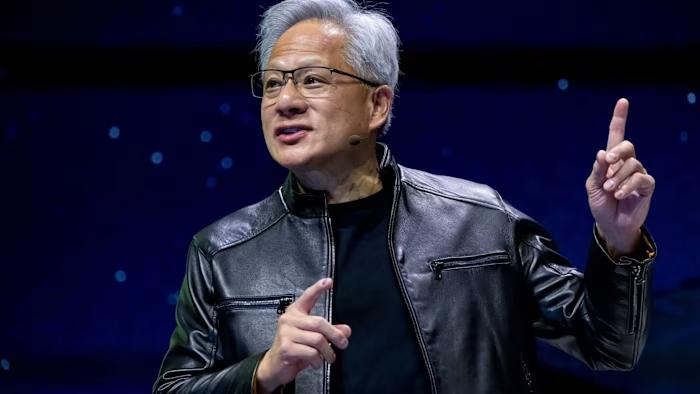
Nvidia CEO Jensen Huang delivers the keynote address at the GTC AI Conference in San Jose, California, on March 18, 2025. The perks of working in Silicon Valley have long included high salaries. Now, some engineers may be offered a new incentive: artificial intelligence tokens. Nvidia CEO Jensen Huang on Monday floated a novel compensation model that would give engineers a token budget on top of their base salary, effectively paying them to deploy AI agents as productivity multipliers. Tokens, or units of data used by AI systems, can be spent to run tools and automate tasks and are becoming "one of the recruiting tools in Silicon Valley," Huang said. "[Engineers] are going to make a few hundred thousand dollars a year, their base pay," Huang said at the chipmaker's annual GPU Technology Conference. "I'm going to give them probably half of that on top of [their base pay] as tokens ... because every engineer that has access to tokens will be more productive." The pitch signaled Huang's broader vision of the workplace, in which engineers oversee a fleet of AI agents capable of completing complex, multi-step tasks autonomously with minimal user input. It is a vision that Huang has been building toward publicly. Last month, he told CNBC that Nvidia's employees would one day work alongside hundreds of thousands of AI agents. "I have 42,000 biological employees, and I'm going to have hundreds of thousands of digital employees," he said.
[4]
Microsoft exec Charles Lamanna on how AI is creating an expensive new request from job candidates
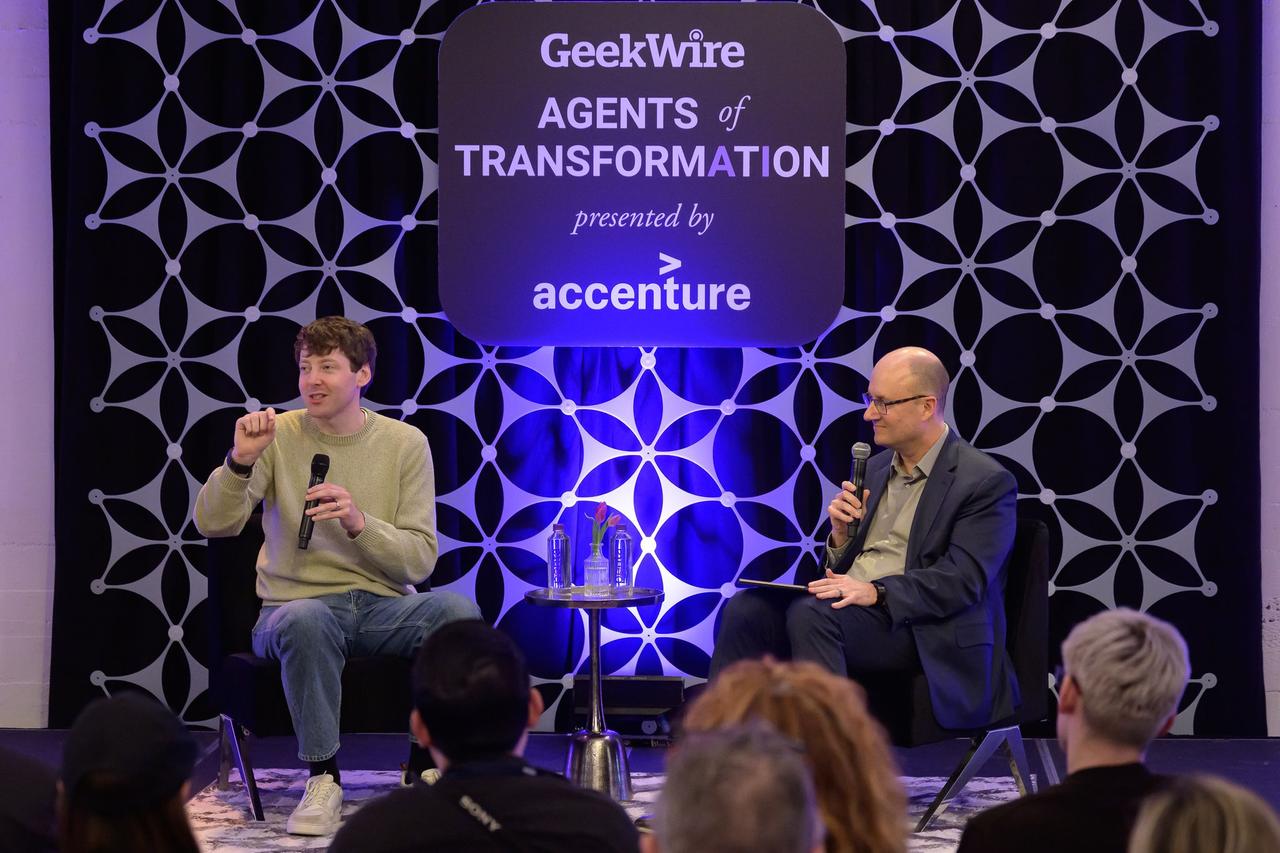
Work perks are taking on new meaning in the AI boom. Speaking at GeekWire's Agents of Transformation event in Seattle on Tuesday, Microsoft EVP Charles Lamanna talked about a job candidate who said they would come aboard as long as their team was given a certain dollar amount of AI tokens -- the fuel that powers interactions with AI systems. Lamanna didn't reveal the exact dollar amount request, but said "you should think of $100 to hundreds of dollars of token cost per day, at the limit." The anecdote reflects how access to AI models is becoming as fundamental as salary -- and how quickly AI is moving from experimentation to a core part of day-to-day work. If a "fully loaded" (total cost of an employee to a company) engineer costs $500,000 a year and the employee asks for $100,000 worth of tokens -- which makes them three times as efficient -- Lamanna said it's a great deal for everyone involved. He compared denying engineers sufficient AI resources to stripping away basic workplace tools. Imagine showing up to work with no mouse, no email, no Microsoft Teams -- that's how an engineer accustomed to AI-powered coding agents would feel working under a tight token budget, he said. "So how you think about what it means to hire, and fully loaded cost, and where we invest is going to change completely as a result of this," said Lamanna, Microsoft's executive vice president of Business Applications & Agents. He sees this happening beyond software engineering -- to multiple other forms of office and information work, such as financial planning. "They'll be like, I'm not going to work there unless I actually get a certain amount of token budget," he said. Lamanna isn't alone in seeing this shift. Nvidia CEO Jensen Huang last week said AI tokens would become "one of the recruiting tools in Silicon Valley," CNBC reported. In a blog post last month, venture capitalist Tomasz Tunguz described inference costs as a potential fourth pillar of engineer compensation alongside salary, bonuses, and equity. "Will you be paid in tokens?" Tunguz wrote. "In 2026, you likely will start to be." The New York Times last week reported on how employees at tech companies are competing on internal leaderboards that track token consumption, creating a new status game called "tokenmaxxing."
[5]

Nvidia CEO Jensen Huang says engineers may get half salary in AI tokens, what they are
Nvidia's Jensen Huang proposes annual token budgets for engineers. This new compensation model could become a key recruitment tool in Silicon Valley. Tokens, units of text for AI, are becoming a measure of productivity. Rising token costs are driving this shift. AI compute is emerging as a fourth compensation pillar. Jensen Huang, chief executive of Nvidia, has outlined a new approach to hiring engineers, suggesting companies may soon offer annual "token budgets" as part of compensation, where tokens are small units of text processed by AI systems and used to measure computing usage. Speaking during his keynote at the GPU Technology Conference, the 63-year-old said he could see a future where "every single engineer will need an annual token budget," adding that he is open to providing it as part of pay packages. Huang said engineers earning a few hundred thousand dollars annually could receive additional compensation in the form of tokens. "They're going to make a few hundred thousand dollars a year, their base pay. I'm going to give them probably half of that on top of it as tokens so that they could be amplified 10X. Of course, we would," he said. Also Read: Nvidia bets on AI inference as chip revenue opportunity hits $1 trillion He added that token allocation is already emerging as a hiring differentiator. "It is now one of the recruiting tools in Silicon Valley: How many tokens comes along with my job? And the reason for that is very clear, because every engineer that has access to tokens will be more productive." Tokens are small units of text processed by AI systems, typically representing parts of words, and are used to measure computing usage. Since longer text requires more tokens, pricing is often tied to cost per thousand or million tokens. When users input prompts into AI tools such as ChatGPT or Claude, the system breaks text into tokens. For example, the word "unbelievable" may be split into "un," "believe," and "able." Generating around 750 words typically requires about 1,000 tokens, while more complex tasks like coding or running AI agents consume significantly more. Also Read: Nvidia gets Beijing's nod for H200 chip sales, adapts Groq chip for China AI companies charge based on token consumption. OpenAI, for instance, prices its most advanced model at $15 per million tokens. These costs can escalate quickly. One engineer at Vercel reportedly incurred a $10,000 bill in a single day while deploying AI agents to build a service. As AI adoption grows, companies are increasingly tracking token usage per employee. Firms such as Zapier and Kumo AI are monitoring consumption to identify inefficiencies and high-performing engineers. A previous report by Business Insider noted that Silicon Valley firms are exploring ways to compete for talent beyond salary, bonuses, and equity by incorporating AI inference power into compensation. Investors are beginning to view tokens as a "fourth component" in recruitment, with some suggesting companies should clearly specify token budgets in job listings. Thibault Sottiaux, engineering lead for Codex at OpenAI, said AI compute is becoming increasingly scarce and valuable. He noted that candidates are now asking about dedicated inference compute during interviews. Huang also highlighted expectations that purchase orders between Blackwell and Vera Rubin could reach $1 trillion by 2027, driven by their ability to generate tokens at scale. With AI workloads expanding rapidly, tokens are increasingly being seen as a new currency of productivity, and their inclusion in compensation packages could soon become standard across the industry. (With inputs from TOI) (You can now subscribe to our Economic Times WhatsApp channel)
[6]

Nvidia CEO Jensen Huang Predicts AI Tokens Will Become a Standard Job Perk | PYMNTS.com
By completing this form, you agree to receive marketing communications from PYMNTS and to the sharing of your information with our sponsor, if applicable, in accordance with our Privacy Policy and Terms and Conditions. Huang said Monday (March 16) during his keynote address at the Nvidia GTC AI Conference & Expo that tokens are becoming a recruiting tool in Silicon Valley, according to the report. Tokens are units of data used by AI systems, the report said. "I could totally imagine in the future every single engineer in our company will need an annual token budget," Huang said during his keynote. "They're going to make a few hundred thousand dollars a year, their base pay, I'm going to give them probably half of that on top of it as tokens so that they could be amplified 10x. Of course we would. It is now one of the recruiting tools in Silicon Valley -- 'How many tokens comes along with my job?'" Huang told CNBC in February that a growing number of AI agents will work alongside Nvidia employees. "I have 42,000 biological employees, and I'm going to have hundreds of thousands of digital employees," he said, per the report. Huang also told CNBC in February that AI agents will have a beneficial impact on the software industry. Rather than reducing demand for the industry's products, AI agents will become its customers as they use programs, tools and computing resources, he said. "The number of C-compilers that we use, the number of Python programs that we have, the number of instances, are growing very, very fast -- because the number of agents we have that use these tools are going up," Huang said, per the report. PYMNTS reported Thursday (March 19) that Huang said during his keynote address that companies will shift from software that enables employees to do work, to software that does the work itself, autonomously, through AI agents executing tasks without continuous human input. Nvidia said in reports released earlier this month that AI is delivering measurable financial gains for businesses. Eighty-eight percent of organizations say AI has increased their annual revenue, and 87% say it has reduced their costs. In terms of AI adoption, 64% of companies are actively using AI, while 28% are evaluating potential deployments.
[7]

Fewer jobs, token pay. Does it add up?
Jensen Huang's assertion that tokens will become the currency of the AI economy may sound like an enticing idea but the reality is much more complex Nvidia's co-founder and CEO Jensen Huang has laid out a grand vision. He wants to generate as much as $1 trillion in annual revenue by 2027 from AI chip sales alone, doubling his earlier $500 billion forecast for 2026. Huang's optimism stems from his belief that computing demand has surged a million-fold over the past two years, which will eventually drive cumulative purchase orders for Nvidia's current Blackwell chips and its next-generation Vera Rubin architecture. For context, no company has ever generated $1 trillion in revenue in a single year. Further, Nvidia itself reported $215.9 billion in revenue for fiscal 2026, effectively signalling the beginning of a much steeper revenue curve. Part salary in tokens Regardless of the outcome, Huang asserts that tokens will become the currency of the AI economy. At first blush, it sounds like an enticing idea. Simply put, a token comprises a chunk of text, words or parts of words, which an AI model reads or generates. Every prompt and response is broken into these units, and companies are billed based on how many tokens are processed. This means engineers may soon not just earn salaries but also receive annual "token budgets", a pool of AI compute they can spend to amplify their productivity. That said, we are assuming that the need for tokens will keep growing. In reality, systems get more efficient. Models are already requiring fewer tokens per task, thanks to better architectures, caching, and specialized systems. This trend is likely to make tokens become cheaper, more abundant, and ultimately less meaningful as a unit of value. Source: Nvidia However, there's also a structural shift underway with more money now flowing into inference, running models in real-world applications, than into training new models from scratch. That complicates the token narrative. Inference is highly competitive, margins are thinner, and efficiency gains are relentless. If companies optimise for fewer tokens per task, the very metric Huang wants to monetise starts shrinking. Thus, token budgets will not expand but get squeezed. Then there's the platform risk. Token budgets are not like salaries; they're tied to specific models, vendors, and pricing structures. If the underlying AI stack shifts, say from proprietary systems to open-source alternatives, or from large general models to smaller task-specific ones, the "value" of those tokens could erode quickly. More fundamentally, Huang's idea assumes that tokens will remain the primary interface to AI. But the industry is already moving from "generate text" to "complete tasks" with the help of agentic systems that don't just consume tokens but call APIs, execute workflows, and deliver outcomes. In such a world, will anyone care how many tokens were used or whether the job gets done? Another paradox: Job losses with more tokens? On the one hand, AI is steadily automating large swathes of coding and software work, the very domain Huang is targeting. This is leading to sizeable job cuts. In just the first 80 days of 2026, 66 tech companies have retrenched about 39,500 employees, as per Layoffs.fyi data. Last year, about 124,200 tech employees were laid off by 271 tech companies including Amazon, Microsoft, Meta, Intel, Accenture, Salesforce, and Google. As per Trueup's layoff tracker, there have been 185 layoffs at tech companies till date this year, with 57,606 people impacted (703 people per day). In 2025, there were 783 layoffs at tech companies with 245,953 people impacted (674 people per day). While one may contest these numbers, the fact remains that many of these job cuts are being effected due to overhiring after the end of the Covid pandemic and increased automation by the rapid escalation of AI tools in the workplace. On the other, engineers are being promised token handouts as part of their compensation, as if more access to AI will secure their relevance. Isn't it ironical, then, that the same technology that threatens to shrink the workforce is being repackaged as a productivity bonus for those who remain. Further, more tokens do not automatically translate into more value. Productivity depends on judgment, context, and problem framing, things that don't scale linearly with compute. Throwing more tokens at a problem can just as easily amplify inefficiency. Just as no one today thinks in CPU cycles or megabytes of RAM, future developers may not think in tokens at all. AI will be priced in subscriptions, outcomes, or embedded into software in ways that abstract away the underlying compute. That would undercut the idea of tokens as compensation entirely. Global experiments but with a difference To be fair, a version of "tokenised work" is already being tested globally but there's a crucial difference from Jensen Huang's framing. In the crypto world, contributors to decentralised projects are often paid in tokens that represent ownership or future upside. Platforms governed by Ethereum, for instance, reward developers and community members with native tokens that can appreciate in value or confer voting rights. Similarly, projects like Gitcoin use tokens and grants to pay for open-source contributions, tying compensation to ecosystem growth rather than resource usage. Large institutions are also exploring the idea, but from a different angle. Deutsche Bank has written about a "tokenised economy" where work is broken into tasks and payments are triggered automatically through smart contracts, effectively paying for outcomes completed, not inputs consumed. Even OpenAI CEO Sam Altman has floated the idea of "universal basic compute", where access to AI resources could be distributed broadly as a form of economic participation. Here, tokens (or compute credits) are framed as a public good or entitlement, not a component of salary. The irony, then, is structural. If AI truly boosts productivity 10x, companies need fewer than 10x engineers. In that world, handing out tokens starts to look less like empowerment and more like consolation for a shrinking workforce. Moreover, compensation has traditionally been tied to scarcity or skills that are hard to replace, thus commanding a higher pay. But AI is actively eroding that scarcity. Hence, as compute becomes cheaper and more ubiquitous, that advantage may vanish.
[8]

Every engineer will have 100 AI agents: Jensen Huang on future of work
Engineers will evolve into orchestrators of hundreds of AI agents at work There are many ways to measure the productivity of an engineer that earns $500,000 or ₹2.3 crore per year. NVIDIA's Jensen Huang, in his inimitable style and theatrical bluntness, has proposed a new one - token burn. "That $500,000 engineer at the end of the year, I'm going to ask him, how much did you spend in tokens?" The NVIDIA CEO was quoted while speaking on the All-In Pod on the final day of GTC 2026. "If that $500,000 engineer did not consume at least $250,000 worth of tokens, I am going to be deeply alarmed," emphasised Jensen Huang. If you think about the implication of what Huang is suggesting, it effectively inverts decades of enterprise thinking. Efficiency, in the classical sense, is all but dead in the age of AI. Under-utilisation of resources - not excess - is the bigger sin, according to NVIDIA CEO Jensen Huang. Tokens are not a cost centre, they need to be looked at as capability. "This is no different than one of our chip designers who says I'm just going to use paper and pencil," Huang said, with a deliberate example. You see, just as CAD tools became non-negotiable for chip design, AI agents are becoming the baseline tools for doing increasingly more knowledge work. Huang's comments aren't hot gas, there's data to back him up. A 2025 study by KPMG estimated that GenAI could add $2.84 trillion in GDP to the US by 2030 and $11.04 trillion to global GDP by 2050, with software engineering among the highest-impact domains. Meanwhile, GitHub's Copilot research found developers completing tasks up to 55% faster, with a majority reporting reduced cognitive load. However, Huang isn't just hinting about faster code, but a fundamental rewrite of what work truly means in the age of AI agents. "Things that are too hard, take too long, need a lot of people, those ideas are all gone," Huang points out. AI collapses human effort barriers in the same way machinery once did for physical labour. Also read: 'Are you insane?' Huang hits out at claims some Nvidia managers want reduced AI use "Every engineer is going to have a hundred agents," Huang predicted. The lone genius coder is being replaced by something closer to a conductor of a software-driven orchestra, which changes the job description entirely. "In the past, we code. In the future, we're going to write ideas, architectures, specifications... define what good looks like." This is less about typing syntax and more about shaping intent. Less mechanical keyboard tapping, more emphasis on thinking and automating. All of what Huang said brings us to an uncomfortable implication. If your value as a knowledge worker was linked to output volume, AI is already eating your lunch. But if your value is defined by taste, judgement, and creativity, your stock just went up. Huang isn't asking you to spend more on tokens as much as he's asking you to spend on possibility.
Share
Share
Copy Link
Nvidia CEO Jensen Huang suggests engineers should receive AI tokens worth up to half their annual salary as part of their compensation package. The proposal positions tokens as a recruiting tool in Silicon Valley, where companies are adopting computational budgets as a fourth pillar of engineer compensation alongside salary, equity, and bonuses. But questions remain about whether this benefits engineers or primarily serves company interests.
Jensen Huang Introduces AI Tokens as Fourth Compensation Pillar
Nvidia CEO Jensen Huang has proposed a new compensation model that could reshape how Silicon Valley pays its engineers. Speaking at the company's annual GPU Technology Conference, Huang suggested that engineers earning a few hundred thousand dollars annually should receive additional compensation in AI tokens worth roughly half their base salary
2
. For a software engineer or AI researcher making $500,000 a year, that translates to $250,000 in tokens2
. The Nvidia chief called AI tokens as compensation a recruiting tool for engineers and predicted it would become standard practice3
.
Source: Digit
AI tokens are computational units that power interactions with systems like ChatGPT, Claude, and Gemini. These small units of text measure computing usage, with longer or more complex tasks consuming more tokens
5
. The pitch centers on productivity multipliers—Huang believes engineers with access to more compute become significantly more productive, justifying the investment3
.Silicon Valley Companies Adopt Token Budgets as Job Perk
The concept is already gaining traction beyond Nvidia. Microsoft executive Charles Lamanna revealed at GeekWire's Agents of Transformation event that a job candidate requested their team receive a specific dollar amount of AI tokens as a condition of employment
4
. Lamanna suggested candidates might request $100 to hundreds of dollars in token costs per day at the upper limit4
. If a fully loaded engineer costs $500,000 annually and requests $100,000 worth of tokens that make them three times as efficient, Lamanna argued it's beneficial for everyone involved4
.
Source: GeekWire
Venture capitalist Tomasz Tunguz of Theory Ventures was discussing this trend in mid-February, describing inference costs as a fourth component to engineering compensation alongside salary, bonuses, and equity
1
. Using data from Levels.fyi, Tunguz calculated that a top-quartile software engineer earning $375,000 plus $100,000 in tokens would have fully loaded compensation of $475,000—meaning roughly one dollar in five is now compute1
.Agentic AI Drives Explosive Token Consumption
The shift toward AI tokens as compensation accelerated with the rise of agentic AI systems. The release of OpenClaw in late January, an open-source AI assistant designed to run continuously and spawn sub-agents, intensified the conversation considerably
1
. These AI agents don't just respond to prompts but take sequences of actions autonomously over time, consuming massive amounts of tokens. Where someone writing an essay might use 10,000 tokens in an afternoon, an engineer running a swarm of agents can burn through millions in a day automatically1
.The New York Times reported that engineers at companies including Meta and OpenAI are competing on internal leaderboards tracking token consumption in a trend called "tokenmaxxing"
1
. One Ericsson engineer in Stockholm told the Times he likely spends more on Claude than he earns in base salary, though his employer covers the cost1
. Companies like Zapier and Kumo AI are monitoring token consumption to identify inefficiencies and high-performing engineers5
.Related Stories

Questions About Job Security and Real Value
While generous token budgets may seem like a straightforward win, the new compensation model raises concerns about the future of work and engineer job security. A large AI compute allowance comes with large expectations—if a company funds compute equivalent to a second engineer's worth of work, the implicit pressure is to produce at twice the rate or more
1
. When token spend per employee approaches or exceeds that employee's salary, the financial logic of headcount starts to shift for CFOs1
.Jamaal Glenn, a Stanford MBA and former VC turned financial services CFO, points out that what appears as a job perk may actually inflate the apparent value of a compensation package without increasing cash or equity—the elements that compound for employees over time
1
. Token budgets for engineers don't vest, appreciate, or carry forward into future offer negotiations the way base salary or equity grants do1
. If companies normalize tokens as pay, they may find it easier to keep cash compensation flat while pointing to growing compute allowances as evidence of investment in their people1
.Huang compared not using AI inference power to chip designers saying they'll use paper and pencil instead of CAD tools
2
. He envisions every engineer working alongside a hundred agents in the talent market of tomorrow2
. Whether this vision benefits engineers as much as it does companies remains an open question that most engineers don't yet have enough information to answer1
.
Source: ET
References
Summarized by

Navi
[4]
Related Stories
AI Tokens Become Employee Performance Metric, But Experts Question if Volume Equals Value
20 Mar 2026•Business and Economy
Meta kills internal AI token leaderboard after data leaks, ending 'Token Legend' competition
09 Apr 2026•Business and Economy

Jensen Huang Warns AI Leaders Against Fearmongering as Nvidia Pushes Optimistic Vision
16 Mar 2026•Technology

Recent Highlights


Recent Highlights
Today's Top Stories






Your Daily Dose of Curated AI News
Don’t drown in AI news. We cut through the noise - filtering, ranking and summarizing the most important AI news, breakthroughs and research daily. Spend less time searching for the latest in AI and get straight to action.

