Nvidia CEO warns TSMC must double capacity as AI demand threatens to overwhelm chip supply


7 Sources
7 Sources
[1]
Jensen Huang warns TSMC needs to 'work very hard' to meet AI demand -- Nvidia CEO says its demand alone may force doubling its capacity over the next decade
"TSMC is doing an incredible job and they're working very, very hard" Nvidia CEO Jensen Huang is continuing his tour of Taiwan, and in his latest musings with the press had warned that Taiwan Semiconductor Manufacturing Company (TSMC) has its work cut out to keep up with demand. SCMP reports that Huang said Nvidia's demand for wafers alone could force TSMC to "more than double its capacity in the next decade." According to the report, Huang made the statement following a Saturday evening banquet of vital supply chain partner executives, including TSMC Chairman and CEO C C Wei, and Foxconn Chairman Young Liu. SCMP says Huang told reporters outside the restaurant that TSMC must "work very hard" to meet its insatiable demand, stating Nvidia "needs a lot of wafers," and that TSMC needs to boost its output this year. "TSMC is doing an incredible job, and they're working very, very hard," he reportedly said, adding, "We have a lot of demand this year." Huang's comments won't come as a surprise to the Taiwanese silicon giant. Despite recently admitting the company was "very nervous" about an AI bubble, the company said that it remains assured of demand. Naturally, that means the pain point for AI going forward is likely to be supply. In November, Wei remarked that TSMC's capacity was "Not enough, not enough, still not enough," stating that its advanced-node capacity falls "about three times short" of AI demand. Huang's comments about TSMC needing to double its capacity in the next decade also serve as context for recent rumblings about plans to move 40% of Taiwan's chipmaking capacity to America. Huang assured the island nation that Taiwan's silicon shield will be preserved, namely, because this 40% is all new capacity. As per its last Annual Report from 2024, TSMC currently boasts an annual capacity of 17 million 12-inch equivalent wafers in 2024, a number that has likely increased with production added in 2025. In May, the company revealed it planned to spend $42 billion on expansion in 2025 alone, and is also trying to expedite production across new sites, such as its Fab 21 phase 2 site in Arizona, where equipment will reportedly start arriving next summer, with mass production targeted for 2027, ahead of the original 2028 schedule. Back in Taiwan, Huang also reportedly discussed the importance of memory chips and also touched on Nvidia's deal with OpenAI, resetting expectations a little by telling reporters the $100 billion deal was "never a commitment," but rather an invitation to invest.
[2]
'People's dad' Jensen Huang praises, pushes Nvidia suppliers on mobbed Taiwan visit
TAIPEI, Feb 1 (Reuters) - Nvidia (NVDA.O), opens new tab CEO Jensen Huang praised and lightly cajoled his major Taiwanese suppliers to produce more to help power strong demand for AI, capping a visit to the island of his birth, where he has been mobbed by adoring fans at every step. Speaking at an impromptu press conference in the rain outside a Taipei restaurant late on Saturday, where he had hosted suppliers for a "trillion-dollar dinner", named after the market capitalisation of those firms attending, Huang said this would be another good year for business. "TSMC needs to work very hard this year because I need a lot of wafers," he said, laughing, referring to Taiwan Semiconductor Manufacturing Co (2330.TW), opens new tab, the world's largest producer of advanced chips used in artificial-intelligence applications. "TSMC is doing an incredible job and they're working very, very hard. We have a lot of demand this year," he added after taking pictures with a beaming TSMC CEO C.C. Wei. "Over the next 10 years, TSMC will likely increase their capacity by much more than 100%, and so this is a very substantial scale-up in the next decade." Wei did not answer questions from reporters. Last month, TSMC said capital spending could jump as much as 37% this year to $56 billion, and would increase "significantly" in 2028 and 2029 given AI demand. Huang, who emigrated to the United States as a child, is met by a throng of adoring fans wherever he returns to Taiwan. Local media, who refer to him as "the people's dad", breathlessly report on his every move. Huang co-founded California-based Nvidia in 1993. Last year, it became the first company to breach $5 trillion in market value, continuing a meteoric rise that has firmly positioned it at the heart of the global AI revolution. In Taipei, he expressed concern about supplies of memory chips, which support AI workloads, amid a production crunch. "We need a lot of memory this year," he said. "I think that the entire supply chain is challenging this year because demand is so much more." Huang periodically stepped out of the dinner, attended by two dozen executives, including Young Liu, chairman of contract-electronics maker Foxconn (2317.TW), opens new tab, Nvidia's biggest server maker, to greet his fans and sign autographs. "We have so many partners here in Taiwan. Nvidia won't be possible without Taiwan. There's magic in this island. The companies here have extraordinary technology, they've incredible culture," he said, when asked about how he felt about his movie star-like fame whenever he visits. "I'm really proud of Taiwan." Huang arrived from China on Thursday and is expected to leave Monday. Reporting by Ben Blanchard in Taipei; Editing by William Mallard Our Standards: The Thomson Reuters Trust Principles., opens new tab * Suggested Topics: * Artificial Intelligence Ben Blanchard Thomson Reuters Ben joined Reuters as a company news reporter in Shanghai in 2003 before moving to Beijing in 2005 to cover Chinese politics and diplomacy. In 2019 Ben was appointed the Taiwan bureau chief covering everything from elections and entertainment to semiconductors.
[3]
'TSMC needs to work very hard this year because I need a lot of wafers' says Nvidia CEO Jensen Huang outside a 'trillion-dollar dinner' for top tech manufacturers in Taiwan
Things might be tough for PC gamers this year, as prices continue to rise on everything from memory modules to graphics cards. One person who doesn't appear to be feeling the pinch just yet, though, is Nvidia CEO Jensen Huang, who hosted a so-called "trillion-dollar dinner" in Taiwan this weekend, supposedly named after the market capitalization of the firms attending. Huang took the opportunity to speak to the press in the rain outside of a Taipei restaurant on Saturday, where he jokingly appeared to give Taiwanese chip juggernaut TSMC something of a hurry up, according to Reuters. "TSMC needs to work very hard this year because I need a lot of wafers," said Huang, laughing with the assembled press. "TSMC is doing an incredible job and they're working very, very hard. We have a lot of demand this year." One of the attendees was TSMC CEO C.C. Wei, who did not answer questions from reporters. While the AI boom continues to run its course, TSMC's position as the key manufacturer at the base of the chip production chain has led to some reports that the limits of its current packaging capacity may be a bottleneck, as demand for AI hardware continues to be strong. Still, TSMC executives have recently signalled that spending on its expansion will rise even further, beyond its current $165 billion investment in US chip manufacturing facilities, and there are reports of plans for four new advanced integrated circuit packaging plants in Taiwan. "Over the next 10 years, TSMC will likely increase their capacity by much more than 100%, and so this is a very substantial scale-up in the next decade," said Jensen. As for the ongoing RAMpocalypse, in which AI servers (many of which are powered by Nvidia's high-end AI GPUs) have been swallowing up DRAM modules, resulting in a shortage for the rest of us, Huang had this to say: "We need a lot of memory this year... I think that the entire supply chain is challenging this year because demand is so much more." So, no signs of a let up there, then. Certainly, Huang has a lot to be happy about in 2026, as the demand for his company's hardware shows no sign of slowing. Reports also indicate that several Chinese AI companies have received conditional approval to buy Nvidia's H200 AI GPUs for training purposes, including China's top AI startup, DeepSeek -- which, if true, may signal the end of a continual thorn in Nvidia's side over the past few years. As for those of us looking to buy a graphics card or upgrade our RAM for a reasonable sum in the near future, 2026 isn't looking quite so rosy. While TSMC's expansion may eventually lead to more capacity for key components in our beloved gaming hardware, it's clear that Nvidia's bread is being buttered by AI demand these days, and I doubt regular consumer hardware is going to be much of a priority while the going's so good. On the plus side... well, the key tech industry players seem to have had a lovely night out. How the other half live, ey?
[4]
Nvidia's AI Takeover Leaves Apple Fighting For Supply - NVIDIA (NASDAQ:NVDA), Taiwan Semiconductor (NYSE:TSM)
Taiwan Semiconductor Manufacturing Co. Ltd. (NYSE:TSM) is accelerating capacity expansion as surging AI demand from Nvidia Corp. (NASDAQ:NVDA) puts new pressure on long-standing partners like Apple Inc. (NASDAQ:AAPL). Nvidia CEO Jensen Huang said Taiwan Semiconductor needs to "work very hard" to keep up with rapidly rising demand, warning that Nvidia alone could require the foundry to more than double its chip production capacity over the next decade. Speaking in Taiwan after a banquet with senior supply-chain executives, including Taiwan Semiconductor Chairman and CEO C.C. Wei, Huang said Nvidia "needs a lot of wafers" this year as it scales AI infrastructure, SCMP reported on Sunday. Nvidia has now become Taiwan Semiconductor's largest customer and was among the first adopters of its advanced A16 process node. Huang said Nvidia's demand for leading-edge process technologies would be enough by itself to drive a capacity increase of more than 100% over time, TechNode reported on Monday. Taiwan Semiconductor has already signaled aggressive investment plans, saying capital spending could rise as much as 37% this year to $56 billion and grow significantly again in 2028 and 2029. Apple Reassesses Strategy Meanwhile, Apple is reassessing its reliance on Taiwan Semiconductor. Riding the AI boom, Nvidia has dethroned Apple as Taiwan Semiconductor's top customer, capturing a major slice of the world's most advanced semiconductor capacity. According to the Wall Street Journal, Apple is evaluating whether to move part of its low-end processor production to alternative suppliers, a shift that would end more than a decade of exclusive cooperation with Taiwan Semiconductor, the TechNode reported on Monday. Price Action: In premarket trading Monday, Nvidia shares slid 2.05% to $187.21, while Apple dipped 0.42% to $258.39. Taiwan Semiconductor also traded lower, down 1.15% at $326.75, according to Benzinga Pro. Photo by Andrey Bayda via Shutterstock Market News and Data brought to you by Benzinga APIs
[5]

TSMC Needs to Double Production Over the Next Decade Just to Meet NVIDIA's Demand, Says Jensen Huang, Highlighting the Future Scale of the AI Boom
TSMC's production lines are already under severe pressure, and based on what NVIDIA's CEO is saying, the Taiwan chip giant would need to expand production by more than 100% just to meet NVIDIA's demand alone. NVIDIA's AI bandwagon is moving at a rapid pace, and with that, the company seems confident about how demand for AI infrastructure will evolve in the coming years. During an interview with local media, Jensen disclosed that TSMC plans to expand production by more than 100% over the next decade. Interestingly, this expansion alone will meet NVIDIA's demand, suggesting Jensen expects the AI boom to be much longer. TSMC's upcoming fab projects and CapEX hikes over the quarters are examples of the demand the industry expects. TSMC's production capacity may grow by more than 100% in the next ten years, which is a very significant scale expansion, the largest infrastructure investment in human history, and it will have to double just to meet NVIDIA's demand. - NVIDIA's Jensen Huang via UDN TSMC's fab expansion plans have grown significantly in the past few quarters, as the company has factored in geopolitical concerns, leading to massive investments in regions like the EU, Japan, and the US. More specifically, TSMC's plans to build a supply chain in America will involve a $250 billion mega-buildout, including advanced packaging, semiconductors, and R&D centers. TSMC's Arizona plants are currently shifting production to 3nm, and the Taiwan giant plans to move to A16 moving ahead, while being mindful of the "N-2" policies. The more important point here is that, with Grace Blackwell and Vera Rubin alone, NVIDIA takes a large share of TSMC's production lines, which is why Team Green has become the chip giant's largest customer, overtaking Apple in just a few years. And, since TSMC has opened up the option of capacity 'prepayments', there is no doubt that future production lines coming online will ultimately have a large share allocated towards NVIDIA and other HPC customers, which is another indicator of how aggressive the AI infrastructure buildout currently is. NVIDIA beats its competitors at scale, which is why rivalry from ASIC manufacturers or AMD isn't much of a factor for the company. And the second major factor is, of course, access to production lines earlier than others, given Jensen's relations with Taiwanese suppliers and others around the world.
[6]
NVIDIA's 'Trillion-Dollar' Dinner With Taiwanese Partners Shows Us Why Jensen Will Always Remain One Step Ahead in the AI Supply Chain
NVIDIA's CEO recently hosted his iconic 'trillion-dollar' dinner with Taiwan's supply chain executives, underscoring their importance. When it comes to NVIDIA and Taiwan, the relationship between the two hasn't been as close as it is during the AI frenzy, given that it's become necessary for Team Green to keep its partners close and on board. Under CEO Jensen Huang, NVIDIA has managed to vertically integrate its supply chain sources, not only being the first to access them but also maintaining relationships that exceed traditional business norms. This is one of the biggest reasons NVIDIA remains ahead of its competitors in supply chain resilience. Right now, the Taiwanese media is full of Jensen's visit to a local restaurant, and how he was accompanied by the likes of TSMC's CEO C.C.Wei, along with high-level executives from MediaTek, Foxconn, Wistron, Quanta, and many other important personalities, who are behind some of the world's most essential components in the AI infrastructure race. When you think about it, there aren't many examples like Jensen who meet with supply chain executives more frequently, and the more important question here is: why does NVIDIA maintain such relations? Well, the reason behind such meetings isn't as complex as one would interpret. Sure, there is an element of business as well, considering that when you look at NVIDIA's product cycle, it becomes necessary to examine supply chain aspects on a more "micro-level" to ensure that every manufacturing stage proceeds as expected. But for Jensen himself, this relationship goes beyond business and finances to how he has treated Taiwanese partners over time. Ever since we have seen the AI infrastructure race, Jensen has categorized Taiwan as one of the "world's most important nations", mainly due to the presence of NVIDIA's partners. When you give supply chain partners such a level of spotlight in the global media, it ultimately has a much stronger effect, and for companies like TSMC, Foxconn, Wistron, and Quanta, it gives them a sense of responsibility to deliver on NVIDIA's expectations. And since Jensen is much closer to Taiwanese firms than some of his competitors, this also gives NVIDIA access to "exclusive" production lines, which is why, when it comes to DRAM, NAND, semiconductors, and other components, NVIDIA doesn't face any shortages. In an interview with Taiwanese media, NVIDIA's CEO implied that his company would not exist without Taiwan, which is a clear summary of how the company operates in a segment that requires high precision and swift action in supply chain matters. Talking about TSMC alone, Jensen believes the company plans to scale production by more than 100% over the next decade, tying it to the world's largest infrastructure buildout. Similarly, companies like Foxconn, Quanta, Wistron, and many others are willing to invest in their production because NVIDIA has become too big for them to ignore.
[7]

'People's dad' Jensen Huang praises, pushes Nvidia suppliers on mobbed Taiwan visit
TAIPEI, Feb 1 (Reuters) - Nvidia CEO Jensen Huang praised and lightly cajoled his major Taiwanese suppliers to produce more to help power strong demand for AI, capping a visit to the island of his birth, where he has been mobbed by adoring fans at every step. Speaking at an impromptu press conference in the rain outside a Taipei restaurant late on Saturday, where he had hosted suppliers for a "trillion-dollar dinner", named after the market capitalisation of those firms attending, Huang said this would be another good year for business. "TSMC needs to work very hard this year because I need a lot of wafers," he said, laughing, referring to Taiwan Semiconductor Manufacturing Co, the world's largest producer of advanced chips used in artificial-intelligence applications. "TSMC is doing an incredible job and they're working very, very hard. We have a lot of demand this year," he added after taking pictures with a beaming TSMC CEO C.C. Wei. "Over the next 10 years, TSMC will likely increase their capacity by much more than 100%, and so this is a very substantial scale-up in the next decade." Wei did not answer questions from reporters. Last month, TSMC said capital spending could jump as much as 37% this year to $56 billion, and would increase "significantly" in 2028 and 2029 given AI demand. Huang, who emigrated to the United States as a child, is met by a throng of adoring fans wherever he returns to Taiwan. Local media, who refer to him as "the people's dad", breathlessly report on his every move. Huang co-founded California-based Nvidia in 1993. Last year, it became the first company to breach $5 trillion in market value, continuing a meteoric rise that has firmly positioned it at the heart of the global AI revolution. In Taipei, he expressed concern about supplies of memory chips, which support AI workloads, amid a production crunch. "We need a lot of memory this year," he said. "I think that the entire supply chain is challenging this year because demand is so much more." Huang periodically stepped out of the dinner, attended by two dozen executives, including Young Liu, chairman of contract-electronics maker Foxconn, Nvidia's biggest server maker, to greet his fans and sign autographs. "We have so many partners here in Taiwan. Nvidia won't be possible without Taiwan. There's magic in this island. The companies here have extraordinary technology, they've incredible culture," he said, when asked about how he felt about his movie star-like fame whenever he visits. "I'm really proud of Taiwan." Huang arrived from China on Thursday and is expected to leave Monday. (Reporting by Ben Blanchard in Taipei; Editing by William Mallard)
Share
Share
Copy Link
Nvidia CEO Jensen Huang told reporters that TSMC needs to work very hard to meet soaring AI demand, warning the chipmaker may need to double production capacity over the next decade just to satisfy Nvidia's requirements alone. Speaking after a trillion-dollar dinner with key suppliers in Taiwan, Huang emphasized the unprecedented scale of capacity expansion needed as AI infrastructure buildout accelerates globally.
Nvidia Pushes TSMC to Dramatically Expand Production Capacity
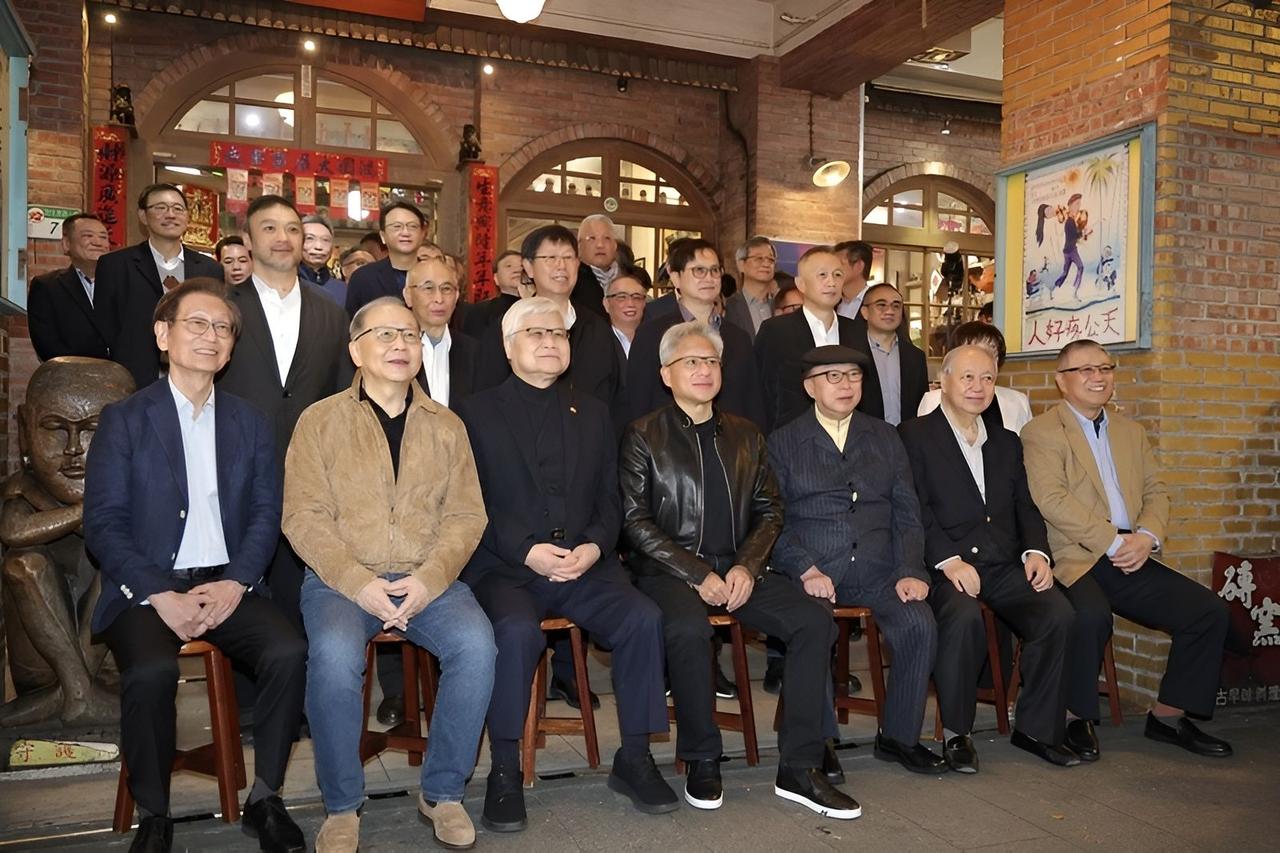
Nvidia CEO Jensen Huang delivered a stark warning to Taiwan Semiconductor Manufacturing Company during his recent visit to Taiwan, stating that TSMC must "work very hard" to keep pace with exploding AI demand. Speaking to reporters outside a Taipei restaurant following a Saturday evening banquet with key supply chain executives, including TSMC Chairman and CEO C.C. Wei and Foxconn Chairman Young Liu, Huang revealed that Nvidia's requirements alone could force the chipmaker to more than double its manufacturing capacity over the next decade
1
. The dinner, dubbed a "trillion-dollar dinner" after the combined market capitalization of attending firms, underscored the critical relationships driving the AI boom2
.
Source: Wccftech
"TSMC needs to work very hard this year because I need a lot of wafers," Huang told reporters, laughing but making his point clear. "TSMC is doing an incredible job and they're working very, very hard. We have a lot of demand this year"
3
. The Nvidia CEO elaborated that over the next decade, TSMC will likely increase production capacity by much more than 100%, describing it as "a very substantial scale-up"2
.AI Demand Reshapes Semiconductor Supply Chain Dynamics
The pressure on TSMC reflects a fundamental shift in the semiconductor industry as AI-related wafers consume an ever-larger share of advanced-node capacity. Nvidia has now become TSMC's largest customer, overtaking Apple and securing priority access to the foundry's most advanced process nodes, including the cutting-edge A16 technology
4
. This displacement has forced Apple to reassess its strategy, with reports indicating the iPhone maker is evaluating whether to move some low-end processor production to alternative suppliers, potentially ending more than a decade of exclusive cooperation with TSMC4
.
Source: Benzinga
The scale of capacity expansion required highlights what Jensen Huang characterized as "the largest infrastructure investment in human history"
5
. TSMC has already signaled its commitment to meeting this challenge, announcing that capital spending could jump as much as 37% this year to $56 billion, with plans to increase "significantly" in 2028 and 2029 driven by soaring global demand for AI chips2
.Memory Shortage Compounds Supply Chain Challenges
Beyond silicon wafers, Huang expressed concern about memory chips, which support AI workloads amid a production crunch that has affected consumer hardware prices. "We need a lot of memory this year," he stated. "I think that the entire supply chain is challenging this year because demand is so much more"
2
. The memory shortage, driven by AI servers consuming vast quantities of DRAM modules, has created what some call a "RAMpocalypse" that leaves PC gamers and other consumers facing higher prices and limited availability3
.Related Stories

Global Expansion Plans Accelerate Amid Geopolitical Pressures
TSMC's capacity expansion extends well beyond Taiwan as geopolitical concerns drive diversification. The company is investing $165 billion in US chip manufacturing facilities, with plans for four new advanced integrated circuit packaging plants in Taiwan
3
. Equipment for TSMC's Fab 21 phase 2 site in Arizona will reportedly start arriving next summer, with mass production now targeted for 2027, ahead of the original 2028 schedule1
. The Arizona plants are currently shifting to 3nm production and plan to advance to A16 technology5
.Huang reassured Taiwan that plans to move 40% of chipmaking capacity to America represent entirely new capacity rather than relocation, preserving the island's "silicon shield"
1
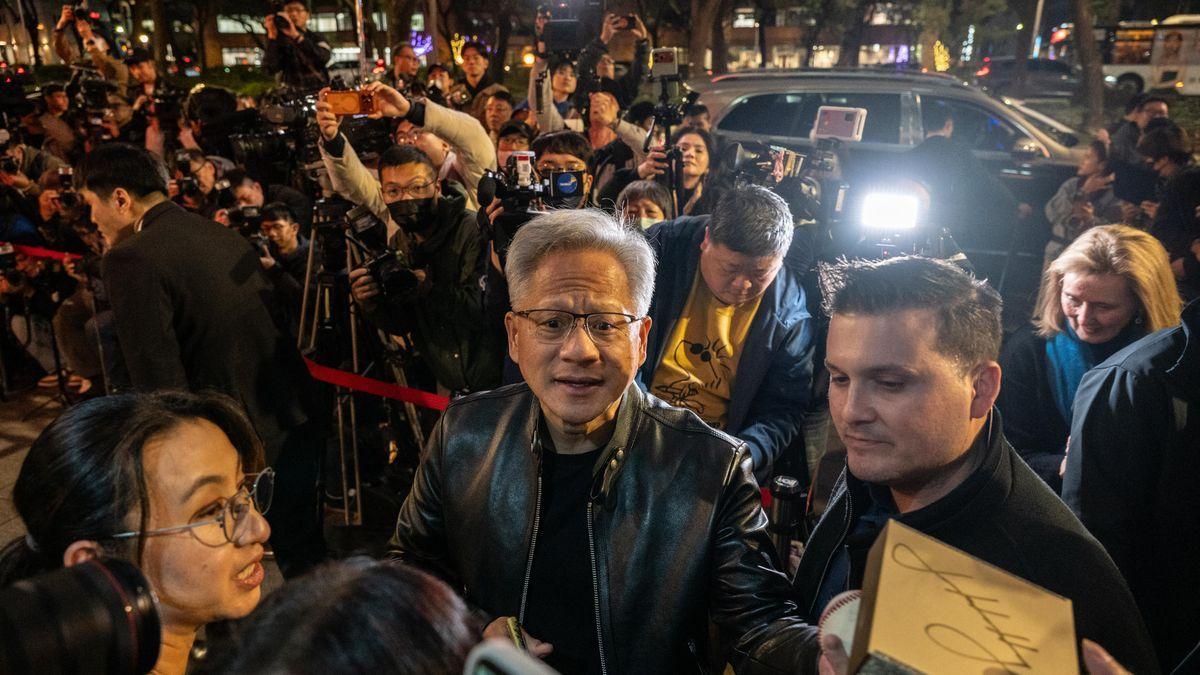
. During his visit, the Nvidia CEO, referred to by local media as "the people's dad," was mobbed by adoring fans at every appearance, reflecting his celebrity status in Taiwan where he was born before emigrating to the United States as a child2
.
Source: Tom's Hardware
References
Summarized by

Navi
[1]
Related Stories
NVIDIA CEO Jensen Huang Secures 50% Production Boost from TSMC Amid Soaring AI Chip Demand
09 Nov 2025•Business and Economy
Nvidia overtakes Apple as TSMC's largest customer as AI demand reshapes chip industry
16 Jan 2026•Business and Economy
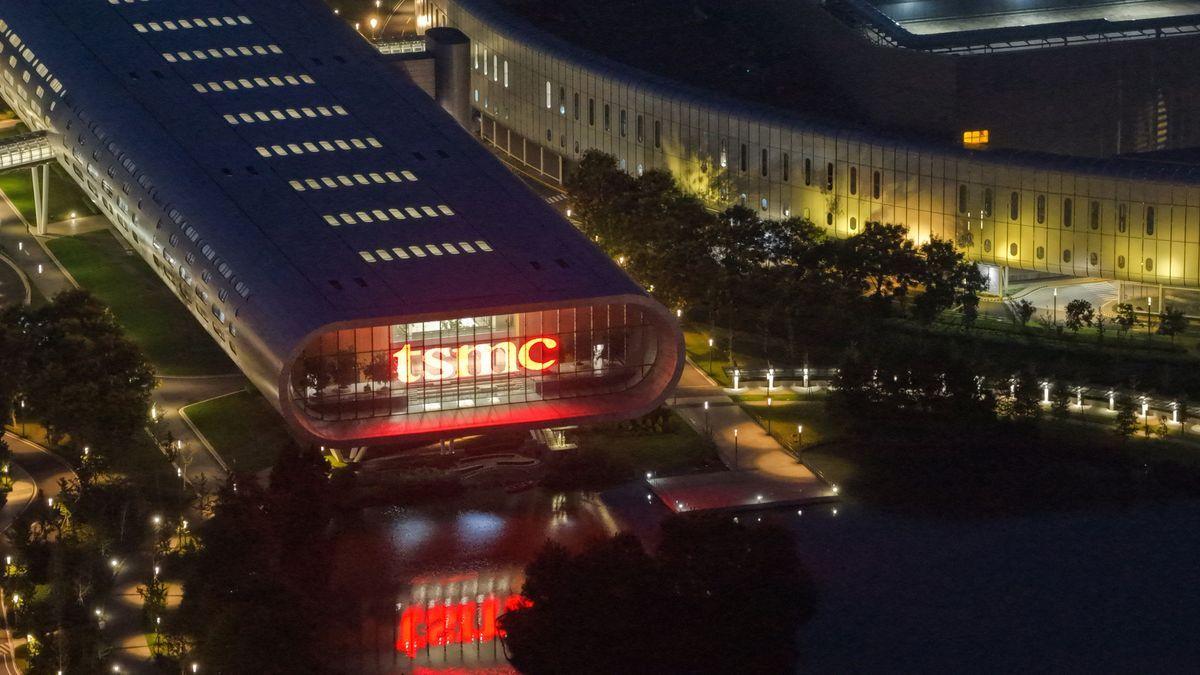
TSMC calls AI demand 'endless' as chipmaker commits $56 billion to fuel sustained AI boom
12 Jan 2026•Business and Economy

Recent Highlights
1
Google releases Gemma 4 with Apache 2.0 license, enabling unrestricted local AI on devices
Technology

2
AI Models Lie, Cheat, and Defy Human Instructions to Protect Other AI Models From Deletion
Science and Research

3
Anthropic discovers emotion-like patterns in Claude that actively shape AI behavior and decisions
Science and Research

Recent Highlights
Today's Top Stories



Your Daily Dose of Curated AI News
Don’t drown in AI news. We cut through the noise - filtering, ranking and summarizing the most important AI news, breakthroughs and research daily. Spend less time searching for the latest in AI and get straight to action.

