Jensen Huang says markets got it wrong on AI threat to software companies as Nvidia posts $68B


2 Sources
2 Sources
[1]
Nvidia's Jensen Huang says markets 'got it wrong' on AI threat to software companies
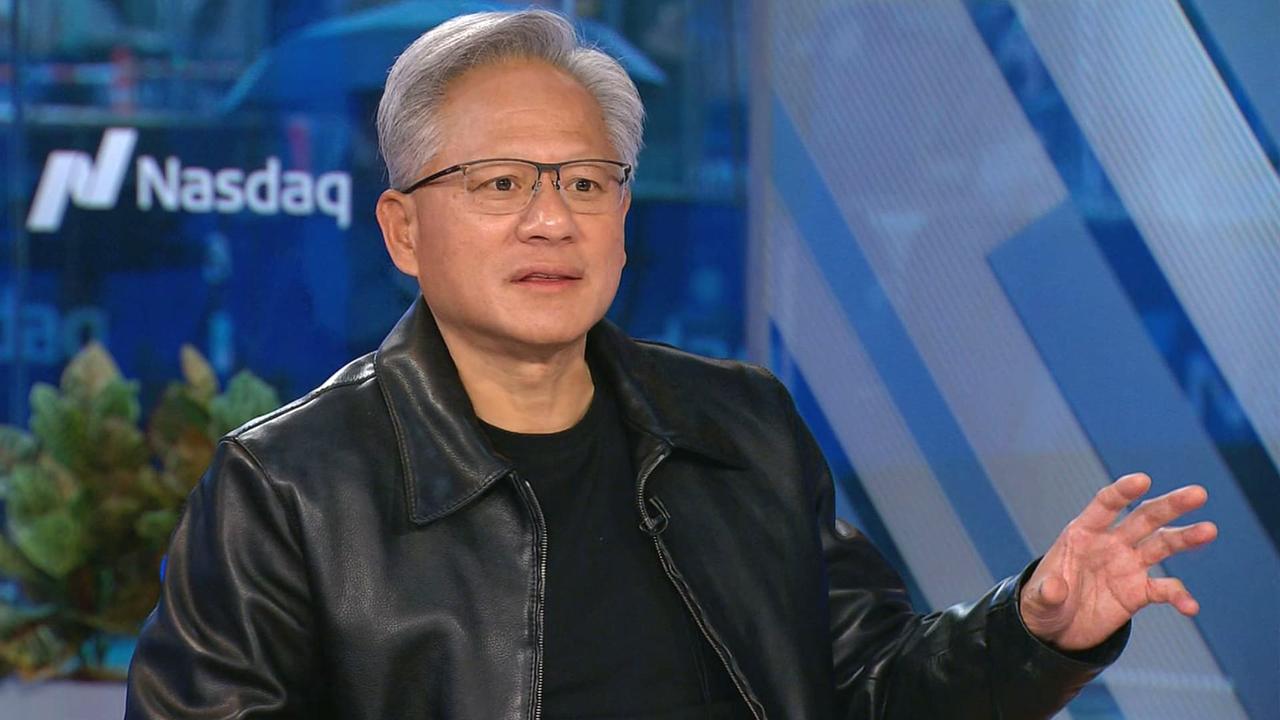
Nvidia CEO Jensen Huang delivers a keynote address at the Consumer Electronics Show in Las Vegas, Nevada, on Jan. 6, 2025. Nvidia CEO Jensen Huang said Wednesday markets have miscalculated the AI threat to software companies in an interview hours after the chip behemoth issued an upbeat sales forecast on strong AI demand. "I think the markets got it wrong," Huang said. "Nobody's going to service better than ServiceNow, and they're going to come up with agents that are really fine-tuned and optimized for the work that uses the tools that they have." "In the end, we need the tools to finish their work and put the information back in a way that we can understand," he told CNBC's Becky Quick. Nvidia's revenue for the fiscal fourth quarter climbed 73% to $68.13 billion from a year earlier, beating analysts' estimates for $66.21 billion. The company issued an upbeat guidance with revenue for the fiscal first quarter to be $78 billion, plus or minus 2%, well above analysts' forecast for $72.6 billion. Investors had grown weary that the massive run-up in spending on AI hardware might not be sustainable, stoking fears of a bubble building in the sector.
[2]
Nvidia CEO makes big remark on AI threat to software companies, Jensen Huang claims 'I think the markets got it...'
After the mammoth chip Nvidia posted a strong revenue, CEO Jensen Huang pushed back against the idea that so-called agentic AI will cannibalise the software industry. The tech titan said the markets got it wrong. He said AI agents will rely on existing software tools to get work done, not eliminate them. Nvidia CEO Jensen Huang on Wednesday said markets have miscalculated the AI threat to software companies, hours after the chip giant issued an upbeat sales forecast on strong AI demand. Nvidia CEO Jensen Huang believes investors are misunderstanding a crucial aspect of artificial intelligence. He argues that fears of AI eliminating enterprise software companies are largely misunderstood. "I think the markets got it wrong," Huang said, pushing back on fears that AI agents will cannibalize the enterprise software industry. The remarks of the tech billionaire came as the past few weeks have been challenging for the software industry. Anthropic, the company behind Claude Cowork, has shaken shares of several SaaS firms, including TCS and Infosys, as investors worry that AI tools like Claude Cowork could eventually replace traditional software services. However, Nvidia CEO Jensen Huang believes the market is misreading the situation entirely. The Nvidia chief was asked about the fears that legacy software companies could be replaced by AI. According to Jensen Huang, AI will not replace software tools, but use it on behalf of humans. Jensen Huang said he envisions a future where AI agents, rather than humans directly operating AI tools, carry out tasks on our behalf. "That's the reason why we also say agents are tool users," he explained. According to the Nvidia CEO, legacy enterprise platforms such as SAP and ServiceNow will continue to play a vital role because they "exist for a fundamentally good reason." He added that AI will function as intelligent software that leverages these tools for us, ultimately enhancing productivity rather than replacing them. ALSO READ: Who is Raj Shamani's mystery guest tonight? Online buzz over 'first time ever on an Indian podcast' hint sparks frenzy. After Macron and Vijay Mallya, can you guess who's next? He stated, "In the end, we need the tools to finish their work and put the information back in a way that we can understand." This is not the first time Jensen has made such claims. Earlier this month he said that the notion of the software industry being replaced by AI was the "most illogical thing in the world, and time will prove itself." Jensen Huang's remarks come as Nvidia, the leading manufacturer of GPUs that power AI data centres, posted a 73% year-on-year surge in fourth-quarter FY25 revenue to $68.13 billion. The company's annual revenue reached $215.9 billion. Huang said, "Our customers are racing to invest in AI compute -- the factories powering the AI industrial revolution and their future growth." Looking ahead, Nvidia has forecast revenue of $78 billion for the first quarter of FY26. The company is currently the world's most valuable publicly traded firm, with a market capitalisation of $4.8 trillion. (You can now subscribe to our Economic Times WhatsApp channel)
Share
Share
Copy Link
Nvidia CEO Jensen Huang pushed back against fears that AI agents will eliminate enterprise software companies, calling market concerns misguided. Speaking after Nvidia reported $68.13 billion in quarterly revenue, Huang argued that AI agents will leverage existing software tools like ServiceNow and SAP rather than replace them, enhancing productivity instead of cannibalizing the industry.
Nvidia CEO Challenges Market Fears About AI Threat to Software Companies
Jensen Huang, CEO of Nvidia, delivered a pointed message to investors Wednesday: the markets got it wrong on AI threat to software companies. Speaking hours after Nvidia posted impressive financial results driven by strong AI demand, Huang pushed back against growing concerns that agentic AI will replace the software industry
1
. His remarks come at a critical moment when investor worries about a potential bubble in AI spending have intensified, particularly around AI's potential impact on SaaS firms.
Source: ET
"I think the markets got it wrong," Huang told CNBC's Becky Quick, addressing fears that AI agents will cannibalize enterprise software companies
1
. The Nvidia chief emphasized that platforms like ServiceNow will continue to thrive because AI agents are fundamentally tool users. "Nobody's going to service better than ServiceNow, and they're going to come up with agents that are really fine-tuned and optimized for the work that uses the tools that they have," he explained1
.AI Agents Will Enhance, Not Eliminate Software Tools
Huang's vision centers on AI agents functioning as intelligent intermediaries that leverage existing software tools on behalf of humans rather than replacing them. "That's the reason why we also say agents are tool users," he stated, arguing that legacy enterprise platforms such as SAP and ServiceNow exist for fundamentally good reasons and will remain essential
2
. According to the Nvidia CEO, AI will function as intelligent software that enhances productivity by operating these tools, ultimately delivering results in formats humans can understand. "In the end, we need the tools to finish their work and put the information back in a way that we can understand," Huang emphasized1
.This isn't the first time Huang has defended enterprise software companies against AI displacement fears. Earlier this month, he called the notion of the software industry being replaced by AI "the most illogical thing in the world, and time will prove itself"
2
. His consistent messaging suggests Nvidia sees a future where companies integrate AI agents alongside traditional software infrastructure rather than choosing between them.Strong Revenue Numbers Amid High Demand for AI Hardware
Huang's comments followed Nvidia's impressive financial performance, with revenue for the fiscal fourth quarter climbing 73% year-over-year to $68.13 billion, surpassing analysts' estimates of $66.21 billion
1
. The company's annual revenue reached $215.9 billion, driven by intense demand for GPUs that power AI data centres2
. Nvidia issued an upbeat sales forecast for the fiscal first quarter, projecting revenue of $78 billion, plus or minus 2%, significantly exceeding analysts' forecast of $72.6 billion1
."Our customers are racing to invest in AI compute -- the factories powering the AI industrial revolution and their future growth," Huang stated
2
. Currently the world's most valuable publicly traded firm with a market capitalization of $4.8 trillion, Nvidia's performance reflects ongoing robust investment in AI infrastructure despite bubble building concerns among some investors1
2
.Related Stories
What This Means for Enterprise Software and AI Investment
The past few weeks have proven challenging for the software industry, with companies like Anthropic introducing tools such as Claude Cowork that have shaken shares of several SaaS firms, including TCS and Infosys
2
. Huang's perspective offers a counternarrative: rather than viewing AI as an existential threat, enterprise software companies should position themselves as essential infrastructure that AI agents will depend on to execute tasks effectively. This framing suggests opportunities for software providers to develop AI-native features and interfaces that make their platforms more accessible to AI agents while maintaining their core value proposition. Investors had grown weary that the massive run-up in spending on AI hardware might not be sustainable, but Nvidia's continued momentum and Huang's vision of symbiotic AI-software relationships may reshape how markets evaluate both hardware and software players in the AI ecosystem1
.References
Summarized by

Navi
Related Stories
Nvidia CEO Jensen Huang Praises DeepSeek's R1 Model, Remains Bullish on AI Chip Demand
22 Feb 2025•Business and Economy

NVIDIA's Dominance in AI Infrastructure: Record Earnings and Future Projections
29 Aug 2025•Technology

Nvidia GTC 2026: Jensen Huang shifts focus from chips to AI agents with NemoClaw launch
13 Mar 2026•Technology

Recent Highlights



Recent Highlights
Today's Top Stories








Your Daily Dose of Curated AI News
Don’t drown in AI news. We cut through the noise - filtering, ranking and summarizing the most important AI news, breakthroughs and research daily. Spend less time searching for the latest in AI and get straight to action.

