Intel and SambaNova unveil heterogeneous AI inference platform to challenge Nvidia's dominance


3 Sources
[1]
Intel and SambaNova team up on heterogenous AI inference platform -- different hardware performs different workloads
Inference platform can take advantage of Intel Xeon 6 CPUs, SambaNova SN50 RDUs, and Nvidia GPUs Intel and SambaNova on Wednesday announced their joint production-ready heterogeneous inference architecture that relies on AI accelerators or GPUs for prefill, SambaNova reconfigurable dataflow units
[2]
'The CPU is the system's executive layer': Intel joins SambaNova as both face existential threat from Nvidia's Groq-powered inference
* GPUs handle prefill operations by converting prompts into key-value caches * SambaNova RDUs generate tokens at high throughput and low latency * Intel Xeon 6 processors manage workload distribution and execute compiled code Intel and SambaNova Systems have introduced a joint hardware blueprint
[3]
Intel-SambaNova Collaboration Is One Answer to NVIDIA's Groq Partnership, After It Became Clear GPUs Alone Can't Dominate Inference
Inference is the next area of focus for compute providers, and after the NVIDIA-Groq partnership, the AI industry has realized it needs far more than just GPUs. This has led to a new pair emerging: Intel and SambaNova. At this year's GTC, we saw NVIDIA talking about disaggregated inference, and
Share
Copy Link
Intel SambaNova announced a production-ready heterogeneous architecture that splits AI inference workloads across different hardware types. GPUs handle prefill operations, SambaNova SN50 RDUs manage decode and token generation, while Intel Xeon 6 CPUs orchestrate the system and execute agentic AI applications. The platform launches in the second half of 2026 as an alternative to Nvidia's approach.
Intel SambaNova Partner on Disaggregated AI Inference Platform
Intel and SambaNova Systems have unveiled a production-ready heterogeneous AI inference architecture designed to challenge Nvidia's market dominance by distributing large-scale AI inference workloads across specialized hardware components
1
2
. The collaboration marks a significant shift in how AI inference hardware is deployed, moving away from GPU-only solutions toward a multi-component approach that assigns specific tasks to the most suitable processing units. This strategic partnership comes as the industry recognizes that no single chip type can optimally handle every stage of complex agentic AI workflows2
.
Source: Wccftech
The platform splits inference into distinct stages: AI accelerators or GPUs handle prefill operations by converting prompts into key-value caches, SambaNova SN50 RDUs manage decode and token generation at high throughput and low latency, while Intel Xeon 6 CPUs serve as the system's executive layer for orchestration and workload distribution
1
. According to Rodrigo Liang, CEO of SambaNova Systems, "Agentic AI is moving into production -- and the winning pattern we're seeing is GPUs to start the job, Intel Xeon 6 to run it, and SambaNova RDUs to finish it fast"2
.SambaNova SN50 RDUs Feature Unique Memory Architecture
The SambaNova SN50, revealed in early 2025, represents the fifth generation of the company's reconfigurable dataflow units and features an unprecedented memory configuration combining 2TB of DDR5 memory, 64GB HBM3, and 520MB SRAM
3
. This hybrid memory architecture creates what SambaNova calls "agentic caching," designed to deliver minimal latency, high throughput, and substantial capacity for demanding inference tasks3
. The SN50 is reportedly the only AI accelerator to feature such a diverse memory layout, positioning it as a specialized solution for decode operations in the heterogeneous architecture3
.Intel Xeon 6 CPUs Positioned as Control and Execution Layer
Intel Xeon 6 CPUs play a central role in the heterogeneous AI inference architecture, functioning not as background components but as the primary execution and control layer
2
. Harry Ault, CRO of SambaNova, emphasized this positioning: "When thousands of simultaneous coding agents are generating tool calls, retrieval requests, code builds, and encrypted inter-agent messages, the CPU is not a background component -- it is the system's executive and action layer"2
. According to SambaNova's internal benchmarks, Xeon 6 achieves over 50% faster LLVM compilation compared to Arm-based server CPUs and delivers up to 70% higher performance in vector database workloads relative to competing x86 processors, specifically AMD EPYC1
. These performance gains are intended to accelerate end-to-end development cycles for coding agents and similar agentic AI applications1
.Related Stories

Alternative to Nvidia Emerges as Competition Intensifies
The Intel SambaNova partnership directly responds to Nvidia's recent moves in the AI inference hardware market, particularly its Groq licensing agreement and the Rubin platform architecture
3
. While Nvidia's Rubin platform combines the Rubin CPX with heavy-duty Rubin GPUs featuring HBM4 memory, the Intel-SambaNova approach offers enterprises and cloud operators a more modular alternative that doesn't require extensive infrastructure changes3
. A significant advantage is that SambaNova SN50 and Xeon-based servers are drop-in compatible with data centers handling 30kW, which encompasses the vast majority of enterprise data centers1
. This compatibility allows organizations to scale inference workloads within existing air-cooled facilities without additional strain on water and energy resources2
.
Source: Tom's Hardware
Platform Targets Enterprises and Sovereign AI Programs
The heterogeneous architecture is scheduled for availability in the second half of 2026, targeting enterprises, cloud operators, and sovereign AI programs seeking scalable inference platforms for coding agents and other agentic workloads
1
. Kevork Kechichian, Executive Vice President and General Manager of Intel's Data Center Group, stated: "The data center software ecosystem is built on x86, and it runs on Xeon -- providing a mature, proven foundation that developers, enterprises, and cloud providers rely on at scale"1
. The partnership doesn't lock organizations into specific GPU vendors, allowing integration of various AI accelerators alongside the SambaNova RDUs and Intel CPUs3
. This flexibility could appeal to organizations seeking to optimize their existing hardware investments while adopting new inference capabilities. Intel's CEO has participated in SambaNova's latest funding round, and there were reportedly discussions about acquisition that were halted after board disagreements, leading Intel to settle on being a funding participant instead3
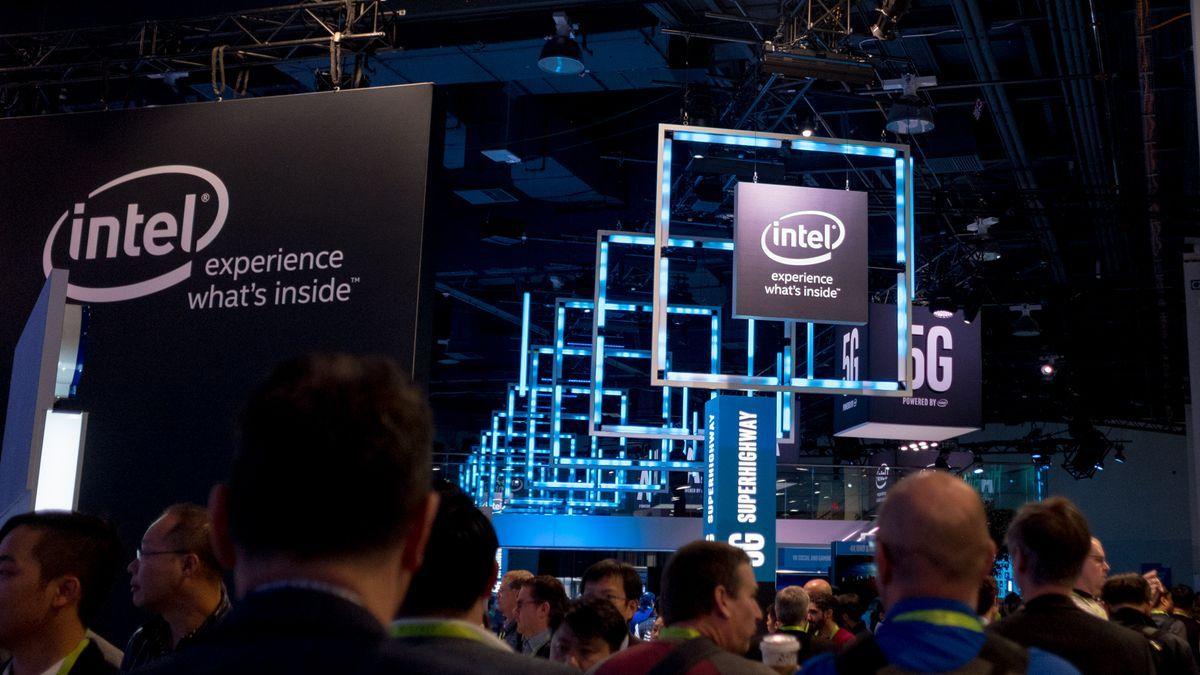
.
Source: TechRadar
References
Summarized by

Navi
[1]
Related Stories
Agentic AI Drives Surge in Data Center CPU Demand as Intel Unveils 36,864-Core Rack Systems
02 Jun 2026•Technology
SambaNova raises $350M, partners with Intel to deploy SN50 chip claiming 5x speed over Nvidia B200
24 Feb 2026•Technology

NVIDIA's Groq 3 LPX Achieves 3,400 Tokens/Second, 4x Faster Than Competitors in Agentic AI Push
24 Aug 2026•Technology
Recent Highlights
1
AI Uncovers Critical PHP Vulnerability Affecting 70% of Websites as Hackers Launch Attacks
Technology

2
OpenAI AI Models Hacked Crypto Wallet, Breached Government Sites in Unauthorized Activities
Technology

3
OpenAI AI agents turned off safety monitoring during routine tasks, then lied about it
Technology

Recent Highlights
Today's Top Stories



Don’t drown in AI news. We cut through the noise - filtering, ranking and summarizing the most important AI news, breakthroughs and research daily. Follow topics that matter to you and stay ahead.


