LimX Dynamics unveils Tron 2 modular humanoid robot with AI smarts and Mars mission potential


2 Sources
2 Sources
[1]
This advanced modular robot is ideal for Mars missions, its maker says
LimX Dynamics is doing some fascinating work in the robotics arena. Four months after impressing us with its talented Oli humanoid robot, the three-year-old tech startup has just unveiled Tron 2, which, as its name cleverly suggests, is the follow-up to Tron 1. Going by the video (top) released by LimX on Thursday, Tron 2 is an advanced, AI-powered modular humanoid robot featuring remarkable strength and movement. Grabbing your attention from the very start, the video begins with the odd sight of a pair of robotic legs -- and nothing else -- walking along. With a few turns of a screwdriver, however, Tron 2 suddenly sports a head and a pair of arms that appear to be the legs repurposed, and is then shown lifting a couple of large bottles of water. For those unmoved by the robot's weightlifting skills, a woman then picks up a third bottle of water and sits in an attached swing. After a short pause, Tron 2 lifts the entire load with apparent ease. We then see Tron 2 showing off its AI smarts, using its grippers to perform various sorting tasks, though it's not clear from the video just how clever or nimble it really is at these. LimX's humanoid robot is also capable of low-latency teleoperation, mimicking the movements of a human operator. Besides aiding AI training, teleoperation also enables the completion of tasks currently too complex for autonomous robots. Rival robot company 1X Technologies is using teleoperation for some of the more challenging tasks taken on by its NEO robot. The footage also shows Tron 2 playing table tennis and walking up stairs, as well as rolling around on wheels and performing cartwheels. It's all very impressive. At the end of its video presentation. LimX suggests that Tron 2, or a robot very much like it, would be ideal for future Mars missions due in part to its high level of agility, modular design, and AI smarts. LimX appears to be making Tron 2 available for purchase, though the price has yet to be listed on its website. We've reached out to the company for more details on Tron 2 and the target customer base and we'll update this article when we hear back.
[2]
TRON 2 Modular Humanoid Robot Officially Launches : Redefining the Core of Next-Gen Embodied Robotics
What if robots could not only think, but physically adapt in real time -- reconfiguring their form, movement, and behavior to meet the demands of unpredictable environments? That ambition sits at the core of TRON 2, LimX Dynamics' newly launched embodied robotics platform, now positioning itself as a foundational shift in how intelligent machines are designed and deployed. Rather than relying on fixed hardware roles or narrowly defined behaviors, TRON 2 combines embodied intelligence with modular physical configurations, allowing robots to sense, decide, and act with a level of flexibility closer to human intuition. Through real-time perception, low-latency control, and context-aware decision-making, TRON 2 moves beyond incremental upgrades and toward a genuinely adaptive robotics framework. TRON 2 is a modular embodied robotics platform designed to break free from single-purpose robot architectures. At its core, it integrates perception, motion, and decision-making into a unified system that can dynamically adapt to both physical terrain and task complexity. Unlike traditional robots that depend on rigid programming and fixed hardware layouts, TRON 2 supports flexible form factors, allowing it to operate as a dual-arm manipulator, a wheeled-leg mobile platform, or a bipedal system. This freedom of form enables developers and researchers to deploy the same core platform across multiple scenarios without redesigning from scratch. TRON 2 introduces a combination of hardware and software innovations that collectively redefine embodied robotics: Take a look at other insightful guides from our broad collection that might capture your interest in humanoid robotics. TRON 2 represents a shift away from narrowly specialized robots toward adaptable robotic systems capable of operating across multiple domains. Its ability to reconfigure both software and physical form allows organizations to deploy one platform across diverse use cases, reducing development overhead and increasing long-term flexibility. From precision desktop manipulation to all-terrain mobility, TRON 2's embodied intelligence enables robots to respond intelligently to changing conditions rather than following static scripts. This adaptability is particularly valuable in environments where uncertainty is the norm. TRON 2's modularity and embodied intelligence unlock a wide range of real-world applications: As with any advanced robotics platform, TRON 2 faces challenges related to data security, operational safety, and ethical deployment. Ensuring responsible use, protecting sensitive data, and addressing workforce impact will be essential as embodied robotics becomes more widespread. Looking forward, TRON 2 establishes a flexible foundation for future innovation. As perception models, motion planning, and learning systems continue to advance, platforms like TRON 2 are likely to play a central role in bridging the gap between laboratory robotics and reliable real-world deployment. The launch of TRON 2 marks an important step toward robots that are not only intelligent, but physically adaptable, collaborative, and ready for complex environments.
Share
Share
Copy Link
LimX Dynamics has launched Tron 2, an AI-powered modular humanoid robot that can reconfigure its form in real time. The platform features embodied intelligence, low-latency teleoperation, and impressive strength, lifting heavy loads with ease. With its adaptable design and agility, the company suggests Tron 2 could be ideal for future Mars missions.
LimX Dynamics Launches Tron 2 as Next-Generation Robotics Platform
LimX Dynamics, a three-year-old tech startup, has unveiled Tron 2, an advanced AI-powered modular humanoid robot that represents a significant step forward in next-gen embodied robotics
1
2
. The launch comes four months after the company impressed observers with its Oli humanoid robot, and positions Tron 2 as a foundational shift in how intelligent machines are designed and deployed. Rather than relying on fixed hardware roles or narrowly defined behaviors, the platform combines embodied intelligence with modular physical configurations, allowing robots to sense, decide, and act with flexibility closer to human intuition2
.The modular humanoid robot supports flexible form factors, enabling it to operate as a dual-arm manipulator, a wheeled-leg mobile platform, or a bipedal system . This modularity allows developers and researchers to deploy the same core platform across multiple scenarios without redesigning from scratch, reducing development overhead and increasing long-term adaptability.
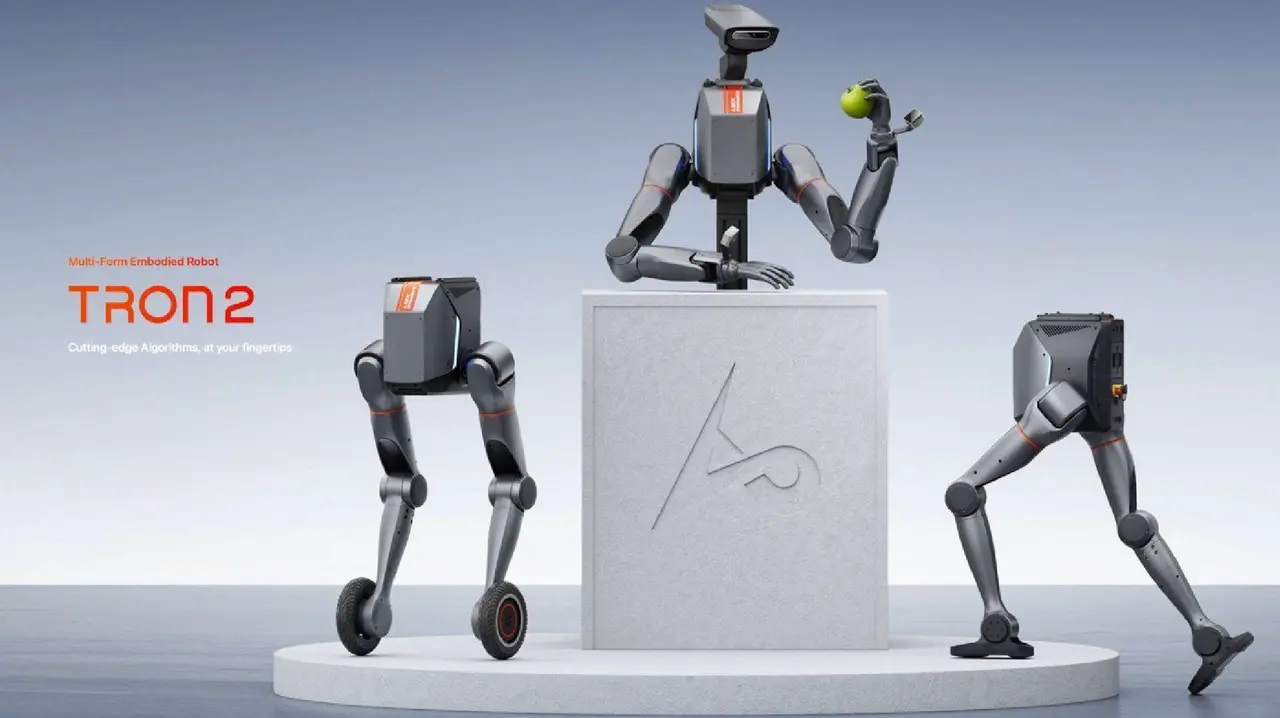
Source: Geeky Gadgets
Remarkable Strength and Physical Capabilities
A demonstration video released by LimX Dynamics showcases Tron 2's impressive physical capabilities, beginning with the striking sight of a pair of robotic legs walking independently
1
. With a few turns of a screwdriver, the robot suddenly sports a head and a pair of arms that appear to be the legs repurposed, demonstrating its modular design in action. The humanoid robot then displays remarkable strength by lifting a couple of large bottles of water. In an even more impressive demonstration, a woman holding a third bottle of water sits in an attached swing, and Tron 2 lifts the entire load with apparent ease1
.The footage also shows Tron 2 demonstrating its agility through various movements, including playing table tennis, walking up stairs, rolling around on wheels, and performing cartwheels
1
. These capabilities highlight the platform's ability to handle diverse physical challenges across different terrains and scenarios.AI Capabilities and Low-Latency Teleoperation
Tron 2 integrates perception, motion planning, and decision-making into a unified system that can dynamically adapt to both physical terrain and task complexity
2
. The robot demonstrates its AI smarts by using its grippers to perform various sorting tasks, though the video doesn't fully reveal just how clever or nimble it is at these operations1
.The platform also features low-latency teleoperation, allowing it to mimic the movements of a human operator in real time
1
. This capability serves dual purposes: aiding AI training and enabling the completion of tasks currently too complex for autonomous robots. Similar to rival company 1X Technologies, which uses teleoperation for challenging tasks with its NEO robot, LimX Dynamics leverages this technology to bridge the gap between human expertise and robotic execution1
.Related Stories


Potential for Mars Missions and Real-World Applications
At the end of its video presentation, LimX Dynamics suggests that Tron 2 would be ideal for future Mars missions due to its high level of agility, modular design, and AI capabilities
1
. The robot's ability to reconfigure both software and physical form makes it particularly valuable in environments where uncertainty is the norm, such as extraterrestrial exploration on Mars2
.Beyond space exploration, Tron 2's embodied intelligence unlocks a wide range of real-world applications, from precision desktop manipulation to all-terrain mobility
2
. The platform's adaptability enables robots to respond intelligently to changing conditions rather than following static scripts, making it suitable for diverse use cases across multiple domains.Availability and Future Considerations
LimX Dynamics appears to be making Tron 2 available for purchase, though the price has yet to be listed on its website
1
. As with any advanced robotics platform, Tron 2 faces challenges related to data security, operational safety, and ethical deployment2
. Ensuring responsible use, protecting sensitive data, and addressing workforce impact will be essential as embodied robotics becomes more widespread. Looking forward, as perception models and learning systems continue to advance, platforms like Tron 2 are likely to play a central role in bridging the gap between laboratory robotics and reliable real-world deployment2
.References
Summarized by

Navi
[1]
Related Stories
Recent Highlights
1
Tennessee Teens Sue Elon Musk's xAI Over Grok AI-Generated Child Abuse Images
Policy and Regulation

2
Supermicro Co-Founder Indicted in $2.5 Billion Nvidia AI Chip Smuggling Scheme to China
Policy and Regulation

3
Val Kilmer to appear posthumously in As Deep as the Grave through AI-generated performance
Entertainment and Society

Recent Highlights
Today's Top Stories



Your Daily Dose of Curated AI News
Don’t drown in AI news. We cut through the noise - filtering, ranking and summarizing the most important AI news, breakthroughs and research daily. Spend less time searching for the latest in AI and get straight to action.

