Logitech CEO says AI gadgets are chasing problems that don't exist, focuses on practical integration


4 Sources
4 Sources
[1]
AI gadget makers are chasing problems that don't exist, Logitech CEO says -- also details supply chain and pricing strategy
Hanneke Faber argues that dedicated AI devices have yet to justify themselves as Logitech focuses on practical integrations. Logitech's chief executive officer is questioning the widsom of rushing into standalone AI hardware. In an interview with Bloomberg, marking her second anniversary in the role, Hanneke Faber made comments have following several high-profile attempts at screenless or companion-style AI devices struggling to establish a market, while Logitech pulls revenue back to pre-pandemic levels and expands its AI features inside more traditional peripherals. Faber argued that the wave of AI-first gadgets released over the past year remains untethered from a clear purpose. Products such as the Humane AI Pin -- acquired by HP in February -- and Rabbit R1 launched with the promise of replacing parts of the smartphone experience, only to draw criticism for slow performance, limited features, and subscription-driven pricing. Their reception has shaped the debate around whether a general-purpose assistant belongs in a dedicated device at all. According to Faber, these early efforts solve little that a phone or PC cannot already handle, which is a view that has gained traction as both devices incorporate larger on-device models and tighter integrations with cloud assistants. So, rather than building a new class of hardware around conversational AI, the company has been introducing features that sit inside established categories. Its webcams already use subject-aware framing and noise filtering, and the recently announced MX Master 4 mouse includes shortcuts that tie directly into ChatGPT and Microsoft Copilot. Faber framed this as a matter of discipline: the company ships roughly three dozen products each year and follows a roadmap planned for several cycles ahead, so additions must justify themselves within familiar workflows. The interview also touched on supply chain stability and pricing. Logitech raised prices early in the year following tariff changes, but does not expect further increases now that it has stabilized its supply chain across China and five additional countries. Faber described the diversification as a factor in restoring consistency across the firm's 13 product categories, most of which have returned to volumes near their pandemic peaks. Growth in China has been particularly strong, helped by a locally led product strategy that the company adopted to arrest previous market share losses. Faber's comments on AI devices come as other large firms explore their own hardware concepts. OpenAI's acquisition of a startup co-founded by Jony Ive has fuelled speculation about a consumer device built around generative models. Whether that will avoid the pitfalls that dogged earlier launches is unclear, but Faber's assessment underlines how difficult it is to create demand for a standalone assistant when multifunction devices continue to carry out the same capabilities.
[2]
Logitech rejects AI gadgets: 'A solution looking for a problem that doesn't exist'
Logitech's CEO says that it isn't interested in making a singular "AI" gadget, like the Rabbit R1 or Humane Pin. From graphics cards to mid-sized cars, you can't find any new electronics that don't claim to be "AI-powered" in some way. That includes Logitech's mice and keyboards, some of which are being loaded specifically with "AI" buttons. But the CEO of Logitech says she sees no value in infamous "AI" gadgets, such as the Rabbit A1 or the Humane pin. "What's out there is a solution looking for a problem that doesn't exist," said Hanneke Faber in an interview with Bloomberg. That seems to be the consensus among reviewers, and many early adopters, who found the Rabbit R1 to be little more than a stripped-down smartphone that was less capable than, well, a phone just running the ChatGPT app. The Humane pin was even more lampooned, with its questionable utility underscored by poor battery life and overheating issues for the projected hand screen. Both devices are now essentially dead. That isn't to say that Logitech has no ticket to the "AI" hype train. It sells a "Signature AI Edition" of the M750 mouse which has a dedicated assistant button right there on the top of the mouse. Logitech has an "AI" Prompt Builder that integrates with its omnibus Logi Options+ management app as well, allowing triggered actions on most of its mid-range and high-end keyboards and mice. That being said, looking at the company's latest products, it's refreshing to see something that doesn't have abominable intelligence plastered on every page. The MX Master 4 mouse and the Alto Keys 98M keyboard both omit any mention of "AI" on their promotional pages. The latter doesn't even have a Copilot button, despite being a cross-platform Windows/Mac input device. With so many products and services apparently injecting "AI" into their features list apparently just to tick a box, I appreciate Logitech's apparent resistance to the trend. Faber also said that Logitech isn't looking to raise prices again anytime soon, after a notable jump in sticker prices following the initial round of Trump tariffs. "...It had to be done and it was better to rip off the proverbial Band-Aid than kind of drag our feet, which some others did." Logitech increased prices on some devices by around 25 percent in early 2025. That said, with pricing for chips and memory exploding, thanks largely to the "AI" industry boom, even low-end devices could see more pricing pressure in 2026.
[3]
'A solution looking for a problem that doesn't exist': Logitech CEO blasts AI gadgets - and most people think that's being generous
Could Jony Ive's collaboration with OpenAI change people's minds? Startups around the globe are trying to create the next big hardware product that sees the iPhone-ification of a dedicated AI device. We've seen plenty of failed attempts from the Rabbit R1 to the Humane Pin, and now Logitech CEO Hanneke Faber has chimed in by saying, "What's out there is a solution looking for a problem that doesn't exist." With 2026 on the horizon, and the looming product reveal of whatever legendary Apple designer, Jony Ive, and OpenAI CEO, Sam Altman, are working on, will this new device change Faber's mind? Or is she just saying what the rest of us are thinking? In her interview with Bloomberg, Faber, who took over as CEO of Logitech two years ago, said, "The company is a strong proponent of AI," but it aims to find clever uses for the technology in its class-leading peripherals rather than a dedicated device itself. Just recently, Logitech launched the MX Master 4, an upgrade to the world's most popular computer mouse, and the new version offers a shortcut to ChatGPT or Copilot. That said, it's a thoughtful inclusion of AI, rather than forcefully adding the software just to tout the current buzzword in marketing. Faber's point is simple: AI has been brilliant for software and accessories, and Logitech has happily used it to make smarter mice and keyboards. But building entire pieces of hardware around AI alone feels like a stretch. It's not that the tech isn't impressive; it's that no one has convincingly explained why you need a standalone AI device in your pocket when your phone already does most of the work without the subscription fees or experimental interfaces. You don't need to look far to find criticism of AI-dedicated devices online. In fact, I'd love to see sales figures for the most popular offerings like the Rabbit R1 or Humane Pin, considering they essentially tanked upon release. In a Reddit thread sharing Faber's interview with Bloomberg, users have shared their opinions on AI hardware, and it's fair to say the Logitech CEO is voicing the consensus of the average consumer. One user said, "Money looking for more money," which neatly sums up the sentiment. Another joked, "I got 99 problems, and AI is 1000 of them." While the most upvoted comment came from someone who said voice interaction is still a terrible interface, and that no amount of AI magic can fix the fact that talking to gadgets can be slower and clunkier than tapping a screen. Faber isn't dismissing AI entirely; she's saying the timing is off. The value isn't clear yet, and until someone builds an AI device that does something your phone can't already do faster, cheaper, and without a learning curve, people will continue to ask why these products exist.
[4]
Logitech CEO questions AI devices, calling them 'solutions looking for problems'
Logitech backs subtle AI upgrades over risky standalone hardware experiments The AI hardware boom has produced some of the most ambitious and most short-lived products in recent tech history. While companies chase the next breakthrough gadget, consumers are asking a simpler question: what problem does this actually solve? Logitech chief executive Hanneke Faber has stepped into that debate with unusual candour, arguing that many AI devices today are "solutions looking for a problem." Her critique echoes a growing sentiment that innovation without purpose risks losing consumer trust rather than earning it. Also read: Manus to Perplexity: AI apps win big in Microsoft Store Awards 2025, see full list Faber's comments arrive after a turbulent run for AI focused gadgets. Humane's AI Pin promised to liberate users from their smartphones through a voice driven interface and wearable projector. Instead it faced heat issues, inconsistent performance and unclear everyday utility, eventually pushing the company toward shutdown. Rabbit's R1 drew viral attention for its bright design and agent powered promise, but reviews revealed slow response times and limited real world usefulness. In both cases the ambition was clear while the practical value was not. These devices captured the AI zeitgeist yet struggled to justify a place in users' daily lives. The industry's rush to capitalise on AI momentum seems to have outpaced its ability to solve meaningful problems. Rather than betting on standalone AI hardware, Logitech is taking a quieter path. The company has been embedding AI capabilities into its existing product line, from webcams that auto correct lighting and framing to the MX Master 4 mouse that integrates AI shortcuts into common workflows. For Faber this approach respects how people actually use technology: through familiar tools that get incrementally better rather than inventions that require entirely new habits. Also read: Top 5 TWS earphones on sale now: AirPods Pro, Sennheiser Momentum TWS and 3 more Her framing suggests that the future of AI hardware may not be radical redesign but thoughtful refinement. When technology blends into what users already do, AI becomes an enabler instead of a spectacle. Faber's critique reflects a broader market reality. Consumers gravitate toward AI experiences that feel effortless, mostly through software in phones, laptops and apps. Hardware only succeeds when it offers clear, consistent advantages. Products that arrive with lofty claims but weak utility fade quickly, leaving behind scepticism that affects the entire category. The message is not that AI hardware has no future. It is that innovation needs context. Reinvention should not be pursued for its own sake. The industry may gain more by strengthening existing ecosystems than by experimenting with fragile new ones. As the AI wave matures, Faber's perspective offers a timely course correction. The next generation of successful AI products might not be the boldest or most futuristic devices but the ones that solve real problems in simple, reliable ways.
Share
Share
Copy Link
Hanneke Faber, Logitech's CEO, criticized standalone AI hardware like the Humane AI Pin and Rabbit R1, calling them solutions looking for problems that don't exist. Instead, Logitech is embedding AI features into traditional peripherals like the MX Master 4 mouse with ChatGPT shortcuts, arguing that phones and PCs already handle what dedicated AI assistants promise.
Logitech CEO Questions the Rush Into Standalone AI Hardware
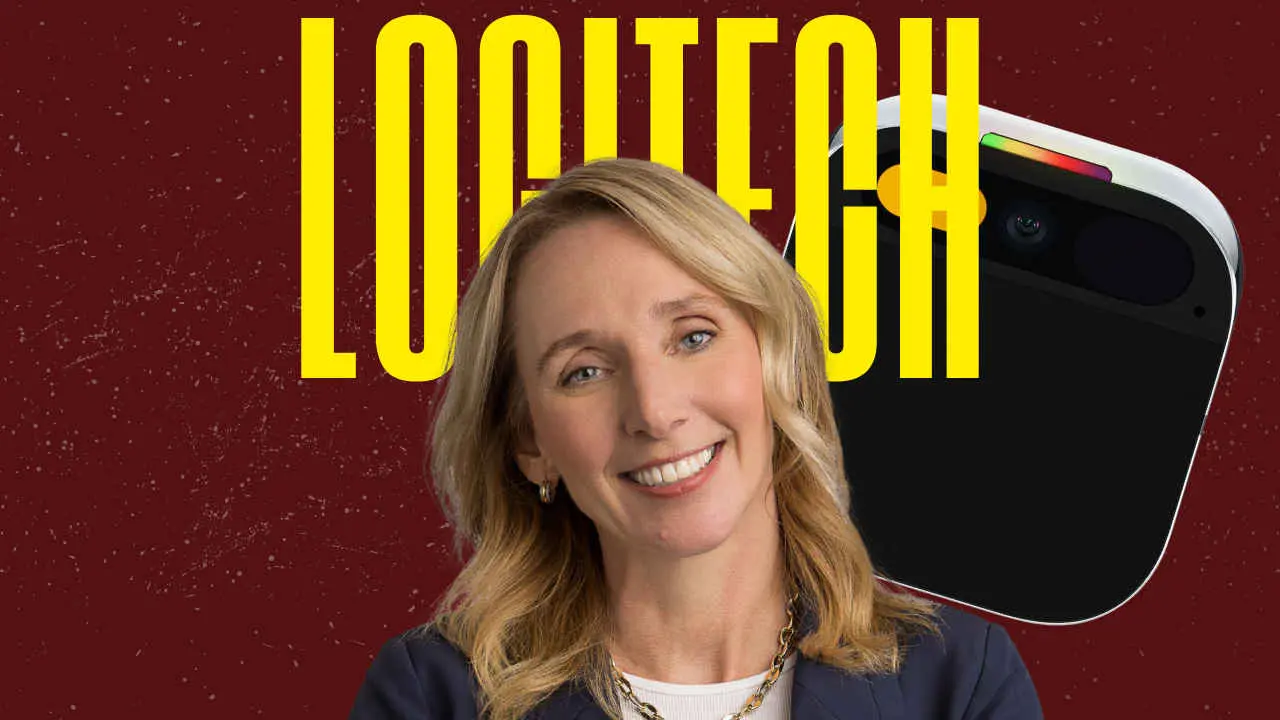
Hanneke Faber, marking her second anniversary as Logitech's chief executive, has delivered a pointed critique of the AI gadgets flooding the market. In an interview with Bloomberg, Faber described the wave of standalone AI hardware as "a solution looking for a problem that doesn't exist," a sentiment that resonates with growing consumer skepticism
1
. Her comments arrive after several high-profile failures in the dedicated AI assistants category, including the Humane AI Pin—acquired by HP in February following widespread criticism—and the Rabbit R1, both of which launched with ambitious promises but struggled to justify their existence2
.
Source: Digit
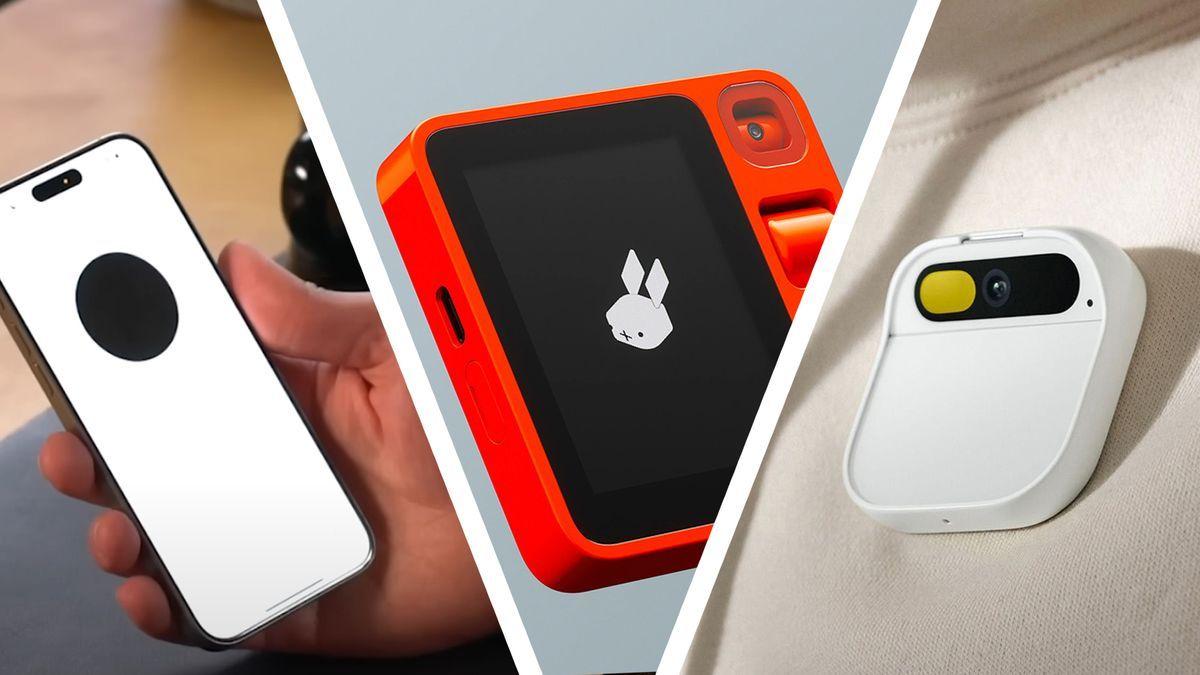
The Humane AI Pin and Rabbit R1 attempted to replace parts of the smartphone experience through screenless or companion-style interfaces. Instead, they drew criticism for slow performance, limited features, overheating issues, and subscription-driven pricing that failed to deliver clear user utility . According to Faber, these early efforts solve little that a phone or PC cannot already handle, a view gaining traction as smartphones incorporate larger on-device models and tighter integrations with cloud assistants
1
.
Source: TechRadar
Logitech AI Strategy Focuses on Practical Feature Integration
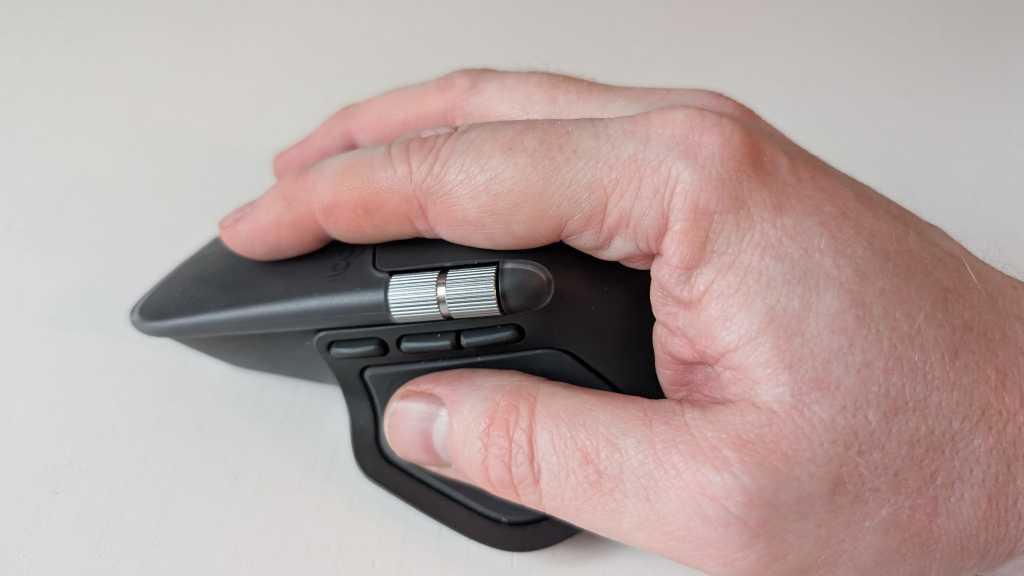
Rather than building a new class of hardware around conversational AI, Logitech has been introducing AI feature integration that sits inside established categories. The company's webcams already use subject-aware framing and noise filtering, while the recently announced MX Master 4 mouse includes shortcuts that tie directly into ChatGPT and Microsoft Copilot
1
. Logitech also offers an AI Prompt Builder that integrates with its Logi Options+ management app, allowing triggered actions on most mid-range and high-end keyboards and mice2
.
Source: PCWorld
Faber framed this approach as a matter of discipline: the company ships roughly three dozen products each year and follows a roadmap planned for several cycles ahead, so additions must justify themselves within familiar workflows
1
. This product strategy respects how people actually use technology—through familiar tools that get incrementally better rather than inventions requiring entirely new habits4
.AI Hardware Criticism Reflects Broader Market Skepticism
The AI hardware criticism voiced by Faber echoes widespread consumer sentiment. In Reddit discussions following her Bloomberg interview, users expressed frustration with AI-dedicated devices, with one highly upvoted comment noting that voice interaction remains a terrible interface and that talking to gadgets can be slower and clunkier than tapping a screen . This market skepticism reflects a broader reality: consumers gravitate toward AI experiences that feel effortless, mostly through software in phones, laptops, and apps, while hardware only succeeds when it offers clear, consistent advantages
4
.The timing of Faber's comments is notable as other large firms explore their own hardware concepts. OpenAI's acquisition of a startup co-founded by Jony Ive has fueled speculation about a consumer device built around generative models
1
. Whether that will avoid the pitfalls that dogged earlier launches remains unclear, but Faber's assessment underlines how difficult it is to create demand for standalone AI hardware when multifunction devices continue to carry out the same capabilities .Related Stories
Supply Chain Stability and Pricing Strategy Shape Logitech's Position
Beyond AI, Faber addressed Logitech's operational positioning. The company raised prices early in the year following tariff changes, with some devices seeing increases of around 25 percent in early 2025
2
. However, Logitech does not expect further increases now that it has stabilized its supply chain across China and five additional countries1
. Faber described the diversification as a factor in restoring consistency across the firm's 13 product categories, most of which have returned to volumes near their pandemic peaks, with particularly strong growth in China helped by a locally led approach1
.Faber's perspective offers a course correction for the AI industry boom. The message is not that AI hardware has no future, but that innovation needs context and should not be pursued for its own sake
4
. As the AI wave matures, the next generation of successful AI products might not be the boldest devices but the ones that solve real problems in simple, reliable ways, strengthening existing computer peripherals ecosystems rather than experimenting with fragile new ones.References
Summarized by

Navi
[1]
Related Stories
Dell admits consumers don't care about AI PCs as Microsoft's Copilot strategy falters
07 Jan 2026•Technology

OpenAI and Jony Ive's AI Device: Ambitious Vision Meets Real-World Challenges
07 Oct 2025•Technology

Tech Giants Race to Develop Revolutionary AI Device, Led by OpenAI and Jony Ive
15 Jun 2025•Technology

Recent Highlights
1
OpenAI shuts down Sora video app after six months, ending Disney's $1 billion investment deal
Technology

2
Apple plans major Siri AI overhaul in iOS 27 with standalone app and third-party chatbot support
Technology

3
Claude AI can now control your computer to complete tasks, but security risks remain
Technology
Recent Highlights
Today's Top Stories








Your Daily Dose of Curated AI News
Don’t drown in AI news. We cut through the noise - filtering, ranking and summarizing the most important AI news, breakthroughs and research daily. Spend less time searching for the latest in AI and get straight to action.

