Meta cuts 700 jobs across Reality Labs and Facebook as AI spending soars to $135 billion


5 Sources
5 Sources
[1]
Meta cuts about 700 jobs as it shifts spending to AI
Meta has begun laying off employees as it focuses more of its cash on building out datacenters, training its own large language models, and recruiting talent for AI. A person familiar with the cuts told The Register they would number about 700. According to The Information, the job losses will fall hardest on Meta's Reality Labs, its social media division, and recruitment. "After 6 years at Meta, my role was impacted by the recent reduction in force today," wrote a woman who worked as a senior recruiter with Meta until this morning in a LinkedIn post. "This one is especially tough. After returning as a short-term employee in 2024, I was grateful to receive a full-time offer again last year and I'm incredibly proud of what I was able to accomplish during that time. The gratitude I feel far outweighs the disappointment." In a statement to The Register, Meta said this reduction in force is about streamlining the business to work more effectively with AI as laid out by Meta CEO Mark Zuckerberg during earnings in January. "Teams across Meta regularly restructure or implement changes to ensure they're in the best position to achieve their goals. Where possible, we are finding other opportunities for employees whose positions may be impacted," a spokesperson wrote. In a post-earnings note on January 28, Zuckerberg said this was the year Meta would begin "flattening teams." "We're elevating individual contributors, and flattening teams. We're starting to see projects that used to require big teams now be accomplished by a single very talented person," he wrote. "I want to make sure as many of these very talented people as possible choose Meta as the place they can make the greatest impact - to deliver personalized products to billions of people around the world. And if we do this, then I think we'll get a lot more done and it's going to be a lot more fun." Reuters reported recently that Meta plans to lay off 20 percent of its workforce - some 15,000 employees - however the layoffs that have reportedly begun this week are on a smaller scale thus far. Meta said it had 78,800 employees as of the end of January, a number that had grown in recent years as it sought to build a bench of AI talent that could build a platform capable of competing with frontier model providers such as Anthropic and OpenAI. If Meta were to follow through with a 20 percent cut, it would mean the elimination of about 15,000 jobs and bring Meta's headcount to its lowest point since 2021, when it had about 58,600 full-time employees in 2021. Meta has dramatically increased spending in recent years to keep up in the AI arms race as it focuses on building its own AI infrastructure and datacenter properties to match competitors Anthropic, Google, and OpenAI. Expenses rose 24% during 2025 to $118 billion, and the company has said it plans to spend between $162 billion and $167 billion this year (although it expects operating income to increase, meaning revenue will grow faster than expenses). Of that, capital expenditures - including datacenter buildouts to power its AI efforts - will amount to between $115 billion and $135 billion. The company is also designing its own custom chips for GenAI workloads which it plans to build over the next two years. The first of its inhouse MTIA chips was released in 2023. "(The) MTIA 300 will be used for ranking and recommendations training, and is already in production. MTIA 400, 450 and 500 will be capable of handling all workloads, but we will primarily use these chips to support GenAI inference production in the near future and into 2027," the company said. The release of Meta's next reasoning model, code-named Avocado, has reportedly been delayed, after delivering underwhelming results during internal tests, according to the New York Times. That news comes even as Meta offered dramatic nine figure pay packages to lure AI researchers from competitors last year with OpenAI defectors reportedly commanding $100 million sign-on bonuses. Zuckerberg also invested $14 billion in Scale AI and tapped its co-founder Alexander Wang to lead Meta's AI efforts. Wang reportedly clashed with Meta's former chief AI scientist Yann LeCun, who called Wang young and inexperienced after he quit. LeCun was also known as the godfather of AI. LeCun accused Zuckerberg of pushing aside the former AI team after the company's disappointing Llama 4 model release. Recently, Facebook CFO Susan Li talked with analysts at Morgan Stanley at the company's Technology, Media & Telecom conference about the uncertain path for a return on Meta's AI investments. "That's not like, okay, in 2026, the ROI is this in 2027, the ROI is this and so on, which pains me, to be clear," Li said. "I really wish that, that were the world we live in, but it's not. And we have to be willing to sort of make temporal bets, and that's a big part of what we have to do in an intelligent and thoughtful way." She said Meta can accurately gauge what the costs will be for personnel and infrastructure to run the platform's existing apps and experiences. It can also calculate how much it will cost to build new AI capabilities, including the employees and compute costs. But there is a blindspot when it comes to guessing how much inference power will be needed if the AI products that the company produces need to be scaled quickly to meet user demand. "The teams that are working on basically AI training today, they have the most immediately sort of clearly defined buttoned-up road map for how much capacity, let's say, they think they need to train models for the next 12, 24 months," Li said. "That's kind of like a demand road map from the teams that they have more certainty into. The part I think that is the most challenging for us to have certainty around is inference needs because that's both - you have to predict meaningfully into the future because of the lead time and getting capacity." ®
[2]
Meta Lays Off 700 Employees, While Rewarding Top Executives
Meta on Wednesday laid off around 700 employees, a person with knowledge of the company said, the latest downsizing as the Silicon Valley giant shifts its priorities toward artificial intelligence. Less than 24 hours earlier, the company unveiled a new stock program for six top executives that could increase compensation for some of them by as much as $921 million each over the next five years. Meta said the move was a way to retain talent in the A.I. era and push it toward ambitious growth. The dichotomy -- cutting some employees while rewarding high-ranking executives -- underlines how much A.I. has changed the tech industry. In recent years, Meta has been trying to move beyond its social media and metaverse businesses. Mark Zuckerberg, Meta's chief executive, has declared that he is striving to create "superintelligence," or a godlike A.I. that can act as the ultimate personal companion. Last year, Mr. Zuckerberg shelled out billions of dollars to hire a team of A.I. specialists. At the same time, the company planned to cut 10 percent to 15 percent of Reality Labs, its division making virtual reality and metaverse products. The latest layoffs compounded a tough day for Meta, which owns Facebook, Instagram and WhatsApp. A Los Angeles jury on Wednesday found the company liable for harming a young user with addictive design features on Instagram in a bellwether case that could open social media companies to more lawsuits over users' well-being. While the verdict was coming in, Meta was also announcing the 700 layoffs in the Reality Labs unit, as well as some in recruiting, sales and Facebook, a person with knowledge of the matter said. The layoffs were a fraction of the tech giant's 78,000 employees, but signal Meta's priorities.
[3]
Meta Lays Off 700 in Pivot From Metaverse to AI
"Where possible, we are finding other opportunities for employees whose positions may be impacted.†Meta is laying off about 700 people at Facebook and its VR division reality Labs, according to a new report from CNBC. The layoffs come as Meta seeks to pivot away from its metaverse bet and lean more heavily into AI. The hundreds of new layoffs come after Meta cut about 1,500 workers in January, mostly from Reality Labs, which makes the Quest VR headset and the Horizon Worlds platform. Meta employs about 78,000 people in total. "Teams across Meta regularly restructure or implement changes to ensure they’re in the best position to achieve their goals," a Meta spokesperson told Gizmodo in a statement Wednesday. "Where possible, we are finding other opportunities for employees whose positions may be impacted.†Facebook was renamed Meta in 2021 because CEO Mark Zuckerberg thought the metaverse was the future. But it turns out that the need to strap a gigantic computer to your face is quite a tall hurdle for mass adoption. Meta's Ray-Ban glasses, while a different product and use case, have sold much better, perhaps because they look like normal glasses on your face. Reality Labs has burned through roughly $73 billion since Zuck shifted his company's focus to the metaverse. Last week Meta announced it was shutting down Horizon Worlds only to backtrack just a couple of days later. “We have decided, just today in fact, we will keep Horizon Worlds working in VR for existing games,†Meta CTO Andrew Bosworth said in an Instagram AMA last week. Meta is trying to make a larger push into AI, with a report from the Wall Street Journal recently suggesting Zuckerberg was even creating a personal AI agent that's supposed to work alongside Meta workers. Meta suffered two legal defeats in the past two days, the first in New Mexico where the state Attorney General had brought a suit alleging it had misled consumers about the safety of its products and the potential harm to children. Meta has been ordered to pay roughly $375 million in civil penalties in that case, far less than the $2 billion the state had asked for. The second loss in court happened Wednesday when Meta and Google both lost a case brought by a woman who said she'd become addicted to Instagram and YouTube as a child and had suffered mental health issues as a result. Meta argued that the woman's mental illnesses predated her exposure to Instagram. The jury has awarded the woman $3 million in that case. The two cases had been closely watched because there are about 2,000 other cases against Meta pending in federal court around the issues of child safety and social media addiction. It's entirely possible that more layoffs at Meta are just over the horizon. Reuters reported last week that Meta would lay off 20% or more of its workforce. That would be somewhere in the neighborhood of about 15,000 people. The reason for the layoffs, according to Reuters, was an attempt to offset "costly artificial intelligence infrastructure bets" and to "prepare" for "greater efficiency" that's supposed to be realized by AI advancements. Meta told Gizmodo over email Wednesday that the Reuters report was "speculative" and had "theoretical approaches.â€
[4]
Meta lays off hundreds across Reality Labs, recruiting, and sales amid $135B AI bet | TNW
Meta began cutting hundreds of jobs on Wednesday across Reality Labs, Facebook, recruiting, sales, and global operations, according to people familiar with the matter and LinkedIn posts from affected employees. The layoffs are the latest in a rolling series of workforce reductions that have accelerated sharply in 2026, as the company redirects resources toward artificial intelligence and away from divisions that no longer sit at the centre of Mark Zuckerberg's strategic vision. A Meta spokesperson confirmed the restructuring in a statement, saying that teams across the company regularly implement changes to ensure they are positioned to achieve their goals, and that the company is working to find other opportunities for affected employees where possible. Meta employed 78,865 people at the end of 2025, according to its annual report. Wednesday's layoffs, described by sources as affecting hundreds of employees, represent a small fraction of that total. But they do not arrive in isolation. In January, Meta cut approximately 1,500 positions in its Reality Labs division, roughly 10 per cent of the unit's workforce, and closed three VR game studios: Twisted Pixel, Sanzaru Games, and Armature Studio. Earlier in 2025, the company carried out performance-based terminations affecting around 3,600 employees, a process Zuckerberg framed as raising the bar on performance management. And in mid-March, Reuters reported that Meta's senior executives had been asked to prepare workforce reduction plans of up to 20 per cent, a figure that would translate to roughly 15,000 positions if fully implemented. Meta called that reporting speculative. The cumulative picture is one of sustained contraction. Since Zuckerberg declared 2023 the "year of efficiency," a programme that eliminated more than 21,000 roles in 2022 and 2023, the company has never fully stopped cutting. The layoffs are inseparable from Meta's AI spending commitments, which have grown to a scale that would have seemed implausible even two years ago. The company forecast capital expenditures of between $115 billion and $135 billion for 2026, nearly double the $72 billion it spent in 2025, with the bulk directed toward data centres, Nvidia GPUs, custom chips, and the infrastructure supporting its Llama model ecosystem and Superintelligence Labs. Total company expenses for 2026 are projected at $162 billion to $169 billion. Analysts at Barclays have forecast a near-90 per cent drop in free cash flow as a result. When Meta's stock rose nearly 3 per cent on the news of the potential 20 per cent layoffs in mid-March, the market's message was blunt: investors want the spending, and they want the headcount to pay for it. Meanwhile, Reality Labs, the division that absorbed the heaviest cuts in January, posted an operating loss of $19.2 billion in 2025, bringing cumulative losses since the unit's creation to approximately $90 billion. Zuckerberg has said he expects 2026 to be the peak year for those losses, with gradual reductions beginning in 2027 as the division shifts its focus from VR headsets toward smart glasses and wearable AI devices. Meta is not cutting in isolation. More than 45,000 tech jobs have been eliminated globally in the first quarter of 2026, with AI cited as the driving force in at least one in five cases. Atlassian announced 1,600 redundancies in March, framing the cuts as an adaptation to the AI era. Amazon confirmed 16,000 corporate job losses in late January. Block eliminated 4,000 roles, with CEO Jack Dorsey explicitly citing AI's growing capability to perform work previously done by humans. The pattern is consistent: companies are spending aggressively on AI infrastructure while reducing the human workforce those systems are designed to augment or replace. Whether the productivity gains materialise at the scale the spending implies remains an open question. Zuckerberg has claimed that output per engineer at Meta has risen 30 per cent since early 2025, driven by AI coding tools, and that power users have seen an 80 per cent year-over-year increase. Those figures, if sustained, would represent a genuine structural shift in how software companies operate. If they do not hold, the layoffs will look less like strategic repositioning and more like cost-cutting dressed in the language of transformation. The immediate question is whether the reported 20 per cent reduction plan will materialise in full. Meta has not confirmed it. But the cadence of cuts, from performance terminations to Reality Labs restructuring to this week's cross-division layoffs, suggests that the company is executing a phased reduction rather than a single dramatic event. For the employees affected on Wednesday, the distinction is academic. For Meta, the bet is that a leaner company spending $135 billion a year on AI infrastructure will outperform the one that employed 87,000 people at its 2022 peak. The next several quarters will determine whether that trade-off was prescient or premature.
[5]

Meta lays off hundreds more workers as Mark Zuckerberg pivots away from costly 'metaverse' push
Meta is laying off several hundred employees across key divisions -- including Facebook and its Reality Labs unit -- as it overhauls the company for the artificial intelligence era. The layoffs also come as Meta pulls back from its costly metaverse push after pouring tens of billions into virtual reality with limited payoff. The company has shifted resources away from immersive worlds and toward artificial intelligence and wearable tech, betting those areas offer faster growth and clearer returns as demand for VR headsets cools and investor enthusiasm fades. "Teams across Meta regularly restructure or implement changes to ensure they're in the best position to achieve their goals," a Meta spokesperson told The Post. News of the layoffs was first reported by The Information. "Where possible, we are finding other opportunities for employees whose positions may be impacted." The cuts will affect just a tiny percentage of Meta's overall 78,000-strong global workforce. The cuts come as CEO Mark Zuckerberg pushes aggressively into artificial intelligence, saying earlier this year: "I think 2026 is going to be the year that AI starts to dramatically change the way that we work." Zuckerberg has said Meta is flattening teams and leaning on AI tools to boost productivity. Some affected employees are being offered alternative roles within the company, though certain positions may require relocation, one person told The Information. The latest cuts follow earlier job reductions at the social media giant, including roughly 1,500 positions eliminated in its Reality Labs division in January. Meta also slashed about 5% of its lowest-performing employees last year as part of an ongoing effort to streamline operations. Reports earlier this month suggested Meta could cut as much as 20% of its workforce this year, though the company has dismissed those claims as "speculative." The restructuring comes as Meta ramps up spending on artificial intelligence, projecting between $115 billion and $135 billion in capital expenditures this year -- a roughly 75% jump from the prior year. Much of that spending is earmarked for data centers, servers and other infrastructure needed to power advanced AI systems. Meta has also forecast a roughly 40% increase in operating expenses, driven in part by higher compensation tied to hiring technical talent. Shares of Meta have shed nearly 10% since Jan. 1. The stock was trading near even at $598.24 per share at around noon Eastern Time on Wednesday.
Share
Share
Copy Link
Meta has laid off approximately 700 employees across Reality Labs, Facebook, recruiting, and sales divisions as it accelerates its strategic pivot to AI. The cuts come as the company plans capital expenditures of up to $135 billion in 2026—nearly double last year's spending—to build data centers and AI infrastructure. Reality Labs, which has accumulated roughly $90 billion in losses since its creation, bore the heaviest impact as Meta shifts focus from the metaverse to artificial intelligence and wearable technology.
Meta Implements Fresh Workforce Reductions Amid AI Transformation
Meta has begun laying off approximately 700 employees across multiple divisions, including Reality Labs, Facebook, recruiting, and sales, as the company accelerates its strategic pivot to AI
1
2
. The workforce reductions represent the latest phase in a sustained contraction that has reshaped Meta since Mark Zuckerberg declared 2023 the "year of efficiency." While the cuts affect less than 1% of Meta's 78,800-strong workforce, they signal a clear shift in priorities as the company redirects resources away from its costly metaverse ambitions toward artificial intelligence development3
.
Source: New York Post
A Meta spokesperson confirmed the restructuring, stating that "teams across Meta regularly restructure or implement changes to ensure they're in the best position to achieve their goals," adding that the company is working to find alternative opportunities for affected employees where possible
4
. The layoffs come less than 24 hours after Meta unveiled a new stock program for six top executives that could increase compensation by as much as $921 million each over five years—a move the company framed as necessary to retain AI talent in an increasingly competitive landscape2
.Reality Labs Bears Heaviest Impact in Shift From Metaverse
Reality Labs, Meta's virtual reality and metaverse division, absorbed a significant portion of the cuts. The unit has posted an operating loss of $19.2 billion in 2025, bringing cumulative losses since its creation to approximately $90 billion
4
. The division, which produces the Quest VR headset and Horizon Worlds platform, has struggled to achieve mass adoption despite years of heavy investment. Zuckerberg expects 2026 to mark the peak year for those losses, with gradual reductions beginning in 2027 as the division shifts focus toward smart glasses and wearable AI devices4
.
Source: NYT
The latest cuts follow approximately 1,500 positions eliminated in Reality Labs in January—roughly 10% of the unit's workforce—which included the closure of three VR game studios: Twisted Pixel, Sanzaru Games, and Armature Studio
4
. Meta's pivot away from the metaverse marks a dramatic reversal from 2021, when Facebook rebranded itself as Meta to signal Zuckerberg's belief that immersive virtual worlds represented the future of social connection3
.AI Infrastructure Investment Drives Capital Expenditures to Record Levels
Meta has forecast capital expenditures of between $115 billion and $135 billion for 2026, nearly double the $72 billion spent in 2025, with the bulk directed toward data centers, Nvidia GPUs, custom chips, and infrastructure supporting its Llama model ecosystem and Superintelligence Labs
4
. Total company expenses for 2026 are projected at $162 billion to $169 billion, representing a roughly 40% increase in operating expenses driven partly by higher compensation for technical AI talent1
5
.
Source: The Next Web
Analysts at Barclays have forecast a near-90% drop in free cash flow as a result of these spending commitments
4
. When Meta's stock rose nearly 3% following reports of potential 20% workforce reductions in mid-March, the market's message was clear: investors support aggressive AI infrastructure investment even when financed through significant workforce reductions. Zuckerberg has claimed that output per engineer at Meta has risen 30% since early 2025, driven by AI coding tools, with power users seeing an 80% year-over-year increase4
.Related Stories
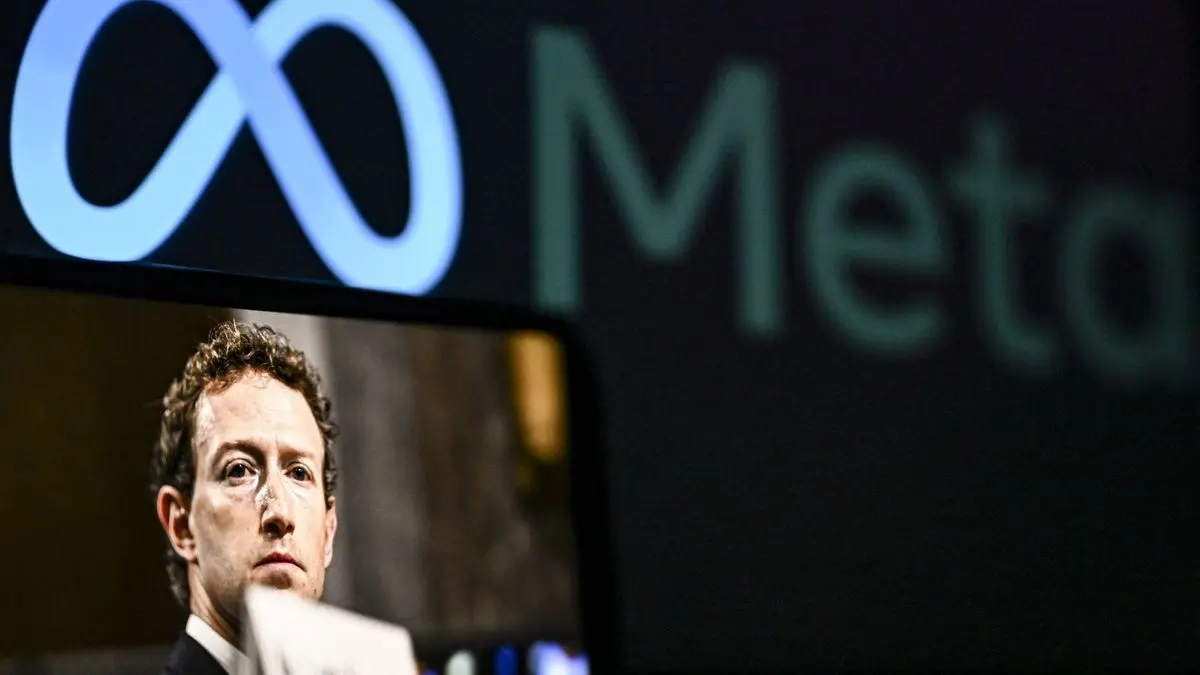
Broader Pattern of Tech Industry Workforce Reductions
Meta's layoffs reflect a broader pattern across the technology sector, where more than 45,000 tech jobs have been eliminated globally in the first quarter of 2026, with artificial intelligence cited as the driving force in at least one in five cases
4
. Companies including Atlassian, Amazon, and Block have announced significant workforce reductions while simultaneously increasing AI spending. The pattern suggests a structural shift in how technology companies operate: spending aggressively on AI infrastructure while reducing the human workforce those systems are designed to augment or replace.Reuters reported that Meta's senior executives had been asked to prepare workforce reduction plans of up to 20%, which would translate to roughly 15,000 positions if fully implemented and bring Meta's headcount to its lowest point since 2021
1
. Meta has called such reporting "speculative," though the cadence of cuts—from performance terminations to Reality Labs restructuring to this week's cross-division layoffs—suggests the company may be executing a phased reduction rather than a single dramatic event4
.Challenges in AI Development and Talent Retention
Despite massive investments in recruiting AI talent—including nine-figure pay packages to lure researchers from competitors, with OpenAI defectors reportedly commanding $100 million sign-on bonuses—Meta has faced setbacks in its AI development efforts
1
. The release of Meta's next reasoning model, code-named Avocado, has been delayed after delivering underwhelming results during internal tests, according to the New York Times1
. Zuckerberg also invested $14 billion in Scale AI and tapped its co-founder Alexander Wang to lead Meta's AI efforts, a move that reportedly led to clashes with former chief AI scientist Yann LeCun, who called Wang young and inexperienced after quitting1
.Facebook CFO Susan Li acknowledged the uncertain path for returns on Meta's AI investments during a Morgan Stanley conference, stating: "That's not like, okay, in 2026, the ROI is this in 2027, the ROI is this and so on, which pains me, to be clear. I really wish that, that were the world we live in, but it's not"
1
. The admission underscores the speculative nature of Meta's massive AI infrastructure investment, even as the company eliminates hundreds of jobs to offset those costs. Whether the productivity gains materialize at the scale the spending implies remains an open question that will determine if these workforce reductions represent strategic repositioning or cost-cutting dressed in the language of transformation.References
Summarized by

Navi
[1]
[4]
Related Stories
Meta Initiates Large-Scale Layoffs to Pivot Towards AI Talent Acquisition
11 Feb 2025•Business and Economy

Meta plans to cut 20% of workforce as AI spending reaches $600 billion, mirroring broader tech trend
14 Mar 2026•Business and Economy
Meta Cuts 600 AI Jobs in Superintelligence Labs Amid Restructuring
22 Oct 2025•Business and Economy

Recent Highlights
1
OpenAI shuts down Sora video app after six months, ending Disney's $1 billion investment deal
Technology

2
AI-Generated Val Kilmer to Posthumously Appear in As Deep as the Grave After His Death
Entertainment and Society

3
Supermicro Co-Founder Indicted in $2.5 Billion Nvidia AI Chip Smuggling Scheme to China
Policy and Regulation

Recent Highlights
Today's Top Stories




Your Daily Dose of Curated AI News
Don’t drown in AI news. We cut through the noise - filtering, ranking and summarizing the most important AI news, breakthroughs and research daily. Spend less time searching for the latest in AI and get straight to action.

