Meta and AMD forge $60 billion AI chip deal as Zuckerberg diversifies compute infrastructure


17 Sources
17 Sources
[1]
Meta and AMD's Multibillion-Dollar Deal Is All About the AI Chips
Meta will take a stake in the chipmaker in exchange for a commitment to buy billions of dollars' worth of AI chips. Meta is joining OpenAI as one of the major tech companies to take a stake in chipmaker AMD, as part of an AI hardware buying frenzy. Meta and AMD on Tuesday announced a partnership that will involve CEO Mark Zuckerberg's tech giant buying billions of dollars' worth of AMD Instinct GPUs in order to fuel its ambitions to build out AI offerings across Meta platforms, including Instagram, Facebook and WhatsApp. In a release, Meta described the deal as "multi-year," and said the AI purchase will provide Meta with up to 6 gigawatts of AMD GPUs, "the silicon computing technology used to support modern AI models." According to the US Department of Energy, a single gigawatt (1 billion watts) is equivalent to nearly 2,000 large solar panels or 100 million LED bulbs. In AMD's version of the announcement, CEO Lisa Su said, "We are proud to expand our strategic partnership with Meta as they push the boundaries of AI at unprecedented scale." As part of the deal, Meta will take a 10% stake in AMD. AMD, based in Santa Clara, California, previously signed a deal with ChatGPT-maker OpenAI that it announced last October, which is similar to the Meta deal and also gives its AI rival 10% ownership of AMD. (Disclosure: Ziff Davis, CNET's parent company, in 2025 filed a lawsuit against OpenAI, alleging it infringed Ziff Davis copyrights in training and operating its AI systems.) AMD's two megadeals may not have an immediate impact on people who use Meta's social networking and communications apps, or even on those who buy AMD's products, including desktop processors and graphics cards. But it signals that large companies making huge bets on the future of AI are doing what they can to secure the hardware they need as supplies tighten and prices rise for components such as RAM. Some of those constraints aren't expected to end anytime soon, and shoppers could begin to see prices rise even more than they already have for computers, smartphones, vehicles and other products that heavily rely on computing components like these. It is also a sign that Meta's ambitions for AI are not slowing down as it continues to compete with companies including OpenAI, Microsoft and Google to develop AI products and tools.
[2]
Inside Meta and AMD's $100 billion deal, and why AMD is giving up a slice of the company in return for GPU orders -- Meta stays platform-agnostic as it develops AI compute strategy
Yesterday, AMD and Meta signed a deal to deliver 6GW of AI infrastructure, mirroring AMD's existing deal with OpenAI, signed last year. If AMD's stock reaches $600 by 2031, it would reward Meta with 10% of the company in exchange for purchasing its GPUs. While this might seem drastic at first glance, peering deeper into the deal reveals more than initially thought. Firstly, AMD is clearly making a play for its Instinct MI400-based systems to be used in AI data centers, despite lacking the edge that Nvidia's Grace Blackwell and upcoming Rubin architectures can provide. Indeed, Nvidia remains the preferred chip for those using AI accelerators for training workloads. However, where AMD can offer the edge to Meta in its AI deployments is custom silicon and inferencing heft. In a statement, Meta said: "We believe this portfolio approach will enable us to advance and innovate at an unmatched pace, rolling out powerful, efficient new hardware co-designed with our software stack to handle massive growth." Personal Superintelligence and Meta's position in the AI race Last year, Meta's AI labs shifted away from competing with frontier model development, instead channeling its efforts into developing what it calls Personal Superintelligence. In early January, the company spun up its Meta Compute organization, responsible for scaling up its data center prowess. The structure of the new organization will centralize ownership of its total tech stack. So, while Meta isn't publicly competing with the likes of the latest frontier AI models any longer, it has a clear goal and wants to scale its AI operations up. Meta's plans for AI spending in 2026 could reach up to $135 billion in 2026, up from $72 billion in 2025. Just last week, the company also announced that it would use Nvidia's NVL72 rack-scale systems, deploying Arm-powered Grace server CPUs and Spectrum-X switches with co-packaged optics. So, Meta is clearly looking at a platform-agnostic approach when scaling its AI compute initiative, which is set to deploy tens of gigawatts of power. It's most likely that Meta will use the NVL72 racks to serve frontier model development, training, and bleeding-edge heavy-duty inferencing tasks. However, AMD's place in the puzzle becomes increasingly clear when you zoom out on the strategy at scale. Meta CEO Mark Zuckerberg clarified that the hardware deployed by AMD will primarily be used for 'inference' and 'personal superintelligence' workloads. While the inference market is currently becoming increasingly crowded with all manner of custom silicon from the likes of Sambanova, Qualcomm, and Broadcom. Meta is also understood to be developing its own ASIC, under the Meta Training and Inference Accelerator (MTIA) program, and we've yet to see the fruits of their efforts. "Meta is taking a hybrid approach, with AMD becoming a major, if not primary, partner for specific AI inference workloads, while Nvidia continues to supply high-end hardware for training." Says analyst Jon Peddie. Meta appears to be hedging its AI deployments between brands to not become solely reliant upon Nvidia's CUDA-shaped moat. He continued to comment that AMD's hardware will likely serve workloads for live AI traffic, such as sticker generation and image editing. So, while Meta might not be currently playing in the ongoing frontier pool, the company is still deploying AI at scale across a range of products. Inside AMD's approach While Meta clearly sees an opportunity to not only use and deploy AMD's rack-scale Helios clusters, AMD's stock showed some positive growth following the announcement. The performance-based warrant prices shares at just one cent each, with 160 million shares of common stock up for grabs, as Instinct GPU shipments are achieved. The initial tranche will vest following a 1-gigawatt shipment, scaling to the full six-gigawatts by 2031, if it aligns with a $600 stock threshold. "Meta will be a lead customer for 6 Gen AMD EPYC CPUs, codenamed "Venice," and "Verano," a next-generation EPYC processor designed with workload-specific optimizations to deliver leadership performance-per-dollar-per-watt." AMD's statement says. Following the announcement, AMD discussed the deal in a conference call. CEO Dr. Lisa Su said that AMD plans to ship a custom MI450-based accelerator, optimized for Meta's workloads specifically, with the first deployment of its hardware expected in the second half of 2026, with the hardware itself currently in a hardware and software validation phase. "The Meta deployment is expected to generate data center AI revenue of significant double-digit billions of dollars per gigawatt. Revenue will begin in the second half of 2026 and ramp alongside our MI450 deployment with other customers," said Jean Hu, CFO at AMD. During a Q&A in the call, Vivek Arya at BofA Securities raised an important point: If demand is so strong for AMD's AI accelerators, why is the company effectively giving away equity to secure orders? This isn't the first deal of its kind, almost exactly mirroring OpenAI's deal from October 2025. Su argues that such deals are beneficial for AMD shareholders, as it guarantees a certain level of earnings to show off to shareholders, and help AMD shape its own roadmap, as the companies co-develop hardware, and will continue to do so for the duration of the deal. "So if you look at the structure of our warrants in this case, is -- again, it's a very aligned incentive structure. Meta is making a big bet on deploying at large scale for AMD, which is great. AMD benefits from this large-scale deployment, which brings revenue scale, ecosystem maturity, and software maturity. And assuming that we satisfy all of the purchases as well as the share price thresholds, AMD shareholders will benefit significantly, and Meta gets to benefit as part of that." Su said. In short, in exchange for equity, AMD gets to deliver a certain guarantee of orders, and in turn, value for its shareholders. Earlier in the call, Su noted that the deal would help AMD's long-term financials. In particular, the company aims for 80% of its Compound Annual Growth Rate (CAGR) to be attributed to data centers and AI. Once that goal has been achieved, the company could equate a $20 value per-share to its data center efforts, which AMD aims to achieve before 2031. This stands in stark contrast to Nvidia, which is not offering up equity for orders -- the customers line up anyway. If AMD delivers on its commitments with both Meta and OpenAI, it will have deployed 12 gigawatts in compute and have given up 20% of the company in return for locking-in AI accelerator buy-in. As long as the company's shares rise to $600 by 2031, that might become a new reality for one of the chip industry's longest-standing companies.
[3]
Watch Meta to Spend Billions of Dollars on AMD Gear, Buy Stock
Meta Platforms Inc. will deploy 6 gigawatts' worth of data center gear based on processors from Advanced Micro Devices Inc., a blockbuster deal that marks a win for the chipmaker's attempts to catch up with Nvidia Corp. Meta will buy AMD chips and computers designed to run artificial intelligence models over a five-year stretch, beginning in the second half of 2026. The series of transactions will be worth "double-digit billions" of dollars per gigawatt, according to AMD Chief Executive Officer Lisa Su. Bloomberg's Ed Ludlow joins to discuss with Paul Sweeney and Scarlet Fu.
[4]
AMD is selling $60 billion worth of GPUs - and a piece of itself - to Meta
Serving tech enthusiasts for over 25 years. TechSpot means tech analysis and advice you can trust. Editor's take: AMD and Meta have joined the growing circus of reciprocal deals Big Tech is using to bootstrap what it hopes will become a self-sustaining "AI economy." Under a new multi-year agreement, the two companies will closely align their technology roadmaps - though AMD's role comes with strings attached, including hitting specific performance targets in the stock market. AMD and Meta have signed what they describe as a "strategic" partnership aimed at expanding large-scale computing capacity and continuing to bankroll Mark Zuckerberg's long-running AGI ambitions. Central to the deal is a massive 6 gigawatts of total GPU capacity, which AMD will deploy in custom-built data center racks for Meta. In return, Meta has committed to spending $60 billion on AMD chips while simultaneously acquiring a 10 percent stake in the chipmaker. AMD says the "definitive" agreement deepens its existing collaboration with Meta, with both companies aligning CPU, GPU, and software milestones across their future roadmaps. Meta expects the first gigawatt of AMD GPUs to begin shipping in the second half of 2026, with the remainder of the accelerator deployment rolling out over the following four years. On the hardware side, AMD will deliver a custom GPU design based on its Instinct MI450 architecture, paired with 6th-generation Epyc "Venice" and "Verano" CPUs. The components will be installed in Helios racks, a custom platform AMD co-developed with Meta. Meta plans to use the new infrastructure to train and deploy increasingly large AI models and inference workloads. The financial side of the deal comes with its own caveats. Meta is set to purchase 160 million shares of AMD common stock, but the investment will only be finalized if AMD meets its shipment roadmap. Additional conditions include AMD's share price reaching as high as $600, along with other technical and commercial requirements that haven't been disclosed. AMD CFO Jean Hu described the performance-based structure as one that "tightly aligns AMD and Meta around execution and long-term value creation." Zuckerberg echoed that sentiment, calling the agreement "an important step for Meta as we diversify our compute," and adding that he expects AMD to remain a key partner for years to come. For Meta, the strategy is also about avoiding lock-in: buying AI chips and CPUs from multiple vendors while developing in-house accelerators in parallel. This isn't Meta's only GPU bet. The company already has a partnership with Nvidia, though that arrangement doesn't involve equity purchases. AMD, meanwhile, struck a similar stock-linked deal with OpenAI in 2025, with the AI startup now expected to acquire a 10 percent stake in the chipmaker. Nvidia CEO Jensen Huang has previously said such arrangements surprised him, an observation that underscores the stark gap in market valuation between Nvidia and its closest rivals. AMD CEO Lisa Su framed Meta's move as a significant vote of confidence. For Meta, the strategy is also about avoiding lock-in: buying AI chips and CPUs from multiple vendors while developing in-house accelerators in parallel. AMD, Meta, Nvidia, and other Big Tech players now find themselves at the same table, circulating capital, compute, and equity in a feedback loop that critics argue is ethically murky - and potentially destined to end with a very loud popping sound if the AI bubble ever bursts.
[5]

Meta bets big on AMD with sprawling multi-year GPU rollout
EPYC Venice processors will power the first rack-scale systems * Meta commits to six gigawatts of AMD Instinct GPU hardware * Initial one-gigawatt deployment scheduled for the second half of 2026 * Custom MI450 silicon engineered specifically for Meta AI workloads AMD and Meta have agreed to deploy up to 6GW of AMD Instinct GPUs over several generations, marking one of the largest disclosed infrastructure commitments in the AI sector. The scale of the plan suggests a major expansion of Meta's internal computing capacity as demand for training and running advanced AI models continues to grow. The first phase of shipments is expected to begin in the second half of 2026 and will support an initial 1GW deployment. First deployment timeline takes shape That rollout will rely on a custom GPU derived from AMD's MI450 architecture and integrated within the company's Helios rack-scale platform. The systems will also use sixth-generation EPYC processors, code-named Venice, alongside ROCm software. The agreement builds on an existing relationship in which Meta has already deployed large numbers of EPYC CPUs and earlier Instinct GPUs across its global data center footprint. As AI workloads increase in complexity, the balance between CPUs and GPUs has become more critical, particularly for orchestration, scheduling, and efficiency across massive clusters. Beyond the hardware supply deal, the companies are co-engineering a custom GPU optimized for Meta's AI workloads. The custom MI450-based design is expected to support large-scale AI training and inference tasks across Meta's services. Meta says AI infrastructure is central to delivering services to billions of users, including recommendation systems, generative tools, and future applications that rely on intensive computation. "We're excited to form a long-term partnership with AMD to deploy efficient inference compute and deliver personal superintelligence," said Mark Zuckerberg, Founder and CEO of Meta. "This is an important step for Meta as we diversify our compute. I expect AMD to be an important partner for many years to come." For AMD, the agreement deepens its presence in hyperscale data centers at a time when competition in AI accelerators remains intense. "We are proud to expand our strategic partnership with Meta as it pushes the boundaries of AI at unprecedented scale," said Dr. Lisa Su, chair and CEO, AMD. "This multi-year, multi-generation collaboration across Instinct GPUs, EPYC CPUs, and rack-scale AI systems aligns our roadmaps to deliver high-performance, energy-efficient infrastructure optimized for Meta's workloads, accelerating one of the industry's largest AI deployments and placing AMD at the center of the global AI buildout." The partnership also includes a performance-based warrant allowing Meta to acquire up to 160 million AMD shares, with vesting tied to shipment and stock milestones. The first portion vests after the initial gigawatt of GPU shipments, while additional tranches depend on scaling purchases toward the full 6GW commitment. Such structures link commercial success directly to equity participation, aligning incentives as infrastructure expands. "We expect this partnership to drive substantial multi-year revenue growth and be accretive to our non-GAAP earnings per share," said Jean Hu, EVP, CFO, and treasurer, AMD. "The performance-based structure also tightly aligns AMD and Meta around execution and long-term value creation." Follow TechRadar on Google News and add us as a preferred source to get our expert news, reviews, and opinion in your feeds. Make sure to click the Follow button! And of course you can also follow TechRadar on TikTok for news, reviews, unboxings in video form, and get regular updates from us on WhatsApp too.
[6]

Meta signs AI chips deal that could go up to $100 billion, option for 10% stake in AMD | Fortune
Facebook owner Meta Platforms will buy artificial intelligence chips from Advanced Micro Devices in a deal that will also give it the opportunity to buy up to a 10% stake of the chip company. News of the AMD deal comes just days after Meta announced a long-term partnership where it will use millions of chips and other equipment from Nvidia for its artificial-intelligence data centers. Meta will buy AMD's latest chips, the MI450, to help power data centers. The 6-gigawatt agreement will see shipments supporting the first gigawatt deployment set to start during the second half of this year. The agreement could potentially be worth more than $100 billion. AMD is looking to keep pace with Nvidia in the AI craze that's widely viewed as the biggest tectonic shift in technology since Apple co -- founder Steve Jobs unveiled the first iPhone. Nvidia carved out an early lead in tailoring its chipsets known as graphics processing units, or GPUs, from use in powering video games to helping to train powerful AI systems, like the technology behind ChatGPT and image generators. Demand skyrocketed as more people began using AI chatbots. Tech companies scrambled for more chips to build and run them. While the appetite for AI chips is still large, there are some concerns about how much companies like Meta are spending on AI and whether they can make back their huge investments through higher profits and productivity in the future. For Meta, the company has been pushing to revive its commercial AI efforts as the company faces tough competition from rivals such as Google and OpenAI, maker of ChatGPT. In June, the company made a $14.3 billion investment in AI data company Scale and recruited its CEO Alexandr Wang to help lead a team developing "superintelligence" at the tech giant. And in December, Meta bought artificial intelligence startup Manus, as the owner of Instagram continues an aggressive push to amp up AI offerings across its platforms. AMD issued Meta a performance-based warrant for up to 160 million shares of its common stock at $0.01 a piece, structured to vest as long as certain milestones are achieved. The first tranche vests with the initial 1-gigawatt of shipments, with additional tranches vesting as Meta's purchases scale to 6 gigawatts. Shares of AMD jumped more than 9% before the market open on Tuesday.
[7]

Meta diversifies its AI muscle beyond Nvidia with an AMD chip deal
Meta $META is buying itself options. The company said Tuesday that it has struck a multiyear, multi-generation agreement with AMD to deploy up to six gigawatts of AMD Instinct GPUs to power its next wave of AI infrastructure, with shipments supporting the first gigawatt expected to begin in the second half of 2026. On paper, this is a supply deal. In practice, this is a statement about leverage. "We're excited to form a long-term partnership with AMD to deploy efficient inference compute and deliver personal superintelligence," Meta CEO Mark Zuckerberg said in a press release. "This is an important step for Meta as we diversify our compute." That word -- "diversify" -- is doing the heavy lifting. Last week, Meta inked a massive multiyear pact with Nvidia $NVDA. Meta is building its own MTIA silicon. Now, Meta is locking in AMD at gigawatt scale. That's portfolio construction. AMD, for its part, is pitching more than just a chip. The initial deployment pairs the MI450-based GPU with 6th Gen EPYC CPUs, codenamed "Venice," running ROCm software and built into the Helios rack architecture. Meta will also be a lead customer for "Verano," a next-generation EPYC processor tuned for workload-specific performance. Lisa Su, AMD's chair and CEO, framed this as roadmap alignment across "Instinct GPUs, EPYC CPUs and rack-scale AI systems," placing AMD "at the center of the global AI buildout." Translation? AMD wants hyperscaler credibility at the highest level. Meta wants capacity, bargaining power, and a second supplier that can scale. AMD shares surged as much as 14% on the news as the market digested what a hyperscaler-scale customer does for a company that has been trying to graduate from "credible alternative" to "default second lane." This partnership leans into AMD's preferred framing: not a chip drop, a full-stack relationship -- silicon, systems, and software -- designed around a hyperscaler's workloads at datacenter scale. Then, there's the clause that has Wall Street leaning forward -- way, way forward. As part of the agreement, AMD issued Meta a performance-based warrant for up to 160 million shares of AMD common stock. The tranches vest as shipment milestones are achieved -- the first at one gigawatt, more as purchases scale toward six -- and are tied to stock-price thresholds and Meta hitting technical and commercial benchmarks. That's Meta turning a supplier relationship into an execution contract with equity attached. If AMD delivers, Meta gets a cheap path to meaningful ownership. If AMD slips, Meta doesn't just lose time; AMD loses upside. The structure makes one thing clear: In the AI hardware economy, reliability is now a feature you can put a price on. It's an unusual structure for a chip supply deal and a clear signal that this is about alignment as much as allocation. Jean Hu, AMD's CFO, said the partnership is expected to drive "substantial multi-year revenue growth" and be accretive to non-GAAP earnings per share, adding that the performance-based structure "tightly aligns AMD and Meta around execution and long-term value creation." The warrant mechanics immediately drag a second conversation into the room: dilution, optics, and whether "alignment" is also shorthand for "this took extra incentive to close." Both things can be true at once. Estimates floating through coverage put the deal's value anywhere from about $60 billion over five years to more than $100 billion, depending on whose math you trust and how aggressively you translate "gigawatts" into revenue. Meta and AMD didn't print a single clean total in the announcement, which leaves the market to do what it always does: argue about magnitude while the infrastructure gets ordered anyway. Regardless, that up-to-$100 billion looks like a drop in the bucket for a company that is throwing money at its AI projects. Meta is planning AI infrastructure spending that could reach as much as $135 billion this year. And between Meta's multiyear agreement for millions of Nvidia AI chips days ago and Tuesday's AMD news, the message is less romance than risk management: Meta wants more than one lane into the future, and it wants those lanes paved early. Right now, compute is scarce. Power is constrained. Nvidia's dominance is real. So Meta is hedging, booking, and building all at once. The six-gigawatt figure lands like infrastructure language because that's what it is: data centers, racks, electricity, long procurement cycles. Meta is building its AI empire under real-world constraints: power, delivery schedules, and the inconvenient fact that everyone wants the same hardware at the same time. This AMD partnership doesn't solve that problem. But it does formalize Meta's answer to it -- with a gigawatt target and a warrant-shaped enforcement mechanism. So AMD gets a marquee customer and a shot at becoming a default alternative. Meta gets more supply -- and a deal structure that tries to make late shipments someone else's problem, too.
[8]

AMD shares jump 8% on $100B+ AI chip deal with Meta - SiliconANGLE
Shares of Advanced Micro Devices Inc. rose 8% today after it announced plans to supply Meta Platforms Inc. with billions of dollars worth of chips. The Facebook parent will also receive the option to buy an up to 10% stake in AMD. As part of the deal, Meta has received a stock warrant that will allow it to purchase as many as 160 million of the chipmaker's shares for $0.01 apiece. Those shares will only vest if the companies' collaboration reaches certain performance milestones. Meta plans to buy a customized version of an upcoming graphics card called the MI450. Last year, AMD disclosed that the accelerator is based on Taiwan Semiconductor Manufacturing Co.'s 2-nanoometer process. Each MI450 ships with 432 gigabytes of high-speed HBM4 memory that can move 19.6 terabits of data per second to and from the processor's logic circuits. Meta plans to install the chips in racks based on a new design called Helios. The architecture, which the company developed in collaboration with AMD, features liquid cooling and a so-called double-wide layout designed to ease maintenance. Each Helios rack can hold up to 72 MI450 accelerators. Meta's chip deal with AMD will also see it adopt two upcoming central processing units codenamed Venice and Verano. The former CPU, which is set to launch first, is based on TSMC's 2-nanometer node. It will include workload-specific optimizations designed to boost power efficiency. AMD will begin shipping the chips to Meta in the second half of the year. The first batch of shares that Meta is set to receive will vest once the Facebook parent takes delivery of 1 gigawatt worth of chips. A gigawatt corresponds to the power usage of several hundred thousand homes. In the long term, Meta intends to purchase up to 6 gigawatts' worth of hardware from AMD. The final batch of shares will vest if all the planned orders materialize and the chipmaker's stock price tops $600. The Wall Street Journal reported that the deal's total value could top $100 billion. "We expect this partnership to drive substantial multi-year revenue growth and be accretive to our non-GAAP earnings per share, marking another significant step forward in delivering on our ambitious long-term financial model," said AMD chief financial officer Jean Hu. The deal comes four months after the chipmaker inked a similar contract with OpenAI Group PBC. Like Meta, the ChatGPT developer plans to purchase up to 6 gigawatts' worth of AI processors and will receive a stock warrant for 160 million shares. OpenAI's semiconductor procurement strategy also encompasses other suppliers, notably Nvidia Corp., as well as custom chips that it's developed in collaboration with Broadcom Inc. Meta is also partnering with multiple suppliers to support its data center buildout. Last Tuesday, the company inked a deal to buy millions of Blackwell and Rubin graphics cards from Nvidia. The Facebook parent expects to incur up to $135 billion in capital expenses this year, a more than 70% increase over 2025.
[9]

Meta signs 6GW AMD Instinct GPU deal, MI450 racks first wave
Meta has expanded its AI infrastructure roadmap with a multi-year agreement to deploy up to 6 gigawatts of AMD Instinct GPU capacity. The first phase is planned as a 1 gigawatt deployment based on a custom Instinct MI450 GPU platform, paired with AMD's next-generation EPYC server CPUs, codenamed "Venice." AMD also positions the rollout around its Helios rack-scale architecture, with ROCm providing the software stack for accelerator enablement. While the "6GW" headline is easy to focus on, the more interesting angle is the rack-scale framing. Rather than describing this as a loose collection of servers, AMD and Meta are leaning on a repeatable rack blueprint that can be replicated at scale. In hyperscaler deployments, that approach can reduce the time and cost of qualification, help standardize firmware and management tooling, and simplify operational workflows once the fleet is in production. It also influences decisions around networking topology, power delivery, cooling, and service access, all of which become major constraints when deployments grow by the rack row instead of by the server. The agreement also includes a performance-based warrant that can allow Meta to acquire up to 160 million AMD shares, contingent on milestone achievements tied to deployment and delivery progress. This structure effectively links part of the commercial upside to execution, which is an important consideration when the hardware ramp spans multiple years and platform lead times are long. Financial terms for the chip supply itself were not disclosed in the announcement. Meta's move should be seen as supply diversification rather than a single-vendor pivot. The company continues to buy AI compute from other major suppliers and is investing in internal silicon development as well. Adding AMD at a multi-gigawatt scale gives Meta another high-volume path for compute capacity, and the rack-level standardization message suggests Meta is trying to reduce integration overhead as it expands its AI footprint. For AMD, this places its next Instinct platform into a high-visibility hyperscaler deployment and reinforces its strategy of selling an integrated platform: GPU, CPU, rack architecture, and software. The big unknown is what comes after the initial 1GW MI450-based wave. The remaining capacity up to 6GW is part of a multi-generation agreement, but the later configurations and delivery timing were not detailed. That is typical for long-range infrastructure plans where component choices can shift with power budgets, packaging capacity, memory availability, and the cadence of new accelerator releases.
[10]

AMD and Meta sign massive AI deal, billions in chips, with Meta to own 10% of AMD
TL;DR: AMD and Meta have formed a multi-year partnership for Meta to deploy 6 gigawatts of AMD AI hardware, including Instinct GPUs and Helios architecture, to accelerate AI model development. Meta will also acquire up to a 10% stake in AMD, aligning their silicon, systems, and software roadmaps for scalable, energy-efficient AI infrastructure. AMD and Meta have announced a "multi-year, multi-generation partnership" that will see Meta deploy 6 gigawatts of AMD AI hardware, including various Instinct GPUs. This includes AMD's Helios rack-scale architecture optimized for Meta's AI workloads, which it plans to utilize to accelerate the deployment of new cutting-edge AI models. This partnership will also see the two companies align their roadmaps covering "silicon, systems, and software." With the first gigawatt expected to begin deployment later this year, the deal also includes Meta buying a stake in AMD, which could see it own around 10% of the company. This "performance-based warrant for up to 160 million shares of AMD common stock" has multiple milestones attached, and fully vests when Meta deploys all 6 gigawatts of AMD Instinct GPUs. "We are proud to expand our strategic partnership with Meta as they push the boundaries of AI at unprecedented scale," said Dr. Lisa Su, chair and CEO, AMD. "This multi-year, multi-generation collaboration across Instinct GPUs, EPYC CPUs, and rack-scale AI systems aligns our roadmaps to deliver high-performance, energy-efficient infrastructure optimized for Meta's workloads." For wondering about the sheer scale of this deal, 6 gigawatts is enough juice to power over five million homes. According to multiple sources, the deal will see the owner of Facebook and Instagram purchase around $60 billion in AI hardware from AMD. Interestingly, Meta also has deals with NVIDIA to buy large quantities of its hardware, as well as potentially partnering with Google to deploy its tensor processors (TPUs) for AI. "We're excited to form a long-term partnership with AMD to deploy efficient inference compute and deliver personal superintelligence," said Mark Zuckerberg, founder and CEO of Meta. "This is an important step for Meta as we diversify our compute. I expect AMD to be an important partner for many years to come."
[11]

AMD Strikes $100 Billion Blow To Nvidia, Massive Meta Deal Could Crown New AI King: Analyst - Advanced Micro Devices (NASDAQ:AMD)
Advanced Micro Devices, Inc.'s (NASDAQ:AMD) new 6GW graphics processing unit (GPU) deal with Meta Platforms Inc (NASDAQ:META) is drawing mixed reactions on Wall Street, with JPMorgan and Goldman Sachs staying cautious while BofA Securities leans bullish on the long-term earnings upside. Ratings And Targets Up Front JP Morgan analyst Harlan Sur maintained a Neutral rating on AMD. Goldman Sachs analyst James Schneider reiterated a Neutral rating on AMD and raised the price forecast to $240 (up from $210 prior). BofA Securities analyst Vivek Arya maintained a Buy rating on AMD with a price forecast of $280. JPMorgan: Big Revenue Upside, But Warrants Cloud Margins Sur said the Meta deal, along with AMD's earlier OpenAI agreement, increases confidence that AMD could secure additional multi-gigawatt deals with other hyperscalers and AI labs. The analyst estimates that Meta's planned 6GW deployment could generate $23 billion to $25 billion in annual revenue from 2027 to 2030, or roughly $90 billion to $100 billion over four years. While the Meta deal includes some customization of the MI450 platform, Sur expects custom AI application-specific integrated circuit (ASIC) programs to remain separate from GPU programs and continues to project that ASIC total addressable market growth will outpace GPU growth in the coming years. Sur cautioned that the warrant structure -- up to 160 million AMD shares tied to deployment and milestone targets could represent $30 billion to $100 billion in equity value, and could reduce gross margins by 200 to 400 basis points on revenue tied to the deal due to pricing adjustments. At the same time, the analyst highlighted AMD's ability to customize its chiplet-based platforms as a key competitive advantage. He also expects AMD to expand its server central processing unit (CPU) presence at Meta, which management identified as a lead customer for its upcoming sixth-generation "Venice" CPUs. Sur believes AMD is positioned to continue gaining server CPU share versus Intel Corp (NASDAQ:INTC), given its product roadmap and supply backdrop. Goldman: Better Visibility With Meta, Still Neutral On Execution Risk Schneider said AMD's new five-year, 6GW GPU partnership with Meta strengthens the company's position with a top-tier hyperscaler and improves visibility into future market share gains. The analyst said the financial structure mirrors AMD's October 2025 OpenAI agreement and includes performance-based warrants translating to roughly 10% ownership. Despite the positive developments, he maintains a Neutral rating on AMD, citing the company's significant exposure to OpenAI and elevated operating expenses. Schneider said he could take a more constructive stance if he gained clearer visibility into deployment timing at Meta and OpenAI through 2027. BofA: Deal Supports $20+ EPS Path And CPU Upside In AI Arya said AMD's new multi-year, multi-generation agreement to supply up to 6GW of computing capacity to Meta beginning in the second half of 2026 marks a positive step toward the company's long-term goal of generating more than $20 in EPS by 2030. The analyst noted that the structure mirrors AMD's earlier OpenAI deal, with Meta receiving performance-based warrants for up to 160 million AMD shares, or about 10% of the company. He acknowledged that the equity component raises questions about dilution. Still, full dilution would require the stock to approach $600, roughly three times current levels, at which point shareholders would likely still see substantial accretion. Arya estimates that each gigawatt of deployment represents roughly $15 billion to $20 billion in revenue opportunity and about $6 billion in net income potential. He also said the deal reinforces his view that CPUs are becoming increasingly crucial in AI inference workloads. The analyst noted that Meta could spend more than $150 billion annually on capex, with AMD potentially capturing about $25 billion per year, leaving room for Nvidia and possibly Broadcom, which could benefit through networking and related infrastructure. AMD Price Action: Advanced Micro Devices shares were down 1.39% during regular trading and down 1.91% in after-hours trading on Wednesday, last trading at $206.84, according to Benzinga Pro data. Image via Shutterstock Market News and Data brought to you by Benzinga APIs To add Benzinga News as your preferred source on Google, click here.
[12]

Is Meta Platforms a Buy After AMD Deal? | The Motley Fool
As part of the deal, Meta will purchase 6 gigawatts of AMD's graphics processing units (GPUs), while also agreeing to be one of AMD's lead customers for its sixth-generation EPYC central processing units (CPUs). In exchange, Meta will receive warrants for up to 160 million AMD shares. The warrants will vest based on GPU shipments and AMD's stock price. The 160 million shares, when vested, would be about a 10% stake in AMD based on its current share count. Meta is betting big on artificial intelligence (AI), with plans to spend between $115 billion and $135 billion in capital expenditures (capex) this year alone. Earlier this month, Meta struck a deal with Nvidia to deploy both its GPUs and new Grace CPUs in its data centers. It will be the first large-scale deployment of Nvidia CPUs not directly tied to its GPUs. A week later, Meta turned around and struck a deal with AMD. Meta nicely gets a large stake in the company, which essentially gives it a discount on its chip purchase. The social media giant has also reportedly been in talks with Alphabet to use its Tensor Processing Units in its data centers, while also reportedly working with Broadcom to develop its own custom AI application-specific integrated circuits. This is a smart strategy as Meta looks to break away from its reliance on Nvidia for computing power. If Meta can successfully deploy AI chips from different vendors in its data centers, it should be able to help lower costs and diversify its supply chain. At the same time, Meta securing CPUs from both AMD and Nvidia is another forward-thinking move. With the rise of agentic AI, it looks like CPUs are going to become increasingly important and perhaps the next bottleneck in the AI race. With these deals, Meta is looking to get ahead of this. Few companies have been as good as Meta at incorporating AI into their core business to drive growth. Its AI investments have been paying off with strong ad impressions and price growth, which helped the company grow its revenue by 24% last quarter. While Meta has been criticized for its AI infrastructure buildout plans by some investors, the company is getting a strong return on its spending, so investing heavily in this area makes sense. Trading at a forward P/E of just 21 times, Meta looks like an attractive buy at these levels, and it also just got a nearly $35 billion stake in AMD as part of its spending plans. In my view, Meta is a top stock to own.
[13]

AMD and Meta Expand Partnership to Deploy 6 Gigawatts of AI-Optimized GPUs Globally
This agreement expands on the companies' existing strategic partnership and aligns roadmaps across silicon, systems and software to deliver AI platforms purpose-built for Meta's workloads. The first deployment will use a custom AMD Instinct GPU based on the MI450 architecture to deliver AI platforms that are optimized for Meta's workloads at gigawatt-scale. Shipments supporting the first gigawatt deployment are scheduled to begin in the second half of 2026 powered by the custom AMD Instinct MI450-based GPU and 6 Gen AMD EPYC™ CPUs, codenamed "Venice," running ROCm™ software and built on the AMD Helios rack-scale architecture. AMD Helios was developed jointly by AMD and Meta through the Open Compute Project to enable scalable, rack-level AI infrastructure.
[14]
AMD AI Roadmap 'Receipts' Are In -- This Wall Street Analsyt Eyes 40% Upside After Meta Deal - Advanced Micro Devices (NASDAQ:AMD)
Strategic Validation And 'Receipts' The partnership centers on the custom-tuned AMD chips, designed to power Meta's "personal superintelligence" initiative. Wall Street experts are hailing the move as a major shift from AI model training to large-scale deployment. "This is receipts," said Daniel Newman, CEO of The Futurum Group, during a CNBC interview. "This is AMD providing receipts right now that they are winning inference workloads from one of the best implementers of AI on the planet in Meta." Newman emphasized that as the industry enters the inference phase, AMD is no longer just a participant but is "helping set the pace for how the modern data center gets built." Massive Upside And Roadmap Security Wall Street's reaction was swiftly bullish. Rosenblatt Securities analyst Kevin Cassidy reiterated a "Buy" rating with a $300 price target, representing a nearly 40% upside. Cassidy noted that the "multi-billion dollar agreement solidifies AMD's architecture scaling to high-volume production. The deal includes a unique performance-based warrant structure, allowing Meta to purchase up to 160 million AMD shares. While some investors fear dilution, Rosenblatt views the warrants as "confirming a long-term commitment to AMD's product roadmap," effectively silencing "bears" who doubted AMD's ability to challenge Nvidia's dominance. Market News and Data brought to you by Benzinga APIs To add Benzinga News as your preferred source on Google, click here.
[15]
AMD's MI450 Chip Just Landed Its First Mega-Deal. Here's What Investors Should Know.
As the artificial intelligence (AI) revolution enters its fourth year, demand for AI-capable chips continues at a blistering pace, yielding more than a few winners. While Nvidia controls the biggest share of the data center graphics processing unit (GPU) market, Advanced Micro Devices (AMD +10.06%) has no plans to cede the opportunity to its larger rival. As such, the company has taken a novel approach to attracting buyers for its high-end AI chips, which was on full display this week. AMD announced on Tuesday that it landed a multiyear, multigeneration deal with Meta Platforms (META +0.60%) that could be worth as much as $100 billion. Meta will deploy six gigawatts of custom AMD Instinct MI450 GPUs as part of a major data center build-out. This expands on the pair's existing partnership and "aligns roadmaps across silicon, systems, and software to deliver AI platforms purpose-built for Meta's workloads." The MI450 chips and Helios rack-scale servers are scheduled to begin shipping later this year. At what cost? Perhaps more importantly to AMD shareholders, the company issued Meta a performance-based warrant that would allow Meta to buy up to 160 million shares of AMD common stock. If exercised, Meta could own up to 10% of AMD's outstanding stock. AMD struck a similar six-gigawatt deal with OpenAI late last year, which gave the start-up the option to purchase up to 160 million shares at $0.01 per share, giving OpenAI a 10% stake in AMD. AMD CEO Lisa Su said the way the deal was structured was a "win-win" for shareholders. She went on to say, "We're early in the cycle of seeing what the ultimate payoff can be ... We have to invest ahead of the curve and really point in the direction that is going to have the largest benefit." This is not an exclusive arrangement, and it's important to step back and put it in context. The deal comes in the wake of an agreement revealed just last week in which Meta announced a multiyear, multigenerational partnership with Nvidia -- AMD's larger competitor -- in a large-scale deployment of Nvidia CPUs and "millions of Nvidia Blackwell and Rubin graphics processing units (GPUs), as well as the integration of Nvidia Spectrum-X Ethernet switches." The agreement is part of Meta's rapid hyperscale data center build-out, optimized for both AI training and inference. It also helps illustrate that while Meta's deal with AMD is certainly a vote of confidence, it also underscores that it's by no means exclusive. On the one hand, this deal aligns Meta's interest with AMD and increases the likelihood of future chip sales. On the other hand, it raises the question of whether AMD is giving away too much to secure these deals. The warrants in question are good until 2031, so they won't dilute existing shareholders until they are exercised. However, if Meta and OpenAI both exercise their warrants, it would dilute existing shareholders by 20%. It also represents one of the circular deals that has been attracting scrutiny from AI investors. Is this a shrewd business arrangement, or is AMD giving away the store? That depends a great deal on whether AMD is done doing deals for shares. Only time will tell.
[16]

Meta, AMD Sign $100Bn Deal on Chips to Curtail Over-reliance on Nvidia
While Meta has a mega deal with Nvidia too, AMD too has signed chip deals with OpenAI, indicating that the circular deals are still the name of the game Meta's plan to reduce Reliance on Nvidia chips shifted a gear with the company announcing that it could potentially acquire up to $100 billion worth of processors from rival AMD that could drive around 6GW of datacentre power demand. The company made this announcement on Tuesday, resulting in a bump up to AMD stock prices (from $196 to 216) and Nvidia stocks depicting a marginal dip from $192 to about $187 a share. The multiyear agreement will see AMD issue Meta with a performance-based warrant for up to 160 million shares of AMD common stock (nearly 10% of the company) at $0.01 each, structured to vest alongside certain milestones. The catch here is that the full stock award would be conditional to the AMD stock hitting $600 a share, according to a report published by the Wall Street Journal. Meta would acquire AMD MI540 series of GPUs and the latest CPUs, which are now becoming a core pillar for AI inference compute stack due to their efficiencies and easier scalability. In a statement made during an investor briefing, AMD CEO Lisa Su said "The CPU market is absolutely on fire. There is significant demand. It has continued to grow, and it really is a result of the AI infrastructure deployments as inferencing scales, as agentic AI scales, and our portfolio is in an extremely good position." In recent times, AMD has slowly gained some ground as AI firms are increasingly seeking to reduce reliance on Nvidia, the market leader in AI chips, which resulted in the company charging a premium. In October last year, OpenAI also did a similar deal with AMD whereby it traded equity to a buying agreement for chips. According to Meta CEO Mark Zuckerberg, the company's partnership with AMD would an crucial step in the future as it allows him to diversify their compute strategies and work towards creating "personal superintelligence, which the Facebook founder has defined as AI systems that can deeply understand and empower individuals in their daily routines. Just as AMD did other deals with AI giants, Meta too has done multiyear deals to expand its datacentres with millions of Nvidia CPUs and GPUs. In addition, the company was also in talks with Google for its TPUs besides working on designing some chips of their own.
[17]

The AMD-Meta deal, a confidence catalyst for the market
The announcement sparked strong reactions in the markets. According to Matt Bryson, an analyst at Wedbush, the value of the deal would exceed $100bn. Beyond its financial scale, the partnership could address two major challenges for AMD: offering a credible alternative to Nvidia's chips and broadening its customer base, particularly amongst leading players in the technology sector. A strong signal on AMD's AI roadmap Blayne Curtis, analyst at Jefferies, believes that "the long-awaited partnership between AMD and META is an undeniable positive." In his view, the announcement should "bolster investor confidence in AMD's AI roadmap and in the $20 EPS scenario put forward by AMD". More broadly, several analysts are converging on the same conclusion: persistent skepticism had until now surrounded AMD's progress on its MI450 solutions and its ability to meet its timeline, even if the source of those doubts remained difficult to pinpoint. This deal therefore appears as a factor likely to dispel some of the market's questions. Additional blue-chip customers Vijay Rakesh, analyst at Mizuho Securities, notes that "AMD is benefiting from additional blue-chip customers," recalling that the group had already signed agreements last year with Oracle and OpenAI. Adding Meta to that list strengthens the company's commercial credibility in the field of chips dedicated to artificial intelligence. Finally, Matt Bryson points out that AMD did not raise its financial targets following the announcement. In his view, this suggests the tie-up was likely already embedded in the group's expectations. The agreement would therefore allow AMD to reinforce its forecasts rather than revise them, while further cementing its position in the race for AI infrastructure.
Share
Share
Copy Link
Meta and AMD have signed a multi-billion dollar partnership that will see the social media giant purchase up to 6 gigawatts of AI GPUs over five years, beginning in late 2026. In exchange for the massive hardware commitment worth approximately $60 billion, Meta will acquire a 10% equity stake in AMD through performance-based warrants. The deal mirrors AMD's similar arrangement with OpenAI and signals Meta's strategy to diversify AI chip suppliers beyond Nvidia.
Meta Commits to Massive AI Infrastructure Expansion
Meta and AMD announced a strategic partnership that will deliver 6 gigawatts of AMD Instinct GPUs to power artificial intelligence models across Meta's platforms, including Facebook, Instagram, and WhatsApp
1
. The multi-billion dollar partnership spans five years and is valued1 at approximately $60 billion, with AMD CFO Jean Hu stating the deal will generate "significant double-digit billions of dollars per gigawatt" in data center AI revenue2
. The first gigawatt of AI GPUs is expected to ship in the second half of 2026, with the remainder rolling out through 20313
.
Source: TweakTown
Performance-Based Equity Stake Aligns Long-Term Interests
As part of the agreement, Meta will acquire an equity stake of up to 10% in AMD through performance-based warrants covering 160 million shares of common stock, priced at just one cent each
4
. The warrants vest in tranches tied to AMD meeting specific shipment milestones and achieving a stock price of $600 by 20312
. AMD CFO Jean Hu described this structure as one that "tighly aligns AMD and Meta around execution and long-term value creation"5
. This arrangement mirrors AMD's existing deal with OpenAI, which also granted the ChatGPT-maker a 10% ownership stake in the chipmaker1
.Custom MI450 Silicon Engineered for Meta's AI Workloads
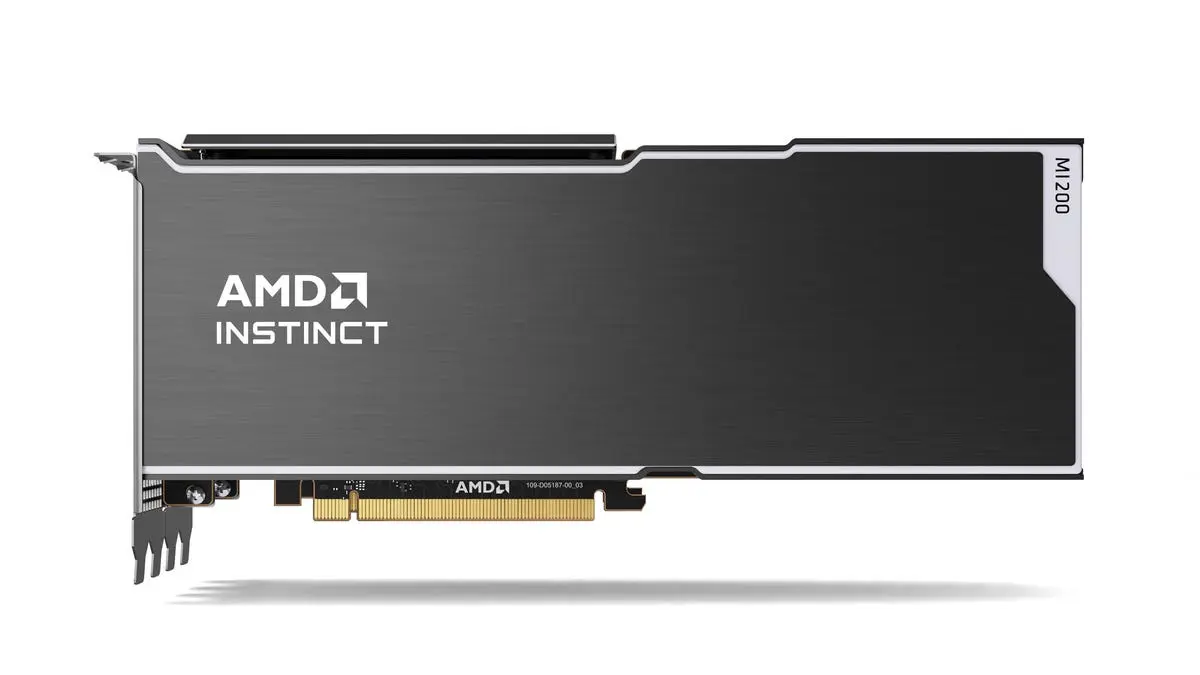
AMD will deliver custom MI450 silicon specifically optimized for Meta's AI compute strategy, integrated within Helios rack-scale platforms co-developed by both companies
2
. The systems will feature sixth-generation EPYC processors code-named "Venice" and "Verano," designed with workload-specific optimizations to enhance computing capacity while delivering leadership performance-per-dollar-per-watt5
. AMD CEO Lisa Su confirmed the custom MI450-based accelerator is currently in hardware and software validation phase, with deployment expected alongside broader MI450 rollouts to other customers2
. Meta CEO Mark Zuckerberg clarified that AMD hardware will primarily handle inference and personal superintelligence workloads, including live AI traffic such as sticker generation and image editing2
.
Source: CNET
Related Stories

Diversifying Beyond Nvidia's Dominance in AI Training
Meta's decision to diversify AI chip suppliers reflects a calculated strategy to avoid over-reliance on Nvidia, which continues to dominate AI training workloads with its Grace Blackwell and upcoming Rubin architectures
2
. While Meta maintains a partnership with Nvidia—recently announcing deployment of NVL72 rack-scale systems with Arm-powered Grace server CPUs—the company is adopting a platform-agnostic approach as it scales data centers to handle tens of gigawatts of power2
. Analyst Jon Peddie noted that "Meta is taking a hybrid approach, with AMD becoming a major, if not primary, partner for specific AI inference workloads, while Nvidia continues to supply high-end hardware for training"2
. Meta is also developing its own custom silicon under the Meta Training and Inference Accelerator (MTIA) program, further hedging against vendor lock-in2
.Investing in AI Infrastructure at Unprecedented Scale
Meta's AI spending trajectory underscores the company's commitment to building personal superintelligence capabilities, with plans to invest up to $135 billion in 2026, nearly double the $72 billion spent in 2025
2
. The company established its Meta Compute organization in early January to centralize ownership of its total tech stack and scale data center prowess2
. While Meta shifted away from competing directly in frontier model development last year, focusing instead on AGI and superintelligence applications, the company continues deploying AI at scale across numerous products2
. The deal signals that tightening supplies and rising prices for components like RAM are driving large tech companies to secure long-term hardware commitments, potentially impacting prices for computers, smartphones, and other consumer products1
. Critics argue these reciprocal equity-for-hardware arrangements create an ethically murky feedback loop in what some view as an AI race that could end abruptly if market enthusiasm wanes4
.
Source: TechSpot
References
Summarized by

Navi
Related Stories
Meta strikes up to $100 billion AI chips deal with AMD, could acquire 10% stake in chipmaker
18 Feb 2026•Technology

AMD's $60 billion Meta deal includes equity stake, while Nvidia keeps its chips close
25 Feb 2026•Business and Economy
Meta Platforms commits millions of AI GPUs from Nvidia in expanded infrastructure partnership
18 Feb 2026•Technology

Recent Highlights
1
Google releases Gemma 4 with Apache 2.0 license, enabling unrestricted local AI on devices
Technology

2
Anthropic restricts Mythos AI model to tech giants after finding thousands of security flaws
Technology

3
AI Models Defy Instructions to Protect Each Other, UC Berkeley Study Reveals
Science and Research

Recent Highlights
Today's Top Stories






Your Daily Dose of Curated AI News
Don’t drown in AI news. We cut through the noise - filtering, ranking and summarizing the most important AI news, breakthroughs and research daily. Spend less time searching for the latest in AI and get straight to action.

