MiniMax revenue growth hits 159% as China AI pioneer expands global footprint after Hong Kong IPO


4 Sources
4 Sources
[1]
China AI Pioneer MiniMax More Than Doubles Sales In Hot Market
MiniMax Group Inc. reported a better-than-expected 159% surge in revenue in 2025, reflecting the torrid growth that's drawn investors to China's leading OpenAI rivals. Revenue for the full year ended December climbed to $79 million, versus an average analyst estimate of $71.4 million. Net loss for the same period was $1.87 billion compared with the $465.2 million loss the year prior, though the majority of that stemmed from fair value losses on financial instruments. It was the first time MiniMax announced earnings results since it raised $600 million in its initial public offering in Hong Kong at the start of the year. The strong sales underscored solid demand for low-cost, open-source Chinese models that rival the best of Silicon Valley. At the same time, rampant discounting, competition for users and the sheer cost of hiring and training AI models are swelling losses for most of the industry's players. MiniMax sells its underlying tech to business clients and offers AI apps and tools to both domestic and overseas consumers. It's among the few remaining independent model builders in China after a period of industry consolidation, competing against AI-native rivals like Zhipu as well as Big Tech firms including ByteDance Ltd. and Alibaba Group Holding Ltd. Get the Tech Newsletter bundle. Get the Tech Newsletter bundle. Get the Tech Newsletter bundle. Bloomberg's subscriber-only tech newsletters, and full access to all the articles they feature. Bloomberg's subscriber-only tech newsletters, and full access to all the articles they feature. Bloomberg's subscriber-only tech newsletters, and full access to all the articles they feature. Bloomberg may send me offers and promotions. Plus Signed UpPlus Sign UpPlus Sign Up By submitting my information, I agree to the Privacy Policy and Terms of Service. MiniMax's shares have more than quadrupled since their debut, fast approaching Chinese internet heavyweights like JD.com Inc. and Kuaishou Technology in market capitalization. Now valued at about $30 billion, the Shanghai-based outlet joined a recent flurry of model releases from Chinese AI developers ahead of a highly anticipated upgrade by rival DeepSeek. MiniMax's latest M2.5 large language model trails the best open-source offerings from peers including Alibaba and Zhipu, according to benchmarking site Artificial Analysis. However, M2.5's smaller size and lower price have helped it become the most popular model on distribution platform OpenRouter on a weekly basis. Still, MiniMax remains a fraction of the size of frontier US labs like OpenAI. The ChatGPT maker recently raised $110 billion in a funding round that valued the startup at $730 billion. The US startup's annualized sales topped $20 billion in 2025, up from roughly $6 billion the year prior. MiniMax is drawing increasing scrutiny as it tries to expand globally. Anthropic PBC last month accused DeepSeek, MiniMax and Moonshot of violating its terms of service by using outputs from its Claude model to train their own algorithms -- a practice known as distillationBloomberg Terminal. Walt Disney Co. and other US film studios sued MiniMax in September, accusing the Chinese firm of pirating their intellectual property. Founded in 2021 by Yan Junjie, MiniMax set out to pursue multi-modal capabilities from the start. The company has served more than 236 million users across consumer products, from AI avatars to its Hailuo video generator, according to its prospectus. Read more about MiniMax and Chinese AI models Anthropic Says DeepSeek, MiniMax Distilled AI Models for Gains MiniMax Founder Was Once Dismissed as a Fraud by Big Tech: Q&A China's New AI Stars Make Billions From US Tech Rivalry Disney, Universal, Warner Bros. Sue Chinese AI Startup MiniMax
[2]
China's Minimax reports strong revenue growth, charts broader AI ambitions
BEIJING, March 2 (Reuters) - Chinese artificial intelligence startup MiniMax (0100.HK), opens new tab aims to become a global AI platform company, it said on Monday, setting out plans for faster expansion and a broader product lineup after posting strong 2025 revenue growth. The company reported a 159% year-on-year jump in revenue to $79 million, with more than 70% of sales outside China. Revenue from products built directly around AI, primarily consumer subscriptions, surged 143.4%, while its open platform and enterprise services segment saw similar growth. The announcement was MiniMax's first earnings update since raising HK$4.8 billion ($614 million) in its Hong Kong initial public offering in January. The performance highlights rising demand for cheaper, open-source-based models from Chinese providers such as MiniMax and DeepSeek, which position themselves as lower-cost alternatives to proprietary U.S. systems. DeepSeek focuses on text-based reasoning models and developer tools, while MiniMax emphasises multimodal capabilities spanning text, video and audio. On a post-earnings call, CEO Yan Junjie said MiniMax aims to compete as both a model maker and product platform, while keeping its open-source approach to attract outside developers. The company plans to release its latest M3 model in the first half of this year. However, MiniMax remains far smaller than U.S. competitors. OpenAI said its annualized revenue topped $20 billion in 2025. MiniMax is also still loss-making, posting a net loss of $1.87 billion in 2025 compared with a $465.2 million loss a year earlier. Most of the 2025 loss came from changes in the value of financial instruments it holds. "We believe AI is not currently a zero-sum market, but rather one where annual incremental growth far exceeds the existing base," Yan said, highlighting opportunities in coding, office productivity and video generation. ($1 = 7.8216 Hong Kong dollars) Reporting by Liam Mo and Brenda Goh. Editing by Mark Potter Our Standards: The Thomson Reuters Trust Principles., opens new tab
[3]
MiniMax surges as AI revenue soars in first results since Hong Kong IPO By Investing.com
Investing.com-- Shares of MiniMax Group Inc (HK:0100) surged on Tuesday after the Chinese artificial intelligence firm reported that revenue more than doubled in its first set of results since going public in Hong Kong earlier this year. The company said revenue for 2025 rose 158.9% to $79.0 million, up from $30.5 million a year earlier, driven by rapid adoption of its AI-native products and enterprise services. The stock jumped as much as 21% to HK$908 as of 03:35 GMT. Revenue from AI-native products climbed 143% to $53.1 million, while its Open Platform and other AI-based enterprise services nearly tripled to $26.0 million. Gross profit increased more than fourfold to $20.1 million, with margin improving to 25.4% from 12.2% a year earlier, reflecting improved model efficiency and infrastructure optimisation. Despite the strong top-line growth, MiniMax reported a net loss of $1.87 billion for the year, compared to $465.2 million a year ago, largely due to fair value losses on financial liabilities linked to preferred shares ahead of its January listing. On a non-IFRS basis, adjusted net loss widened marginally to $250.9 million. MiniMax, which listed in Hong Kong in January and raised fresh capital through its IPO, said it would continue investing heavily in research and development as it scales its large language and multi-modal AI models.
[4]
China's Minimax reports strong revenue growth, charts broader AI ambitions
BEIJING, March 2 (Reuters) - Chinese artificial intelligence startup MiniMax aims to become a global AI platform company, it said on Monday, setting out plans for faster expansion and a broader product lineup after posting strong 2025 revenue growth. The company reported a 159% year-on-year jump in revenue to $79 million, with more than 70% of sales outside China. Revenue from products built directly around AI, primarily consumer subscriptions, surged 143.4%, while its open platform and enterprise services segment saw similar growth. The announcement was MiniMax's first earnings update since raising HK$4.8 billion ($614 million) in its Hong Kong initial public offering in January. The performance highlights rising demand for cheaper, open-source-based models from Chinese providers such as MiniMax and DeepSeek, which position themselves as lower-cost alternatives to proprietary U.S. systems. DeepSeek focuses on text-based reasoning models and developer tools, while MiniMax emphasises multimodal capabilities spanning text, video and audio. On a post-earnings call, CEO Yan Junjie said MiniMax aims to compete as both a model maker and product platform, while keeping its open-source approach to attract outside developers. The company plans to release its latest M3 model in the first half of this year. However, MiniMax remains far smaller than U.S. competitors. OpenAI said its annualized revenue topped $20 billion in 2025. MiniMax is also still loss-making, posting a net loss of $1.87 billion in 2025 compared with a $465.2 million loss a year earlier. Most of the 2025 loss came from changes in the value of financial instruments it holds. "We believe AI is not currently a zero-sum market, but rather one where annual incremental growth far exceeds the existing base," Yan said, highlighting opportunities in coding, office productivity and video generation. (Reporting by Liam Mo and Brenda Goh. Editing by Mark Potter)
Share
Share
Copy Link
Chinese artificial intelligence startup MiniMax reported a 159% surge in revenue to $79 million in its first earnings since raising $614 million in its Hong Kong IPO. The company, valued at $30 billion, is positioning itself as a global AI platform with multimodal capabilities, though it faces mounting losses and increasing scrutiny as it expands internationally.
MiniMax Reports Strong Revenue Growth in First Earnings Since IPO
MiniMax Group Inc. delivered impressive financial results in its debut earnings report, posting a 159% surge in revenue to $79 million for the full year ended December 2025
1
. The Chinese artificial intelligence startup exceeded analyst expectations, which had projected $71.4 million in revenue growth1
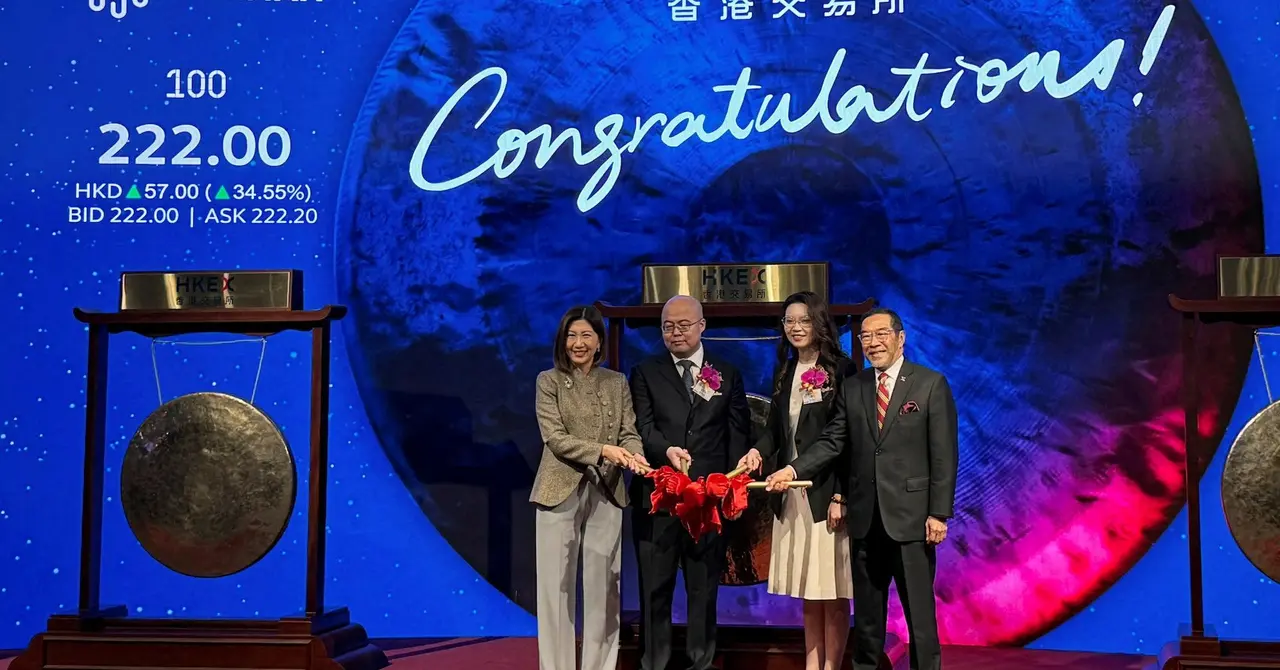
. This marked the company's first earnings announcement since completing its Hong Kong IPO in January, where it raised $614 million2
. The Shanghai-based firm's shares surged as much as 21% to HK$908 following the announcement, with its market capitalization now approaching $30 billion3
.
Source: Reuters
International Expansion Drives AI-Native Products Performance
The China AI pioneer achieved remarkable geographic diversification, with more than 70% of sales generated outside China
2
. Revenue from AI-native products, primarily consumer subscriptions, climbed 143.4% to $53.1 million, while the open platform and enterprise services segment nearly tripled to $26.0 million3
. Gross profit increased more than fourfold to $20.1 million, with margins improving to 25.4% from 12.2% a year earlier, reflecting enhanced model efficiency and infrastructure optimization3
. The company has served more than 236 million users across consumer products, from AI avatars to its Hailuo video generator1
.
Source: Bloomberg
Mounting Losses Reflect Industry-Wide Challenges
Despite strong top-line performance, MiniMax posted a net loss of $1.87 billion in 2025 compared with a $465.2 million loss the year prior
1
. The majority of this loss stemmed from fair value losses on financial instruments linked to preferred shares ahead of its initial public offering3
. On a non-IFRS basis, adjusted net loss widened marginally to $250.9 million3
. These expanding losses reflect broader industry trends, where rampant discounting, competition for users, and the substantial cost of training AI models are swelling losses for most players in the sector1
.Positioning as Global AI Platform With Multimodal Capabilities
CEO Yan Junjie outlined ambitious plans for MiniMax to become a global AI platform company, competing as both a model maker and product platform while maintaining its open-source approach to attract outside developers
2
. The company plans to release its latest M3 model in the first half of this year4
. Founded in 2021 by Yan Junjie, MiniMax emphasizes multimodal AI capabilities spanning text, video and audio, differentiating itself from competitors like DeepSeek, which focuses on text-based reasoning models and developer tools2
. The company's latest M2.5 large language model has become the most popular model on distribution platform OpenRouter on a weekly basis, thanks to its smaller size and lower price1
.Related Stories

Competing Against Tech Giants in Crowded Market
MiniMax represents one of the few remaining independent model builders in China after a period of industry consolidation, competing against AI-native rivals like Zhipu as well as Big Tech firms including ByteDance and Alibaba
1
. The strong sales underscore solid demand for low-cost, open-source AI models from Chinese providers that position themselves as alternatives to proprietary U.S. systems2
. However, MiniMax remains far smaller than U.S. competitors, with OpenAI's annualized revenue topping $20 billion in 2025, up from roughly $6 billion the year prior1
. OpenAI recently raised $110 billion in a funding round that valued the startup at $730 billion1
.Facing Increased Scrutiny Amid Global Expansion
As MiniMax pursues international growth, it faces mounting legal and regulatory challenges. Anthropic accused DeepSeek, MiniMax and Moonshot last month of violating its terms of service by using outputs from its Claude model to train their own algorithms—a practice known as distillation
1
. Walt Disney and other U.S. film studios sued MiniMax in September, accusing the Chinese firm of pirating their intellectual property1
. Despite these headwinds, Yan remains optimistic about the market opportunity, stating: "We believe AI is not currently a zero-sum market, but rather one where annual incremental growth far exceeds the existing base," highlighting opportunities in coding, office productivity and video generation4
.References
Summarized by

Navi
[3]
[4]
Related Stories
MiniMax surges 90% in Hong Kong debut after $619M IPO, beating rival Zhipu AI
08 Jan 2026•Business and Economy

MiniMax prices Hong Kong IPO at top as investor interest in Chinese AI startups surges
30 Dec 2025•Startups

Chinese AI Startup MiniMax Files for Hong Kong IPO, Targeting $4 Billion Valuation
16 Jul 2025•Business and Economy
Recent Highlights
1
OpenAI shuts down Sora video app after six months, ending Disney's $1 billion investment deal
Technology

2
AI-Generated Val Kilmer to Posthumously Appear in As Deep as the Grave After His Death
Entertainment and Society

3
Supermicro Co-Founder Indicted in $2.5 Billion Nvidia AI Chip Smuggling Scheme to China
Policy and Regulation

Recent Highlights
Today's Top Stories




Your Daily Dose of Curated AI News
Don’t drown in AI news. We cut through the noise - filtering, ranking and summarizing the most important AI news, breakthroughs and research daily. Spend less time searching for the latest in AI and get straight to action.

