New AI tool logs into Canvas to complete homework automatically as 54% of teens use chatbots


6 Sources
6 Sources
[1]
This AI Tool Doesn't Help With Homework. It Does It for You
Macy has been working for CNET for coming on 2 years. Prior to CNET, Macy received a North Carolina College Media Association award in sports writing. A new AI tool called Einstein is pushing the boundaries of what automation in education looks like. Created by the startup Companion, Einstein does more than generate answers to homework questions. It logs directly into a student's Canvas account and completes coursework on the student's behalf. According to its creators, Einstein operates through its own virtual computer. It can open a browser, navigate class pages, watch lecture videos, read PDFs and essays, write papers, complete quizzes and post replies in discussion boards. Once connected to a student's account, the system can monitor deadlines and automatically submit assignments. Unlike chatbots that respond when prompted, Einstein functions more like a digital stand-in for a human student. After setup, it can run in the background with little ongoing input. "Students are already using AI. We're just giving them a better version of it," Companion CEO Advait Paliwal said in a statement. Read more: 'Machines Can't Think for You.' How Learning Is Changing in the Age of AI Einstein connects to Canvas, a widely used learning-management system in colleges and high schools. From there, it reviews course materials and identifies assigned tasks. The AI can analyze lecture recordings, summarize readings and generate written work that matches the assignment requirements. The company says the system produces original essays with citations and context-aware discussion posts. It can also track new announcements and upcoming deadlines. In practice, this means a student could enroll in an online course and let Einstein handle much -- if not all -- of the required work. The technology builds on advances in generative AI, browser automation and so-called autonomous agents that can take multistep actions on behalf of their human counterpart. While many students already use AI tools to brainstorm ideas or check grammar, Einstein moves beyond assistance into complete automation. "Our companions aren't simple chatbots," Paliwal said. "Each one has access to an entire virtual computer with a persistent file system and internet access, so they can actually do things on your behalf. This makes ChatGPT look like a toy." The release of Einstein comes at a time when schools are still adapting to widespread AI use. Since the arrival of powerful language models, educators have debated how to distinguish legitimate support from academic dishonesty. Most policies focus on whether students are using AI to help draft or edit their work, or do it entirely for them. Einstein complicates that conversation. If an AI logs in as a student and completes assignments independently, the question shifts from assistance to substitution. Is the tool essentially taking the student's place? Not all in education are sounding the alarm, though. "I think the Canvas method of teaching already has a proclivity for cheating. This change, I think, will ultimately be good because it will force educators to redesign classes to not rely on virtual assignments," said Nicholas DiMaggio, a PhD student at The University of Chicago Booth School of Business and teaching assistant for a course in consumer behavior this quarter. DiMaggio said that this may prompt institutions to emphasize in-person work, oral exams or project-based learning instead. Beyond this one tool, schools will have to decide whether to ban such tools outright, integrate them under strict guidelines or rethink how learning is measured in the age of AI.
[2]
What's the Point of School When AI Can Do Your Homework?
The creator of the AI agent "Einstein" wants to free humans from the burden of academic labor. Critics say that misses the point of education entirely. There's a new agentic AI called Einstein that will, according to its developers, live the life of a student for them. Einstein's website claims that the AI will attend lectures for you, write your papers, and even log into EdTech platforms like Canvas to take tests and participate in discussions. Educators told me that Einstein is just one of many AI tools that can do homework for students, but should be seen as a warning to schools that are increasingly seen by students as a place to gain a diploma and status as opposed to the value of education itself. If an AI can go to school for you what's the point of going to school? For Advait Paliwal, Brown dropout and co-creator of Einstein, there isn't one. "I think about horses," he said. "They used to pull carriages, but when cars came around, I'd argue horses became a lot more free," he said. "They can do whatever they want now. It would be weird if horses revolted and said 'no, I want to pull carriages, this is my purpose in life.'" But humans aren't horses. "This is much bigger than Einstein," Matthew Kirschenbaum told 404 Media. "Einstein is symptomatic. I doubt we'll be talking about Einstein, as such, in a year. But it's symptomatic of what's about to descend on higher ed and secondary ed as well." Kirschenbaum teaches English at the University of Virginia and has written at length about artificial intelligence. He's also a member of the Modern Language Association (MLA) where he serves as member of its Task Force on AI Research and Teaching. Einstein isn't the first agentic AI to do the work of a student for them, it's just one that got attention online recently. Kirschenbaum and his fellow committee members flagged their concerns about these AIs in October, 2025. "Agentic browsers are becoming widely available to the public. These offer AI 'agents' that can navigate [learning management systems] and complete assignments without any student involvement," the MLA's statement from October said. "The recent and hasty integration of generative AI features into those systems is already redefining student and instructor relationships, evaluative standards, and instructional outcomes -- with no compelling evidence that any of it is for the better." The statement called on educators, lawmakers, and learning management system providers like Canvas, too cooperate in order to give academic institutions the abilities to block AI agents like Einstein. Canvas did not respond to a request for comment. Einstein is explicit in its pitch: it will log into Canvas (one of the most popular and ubiquitous pieces of education software) and do your classwork for you, just like Kirschenbaum and his fellows warned about last year. The attractiveness of agentic AIs is a symptom of a decades-long trend in higher education. "Universities...by and large adopted a transactive model of education," Kirschenbaum said. "Students see their diploma as a credential. They pay tuition and at the end of four years, sometimes five years, they receive the credential and, in theory at least, that is then the springboard to economic stability and prosperity." Paliwal seems to agree. He told 404 Media that he attempted to change the university from the inside while working as a TA, but felt stymied by politics. "The only way to force these institutions to evolve is to bring reality to their face. And usually the loudest critics are the ones who can't do their own job well and live in fear of automation," he said. For Paliwal, agentic AIs are a method of freeing people from the labor of education. "I think we really need to question what learning even is and whether traditional educational institutions are actually helping or harming us," he said. "We're seeing a rise in unemployment across degree holders because of AI, and that makes me question whether this is really what humans are born to do. We've been brainwashed as a society into valuing ourselves by the output of our productive work, and I think humanity is a lot more beautiful than that. Is it really education if we're just memorizing things to perform a task well?" Kirschenbaum said that programs like Einstein are the inevitable conclusion of viewing higher education as a certification and transactive process. "What we're finding is that if forms of education can be transacted then we've just about arrived at the point where autonomous software AI agents are capable of performing the transaction on your behalf," he said. "And so the whole educational paradigm has come back to essentially bite itself in the ass." He said that one solution he's seen work is to retreat from devices entirely in the classroom. "Colleagues who have done it report that students are almost universally grateful. They understand the reasoning. They understand the logic," he said. "And they appreciate the opportunity to be freed from the phones and the screens and to focus and engage with other people in a meaningful dialogue." But the abandonment of EdTech platforms and screens won't work for every student. Anna Mills, an English professor at the College of Marin and a colleague of Kirschenbaum's on the MLA AI task force, compared the fight against agentic AI in education to cybersecurity. "We could decide that bots need to be labeled as bots and that we need to be able to distinguish human activity from AI activity online in some circumstances and that we want to build infrastructure for that," she said. "That would be an ongoing project, as cybersecurity is." Mills is not a luddite. She's an expert in artificial intelligence systems as well as English, frequently uses Claude, and has been documenting the rise of agentic AIs in EdTech on her YouTube channel for months. She said that using agentic AI like Einstein was cheating, full stop, and academic fraud. "This is in direct violation of these foundational agreements that we make in order to use technology for human communication, human exchange, and human work online," she said. "And yet that's not obvious to us. It seems like it's just another tool, right? But it's not." Mills said she understands Paliwal's frustrations with education. "But what you need to understand is that online learning spaces are critical for students to access any kind of education," she said. For her, the proliferation of tools like Einstein do more than help a student bypass the labor of the classroom. They poison the educational well. Online learning has been a boon to many kinds of non-traditional students and that the rise of agentic AI is a threat to that not just because it trivializes traditional forms of education, but because it hurts the credibility of EdTech itself and other online platforms. The vast majority of college students aren't attending Ivy League schools, they're grinding away at night classes in community colleges across the country. Distance and online learning has been an enormous boon for those students. "If there's no credibility to that, then you've just ruined the investment and the learning goals and the access to meaningful learning that that they can then also use for employment of students who are underprivileged, who can't come to the classroom, who are working full time and raising families and trying to get an education," Mills said. Students aren't horses and there is no greater freedom they can buy themselves by using AI tools to cheat in the classroom. And worse, the more these tools proliferate, the more suspect the entire enterprise becomes. It's one thing to cheat yourself out of an education, it's quite another to muddy the waters of EdTech platforms and online learning for everyone else.
[3]
A Staggering Proportion of High School Kids Are Using AI to Do Their Homework, Which Is Probably Not Going to End Well
Can't-miss innovations from the bleeding edge of science and tech Who could've guessed that when you give millions of kids free access to a homework-writing chatbot, they'd stop writing their own essays? According to new research from the Pew Research Center, the number of kids automating school assignments is now staggering. At this point, 57 percent of kids are using chatbots to search for information, while 54 percent say they use AI for "help with homework" -- a euphemism that could mean they're using it as a tutor that enriches learning, but in many cases probably amounts to the kind of cheating that does nothing to prepare them for higher education or the job market. And who could blame them? They're being barraged by the message that AI is poised to take over virtually all jobs, and especially any that required intellectual labor that school is attempting to prepare them for -- a drumbeat that has bleak psychological effects on adults, and likely similar ones on kids. The survey, which looked at teens aged 13 through 17, found that 10 percent of all respondents reporting using AI for "all or most of their homework." A further 44 percent reporting using "a little" or "some" AI for coursework, while the students who don't use chatbots for homework now make up the minority, at 45 percent. Asked how they're using chatbots, four out of every ten teens who used AI for school said they used them to do research or find the answer to math problems. About a quarter said they were "extremely" or "very helpful" for completing schoolwork, while another 25 percent say they're "somewhat helpful," according to Pew. The findings reveal the staggering grip AI has on student populations in the US, particularly as the federal share of K-12 education funding continues on a 50-year decline. A particularly grim finding: minority and low-income students have become the most likely to turn to AI solutions. Per the Pew study, 20 percent of kids in a household making less than $30,000 a year reported doing "all or most" of their homework with AI's help. Compare that to the 7 percent of kids whose households bring in over $75,000, and the contrast is stark. Black and Hispanic teens are also 12 percent more likely than their white counterparts to do all or most of their schoolwork with AI chatbots, the survey found. It's a sad state of affairs given the undeniable cognitive and social effects of AI dependence in young students. With AI companies worming their way into teachers' unions and classrooms at an alarming rate, there's no telling how -- or if -- educators will be able to navigate the new normal.
[4]
Your teen is probably using AI for homework
New Pew data shows 54% of teens turn to chatbots for schoolwork, but the reality is more complex than the cheating panic. A new Pew Research Center survey confirms a parent's hunch. Your teen is probably using AI for homework. More than half of U.S. teens ages 13 to 17 say they have turned to chatbots like ChatGPT or Copilot for school tasks. The data, collected in fall 2025, offers the clearest look yet at how AI has reshaped student life. But the numbers tell a nuanced story. While 54 percent have used AI for school, only about one in ten rely on it for all or most of their assignments. That small group marks a real shift. Larger shares use it for some, 21 percent, or a little, 23 percent, of their work. Nearly half, 45 percent, haven't used it for school at all. AI is common but far from universal. From research to math help Teens mostly reach for AI on specific tasks. Roughly four in ten use it to research topics or solve math problems. A third have used it to edit something they wrote. They treat these tools like smart tutors, not ghostwriters. Recommended Videos And the tools deliver. About a quarter of all teens say chatbots have been extremely or very helpful for schoolwork. Another quarter say somewhat helpful. Only 3 percent found them useless. That positive experience keeps adoption climbing as schools scramble for policies. What teens think about cheating Students know the ethical lines blur. Most teens, 59 percent, say AI cheating happens at least somewhat often at their school. A third say it happens extremely or very often. Just 14 percent say it rarely or never occurs. The heavy users see it most. Among teens who use AI for school, three-quarters say cheating is a regular thing. That perception matters. If kids think everyone's doing it, they feel pressure to keep up. And with 15 percent unsure what counts as cheating, schools have room to clarify the rules. What schools and parents should watch AI is no longer a fringe tool. Sixty-four percent of teens use chatbots in some form, a number higher than parents estimate. Schools crafting policies must reckon with students who already have strong opinions about acceptable use. For parents, the focus should shift from policing to talking. Only about one in ten teens feel highly confident using chatbots. That gap between usage and confidence opens a door. Parents can ask when AI helps and when it gets in the way of real learning. Teens seem ready for that talk. They see the cheating, 59 percent admit it happens, but they also value the help. The trick is keeping the support without losing the learning.
[5]
New AI Agent Logs Directly Into College Platform Canvas to Do Your Homework for You
If you thought if using AI to cheat couldn't get any easier, think again. Lazy undergrads rejoice. A new AI "homework agent" can supposedly log into your account on the learning management system Canvas and automatically complete your homework and assignments for you -- streamlining the laborious, outdated process of having to copy-paste answers from ChatGPT. Called "Einstein," the AI can even participate in discussions, reply to your peers, write essays, and take notes on recorded lectures on your behalf, its maker Companion.AI claims on its website. "Einstein has a full virtual computer with a browser -- anything you can do, he can do," the site reads, next to the smiling visage of the famed physicist Albert Einstein. "He logs into Canvas every day, watches lectures, reads essays, writes papers, participates in discussions, and submits your homework -- automatically." Companion's founder, Advait Paliwal, described the Einstein AI tool in a tweet as "OpenClaw as a student," referring to the viral open source AI agent that "actually does things." Paliwal also worked on YouLearn AI, an "AI tutor" for students that claims to have over a million users. Companion didn't respond to a request for comment by the time of publication. It's unclear if the company's boasts hold water. The AI industry is fraught with half-baked vibe-coded projects and deceptive claims. The AI's work may be shoddy or obvious, opening up users to disciplinary action. What may appear to be autonomous may actually be heavily assisted by a bedrock of human labor. That said, it's alarming that the tool exists at all, as it explicitly promises to autonomously cheat on assignments without ever mentioning the word. Once given permission, a prospective customer theoretically won't have to lift a finger: Companion claims that Einstein will work while you sleep, pre-empting you having to be even cognizant of an assignment's existence. "Set him up and forget about it. Einstein checks for new assignments and knocks them out before the deadline," Companion says. The site can read like a parody, as when its FAQ features the daring question: "What if I want to do an assignment myself?" And our bit at the beginning about no longer having to copy-paste your answers from ChatGPT? That wasn't us being facetious. "Forget switching between ChatGPT and your [learning management software]," the company boasts. "Einstein reads the assignment, solves it, and submits it directly." Word of the AI agent sparked backlash on social media, especially among educators, who have long been fighting an uphill battle against the flood of cheating enabled by AI chatbots. "Get me off this rock," a user wrote on the r/Professor subreddit. Others warned this was just the tip of the iceberg. "What many don't yet grasp is just how quickly all of these things -- the good, the bad, and the ugly -- are coming down the line," Brendan Bartanen, an associate professor of education and public policy at the University of Virginia, wrote on Bluesky. "AI models have reached capability that allows for basically anyone with an internet connection to spin up functioning apps using just ideas expressed in natural language." Another risk some noted was that allowing a third-party AI tool to access a Canvas account could violate an institution's acceptable use policy. The Einstein tool comes as the AI industry's obsession over building autonomous AI agents has seen some companies try make a name for themselves by unashamedly bragging that their tools will help you con your way through your professional and academic life. A startup launched by two Columbia University dropouts called Cluely gloats that its AI will help you "cheat on everything" and make you come across smarter in virtual meetings. Teachers and professors are hopeless to keep up with all the latest ways AI can be used for cheating, while the schools and institutions they work for often form partnerships with big tech companies to push AI tools on their students.
[6]

New AI 'homework agent' will do assignments for lazy students -- ...
Doing homework without robot assistance may soon be a relic of the past. A tech company has devised a state-of-the-art AI "homework agent" named Einstein that can automatically complete your assignments for you. "Einstein has a full virtual computer with a browser -- anything you can do, he can do," the education automator's creator, Companion.AI, boasts on their website alongside a pic of the tech's gray-haired namesake. Indeed, the cutting-edge creation logs onto the learning management database Canvas on the user's behalf. It then "watches lectures, reads essays, writes papers, participates in discussions, and submits your homework -- automatically," per the site. And these essays are apparently not half-baked either. "Give him a reading assignment, and he reads the full text, understands it, and writes original essays with proper citations," Companion brags. The academic accelerant can also do this for videos by extracting "key concepts" and using them to "answer assignments accurately." In doing so, Einstein circumvents the outdated process of copy-pasting answers from ChatGPT, which is not only tedious but can make students susceptible to AI detectors employed by professors. It can even participate in online discussion boards and forums by reading the thread and contributing well-wrought responses. And no subject is off-limits for this automated jack of all classes, which can ace "math, physics, CS, history, literature, econ" and more, even while you're asleep. Indeed, it would appear that the homework bot is a veritable H-bomb in students' ongoing race to game the system via "machine learning." But is Einstein as good as advertised? The techsperts at Futurism had their doubts, noting that the AI industry is fraught with "deceptive claims" and that the homework whiz's work could be substandard. In addition, they claimed that the so-called "autonomous" homework process could paradoxically rely on a large human support network. What is perhaps alarming is how Companion unabashedly promotes the tech's ability to facilitate cheating in school. Addressing whether an Einstein user could get busted by professors, Companion wrote, "Einstein submits assignments from your account just like you would. The work is original and generated per-assignment -- not copied from a database. The tech firm noted in the FAQ that students, if presumably struck by a sudden pang of conscience, could still do an assignment themselves by telling "Einstein to skip it." "You're in full control -- he only submits what you approve or what you've set to auto-submit," they declared. The education automation tool had online users raging against the machine. "It's really sad that somebody would make something like this," lamented one critic in a Reddit thread, while another rued, "get me off this rock." "I wonder if these morons that [sic] use tools like this realize how utterly replaceable they will be in the very near future?" said a third. "First, the name is just insulting to Einstein," declared one disillusioned Redditor. "Second, we are so cooked as a society." Companion's founder, Advait Paliwal, defended the tech in a statement to Futurism, claiming that the outrage is "misplaced" because the tool is inevitable. "The education system will need to adapt to AI the same way it adapted to calculators, the internet, and Google," he declared. The use of the tech in the classroom has divided people, with some claiming the tech heralds the end of academic integrity while others claim it's part and parcel of academia in the AI Age. "Honestly, I've never met a student who doesn't use AI or has never used AI to cheat on an assignment," said Roy Lee, a former Columbia University student who said he used ChatGPT to write 80% of his college essays, told The Post. "AI is just part of the student workflow now." Lee, 21, was later suspended from Columbia for creating a tech to help game job interviews, which prompted him to create Cluely, a startup that claims to help users "cheat on everything." According to a scholastic survey of high school and college students, 97% said they've used tools like ChatGPT to get ahead at school, while more than 1 in 5 copped to using it to write college or scholarship essays before even setting foot on campus.
Share
Share
Copy Link
A new AI agent called Einstein can log directly into Canvas and complete coursework automatically, from writing essays to taking quizzes. Meanwhile, Pew Research Center data reveals 54% of U.S. teens now use AI chatbots for homework, with 10% relying on them for most assignments. The developments signal a fundamental shift in how students approach education and raise urgent questions about academic integrity.
Einstein AI Automates Coursework Through Canvas Integration
A new AI tool called Einstein, created by startup Companion.AI, has pushed automation in education into uncharted territory. Unlike AI chatbots that respond to prompts, Einstein AI operates as a digital stand-in that logs directly into student accounts on Canvas, a widely used learning management system in colleges and high schools
1
. The system can watch lecture videos, read PDFs and essays, write papers, complete quizzes, post replies in discussion boards, and automatically submit assignments before deadlines5
.
Source: New York Post
According to Advait Paliwal, CEO of Companion.AI and a Brown University dropout, Einstein operates through its own virtual computer with browser automation capabilities. "Our companions aren't simple chatbots," Paliwal said. "Each one has access to an entire virtual computer with a persistent file system and internet access, so they can actually do things on your behalf. This makes ChatGPT look like a toy"
1
. The technology builds on advances in generative AI and autonomous agents that can take multistep actions without ongoing human input.Majority of Students Already Using AI for Homework
The release of Einstein comes as new data from the Pew Research Center reveals that 54% of U.S. teens aged 13 to 17 have used AI tools for homework
4
. The survey, collected in fall 2025, shows that 10% of all respondents report using AI for all or most of their homework, while 44% use it for a little or some coursework3
. Only 45% of students haven't used AI chatbots for school assignments at all.Roughly four in ten teens use AI to research topics or solve math problems, while a third have used it to edit their writing
4
. About a quarter of all teens say these tools have been extremely or very helpful for schoolwork, with another quarter finding them somewhat helpful. The positive experience keeps adoption climbing as schools scramble to develop policies addressing AI use.
Source: Futurism
Disparities Emerge in AI Dependence Patterns
The Pew data reveals troubling disparities in how students rely on AI. Twenty percent of kids in households making less than $30,000 a year reported doing all or most of their homework with AI's help, compared to just 7% of kids whose households earn over $75,000
3
. Black and Hispanic teens are also 12% more likely than their white counterparts to do all or most of their schoolwork with AI chatbots.These findings emerge as the federal share of K-12 education funding continues a 50-year decline, suggesting that minority and low-income students may be turning to AI tools to compensate for resource gaps
3
.Related Stories


Student Cheating and Academic Integrity Concerns
Most students, 59%, say student cheating with AI happens at least somewhat often at their school, with a third reporting it happens extremely or very often
4
. Among teens who use AI for school, three-quarters say cheating is a regular occurrence. However, 15% remain unsure what counts as academic dishonesty, highlighting confusion around acceptable use.Matthew Kirschenbaum, who teaches English at the University of Virginia and serves on the Modern Language Association's Task Force on AI Research and Teaching, warned that agentic AIs represent a fundamental challenge. "Einstein is symptomatic. I doubt we'll be talking about Einstein, as such, in a year. But it's symptomatic of what's about to descend on higher ed and secondary ed as well"
2
. The MLA's statement from October 2025 flagged concerns about agentic browsers that can navigate EdTech platforms and complete assignments without any student involvement.Educators Debate the Future of Learning
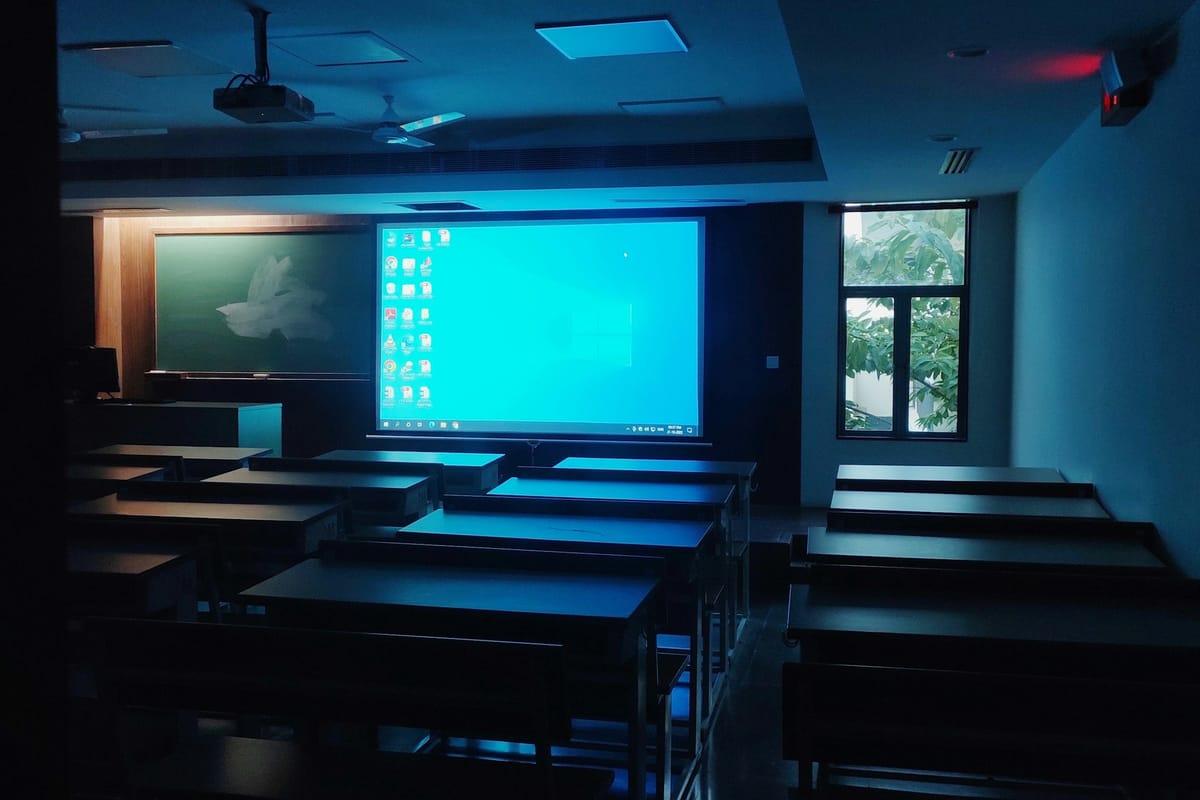
The arrival of tools like Einstein forces educators to confront whether AI represents assistance or substitution. Nicholas DiMaggio, a PhD student at The University of Chicago Booth School of Business, suggested the change may ultimately benefit education. "I think the Canvas method of teaching already has a proclivity for cheating. This change, I think, will ultimately be good because it will force educators to redesign classes to not rely on virtual assignments"
1
.
Source: 404 Media
Kirschenbaum argues that agentic AIs are the inevitable conclusion of viewing higher education as a transactive process focused on credentials rather than learning. "What we're finding is that if forms of education can be transacted then we've just about arrived at the point where autonomous software AI agents are capable of performing the transaction on your behalf"
2
. He reports that colleagues who have retreated from devices entirely in the classroom find students are almost universally grateful and appreciate the reasoning.Paliwal frames his creation as liberation from academic labor. "I think we really need to question what learning even is and whether traditional educational institutions are actually helping or harming us," he said
2
. Yet this perspective raises questions about critical thinking development and whether automating education undermines the purpose of learning itself. Schools now face decisions about whether to ban such tools outright, integrate them under strict guidelines, or fundamentally rethink how learning is measured in the age of AI.References
Summarized by

Navi
[4]
Related Stories
Recent Highlights
1
Google releases Gemma 4 with Apache 2.0 license, enabling unrestricted local AI on devices
Technology
2
AI Models Lie, Cheat, and Defy Human Instructions to Protect Other AI Models From Deletion
Science and Research

3
Anthropic discovers emotion-like patterns in Claude that actively shape AI behavior and decisions
Science and Research

Recent Highlights
Today's Top Stories



Your Daily Dose of Curated AI News
Don’t drown in AI news. We cut through the noise - filtering, ranking and summarizing the most important AI news, breakthroughs and research daily. Spend less time searching for the latest in AI and get straight to action.

