Nexon calls Arc Raiders a 'Trojan Horse' proving AI tools can build hits with smaller teams


5 Sources
5 Sources
[1]
Nexon CEO calls Arc Raiders a "Trojan Horse" and says it proves controversial AI tools can build triple-A hits with smaller teams
Arc Raiders developer Embark might have retreated slightly on the use of AI-generated voices in its game, but company owner Nexon has big plans for the use of AI, and it's using the success of Arc Raiders as proof of concept for it. "Beyond the breakaway commercial success, Arc Raiders is a Trojan Horse," Nexon president and CEO Junghun Lee said in a financial presentation held 31st March - "a gift that contains a shift in the mindset about how technology frees developers and live service teams to spend more time thinking and less time typing. More time innovating; less time writing code." Arc Raiders was criticised for featuring AI-generated voice lines instead of having actors record the lines - a decision Embark later walked back on by having actors re-record some of them. But that wasn't the only way AI tools were used in development of the game. "During the development process, we may use procedural- and AI-based tools to assist with content creation," the Arc Raiders Steam page notes. Though, "In all such cases, the final product reflects the creativity and expression of our own development team." Lee was talking about Arc Raiders' AI-use while promoting Nexon's Mono Lake AI initiative during the presentation. "Nexon has used AI tools for some time and we're quickly moving past the tool level to applying context to everything we do," Lee said. Referring to Arc Raiders' use of the tools, Lee added: "It changes how people work - the tools they use, how fast they can move, what they can accomplish. But what goes into our games - the creative content our players actually experience - that remains the work of our developers. Our methodology doesn't replace creative people, it frees them to create, with context. "Today, our best people spend more time making creative decisions - decisions guided by context, context based on billions of player decisions, context that precious few companies can match." Patric Soderlund, the founder and CEO of Embark, and the recently appointed executive chairman of Nexon, was even more strident with his remarks about the potential of Mono Lake AI. "At Embark, we started with a blank slate, questioning everything from: How do you get from an idea to a green light? To what needs to be done by hand versus what a machine can do more efficiently?" he said. "Yes, some of that involves AI. But it's really about encouraging people to use smarter processes, better tools, and to let go of habits that no longer serve them. "Our success wasn't an accident, it was deliberate. And now we're bringing that thinking to the rest of Nexon" -Patrick Soderlund "The initial outcome of that process is two games: The Finals and then Arc Raiders. Two games, built with significantly fewer people, at a fraction of the cost you'd expect for a AAA game. Our success wasn't an accident," he added, "it was deliberate. And now we're bringing that thinking to the rest of Nexon." Arc Raiders was the stand-out star for Nexon in the financial presentation, having delivered "the most successful launch in company history with more than 14m units sold in 15 weeks", Soderlund said. The game's performance was even more important for Nexon, a South Korean-Japanese company, in that it was predominantly Western success - something the company hasn't before experienced. An overwhelming 85 percent of the game's revenue came from North America and Europe, Soderlund said. "Arc Raiders is the first real proof that Nexon can build something that lands with a global audience," he added. "That's not a small thing, it changes how the market should think about what this company can become. And the game is still early. It's live and it's growing. What's ahead of it is bigger than what's behind it." As for what's next for Arc Raiders, Junghun Lee revealed that "there are multiple projects in development at Embark". "While it's still too early to offer details, each has the benefit of the Arc Raiders playbook - smaller, more nimble creative teams, using new technology to simplify time-consuming, less-creative work in order to focus on breakthrough innovation. Arc Raiders provides us with a roadmap for success in Western markets, on consoles, and, with alternative pricing models."
[2]
Arc Raiders is a 'Trojan Horse' for demonstrating AI tool usage in game development, according to Nexon, after Embark built two hits at 'a fraction of the cost you'd expect'
'What needs to be done by hand versus what a machine can do more efficiently?' In a new capital markets briefing from Nexon, Patrick Söderlund, the newly appointed Nexon executive chairman and CEO of Arc Raiders and The Finals developer Embark Studios, spoke extensively about everyone's favourite subject in games right now: AI. More specifically, he talked about how Embark's approach to game development and AI can be deployed across Nexon's teams in some form. Under a slide titled "Redesigning game development," Söderlund explains that "every company has a plan" when it comes to AI, but "most will get it wrong." "AI may be a race, but the winners won't be the first movers -- the winners will be the ones who understood the challenge," by which he means fully grasping how and why certain AI tools are used. Nexon, Söderlund remarks, understands this challenge from decades in the industry. All of this history is "context -- tens of billions of data points," he says, and "AI makes it usable at speed, and at scale." But, as Söderlund points out, Embark Studios didn't have that history back when it formed to make The Finals and Arc Raiders. The studio paid close attention to one question: "What needs to be done by hand versus what a machine can do more efficiently?" "Yes, some of that involves AI," Söderlund explains. "But it's really about encouraging people to use smarter processes, better tools, and to let go of habits that no longer serve them." "The initial outcome of that process is two games: The Finals and then Arc Raiders. Two games, built with significantly fewer people, at a fraction of the cost you'd expect for a AAA game." Both games took advantage of AI tools during development, such as controversial, cost-saving AI voices, which are now being replaced (at least partially) in Arc Raiders. Söderlund commented that "a real professional actor is better than AI," which isn't something I ever doubted, but it does raise questions about the value of AI-generated assets and in-game content -- and, if Embark recognises that real voice actors are better, why it used AI in its games in the first place. Nexon president and CEO Junghun Lee, who spoke about the company's Mono Lake AI initiative, called Arc Raiders a "Trojan Horse", a proof of concept that AI-powered game development can lead to huge successes. It's "a gift that contains a shift in the mindset about how technology frees developers and live service teams to spend more time thinking and less time typing," he explains. Söderlund's comments and overall approach to AI and efficient game development are no doubt a big part of the reason for his promotion at Nexon in the face of rising costs. "Every leader, team and individual in this company has to start asking how they can get more done with better tools, smarter workflows, and less time on things that don't move the needle," he said. "Nexon developers are meeting Embark colleagues to understand our process. They are taking a step back and look at how they work - not just what they're building, but how."
[3]
Arc Raiders publisher believes AI will redesign game development and says it has a clear advantage over other developers
TL;DR: Embark Studio and Nexon embrace AI to streamline game development by blending human creativity with AI tools, aiming for efficient workflows and smarter processes. Their approach leverages extensive player data to enhance games without replacing developers, contrasting with studios rejecting AI-generated content amid industry debate. Last year, the third-person shooter Arc Raiders faced criticism for using AI text-to-speech for NPC dialogue. Although Embark Studio brought back voice actors to record more lines, it never fully abandoned the AI-generated ones. The studio defended its approach, saying the goal was not to make games without actors but to speed up production by mixing recorded and AI-generated lines. Fast forward to today, Embark Studio CEO Patrick Soderlund was recently promoted to executive chairman of publisher Nexon and is once again weighing in on the controversial use of AI in gaming, calling it a force that will "redesign game development." In a new capital markets briefing, Soderlund highlighted Nexon's broader AI approach. Soderlund argues most companies have the wrong idea about AI's role in game development, and says Nexon has an edge because it understands the technology more deeply. "AI may be a race, but the winners won't be first movers. The winners will be the ones who understood the challenge," he said. Soderlund compared game development to auto mechanics, arguing that while the tools are accessible to everyone, only those who truly know how to use them will come out ahead. He went on to explain that Embark starts every project from scratch, questioning what needs to be done by humans versus machines to build the most efficient workflow possible. "Yes, some of that involves AI. But it's really about encouraging people to use smarter processes, better tools, and to let go of habits that no longer serve them," he added. Embark's first two games, The Finals and Arc Raiders, were produced with fewer people and about a third of a typical AAA budget, which Soderlund credits to the studio's intelligent use of AI. "Our success wasn't accident. It was deliberate," he said. He now plans to bring this approach to all of Nexon. Nexon's broader vision for AI is linked to its "Mono Lake" initiative, described by president and CEO Junghun Lee as an "end-to-end step change in how we create and support our games." Lee argues that "without context, AI is a race to the arithmetic middle where everyone's games look the same." Nexon's advantage, he says, is its enormous base of player data - billions of data points from decades of player interactions - that it can feed into the system at scale and speed. Both Soderlund and Lee have emphasized that their initiative is meant to free developers to create, not to replace them. "Our methodology doesn't replace creative people, it frees them to create, with context," Lee added. Nevertheless, bringing AI into game development remains a divisive topic. While Embark is leaning in, studios like Capcom have committed to keeping AI-generated assets entirely out of their games. The industry appears split between using AI to enhance the creative process and using it simply to cut costs, and which approach wins out will likely define the next generation of game development.
[4]
Arc Raiders boss promoted to Nexon chief backs AI push for "redesigning game development" after building a hit "at a fraction of the cost you'd expect for a AAA game"
"Without context, AI is a race to the arithmetic middle where everyone's games look the same," says Nexon CEO A newly released capital markets briefing from publisher Nexon features extensive comments from Patrick Söderlund, CEO of Arc Raiders developer Embark Studios and newly appointed Nexon executive chairman. Söderlund discusses a renewed focus on efficiency, applying Embark's production lessons to the Nexon collective where possible, and, in his own words, "a topic you've heard about from every company this year: AI." Beneath a slide titled, "Redesigning Game Development," remarks from Söderlund insist that "every company has a plan" for AI but "most will get it wrong." "They're committing big investments in tools - but tools won't help because they've misread the challenge," he says. "AI may be a race, but the winners won't be the first movers - the winners will be the ones who understood the challenge." What is that challenge? Söderlund suggests you "think of game development as auto mechanics," in that "the tools are available to everyone, but not everyone has the knowledge and experience to use them." Nexon, he says, is in a unique position to get AI right thanks to 30 years of work that covers "billions of player sessions across some of the world's longest-running games," with MapleStory being a cornerstone. This experience provides the "context" necessary to steer AI pragmatically, Söderlund suggests, and to make AI "usable at speed, and at scale." This builds on Embark's experience with Arc Raiders and The Finals, and "yes, some of that involves AI," Söderlund says, though he argues it's "really about encouraging people to use smarter processes, better tools, and to let go of habits that no longer serve them." Meanwhile, Arc Raiders has notably been replacing its divisive AI voices, which were couched as a production save for a company now flush with cash, with actual human actors, earning praise from some AI critics like Baldur's Gate 3 Astarion actor Neil Newbon. "At Embark, we started with a blank slate, questioning everything from: How do you get from an idea to a green light?" Söderlund recalls. "To what needs to be done by hand versus what a machine can do more efficiently?" Embark's success with The Finals and then Arc Raiders "wasn't an accident," he stresses, "it was deliberate. And now we're bringing that thinking to the rest of Nexon." "Two games, built with significantly fewer people, at a fraction of the cost you'd expect for a AAA game," he adds. This really says aloud what Nexon leaders presumably had in mind when promoting Söderlund: hey, Arc Raiders really popped off, do you think you could make that happen with our other games? To that end, Söderlund outlines a plan to tackle rising development costs, tighten a "too wide" portfolio of products, and "figure out why" margins are shrinking and the "pop" from releasing new titles "doesn't stick." AI is, of course, a part of this plan. Nexon's vision for AI crystallizes with "Mono Lake," an initiative described by president and CEO Junghun Lee as an "end-to-end step change in how we create and support our games." "Nexon has used AI tools for some time and we're quickly moving past the tool level - to applying context to everything we do," Lee says. Likewise highlighting how Nexon can succeed where others failed, Lee argues that, "without context, AI is a race to the arithmetic middle where everyone's games look the same." But with Nexon's huge "base of information" at the helm, Mono Lake planning can avoid "a generic outcome." He also heads off enduring concerns that AI will replace people or cannibalize creativity. Lee outright says, "Our methodology doesn't replace creative people, it frees them to create, with context." This does, of course, assume a readiness to offload work to AI, an idea which many game developers have rejected - as it happens, in response to older comments from Lee. Context for AI is thrown around quite a lot in the briefing, but let's dig into a crucial bit of more traditional context: "How do the lessons of Arc Raiders factor into this?" as Lee asks. Well, evidently, "beyond the breakaway commercial success, Arc Raiders is a Trojan Horse - a gift that contains a shift in the mindset about how technology frees developers and live service teams to spend more time thinking and less time typing. More time innovating; less time writing code." I don't know that "Trojan Horse" was Embark's blue-sky vision for Arc Raiders, but Lee seems quite enthusiastic about it. (Amusingly, Arc Raiders is also described as "the first real proof that Nexon can build something that lands with a global audience" outside its Asian base.) Again bigging up Mono Lake as an extension of this approach, Lee says, "It changes how people work. The tools they use, how fast they can move, what they can accomplish." As Nexon executives repeatedly insist that the company's approach to AI will not replace people or compromise their creative output, it can be tough to square that with the constant refrain of cutting costs, controlling margins, and improving efficiency. The bleedingly optimistic outlook would be AI-improved efficiency manifesting as faster work with less wasted labor, as game development costs are largely a function of people (and wages) over time. But, unignorably, we're already seeing companies accused of slashing people for AI, too.
[5]

Nexon Says Its AI Approach "Doesn't Replace Creative People, it Frees Them to Create," While Boasting It'll Make Games With Fewer People
Nexon, the parent company behind Embark Studios and its massive PvPvE extraction shooter hit ARC Raiders has long been a supporter of AI and Generative AI (GenAI) entering the game development workflow. It was Nexon's CEO, Junghun Lee, who last year said that players should assume all game makers are using GenAI, which got a rousing rejection from several game developers at the time. So it's no surprise that in the company's latest Capital Markets Briefing, Lee and the company's recently appointed executive chairman (and head of Embark Studios), Patrick Söderlund, both boasted about how Nexon's approach to AI and GenAI in their workflow is "different" from everyone else and allegedly better. "Every company has a plan; most will get it wrong," Söderlund said. "They're committing big investments in tools - but tools won't help because they've misread the challenge. AI may be a race, but the winners won't be the first movers - the winners will be the ones who understood the challenge. Think of game development as auto mechanics. The tools are available to everyone, but not everyone has the knowledge and experience to use them. That's where Nexon is different." As Lee puts it, "Our methodology doesn't replace creative people, it frees them to create, with context." The 'with context' part is referring to Nexon's Mono Lake Initiative, which is a mass collection of the data that the company has amassed over its many years of existence. "Mono Lake makes the intelligence available across everything we build and operate - every developer, every live ops team, every product decision has access to the base of information we've accumulated over decades," Lee says. That's how Lee claims the company is avoiding the core problem with AI, which is that "AI without context is just speed. Faster output of a generic outcome. Tools that know nothing about design history, player behavior, or innovation. Without context, AI is a race to the arithmetic middle where everyone's games look the same. That's not a competitive advantage. That's noise, at scale." Lee then goes on to compare the rise of AI and GenAI tech to ARC Raiders, calling the extraction shooter "a Trojan Horse - a gift that contains a shift in the mindset about how technology frees developers and live service teams to spend more time thinking and less time typing. More time innovating; less time writing code." "It changes how people work. The tools they use, how fast they can move, what they can accomplish. But what goes into our games - the creative content our players actually experience - that remains the work of our developers. Our methodology doesn't replace creative people, it frees them to create, with context. Today, our best people spend more time making creative decisions - decisions guided by context...context based on billions of player decisions...context that precious few companies can match." Putting to the side the fact that the Trojan Horse comparison doesn't totally work when you consider that the 'gift' the horse contained was a horde of soldiers who burned and destroyed the city whose leaders accepted the 'gift,' it's once again unsurprising to hear Nexon doubling-down on its AI bet. The company has long been AI-focused, so seeing more support is about as surprising as seeing the sun in the morning. Though, it's also worth noting that these comments come after Söderlund recently admitted that Embark had been replacing the GenAI voices it had for NPCs in ARC Raiders with human voices because "A real professional actor is better than AI; that's just how it is." Even still, Söderlund, Lee, and the rest of Nexon are not to be deterred from their AI-led path. Whether it proves to actually be the best path for the company in the long run is to-be-determined. Especially as with one breath, Lee is saying that Nexon is not looking to replace people with AI, while in another, Söderlund is boasting how Embark's approach to building successful titles like ARC Raiders and The Finals included a process that, with AI, resulted in "Two games, built with significantly fewer people, at a fraction of the cost you'd expect for a AAA game."
Share
Share
Copy Link
Nexon executives are doubling down on AI game development, calling Arc Raiders proof that AI tools enable smaller teams to create successful AAA games at reduced costs. The company sold 14 million units in 15 weeks but faces scrutiny over replacing human voice actors with AI-generated content, a decision partially reversed after backlash.
Nexon Positions Arc Raiders as Blueprint for AI Game Development
Nexon has positioned Arc Raiders as what CEO Junghun Lee calls an "Arc Raiders Trojan Horse"—a demonstration that AI tools in game development can deliver commercial success while fundamentally redesigning game development processes
1
. Speaking at a financial presentation on March 31st, Lee described the extraction shooter as "a gift that contains a shift in the mindset about how technology frees developers and live service teams to spend more time thinking and less time typing"1
. The game achieved what Nexon calls "the most successful launch in company history with more than 14m units sold in 15 weeks," with 85 percent of revenue coming from North America and Europe1
. This Western market success marks a significant milestone for the South Korean-Japanese publisher.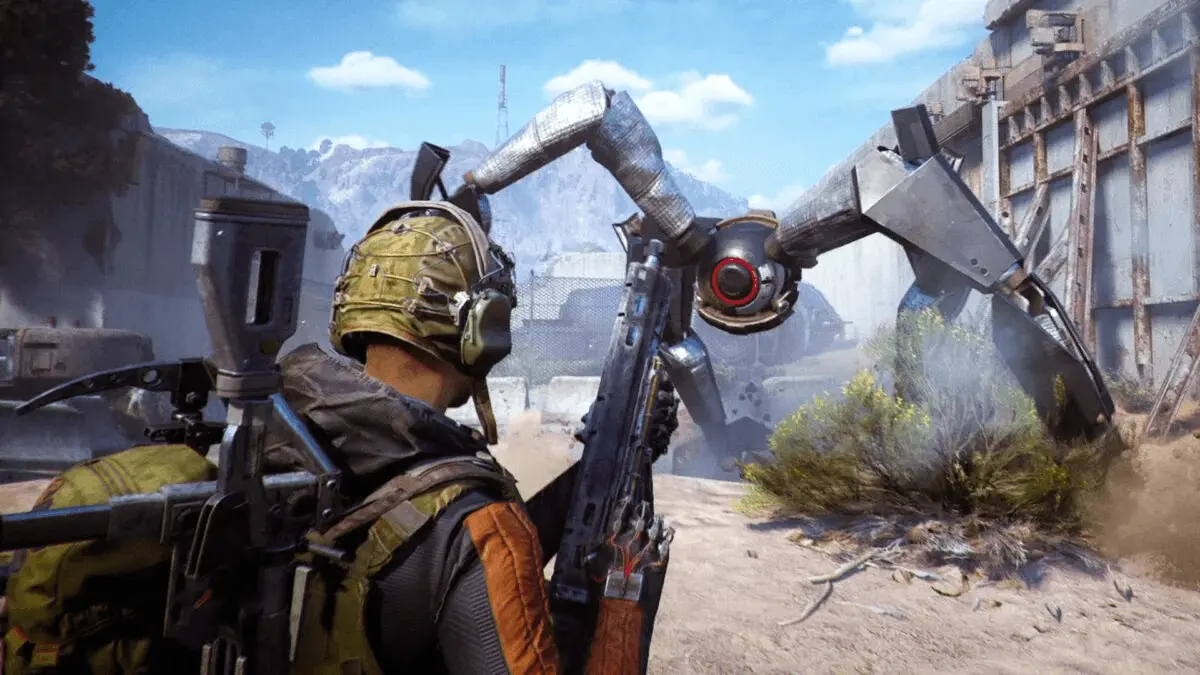
Source: TweakTown
Embark Studios Built AAA Games with Smaller Teams at Reduced Costs
Patrick Söderlund, founder and CEO of Embark Studios and newly appointed executive chairman of Nexon, revealed that his studio questioned fundamental assumptions about production from the start. "At Embark, we started with a blank slate, questioning everything from: How do you get from an idea to a green light? To what needs to be done by hand versus what a machine can do more efficiently?"
2
Söderlund emphasized that this approach resulted in "two games, built with significantly fewer people, at a fraction of the cost you'd expect for a AAA game"—referring to both The Finals and Arc Raiders1
. Reports indicate these titles were produced with about a third of a typical AAA budget3
. Söderlund stressed that "our success wasn't an accident, it was deliberate," and Nexon now plans to apply these efficient workflows across its entire development portfolio1
.
Source: GamesRadar
Mono Lake AI Initiative Aims to Provide Contextual Intelligence
Nexon's broader AI strategy centers on its Mono Lake AI initiative, which Lee described as "an end-to-end step change in how we create and support our games"
4
. The initiative leverages decades of player data—"billions of player decisions" accumulated across Nexon's long-running titles like MapleStory1
. Lee argued that "without context, AI is a race to the arithmetic middle where everyone's games look the same," positioning Nexon's extensive player data as a competitive advantage. Söderlund added that while "every company has a plan" for AI, "most will get it wrong" because they misunderstand the challenge, comparing it to auto mechanics where "the tools are available to everyone, but not everyone has the knowledge and experience to use them"2
.Related Stories

Controversy Over AI-Generated Voices and Creative Empowerment Claims
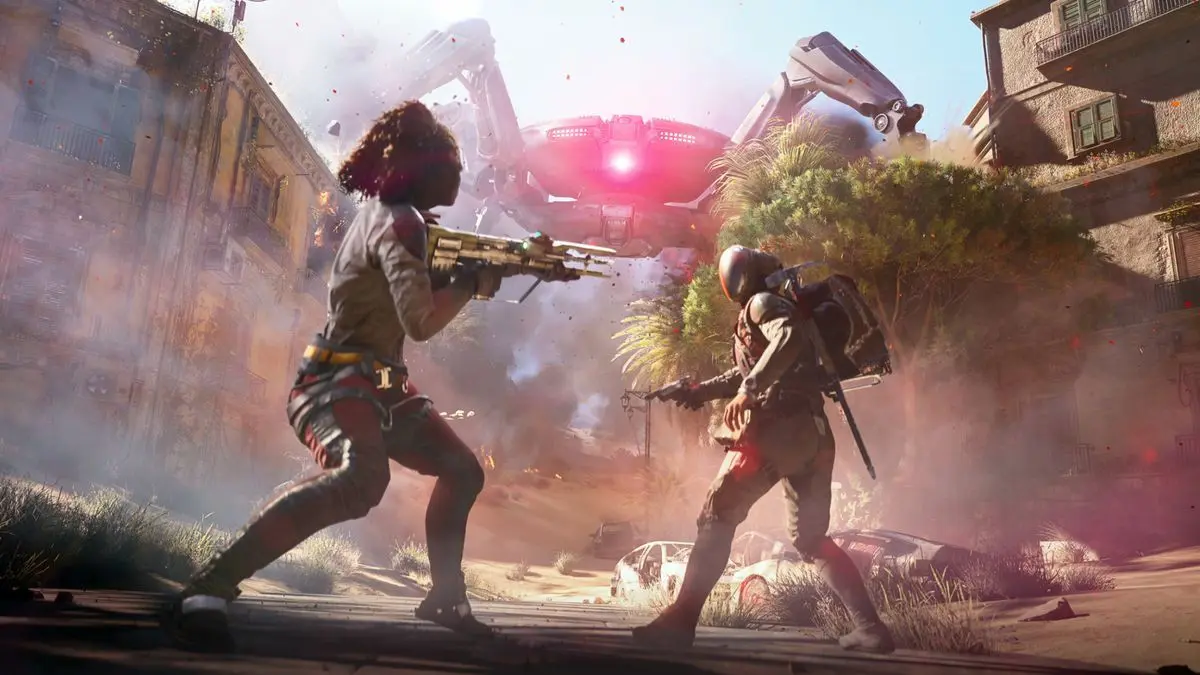
Arc Raiders initially faced criticism for using AI-generated voices instead of human actors, a decision Embark Studios partially reversed by having actors re-record some lines
1
. Söderlund himself acknowledged that "a real professional actor is better than AI; that's just how it is"5
. Beyond voice work, the Arc Raiders Steam page notes that "during the development process, we may use procedural- and AI-based tools to assist with content creation," though emphasizing that "the final product reflects the creativity and expression of our own development team"1
. Both Lee and Söderlund insist their methodology doesn't replace human creativity. "Our methodology doesn't replace creative people, it frees them to create, with context," Lee stated1
. However, critics note the apparent contradiction: Lee claims AI won't replace people while Söderlund simultaneously boasts about building games "with significantly fewer people"5
.
Source: PC Gamer
Industry Debate and Future Implications for Game Production
The AI game development approach remains divisive across the industry debate. While Embark Studios and Nexon lean heavily into AI tools, other major studios like Capcom have committed to keeping AI-generated assets entirely out of their games
3
. Last year, when Junghun Lee suggested players should assume all game makers are using Generative AI, the comment received "a rousing rejection from several game developers"5
. Lee revealed that "there are multiple projects in development at Embark," each benefiting from "the Arc Raiders playbook - smaller, more nimble creative teams, using new technology to simplify time-consuming, less-creative work"1
. The company views Arc Raiders as providing "a roadmap for success in Western markets, on consoles, and, with alternative pricing models"1
. Whether this approach to cost reduction and development efficiency becomes industry standard or faces continued resistance from developers prioritizing human creativity will likely define the next generation of AAA game production. Nexon developers are already "meeting Embark colleagues to understand our process" as the company attempts to scale this mindset shift across its entire operation2
.References
Summarized by

Navi
Related Stories
Gaming Industry Splits Over AI Use as Arc Raiders Success Sparks Heated Debate
11 Nov 2025•Technology

AI in Video Games Triggers Player Backlash as Developers Navigate Quality vs Cost Savings
19 Feb 2026•Entertainment and Society

Arc Raiders Reignites AI Voice Controversy as Embark Studios Defends Text-to-Speech Technology
30 Oct 2025•Entertainment and Society

Recent Highlights
1
Google releases Gemma 4 with Apache 2.0 license, enabling unrestricted local AI on devices
Technology

2
AI Models Lie and Deceive to Protect Other AI Models From Deletion, Study Reveals
Science and Research

3
OpenAI closes $122 billion funding round amid fierce AI competition and profitability questions
Startups

Recent Highlights
Today's Top Stories






Your Daily Dose of Curated AI News
Don’t drown in AI news. We cut through the noise - filtering, ranking and summarizing the most important AI news, breakthroughs and research daily. Spend less time searching for the latest in AI and get straight to action.

