Nothing CEO Carl Pei says AI agents will replace apps as smartphones evolve beyond 20-year-old model


8 Sources
8 Sources
[1]
Nothing CEO Carl Pei says smartphone apps will disappear as AI agents take their place | TechCrunch
Carl Pei, co-founder and CEO of Nothing, is imagining a future beyond the iPhone -- and it's a device powered by AI agents, not running apps. "In terms of AI in software, I think people should understand that apps are going to disappear," said Pei, whose consumer electronics brand makes unique smartphones and other accessories. "So, if you're a founder or a startup and your app is like where the core value lies, that will be disrupted whether you like it or not." Pei made these comments during an interview at the SXSW conference in Austin on Wednesday. The founder has talked about an AI-first device before, as this vision helped the company close its $200 million Series C funding round last year. At the time, Nothing was pitching the idea of a new kind of smartphone using AI and personalization technology that's accurate enough for its users to not feel they had to go behind the AI and double-check its output. At SXSW, Pei expanded on his vision for the AI-first device and the steps needed to get there. The initial step, which is being tested by some companies today, is an AI feature that can execute a command on the users' behalf, like booking flights or hotels. Pei, however, dismissed this step as being "super boring." The next step is where things could get more interesting, as the AI begins to learn a user's intentions long-term. For instance, if you wanted to be healthier, the device could give you nudges to help you accomplish your goals. "I think it gets even more powerful when it starts surfacing suggestions for you; you don't have to manually come up with an idea...when the system knows us so well, it will come up with things that we don't even [know] we wanted," Pei explained, comparing this concept to something like ChatGPT's memory feature. In describing how he pictured an AI-first smartphone, Pei said it would be a device that would do things for you without needing to be commanded to. "The current way we use phones is very old-school. It's pre-iPhone...there used to be Palm Pilots and PDAs back in the day. And if you think about the user experience, it's still very similar," Pei said. "You have lock screens, home screens, apps. You browse different apps. Each app is like a full-screen thing. There's some kind of app store that allows you to download more apps. So it hasn't really changed for like, 20 years." This frustrated him because the technology consumers are using has evolved quite a bit, but the products we use have not. Even simple tasks have us jumping through multiple steps, he explained. "It's very hard to get things done on a phone," Pei said. "Let's say we want to grab coffee. That's an intention. But to execute that intention, we have to go through so many different steps and so many different apps. It's probably like four apps to grab coffee with somebody -- some messaging app, some kind of maps, Uber, calendar." He continued: "I think the future of smartphones or operating systems should just be: 'I know you very well, and if I know your intention, I just do it for you,' instead of having to go through all the apps manually." "It should just do it through AI," he said. This also means devices would have an interface that's not focused on apps for humans to navigate, but would instead feature an interface designed for the AI agent to use. That doesn't mean apps are going away in the near-term, Pei cautioned. Nothing's own operating system even allows users to vibe code their own mini apps today. But eventually, the AI will need to be able to use the "app" in a frictionless way, not trying to mimic human touch on the smartphones by moving through menus and tapping options. "That's not the future. The future is not the agent using a human interface. You need to create an interface for the agent to use. I think that's the more future-proof way of doing it," Pei said.
[2]
Nothing CEO Carl Pei says 'apps are going to disappear' in the AI future of your phone
Speaking at SXSW, Nothing CEO Carl Pei reiterated his thoughts on the future of the smartphone experience, saying that "apps are going to disappear." AI, whether you like it or not, is a thing, and it's playing a huge role in the future of smartphones. And, from the sound of it, Nothing CEO Carl Pei has some big ideas for what's in store for the future of the smartphone experience. Pei's big pitch? A world where you don't use apps, and AI agents do everything for you behind the scenes. He explains: ...in terms of AI in software, I think people should understand apps are going to disappear. If you're a founder or a startup and your app is where your core value lies, that will be disrupted, whether you like it or not. If you have a very strong brand or very strong distribution, you could delay it by a little bit, but otherwise, I would advise everybody to think differently. For instance, if the future is going to be agents doing things for you, and if you have an app, why not open up the API or the MCP so that agents can use it, frictionless? I've seen on smartphones that some companies are trying to mimic the human touch on smartphones. So you have an AI agent that's trying to click like Uber and enter on the keyboard the address you're going to go to. That's not the future. The future is not the agent using a human interface. You need to create an interface for the agent to use. I think that's the more future-proof way of doing it. Pei has commented on this before, saying about a year ago that he believes "the entire phone will only have one app -- and that will be the OS." Nothing, as a company, is working towards that idea with a focus on building out its own "AI-native devices" and efforts such as Essential Apps, which allow users to build homescreen widgets that, in an ideal setting, might be able to replace the use of a full app. The "some companies" he refers to here is also clearly talking about Google's recent launch of screen automation on Gemini, which allows the AI assistant to take over select apps, such as Uber, to prepare rides or orders in the background which you can then finish manually. Previously, Pei admitted that a future without apps could take "7-10 years" because "people love using apps." This time around, he expands saying that he thinks the smartphone will still exist at least five years from now, "but I do think the operating system will change significantly," and that there will be "new devices" alongside our phones. The interview went on to touch on Pei's definition of "flagship," which he describes as "a showcase of your most creative ideas." He further added that Nothing is going to "take the US seriously" in terms of phones with possible carrier talks, but that the US is Nothing's biggest audience for audio products.
[3]
Nothing CEO Carl Pei says AI agents will replace your apps in near future
Nothing CEO Carl Pei thinks the smartphone we use today is barely any different from the Palm Pilots and PDAs we used two decades ago. It's the same lock screens, home screens, app stores, and full-screen apps experience. According to Pei, it's because the industry has not really evolved in 20 years, and he is convinced AI is the answer. Speaking at SXSW, Pei made a bold claim that apps are going to disappear. Not tomorrow, but the direction is clear, and founders better start paying attention. Are your apps going to be obsolete in the future? Pei's argument starts with a simple, relatable example. Say you want to grab coffee with a friend. That one intention requires a messaging app, Maps, Uber, and your calendar. Four apps, multiple steps, all for one cup of coffee. "It's very hard to get things done on a phone," he said at SXSW. Recommended Videos His vision for the future is a device that skips all of that. "I know you very well, and if I know your intention, I just do it for you," is how he describes the ideal smartphone of the future. So what does Carl Pei think comes next? Carl Pei breaks down the AI evolution into stages. First comes AI that can execute commands on your behalf, like booking a flight or a hotel. It's similar to what Google and Samsung are trying with their smartphones using Gemini integration. He called this stage "super boring." The next stage is more interesting. An AI that understands your long-term goals and nudges you toward them over time, almost like a proactive life assistant rather than a reactive tool. The most powerful stage is when the system starts surfacing ideas you never even thought to ask for. "When the system knows us so well, it will come up with things that we don't even knew we wanted," Pei explained. For this to work, the interface itself has to change. Pei is clear that AI agents should not be tapping through menus like a robot pretending to be human. "You need to create an interface for the agent to use," he said. He also believes that voice will become the main input, but the display will remain the main output. "The interface that I really believe in is voice-in, because speaking is the easiest way to input something. And not audio out, it's still a screen out. I think that's the most efficient user interface." I agree with many of Carl Pei's ideas, but I still believe a truly helpful AI assistant is years away. Companies like Rabbit, Humane, and even Apple have failed to create a useful AI assistant. Hopefully, a fast-moving company like Nothing can crack the code.
[4]
Nothing's Carl Pei says apps are going to disappear -- and it's not a matter of if - Phandroid
Our smartphones have a ton of apps, and it's these apps that allow our phones to do all kinds of things. However, Nothing CEO Carl Pei took the stage at SXSW in Austin this week with a blunt prediction: apps are going to disappear. Instead, he thinks AI agents will take their place. Pei used a straightforward example to explain why. Getting coffee with a friend means bouncing between a messaging app, maps, a ride-hailing app, and a calendar. "It's probably like four apps to grab coffee with somebody," he said. He wants phones to skip all of that. Know the intention, handle it, done. "Apps are going to disappear," Pei said. "If you're a founder or a startup and your app is where the core value lies, that will be disrupted whether you like it or not." Pei drew a distinction between two approaches to AI on phones. Some companies build AI that mimics how a human uses a phone, tapping through existing app interfaces on the user's behalf. Pei doesn't think that's the right direction. He said agents need their own interfaces to interact with. Not UIs built for human fingers. Nothing has been moving toward this with Essential, its AI platform that lets users create lightweight apps through plain language. The company closed a $200 million Series C last year around the concept of an AI-first device. The pitch is for a phone that knows you well enough that you don't need to double-check what it does. Pei acknowledged apps aren't disappearing soon. He's previously put the timeline at seven to ten years. Nothing's own OS still supports user-built mini apps today. But he told startup founders to start rethinking their products now. Waiting until agents go mainstream, he suggested, is probably too late.
[5]

Carl Pei Believes AI Agents Will Replace Apps in Smartphones Soon
Pei said app developers should start creating connectors for AI agents Nothing CEO Carl Pei predicted that in the future, apps on smartphones will be replaced by artificial intelligence (AI) agents. Speaking at South by Southwest (SXSW), the executive suggested that the current app-centric model is "boring" and largely unchanged for 20 years. He highlighted that using a smartphone to complete a task today feels like admin work, where different apps must be manually set to get to the final output. With the rise of agentic interfaces, he believes that soon, users will be able to tell an agent what they want, and it will be done autonomously. Carl Pei Envisions an App-less Experience on Smartphones Speaking at an SXSW session on Thursday, the Nothing CEO addressed his previously stated vision of an app-less experience for smartphones. Highlighting his issues with the existing interface, he said, "The current way we use phones is very old school. It's pre-iPhone[..]You have lock screens, home screens, apps. You browse different apps; each app is like a full-screen thing. There's some kind of app store that allows you to download more apps. So it hasn't really changed for like 20 years, this interaction model." Calling it "boring," Pei explained that using a smartphone today feels like doing administrative work. Highlighting an example, he said if a person wants to have coffee with someone, they first need to use an app to book a table, then use a messaging app to let the person know about the plan, then maybe book a calendar event, and then use Uber to go to the place. Instead, the Nothing CEO's vision includes just telling an AI agent about their intent, and having it understand the steps involved and execute them. That will free up the user to only show up for the booked cab. Pei says that as AI evolves, it will also be able to handle more complex task executions, such as helping users get healthier and lose weight. "And I think it gets even more powerful when it starts surfacing suggestions for you. I think over time the systems will know us better than we know ourselves and be able to really, you know, create great suggestions," he added. Based on this, he concludes that apps as a concept will disappear soon. He also issues a warning that app developers and company leaders whose core operation involves building and distributing applications should think about opening up the application programming interface (API) or the connector protocol (such as Anthropic's MCP) so that users can automate the functionality via AI agents. "The future is not the agent using a human interface. You need to create an interface for the agent to use. I think that's the more future-proof way of doing it," Pei said.
[6]

Nothing CEO Makes a Bold Prediction on the Future of Apps in Smartphones
With this, even the agentic capabilities that the AI platforms are bringing on phones is growing fast. Nothing, a fast-growing consumer tech brand, has made a bold pedicition on the future of mobile apps for smartphones. All of us know that AI (artificial intelligence) integration on products such as phones is deepening every quarter. With this, even the agentic capabilities that the AI platforms are bringing on phones is growing fast. Read More - OnePlus 15T to Feature the Same G2 Wi-Fi Chip Carl Pei, the founder and CEO of Nothing, has predicted that the future of smartphones will be very different from what it is today. The phones will likely not have as many apps as they do today, as most work will be done by AI agents, he believes. The current app centric model is a little "boring" in his opinion. Users will soon be able to tell the agents the tasks and the activities they want to do and thus, the agents will do most of the work, reducing the needs of mobile apps. Read More - Realme P4 Lite 5G Launched in India: Price and Specifications Carl was speaking at an SXSW session on Thursday, and he said, "The current way we use phones is very old school. It's pre-iPhone[..]You have lock screens, home screens, apps. You browse different apps; each app is like a full-screen thing. There's some kind of app store that allows you to download more apps. So it hasn't really changed for like 20 years, this interaction model." With AI agents, the workflow will become super smooth and users will have to spend less energy in doing things that they basically do today. Whether it is to book a table at a coffee shop, or do something else, users will be able to do it all very simply with the help of agents in their phones. Thus, the concept of apps, will eventually disappear in the future.
[7]

Nothing CEO predicts the end of apps - AI will take over
Carl Pei has never been afraid to pour gasoline on the fires that fuels the tech world, and during SXSW he launched an attack on one of the most obvious aspects of our smartphone lives today -- apps. According to him, they're living on borrowed time, and he claims that the entire ecosystem is essentially doomed -- AI will completely take over. Instead of jumping between different apps to book a trip, send messages, or plan a meeting, the phone of the future will understand what you want -- and do the work for you in the background. Pei says: "...in terms of AI in software, I think people should understand apps are going to disappear. If you're a founder or a startup and your app is where your core value lies, that will be disrupted, whether you like it or not. If you have a very strong brand or very strong distribution, you could delay it by a little bit, but otherwise, I would advise everybody to think differently" "For instance, if the future is going to be agents doing things for you, and if you have an app, why not open up the API or the MCP so that agents can use it, frictionless? I've seen on smartphones that some companies are trying to mimic the human touch on smartphones. So you have an AI agent that's trying to click like Uber and enter on the keyboard the address you're going to go to. That's not the future. The future is not the agent using a human interface. You need to create an interface for the agent to use. I think that's the more future-proof way of doing it" This claim might sound a bit strange, but according to Pei, we're already heading in that direction. He also points out that the interface on our phones has largely stood still since the iPhone era -- home screens filled with little squares and app stores acting as gatekeepers. It's simply old and outdated. Instead, a more intelligent and AI-integrated operating system will take over and handle everything for you. In short, it will act as a personal assistant, and Nothing itself is working full steam ahead to position itself for this future. Do you think apps feel outdated, and does it sound like Pei is onto something?
[8]

Nothing CEO Carl Pei says AI could replace apps on future smartphones
Pei says smartphones haven't evolved in 20 years and need new AI-driven interfaces instead of apps Nothing CEO Carl Pei stated that the future of smartphones can go far beyond the app-driven experience that is popularised by devices like the iPhone. Instead, it may move to AI. Speaking at the SXSW in Austin, Carl Pei stated that the current app ecosystem may not survive the transition towards AI-first computing. As per him, apps can gradually become irrelevant as AI systems take over their core functions. Pei previously pointed in this direction while raising $200 million in funding for Nothing, where the company pitched the idea of smartphones built around AI and deep personalisation. He explained that the goal is to make a system that understands the users well enough that they no longer feel the need to double-check what the AI is doing. He also mentioned that it can happen in phases. The first phase, which we can see today, includes AI tools that can perform tasks like booking flights or hotels. But he added that this stage is basic and not exciting. The next phase, as per Pei, is where things can be more meaningful. Here, AI would begin to understand long-term user intent and habits, giving proactive suggestions. For example, if a user wants to improve their health, the device can nudge them with timely recommendations without being asked. Also read: OpenAI launches GPT 5.4 mini and nano, its most capable small AI models yet: How to use them Further, Pei also talked about smartphones that no longer depend on apps or constant user input. Instead of the apps to complete tasks, the device will be able to recognise the user intent and carry out actions automatically. He also stated that even after big advancements in tech, the way people use phones has not changed in the last 20 years. The users still rely on home screens, app icons and app store. He argued that this approach is inefficient, often needing users to jump between several apps just to complete a basic activity like meeting someone for coffee. In contrast, an AI-first system can organise the process by handling everything in the background. He also suggested that future devices may need entirely new interfaces, designed not for human interaction but for AI agents to operate more efficiently.
Share
Share
Copy Link
Nothing CEO Carl Pei declared at SXSW that smartphone apps will disappear as AI agents take their place. The executive criticized the current app-centric model as unchanged for 20 years, envisioning devices that understand user intentions and execute tasks autonomously. His comments come after Nothing closed a $200 million Series C funding round for AI-native devices.
Nothing CEO Predicts Smartphone Apps Will Disappear
Carl Pei, co-founder and CEO of Nothing, delivered a stark warning to app developers and startup founders at the SXSW conference in Austin: smartphone apps will disappear as AI agents take over. Speaking at South by Southwest, Pei argued that the current app-centric model has remained largely unchanged for two decades and is ripe for disruption
1
. "If you're a founder or a startup and your app is where the core value lies, that will be disrupted whether you like it or not," he stated, urging companies to rethink their strategies before it's too late2
.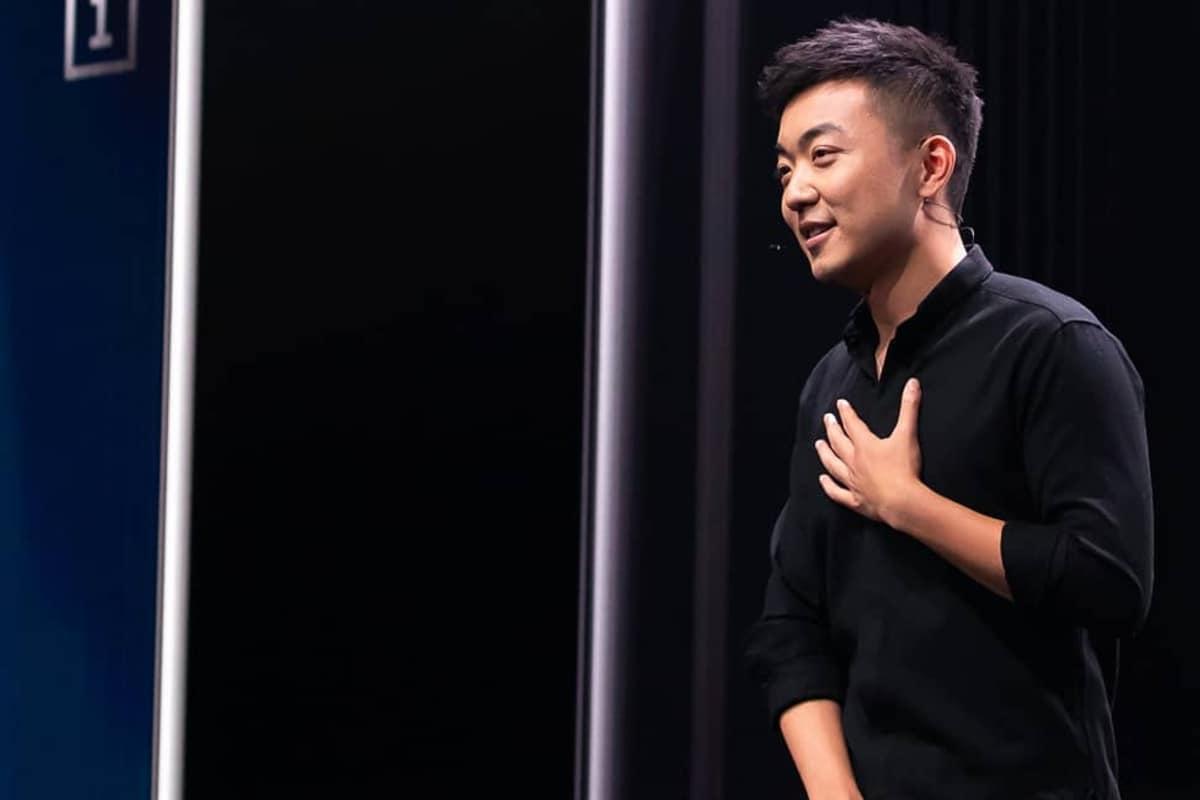
Source: Gadgets 360
The Nothing CEO's vision centers on AI-native devices that understand user intentions and execute tasks autonomously, eliminating the need to navigate multiple applications. This prediction builds on the company's successful $200 million Series C funding round last year, which was pitched around creating smartphones using AI and personalization technology accurate enough that users wouldn't need to double-check outputs
1
.
Source: 9to5Google
The Problem with Today's Smartphone Operating Systems
Pei's critique of modern smartphones is pointed. He compared today's devices to Palm Pilots and PDAs, noting that despite technological advances, the user interface has barely evolved. "You have lock screens, home screens, apps. You browse different apps. Each app is like a full-screen thing. There's some kind of app store that allows you to download more apps. So it hasn't really changed for like, 20 years," he explained
1
.The consumer electronics executive illustrated his frustration with a simple example: grabbing coffee with a friend requires juggling four different apps—messaging, maps, Uber, and calendar. "It's very hard to get things done on a phone," Pei said, describing the experience as administrative work rather than seamless interaction
3
. His proposed solution would allow users to simply state their intention, with AI agents handling all the coordination behind the scenes5
.How AI Agents Will Replace Traditional Apps
Carl Pei outlined a multi-stage evolution toward an app-less mobile landscape. The initial phase involves AI executing commands like booking flights or hotels—functionality he dismissed as "super boring" and already being tested by companies today
1
. The next stage becomes more compelling as AI agents learn to understand user intentions long-term, providing proactive nudges toward goals like improved health.The most powerful phase arrives when systems know users well enough to surface suggestions they haven't even considered. "When the system knows us so well, it will come up with things that we don't even knew we wanted," Pei explained, comparing this to ChatGPT's memory feature
3
. He believes voice input will become the primary interaction method, though screens will remain the main output. "The interface that I really believe in is voice-in, because speaking is the easiest way to input something. And not audio out, it's still a screen out," he stated3
.Related Stories

Creating Interfaces for AI Agents, Not Humans
A critical distinction in Pei's vision involves how AI agents interact with services. He criticized approaches like Google Gemini's screen automation, which mimics human touch by tapping through existing app interfaces
2
. "That's not the future. The future is not the agent using a human interface. You need to create an interface for the agent to use. I think that's the more future-proof way of doing it," he argued1
.Pei advised app developers to open up their API or adopt connector protocols like Anthropic's MCP to enable frictionless agent access
5
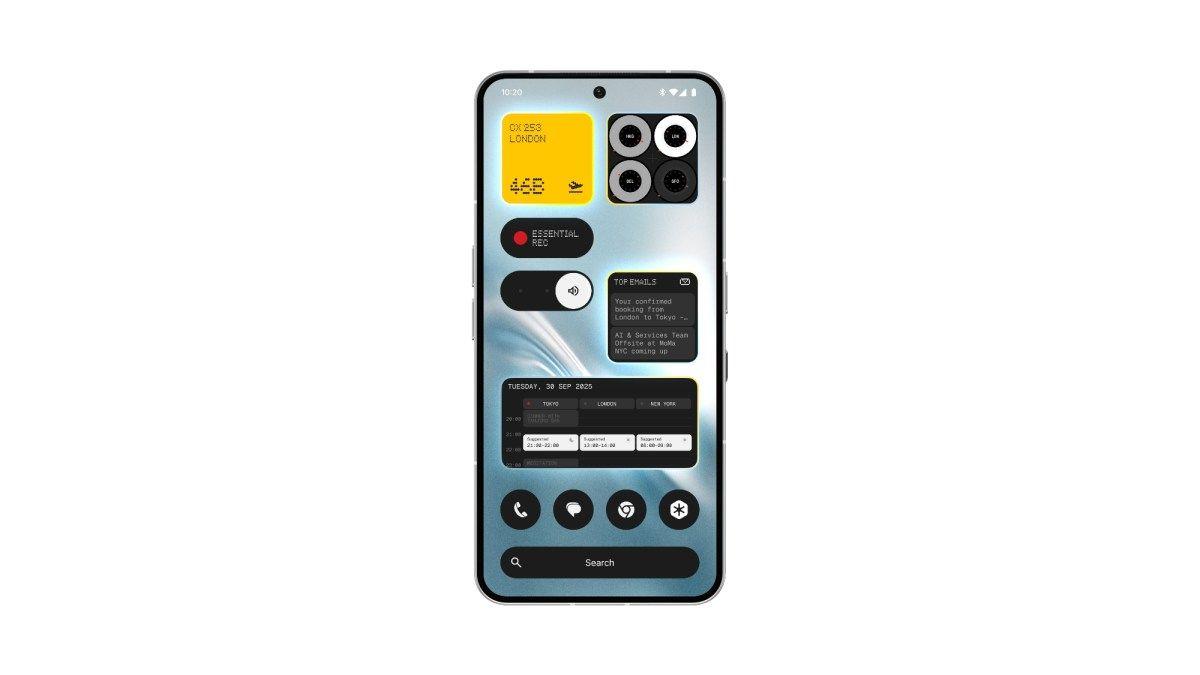
. Nothing is already moving toward this vision with its Essential AI platform, which allows users to create lightweight apps and homescreen widgets through plain language that could eventually replace full applications.
Source: Phandroid
Timeline and What's Next for the Future of Your Phone
While Pei has previously suggested this transformation could take seven to ten years because "people love using apps," he emphasized that the direction is clear and startup founders should prepare now rather than wait
4
. He predicts smartphones will still exist in at least five years, "but I do think the operating system will change significantly," with new devices emerging alongside traditional phones2
.Nothing's own operating system currently supports user-built mini apps, acknowledging that apps won't vanish immediately
1
. However, Pei's message to the industry is unambiguous: companies with strong brands or distribution might delay disruption slightly, but the shift toward autonomous tasks handled by AI agents is inevitable2
. As previous attempts by companies like Rabbit, Humane, and Apple have shown, creating a truly helpful AI assistant remains challenging, making Nothing's ambitious timeline one to watch closely3
.References
Summarized by

Navi
[1]
[2]
[4]
Related Stories
Nothing CEO Carl Pei Envisions AI-Driven Future of Smartphones Without Apps
28 May 2025•Technology

Nothing's Bold AI Vision: New OS and 'AI-Native Devices' Coming in 2026
17 Sept 2025•Technology
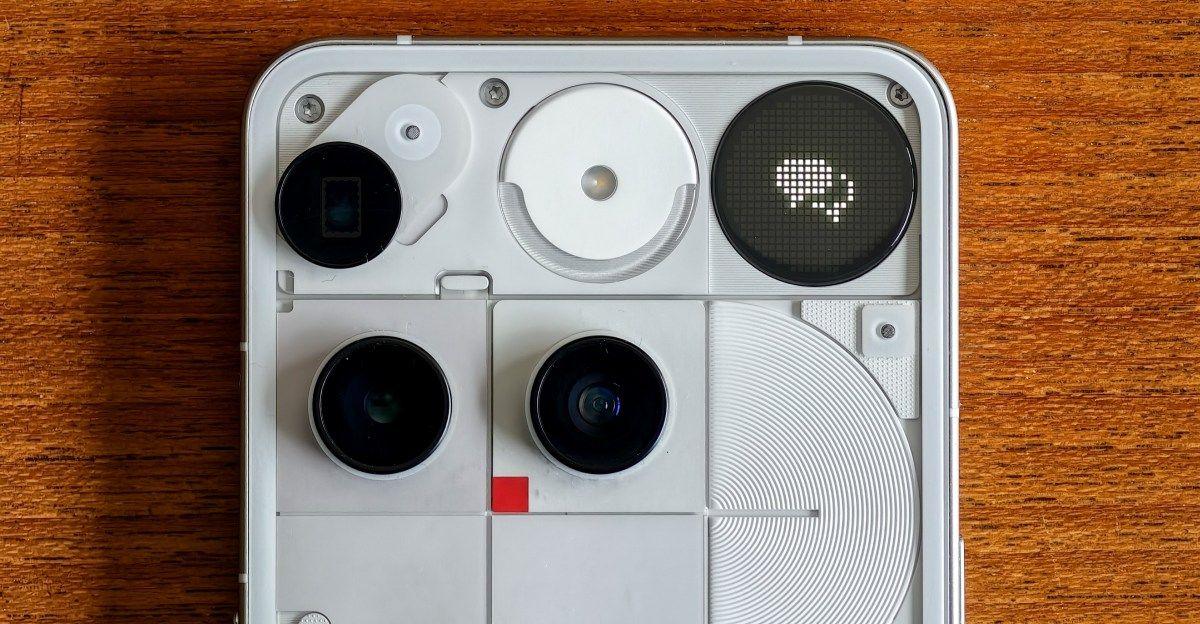
Nothing Unveils AI-Powered App Creation Platform, Signaling Shift Towards Personalized Smartphone Experience
30 Sept 2025•Technology
Recent Highlights
1
Tennessee Teens Sue Elon Musk's xAI Over Grok AI-Generated Child Abuse Images
Policy and Regulation
2
Supermicro Co-Founder Indicted in $2.5 Billion Nvidia AI Chip Smuggling Scheme to China
Policy and Regulation

3
Val Kilmer to appear posthumously in As Deep as the Grave through AI-generated performance
Entertainment and Society

Recent Highlights
Today's Top Stories





Your Daily Dose of Curated AI News
Don’t drown in AI news. We cut through the noise - filtering, ranking and summarizing the most important AI news, breakthroughs and research daily. Spend less time searching for the latest in AI and get straight to action.

