US export rules greenlight H200 sales to China, but strict limits put American buyers first


35 Sources
35 Sources
[1]
U.S. posts official H200 and MI325X AI GPU export rules to China, but with plenty of caveats -- a string of requirments greatly limits the total number of GPUs that can be shipped to China
The U.S. Department of Commerce has unveiled new export rules for shipments of advanced AI and HPC processors designed in America to China and Macau. However, while the new rules permit limited exports of specific accelerators -- most notably AMD's Instinct MI325X, Nvidia's H200, and comparable lower-performance products -- on a case-by-case basis, licenses are granted only if the products are readily available in the U.S. and if shipments to the People's Republic remain capped relative to U.S. volumes, which effectively rules out China-only SKUs. When it comes to specifications, approved devices must feature a total processing performance (TPP) score below 21,000 points and total DRAM bandwidth under 6,500 GB/s, which means relaxation of performance-tied export rules. However, the key constraint is now U.S. supply priority: exporters must prove that domestic demand is fully met, that no U.S. orders are delayed, that advanced-node foundry capacity serving U.S. customers is not diverted, and that aggregate PRC-bound shipments do not exceed 50% of the same product shipped into the United States. The U.S. DoC names AMD's Instinct MI325X and Nvidia's H200 GPUs as models of accelerators that may qualify. The MI325X delivers 1,300 TFLOPS of FP16 performance, which translates to a TPP score of 20,800, and pairs 256 GB of HBM3E memory with 6 TB/s of bandwidth. Nvidia's H200 offers 989.5 TFLOPS of FP16 throughput, which converts to a TPP score of 15,832, alongside 141 GB of HBM and 4.8 TB/s of bandwidth. Both processors fall below the stated thresholds and are therefore eligible for shipments to China, provided a license is approved. Products that exceed the limits, or include re-exports that involve D:5 countries remains subject to denial. However, while previous limitations focused solely on performance and specifications, the new compliance requirements extend well beyond specifications. Every shipment must undergo verification of TPP, memory bandwidth, interconnect bandwidth, and copackaged DRAM capacity in an independent U.S.-headquartered testing laboratory with no financial ties to the exporter or importer. Meanwhile, the U.S. DoC can revoke a lab's qualification at any time. In addition, exporters must meet strict Know Your Customer and cloud-usage rules, disclose end users, prevent unauthorized remote access, and bar transfers of model weights or trained algorithms to restricted parties, such as Chinese military or secret service organizations. To a large degree, the policy treats China as a market for AI processor leftovers, as China-bound volumes are limited by U.S. shipment history. For example, if a company had supplied 100,000 model A processors to American clients, it cannot ship more than 50,000 model A processors to Chinese customers at the same time. Meanwhile, Europe, Japan, and other regions remain normal destinations for AI and HPC hardware. Also, while the rules give AMD and Nvidia a way to supply older accelerators to select customers in China or Macau, they make large-scale exports difficult as they need to ship to American clients and ensure no capacity is diverted from American clients, which reduces volumes that can be shipped to the PRC. In addition, the new technology particularly disadvantages smaller vendors that have limited access to advanced production and packaging capacities and can rarely offer performance comparable to that of AMD's or Nvidia's GPUs. In short, while the new export regulations allow tightly controlled sales of previous-generation (or at least not leading-edge) hardware to customers in China, which preserves the presence of American technologies in the Chinese AI sector, it does so in a way that greatly limits volumes that can be shipped to Chinese buyers.
[2]
US GPU export rules put Chinese buyers last
The Trump administration will only allow exports of Nvidia and AMD GPUs to China if local buyers can get all the kit they want. Recent US policy has restricted exports of advanced GPUs to China, on grounds that the Middle Kingdom can use them for military purposes. That ban meant Nvidia could not export its H200 accelerator to China. The company responded by creating the H20, a crippled version of the H200. The Trump administration later banned exports of the H20, to prevent China improving its AI capabilities. Nvidia later said that decision cost it over $10 billion in sales. The administration then reversed the ban and promised to allow H200 sales into China subject to certain conditions. On Tuesday, the US Department of Commerce's Bureau of Industry and Security (BIS) revealed those conditions in a filing [PDF] that explains it will allow Nvidia and AMD to apply to export their H200 and MI325X models if they meet four criteria: There's also a requirement for any shipments to China to "be no more than 50% of the total product shipped to customers for end use in the United States of that product." AMD and Nvidia will also have to produce a list of remote users located within, or controlled by a parent company from, Belarus, China, Cuba, Iran, Macau, North Korea, Russia, and Venezuela. The BIS will conduct a case-by-case review of every application to export and says the new rules are necessary "to ensure the national security benefits of U.S. leadership in artificial intelligence." Nvidia and AMD launched the H200 and MI325X in 2024, and the devices do not use their most advanced architectures. If Chinese buyers pass the BIS's test and can acquire the machines, they will therefore acquire less powerful chips than those available to US buyers - potentially preserving the USA's lead if China doesn't catch up with homegrown GPUs. Or perhaps not, as Chinese hyperscalers and AI companies have often found ways to do more with less, as was the case with DeepSeek and Alibaba Cloud, which found a way to lift GPU utilization rates. Shares in AMD and Nvidia stayed flat on Tuesday, suggesting investors don't see the new rules as likely to deliver a flood of sales and revenue. ®
[3]
Alibaba Shares Rise as China Plans Approval of H200 Imports
Alibaba Group Holding Ltd. shares jumped on optimism that the tech giant can benefit if Nvidia Corp.'s H200 chips are made available in China. The stock climbed as much as 4.8% in Hong Kong, the most since Nov. 24, after China's plans to approve some imports of the H200 chips as soon as this quarter. Other Chinese artificial intelligence firms Kuaishou Technology and JD.com Inc. also gained more than 4% each. The shares are boosted by the expectation that China may allow domestic players to use H200 chips, which should bode well for firms like Alibaba, said Vey-Sern Ling, managing director at Union Bancaire Privee. Access to these AI semiconductors would help Chinese firms upgrade and run their models as they seek to compete with the likes of OpenAI and other US rivals. The H200 is an older-generation chip that the Trump administration has said can be exported to China. The US government restricts sales of more advanced processors on national security grounds. Alibaba has been the biggest spender among Chinese firms to power AI-related businesses, and a secure chip supply is expected to boost its cloud segment. That bodes well for the stock, which has declined more than 20% from a peak in early October amid concerns over its core e-commerce earnings and Beijing's regulations on live-streaming businesses. The tech giant has told Nvidia in private that it is interested in ordering more than 200,000 units of the H200, according to a person familiar with the matter.
[4]
Exclusive: China's customs agents told Nvidia's H200 chips are not permitted, sources say
Jan 14 (Reuters) - Chinese customs authorities told customs agents this week that Nvidia's (NVDA.O), opens new tab H200 artificial intelligence chips are not permitted to enter China, according to three people briefed on the matter. Chinese government officials also summoned domestic technology companies to meetings on Tuesday where they were explicitly instructed not to purchase the chips unless necessary, two of the people and a third source said. "The wording from the officials is so severe that it is basically a ban for now, though this might change in the future should things evolve," one of the people said. BEIJING'S MOTIVES UNCLEAR The H200, Nvidia's second most powerful AI chip, is one of the biggest flashpoints in current U.S.-Sino relations. Though there is strong demand from Chinese firms, it remains unclear whether Beijing wants to ban it outright so that domestic chip companies can flourish, or is still chewing over restrictions, or whether these measures could be used as a bargaining tactic in talks with Washington. The chip, formally approved by the Trump administration for export to China this week with some conditions, is also a hot-button issue in the U.S., with many China hawks concerned that the chips could supercharge the Chinese military and erode the U.S. advantage in AI. The sources, who spoke on condition of anonymity due to the sensitivity of the matter, said authorities had not provided any reasons for their directives and had not given any indication whether this constitutes a formal ban or a temporary measure. Reuters was not immediately able to ascertain whether the directives applied to existing orders for H200 chips or only to new orders. China's General Administration of Customs, the Ministry of Industry and Information Technology and the National Development and Reform Commission had not responded to Reuters requests for comment at the time of publication. Nvidia also did not reply to Reuters queries. HUGE ORDERS PLACED The Information on Tuesday reported that the Chinese government this week told some tech companies it would only approve their H200 purchases under special circumstances, such as for research and development conducted in partnerships at universities. Exemptions are being discussed for R&D purposes and universities, said one of the sources. Keen to stifle China's AI and technological development, the U.S. has since 2022 placed restrictions on exports to China of high-end chips. Last year, Trump banned and then allowed exports of a much weaker chip, the H20. But then Beijing de facto blocked those sales from around August, prompting Nvidia CEO Jensen Huang to say the company's share of the AI chip market in the world's second-largest economy had shrunk to zero. The H200, however, delivers roughly six times the performance of the H20, making it a highly attractive product. While Chinese chipmakers have developed AI processors like Huawei's (HWT.UL) Ascend 910C, the H200 is considered far more efficient for the large-scale training of advanced AI models. Chinese technology companies have placed orders for more than two million H200 chips priced at around $27,000 each, far exceeding Nvidia's inventory of 700,000 chips, sources said last month. Conditions placed by the U.S. on the H200 exports include a cap limiting China to no more than 50% of the total chips sold to U.S. customers. Reporting by Reuters staff; Editing by Edwina Gibbs Our Standards: The Thomson Reuters Trust Principles., opens new tab
[5]

Sales of a powerful Nvidia AI chip to China gets the greenlight, with conditions
The Trump administration placed new security requirements on Nividia's semiconductor sales to China, but essentially greenlighted the export of its powerful H200 artificial intelligence chips to Chinese buyers. Nvidia must ensure that there is an adequate supply in the U.S., and the H200 chips must undergo a third-party review before being exported to China, according to new rules set by the Commerce Department's Bureau of Industry and Security. But the new rules lower the bar for exports. China won't be allowed to use the chips for military purposes and is not allowed to import more than 50% of the chips sold to U.S. customers. "We applaud President Trump's decision to allow America's chip industry to compete to support high paying jobs and manufacturing in America," Nvidia told The Associated Press in a prepared statement Wednesday. "Offering H200 to approved commercial customers, vetted by the Department of Commerce, strikes a thoughtful balance that is great for America." The new Commerce rules arrive just over a month after President Donald Trump said he'd allow Nvidia to sell the H200 to "approved customers" in China. The H200 is not Nvidia's most advanced product. Those chips, called Blackwell and the upcoming Rubin, were not part of the approved chips for export. A group of Democratic senators has objected to sales in China, saying that the chips could aid China's military, help China carry out more effective cyberattacks against the U.S. and strengthen China's economic and manufacturing sector. The approval of the licenses to sell Nvidia H200 chips reflects the increasing power and close relationship that the company's founder and CEO, Jensen Huang, enjoys with the president. But there have been concerns that China will find ways to use the chips to develop its own AI products in ways that could pose national security risks for the U.S., a primary concern of the Biden administration which had sought to limit exports. In August Nvidia and AMD agreed to share 15% of their revenues from chip sales to China with the U.S. government, as part of a deal to secure export licenses for the semiconductors.
[6]
Beijing reportedly limiting H200 purchases to those with 'special circumstances' -- sources suggest only university R&D labs can acquire Nvidia GPUs in China
New restrictions put the brakes on an Nvidia resurgence in China President Donald Trump allowed Nvidia to sell its H200 data center GPUs to China last month, but Beijing stepped on the brakes. The central government instructed its tech giants to temporarily halt their orders as it debated how it can provide its AI developers the necessary powerful chips they need to make train their cutting edge models while simultaneously supporting local chip manufacturers. Now, some sources have told The Information that the Chinese government will only allow the purchase of these chips for "special circumstances," saying that these are probably limited to university research and development labs only. That restriction is going to be a blow to Nvidia's dream of making it big in China again, especially after its market share fell to essentially zero from a high of 95% in just a matter of years. When the news broke that the White House will finally allow Nvidia to sell its H200 chips to China, Beijing immediately set an emergency meeting with its big tech companies to assess the demand for the advanced AI GPUs and how they will impact the CCP's target of both AI supremacy and semiconductor sovereignty. Even though these two targets seemingly go hand-in-hand, they're contradictory due to the current situation in China's semiconductor industry. While Chinese chip makers can allegedly build homegrown AI processors that can match the watered-down H20 and RTX Pro 6000D GPUs, they still don't have anything that approaches the power and efficiency that the full-blown H200 and newer Blackwell chips that Nvidia currently offer. But Beijing still needs its companies to continue buying AI processors from local manufacturers to spurn demand and allow them the cash flow to be able to reinvest and drive research and development on homegrown chips. In fact, one source even claimed that the reason the H200 was finally allowed to be sold to China was because of the threat that Huawei's new Ascend chips pose to the "dominance of the American tech stack" in the AI space. It's been suggested that Chinese companies will be allowed to purchase Nvidia H200 GPUs if they also buy an equivalent number or a ratio of domestically manufactured AI processors. However, this development, if true, means that only labs with specialized uses will be able to purchase them. Still, all is not lost for Nvidia and the tech giants, like Alibaba and ByteDance, that want to order hundreds of thousands of these AI chips. The "special circumstances" directive is said to be intentionally vague, meaning it's up to the government to determine which tech company's application will fall under this definition. Furthermore, the publication said that Beijing has set meetings with the big companies that want to make massive purchases of these graphics cards "to deliver the purchase directive," although it's unclear what more will be said behind those closed doors. Ambiguous messaging like this is often used by governments if they don't want to make a commitment. This could be either because they're looking to win more concessions from the other side or that they're trying to gauge local politics to see how affected parties will react to their directive. But until we start seeing orders come in from large China-based tech companies, Chinese universities and labs, or combination of the two, Nvidia has no choice but to hold its breath and see which way Beijing will go.
[7]

NVIDIA can now sell AI chips to China as US eases export rules
The U.S. is easing restrictions on advanced AI chip exports to China, opening a path for NVIDIA and Advanced Micro Devices to seek approval to sell high-performance processors under revised federal rules. Under new regulations released Tuesday by the U.S. Commerce Department, chipmakers can apply to ship certain advanced computing processors to Chinese customers on a case-by-case basis. The move marks a clear departure from Washington's earlier stance, which presumed rejection of nearly all such requests.
[8]
China expected to approve H200 imports in early 2026, report claims -- tech giants Alibaba and ByteDance reportedly ready to order over 200,000 Nvidia chips each if green-lit by Beijing
China is expected to allow its tech giants to finally import Nvidia H200 chips about a month after President Donald Trump approved its export to its Asian rival. Sources say that Beijing will allow domestic corporations to purchase these chips for commercial use, as reported by Bloomberg. However, it seems that this won't be a blanket approval -- instead, it will likely come with caveats, like requiring companies to buy a number of homegrown chips alongside their imports. Furthermore, military, sensitive government agencies, critical infrastructure, and state-owned enterprises aren't allowed to acquire and use these American-made chips due to security concerns. The H200 is one generation behind the latest Blackwell AI GPUs, and with the upcoming Vera Rubin NVL72 now in production, it's expected that the H200 will further fall behind in performance. However, it's still relatively much more powerful than Nvidia's H20 chips, which the company made in response to the White House's bans, and the latest offerings from homegrown chip manufacturers in China. Because of this, local tech giants like Alibaba and ByteDance are reportedly gearing up to order over 200,000 H200 AI GPUs, each, once they receive approval from Beijing. Smaller startups are also expected to place orders for these chips, which are crucial for training their latest models that would allow them to compete against OpenAI's ChatGPT and other LLMs from the U.S. This news of impending approval and massive interest is great news for Nvidia, especially as its market share in China has essentially fallen to zero from a high of 95% just a few years earlier. This was caused by the increasing tensions between the U.S. and China, with a trade war between the two sides resulting in a complete ban of Nvidia's most powerful offerings to China in April 2025, including those specifically made to follow Washington, D.C.'s earlier limitations like the H20 and RTX 5090D. This was lifted in July of the same year, with the U.S. government promising that it will grant export licenses for the H20 soon. However, it was Beijing's turn to enact a ban, preventing its biggest tech companies from purchasing China-specific hardware like the RTX Pro 6000D, claiming that its homegrown chips are now as capable as these offerings. The situation between the two rivals have softened recently, though, with the U.S. and China agreeing on a one-year tariff truce. And even though Blackwell's availability wasn't discussed between the two parties, it seemed that China was able to win some concessions from the U.S. for allowing the sale and export of Nvidia's last-generation AI chip. This is a win for both Nvidia and Chinese AI companies, although we still don't know how it will affect local chip manufacturing. Beijing's dilemma at the moment is how it will balance the need of its AI tech companies for the latest, most powerful chips and the advancement of its homegrown semiconductor industry. But even as the Chinese CCP is considering how it will approach this problem, Chinese tech giants are already lining up to get their share of Nvidia's H200 AI GPUs.
[9]

U.S. approves Nvidia H200 chip exports to China with some conditions
WASHINGTON -- The Trump administration on Tuesday gave a formal green light to China-bound sales of Nvidia's second most powerful AI chip, putting in place a rule that is likely to kickstart shipments of the H200 despite deep concerns among China hawks in Washington. According to the regulations, the chips will be reviewed by a third-party testing lab to confirm their technical AI capabilities before they can be shipped to China, which cannot receive more than 50% of the total amount of chips sold to American customers. Nvidia will need to certify that there are enough H200s in the U.S., while Chinese customers must demonstrate "sufficient security procedures" and cannot use the chips for military purposes. Those conditions had not been established previously. In a statement, Nvidia said the move by President Donald Trump "strikes a thoughtful balance that is great for America" and will help the company compete in the global chip market. "The administration's critics are unintentionally promoting the interests of foreign competitors on U.S. entity lists -- America should always want its industry to compete for vetted and approved commercial business, supporting real jobs for real Americans," Nvidia said. The Chinese Embassy in Washington did not immediately respond to requests for comment. Trump announced last month that he would allow the chip sales in exchange for a 25% fee for the U.S. government. The decision drew fire from China hawks across the U.S. political spectrum over concerns the chips would supercharge Beijing's military and erode the U.S. advantage in artificial intelligence. Jay Goldberg, an equities analyst with Seaport Research, said the caps on exports appeared to be a compromise that put some restrictions on Nvidia's China sales but might be difficult to enforce. "As we have seen, (Chinese) companies have found ways to get access to those chips, and the U.S. government appears highly transactional in their approach to chip exports," Goldberg said. "Put another way, this looks like a Band-Aid, a temporary attempt to cover the huge gap among the U.S. government's export policy makers." Chinese technology companies have placed orders for more than 2 million H200 chips that are priced at around $27,000 each, Reuters reported last month, exceeding Nvidia's inventory of 700,000 of the chips. At the Consumer Electronics Show last week in Las Vegas, Nvidia CEO Jensen Huang said the company was ramping up production of H200 chips amid strong demand from both China and the rest of the world that was driving up the price to rent the H200 chips currently sitting in cloud computing data centers. Saif Khan, who served as director of technology and national security on the White House National Security Council under former President Joe Biden, said the rule would substantially increase China's AI capabilities. "The rule would allow about 2 million advanced AI chips like the H200 to China, an amount equal to the compute owned today by a typical U.S. frontier AI company," Khan said. "The administration will also face challenges enforcing the rule's know-your-customer requirements that restrict Chinese cloud providers from supporting nefarious uses." Such concerns had prompted the Biden administration to bar sales of advanced AI chips to China. But the Trump administration, led by White House AI czar David Sacks, argues that shipping advanced AI chips to China discourages Chinese competitors -- such as heavily sanctioned Huawei -- from redoubling efforts to catch up with Nvidia's and AMD's most advanced chip designs. When Trump announced the sales last month, he said they would be exported to China "under conditions that allow for continued strong National Security." But questions have arisen around whether the administration would in practice impose any limits on the chip shipments, or even if Beijing would allow their sales domestically. Reuters reported last month that the U.S. had launched a review that could result in the first shipments of the chips to China.
[10]

President Trump again eases restrictions on H200 chip exports to China
While some lawmakers fear what Beijing will do with the advanced tech, others stress that restrictions will only force China's homegrown industry to innovate. The US has eased export restrictions on the sale of Nvidia's H200 chip to China, according to a regulation published on Tuesday by the Department of Commerce. Export applications will now be considered on a case-by-case basis, rather than starting from a presumption of denial. This comes after President Trump said last month that advanced chips could be sent to "approved customers" in China for a 25% government surcharge -- following months of lobbying by Nvidia CEO Jensen Huang. National security concerns had previously led the administration to restrict exports as lawmakers feared that China could use the semiconductors for military purposes. To address these risks, the new regulation comes with a series of conditions. For example, the chips must be reviewed by a third-party testing lab to confirm their performance capabilities before they can be shipped to China. Added to this, there must be a sufficient supply of chips in the US for exports to be permitted, and China cannot receive more than 50% of the total products made for the US market. Exporters must apply "Know Your Customer" procedures that verify who the customer is and how the product will be used -- intended to "prevent unauthorised remote access to unauthorised parties". The updated regulation applies to the H200 chip, Nvidia's second-most-advanced semiconductor, as well as less advanced products. The firm's more sophisticated Blackwell processor and the upcoming Rubin model are not part of the deal. The rules also apply to advanced chips made by rival firms like AMD. "We applaud President Trump's decision to allow America's chip industry to compete to support high paying jobs and manufacturing in America," a Nvidia spokesperson told Euronews, adding that the updated regulation "strikes a thoughtful balance". "The Administration's critics are unintentionally promoting the interests of foreign competitors on US entity lists," the spokesperson claimed. "America should always want its industry to compete for vetted and approved commercial business, supporting real jobs for real Americans." As the US-China technology race intensifies, semiconductors have become a strategic flashpoint as both sides attempt to disrupt the other's progress. These tiny chips are used to power a range of electronic devices from smartphones to medical equipment, and they're essential to AI processing. While the US is currently the global leader in semiconductor production, China is gaining ground. Critics of Washington's export bans argue that by restricting access to Nvidia technology, Chinese firms will be forced to innovate, therefore benefitting Beijing in the long run. Understanding this logic, the Chinese government reportedly ordered its tech companies to boycott Nvidia's chips after Trump lifted an export ban on the less advanced H20 chip in July last year. The ban was originally imposed by the president in April despite the fact that the chip had been designed to comply with Biden-era export curbs. The H200 delivers roughly six times the performance of the H20. For Nvidia, Tuesday's decision represents another win after months of seeking favour with US President Donald Trump. Until China's domestic capabilities improve, demand for the H200 will remain strong unless Beijing imposes a stricter ban on US chips. This will bolster revenues for Nvidia, even though the Trump administration will continue to take a 25% cut of the sales. According to a Reuters report from late December, Chinese technology companies have placed orders for more than 2 million H200 chips for 2026, exceeding Nvidia's inventory of 700,000 of these processors.
[11]

US allows Nvidia to send advanced AI chips to China with restrictions
San Francisco (United States) (AFP) - The US Commerce Department on Tuesday opened the door for Nvidia to sell advanced artificial intelligence chips in China with restrictions, following through on a policy shift announced last month by President Donald Trump. The change would permit Nvidia to sell its powerful H200 chip to Chinese buyers if certain conditions are met -- including proof of "sufficient" US supply -- while sales of its most advanced processors would still be blocked. However, uncertainty has grown over how much demand there will be from Chinese companies, as Beijing has reportedly been encouraging tech companies to use homegrown chips. Chinese officials have informed some tech companies they would only approve buying H200 chips under special circumstances, such as development labs or university research, news website The Information reported on Tuesday, citing people with knowledge of the situation. The Information had previously reported that Chinese officials were calling on companies there to pause H200 purchases while they deliberated requiring them to buy a certain ratio of AI chips made by Nvidia rivals in China. In its official update on Tuesday, the Commerce Department's Bureau of Industry and Security (BIS) said it had changed the licensing review policy for H200 and similar chips from a presumption of denial to handling applications case by case. Trump announced on December 9, 2025 that he had reached an agreement with Chinese President Xi Jinping to allow Nvidia to export its H200 chips to China, with the US government getting a 25-percent cut of sales. The move marked a significant shift in US export policy for advanced AI chips, which Joe Biden's administration had heavily restricted over national security concerns about Chinese military applications. Democrats in Congress have criticized the shift as a huge mistake that will help the Chinese military and economy. Nvidia chief executive Jensen Huang has advocated for the company to be allowed to sell some of its more advanced chips in China, arguing the importance of AI systems around the world being built on US technology. The chips -- graphic processing units or GPUs -- are used to train the AI models that are the bedrock of the generative AI revolution launched with the release of ChatGPT in 2022. The GPU sector is dominated by Nvidia, now the world's most valuable company thanks to frenzied global demand and optimism for AI. China and the United States are competing for dominance in AI. H200s are roughly 18 months behind the US company's most state-of-the-art offerings, which will still be off-limits to China.
[12]

China may block US-approved imports of Nvidia H200 chips - report
Just as the US formally approves the export of Nvidia's H200 chips to China this week, Reuters is reporting that China will effectively ban their entry at customs. Nvidia's second most powerful AI chip, the H200 has been at the centre of the trade debacle between the US and China for years now, as Chinese companies say they need them, but the Chinese authorities are pushing for them to employ domestically manufactured chips. Now as the US has announced a lifting of restrictions, sources have told Reuters that Chinese customs authorities told customs agents this week that Nvidia's H200 AI chips are not permitted to enter China. It reports that Chinese technology companies were summoned to meetings where they were told not to buy the chips "unless necessary" Just this week Chinese AI start-up Knowledge Atlas Technology released a new open-source AI image generation model, GLM Image, that it says was fully trained on domestically manufactured Ascend chips from Huawei. The H200 chips are widely regarded as being stronger than anything being produced in China, however, for large scale training of advanced AI models. The latest 'ban' on entry of the chips will see some R&D efforts and university users exempted according to Reuters. This could of course be a short-term negotiating tactic on China's part as both sides play hard ball in the trade war, but that remains to be seen. In the US, the Department of Commerce has just announced this week that the Bureau of Industry and Security (BIS) was "revising its license review policy" to allow for limited export of the Nvidia H200 and its equivalents, "provided that the semiconductors are commercially available in the United States at the time of publication of this rule [13 January] and the exporter certifies that there is sufficient supply of this product in the United States". As many China hawks in Washington lobby for all high end AI chips to China be banned, amid fears for US supremacy in AI, the Trump administration had restricted exports of all such chips to China since 2022. The Department of Commerce announcement also stipulates that shipments of the product to China and Macau will be "no more than 50pc of the total product shipped to customers for end use in the United States of that product". Despite strong results in 2025, is is estimated that Nvidia is losing billions in revenue from the restriction on exports to China, and so its CEO Jensen Huang has been lobbying hard to have those restrictions lifted. Indeed in August 2025, after another White House meeting, there were reports that Nvidia would pay the US government 15pc of revenues generated from sales of its less powerful H20 chips to China if restrictions were lifted. Don't miss out on the knowledge you need to succeed. Sign up for the Daily Brief, Silicon Republic's digest of need-to-know sci-tech news.
[13]

Sales of a powerful Nvidia AI chip to China gets the greenlight, with conditions
The Trump administration placed new security requirements on Nividia's semiconductor sales to China, but essentially greenlighted the export of its powerful H200 artificial intelligence chips to Chinese buyers. Nvidia must ensure that there is an adequate supply in the U.S., and the H200 chips must undergo a third-party review before being exported to China, according to new rules set by the Commerce Department's Bureau of Industry and Security. But the new rules lower the bar for exports. China won't be allowed to use the chips for military purposes and is not allowed to import more than 50% of the chips sold to U.S. customers. "We applaud President Trump's decision to allow America's chip industry to compete to support high paying jobs and manufacturing in America," Nvidia told The Associated Press in a prepared statement Wednesday. "Offering H200 to approved commercial customers, vetted by the Department of Commerce, strikes a thoughtful balance that is great for America." The new Commerce rules arrive just over a month after President Donald Trump said he'd allow Nvidia to sell the H200 to "approved customers" in China. The H200 is not Nvidia's most advanced product. Those chips, called Blackwell and the upcoming Rubin, were not part of the approved chips for export. A group of Democratic senators has objected to sales in China, saying that the chips could aid China's military, help China carry out more effective cyberattacks against the U.S. and strengthen China's economic and manufacturing sector. The approval of the licenses to sell Nvidia H200 chips reflects the increasing power and close relationship that the company's founder and CEO, Jensen Huang, enjoys with the president. But there have been concerns that China will find ways to use the chips to develop its own AI products in ways that could pose national security risks for the U.S., a primary concern of the Biden administration which had sought to limit exports. In August Nvidia and AMD agreed to share 15% of their revenues from chip sales to China with the U.S. government, as part of a deal to secure export licenses for the semiconductors.
[14]

Confusion mounts as China issues vague rules on Nvidia H200 imports
The Chinese government on January 13 instructed certain technology companies to purchase Nvidia's H200 AI chips only under special circumstances, such as university research, according to a report by The Information citing two people with direct knowledge. The directive emerged as Beijing maintains caution toward fully reopening its market to Nvidia. The company's semiconductors power the most advanced artificial-intelligence applications and data centers worldwide. Last week, Chinese authorities requested that some companies pause their orders for the H200 chips. This step aims to prioritize domestic firms amid China's efforts to lead in artificial intelligence. Officials described the instruction as deliberately vague. It requires firms to acquire the chips solely when necessary, without defining that term. Such ambiguity leaves companies uncertain about permissible scenarios beyond the specified exceptions like academic projects. China seeks to bolster its domestic AI infrastructure. Authorities encourage local enterprises to diminish dependence on foreign technology suppliers. Nvidia occupies a challenging position, navigating restrictions from Washington alongside Beijing's drive for technological self-reliance. Chinese Embassy spokesperson Liu Pengyu addressed the matter by stating, "As a principle, ensuring the smooth development of economic, trade, and technological cooperation is in the common interest of both China and the U.S." The government intends to hold further meetings with additional companies to issue the same purchase restrictions. Details remain unclear on whether these sessions will offer fresh instructions or clarifications.
[15]

Sales of a Powerful Nvidia AI Chip to China Gets the Greenlight, With Conditions
The Trump administration placed new security requirements on Nividia's semiconductor sales to China, but essentially greenlighted the export of its powerful H200 artificial intelligence chips to Chinese buyers. Nvidia must ensure that there is an adequate supply in the U.S., and the H200 chips must undergo a third-party review before being exported to China, according to new rules set by the Commerce Department's Bureau of Industry and Security. But the new rules lower the bar for exports. China won't be allowed to use the chips for military purposes and is not allowed to import more than 50% of the chips sold to U.S. customers. "We applaud President Trump's decision to allow America's chip industry to compete to support high paying jobs and manufacturing in America," Nvidia told The Associated Press in a prepared statement Wednesday. "Offering H200 to approved commercial customers, vetted by the Department of Commerce, strikes a thoughtful balance that is great for America." The new Commerce rules arrive just over a month after President Donald Trump said he'd allow Nvidia to sell the H200 to "approved customers" in China. The H200 is not Nvidia's most advanced product. Those chips, called Blackwell and the upcoming Rubin, were not part of the approved chips for export. A group of Democratic senators has objected to sales in China, saying that the chips could aid China's military, help China carry out more effective cyberattacks against the U.S. and strengthen China's economic and manufacturing sector. The approval of the licenses to sell Nvidia H200 chips reflects the increasing power and close relationship that the company's founder and CEO, Jensen Huang, enjoys with the president. But there have been concerns that China will find ways to use the chips to develop its own AI products in ways that could pose national security risks for the U.S., a primary concern of the Biden administration which had sought to limit exports. In August Nvidia and AMD agreed to share 15% of their revenues from chip sales to China with the U.S. government, as part of a deal to secure export licenses for the semiconductors.
[16]

Nvidia Sees a Big Sales Opportunity in China. Locking It Up Hasn't Been Easy
The Chinese government's latest moves to halt sales could endanger those plans, however. Will Nvidia ever get to sell more of its AI chips in China? Investors see the country as a big opportunity -- but getting there has been a challenge. CEO Jensen Huang said this week that Nvidia (NVDA) is looking forward to selling its H200 AI chip in China after winning President Donald Trump's approval in exchange for agreeing to give the U.S. government a 25% cut of sales. CFO Colette Kress yesterday said the U.S. government is "working feverishly" on the details, and the company expects to begin shipping to China soon. But the Chinese government's latest moves to halt sales could hobble those plans. Beijing has ordered companies to halt H200 orders, and could follow with a mandate that firms buy domestic chips instead, The Information reported Wednesday. An Nvidia spokesperson declined to comment on the report. More access to China's market, which Huang has said could be a $50 billion annual opportunity for Nvidia, would represent a significant source of growth for the company. (Nvidia is expected to report full-year revenue above $210 billion.) The chipmaker's latest forecasts did not take China sales of the H200, or H20 that Trump greenlighted back in August, into consideration. The H20, a less-powerful chip designed specifically for China's market, has also met challenges from Beijing after receiving Trump's backing. The approvals also face opposition at home, with bipartisan efforts by U.S. lawmakers in recent weeks to block the sales. In a note to clients yesterday, analysts at Morgan Stanley nodded to possible sales of the AI chips in China as a source of potential upside for the company, but excluded them from their base case for the stock amid lingering political uncertainty. Analysts at Jefferies and Bernstein, who like Morgan Stanley hold "buy" or equivalent ratings on the stock, have also voiced some skepticism about the likelihood of sales. Shares of Nvidia rose about 1% Wednesday, leaving them little changed for 2026 after climbing close to 40% last year.
[17]

China's customs agents told Nvidia's H200 chips are not permitted, sources say
China has reportedly instructed customs agents and domestic tech firms not to import Nvidia's H200 AI chips, with officials describing the directive as a de facto ban for now. The motives behind Beijing's actions remain unclear, with speculation ranging from promoting domestic companies to using it as a bargaining tactic with the US. Chinese customs authorities told customs agents this week that Nvidia's H200 artificial intelligence chips are not permitted to enter China, according to three people briefed on the matter. Chinese government officials also summoned domestic technology companies to meetings on Tuesday where they were explicitly instructed not to purchase the chips unless necessary, two of the people and a third source said. "The wording from the officials is so severe that it is basically a ban for now, though this might change in the future should things evolve," one of the people said. The H200, Nvidia's second most powerful AI chip, is one of the biggest flashpoints in current U.S.-Sino relations. Though there is strong demand from Chinese firms, it remains unclear whether Beijing wants to ban it outright so that domestic chip companies can flourish, or is still chewing over restrictions, or whether these measures could be used as a bargaining tactic in talks with Washington. The chip, formally approved by the Trump administration for export to China this week with some conditions, is also a hot-button issue in the U.S., with many China hawks concerned that the chips could supercharge the Chinese military and erode the U.S. advantage in AI. The sources, who spoke on condition of anonymity due to the sensitivity of the matter, said authorities had not provided any reasons for their directives and had not given any indication whether this constitutes a formal ban or a temporary measure. Reuters was not immediately able to ascertain whether the directives applied to existing orders for H200 chips or only to new orders. China's General Administration of Customs, the Ministry of Industry and Information Technology and the National Development and Reform Commission had not responded to Reuters requests for comment at the time of publication. Nvidia also did not reply to Reuters queries. The Information on Tuesday reported that the Chinese government this week told some tech companies it would only approve their H200 purchases under special circumstances, such as for research and development conducted in partnerships at universities. Exemptions are being discussed for R&D purposes and universities, said one of the sources. Keen to stifle China's AI and technological development, the U.S. has since 2022 placed restrictions on exports to China of high-end chips. Last year, Trump banned and then allowed exports of a much weaker chip, the H20. But then Beijing de facto blocked those sales from around August, prompting Nvidia CEO Jensen Huang to say the company's share of the AI chip market in the world's second-largest economy had shrunk to zero. The H200, however, delivers roughly six times the performance of the H20, making it a highly attractive product. While Chinese chipmakers have developed AI processors like Huawei's Ascend 910C, the H200 is considered far more efficient for the large-scale training of advanced AI models. Chinese technology companies have placed orders for more than two million H200 chips priced at around $27,000 each, far exceeding Nvidia's inventory of 700,000 chips, sources said last month. Conditions placed by the U.S. on the H200 exports include a cap limiting China to no more than 50% of the total chips sold to U.S. customers.
[18]
China's Customs Agents Told Nvidia's H200 Chips Are Not Permitted, Sources Say
Jan 14 (Reuters) - Chinese customs authorities told customs agents this week that Nvidia's H200 artificial intelligence chips are not permitted to enter China, according to three people briefed on the matter. Chinese government officials also summoned domestic technology companies to meetings on Tuesday where they were explicitly instructed not to purchase the chips unless necessary, two of the people and a third source said. "The wording from the officials is so severe that it is basically a ban for now, though this might change in the future should things evolve," one of the people said. BEIJING'S MOTIVES UNCLEAR The H200, Nvidia's second most powerful AI chip, is one of the biggest flashpoints in current U.S.-Sino relations. Though there is strong demand from Chinese firms, it remains unclear whether Beijing wants to ban it outright so that domestic chip companies can flourish, or is still chewing over restrictions, or whether these measures could be used as a bargaining tactic in talks with Washington. The chip, formally approved by the Trump administration for export to China this week with some conditions, is also a hot-button issue in the U.S., with many China hawks concerned that the chips could supercharge the Chinese military and erode the U.S. advantage in AI. The sources, who spoke on condition of anonymity due to the sensitivity of the matter, said authorities had not provided any reasons for their directives and had not given any indication whether this constitutes a formal ban or a temporary measure. Reuters was not immediately able to ascertain whether the directives applied to existing orders for H200 chips or only to new orders. China's General Administration of Customs, the Ministry of Industry and Information Technology and the National Development and Reform Commission had not responded to Reuters requests for comment at the time of publication. Nvidia also did not reply to Reuters queries. HUGE ORDERS PLACED The Information on Tuesday reported that the Chinese government this week told some tech companies it would only approve their H200 purchases under special circumstances, such as for research and development conducted in partnerships at universities. Exemptions are being discussed for R&D purposes and universities, said one of the sources. Keen to stifle China's AI and technological development, the U.S. has since 2022 placed restrictions on exports to China of high-end chips. Last year, Trump banned and then allowed exports of a much weaker chip, the H20. But then Beijing de facto blocked those sales from around August, prompting Nvidia CEO Jensen Huang to say the company's share of the AI chip market in the world's second-largest economy had shrunk to zero. The H200, however, delivers roughly six times the performance of the H20, making it a highly attractive product. While Chinese chipmakers have developed AI processors like Huawei's Ascend 910C, the H200 is considered far more efficient for the large-scale training of advanced AI models. Chinese technology companies have placed orders for more than two million H200 chips priced at around $27,000 each, far exceeding Nvidia's inventory of 700,000 chips, sources said last month. Conditions placed by the U.S. on the H200 exports include a cap limiting China to no more than 50% of the total chips sold to U.S. customers. (Reporting by Reuters staff; Editing by Edwina Gibbs)
[19]

China Plays "Cat and Mouse" With NVIDIA Once Again By Reportedly Restricting H200 AI Chip Orders Flowing in the Region
It appears that China is showing reluctance towards H200 AI chip shipments entering the region, as authorities have reportedly informed customers that the newer chips aren't permitted. The NVIDIA-China fiasco doesn't seem to be ending anytime soon, given that within a matter of a few weeks, we have seen aggressive changes in policies, whether from the US or China's end. Just a few weeks ago, President Trump announced that NVIDIA would be permitted to sell the H200 AI chips to Beijing. Recently, it was revealed that US authorities are now considering easing regulations on NVIDIA's China shipments. But, according to a new Reuters report, it is claimed that Chinese customs authorities have instructed agents not to permit H200 shipments. The wording from the officials is so severe that it is basically a ban for now, though this might change in the future should things evolve. - Reuters China's sentiment toward NVIDIA's AI chips entering the region remains negative, despite Team Green offering a more capable solution compared to the H20 AI chip. The main barrier to the adoption of NVIDIA's chips within Chinese hyperscalers is not the customers themselves; rather, it is the administration that is acting as a hurdle. The stance has been prominent ever since US officials issued a statement earlier, claiming America should make Chinese engineers "addicted" to their hardware. An earlier report suggested that China is now examining specific cases where NVIDIA's H200 chips are being requested for import, and that shipments would only be permitted when imported for "R&D purposes" within academic institutions. However, when you consider Chinese AI giants' reported demand for up to two million H200 AI chips, it would be incorrect to ignore the need for such compute power, as it is a necessity for advancing in the AI race.
[20]

U.S. gives green light to Nvidia H200 chip exports to China
The administration of U.S. President Donald Trump on Tuesday gave a formal green light to China-bound sales of Nvidia's second most powerful AI chips, putting in place a rule that will likely kickstart shipments of the H200 despite deep concerns among China hawks in Washington. According to the regulations, the chips will be reviewed by a third-party testing lab to confirm their technical AI capabilities before they can be shipped to China, which cannot receive more than 50% of the total amount of chips sold to American customers. Nvidia will need to certify that there are enough H200s in the U.S., while Chinese customers must demonstrate "sufficient security procedures" and cannot use the chips for military purposes.
[21]

Trump Administration Clears Nvidia's H200 AI Chip Sales To China, But Beijing Reportedly Limits Purchases To Special Cases - NVIDIA (NASDAQ:NVDA), Taiwan Semiconductor (NYSE:TSM)
On Tuesday, the Donald Trump administration formally approved Nvidia Corporation's (NASDAQ:NVDA) sales of its H200 artificial intelligence chips to China. US Approves H200 Exports Under New Guardrails The approval allows Nvidia to resume shipments of its H200 chips to China, the company's second-most powerful AI processor, under a newly defined regulatory framework. The rules require third-party testing to verify the chips' technical specifications and impose limits on the number of units China can receive compared to U.S. customers. Under the regulations, China cannot receive more than 50% of the number of H200 chips sold to American buyers. Nvidia must also certify that sufficient supplies remain available in the U.S. before any exports are approved. Meanwhile, China has told select tech firms it will approve Nvidia H200 chip purchases only in limited cases, such as for university research labs, reported investing.com on Tuesday (via The Information). Security Reviews And Military Use Restrictions Chinese customers will be required to demonstrate "sufficient security procedures" and formally attest that the chips will not be used for military purposes. These conditions mark a significant tightening compared with earlier policies, which lacked explicit verification and usage safeguards. Trump said last month he would allow the sales in exchange for a 25% fee paid to the U.S. government. Following this, several leaders, including former U.K. Prime Minister Rishi Sunak. He criticized the move, saying it is "naive" to assume that these chips would not ultimately support military applications. However, analysts, including Futurum CEO Daniel Newman, said China's best chance of remaining competitive in AI depends on continued access to Nvidia's chips. Massive Demand Meets Political Friction Last month, it was reported that Chinese technology firms ordered more than 2 million H200 chips for delivery in 2026, far exceeding Nvidia's current inventory of roughly 700,000 units. Nvidia reportedly asked Taiwan Semiconductor Manufacturing Co. (NYSE:TSM) to increase production while accelerating development of its Blackwell and Rubin chips. At the same time, Chinese authorities have reportedly instructed some domestic firms to pause H200 orders. Nvidia Tightens Terms For Chinese Buyers Nvidia CEO Jensen Huang said earlier this month that Chinese approval would be reflected in customer orders rather than public announcements. The company has also reportedly toughened its commercial terms, now requiring Chinese buyers to pay in full upfront and accept rigid contract conditions, eliminating the flexibility that previously included partial deposits. Price Action: Nvidia shares rose 0.47% during Tuesday's regular trading session to close at $185.81, then edged slightly lower to $185.80 in after-hours trading, according to Benzinga Pro. Benzinga Edge Stock Rankings rank Nvidia in the 94th percentile for Growth and the 97th percentile for Quality. Click here to see how it stacks up against companies like AMD, TSMC and more. Photo Courtesy: Hepha1st0s on Shutterstock.com Disclaimer: This content was partially produced with the help of AI tools and was reviewed and published by Benzinga editors. NVDANVIDIA Corp$185.80-0.01%OverviewTSMTaiwan Semiconductor Manufacturing Co Ltd$331.700.15%Market News and Data brought to you by Benzinga APIs
[22]

China Plans to Approve Imports of Nvidia's H200 AI Chips as Early as This Quarter. Here's What It Means for Investors
After previously banning Nvidia's (NVDA +0.02%) H200 artificial intelligence (AI) chips, the Chinese government appears poised to approve the import of these processors, according to a report by Bloomberg, which cited "people familiar with the situation." This would mark the reentry into an important market for the chipmaker. Regulators will reportedly permit the sale of these older-generation AI chips to commercial and technology customers, although details remain sketchy. There will be limitations, however. China will prohibit the use of these chips from government agencies, military applications, critical infrastructure, state-owned businesses, or other applications that may pose security concerns, according to the report. A $50 billion opportunity? The stakes are high. In calendar 2024, which marked the last full year of sales to China, Nvidia's revenue from the country was $17.1 billion -- despite existing export restrictions against the sale of its top-of-the-line chips. Early last year, Nvidia estimated it took an $8 billion revenue hit due to increased U.S. export restrictions. CEO Jensen Huang previously stated that there was "very high" demand for the chips in China, and suggested that sales there could top $50 billion per year if approved. That figure could well be conservative. The company already has orders from Chinese customers for more than 2 million H200 chips and plans to charge $27,000 each for the processors, according to a report by Reuters. This would result in additional revenue of about $54 billion. Subtracting the 25% export levy that will be due to the U.S. government, Nvidia could net more than $40 billion from existing orders alone. Sales to China are currently excluded from Nvidia's outlook, so this would represent a material increase to the company's existing guidance. Nvidia has previously stated that sales of AI-centric data center processors are expected to generate $500 billion for the six quarters ending in early 2027. During the CES keynote address this week, Huang suggested that the figure was too conservative and its revenue outlook has only gotten brighter. Analysts' consensus estimates for Nvidia's revenue next year clock in at $320 billion. Add to that a $40 billion boost to revenue, combined with its current 56% net profit margin, could potentially drive Nvidia's earnings per share (EPS) to $8.29. Using its current price-to-earnings (P/E) ratio of roughly 46 would result in a share price of about $380, more than double its current level. Simply put, Nvidia's reentry into the Chinese market could be a windfall for shareholders.
[23]
US gives green light to Nvidia H200 chip exports to China - The Economic Times
According to the regulations, the chips will be reviewed by a third-party testing lab to confirm their technical AI capabilities before they can be shipped to China, which cannot receive more than 50% of the total amount of chips sold to American customers.The Trump administration on Tuesday gave a formal green light to China-bound sales of Nvidia's second most powerful AI chips, putting in place a rule that will likely kickstart shipments of the H200 despite deep concerns among China hawks in Washington. According to the regulations, the chips will be reviewed by a third-party testing lab to confirm their technical AI capabilities before they can be shipped to China, which cannot receive more than 50% of the total amount of chips sold to American customers. Nvidia will need to certify there are enough H200s in the U.S., while Chinese customers must demonstrate "sufficient security procedures" and cannot use the chips for military purposes. Nvidia and the Chinese Embassy in Washington did not immediately respond to requests for comment. U.S. President Donald Trump announced last month that he would allow the chip sales in exchange for a 25% fee for the U.S. government. The decision drew fire from China hawks across the U.S. political spectrum over concerns the chips would supercharge Beijing's military and erode the U.S. advantage in artificial intelligence. Such concerns had prompted the Biden administration to bar sales of advanced AI chips to China. But the Trump administration, led by White House AI czar David Sacks, argues that shipping advanced AI chips to China discourages Chinese competitors - such as heavily sanctioned Huawei - from redoubling efforts to catch up with Nvidia's and AMD's most advanced chip designs. When Trump announced the sales last month, he said they would be exported to China "under conditions that allow for continued strong National Security." But questions have arisen around whether the administration would in practice impose any limits on the chip shipments, or even if Beijing would allow their sales domestically. Reuters reported last month that the U.S. had launched a review that could result in the first shipments of the chips to China.
[24]

China's customs agents told not to allow Nvidia's H200 chips to enter country
China's customs authorities told customs agents this week that Nvidia's (NVDA) H200 AI chips are not allowed to enter the country, Reuters reported, citing three people familiar with the matter. The people noted that authorities had not provided any reasons China's restriction could limit Nvidia's ability to recover lost revenue from Chinese sales despite previous approval under certain conditions. Chinese authorities have been vague about whether the ban is temporary or formal, and exceptions may exist under ambiguous 'necessary' purchase conditions, confusing compliance and planning for companies. Nvidia H200 chips are considered far more efficient for large-scale AI model training than Chinese alternatives, driving high demand among Chinese tech companies.
[25]
Alibaba Steps Up AI Race With Potential Nvidia Mega Order - Alibaba Gr Hldgs (NYSE:BABA)
Alibaba Group Holding Ltd. (NYSE:BABA) stock rose Thursday after reports signaled expanded access to Nvidia Corp.'s (NASDAQ:NVDA) advanced artificial intelligence chips in China. The Chinese e-commerce giant pared some of those gains in early Friday trading, following a rally of more than 5% the prior session. The Thursday move came after reports that China may approve limited imports of Nvidia's H200 chips as soon as this quarter. Nvidia is tightening its sales of H200 artificial intelligence chips to China as it works to reopen a critical market while managing geopolitical tensions between Washington and Beijing. The company now requires Chinese customers to pay in full upfront for H200 orders and to accept rigid, no-flexibility terms, Reuters reported. Regulatory Signals From Beijing At the same time, Chinese regulators are preparing to approve limited H200 imports as soon as this quarter for select commercial uses, while restricting access for the military, sensitive government agencies, and state-owned enterprises, according to Bloomberg. Officials have also asked some Chinese technology firms to temporarily pause orders and are considering requirements that buyers purchase domestically made chips alongside Nvidia products. Against that backdrop, Alibaba has privately told Nvidia that it is interested in ordering more than 200,000 units of the H200, Bloomberg reported on Friday, citing a source familiar with the matter. Analyst Commentary Investors responded to expectations that China will allow domestic companies to use Nvidia's H200 chips, a development that would support firms such as Alibaba, Vey-Sern Ling, managing director at Union Bancaire Privee, told Bloomberg on Friday. The H200 is an older-generation chip that the Trump administration has said can be exported to China amid escalating geopolitical tensions between the countries. Alibaba has emerged as the largest AI spender among Chinese technology companies, and a more reliable chip supply would strengthen its cloud business. The stock gained 92% over the last 12 months, driven by strong investor confidence in its substantial investments and growth in AI, particularly in its cloud computing division. BABA Price Action: Alibaba shares were down 2.51% at $150.59 during premarket trading on Friday, according to Benzinga Pro data. Photo by Mamun_Sheikh via Shutterstock BABAAlibaba Group Holding Ltd$150.59-2.51%OverviewNVDANVIDIA Corp$185.840.43%Market News and Data brought to you by Benzinga APIs
[26]
U.S. formally clears Nvidia H200 AI chip exports to China with some conditions (NVDA:NASDAQ)
The Trump administration on Tuesday formally approved sales of Nvidia's second-most powerful AI chips to China, establishing a new regulatory framework that could pave the way for shipments of the H200 despite strong opposition from China hawks in Washington. Under Nvidia's H200 chips can now be sold to China with strict volume caps, third-party lab review, U.S. supply certification, higher tariffs, and required security procedures to prevent military use. With approval to export H200 GPUs under license and a 25% surcharge, Nvidia regains partial access to Chinese markets, helping it recover some previous revenue losses. Chinese tech firms may purchase H200 GPUs for non-military, potentially university or research purposes if they meet new requirements set by both U.S. and Chinese authorities.
[27]
Nvidia CEO says purchase orders, not formal declaration, will signal Chinese approval of H200
Earlier on Tuesday in an interview with a JPMorgan analyst, Nvidia CFO Colette Kress said that the U.S. government is "working feverishly" on license applications for Nvidia to ship its H200 chips to China, but that the company still does not know when they will be approved. Nvidia CEO Jensen Huang said on Tuesday he does not believe China's government will make a formal declaration that it has allowed Chinese firms to import the U.S. company's H200 chips but that evidence will come through purchase orders. "My expectation is that we're not expecting any press releases or any large declarations," Huang said, after saying that demand for the H200 chips was strong among Chinese customers. "It's just going to be purchase orders. If the purchase orders come, it's because they're able to place purchase orders," Huang said during a press conference at the Consumer Electronics Show in Las Vegas. U.S. President Donald Trump last year reversed a longstanding ban on shipping advanced artificial intelligence chips to China, saying he would allow Nvidia to sell the H200, which was the predecessor to its current flagship "Blackwell" chips. Earlier on Tuesday in an interview with a JPMorgan analyst, Nvidia CFO Colette Kress said that the U.S. government is "working feverishly" on license applications for Nvidia to ship its H200 chips to China, but that the company still does not know when they will be approved. "We're going to wait and see what will happen," Kress said of the applications. At the press conference, Huang said that Nvidia is ramping up H200 chips for Chinese firms. "The customer demand is high - quite high," Huang said. "We've fired up our supply chain, and H200s are flowing through the line." On Monday, Nvidia showed a sextet of new chips that it said are in full production to form the next "Vera Rubin" generation of its AI computing systems. Kress declined to say whether Nvidia was facing any specific bottlenecks as it ramps up production but said "we feel very solid" about the state of its supply chain. Nvidia has called for $500 billion in sales from its current "Blackwell" generation as well as the forthcoming Vera Rubin chips by the end of this year. Kress said there have "already been discussions" about data center buildouts with customers for 2027 but did not give sales guidance. Huang said demand is high for Nvidia products across the board. "I'm fully expecting a really giant year for our business with TSMC," Huang said, referring to Taiwan Semiconductor Manufacturing Co, which makes most of Nvidia's chips. Huang also said that he plans a visit soon to Israel, where the company has 5,000 employees and is looking to double its workforce. Local media reported last month that Nvidia is in talks to buy Israeli firm AI21 Labs. He did not comment on that story or any other possible acquisition targets, but said he is open to more dealmaking. "We might invest in, partner with, and we might, of course, acquire some semiconductor companies," Huang said. Responding to a Reuters question about whether his relationship with Trump played any role in Nvidia's decisions around a deal for chip startup Groq - which was backed by 1789 Capital, a firm where Trump's son Donald Trump Jr is a partner - Huang said he was unaware that 1789 Capital was a Groq investor. "I didn't know that," Huang said. "I guess good for them, but I didn't know that at all."
[28]

Sales of a powerful Nvidia AI chip to China gets the greenlight, with conditions
The Trump administration placed new security requirements on Nividia's semiconductor sales to China, but essentially greenlighted the export of its powerful H200 artificial intelligence chips to Chinese buyers. Nvidia must ensure that there is an adequate supply in the U.S., and the H200 chips must undergo a third-party review before being exported to China, according to new rules set by the Commerce Department's Bureau of Industry and Security. But the new rules lower the bar for exports. China won't be allowed to use the chips for military purposes and is not allowed to import more than 50 per cent of the chips sold to U.S. customers. "We applaud President Trump's decision to allow America's chip industry to compete to support high paying jobs and manufacturing in America," Nvidia told The Associated Press in a prepared statement Wednesday. "Offering H200 to approved commercial customers, vetted by the Department of Commerce, strikes a thoughtful balance that is great for America." The new Commerce rules arrive just over a month after President Donald Trump said he'd allow Nvidia to sell the H200 to "approved customers" in China. The H200 is not Nvidia's most advanced product. Those chips, called Blackwell and the upcoming Rubin, were not part of the approved chips for export. A group of Democratic senators has objected to sales in China, saying that the chips could aid China's military, help China carry out more effective cyberattacks against the U.S. and strengthen China's economic and manufacturing sector. The approval of the licenses to sell Nvidia H200 chips reflects the increasing power and close relationship that the company's founder and CEO, Jensen Huang, enjoys with the president. But there have been concerns that China will find ways to use the chips to develop its own AI products in ways that could pose national security risks for the U.S., a primary concern of the Biden administration which had sought to limit exports. In August Nvidia and AMD agreed to share 15 per cent of their revenues from chip sales to China with the U.S. government, as part of a deal to secure export licenses for the semiconductors.
[29]

China appears poised to allow Nvidia imports as soon as this quarter:...
Beijing officials plan to approve some Nvidia imports as soon as this quarter after they forced Chinese firms to pause their orders for the Silicon Valley firm's H200 chips, according to reports. China is preparing to allow local tech firms to buy the H200 chip for select commercial use, though it will still be banned from the military, government agencies and state-owned enterprises over national security concerns, sources familiar with the matter told Bloomberg. The planned approval still represents a major win for Nvidia, which has effectively been banned from selling AI chips to customers in China - the world's largest semiconductor market - since 2022. That squeezed Nvidia's market share in China down from 95% to zero, according to CEO Jensen Huang. Nvidia declined to comment. The Chinese Embassy did not immediately respond to The Post's request for comment. Chinese officials have been meeting with local tech companies in recent weeks to debate whether they should allow Nvidia imports and weigh potential regulations like requiring firms to buy a certain ratio of Chinese chips alongside any H200 purchases, sources told the Information. The Chinese government told tech companies to halt their orders for H200 chips this week to prevent local firms from rushing to stockpile foreign semiconductors before it reaches a decision, a source told the outlet. After President Trump in December reversed a Biden-era ban that restricted Nvidia from selling its H200 chips to China, on the condition that Nvidia gives 25% of the resulting revenue to the US government, Chinese customers rushed to place their orders. The White House argued that Nvidia should be able to sell its H200 chips to China because it is a less advanced model compared to newer chips - a move that could help Nvidia regain billions of dollars in lost business from the massive market. Nvidia has been placing unusually strict requirements around these orders, forcing Chinese customers to submit full upfront payments for its H200 chips, sources told Reuters. The company has not been giving Chinese customers any options to cancel, request refunds or change the configurations of their orders, according to the report. Nvidia has been particularly stringent about H200 payments since it is unclear whether Chinese regulators will actually allow the shipments, a source told Reuters. As of last month, Chinese tech firms had placed orders for more than 2 million H200 chips - more than Nvidia's inventory of 700,000, according to Reuters. Each semiconductor is priced at roughly $27,000. Alibaba and ByteDance have both privately told Nvidia that they are considering ordering more than 200,000 units each of the H200 chips, according to Bloomberg. Demand from China has been so high that Nvidia needed to request additional capacity from Taiwan Semiconductor Manufacturing Company, its primary supplier, according to the Information. Huang nodded to that strong demand during the CES tech conference in Las Vegas this week, though he said Nvidia is unsure when China might give its chips a stamp of approval. Nvidia typically sells its AI chips to server manufacturers like Dell Technologies, Super Micro Computer and Lenovo, which build the semiconductors into systems before selling to customers. Chinese rivals like Huawei Technologies and Cambricorn have been racing to catch up with Nvidia's tech and are currently planning to ramp up production in 2026, scooping up some of the market share left in Nvidia's absence. But Beijing still lacks AI processors on par with Nvidia's models, experts say.
[30]

The US authorizes controlled exports of Nvidia H200 chips to China
The Trump administration has approved exports of Nvidia's H200 artificial intelligence chips to China, subject to strict conditions designed to govern their use and protect US strategic interests. Each chip will have to be assessed by a third-party laboratory; China will be able to acquire only the equivalent of 50% of the volume of chips sold to US customers; and buyers will have to guarantee there will be no military use. Nvidia will also be required to maintain sufficient stock on US territory. The decision marks a compromise between economic imperatives and security concerns. Nvidia welcomed the approach as "balanced", saying it allows the company to preserve its global competitiveness while meeting national security requirements. In China, the embassy called for mutual co-operation while denouncing US restrictions it said were disruptive to global technology supply chains. The measure remains politically controversial. While Donald Trump defended the deal as a strategic lever, coupled with a 25% tax, many lawmakers are concerned about the security implications. Analysts point to the difficulty of enforcing the restrictions in practice, as Chinese companies are reported to have already ordered over two million H200 chips, compared with available stock of just 700,000 units. Some experts see it as a short-term tactical response that does not resolve the structural tensions over control of AI technologies.
[31]
China's customs agents told Nvidia's H200 chips are not permitted, sources say
Jan 14 (Reuters) - Chinese customs authorities told customs agents this week that Nvidia's H200 artificial intelligence chips are not permitted to enter China, according to three people briefed on the matter. Chinese government officials also summoned domestic technology companies to meetings on Tuesday where they were explicitly instructed not to purchase the chips unless necessary, two of the people and a third source said. "The wording from the officials is so severe that it is basically a ban for now, though this might change in the future should things evolve," one of the people said. BEIJING'S MOTIVES UNCLEAR The H200, Nvidia's second most powerful AI chip, is one of the biggest flashpoints in current U.S.-Sino relations. Though there is strong demand from Chinese firms, it remains unclear whether Beijing wants to ban it outright so that domestic chip companies can flourish, or is still chewing over restrictions, or whether these measures could be used as a bargaining tactic in talks with Washington. The chip, formally approved by the Trump administration for export to China this week with some conditions, is also a hot-button issue in the U.S., with many China hawks concerned that the chips could supercharge the Chinese military and erode the U.S. advantage in AI. The sources, who spoke on condition of anonymity due to the sensitivity of the matter, said authorities had not provided any reasons for their directives and had not given any indication whether this constitutes a formal ban or a temporary measure. Reuters was not immediately able to ascertain whether the directives applied to existing orders for H200 chips or only to new orders. China's General Administration of Customs, the Ministry of Industry and Information Technology and the National Development and Reform Commission had not responded to Reuters requests for comment at the time of publication. Nvidia also did not reply to Reuters queries. A BARGAINING TACTIC? The Information on Tuesday reported that the Chinese government this week told some tech companies it would only approve their H200 purchases under special circumstances, such as for research and development conducted in partnerships at universities. Exemptions are being discussed for R&D purposes and universities, said one of the sources. Analysts say Beijing's move could be aimed at exerting leverage on Washington in the run-up to U.S. President Donald Trump's April visit to Beijing to meet with Xi Jinping as both sides navigate an uneasy truce on trade. "Beijing is .... pushing to see what bigger concessions they can get to dismantle U.S.-led tech controls," said Reva Goujon, a geopolitical strategist at research firm Rhodium Group. Keen to stifle China's AI and technological development, the U.S. has since 2022 placed restrictions on exports to China of high-end chips. Last year, Trump banned and then allowed exports of a much weaker chip, the H20. But then Beijing de facto blocked those sales from around August, prompting Nvidia CEO Jensen Huang to say the company's share of the AI chip market in the world's second-largest economy had shrunk to zero. The H200, however, delivers roughly six times the performance of the H20, making it a highly attractive product. While Chinese chipmakers have developed AI processors like Huawei's Ascend 910C, the H200 is considered far more efficient for large-scale training of advanced AI models. Chinese technology companies have placed orders for more than two million H200 chips priced at around $27,000 each, far exceeding Nvidia's inventory of 700,000 chips, sources said last month. It remains debatable, however, which side has more to gain from the sales of H200 chips to China. Re-entry into the Chinese market would mean huge profits for Nvidia and the U.S. government, which will take a 25% fee on the chip sales. White House AI czar David Sacks and others have also argued that exporting such chips to China discourages Chinese competitors from redoubling efforts to catch up with Nvidia's most advanced chip designs. "(Beijing) believes the U.S. is desperate to sell AI chips to China, so it believes China has the leverage to extract concessions from the U.S. in exchange for license approvals," said Chris McGuire, senior fellow for China and emerging tech at the Council on Foreign Relations think tank. (Reporting by Reuters staff; Editing by Edwina Gibbs)
[32]
China's customs authorities told customs agents this week that Nvidia's H200 AI chips are not permitted to enter China - sources
NVIDIA Corporation is the world leader in the design, development, and marketing of programmable graphics processors. The group also develops associated software. Net sales break down by family of products as follows: - computing and networking solutions (89%): data center platforms and infrastructure, Ethernet interconnect solutions, high-performance computing solutions, platforms and solutions for autonomous and intelligent vehicles, solutions for enterprise artificial intelligence infrastructure, crypto-currency mining processors, embedded computer boards for robotics, teaching, learning and artificial intelligence development, etc.; - graphics processors (11%): for PCs, game consoles, video game streaming platforms, workstations, etc. (GeForce, NVIDIA RTX, Quadro brands, etc.). The group also offers laptops, desktops, gaming computers, computer peripherals (monitors, mice, joysticks, remote controls, etc.), software for visual and virtual computing, platforms for automotive infotainment systems and cloud collaboration platforms. Net sales break down by industry between data storage (88.3%), gaming (8.7%), professional visualization (1.4%), automotive (1.3%) and other (0.3%). Net sales are distributed geographically as follows: the United States (46.9%), Singapore (18.2%), Taiwan (15.8%), China and Hong Kong (13.1%) and other (6%).
[33]
US gives green light to Nvidia H200 chip exports to China
WASHINGTON, Jan 13 (Reuters) - The Trump administration on Tuesday gave a formal green light to China-bound sales of Nvidia's second most powerful AI chips, putting in place a rule that will likely kickstart shipments of the H200 despite deep concerns among China hawks in Washington. According to the regulations, the chips will be reviewed by a third-party testing lab to confirm their technical AI capabilities before they can be shipped to China, which cannot receive more than 50% of the total amount of chips sold to American customers. Nvidia will need to certify there are enough H200s in the U.S., while Chinese customers must demonstrate "sufficient security procedures" and cannot use the chips for military purposes. Nvidia and the Chinese Embassy in Washington did not immediately respond to requests for comment. U.S. President Donald Trump announced last month that he would allow the chip sales in exchange for a 25% fee for the U.S. government. The decision drew fire from China hawks across the U.S. political spectrum over concerns the chips would supercharge Beijing's military and erode the U.S. advantage in artificial intelligence. Such concerns had prompted the Biden administration to bar sales of advanced AI chips to China. But the Trump administration, led by White House AI czar David Sacks, argues that shipping advanced AI chips to China discourages Chinese competitors - such as heavily sanctioned Huawei - from redoubling efforts to catch up with Nvidia's and AMD's most advanced chip designs. When Trump announced the sales last month, he said they would be exported to China "under conditions that allow for continued strong National Security." But questions have arisen around whether the administration would in practice impose any limits on the chip shipments, or even if Beijing would allow their sales domestically. Reuters reported last month that the U.S. had launched a review that could result in the first shipments of the chips to China. (Reporting by David Shepardson and Bhargav Acharya; editing by Deepa Babington and Lincoln Feast) By Karen Freifeld, David Shepardson and Alexandra Alper
[34]
China limits Nvidia chip purchases to special circumstances, Information reports
Jan 13 (Reuters) - The Chinese government this week told some tech companies it would only approve their purchases of Nvidia's H200 AI chips under special circumstances, such as for university research, the Information reported on Tuesday, citing two people with direct knowledge of the situation. The move signals Beijing is remaining cautious about fully reopening the Chinese market to Nvidia, whose semiconductors are pivotal in operating the most advanced artificial intelligence applications and data centers. China's government issued a "deliberately vague" directive, the report said, telling some technology firms to buy chips only when "necessary" but was unclear as to what that means. The Information reported last week that China had asked some companies to halt their orders for the H200 chips, as it looked to prioritize domestic firms in their race to dominate AI. Nvidia is caught between Washington and Beijing, as the U.S. weighs tighter export controls on its most advanced technology while China pushes to strengthen domestic AI capabilities and urges local firms to curb reliance on foreign tech. Nvidia and the Chinese embassy in the U.S. did not immediately respond to Reuters' requests for comment. The Chinese government plans to convene additional meetings with more companies to deliver the purchase directive, though it is unclear whether those sessions will include any new guidance, the report said. (Reporting by Zaheer Kachwala in Bengaluru; Editing by Tasim Zahid)
[35]
Nvidia CEO Huang Says Purchase Orders Likely to Indicate Chinese Approval of H200 Chip
NVIDIA Corporation is the world leader in the design, development, and marketing of programmable graphics processors. The group also develops associated software. Net sales break down by family of products as follows: - computing and networking solutions (89%): data center platforms and infrastructure, Ethernet interconnect solutions, high-performance computing solutions, platforms and solutions for autonomous and intelligent vehicles, solutions for enterprise artificial intelligence infrastructure, crypto-currency mining processors, embedded computer boards for robotics, teaching, learning and artificial intelligence development, etc.; - graphics processors (11%): for PCs, game consoles, video game streaming platforms, workstations, etc. (GeForce, NVIDIA RTX, Quadro brands, etc.). The group also offers laptops, desktops, gaming computers, computer peripherals (monitors, mice, joysticks, remote controls, etc.), software for visual and virtual computing, platforms for automotive infotainment systems and cloud collaboration platforms. Net sales break down by industry between data storage (88.3%), gaming (8.7%), professional visualization (1.4%), automotive (1.3%) and other (0.3%). Net sales are distributed geographically as follows: the United States (46.9%), Singapore (18.2%), Taiwan (15.8%), China and Hong Kong (13.1%) and other (6%).
Share
Share
Copy Link
The US Department of Commerce approved limited exports of Nvidia's H200 and AMD's MI325X AI chips to China under strict conditions. Chinese buyers can only receive up to 50% of units sold to US customers, and domestic demand must be fully met first. However, China's customs authorities have reportedly told agents the H200 is not permitted entry, creating uncertainty despite the formal approval.
US Export Rules Allow H200 Sales to China With Major Restrictions
The U.S. Department of Commerce has unveiled new regulations permitting limited exports of advanced AI processors to China, most notably the Nvidia H200 AI chip and AMD Instinct MI325X, but with conditions that effectively prioritize American buyers and drastically limit volumes
1
. The new US export rules mark a shift in trade policy, moving beyond simple performance thresholds to implement complex supply chain controls that treat China as a secondary market for AI hardware.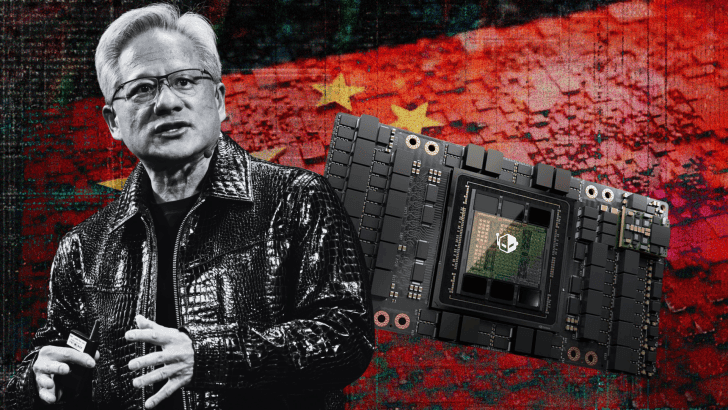
Source: Wccftech
Under the regulations released by the Bureau of Industry and Security, approved devices must feature a total processing performance score below 21,000 points and total DRAM bandwidth under 6,500 GB/s
1
. The AMD Instinct MI325X delivers 1,300 TFLOPS of FP16 performance with a TPP score of 20,800, paired with 256 GB of HBM3E memory and 6 TB/s bandwidth. Nvidia's H200 offers 989.5 TFLOPS of FP16 throughput, translating to a TPP score of 15,832, alongside 141 GB of HBM and 4.8 TB/s bandwidth1
. Both advanced AI processors fall below the stated thresholds and qualify for potential shipment.
Source: Benzinga
50% Shipment Limit Creates Significant Barrier for China AI Development
The most significant constraint involves the 50% shipment limit, which caps aggregate China-bound shipments at no more than half of the same product shipped to US customers
2
. Exporters must prove that domestic demand is fully met, that no US orders are delayed, and that advanced-node foundry capacity serving US customers is not diverted1
. This approach effectively treats China as a market for AI processor leftovers, with volumes limited by US shipment history. If a company supplied 100,000 processors to American clients, it cannot ship more than 50,000 to Chinese customers simultaneously1
.The chip export restrictions also require every shipment to undergo verification in an independent US-headquartered testing laboratory with no financial ties to the exporter or importer
1
. Exporters must meet strict Know Your Customer and cloud computing usage rules, disclose end users, prevent unauthorized remote access, and bar transfers of model weights or trained algorithms to restricted parties such as Chinese military or secret service organizations1
. China cannot use the chips for military use under the new regulations5
.China's Response Creates Uncertainty Despite US Approval
Despite the formal US approval, Chinese customs authorities told customs agents this week that Nvidia's H200 chips are not permitted to enter China
4
. Chinese government officials also summoned domestic technology companies to meetings where they were explicitly instructed not to purchase the chips unless necessary4
. The wording from officials was described as severe, essentially constituting a ban for now, though this might change should circumstances evolve4
. It remains unclear whether Beijing wants to ban the H200 outright so domestic chip companies can flourish, or whether these measures could serve as a bargaining tactic in talks with Washington4
.Related Stories
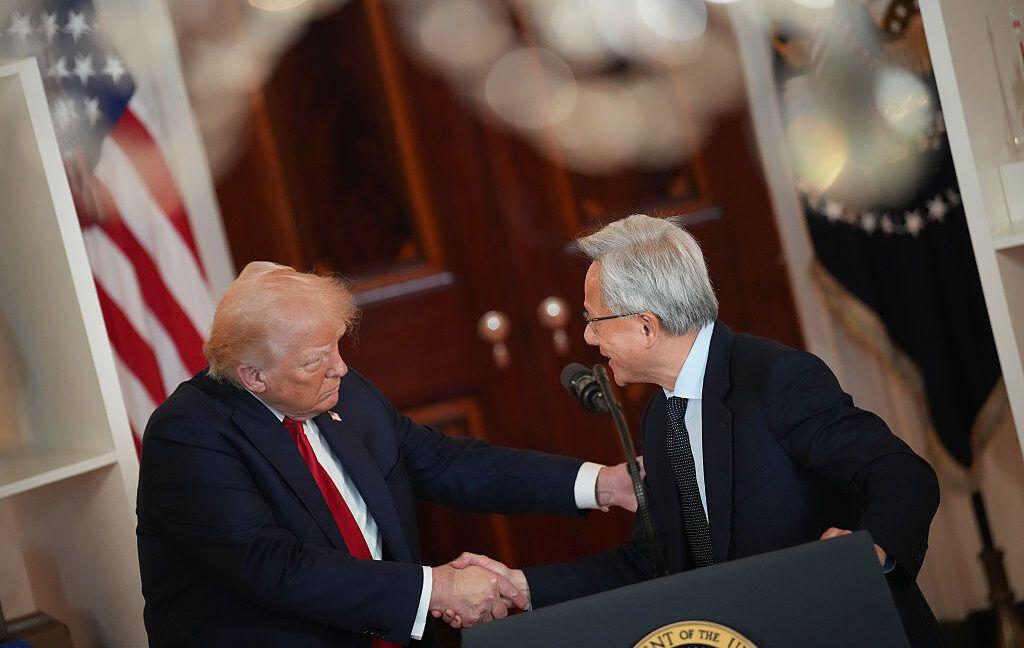
Market Impact and Demand for Advanced AI Processors
Alibaba shares jumped as much as 4.8% in Hong Kong on initial optimism about potential H200 access, with other Chinese AI firms like Kuaishou Technology and JD.com also gaining more than 4% each
3
. Alibaba has told Nvidia privately that it is interested in ordering more than 200,000 units of the H2003
. Chinese technology companies have placed orders for more than two million H200 chips priced at around $27,000 each, far exceeding Nvidia's inventory of 700,000 chips4
.
Source: Benzinga
Access to these semiconductors would help Chinese firms upgrade and run their models for AI model training as they seek to compete with OpenAI and other US rivals
3
. While Chinese chipmakers like Huawei have developed AI processors such as the Ascend 910C, the H200 is considered far more efficient for large-scale training of advanced AI models4
. The H200 delivers roughly six times the performance of the previously available H20, making it highly attractive4
.Nvidia and AMD shares stayed flat following the announcement, suggesting investors don't see the new rules as likely to deliver a flood of sales and revenue
2
. Nvidia CEO Jensen Huang previously stated the company's share of the AI chip market in China had shrunk to zero after earlier restrictions4
. Nvidia responded to the new regulations by stating they "applaud President Trump's decision to allow America's chip industry to compete to support high paying jobs and manufacturing in America"5
. The regulations aim to ensure US national security benefits while maintaining leadership in artificial intelligence2
. GPUs like the H200 represent older technology compared to Nvidia's most advanced Blackwell and upcoming Rubin chips, which were not part of the approved exports5
. The complex interplay between US trade policy and China's response will shape the future of High-Performance Computing access and competitive dynamics in AI development.References
Summarized by

Navi
[2]
[4]
Related Stories
Nvidia's H200 AI chip sales to China stalled by US security review despite initial approvals
28 Jan 2026•Policy and Regulation
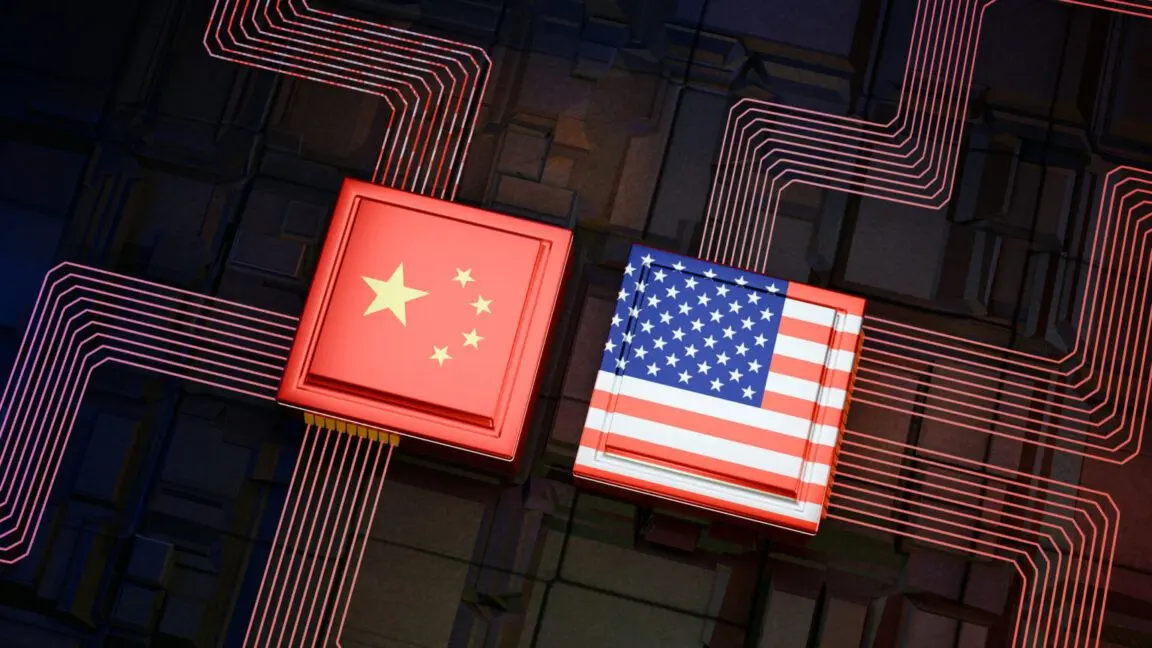
US Launches Review of Nvidia H200 Chip Sales to China as Demand Surges and Production Ramps Up
12 Dec 2025•Policy and Regulation
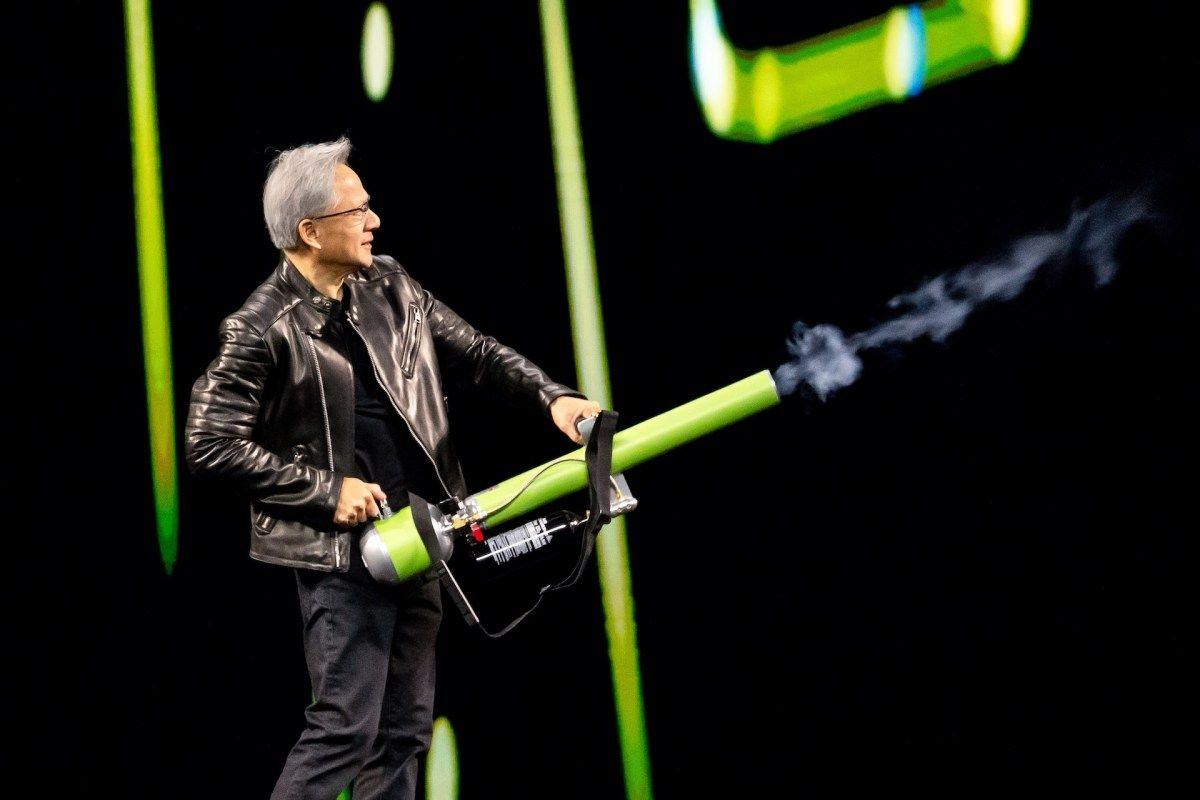
U.S. Imposes 15% Revenue Share on Nvidia and AMD's AI Chip Sales to China Amid Escalating Tech Rivalry
05 Aug 2025•Policy and Regulation

Recent Highlights
1
AI Models Lie and Deceive to Protect Other AI Models From Deletion, Study Reveals
Science and Research

2
AI chatbots validate you too much, making you less kind to others, Stanford study reveals
Science and Research
3
Judge blocks Pentagon from blacklisting Anthropic over AI safety guardrails dispute
Policy and Regulation

Recent Highlights
Today's Top Stories




Your Daily Dose of Curated AI News
Don’t drown in AI news. We cut through the noise - filtering, ranking and summarizing the most important AI news, breakthroughs and research daily. Spend less time searching for the latest in AI and get straight to action.

