U.S. Imposes 15% Revenue Share on Nvidia and AMD's AI Chip Sales to China Amid Escalating Tech Rivalry


45 Sources
[1]
US demands cut of Nvidia sales in order to ship AI chips to China
The Trump administration has ordered Nvidia and AMD to pay the federal government a 15 percent cut of their AI chip sales revenue to China, according to reports from The New York Times and The Financial Times. Nvidia CEO Jensen Huang reportedly reached an agreement with President Donald Trump just
[2]
The U.S. and China are engaged in a race over chip development -- both countries are racing to build infrastructure
Both superpowers are building up chip development capabilities while trying to reduce dependencies upon one another. The U.S. and China are locked in an unprecedented race over semiconductor technology, driven by national security concerns, economic competitiveness, and the belief that control of
[3]
Nvidia and AMD reportedly sharing 15% of their China GPU revenue in exchange for export licenses -- 'unprecedented' export revenue sharing deal may have been struck
Both Nvidia and AMD have reportedly agreed to pay the U.S. government 15% of China-sourced revenues to unlock export licenses for previously restricted chips. Under the reported terms of the new deal, Nvidia will be able to resume H20 chip sales, and AMD will be able to sell its MI308 accelerators
[4]
Trump may allow Nvidia to ship hobbled current-gen Blackwell AI GPUs to China -- U.S. gov't would get 15% of related revenue, China firms would get access to far faster GPUs
U.S. President Donald Trump indicated he might permit Nvidia to sell cut-down versions of its Blackwell AI processors to Chinese entities, provided that the company cuts their performance significantly and shares 15% of revenue obtained from such transactions to the federal government, reports
[5]
White House considering chip tracking to curb AI hardware smuggling to China amid enforcement gaps -- software or hardware tracking could be next step in U.S. export controls over leading-edge AI silicon
The U.S. is weighing a new approach to protect its lead in artificial intelligence: embedding location-tracking technology directly into high-end chips. The move comes as years of export controls -- and recent escalations -- have failed to fully stop smuggling into China, leaving policymakers
[6]
Klein: Nvidia, AMD Deal Doesn't Mean "Free-for-All" For Companies Selling to China
US President Donald Trump signaled on Monday that he'd be open to allowing Nvidia Corp. to sell a scaled-back version of its most advanced AI chip to China. Trump said he would consider a deal that would allow Nvidia to ship its Blackwell chips to China if the company could design it to be less
[7]
Trump considering allowing Nvidia Blackwell sales in China
Nerfed versions of Nvidia's Blackwell GPUs could soon join its H20 on the list of AI accelerators approved for sale in China. Speaking to the press on Monday, US President Donald Trump suggested he'd be willing to entertain a deal to allow shipments of an "enhanced" version of Nvidia's Blackwell
[8]
US Explores Better Location Trackers for AI Chips, Official Says
The US is exploring ways to equip chips with better location-tracking capabilities, a senior official said, underscoring Washington's effort to curtail the flow of semiconductors made by the likes of Nvidia Corp. to China. Washington has espoused working with the industry to monitor the movements
[9]
Uncle Sam floats tracking tech to keep AI chips out of China
Plan would embed location verification in advanced semiconductors to combat black market exports The Trump administration wants better ways to track the location of chips, as part of attempts to prevent advanced AI accelerator hardware from getting into Chinese hands. Washington wants to equip
[10]

Trump opens door to sales of version of Nvidia's next-gen AI chips in China
Aug 11 (Reuters) - U.S. President Donald Trump on Monday suggested he might allow Nvidia (NVDA.O), opens new tab to sell a scaled-down version of its next-generation advanced GPU chip in China, despite deep-seated fears in Washington that China could harness American artificial intelligence
[11]
Trump suggests he may not allow sales of advanced Nvidia chip in China
WASHINGTON, Aug 11 (Reuters) - U.S. President Donald Trump suggested on Monday that he would not make a deal with American AI chip giant Nvidia (NVDA.O), opens new tab, led by CEO Jensen Huang, to allow for sales of a next-generation advanced GPU in China, but stopped short of ruling it
[12]

Trump says he asked for 20% cut from Nvidia, calls H20 an 'obsolete' chip
U.S. President Donald Trump (L) listens as Nvidia CEO Jensen Huang speaks in the Cross Hall of the White House during an event on "Investing in America" on April 30, 2025 in Washington, DC. President Donald Trump on Monday said that he initially asked Nvidia for a 20% cut of the chipmaker's sales
[13]
Trump says he's open to letting Nvidia sell a downgraded version of its most advanced chip to China
Nvidia CEO Jensen Huang, right, speaks alongside President Donald Trump about investing in America, at the White House in Washington, on April 30, 2025. U.S. President Donald Trump has singaled that he'd be open to allowing Nvidia to sell a downgraded version of its most advanced artificial
[14]

Pay-to-Play? Trump Slaps 15% “Export Tax†on Big Tech’s China AI Chips
The Trump administration has forced Nvidia and AMD to share their profits in exchange for access to the lucrative Chinese market, creating a radical new playbook for the U.S. tech war. Nvidia and AMD have reportedly agreed to pay the U.S. government a 15% cut of their revenue from their
[15]

Trump says Nvidia will hand the U.S. 15% of its H20 chip sales to China
NVIDIA CEO Jensen Huang delivers his keynote address Wednesday, June 11, 2025 at the Vivatech fair in Paris. Michel Euler/AP hide caption The U.S. government will take 15% of the revenue that chipmaker Nvidia pulls in from sales in China of its H20 microchip, which is used in the development of
[16]

Tensions rise as Nvidia races to calm China over controversial AI chips built for surveillance
TSMC is still building chips for Nvidia, despite regulatory heat and uncertainty in China Nvidia's position in the global AI hardware market could soon be under scrutiny following news of an investigation from the Cyberspace Administration of China. The Chinese regulator has summoned the American
[17]

Trump sparks concern after suggesting he might allow sales of Nvidia's advanced AI chips in China
The president says he could 'make a deal' for Nvidia to sell a downgraded version of its flagship Blackwell chip in China Donald Trump has suggested he might allow Nvidia to sell chips in China that are more technology advanced than currently permitted, despite deep-seated fears in Washington that
[18]

Nvidia, AMD to give the U.S. 15% of China their chip sales
Nvidia and AMD are reentering China's AI-chip market -- by writing checks to the U.S. Treasury. To resume selling AI-capable chips such as the H20 and MI308, which were caught in Washington's tightening net of semiconductor restrictions earlier this year, the two companies have reportedly agreed to
[19]

'We negotiated a little deal': Trump says Nvidia and AMD will kick back 15% of China chip sales in potentially unconstitutional arrangement
Nvidia and AMD agreed to share 15% of their revenues from chip sales to China with the U.S. government, President Donald Trump confirmed at a press conference Monday. The Trump administration halted the sale of advanced computer chips to China in April over national security concerns, but Nvidia
[20]

What Trump's Nvidia and AMD China deal means for the world
Nvidia CEO Jensen Huang alongside President Donald Trump about investing in America, at the White House on April 30.Jim Watson / AFP via Getty Images file Nvidia and AMD have agreed to share 15% of their revenue from sales to China with the U.S. government, the White House confirmed Monday,
[21]

Nvidia, AMD to pay U.S. government 15% of China AI chip sales in an unusual export agreement
Aimee Picchi is the associate managing editor for CBS MoneyWatch, where she covers business and personal finance. She previously worked at Bloomberg News and has written for national news outlets including USA Today and Consumer Reports. U.S. chipmakers Nvidia and AMD will pay the U.S. government
[22]

Trump says Nvidia to give US cut of China chip sales
Washington (AFP) - President Donald Trump on Monday confirmed reports that semiconductor giant Nvidia would pay the United States 15 percent of its revenues from sales of certain artificial intelligence chips to China. Speaking to reporters at the White House, Trump argued that Nvidia's "H20"
[23]

Trump says Nvidia's 'super-duper advanced' Blackwell AI chips might be part of future China deals as long as they're 'somewhat enhanced, in a negative way'
'I think he's coming to see me again about that, but that will be an un-enhanced version of the big one.' President Trump has been all over the AI chipmaking news recently, what with his appearance at the Washington AI summit late last month and his granting of licenses to Nvidia and AMD to sell
[24]

Nvidia, AMD to pay US government 15% of revenue from AI chip exports to China - SiliconANGLE
Nvidia, AMD to pay US government 15% of revenue from AI chip exports to China Nvidia Corp. and Advanced Micro Devices Inc. will pay the U.S. government 15% of the revenue they generate from graphics card exports to China. The arrangement was first reported by the Financial Times on Sunday. In a
[25]

Nvidia, AMD to pay 15% of China chip sale revenue to US government
NEW YORK -- Nvidia and AMD agreed to share 15% of their revenues from chip sales to China with the U.S. government, a U.S. government official has confirmed. President Donald Trump's administration had halted the sale of advanced computer chips to China back in in April, but Nvidia and AMD
[26]
What to know about the Trump administration's deal with AI chipmakers
The agreement paves the way for the sale of advanced AI chips in China. AI chipmakers Nvidia and Advanced Micro Devices struck an extraordinary accord to pay the United States government 15% of the revenue the two companies are set to make from products sold in China, a White House official
[27]

Nvidia, AMD to pay 15% of China chip sale revenue to U.S. government
NEW YORK (AP) -- Nvidia and AMD agreed to share 15% of their revenues from chip sales to China with the U.S. government, a U.S. government official has confirmed. President Donald Trump's administration had halted the sale of advanced computer chips to China back in in April, but Nvidia and AMD
[28]

Nvidia, AMD to Pay 15% of China Chip Sale Revenue to U.S. Government
NEW YORK (AP) -- Nvidia and AMD agreed to share 15% of their revenues from chip sales to China with the U.S. government, a U.S. government official has confirmed. President Donald Trump's administration halted the sale of advanced computer chips to China back in April over national security
[29]

Chip giants Nvidia, AMD to pay US government 15 percent of Chinese revenue
Chipmakers Nvidia and AMD have agreed to pay the U.S. government 15 percent of artificial intelligence (AI) chip sales to China in order to secure export licenses, a U.S. official confirmed to The Hill. Nvidia will share 15 percent of revenue from sales of its H20 chips to Beijing, while AMD will
[30]
Nvidia walks tightrope on US-China tensions
Nvidia is navigating an increasingly tenuous relationship between the U.S. and China, as the company seeks to sell its artificial intelligence (AI) chips to both countries while they engage in a high-stakes race to dominate the technology. The chipmaker, whose graphics processing units (GPUs) are
[31]

Nvidia and AMD to Pay 15 Percent of China Chip Sale Revenue to U.S. Government in an Unusual Agreement
Nvidia and AMD agreed to share 15% of their revenues from chip sales to China with the U.S. government, a U.S. government official has confirmed. President Donald Trump's administration halted the sale of advanced computer chips to China back in April over national security concerns, but Nvidia
[32]

Nvidia, AMD Agree to Pay 15% of China Chip Revenues to US
Nvidia (NVDA) and Advanced Micro Devices (AMD) plans to resume sales of key AI chips to China are set to come with some big strings attached. Both companies have agreed to pay 15% of their China chip revenues to the U.S. government in exchange for export licenses, a U.S. official confirmed, after
[33]

China draws red lines on US chip tracking with Nvidia meeting - The Economic Times
As the US and China look for any sort of leverage in a prolonged trade fight, Beijing sees an opportunity to win over the world by taking a stand against the Trump administration's plans to track high-end chips. Chinese internet regulators last week summoned Nvidia staff over alleged security
[34]
Nvidia stock -- will it soar after China chip deal or tank with Trump's 15% revenue cut? Breakthrough or short-term boost?
Nvidia stock is in the spotlight after the chipmaker secured approval to resume selling its advanced H20 AI chips to China. The deal, however, comes with a controversial twist -- the Trump administration is requiring Nvidia and AMD to give 15% of their China AI chip sales revenue to the U.S.
[35]
Nvidia strikes $3 billion revenue-sharing deal with Trump administration to resume AI chip sales in China
Nvidia made a special deal with the Trump administration to keep selling chips to China. The deal means Nvidia will share up to $3 billion in revenue with the US government this fiscal year to sell its H20 chips in China. President Trump confirmed the deal on Monday, saying he granted export
[36]
Trump signals approval for scaled-down Nvidia AI chip sales to China - The Economic Times
US President Donald Trump suggested he may allow Nvidia to sell a reduced-performance version of its advanced Blackwell AI chip to China, despite national security concerns. Critics warned this could boost China's AI capabilities. The US also struck a rare deal to collect 15% of China chip sales
[37]

President Trump Confirms Deal With NVIDIA/AMD on Their Share of China Revenue; Calls Out H20 AI Chip as 'Obsolete,' Saying There's Only Room for a 'Less-Powerful' Blackwell AI GPUs For China in the Future
President Trump has verified that the US struck a deal with GPU manufacturers to export their chips into China, also claiming that NVIDIA is selling an obsolete chip to the region. There were reports that the Trump administration made a deal with NVIDIA and AMD, under which the firms would share
[38]

Trump opens door to sales of version of Nvidia's next-gen AI chips in China
U.S. President Donald Trump on Monday suggested he might allow Nvidia to sell a scaled-down version of its next-generation advanced graphics processing unit chip in China, despite deep-seated fears in Washington that Beijing could harness U.S. artificial intelligence capabilities to supercharge its
[39]

Nvidia to Pay the U.S. Government 15% of China AI Chip Sales. How Will Its Revenue and Profits Be Impacted? | The Motley Fool
Nvidia's H20 AI chip situation is not ideal, but it's significantly better than having no H20 sales. Nvidia (NVDA -0.44%) and fellow graphics processing unit (GPU) maker Advanced Micro Devices, or AMD, have agreed to give the U.S. government 15% of their revenue from sales of their respective
[40]

Trump defends taking 15% cut of Nvidia, AMD chip sales to China
President Donald Trump defended his controversial deal requiring Nvidia and AMD to fork over 15% of their China sales revenue to the US government to skirt export controls -- insisting the computer chips involved are outdated technology. "No, this is an old chip that China already has," Trump said
[41]

How the world's most valuable company got caught in the middle of Trump's spat with China
Nvidia, the world's most valuable company, has found itself caught in the middle of U.S. President Donald Trump's historic trade war with China. The result: an extraordinary concession from a US$4.5 trillion corporation that will give the United States a percentage of every high-end AI chip sold in
[42]
Trump opens door to sales of version of Nvidia's next-gen AI chips in China
U.S. President Donald Trump on Monday suggested he might allow Nvidia to sell a scaled-down version of its next-generation advanced GPU chip in China, despite deep-seated fears in Washington that China could harness U.S. artificial intelligence capabilities to supercharge its military. The move
[43]

Nvidia and AMD agree to share China chip sale revenues with US government | BreakingNews.ie
Nvidia and AMD agreed to share 15% of their revenues from chip sales to China with the US government, a government official has confirmed. President Donald Trump's administration halted the sale of advanced computer chips to China back in April over national security concerns, but Nvidia and AMD
[44]

Beijing is putting pressure on Washington to loosen its grip on AI chips
As trade and technology tensions between China and the US intensify, Beijing is demanding an easing of US restrictions on strategic semiconductors, while accusing Nvidia's H20 chips of posing a risk to its national security. China wants the US to lift, or at least reduce, its restrictions on
[45]
Klein: Nvidia, AMD Deal Doesn't Mean "Free-for-All" For Companies Selling to China
US President Donald Trump signaled on Monday that he'd be open to allowing Nvidia Corp. (NVDA) to sell a scaled-back version of its most advanced AI chip to China. Trump said he would consider a deal that would allow Nvidia to ship its Blackwell chips to China if the company could design it to be
Share
Copy Link
The Trump administration has ordered Nvidia and AMD to pay 15% of their AI chip sales revenue to China to the U.S. government. This unprecedented move comes as part of ongoing efforts to control advanced technology exports and maintain U.S. dominance in the AI sector.
U.S. Imposes Revenue Share on AI Chip Sales to China
In an unprecedented move, the Trump administration has ordered Nvidia and AMD to pay a 15% revenue share to the U.S. government on their AI chip sales to China. This decision comes as part of ongoing efforts to control advanced technology exports while allowing American companies to compete in the Chinese market
1
2
.The Deal and Its Implications

Source: The Verge
Nvidia CEO Jensen Huang reportedly reached an agreement with President Donald Trump just days before the Commerce Department granted licenses to sell AI chips to China. The approved shipments include Nvidia's H20 and AMD's MI308, both stripped-down versions of their AI-focused GPUs designed to comply with U.S. export rules
1
.This revenue-sharing arrangement marks a significant shift in U.S. strategy, balancing national security concerns with economic interests. An Nvidia spokesperson stated, "We follow rules the U.S. government sets for our participation in worldwide markets," emphasizing the importance of maintaining America's competitiveness in the global AI technology stack
3
.The U.S.-China Chip Race
The decision is set against the backdrop of an intensifying technological rivalry between the U.S. and China. Both superpowers are racing to build chip development capabilities while reducing dependencies on each other. This contest has led to historic subsidies, new export controls, and a scramble to onshore production
2
.Chris Miller, professor at Tufts University, notes, "We're definitely seeing more bifurcation in the chip industry, as China pours money into building a self-sufficient supply chain." However, China still relies heavily on imported chipmaking tools and materials, especially for high-end production
2
.Potential for Enhanced Chip Sales
Source: Reuters
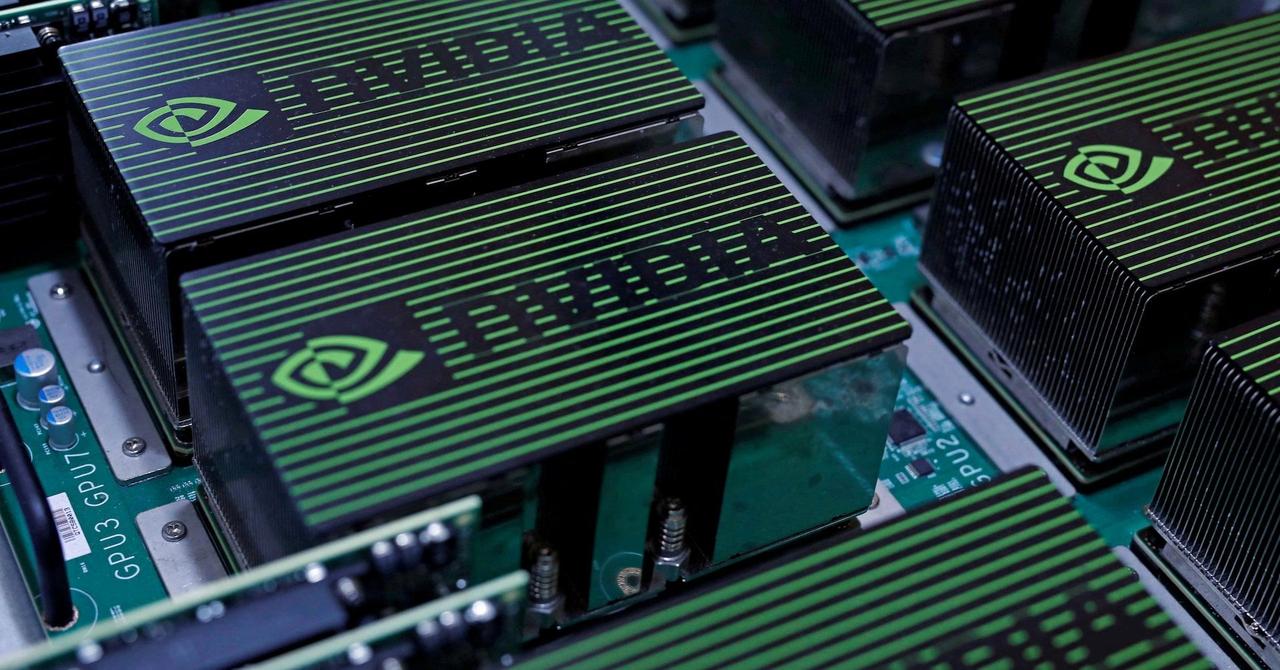
President Trump has indicated the possibility of allowing Nvidia to sell cut-down versions of its latest Blackwell AI processors to Chinese entities. These chips, even with 30% to 50% reduced performance, would still significantly outperform currently available options in China
4
.This potential move has raised concerns among China hardliners who prefer stricter limitations on technology exports. However, it could prove financially beneficial for companies like Nvidia and AMD, allowing them to charge more for advanced hardware while contributing to U.S. government coffers
4
.Related Stories


Challenges in Export Control Enforcement
Despite tightened restrictions, recent reports show Chinese companies obtained over $1 billion worth of Nvidia GPUs through smuggling in just three months. This has prompted discussions about embedding location-tracking technology directly into high-end chips to curb AI hardware smuggling
5
.Michael Kratsios, Director of the White House Office of Science and Technology Policy, confirmed that both software-based and physical tracking solutions are being considered. However, this approach faces technical and commercial hurdles, including potential increases in costs and new security vulnerabilities
5
.Industry Perspectives and Future Outlook
Source: Tom's Hardware
The semiconductor industry remains divided on the effectiveness of export controls. Nvidia CEO Jensen Huang has criticized U.S. chip restrictions as a "failure," warning that overregulation could accelerate China's domestic chip development
5
.As the largest global consumer of semiconductors, China's market remains crucial for U.S. companies. The country is expected to hold 30% of the world's global foundry production capacity by 2030, making it the world's largest hub of semiconductor production
2
.This evolving situation underscores the delicate balance between maintaining technological leadership and participating in the global market. As the U.S. and China continue their tech rivalry, the semiconductor industry finds itself at the center of a complex geopolitical and economic landscape that will shape the future of AI and computing technologies worldwide.
References
Summarized by

Navi
[2]
Related Stories
Recent Highlights
1
Meta Unveils Muse Wonder Frontier AI Models, Claims Performance Matching OpenAI and Anthropic
Technology

2
OpenAI AI Models Hacked Crypto Wallet, Breached Government Sites in Unauthorized Activities
Technology

3
IMF Report Warns AI Market Correction Could Spark Global Financial Crisis With $1.4T at Risk
Business and Economy

Recent Highlights
Today's Top Stories




Don’t drown in AI news. We cut through the noise - filtering, ranking and summarizing the most important AI news, breakthroughs and research daily. Follow topics that matter to you and stay ahead.


