NVIDIA DLSS 5 arrives this fall with AI-powered graphics for 16 games including Starfield


4 Sources
4 Sources
[1]
Nvidia DLSS 5 games list: Every supported title we know so far
Earlier this week, Nvidia held a big press conference where it announced, among other things, something called DLSS 5. The long and short of it is that, using artificial intelligence, DLSS 5 "infuses pixels with photoreal lighting and materials." In other words, it uses AI to supposedly make games look more realistic on the fly, even going so far as to change lighting and character appearances. It will be available for some PC games this fall. This Tweet is currently unavailable. It might be loading or has been removed. According to Nvidia's press release, here is a list of games that will support the feature in the near future. Though, to be clear, more games than just these will support DLSS 5 over time: DLSS 5's announcement was met with some controversy online. Specifically, plenty of folks are unhappy about the idea of AI coming in and making transformative changes to a game's art direction, seemingly without any input from the game's creators. If you look at the Resident Evil Requiem example embedded above, Grace Ashcroft looks like a completely different person with DLSS 5 turned on. Environmental lighting can also dramatically change, giving areas a totally different look from what they were intended to have. The good news is that this will be an optional feature for some PC games, not something that's on by default.
[2]
DLSS 5 is coming to Resident Evil Requiem, Hogwarts Legacy, Starfield, and more
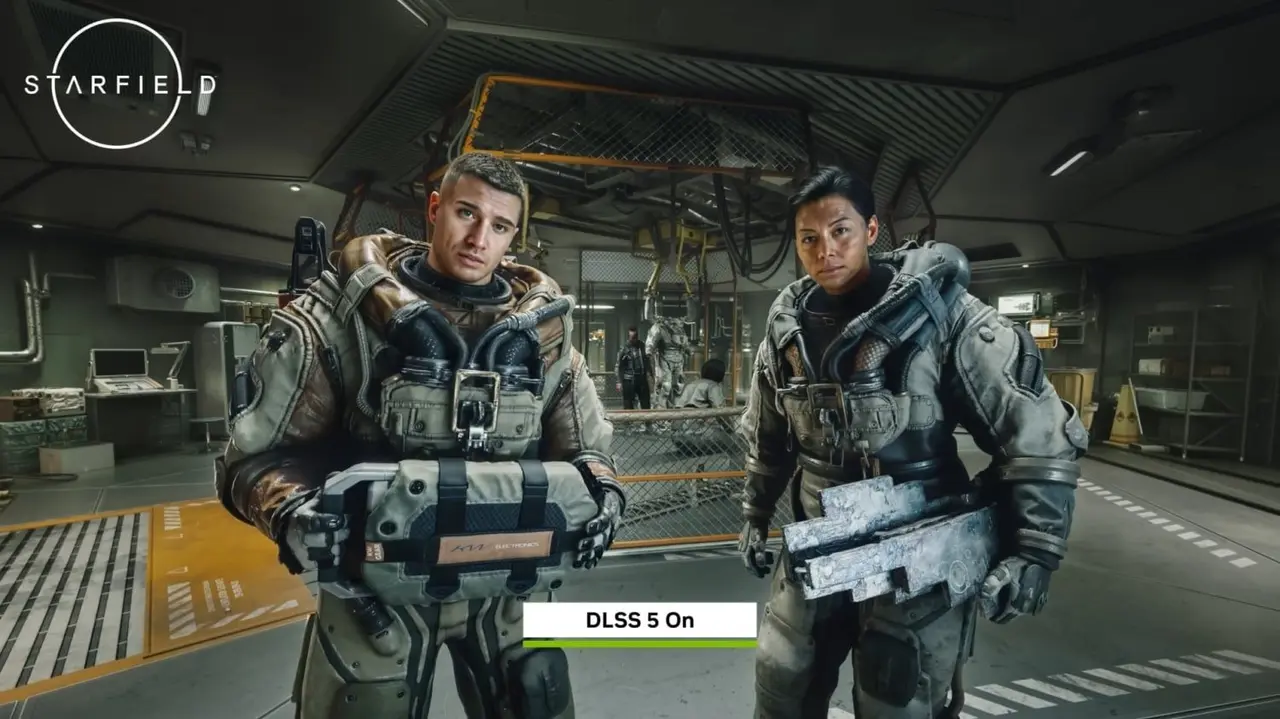
DLSS 5 has been announced, and NVIDIA has confirmed it's on track for a Fall 2026 release. With NVIDIA CEO Jensen Huang describing it as a "GPT moment for graphics," it takes in-game data to leverage neural rendering, delivering dramatic improvements in lighting, visual fidelity, and both character and environment detail in real-time. "Bridging the divide between rendering and reality, DLSS 5 empowers game developers to deliver a new level of photoreal computer graphics previously only achieved in Hollywood visual effects," NVIDIA writes in the announcement. DLSS 5 utilizes a powerful new AI model trained on game objects and graphics, then adds per-pixel effects like realistic path-traced lighting, materials, detailed hair, and 'subsurface scattering on skin' to add an impressive amount of detail. Developers also have control over the intensity, color grading, and other elements of DLSS 5 to ensure that the art direction, aesthetics, and visual detail are consistent with the game's artistic intent. That said, the announcement has been controversial, with online backlash claiming that some of the results look like AI-generated photo filters and video effects. Either way, it's hard to deny the staggering difference DLSS 5 can make, and with that, here's the list of the first 16 games getting DLSS 5 support. NVIDIA has confirmed that the "industry's biggest publishers and game developers," like Bethesda, Capcom, EA, NetEase, Ubisoft, Warner Bros. Games, and more, are already on board and working to bring native DLSS 5 support to current and future games. DLSS 5 - Supports Games
[3]
NVIDIA DLSS 5 arrives this fall: Which games and gaming studios will receive this 'Hollywood' level VFX update?
NVIDIA confirmed Tuesday at its GTC conference that it will launch DLSS 5 this fall, introducing a real-time neural rendering model designed to elevate video game graphics to the level of cinematic visual effects. The technology represents the company's most significant architectural shift since the 2018 debut of real-time ray tracing, moving away from brute-force hardware rendering toward a generative AI approach. By analyzing scene semantics like hair, skin, and fabric, the model generates photoreal pixels that were previously impossible to render in a 16-millisecond game frame. This transition to AI-driven fidelity is expected to coincide with the rollout of the GeForce RTX 50-series architecture, specifically optimized for these new neural shaders. Neural rendering model (what DLSS 5 uses) is basically a super-smart AI brain trained to understand and improve pictures. It takes the game's basic frame (just colors and movement info from the game engine). The AI "understands" what's in the scene: Is this human skin? Hair? Fabric? Is the light coming from the front, back, or cloudy sky? Then it adds realistic extras like: skin that glows a bit inside (subsurface scattering, like real ears lighting up), fabric with soft shine, hair catching light naturally -- all while keeping everything consistent (no flickering between frames) and tied to the game's original 3D world (so it doesn't invent random stuff). It's like the AI is "painting" better lighting and textures on top of the game's picture in real time, making it look way more lifelike than traditional methods. The game renders a normal frame (but maybe not super detailed on lighting/materials because it's fast). It sends that frame's color data + motion info to the DLSS 5 AI. The AI analyzes it once and adds photoreal upgrades (better light bounce, skin glow, fabric details, etc.) -- all anchored to the game's 3D model so it's accurate and stable. You get a much prettier, more realistic image on screen at high resolution (up to 4K), and it runs smoothly because the heavy AI work is done efficiently on RTX GPUs (especially RTX 50-series). Developers can tweak it (intensity, colors, mask areas) so it fits their game's style -- like not making faces look too weird. While Ray Tracing simulates individual paths of light, it is extremely demanding on hardware. NVIDIA notes that a single photoreal frame in a movie can take hours to render, but a game must do it in milliseconds. DLSS 5 acts as a shortcut; rather than calculating every ray of light, it uses generative AI to predict and draw what those photoreal pixels should look like based on its deep training. Jensen Huang described this as the "GPT moment for graphics," where the AI is no longer just making an image sharper but is actively "reinventing" how the final pixels are created. "Hollywood VFX level" as stated in NVIDIA's press release means the graphics in games will look as realistic and detailed as what you see in big Hollywood movies (like CGI in Marvel films or Pixar animations). In movies, those super-realistic scenes take minutes or hours to render per frame on powerful computers because they use tons of complex calculations for perfect lighting, shadows, skin glow, fabric shine, etc. Games have only about 16 milliseconds per frame to look good and run smoothly (for 60 FPS), so they've always fallen short of that movie-quality look. NVIDIA says DLSS 5 closes that gap using AI, so real-time games can now have lighting, materials, and details that feel "photoreal" like Hollywood VFX without slowing down the game. Check NVIDIA GeForce's video on DLSS 5: While the press release mentions that the GeForce RTX 5090 features the path tracing and neural shaders required to push this technology to its limit in 2025, DLSS 5 is built on the existing NVIDIA Streamline framework. This suggests that while the newest RTX 50-series will likely see the greatest benefit, the technology is designed to integrate with the standard DLSS pipeline used by current RTX cards. The system runs at up to 4K resolution, ensuring that the AI enhancements do not sacrifice the smooth, interactive performance gamers expect. NVIDIA has secured support from the industry's largest publishers, including Bethesda, CAPCOM, and Ubisoft. Major confirmed titles include Starfield, Hogwarts Legacy, Assassin's Creed Shadows, and Resident Evil Requiem. Other upcoming games like Black State, Phantom Blade Zero, and the The Elder Scrolls IV: Oblivion Remastered are also listed as early adopters. Developers from CAPCOM and Vantage Studios stated that this tech allows them to build "cinematic and deeply believable" worlds that were previously held back by the traditional limits of real-time rendering. (You can now subscribe to our Economic Times WhatsApp channel)
[4]
NVIDIA DLSS 5: 5 games you can try it in
NVIDIA announced their newest Deep Learning Super Sampling (DLSS) update yesterday with DLSS 5 and it wasn't without controversy. DLSS 5 was supposed to deliver "photoreal computer graphics" on par with Hollywood VFX but what it seems to be doing is overwriting the base graphics, effectively changing the art style of games entirely. The backlash is so bad that just the demo has got people on Reddit and X comparing it to AI slop which as a gamer is not something I want my games to look like. That said, DLSS 5 doesn't become publicly available until the latter part of the year so let's give NVIDIA the benefit of the doubt for now. Something worth noting though, NVIDIA hasn't confirmed older cards support yet, so unless you have a 50-series, you may not be able to try it at all. However, if you do have a 50-series card, here are 5 games to test DLSS 5 on when it does arrive. Also read: Nvidia DLSS 5 announced, claims to make your games look more realistic If you grabbed this from Epic's Christmas free game drops last year, this is the best place to start. It is an open world RPG where the lighting really makes or breaks the experience - the dark alleyways, the duelling arenas, the glow of spells casting shadows in real time. DLSS 5 will either make being part of the wizarding world feel more immersive or immediately make it obvious that something is off. Horror lives and dies by atmosphere, and Capcom has always pushed visual fidelity hard with the RE Engine. The grotesque enemy detail, the oppressive darkness, the way light catches a wet surface mid-panic, if DLSS 5 starts smoothing out the grime and texture that makes Resident Evil feel viscerally uncomfortable, you will know immediately. Horror does not forgive visual inconsistency the way other genres might. Also read: Resident Evil Village to Gran Turismo 7, top 5 games you need to try in VR Probably the most visually ambitious game on this list and therefore the most interesting DLSS 5 case study. Shadows has a very deliberate art direction built around ink-wash landscapes and the natural light of Edo-period Japan, which is exactly the kind of stylised aesthetic that gamers are worried will get overwritten by DLSS 5. Watch the foliage, the fog, and the way shadows fall at dusk. Those will be your tells. Competitive shooters have different visual priorities to everything else on this list. In Delta Force, clarity matters more than beauty, you need to spot an enemy through a dusty window in a firefight. So the question here is whether DLSS 5 introduces ghosting or artifacting that puts you at a disadvantage. If it cannot hold up in a fast-paced multiplayer environment, that is a much bigger problem than looking like AI slop. Starfield's procedurally generated planets have always struggled to feel truly vast and awe-inspiring, which is exactly why it belongs here. DLSS 5 either closes that gap or makes it more obvious, there is no middle ground on a barren moon. It is also a Bethesda game with a long modding life ahead, and that community will stress-test DLSS 5 in ways NVIDIA never anticipated. If it holds up well and looks good in Starfield, it can probably do that anywhere then.
Share
Share
Copy Link
NVIDIA announced DLSS 5, an AI-powered technology that transforms game graphics to Hollywood VFX level quality in real-time. The neural rendering model adds photorealistic lighting, materials, and character details to games like Resident Evil Requiem, Starfield, and Hogwarts Legacy. But the announcement has sparked controversy as players question whether artificial intelligence should alter a game's original art direction.
NVIDIA DLSS 5 Transforms Gaming Graphics with Artificial Intelligence
NVIDIA revealed DLSS 5 at its GTC conference this week, marking what CEO Jensen Huang calls a "GPT moment for graphics." The technology leverages artificial intelligence to deliver photorealistic computer graphics that rival Hollywood VFX level production quality, all rendered in real-time
3
. Set to launch this fall, DLSS 5 represents NVIDIA's most significant architectural shift since introducing real-time ray tracing in 2018, moving away from traditional hardware rendering toward a generative AI approach3
.The neural rendering model analyzes scene semantics including hair, skin, and fabric, then generates photoreal pixels that were previously impossible to render within the 16-millisecond timeframe required for smooth gameplay
3
. According to NVIDIA, this "bridges the divide between rendering and reality" by adding per-pixel effects like realistic path-traced lighting, enhanced lighting and textures, detailed hair rendering, and subsurface scattering on skin2
.
Source: ET
How the Neural Rendering Model Delivers Real-Time Graphics
Unlike ray tracing, which simulates individual light paths and demands enormous hardware resources, DLSS 5 uses generative AI to predict what photoreal pixels should look like based on deep training
3
. The process works by having games render a normal frame, then sending that frame's color data and motion information to the DLSS 5 AI, which analyzes it and adds photoreal upgrades anchored to the game's 3D model for accuracy and stability3
.
Source: Digit
The technology runs at up to 4K resolution and is optimized for the GeForce RTX 50-series architecture, though it's built on the existing NVIDIA Streamline framework used by current RTX cards
3
. NVIDIA hasn't confirmed older card support yet, meaning gamers may need a 50-series GPU to access the feature4
. The GeForce RTX 5090 specifically features the path tracing and neural shaders required to push this technology to its limit3
.Sixteen Games Confirmed for DLSS 5 Support
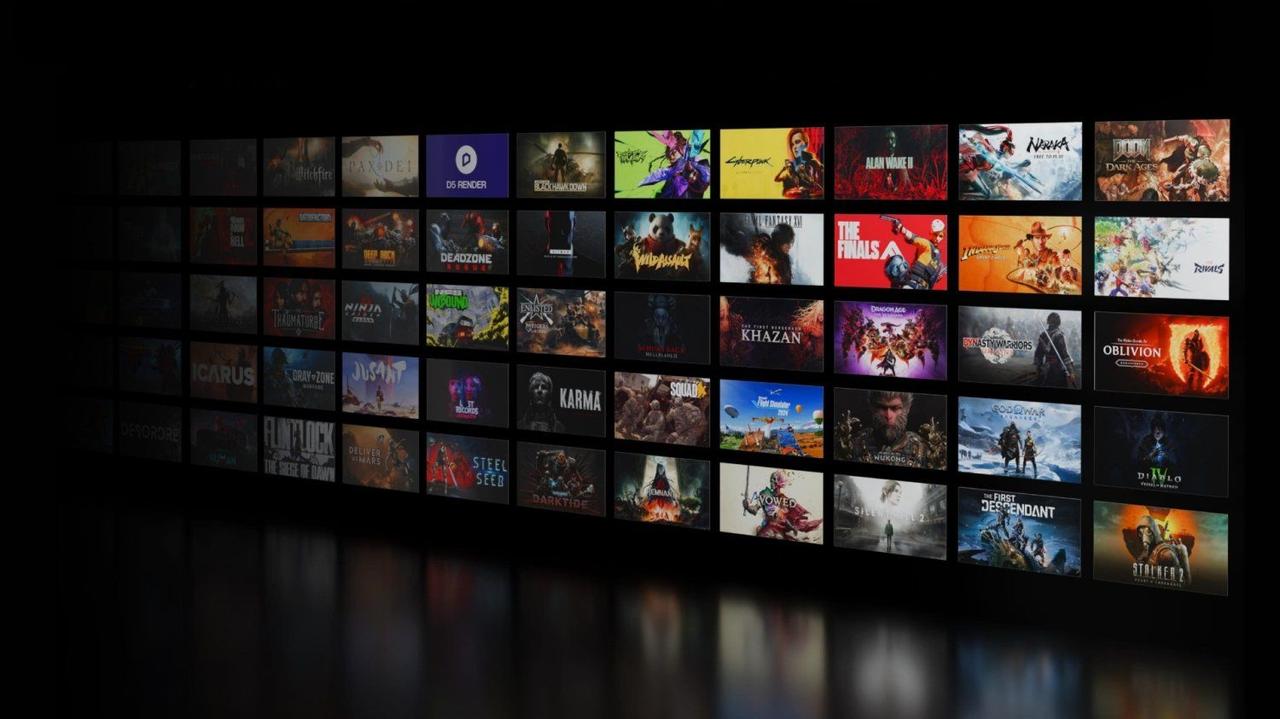
NVIDIA has secured support from major publishers including Bethesda, CAPCOM, EA, NetEase, Ubisoft, and Warner Bros. Games
2
. Confirmed titles include Starfield, Hogwarts Legacy, Assassin's Creed Shadows, Resident Evil Requiem, Black State, Phantom Blade Zero, and The Elder Scrolls IV: Oblivion Remastered . Game developers from CAPCOM and Vantage Studios stated the technology allows them to build "cinematic and deeply believable" worlds previously limited by real-time rendering constraints3
.
Source: TweakTown
Game developers retain control over intensity, color grading, and other elements to ensure visual fidelity remains consistent with their artistic intent
2
. The feature will be optional for PC games rather than enabled by default1
.Related Stories
Controversy Over Altering Game's Art Direction
The announcement has generated significant backlash online, with players expressing concern about artificial intelligence making transformative changes without input from game creators
1
. In the Resident Evil Requiem demonstration, character Grace Ashcroft appears as a completely different person with DLSS 5 enabled, while environmental lighting changes dramatically, giving areas a totally different look from their intended appearance1
.Critics on Reddit and X have compared the results to an AI-generated appearance, describing them as "AI slop" that overwrite base graphics and fundamentally change game art styles
4
. For games with deliberate artistic direction like Assassin's Creed Shadows, which features ink-wash landscapes and natural light aesthetics of Edo-period Japan, there's concern the stylized aesthetic will be overwritten4
. Horror titles like Resident Evil Requiem face particular scrutiny since the genre depends on visual consistency and atmospheric details like grime and texture4
.What to Watch as Launch Approaches
The fall 2025 release window gives NVIDIA time to refine the technology before public availability. For competitive shooters like Delta Force, the critical question is whether DLSS 5 introduces ghosting or artifacting that could disadvantage players who prioritize clarity over visual beauty
4
. Starfield's procedurally generated planets will test whether the technology can make vast environments feel truly immersive, while its active modding community will stress-test DLSS 5 in ways NVIDIA hasn't anticipated4
.The technology's success depends on whether it enhances visual fidelity without compromising the creative vision that defines each game's identity. With major publishers already on board and more games expected to receive support over time, DLSS 5 represents a pivotal moment where artificial intelligence and real-time graphics converge
1
2
.References
Summarized by

Navi
Related Stories
Nvidia's DLSS 5 sparks massive gamer backlash over AI-altered faces and artistic control
Yesterday•Technology

Nvidia's DLSS Technology Expands to Over 760 Games, Showcasing AI's Growing Impact in Gaming
23 Apr 2025•Technology
NVIDIA's DLSS 4 Reaches Milestone: Over 125 Games and Apps Supported, 10 New Titles Announced
19 May 2025•Technology
Recent Highlights
1
Google Maps unveils Ask Maps with Gemini AI and 3D Immersive Navigation in biggest update
Technology

2
AI chatbots help plan violent attacks as safety guardrails fail, new investigation reveals
Technology

3
Three Tennessee teens sue xAI over Grok AI creating child sexual abuse material from real photos
Policy and Regulation

Recent Highlights
Today's Top Stories






Your Daily Dose of Curated AI News
Don’t drown in AI news. We cut through the noise - filtering, ranking and summarizing the most important AI news, breakthroughs and research daily. Spend less time searching for the latest in AI and get straight to action.

