Nvidia DLSS 4.5 brings Dynamic Multi-Frame Generation to RTX 50-series GPUs on March 31


7 Sources
[1]
Dynamic MFG comes to RTX 50-series GPUs to push monitor refresh rates to the max -- more flexible mode with 5x and 6x multipliers arrives March 31
The annual Game Developers Conference (GDC) kicks off this week, and it's happening against the backdrop of considerable turmoil in both the games industry proper and the AI-driven hardware supply shock that's delaying mid-cycle and next-gen gaming hardware. In that context, it's no surprise that
[2]
Nvidia Hopes Multi-Frame Gen Will Finally Make Sense on Its GPUs
Nvidia promises you may finally get use out of that 240Hz refresh rate on your expensive QD-OLED monitor. Nvidia is still looking for ways to make frame generationâ€"which PC gamers not-so-lovingly call “fake framesâ€â€"have more utility. Now, Nvidia imagines its AI frame interpolation
[3]
Nvidia's dynamic frame gen will max out your monitor on March 31
Despite hardware rumors, no new GeForce RTX 50-series GPUs were announced, though additional features include RTX Mega Geometry and expanded path tracing support. Nvidia is powering up its DLSS technology, as previewed at CES at the beginning of the year. According to an announcement at the Game
[4]
I went eyes-on with Nvidia's DLSS 4.5 Dynamic Multi-Frame Generation launching March 31 -- and it's a game-changer
Nvidia launched DLSS 4.5 back in the middle of January and (spoiler alert) I've been really impressed with just how much detail is AI-infused upscaler is able to get from a rendered picture from just 25% the resolution. It feels like a real value booster for mid-range GPUs! But there's one feature
[5]

Nvidia is leveling up game visuals with the new DLSS 4.5 update
Nvidia has just announced DLSS 4.5. The update brings new AI-powered graphics technology, and the improvements offer a noticeable impact on how modern PC games look and perform. It was revealed alongside other RTX announcements during GDC 2026, focusing on boosting both visual quality and frame
[6]

DLSS 4.5 Dynamic Multi Frame Generation is coming to Nvidia App beta users on March 31, bringing on-the-fly 6x frame gen switching to RTX 50-series owners
It worked pretty well when I saw an early version at CES, so here's hoping for a smooth launch. DLSS 4.5 may have been with us since January of this year, but one of its most interesting features, Dynamic Multi Frame Generation, is finally coming to Nvidia app beta users on March 31. The update
[7]

Nvidia DLSS 4.5 update can make games run smoother: Here's how
Having the most high-end GPU in your PC is one thing. But having a relatively cheaper GPU result in similar performance is a whole new level. And Nvidia, with its DLSS technology, has been offering exactly that for years. During CES this year, the company introduced DLSS 4.5 6x multi frame
Share
Copy Link
Nvidia announced DLSS 4.5 at GDC 2026, introducing Dynamic Multi-Frame Generation that automatically adjusts AI-generated frames to match monitor refresh rates. The update launches March 31 with 5x and 6x multipliers for RTX 50-series GPUs. The technology aims to help gamers maximize high-refresh-rate displays while reducing latency and visual artifacts like ghosting.
Nvidia Unveils DLSS 4.5 with Intelligent Frame Generation at GDC 2026
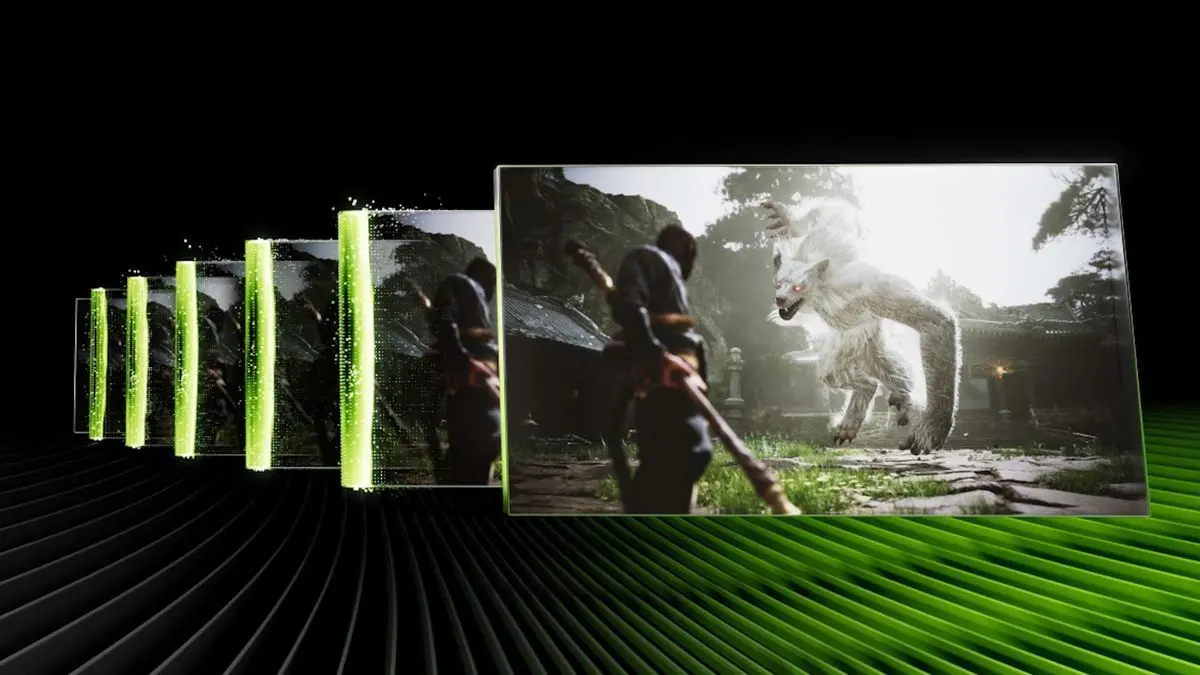
Nvidia revealed major updates to its AI-powered graphics technology at the Game Developers Conference (GDC) 2026, announcing that DLSS 4.5 with Dynamic Multi-Frame Generation will launch on March 31. The update represents a shift in how frame generation technology operates, moving from fixed multipliers to an intelligent system that automatically adjusts output based on monitor capabilities
1
. Unlike current implementations that only offer constant frame rate multipliers, Dynamic Multi-Frame Generation can shift gears on the fly to maintain target frame rates, particularly useful for gamers seeking to maximize monitor refresh rates on high-end displays5
.
Source: Tom's Hardware
The announcement comes as Nvidia focuses on software enhancements rather than new hardware, with no new GeForce cards revealed at the show amid ongoing supply constraints affecting the gaming industry
3
.How Dynamic Multi-Frame Generation Transforms Gaming Experience
Dynamic Multi-Frame Generation addresses longstanding concerns about frame generation technology by intelligently monitoring system load and automatically adjusting the frame multiplier between 1x and 6x. For RTX 50-series GPUs, this means the system can insert up to five AI-generated frames between each rendered frame
2
. The technology works by targeting the maximum refresh rate of connected monitors—whether 144Hz or 240Hz—and generating only the frames needed to reach that target, eliminating wasteful computation4
.Hands-on testing revealed three key improvements that deliver a responsive and seamless gaming experience. First, the system eliminates wasteful latency by avoiding over-generation of frames that monitors cannot display. Second, it provides smoother gameplay through consistent frame pacing, removing the jittery feeling that occurs when manually switching between multipliers during GPU-intensive scenes. Third, it prioritizes base frame rate by scaling back to 2x or even native rendering when necessary, ensuring the GPU focuses on rendering real frames faster rather than clogging the pipeline with AI tasks
4
.Enhanced Visual Quality and Reduced Artifacts
Beyond performance, DLSS 4.5 introduces a second-generation transformer AI model for Super Resolution that improves image clarity by reducing visual artifacts including ghosting, shimmering, and jagged edges in motion-heavy scenes
5
. Nvidia claims the new update improves stability and reduces ghosting—two major issues that have plagued multi-frame generation since its introduction2
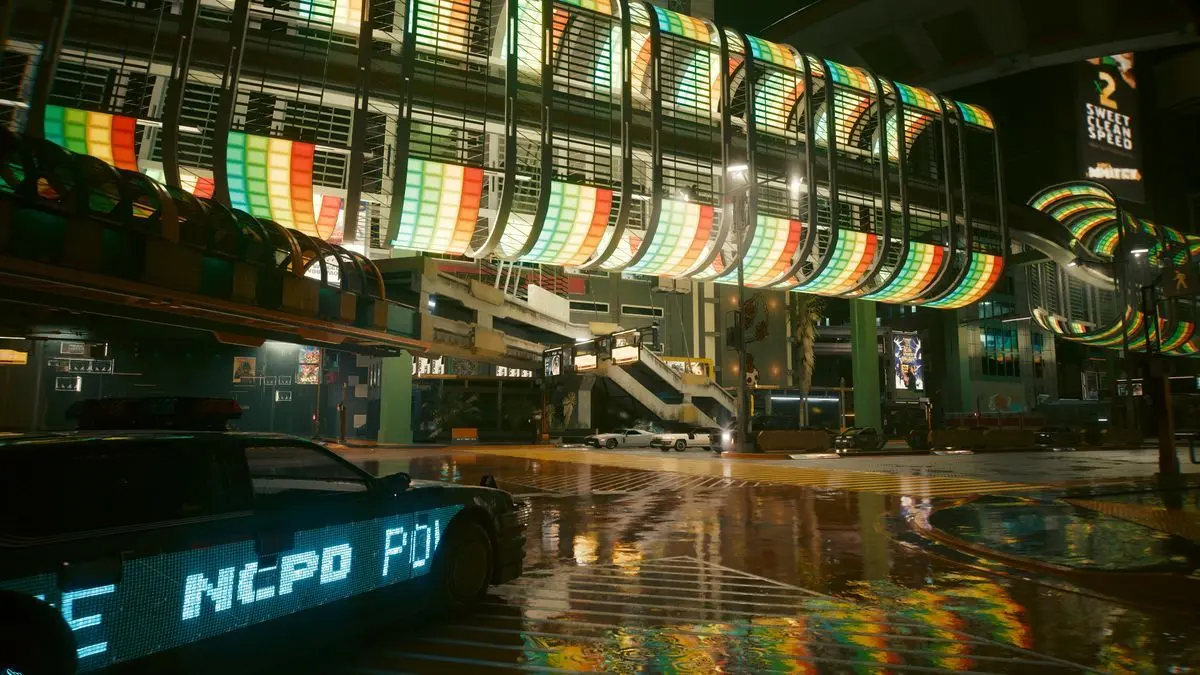
.Testing with Black Myth: Wukong on an RTX 5080 demonstrated minimal latency impact at full 6x multiplier, with only a few milliseconds of delay that remained imperceptible in controller inputs. The visual improvements were particularly noticeable when comparing DLSS 4.5 to its predecessor, with finer particle details and distant textures that were previously smoothed out now restored to life
4
.
Source: PC Gamer
Related Stories
Path Tracing and RTX Mega Geometry Expand Capabilities
Nvidia announced that upcoming titles including Control Resonant and 007 First Light will feature path tracing effects, joining recently launched Resident Evil Requiem in incorporating these demanding rendering techniques
1
.
Source: PCWorld
The company is extending RTX Mega Geometry technology to help CD Projekt Red create richer forested vistas in The Witcher IV, slated for 2027. This enhanced version allows selective updates of ray-tracing data structures and supports finer-grained opacity micromaps for real-time ray tracing of complex scenes like entire forests
1
.RTX Mega Geometry works best on the Blackwell architecture thanks to optimizations in fourth-generation RT Cores present in RTX 50-series GPUs
1
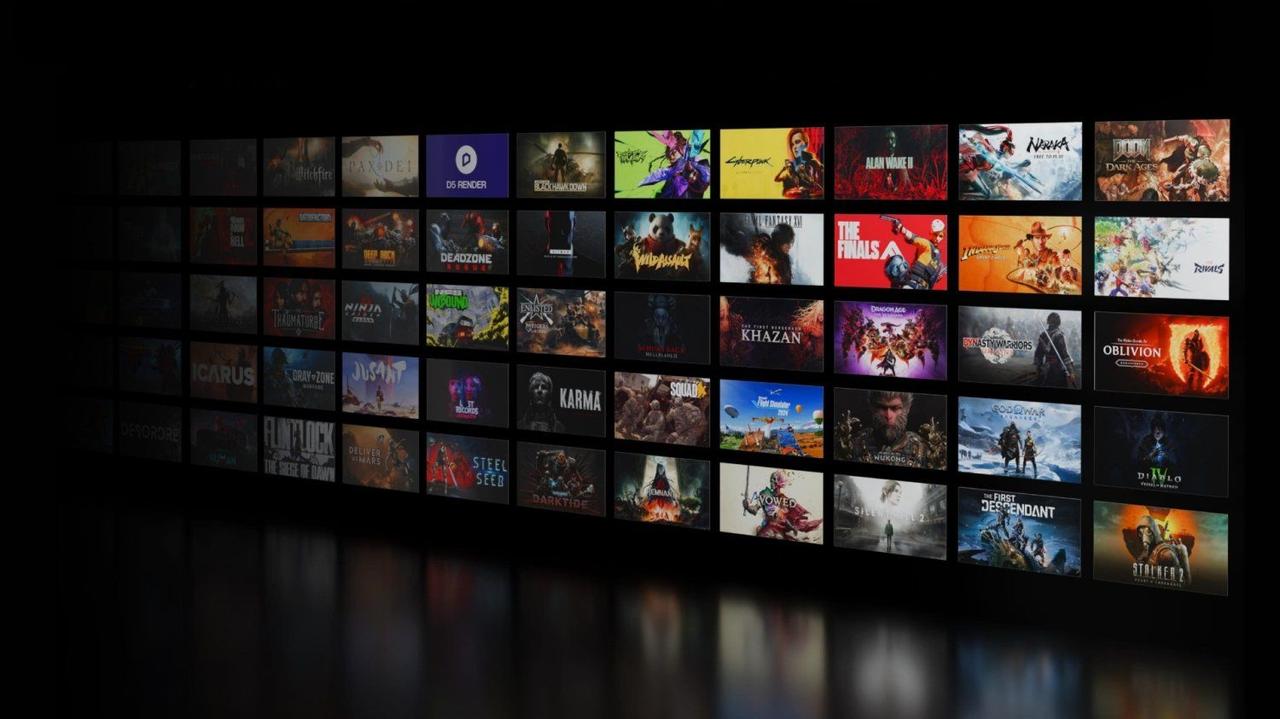
. DLSS 4.5 features will be supported in approximately 20 games at launch5
.Implications for PC Gaming's Future
The focus on software optimization arrives as hardware production faces constraints, with recent reports suggesting Nvidia is cutting production on higher-end GPUs due to ballooning VRAM costs driven by AI chip demand
2
. The RTX 5090 now costs close to $4,000—$2,000 more than its original suggested retail price—placing the most powerful GPU out of reach for most gamers2
.Dynamic Multi-Frame Generation may represent Nvidia's strategy to extract more capability from mid-range GPUs, making frame generation technology finally useful for gamers who previously questioned why they would muddy visuals with generated frames when their expensive GPUs could already render high frame rates natively
2
. The update launches March 31 through an opt-in beta in the Nvidia app, available exclusively for GeForce RTX 50-series GPUs4
. As AI chip shortages continue, getting more performance from existing hardware through software appears to be the path forward for the foreseeable future1
.References
Summarized by

Navi
[1]
[4]
[5]
Related Stories
Nvidia DLSS 4.5 launches with 6x frame generation and dynamic mode for RTX 50 series GPUs
31 Mar 2026•Technology

Nvidia DLSS 4.5 brings AI upscaling improvements to all RTX GPUs, but older cards may struggle
14 Jan 2026•Technology

NVIDIA Unveils DLSS 4: A Leap in AI-Powered Gaming Performance
07 Jan 2025•Technology

Recent Highlights



Recent Highlights
Today's Top Stories






Don’t drown in AI news. We cut through the noise - filtering, ranking and summarizing the most important AI news, breakthroughs and research daily. Follow topics that matter to you and stay ahead.


