Nvidia steps back from AI investment as OpenAI and Anthropic prepare for public listings


3 Sources
3 Sources
[1]
Nvidia says its investments in OpenAI and Anthropic are likely its last
Serving tech enthusiasts for over 25 years. TechSpot means tech analysis and advice you can trust. Bottom line: Nvidia's latest remarks suggest its deep-pocketed relationship with leading AI developers has entered a new phase. At the Morgan Stanley Tech, Media & Telecom conference this week, CEO Jensen Huang said the company's earlier investments in OpenAI and Anthropic are likely its last, pointing to their upcoming public listings as the natural end of such deals. Huang's explanation was brief, but the implications are broad. Nvidia, whose products have become indispensable to generative AI infrastructure, sits in a position few companies have ever occupied: both supplier and shareholder to the firms building the software atop its hardware. That arrangement, once mutually reinforcing, now appears increasingly tangled. The company declined to elaborate beyond its previous statements. A spokesperson directed reporters to comments from Nvidia's fourth-quarter earnings call, where Huang described the company's venture activity as being "focused very squarely, strategically on expanding and deepening our ecosystem reach." That mission, he argued at the time, has largely been accomplished through earlier stakes in OpenAI and Anthropic, each of which became cornerstone customers for Nvidia's chips. Source: App Economy Insights Yet the relationships that once looked symbiotic now raise questions. When Nvidia floated the idea last September of investing up to $100 billion in OpenAI, many in the market saw circular logic rather than strategic alignment, prompting speculation that the AI sector's capital cycle has turned self-referential. By the time Nvidia finalized its portion of OpenAI's latest $110 billion funding round last week, its actual contribution had shrunk to about $30 billion. Analysts interpreted that cutback as less a financial constraint than a signal of reduced appetite for circular commitments. The concern that AI startups and their suppliers are inflating one another's valuations has fueled broader talk of an investment bubble across the industry. If Nvidia's ties with OpenAI have become opaque, its engagement with Anthropic has been outright fraught. In November, the chipmaker committed roughly $10 billion to the developer of the Claude models, deepening what was then framed as a multi-cloud partnership spanning Google and Microsoft. But only two months later, Anthropic CEO Dario Amodei appeared at the World Economic Forum in Davos and sharply criticized US chipmakers for selling high-performance AI systems to Chinese customers, likening such deals to "selling nuclear weapons to North Korea" - a remark widely read as a veiled jab at Nvidia. Since then, the fallout has accelerated. In late February, the Trump administration sort of blacklisted Anthropic as a "supply-chain risk," blocking federal agencies and defense contractors from deploying its models although that seems to be an ongoing discussion behind the scenes. The move followed the company's refusal to allow its AI systems to be used for autonomous weapons or domestic surveillance. Within hours, OpenAI announced a new partnership with the Pentagon - a deal Amodei publicly denounced as "mendacious," arguing that OpenAI had exaggerated the scope of military cooperation. The public response was swift and ironic: Anthropic's Claude app climbed to the top of Apple's free app rankings, displacing ChatGPT after spending months below the top 100, according to Sensor Tower data. Also read: Nvidia's secret weapon: It's the software, stupid Huang's comment in San Francisco during this week's conference - that once OpenAI and Anthropic go public, new investment opportunities effectively end - fits a tidy narrative of natural progression. But late-stage investment norms in Silicon Valley suggest otherwise: firms often buy into rounds right up to initial offerings. That disconnect has led some observers to interpret Nvidia's recent caution as pragmatic retreat rather than procedural timing. With geopolitical pressure mounting, regulatory scrutiny increasing, and AI valuations climbing into the hundreds of billions, the world's most valuable company may be deciding that its hardware (and software) advantage is leverage enough.
[2]
Nvidia Is Probably Done Investing in OpenAI and Anthropic, Says CEO -- Why? - Decrypt
With this decision, Nvidia avoids choosing sides as AI labs clash with each other and Washington. At the Morgan Stanley Technology, Media, and Telecom conference in San Francisco on Wednesday, Jensen Huang said Nvidia is likely done investing in AI giants OpenAI and Anthropic. The $30 billion investment it just finalized into OpenAI was a steep drop from the $100 billion deal announced last September, and will likely be the last check. Same for the $10 billion it put into Anthropic in November. The official reason sounds clean: Both companies appear to be heading toward IPOs later this year, and private deals of this nature close once that window opens. "This might be the last time we'll have the opportunity to invest in a consequential company like this," Huang told the audience. Granted, late-stage investors write checks right up to the IPO bell all the time, and the original $100 billion OpenAI commitment didn't shrink to $30 billion because of some procedural IPO rule. Something else changed. Nvidia now holds stakes in two companies in the middle of an all-out war with each other -- and with Washington. Trump ordered all federal agencies to stop using Anthropic's technology after the company refused to let Claude be deployed for autonomous weapons or mass domestic surveillance. Within hours, OpenAI announced its own Pentagon deal -- a move Anthropic publicly called "mendacious." The public sided with Anthropic. Within 24 hours of the back-to-back announcements, Claude shot to the top of the free app rankings on Apple's U.S. App Store, overtaking ChatGPT. At the end of January, it was outside the top 100. An Anthropic spokesperson told Decrypt that it saw record signups in the days following the Pentagon's move. Meanwhile, the QuitGPT movement had claimed an estimated 2.5 million users taking action against OpenAI -- canceling subscriptions or spreading the boycott -- by the time the dust started settling. Nvidia's relationship with Anthropic was already strained before all this. Two months after putting $10 billion into the company, Dario Amodei stood at Davos and compared U.S. chip companies selling high-performance processors to approved Chinese customers to selling nuclear weapons to North Korea. He didn't name Nvidia, but didn't need to either. There's also the structural awkwardness of the whole circular economy behind Nvidia's massive investments in AI startups. Nvidia invests in OpenAI, but OpenAI spends it on Nvidia chips. The circularity drew bubble comparisons. What Nvidia is actually doing is getting out of the business of picking sides. It sells GPUs to OpenAI, Anthropic, xAI, Google, and everyone else racing for the frontier. The arms dealer doesn't get to have a favorite army. Getting caught holding equity on both sides of a Pentagon standoff, in which one investee is increasingly hated and the other gets designated a national security supply-chain risk, is exactly the kind of mess that makes customers nervous. The IPO story is a convenient door. Huang walked through it.
[3]
Nvidia's Jensen Huang: 'I think the opportunity to invest $100 billion in OpenAI is probably not in the cards'
It will be investing $30 billion, though. Pocket change for Nvidia, surely. OpenAI and Nvidia have had a tense relationship as of late. OpenAI is reportedly not very happy with Nvidia's GPUs, and Nvidia's plan to invest $100 billion in the company has stalled. Recently, in an interview with Nvidia CEO Jensen Huang at the Morgan Stanley Technology, Media & Telecom conference, he announced that OpenAI would instead be getting $30 billion. He said: "So recently, there was a question about 'are we going to invest $100 billion in OpenAI?' Just for everybody's update, we finalized our agreement. We're going to invest $30 billion in OpenAI. I think the opportunity to invest $100 billion in OpenAI is probably not in the cards." The reasoning he gives here is that OpenAI is going public and he believes "the revenues will more than follow" if OpenAI continues to get computer power from Nvidia. He says, "This might be the last time we'll have the opportunity to invest in a consequential company like this." That investment is one that would give Nvidia some ownership, but the partnership with Nvidia to buy its stock will also benefit the gaming company long-term. Effectively, Nvidia doesn't need to invest more as it doesn't have to. On that same note, Nvidia said: "Our $10 billion investment in Anthropic probably will be the last as well." Huang goes on to talk about Nvidia's role in the AI boom, adding, "We expanded OpenAI's reach of capacity to AWS. We're ramping AWS like mad. We're ramping them as hard as we can so that OpenAI has accessed even more capacity." $30 billion is still a lot of money, though less than a third of the investment round OpenAI announced just over a week ago. Nvidia is the most valuable company in the world thanks to its efforts in the rapid growth of AI, and that growth is what's stopping you from buying memory at a reasonable price. This is to say, even if Nvidia isn't investing as much as one thought it would just a little while ago, the AI industry shows no sign of slowing down. Nvidia has also taken a pretty wide swing, when it comes to which companies it is throwing its support behind; it wouldn't invest so much cash if it didn't think it would get it back.
Share
Share
Copy Link
Nvidia CEO Jensen Huang announced the chipmaker's $30 billion investment in OpenAI and $10 billion in Anthropic will likely be its last, citing their upcoming IPOs. But the retreat may signal deeper concerns about potential conflicts of interest, geopolitical pressures, and inflated AI valuations as Nvidia shifts focus to maintaining its position as a neutral hardware supplier to competing AI labs.
Nvidia Signals End to Direct AI Investment Strategy
Nvidia CEO Jensen Huang revealed at the Morgan Stanley Technology, Media, and Telecom conference this week that the company's investments in OpenAI and Anthropic are likely its last
1
. The announcement marks a notable shift for the world's most valuable company, which has spent recent years positioning itself as both supplier and shareholder to leading AI labs. Huang's explanation centered on impending public listings: once OpenAI and Anthropic complete their IPOs later this year, opportunities for private investment naturally close2
. Yet the timing suggests more complex motivations beneath this tidy narrative.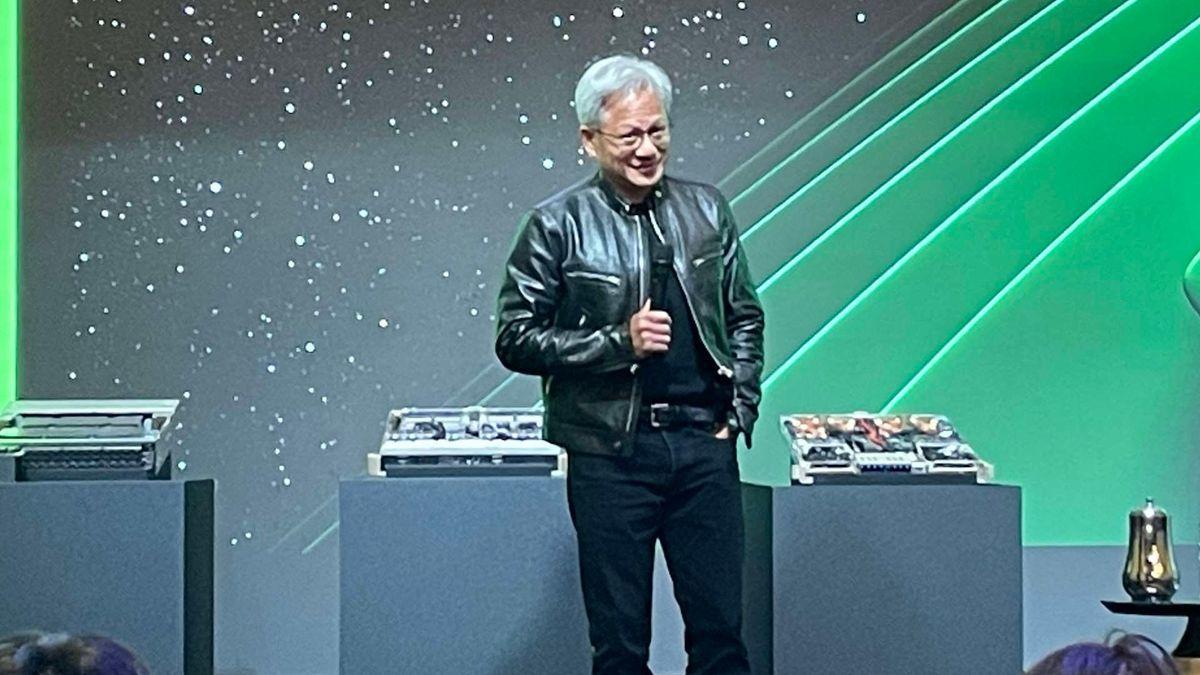
Source: PC Gamer
From $100 Billion to $30 Billion: A Strategic Retreat
The scale of Nvidia's pullback tells its own story. When the chipmaker floated the idea of investing up to $100 billion in OpenAI last September, the figure raised eyebrows across the industry
3
. By the time Nvidia finalized its portion of OpenAI's latest $110 billion funding round last week, the actual contribution had shrunk to approximately $30 billion1
. "I think the opportunity to invest $100 billion in OpenAI is probably not in the cards," Huang stated plainly at the conference3
. Similarly, the company's $10 billion commitment to Anthropic in November will mark its final stake in the Claude developer1
.Circular Economy Concerns and Investment Bubble Fears
Analysts increasingly view the reduction as a response to concerns about a circular economy where AI startups and their suppliers inflate one another's valuations
2
. Nvidia invests billions in OpenAI and Anthropic, which then spend those funds purchasing Nvidia GPUs for computing power—a self-referential capital cycle that has fueled broader talk of an investment bubble across the AI boom1
. A Nvidia spokesperson directed reporters to comments from the company's fourth-quarter earnings call, where Huang described venture activity as "focused very squarely, strategically on expanding and deepening our ecosystem reach"1
. That mission, he argued, has largely been accomplished through earlier stakes in the AI labs.Related Stories
Geopolitical Pressures and Potential Conflicts of Interest
Nvidia's relationship with Anthropic has grown particularly strained. Just two months after committing $10 billion, Anthropic CEO Dario Amodei appeared at the World Economic Forum in Davos and sharply criticized US chipmakers for selling high-performance AI systems to Chinese customers, likening such deals to "selling nuclear weapons to North Korea"—a remark widely interpreted as targeting Nvidia
1
. The situation deteriorated further when the Trump administration designated Anthropic a supply-chain risk in late February, blocking federal agencies and defense contractors from deploying its models after the company refused to allow its AI systems for autonomous weapons or domestic surveillance1
.Within hours, OpenAI announced a new Pentagon partnership—a move Amodei publicly denounced as "mendacious"
2
. The public backlash was immediate: Claude climbed to the top of Apple's free app rankings, displacing ChatGPT after spending months outside the top 100, while the QuitGPT movement claimed an estimated 2.5 million users taking action against OpenAI2
. For Nvidia, holding equity stakes on both sides of this Pentagon standoff creates exactly the kind of potential conflicts of interest that could unsettle customers across its AI ecosystem2
.Maintaining Position as Neutral GPU Supplier
The strategic calculus appears clear: Nvidia benefits more from maintaining its role as a hardware supplier to all competing AI labs than from picking winners through investing in AI labs
2
. The company supplies GPUs to OpenAI, Anthropic, xAI, Google, and virtually every other organization racing to build frontier AI models. "We expanded OpenAI's reach of capacity to AWS. We're ramping AWS like mad. We're ramping them as hard as we can so that OpenAI has accessed even more capacity," Huang explained3
. This neutral position becomes harder to maintain when the company holds significant ownership stakes in firms engaged in public battles over ethical AI use and government contracts.
Source: TechSpot
While late-stage investors typically write checks right up to the IPO bell, Nvidia's early exit suggests the company views its hardware advantage as leverage enough
1
. With geopolitical pressures mounting, regulatory scrutiny increasing, and inflated AI valuations climbing into the hundreds of billions, stepping back from direct equity positions allows Nvidia to avoid choosing sides while continuing to profit from selling the computing power that fuels the entire industry2
.References
Summarized by

Navi
Related Stories
Nvidia pulls back from OpenAI investment as Jensen Huang cites IPO plans and complex dynamics
26 Feb 2026•Technology

Nvidia's $100 billion OpenAI investment shrinks to $20 billion as chip tensions surface
02 Feb 2026•Business and Economy

Nvidia CEO calls reports of stalled $100 billion OpenAI investment 'nonsense,' pledges major funding
31 Jan 2026•Business and Economy

Recent Highlights
1
OpenAI shuts down Sora video app after six months, ending Disney's $1 billion investment deal
Technology

2
Apple plans major Siri AI overhaul in iOS 27 with standalone app and third-party chatbot support
Technology

3
Claude AI can now control your computer to complete tasks, but security risks remain
Technology

Recent Highlights
Today's Top Stories










Your Daily Dose of Curated AI News
Don’t drown in AI news. We cut through the noise - filtering, ranking and summarizing the most important AI news, breakthroughs and research daily. Spend less time searching for the latest in AI and get straight to action.

