Qualcomm and Nvidia race to define AI-native 6G as telecom industry shifts focus at MWC 2026


10 Sources
10 Sources
[1]
Qualcomm, Nvidia push 'AI-native' 6G - definition pending
It seems like just yesterday that the 5G rollout started. Now, at Mobile World Congress, major companies are already talking about commercializing 6G. Never mind that binding 6G standards haven't been nailed down yet. The world has been joking about when telecoms would push the sixth generation of mobile networking ever since 5G came to dominate in the earlier part of the decade. Now there's an excuse to push networking toward the sixth generation in the form of AI, and you can expect two of the biggest we're-gonna-win-6G announcements at MWC to be loaded with AI as the catalyst for the tech's arrival. Nvidia said over the weekend that it had entered into a commitment with a number of partners "to build the world's next generation of wireless networks on AI-native, open, secure and trustworthy platforms," whatever exactly that means. Qualcomm intends to do just that with its own coalition, thank you very much (there are a number of partners shared between the two initiatives), and it's going to make its own "AI-native" 6G system "that builds upon three key pillars: connectivity, wide-area sensing, and high-performance compute." The mobile modem maker isn't just going to do all that by 2029, mind you: It's also going to push for the development of 6G standards so it can figure out what exactly it's designing for. That's right - Qualcomm knows this 6G thing is going to be important, and probably going to involve AI, so it'd really like "development of essential 6G standards, early system validation, demonstration of 6G spec-compliant pre-commercial devices and networks" by 2028 so it can get on "establishing a common industry benchmark for 6G readiness, and initial rollout of global and interoperable commercial 6G systems" in 2029. So, that's all the hard work done, then. Nvidia's vision of the 6G future is one far more focused on AI-powered software-defined networking to build a generation of telecom equipment we can just keep updating instead of constantly having to redesign. "6G networks, built on AI-RAN architecture, will continuously evolve through software, enabling real-time intelligence and rapid advancement," Nvidia said of its own plans. As mentioned, Nvidia and Qualcomm share a number of partners in their initiatives, with overlap from firms like BT Group, Cisco, Deutsche Telekom and T-Mobile, Nokia, SK Telecom, Ericsson, and others. Both Qualcomm and Nvidia see a 6G future that's powered by AI, with intelligent radios and software-defined systems connecting devices in designs and volumes that are hard to fathom. We'll need less latency to get there, says one, with better traffic management and real-time analytics to maximize data flow. We're going to need to think about the sheer volume of physical AI systems that are just over the horizon, says the other, and build for possibilities of the future and not just what we have now. As for what all that means, the jury, or more accurately, the standards boards, are still out. The International Telecommunication Union published its IMT-2030 framework for 6G in 2023 and is now working through requirements and evaluation criteria, while the 3rd Generation Partnership Project has begun early-stage 6G study work of its own. But neither body has finalized technical specifications for commercial 6G systems. Yes, there's some miscellaneous tech that calls itself 6G out there, but without standards it doesn't mean much.
[2]
Nvidia Forms Alliance to Make Sure 6G Networks Embrace AI
Nvidia Corp., the world's most valuable company, is throwing its weight behind an effort to make sure the forthcoming 6G phone networks provide a strong platform for services and devices that take advantage of artificial intelligence. Nvidia is teaming up with a group of telecommunications companies including Nokia Oyj, SoftBank Group Corp. and T-Mobile US Inc. that will commit to building sixth-generation networks based on computers and software capable of using AI to help direct radio traffic safely and efficiently. The change is necessary because of myriad devices that will be attached to networks in the future and their more complex requirements, Nvidia said Sunday in a statement timed for the opening of a telecom industry conference in Barcelona. The current generation, 5G, was designed to connect people via voice and data and provide them with retrieved information. It isn't capable of supporting the widespread use of AI, Nvidia said. "The networks of today simply aren't ready for the use cases of tomorrow," said Ronnie Vasishta, who heads Nvidia's telecommunications business and strategy. "In the AI era, everything changes. Networks will deliver intelligence, not just for humans on their phones, but for machines." Telecommunications networks will require "hundreds of thousands of times" more efficiency because there isn't enough radio spectrum to support the new uses, he said. The chipmaker, whose gear is at the center of the AI explosion, is trying to carve out a new market and clear a potential roadblock. Nvidia already offers versions of its chips, computers and software for use in networks and hopes to expand that business. At the same time, the company needs AI to spread to more areas -- in things termed physical AI, like robots and vehicles -- to continue to fuel demand and pay for the data centers that are currently the biggest consumers of its technology. Without wireless networks enabled for AI traffic, Nvidia's vision of a world full of humanoid robots and self-driving cars might be slower to emerge. Get the Tech Newsletter bundle. Get the Tech Newsletter bundle. Get the Tech Newsletter bundle. Bloomberg's subscriber-only tech newsletters, and full access to all the articles they feature. Bloomberg's subscriber-only tech newsletters, and full access to all the articles they feature. Bloomberg's subscriber-only tech newsletters, and full access to all the articles they feature. Bloomberg may send me offers and promotions. Plus Signed UpPlus Sign UpPlus Sign Up By submitting my information, I agree to the Privacy Policy and Terms of Service. Every decade or so the telecommunications business shifts to a new generation of wireless technology, the next "G." In the run-up to setting standards that determine the parameters of new hardware and software, companies form alliances to steer the industry in a direction they believe will favor their products. That approach has a mixed record and has been undermined by competing efforts that have sometimes delayed new deployments or resulted in networks that are incompatible. Nvidia argues that new gear and software needs to be fundamentally open. Instead of locked-down devices with bespoke hardware, the radios that send and receive wireless traffic should be controlled by software that can be updated and runs on more general purpose computers. The data traffic should be routed by AI software that's capable of responding to rapidly changing patterns and priorities in a way that's simply not currently possible, according to the chipmaker. In such an environment, the telecommunications industry will be far more open to the emergence of new providers, including startups that might rapidly attain billion-dollar valuations, Nvidia's Vasishta said. "This will be how a new telecom unicorn is born," he said. There have been far too few new entrants into the industry over the last decade, he added.
[3]
At MWC 2026, the telecom industry pivoted from 5G to AI-powered 6G
Serving tech enthusiasts for over 25 years. TechSpot means tech analysis and advice you can trust. Heading to Barcelona for this year's Mobile World Congress, I had a feeling there might be some early discussions on the potential for 6G. Boy, was I wrong. Instead of 6G being a sideline topic, it was the center of attention for many of the vendors there. In particular, the theme of how 6G could become a critical enabler for hybrid AI applications that span hyperscalers, data centers, devices, and cellular networks received a surprising amount of attention at this year's show. Chip companies like Qualcomm and Nvidia, network infrastructure vendors such as Nokia and Ericsson, and even telcos like T-Mobile and Deutsche Telekom all offered strategic plans and even some early demonstrations for how they were going to tackle the next generation of cellular networks. From a pure technology enablement perspective, it is probably not surprising that semiconductor vendors like Qualcomm and Nvidia had some of the most forward-looking perspectives. After all, chip designers have to plan for capabilities they expect will be required several years in advance, so they are wired to think that way. Qualcomm, in particular, made a very strong statement about the importance of 6G and the numerous technologies it believes can contribute to its evolution. The company positioned itself as a key supplier for everything from next-gen modem designs for early 6G testing, to AI acceleration silicon for devices and data centers, AI-powered RAN (Radio Access Network) operation and automation, and implementations of Wide Area Network physical AI applications such as robotics and cars. For physical AI, Qualcomm discussed how the new ISAC (Integrated Sensing and Communications) technology expected to be a key differentiator for 6G compared with 5G would play an important role. ISAC leverages something called RF sensing, which uses radio frequency waveforms to provide a real-time radar-like view of the physical world around us. In a manner conceptually similar to existing WiFi sensing technology, ISAC tracks the path and reflections of cellular signals sent from towers and uses that data to create a physical display and map of the surrounding area. While it does not offer camera-like visibility, nor does it carry the privacy concerns that networks of connected cameras often have, it provides a strong solution for applications such as digital twins of locations and facilities, asset tracking, connected cars, robots, and much more. Though not directly tied to 6G, one of the Qualcomm's big MWC announcements was the unveiling of the Snapdragon Wear Elite SoC for wearable devices such as smartwatches and smart glasses. Wear Elite should significantly improve the on-device AI capabilities of devices that use it. The SoC is the first in the company's wearable chip line to integrate an NPU. Wear Elite also includes an impressive range of low-power wireless connectivity options, including cellular, WiFi, Bluetooth, Threads, UWB, and satellite, that will enable a wider variety of wearable form factors and applications. Nvidia's impact was strongly felt at this year's MWC even with the company not physically present at the show. Given its dominant position in AI and the momentum driving telecom providers to offer more of those services, the company's products and capabilities were an essential ingredient in many of the discussions around AI and 6G. The company also had an outsized presence in announcements surrounding the use of AI acceleration for core RAN applications. While Nvidia first introduced the concept of its Aerial software project for using GPUs to accelerate L1 RAN workloads and run AI applications more than five years ago, it was only at this year's MWC that it seemed to have a real impact. Until now, many industry players wrote off GPUs as too expensive, too power hungry, and unnecessary for telecom applications, but that perspective appeared to have come full circle at this year's show. In fairness, some of that change was driven by small but important tweaks to how Nvidia talks about Aerial, but most of it comes from how quickly the world has changed and how AI is now at the center of every tech discussion. Last fall, Nvidia unveiled its Aerial RAN Computer Pro (ARC Pro), which focuses almost exclusively on running core RAN workloads. Instead of using the kilowatt-level GPUs the company is famous for in today's most advanced data centers, ARC Pro leverages lower-power versions that fit within the same type of power envelope, around 330 watts, as existing non-GPU-based solutions. While ARC Pro can also run other AI applications in the same environment, the company has also discussed how more of those workloads are likely to run in telco core network locations such as central offices and other data centers. In these environments, new Vera Rubin-class Nvidia GPUs can run, providing a split computing option that seems better suited to the generally more conservative telco operators. Nvidia also took center stage with Nokia (the company announced a $1 billion investment last fall), as the network equipment provider revealed several real-world installations of its Nvidia-powered options for both 5G and 6G environments. Nokia showed both GPU-equipped upgrade card options for its existing Airscale line of baseband solutions and a new set of GPU-equipped cards that can be used with standard x86-based COTS servers from companies like Dell, HPE, Lenovo, Cisco, and others. Importantly, Nokia emphasized its increasing focus as a software provider that can bring battle-tested telecom applications to a wide variety of hardware environments. In the process, this move helps the company shift away from the increasingly difficult challenge of keeping its custom silicon ReefShark-based products on a performance par with the rapid advancements in other general-purpose AI accelerators such as GPUs. In addition, it highlights the modern realities of software-based radio designs. In fact, another key industry-wide development from MWC was the focus on software-defined radios. While the concept certainly is not new, the reality of how important it will be as the industry transitions from 5G to 6G became very apparent at this year's show. That software-based focus was also a critical part of Ericsson's positioning and its key announcements. Like Nokia, the company has new Nvidia GPU-based options leveraging the CUDA-based Aerial software stack, but it also continues to believe that its custom silicon can and will play an important role in both the 5G and 6G worlds. In addition, Ericsson made significant announcements with Intel about how the company's new Xeon 6+ family of CPUs, based on Intel's new 18A process technology, can help enable a software-upgradable path to 6G when telco customers choose to make that move. Ericsson focused on the pivotal role that AI plays across RAN, core network, and edge applications, highlighting how the worlds of compute and traditional mobile networks are merging into a new type of entity with important implications and big questions not just for the tech industry but for society overall. As in previous years, Ericsson also had a wide range of interesting demos at its booth, including some featuring the ISAC sensing capabilities expected for 6G, as well as demonstrations of how AI-based tools can enable increasingly sophisticated network automation. Several telcos also began discussions around the potential role that 6G could play in their environments. T-Mobile and its German counterpart Deutsche Telekom, for example, highlighted the work they are starting to do in enabling AI applications on their networks with the debut of a new 6G Innovation Hub. According to the two, their efforts will focus on "the evolution of connectivity, sensing, and compute to support the next generation of Physical AI applications." T-Mobile also made a joint announcement with Ericsson and Nvidia about how they are leveraging GPU-accelerated AI RAN capabilities to improve the performance and efficiency of their networks, and with Qualcomm to discuss how they are working together to make the first 6G installations real starting in 2029. When it comes to any telco, the one big question hanging over all of them regarding 6G and AI is business models. Unfortunately, most of the new revenue opportunities that 5G was supposed to deliver through a more intelligent network have yet to materialize. That reality raises legitimate concerns that the same problems could emerge with 6G. In addition, many telcos are still paying back the huge investments they made to upgrade their infrastructure to 5G, and very few have even made the transition to 5G SA (Stand Alone). As a result, the willingness and ability to adopt 6G could be limited for some time. The bottom line is that telco providers have to figure out ways to create and successfully charge for new AI-powered services, or the industry could remain stuck in its more utility-like role for some time. If MWC 2026 made one thing clear, it is this: 6G has moved from a speculative future concept to a strategic planning framework for the next wave of AI-enabled networks. Of course, because it is still very early days and the official specifications for 6G are barely getting started, there is a fair bit of room for interpretation and several possible paths that the evolution to 6G could take. Plus, to be honest, on many levels it still feels like the industry needs several more years to get 5G right before any serious discussions about 6G occur. At the same time, there seemed to be more people at this year's show than ever before who had given up on 5G and 5G Advanced ever reaching the full potential that was promised. Comments about "every other G" being the impactful one, implying that 5G would not be as important as 4G but 6G would be, were made by several people I interacted with. Even so, progress is being made on the 5G front, and there were some important announcements about those advancements at the show. The new Live Translation feature and other voice-based capabilities that T-Mobile recently unveiled, for example, are solid examples of the "intelligent network" capabilities that 5G was supposed to bring us. The net result is that the telecom industry and its suppliers seem to be at that uncertain stage in the middle of a major technology transition where more people are looking forward or backward than focusing on the realities of where we currently are. Nevertheless, there is no question that AI is going to be the critical component in moving the telecom industry ahead, but many uncertainties remain about exactly how, where, and who are best positioned to drive that AI development. If MWC 2026 made one thing clear, it is this: 6G has moved from a speculative future concept to a strategic planning framework for the next wave of AI-enabled networks. How it ultimately evolves remains to be seen, but there is no question that it will be a fascinating process to watch. Bob O'Donnell is the founder and chief analyst of TECHnalysis Research, LLC a technology consulting firm that provides strategic consulting and market research services to the technology industry and professional financial community. You can follow him on Twitter @bobodtech
[4]
NVIDIA and Global Telecom Leaders Commit to Build 6G on Open and Secure AI-Native Platforms
* Leading operators and infrastructure providers including Booz Allen, BT Group, Cisco, Deutsche Telekom, Ericsson, MITRE, Nokia, ODC, SK Telecom, SoftBank Corp. and T-Mobile will build on open and trusted software-defined wireless platforms. * The commitment complements NVIDIA's ongoing collaborations with industry and governments across Europe, Japan, Korea, the U.K. and the U.S. to advance AI-native 6G innovation. Mobile World Congress -- NVIDIA today announced a commitment -- together with Booz Allen, BT Group, Cisco, Deutsche Telekom, Ericsson, MITRE, Nokia, OCUDU Ecosystem Foundation, ODC, SK Telecom, SoftBank Corp. and T-Mobile -- to build the world's next generation of wireless networks on AI-native, open, secure and trustworthy platforms. The initiative represents a shared commitment to ensure 6G infrastructure -- the foundation for the world's future connectivity -- is open, intelligent, resilient and accelerates innovation and safeguards global trust. Beyond traditional connectivity, 6G wireless networks will become the fabric for physical AI, enabling billions of autonomous machines, vehicles, sensors and robots and significantly increasing demands for security and trust. Legacy wireless architectures were not designed to meet these requirements, creating challenges as networks increase in complexity. To address this, NVIDIA is bringing the industry together to advance AI-native, software-defined wireless platforms built on open and trusted principles. By embedding AI across the radio access network (RAN), edge and core, 6G networks must enable secure integrated sensing and communications, intelligence and decision-making while supporting interoperability, supply-chain resilience and faster innovation. "AI is redefining computing and driving the largest infrastructure buildout in human history -- and telecommunications is next," said Jensen Huang, founder and CEO of NVIDIA. "Together with a global coalition of industry leaders, NVIDIA is building AI-RAN to transform the world's telecom networks into AI infrastructure everywhere." Uniting on Openness and Trust for the AI-Native, Software-Defined Era of Connectivity 6G will be AI-native and software-defined, enabling wireless networks to advance at the pace of innovation. 6G networks, built on AI-RAN architecture, will continuously evolve through software, enabling real-time intelligence and rapid advancement. This transformation opens the door for a diverse ecosystem of participants -- from global operators and technology providers to startups, researchers and developers -- all contributing through open and programmable platforms. Allison Kirkby, chief executive of BT Group, said: "Connectivity is the backbone of economic growth, and with this collaboration, we're helping lay the foundations for a future ecosystem that is intelligent, sustainable and secure. By building on open and trustworthy AI native platforms, we can simplify future technologies like 6G, ensuring they build upon the strengths of today's 5G networks while still unlocking powerful new capabilities at scale." Tim Höttges, CEO of Deutsche Telekom AG, said: "Best network, best customer experience -- that remains our promise. With an open, intelligent and trusted 6G infrastructure, we are laying the foundation for the era of physical AI and unlocking new value for our customers, for industry and for society." Arielle Roth, Assistant Secretary of Commerce for Communications and Information, and Administrator at the National Telecommunications and Information Administration, said: "America's 6G leadership will be critical to our nation's economic prosperity, national security and global competitiveness. Today's announcement demonstrates that the United States and our allies and partners around the world are leading in this next-generation technology. We look forward to the next steps from this international industry coalition as they advance and implement their shared 6G vision." Jung Jai-hun, president and CEO of SK Telecom, said: "SKT is evolving telco infrastructure to serve as the foundation for the AI era, where connectivity serves as a platform for intelligence and innovation. Together, we can build open, trusted infrastructure that drives a global ecosystem of AI innovation." Hideyuki Tsukuda, executive vice president and chief technology officer of SoftBank Corp., said: "Al-native 6G will transform wireless networks into secure, software-defined infrastructure that supports the next wave of global innovation. SoftBank Corp. is driving this innovation with NVIDIA by advancing open and trusted platforms that enable interoperability, resilience and continuous evolution at scale." Srini Gopalan, CEO of T-Mobile, said: "We're at a pivotal moment. In the U.S., we've laid the foundation with 5G Advanced and AI-native networks where intelligence lives inside the network. As 6G becomes the backbone of the AI era, telecom will serve as the nervous system of the digital economy, enabling autonomous systems and intelligent industries at scale and unlocking new value for customers and businesses alike. T-Mobile is proud to help define what's next through deep ecosystem collaboration and sustained innovation." A Shared Vision for 6G: Open, Software-Defined, AI-Native NVIDIA participates in global private and public initiatives to advance 6G innovation, contributing open source software, accessible platforms and joint research and development projects: * In the United States, NVIDIA has joined the FutureG Office-led OCUDU Initiative, aligning with government and industry partners to accelerate open, software-defined and AI-native 6G architectures. * NVIDIA is a founding member of the AI-RAN Alliance, which now has over 130 participating companies driving AI-RAN innovation. * NVIDIA, along with Booz Allen, Cisco, T-Mobile, MITRE and ODC, in October launched the AI-Native Wireless Networks (AI-WIN) project, an all-American AI-RAN stack to accelerate the path to 6G. * In Korea, NVIDIA is collaborating with an industry consortium to help shape intelligent, secure, programmable 6G networks from the ground up. * In the U.K., NVIDIA is collaborating with the Department for Science, Innovation and Technology to advance applied research, ecosystem development and trusted AI-native network design. * Across Europe and Japan, NVIDIA is actively engaged with public and industry programs aimed at strengthening open innovation, interoperability and trusted infrastructure. Together, these collaborations represent a unified commitment -- supported by like‑minded governments, operators and technology partners -- to shape secure, intelligent and trusted global connectivity for the next generation of wireless technology.
[5]

Qualcomm CEO: "resistance is futile" as 6G mobile revolution approaches | Fortune
I remember sending my first email in the early 1990s, a clunky experience which meant logging on to two different computer systems. I thought it would never replace the much swifter fax. The internet was already revolutionizing the flow of information and, as the editor of The Guardian's gargantuan media section in the U.K. (printed every week with 50 pages of job ads), I was the proud owner of one of the first 'WAP-enabled' mobile telephones. I mused in the front-cover headline whether this was "the end of newspapers?". Newspapers fight on and today I am at the Mobile World Congress in Barcelona, contemplating the next technological revolution. It turns out it's a bit more consequential than the arrival of email. Thousands of digital leaders from around the world are here, displaying the latest in robotics, quantum computing, and IQ AI, which is grappling with the relationship between us -- humans -- and the multitude of AI agents that proffer help and arouse suspicion. One of the largest pavilions in the seven exhibition halls of installations and exhibits (robots making sushi, virtual-reality table football, cars that are phones, medical devices that might save the world) is the home of Qualcomm. Number 117 on the Fortune 500 list, the telecommunications giant was founded in San Diego in the 1980s and is now at the heart of a debate about a tech-enabled world. Mobile 6G sounds prosaic -- just another development phase for cellphones which started with phone calls (2G), brought us texts (3G), data (4G) and smartphones (5G). It isn't. 6G will be the telecommunication system for the AI age -- for all the data passing between us, AI agents, and the real world, where phones will only be one part of the digital ecology. The internet of everything is finally arriving. "AI will fundamentally change our mobile experiences," Qualcomm chief executive, Cristiano Amon, tells me. "It's going to change how we think about our smartphones. Think about our personal computing. Think about and interact with a car. The car is now a computing surface." "If you actually believe in the AI revolution, 6G will be required. Resistance is futile." Akash Palkhiwala is Qualcomm's Chief Financial Officer and Chief Operating Officer. I spent some time with him at the company's stand, as his leading engineers took me through a 6G future where individuals will have real-time information delivered to them via their glasses. Palkhiwala compliments me on my watch, which only does one thing. It tells me the time. "6G is going to be the first time that connectivity and AI come together in the network. What we're building is the first AI native wireless network that's ever been built," he explains. "The traffic that we expect on 6G is way different than what we had before. Before, it was all about consumer traffic. We expect 6G to be driven by [AI] agent traffic. Think about all these use cases where there are AI agents sitting on various devices -- your glasses, your watch, your phone, your PC. These agents are going to be talking back and forth across the network to other agents and services." "The traffic completely changes. 6G is being built with this idea that the traffic that goes on the network is not just going to be consumer voice calls or downloading videos, we're going to have agents talking to each other, so the reliability of the network becomes very important." On-device capabilities (the ability of your phone to process far more data), edge computing (locally sourced IT technology rather than distant datacenters), more efficient use of available bandwidth (AI-enabled load control), and greater cloud access will all come together to produce a new wireless network. I ask Palkhiwala what this all might mean for a mother from Arkansas? "That's a great question," he answers (it isn't, but it is an attempt to bring the issue home for non-technology experts). "Today we are in the application economy. On the phone, you want to make a travel reservation, you go to one application. You want to order an Uber, you go to a second application. You want to order food, you go to a third application, movie tickets etc. The user has to go through that effort." "In the future, you think of the app economy moving over to an agent economy, where there's one agent I'm interacting with and I can ask that agent to book me a movie ticket or a plane ticket, to order food for me, get an Uber for me. It knows everything about me." On the stand there is an interactive table-top display that used to look impossibly modern in movies twenty years ago. With the swipe of a finger, a video plays. It is of a driver arriving at a supermarket where there is a waiting robot with bags of groceries it already knew you wanted. Qualcomm says the first 6G applications will be in consumer testing by the time of the Los Angeles Olympics in 2028. By 2029, rollouts will begin. Many are still getting their heads around applied AI and, in the U.K., where I live, 5G is still spotty and drops out whenever on the train. Mobile World Congress is a gathering of thousands of people all focused on the possibilities of the AI-enabled future. How it works out will take the brainpower of many millions more.
[6]

Qualcomm bets on AI-native 6G by 2029 and says Europe can lead
"6G is not an evolution, it's a revolution," Qualcomm's Wassim Chourbaji tells Euronews Next at the Mobile World Congress. Semiconductor giant Qualcomm has set an ambitious 2029 date for 6G commercialisation and says the next generation of wireless is a "revolution, not an evolution," that Europe should lead. The tech company aims for 6G pre-commercial deployments beginning as early as 2028, which will be key to artificial intelligence, connectivity, and high-performance computing taking off. "6G is not an evolution, it's a revolution, and Europe should be completely a leading continent on 6G," said Wassim Chourbaji, Qualcomm's president for the Middle East and Africa and senior vice president for government affairs for Europe, the Middle East and Africa. Speaking to Euronews Next at the Mobile World Congress (MWC) tech fair in Barcelona, he said Qualcomm is positioning 6G as a platform for physical AI, the next wave of AI that interacts with the physical world, such as robotics and smart glasses. Giving the example of smart glasses, he said that the video streams need to go back to the data centre, to the network to be processed and tokenised. For that, "you need a big upload and that's something 6G will enable," he said. Another benefit of 6G is that it introduces sensing capabilities so objects can be detected and tracked, such as cars or drones, which he said was "super important" for national security applications. Qualcomm announced at MWC a new coalition aimed at accelerating 6G development, drawing in several European partners, including Nokia and Ericsson, as well as US companies Amazon, Google and Microsoft. On the issue of Europe's AI sovereignty, Chourbaji argued for a so-called "hybrid AI" model that would distribute computing across devices, edge networks, and the cloud. But he said that the AI must speak your own language and culture. "When you're engaging today with your device, with AI, the computer understands you, speaks your language. You need to integrate large language models that are local by nature, that understand your culture," he said. These locally embedded models will represent a practical and tangible layer of digital sovereignty, not just a policy ambition. "We are supporting and working very hard with European governments and European industries to partner on sovereignty layers," Chourbaji said. Qualcomm's European footprint spans R&D and engineering operations in Germany, France, Ireland, Spain, Italy, and Sweden, which the company says positions it as a natural partner for the continent's digital transformation ambitions across automotive, industrial, and defence sectors. Though the US-based company is multinational, Europe is a key market and one with a strong history of manufacturing. "Europe has great assets, precise manufacturing, critical infrastructure, defence, automotive and smart transportation," he said. "Bringing those capabilities together with 6G technology and AI, I do believe that Europe can be a leader."
[7]

6G Gets an Early Launch Date
We may earn a commission when you click links to retailers and purchase goods. More info. Did the promises of 5G ever happen? I don't know. 5G is fine. It seems mostly mature at this stage and our wireless networks in the US are all pretty good. T-Mobile's network wins awards, Verizon's does too, and AT&T's is right there with both of them. I see "5G UW" all of the time in Portland and my network connections always seem pretty stable. Did we make leaps of awesomeness over the peaks of 4G LTE? Ehhhh, maybe? The download speeds are pretty nice at times, for sure. But hey, we're done talking 5G. 6G is coming, even if there probably isn't a need for it. The companies need something to hype and to sell each other on in order to make all of the billions on top of the billions they already make. 5G is old or tired in the way of fun (and profits), so 6G has found a date. As a part of Mobile World Congress (MWC) this week, Qualcomm has stepped forward to commit towards commercialization of 6G starting in 2029. Actually, let me be more specific - "AI-Native 6G" could show up in 2029. Why did we need to attach "AI-Native" to 6G? You know why. Here's to hoping AI is dead by 2029. Qualcomm and its friends in the industry are trying to define what 6G should be and so far they have settled on three key pillars: connectivity, wide-area sensing, and high-performance computer. They explained what those mean by saying that the next generation of networks "will feature new and advanced capabilities, including intelligent radios with integrated wide-area sensing capabilities, virtualized and cloud RAN with high-performance and energy efficient compute, AI-based network autonomy, as well as edge and centralized data centers for entirely new AI workloads." What does all of that mean for you? Well, Qualcomm says it "will enable higher levels of efficiency and performance for telecommunication applications, new agentic consumer and enterprise devices, and new classes of AI-enabled services, ranging from context-relevant data, low-altitude aerial and terrestrial traffic management, data insights and analytics at scale, and many more." All of that mostly boils down to a, "Trust me, bro, it's going to be awesome because of AI even if what we just said is a jumbled mess of a potential future tech speak." As of today, Qualcomm and its partners want to launch spec-compliant pre-commercial devices and networks in 2028 before rolling things out officially in 2029. A couple of years isn't that far off. Will we hit these dates?
[8]

Telco giants join forces with Nvidia for AI-ready 6G infrastructure
Collaborators include BT, Cisco, Deutsche Telekom and its subsidiary T-Mobile, and Nokia. Nvidia has announced a new joint project with global telecommunication leaders to fast track AI-ready 6G infrastructure. Expected to be commercially adopted before the end of the decade, 6G promises leaps in advances compared to 5G, particularly designed for AI, digital twinning and other new innovations. The announcement came over the weekend, just ahead of the Mobile World Capital telecom conference in Barcelona kick starting today (2 March). Nvidia argues that 6G is key for physical AI to help ensure autonomous machines, vehicles and robots also remain secure. The company hopes that by bringing the telco industry together, it can advance open AI-native wireless platforms. The partnership will attempt to embed AI across the radio access network (RAN), and edge and core. The large pack of collaborators include BT, Cisco, Deutsche Telekom and its subsidiary T-Mobile, Nokia, SK Telecom and Sweden's Ericsson. Also participating are US consultancy firm Booz Allen, the not-for-profit research group Mitre, AI RAN provider ODC, and the Japanese investment group SoftBank. Many are repeat collaborators with Nvidia that already have other ongoing 6G-related projects. According to Nvidia, the new commitment complements its ongoing industry and government partnerships across Europe, Japan, Korea, UK and the US. The AI chipmaking giant is also a founding member of the 'AI-RAN Alliance', which currently has more than 130 participating companies working toward accelerating this innovation. According the company, 6G networks built on AI-RAN architecture, will continuously evolve through software, enabling real-time intelligence and rapid advancement. "AI is redefining computing and driving the largest infrastructure buildout in human history -- and telecommunications is next," said Jensen Huang, founder and CEO of Nvidia. "Together with a global coalition of industry leaders, Nvidia is building AI-RAN to transform the world's telecom networks into AI infrastructure everywhere." The multi-trillion-dollar semiconductor manufacturer has a huge stake in ensuring further and continued adoption of AI. The company already offers chips and software for use in networks, and recently launched open-source AI models for newer autonomous vehicles. Allison Kirkby, chief executive of BT Group, added: "By building on open and trustworthy AI native platforms, we can simplify future technologies like 6G, ensuring they build upon the strengths of today's 5G networks while still unlocking powerful new capabilities at scale." Don't miss out on the knowledge you need to succeed. Sign up for the Daily Brief, Silicon Republic's digest of need-to-know sci-tech news.
[9]

Ahead of MWC Barcelona, Nvidia bets AI-native platforms will carry telecom into 6G - SiliconANGLE
Ahead of MWC Barcelona, Nvidia bets AI-native platforms will carry telecom into 6G Nvidia Corp. early Sunday announced ahead of the MWC Barcelona conference that its joining global telecom leaders in a commitment to build 6G on open and secure artificial intelligence-native platforms, bringing software-defined networking to the future of telecommunications. As it rolled out, 5G helped offer enough bandwith and opportunity to blaze a trail for the much-anticipated "metaverse," but that hype has been quickly supplanted by another darling: artificial intelligence. The promise of AI -- and thinking machines acting autonomously across networks -- have greatly increased potential demands for switching and traffic. The current evolution, 5G Advanced, will turn early 5G deployments into something more capable and programmable and, frankly, more useful at scale. It represents a bridge that operators can tune using software-defined networking, allowing AI- and machine learning-assisted radio and operations to achieve better energy efficiency and improved coverage capacity, while supporting new devices. The expectation is that this will eventually grow into 6G, which is expected to launch commercially around 2030, with initial trials starting as early as 2028. Aside from transforming traditional connectivity, 6G wireless networks will accelerate advancements in physical AI, allowing millions of autonomous machines, sensors, vehicles and robots to interact with the real world. "AI is redefining computing and driving the largest infrastructure buildout in human history -- and telecommunications is next," said Jensen Huang, founder and chief executive of Nvidia. "Together with a global coalition of industry leaders, Nvidia is building AI-RAN to transform the world's telecom networks into AI infrastructure everywhere." AI-RAN, or artificial intelligence radio access networking, represents the next evolution of telecommunications architecture: incorporating AI-driven networking that can continuously evolve through software, enabling real-time intelligence and faster advancement. Nvidia joined with leading operators and infrastructure providers including Booz Allen Hamilton Inc., BT Group plc, Cisco Systems Inc., Deutsche Telekom AG, Nokia Corp. and T-Mobile US Inc. to build open and trusted wireless platforms. "As 6G becomes the backbone of the AI era, telecom will serve as the nervous system of the digital economy, enabling autonomous systems and intelligent industries at scale and unlocking new value for customers and businesses alike," said Srini Gopalan, chief executive of T-Mobile. To support this onrushing technological wake, Nvidia announced new AI-RAN collaborations with industry pioneers including T-Mobile US, SoftBank and Indosat Ooredoo Hutchison. These partnerships bring AI-RAN out of the lab and into the field, providing platforms for commercialization of products. This includes a growing ecosystem around Nvidia-powered solutions such as Quanta Cloud Technology off-the-shelf systems; WNC Corp.'s AI-optimized indoor-outdoor radio unit; Eridan Communications Inc.'s 4T4R O-RU; and Lite-On Technology Corp.'s completed integration for sub-6 GHz units and millimeter wave. This would allow companies to deploy wireless networking for high-capacity, short-range coverage and dense infrastructure in urban environments, as needed, depending on deployment requirements. Autonomous networks -- intelligent, self-managing telecommunications operations -- would mean telecoms operating themselves like thinking machines. That will require large language models and reasoning systems that can automate networks from within. Nvidia argues that for networks to become autonomous, agentic AI will need to run using specialized telecom network models that can talk to each other across networks and use simulation tools to validate actions. In its announcement, the company unveiled a Nemotron-based large telco model, or LTM, along with a guide for building agents for network operations and an operations blueprint. These Nvidia Blueprints include energy savings, network configuration with multi-agent orchestration and advanced autonomy. The company said its Nemotron framework is open and gives telcos transparency into how it was trained and what data was used. That, Nvidia argues, enables secure and fast on-premises deployment within networks. Nvidia and Tech Mahindra Ltd. published an open-source guide showing operators how to fine-tune domain-specific reasoning models and build agents for network operations center workflows.
[10]

Jio and Airtel Step into Early 6G Ecosystem as Qualcomm Targets 2029 Rollout
Leading companies such as Airtel, Jio, Samsung, Nokia, Ericsson, Cisco and others are actively involved At Mobile World Congress (MWC) Barcelona 2026, Qualcomm Technologies announced a strategic coalition with leading global partners to accelerate the development of next-generation 6G networks. The collaboration outlines a milestone driven roadmap for AI native 6G systems, with commercial deployments expected to begin from 2029 onwards. The announcement marks one of the clearest industry signals yet on the transition path beyond 5G, as telecom operators and technology companies begin aligning around the future of intelligent, low-latency network infrastructure powered by artificial intelligence. According to Qualcomm, the coalition aims to build networks that are not only faster but also capable of learning, adapting, and optimising performance in real time. Unlike previous generations of wireless technology, 6G is expected to integrate AI deeply into network architecture, enabling dynamic spectrum usage, intelligent traffic management, and improved energy efficiency. Also Read: Samsung Completes Commercial vRAN Call on Live US Network, Accelerating AI-Native, 6G-Ready Networks The roadmap also includes early-stage demonstrations that will take place during the development phase, laying the groundwork for scalable deployment models by the end of this decade. Industry stakeholders believe that AI-native network capabilities will play a key role in supporting future applications such as immersive extended reality, autonomous mobility, remote healthcare, and advanced industrial automation. In India, telecom operators Reliance Jio and Bharti Airtel have already started participating in early global conversations around 6G ecosystem development. Both companies have previously indicated their interest in aligning with international standards bodies and technology vendors to prepare for next-generation network evolution. Their early engagement reflects a broader intent to stay integrated with global innovation cycles, particularly as the telecom industry moves towards intelligent infrastructure that combines connectivity with computing capabilities. Participation at this stage allows operators to explore interoperability, network architecture design, and spectrum strategies well ahead of commercial rollout timelines. Also Read: Reliance and Samsung Explore Expanding Cooperation With Focus on 6G and AI Data Centres: Report While Jio and Airtel appear to be taking initial steps towards engaging with the emerging 6G ecosystem, Vodafone Idea is yet to visibly participate in global discussions or development initiatives tied to Qualcomm's roadmap. As the industry begins shaping standards and infrastructure frameworks for the next decade, broader alignment from all telecom stakeholders may become increasingly important to ensure nationwide readiness for 6G adoption once commercial deployments commence. The transition from 5G to 6G is expected to unfold gradually over the next several years, with operators continuing to expand existing networks even as they prepare for future upgrades. For now, early collaboration between chipmakers, network vendors, and telecom operators is likely to play a critical role in defining the technological foundations of next-generation connectivity. With Qualcomm's roadmap targeting commercialisation from 2029, the global telecom industry has begun laying the groundwork for what could become the next major leap in wireless communication
Share
Share
Copy Link
At Mobile World Congress 2026, Qualcomm and Nvidia announced competing initiatives to build AI-native 6G networks, with both tech giants forming alliances with major telecom operators. Despite no finalized 6G standards, the companies aim for commercial rollouts by 2029, positioning the next generation of wireless networks as essential infrastructure for physical AI applications like autonomous vehicles and robots.
Qualcomm and Nvidia Unveil Competing 6G Visions
At Mobile World Congress in Barcelona, the telecom industry made a dramatic pivot from 5G discussions to aggressive 6G positioning, with Qualcomm and Nvidia leading separate but overlapping initiatives to define the next generation of wireless networks
1
. Both companies framed AI-native 6G as critical infrastructure for an era where billions of autonomous systems, vehicles, sensors, and robots will demand unprecedented network intelligence and reliability4
.
Source: Silicon Republic
Nvidia, now the world's most valuable company, announced a commitment with global telecom leaders including Nokia, Ericsson, T-Mobile, Deutsche Telekom, SK Telecom, BT Group, Cisco, and SoftBank Corp. to build 6G on open and secure AI-native platforms
2
. Qualcomm countered with its own coalition, sharing many of the same partners, and outlined plans to develop a software-defined 6G network built on three pillars: connectivity, wide-area sensing, and high-performance compute1
.Racing Against Undefined Standards
The urgency around these announcements stands in stark contrast to the absence of finalized technical specifications. The International Telecommunication Union published its IMT-2030 framework for 6G in 2023, while the 3rd Generation Partnership Project has begun early-stage study work, but neither body has established binding 6G standards
1
. Qualcomm aims to drive "development of essential 6G standards, early system validation, demonstration of 6G spec-compliant pre-commercial devices and networks" by 2028, with initial commercial 6G systems rolling out in 20291
.Qualcomm CEO Cristiano Amon told Fortune that "if you actually believe in the AI revolution, 6G will be required. Resistance is futile"
5
. The company's Chief Financial Officer and Chief Operating Officer Akash Palkhiwala explained that 6G represents "the first AI native wireless network that's ever been built," designed for agent traffic rather than traditional consumer voice calls and video downloads5
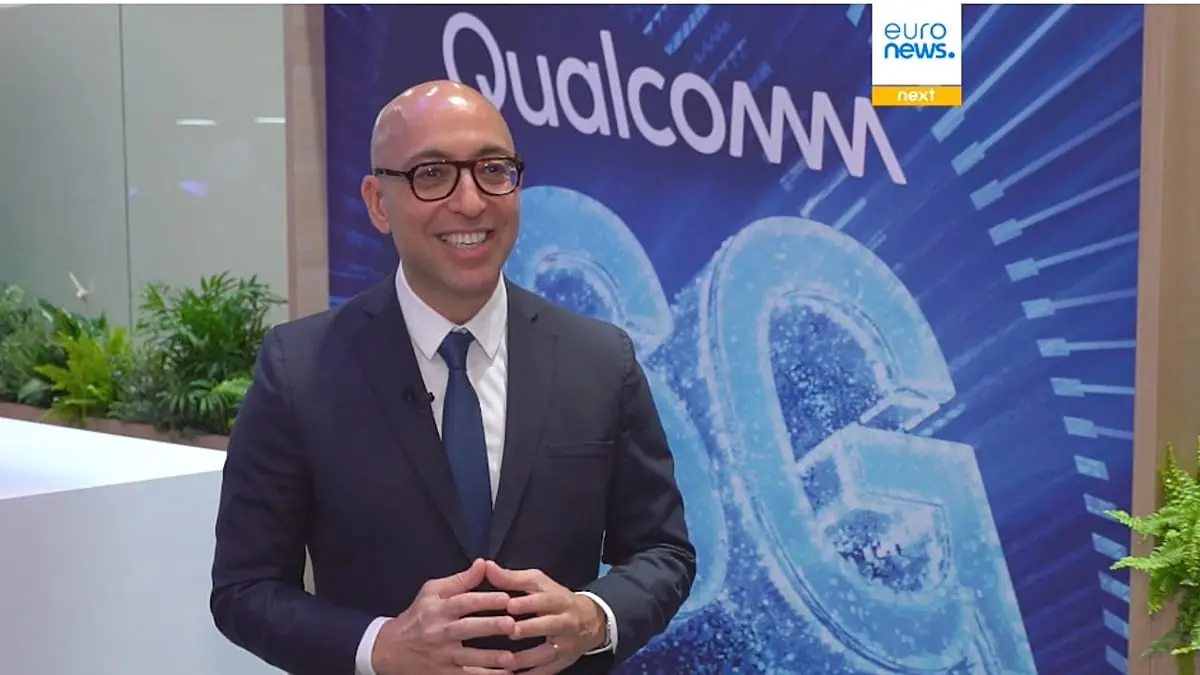
.
Source: Euronews
Physical AI Drives Network Requirements
Nvidia's vision centers on addressing what it describes as a fundamental limitation of current infrastructure. "The networks of today simply aren't ready for the use cases of tomorrow," said Ronnie Vasishta, who heads Nvidia's telecommunications business and strategy
2
. The company argues that telecommunications networks will require "hundreds of thousands of times" more efficiency because available radio spectrum cannot support the explosion of physical AI applications without fundamental architectural changes2
.Nvidia CEO Jensen Huang framed the initiative in sweeping terms: "AI is redefining computing and driving the largest infrastructure buildout in human history -- and telecommunications is next"
4
. The company's approach emphasizes AI-powered Radio Access Networks and software-defined networks that can continuously evolve through software updates rather than requiring constant hardware redesigns1
.Related Stories

Integrated Sensing and Communications Emerges as Key Differentiator
Qualcomm highlighted integrated sensing and communications (ISAC) technology as a critical feature distinguishing 6G from 5G
3
. ISAC leverages RF sensing, using radio frequency waveforms to provide real-time radar-like views of physical environments. This technology tracks cellular signal paths and reflections to create physical maps of surrounding areas, enabling applications like digital twins, asset tracking, connected vehicles, and robotics without the privacy concerns associated with camera networks3
.
Source: TechSpot
The 6G mobile revolution promises to transform how networks handle traffic. Palkhiwala described a shift from today's "application economy" to an "agent economy," where a single AI agent handles multiple tasks across services rather than users manually navigating separate applications for travel, transportation, food ordering, and entertainment
5
.Industry Momentum Builds Despite Technical Uncertainty
Nvidia's Vasishta suggested that the shift to open and secure AI-native platforms could enable new entrants: "This will be how a new telecom unicorn is born," noting the telecom industry has seen too few startups achieve billion-dollar valuations over the past decade
2
.At Mobile World Congress, Nvidia's influence was evident even without a physical presence at the show
3
. The company's Aerial software project for using GPUs to accelerate Radio Access Network (RAN) workloads gained traction after years of skepticism about power consumption and cost. Nvidia's new Aerial RAN Computer Pro (ARC Pro) addresses these concerns by using lower-power GPUs that fit within 330-watt power envelopes comparable to existing solutions .Qualcomm also announced the Snapdragon Wear Elite SoC for wearable devices, the first in its wearable chip line to integrate an NPU for on-device AI capabilities
3
. Combined with edge computing and more efficient bandwidth management through AI-enabled load control, these developments point toward a distributed computing architecture spanning devices, local infrastructure, and cloud services5
.Qualcomm stated that first 6G applications will reach consumer testing by the 2028 Los Angeles Olympics, with broader rollouts beginning in 2029
5
. Whether competing initiatives from Qualcomm and Nvidia will converge on compatible standards or create fragmentation remains an open question as the race to define AI-native 6G accelerates.References
Summarized by

Navi
[1]
[4]
Related Stories
Qualcomm and MediaTek Lead the Charge Towards 6G: AI Integration and Technological Advancements
27 Feb 2025•Technology

Qualcomm Unveils 6G Plans and AI-Centric Future at Snapdragon Summit
25 Sept 2025•Technology

Nvidia pushes open-source 6G with telecom giants, challenging how mobile networks get built
03 Mar 2026•Technology

Recent Highlights



Recent Highlights
Today's Top Stories









Your Daily Dose of Curated AI News
Don’t drown in AI news. We cut through the noise - filtering, ranking and summarizing the most important AI news, breakthroughs and research daily. Spend less time searching for the latest in AI and get straight to action.

