OpenAI declares code red as Google's Gemini 3 gains 200 million users in three months


51 Sources
51 Sources
[1]
OpenAI CEO declares "code red" as Gemini gains 200 million users in 3 months
The shoe is most certainly on the other foot. On Monday, OpenAI CEO Sam Altman reportedly declared a "code red" at the company to improve ChatGPT, delaying advertising plans and other products in the process, The Information reported based on a leaked internal memo. The move follows Google's release of its Gemini 3 model last month, which has outperformed ChatGPT on some industry benchmark tests and sparked high-profile praise on social media. In the memo, Altman wrote, "We are at a critical time for ChatGPT." The company will push back work on advertising integration, AI agents for health and shopping, and a personal assistant feature called Pulse. Altman encouraged temporary team transfers and established daily calls for employees responsible for enhancing the chatbot. The directive creates an odd symmetry with events from December 2022, when Google management declared its own "code red" internal emergency after ChatGPT launched and rapidly gained in popularity. At the time, Google CEO Sundar Pichai reassigned teams across the company to develop AI prototypes and products to compete with OpenAI's chatbot. Now, three years later, the AI industry is in a very different place. Google released Gemini 3 in mid-November, and the model quickly topped the LMArena leaderboard, a crowdsourced vibemarking site that allows users to compare two AI models and select the one with outputs that please them most. The launch has been accompanied by measured praise from some and bombastic hype from others. Salesforce CEO Marc Benioff wrote Sunday on X that he was switching to Gemini 3 after using ChatGPT daily for three years. "I'm not going back," Benioff wrote. "The leap is insane." In addition to buzz about Gemini on social media, Google is quickly catching up to ChatGPT in user numbers. ChatGPT has more than 800 million weekly users, according to OpenAI, while Google's Gemini app has grown from 450 million monthly active users in July to 650 million in October, according to Business Insider. Financial stakes run high Not everyone views OpenAI's "code red" as a genuine alarm. Reuters columnist Robert Cyran wrote on Tuesday that OpenAI's announcement added "to the impression that OpenAI is trying to do too much at once with technology that still requires a great deal of development and funding." On the same day Altman's memo circulated, OpenAI announced an ownership stake in a Thrive Capital venture and a collaboration with Accenture. "The only thing bigger than the company's attention deficit is its appetite for capital," Cyran wrote. In fact, OpenAI faces an unusual competitive disadvantage: Unlike Google, which subsidizes its AI ventures through search advertising revenue, OpenAI does not turn a profit and relies on fundraising to survive. According to The Information, the company, now valued at around $500 billion, has committed more than $1 trillion in financial obligations to cloud computing providers and chipmakers that supply the computing power needed to train and run its AI models. But the tech industry never stands still, and things can change quickly. Altman's memo also reportedly stated that OpenAI plans to release a new simulated reasoning model next week that may beat Gemini 3 in internal evaluations. In AI, the back-and-forth cycle of one-upmanship is expected to continue as long as the dollars keep flowing.
[2]
OpenAI boasts enterprise win days after internal 'code red' on Google threat | TechCrunch
OpenAI released new data Monday showing enterprise usage of its AI tools has surged dramatically over the past year, with ChatGPT message volume growing 8x since November 2024 and workers reporting they're saving up to an hour daily. The findings arrive a week after CEO Sam Altman sent an internal "code red" memo about the competitive threat of Google. The timing underscores OpenAI's push to reframe its position as the enterprise AI leader, even as it faces mounting pressures. While close to 36% of U.S. businesses are ChatGPT Enterprise customers compared to 14.3% for Anthropic, per Ramp AI Index, the majority of OpenAI's revenue still comes from consumer subscriptions -- a base that's being threatened by Google's Gemini. OpenAI also must compete against rival AI firm Anthropic -- whose revenue comes mainly from B2B sales - and, increasingly, open-weight model providers for enterprise customers. The AI giant has committed $1.4 trillion to infrastructure commitments over the next few years, making enterprise growth essential to its business model. "If you think about it from an economic growth perspective, consumers really matter," Ronnie Chatterji, OpenAI's chief economist, said during a briefing. "But when you look at historically transformative technologies like the steam engine, it's when firms adopt and scale these technologies that you really see the biggest economic benefits." OpenAI's new findings suggest that adoption among larger enterprises is not only growing but becoming more integrated into workflows. Employees aren't only sending more messages -- organizations using OpenAI's API (its developer interface) are consuming 320 times more "reasoning tokens" than they were a year ago, suggesting companies are using AI for more complex problem-solving. That, or they are experimenting heavily with the new tech and burning through tokens, without necessarily getting long-term value. That increase in reasoning tokens, which correlates with increased energy usage, could be expensive for companies and therefore not sustainable in the long term. TechCrunch has asked OpenAI about enterprise budget allocation for AI and the sustainability of this growth rate. Beyond raw usage metrics, OpenAI is also seeing changes in how companies deploy its tools. Use of custom GPTs -- which companies use to codify institutional knowledge into assistants or automate workflows -- jumped 19x this year, now accounting for 20% of enterprise messages, the report found. OpenAI pointed to digital bank customer BBVA, which it says regularly uses over 4,000 custom GPTs. "It shows you how much people are really able to take this powerful technology and start to customize it to the things that are useful to them," said Brad Lightcap, OpenAI's chief operating officer, during the briefing. These integrations have led to meaningful time savings, according to OpenAI. Participants reported saving 40 to 60 minutes per day with OpenAI's enterprise products -- though that may not include time spent learning the systems, prompting, or correcting AI output. The report found that enterprise workers are also increasingly leveraging AI tools to expand their own capabilities. Three quarters of those surveyed say AI enables them to do things, including technical tasks, they couldn't do before. OpenAI reported a 36% increase in coding-related messages outside of engineering, IT, and research teams. While OpenAI drove home the idea that its technology is democratizing access to skills, it's important to note that more vibe coding could lead to more security vulnerabilities and other flaws. When asked about this, Lightcap pointed to OpenAI's recent release of its agentic security researcher Aardvark, which is in private beta, as a potential way to detect bugs, vulnerabilities, and exploits. OpenAI's report also found that even the most active ChatGPT Enterprise users aren't using the most advanced tools available to them, like data analysis, reasoning, or search. During the briefing, Lightcap mused that this was because fully adopting AI systems requires a mindset shift and deeper integration with enterprise data and processes. Adoption of advanced features will take time, he said, as companies retool workflows to better understand what's possible. Lightcap and Chatterji also stressed a report finding that showed a "growing divide in AI adoption," with some "frontier" workers using more tools more often to save more time than the "laggards." "There are firms that still very much see these systems as a piece of software, something I can buy and give to my teams and that's kind of the end of it," Lightcap said. "And then there are companies that are really starting to embrace it, almost more like an operating system. It's basically a re-platforming of a lot of the company's operations." OpenAI's leadership -- which certainly feels the pressure of the firm's $1.4 trillion in infrastructure commitments -- framed this as an opportunity for laggards to catch up. For workers training AI systems to replicate their work, "catching up" might feel more like a countdown.
[3]
AI Saves Workers Less Than an Hour Each Day, New OpenAI Report Shows
Macy has been working for CNET for coming on 2 years. Prior to CNET, Macy received a North Carolina College Media Association award in sports writing. OpenAI's 2025 'The State of Enterprise AI' report provides an in-depth look at how businesses are using AI tools within real companies. Drawing on anonymized usage data from more than 1 million business customers, along with a survey of 9,000 workers at nearly 100 organizations, the report presents a picture of increased AI adoption and integration in the workplace. "Across surveyed enterprises, 75% of workers report that using AI at work has improved either the speed or quality of their output," the report states. Also, the report says that "75% of users report being able to complete new tasks they previously could not perform." However, the productivity gains might not be as universal and widespread as anticipated: on average, ChatGPT Enterprise users save less than an hour of time per day, according to the report. Below is a breakdown of the report's major findings. Don't miss any of our unbiased tech content and lab-based reviews. Add CNET as a preferred Google source on Chrome. Despite the hype surrounding AI at work, the latest data from OpenAI suggests that the reality for most employees is modest. In its report, the company says that on average, ChatGPT Enterprise users save only about 40 to 60 minutes per active workday. That's not nothing, but it's nowhere near the sweeping productivity overhaul that many hoped for. In a workday filled with meetings, emails and tool overload, an hour reclaimed can feel like a minimal benefit rather than a tidal shift in productivity. (Disclosure: Ziff Davis, CNET's parent company, in April filed a lawsuit against OpenAI, alleging it infringed Ziff Davis copyrights in training and operating its AI systems.) The report finds AI adoption within companies is growing fast. Weekly messages in ChatGPT Enterprise have increased nearly eightfold in the past year, and the use of structured workflows, such as custom GPTs, has risen 19 times. Companies are pushing more complex prompts, too, with reasoning-token usage increasing more than 320-fold. But the outcomes don't scale at the same rate. Workers say they complete certain tasks more quickly -- like IT troubleshooting, campaign creation and coding improvements -- yet the day-to-day gains still add up to roughly an hour on average. OpenAI's data shows a widening gap between "frontier" users -- defined by OpenAI as those in the 95th percentile of adoption intensity -- and the average worker, however. Frontier employees send about six times more messages than average users. Unsurprisingly, these heavy users report bigger gains of over 10 hours a week. They build workflows around AI, automate routine tasks and turn the tool into a dependable co-worker instead of an occasional assistant. Though arguably, around 2 hours per day of saved time is still relatively moderate. OpenAI frames the report as a snapshot of where enterprise AI stands today, rather than a final verdict. The company suggests that future gains could come not from the model itself, but from how organizations reshape processes and workflows around it. But for most workers, AI is still a sidekick. Useful, but not transformative. It helps speed things up. It may even make some work less tedious. But the typical worker saving under an hour a day points to a technology that is powerful, yet still limited. The big question now is whether those numbers will keep climbing, or whether an hour a day is closer to the ceiling than AI enthusiasts want to admit.
[4]
OpenAI declares 'code red' as Google catches up in AI race
There will be a daily call for those tasked with improving the chatbot, the memo said, and Altman encouraged temporary team transfers to speed up development. The newfound urgency illustrates an inflection point for OpenAI as it spends hundreds of billions of dollars to fund growth and figures out a path to future profitability. It is also something of a full-circle moment in the AI race. Google, which declared its own "code red" after the arrival of ChatGPT, is a particular concern. Google's AI user base is growing -- helped by the success of popular tools like the Nano Banana image model -- and its latest AI model, Gemini 3, blew past its competitors on many industry benchmarks and popular metrics.
[5]

Research commissioned by OpenAI and Anthropic claims that workers are more efficient when using AI -- Up to one hour saved on average, as companies make bid to maintain enterprise AI spending
These counter studies released by MIT and Harvard in August, claiming the opposite. OpenAI and Anthropic have released a pair of new reports on how the use of their AI products helps to grow enterprise productivity. The reports serve as the AI industry's latest response to a wave of recent academic studies amid a sea of public discontent pushing back on the AI data center boom, as the big AI firms seek to stow doubts in the value of enterprise AI spending. OpenAI's report released today, "The State of Enterprise AI", hinges on two major points: companies are using AI more, and workers are saving time as a result. OpenAI claims that in a survey of 9,000 workers across 100 companies, workers reported having saved 40 to 60 minutes of work per day on professional tasks with the use of ChatGPT. Of these 9,000 workers, 75% of respondents reported that AI has improved either the speed or quality of their work. Because OpenAI's report appears to be more focused on marketing to enterprise than performing scientific resaerch, there is no way of knowing beyond the most favorable published numbers how this 75% metric breaks down. Much of the data isn't very specific. The OpenAI report also makes a case that companies are using AI more, stating that "frontier firms" and "leaders" are sending 6x more prompts to ChatGPT than "laggards", or the median AI-using firms. However, all this "6x" number proves is that some companies use ChatGPT more than others, saying nothing about the quality of the work done or how this usage affects business numbers. OpenAI may be looking to contradict studies from educational institutions published earlier this year. An August study from MIT showed that 95% of organizations that invested in AI business products "found zero return" despite corporate investments of $30-40 billion. The study shows that the "vast majority" of AI pilot programs stall, delivering little to no measurable impact on profit. Shortly after, a research initiative from Harvard Business Review found that most professional AI use constituted little more than "workslop", or work content that "masquerades as good work, but lacks the substance to meaningfully advance a given task." In late November, Anthropic published its own research to respond to these allegations. The internal survey, submitted without peer review, found that using Claude, Anthropic's AI assistant, cuts down the time it takes people to complete work tasks by 80%, from an average of 90 minutes down to 18 minutes, based on a look at 100,000 private Claude conversations. But as the company admits, buried deep in the website copy, these numbers have no promise of actually reflecting real-world efficiency. "This doesn't account for the time that humans might spend on these tasks beyond their conversation on Claude.ai, however, so we think these estimates might overstate current productivity effects to at least some degree," says Anthropic's own study. Regardless of these self-admissions of weak methodology and the cherry-picking of numbers, the AI industry is still publicly bullish on its own claims of enterprise profit increase. In a statement to Bloomberg, OpenAI COO Brad Lightcap directly addressed the MIT and Harvard Business studies. "There's a lot of studies flying around saying this, that and the other thing. They never quite line up with what we see in practice." The AI industry doesn't just have academia to reckon with in the new year, however. The physical realities of the needs of the AI industry to keep up with data center expansion are catching up, with a copper shortage expected to hit data center buildouts in the next decade, matching the current RAM shortage crisis currently caused by AI data centers. Add this to rising public fear and outrage over data center expansion's health risks and rising electricity prices, and the AI juggernaut will have more pictures to paint than one of productivity.
[6]

ChatGPT Turns 3 and Faces Its First 'Code Red' Existential Crisis. Can It Stay on Top?
As ChatGPT turns three this week, its future is more uncertain than I would've predicted just a few years ago. Large language models have become largely commodified, with similar interfaces and training data, making ChatGPT look less unique with each passing day. The biggest threat comes from Google Gemini, which had a rocky start after ChatGPT caught it flat-footed, but is now starting to compete in earnest. However, even smaller players, such as Anthropic, as well as inexpensive open-source models, are rapidly establishing themselves. OpenAI Sam Altman is aware of the challenges; he reportedly declared a "code red" this week and ordered staff to refocus on immediate improvements to its chatbot. Here's a look at what it's up against in its third year. Google's Revenge Is Near With the November release of Gemini 3, Google's AI was named the most capable AI chatbot, according to industry benchmarks, The Wall Street Journal reports. On X, Salesforce CEO Marc Benioff said "everything is sharper and faster" on Gemini 3. "I'm not going back [to ChatGPT]." It's sweet revenge for the tech giant after the internet roasted its first iteration of AI Overviews for recommending you put glue on pizza to make the cheese stick. The Journal acknowledges that ChatGPT still dominates the chatbot space. Its US market share was at 78% in November to Gemini's 3.3%, according to StatCounter. However, I was surprised to see that the Gemini app has more than 650 million users per month, according to CEO Sundar Pichai, closing the gap with ChatGPT's 800 million weekly users. In September, Gemini downloads overtook ChatGPT in global app stores thanks to Google's Nano Banana image generator, TechCrunch reports. That's noticeable progress since Google issued its own "code red" in late 2022 over ChatGPT's threat to its search business. Fast forward three years, and Pichai is now being praised as the "wartime CEO" the company needed, Bloomberg writes. Google is finally having its AI moment, though that could change on a dime like we've seen with AI over the past few years. Claude and Open-Source Models Create More Competition Beyond Google, ChatGPT faces competition on multiple other fronts. Anthropic's Claude has carved out a niche for itself among programmers, overtaking ChatGPT's efforts to do so with Codex. Its focus on workplace adoption distinguishes it from ChatGPT's general-purpose vibe. The same goes for Microsoft Copilot, which is built into its ubiquitous operating system. Even more concerning for ChatGPT is the trend of tech startups turning to cheap, open-source models, often made by Chinese AI companies, NBC News reports. Remember DeepSeek? It made waves in January, and took tech stocks for a tumble over claims that it offered similar performance to ChatGPT at a fraction of the price and compute power, although skeptics questioned some of these claims. DeepSeek is quietly continuing in the background, and just released a new version. Startups may question why they should use ChatGPT on the backend if there are cheaper alternatives out there that make no difference to the end user. Individuals and hobbyists are saying the same thing, with some now making their own chatbots at home. They can offer more tailored data sets and targeted responses than black box systems like ChatGPT. What's ChatGPT's Advantage at This Point? To stay on top and stand out, OpenAI is going to have to home in on why someone should use it over the growing competition. Luckily, in the short term, its name recognition might be the biggest reason most people stick with it. But how long can that last? They might like the UI as well, or the tone of voice in the responses, but OpenAI constantly changes the latter. Others might feel stuck with ChatGPT since they have so much chat history, but Anthropic makes it surprisingly easy to port over the memory to Claude. The number one use for ChatGPT might surprise you. No, it's not brainstorming, summarizing, generating images, or making comparison charts. According to an OpenAI study, the biggest use is emotional support and help in making decisions. Over 70% of queries are for personal subjects, not work. That's up 53% from just a year ago. Altman has appeared caught off guard by the intimate role his chatbot plays in people's lives, saying it sometimes makes him "uneasy." The company grappled with a spate of suicides with potential links to ChatGPT conversations, and a growing number of AI-induced delusion claims. It's spent the latter half of this year in damage control mode, introducing parental controls and working on improving how it reacts in "sensitive conversations." OpenAI doesn't seem to be ready to lean into its competitive advantage as a personal confidant. It's also doubling down on controversial conversations, teasing plans to introduce erotica that could end up being incredibly addictive -- and lucrative. No Time for an Existential Crisis: OpenAI Has Bills to Pay OpenAI needs to figure out where it fits into this competitive landscape so it can start paying its mountain of bills and debts. The company will make about $13 billion in revenue this year, which is quite impressive. But it needs to make over $1 trillion to cover its planned costs in the next decade, TechCrunch reports. It's unclear if that's possible. To keep investors happy, OpenAI is rapidly cooking up potential revenue streams, like its product discovery experience (not my favorite) and Instant Checkout tech. A year ago, OpenAI CFO Sarah Friar said an ad-based model was under consideration, though she later followed that up to say there were "no active plans to pursue advertising." Meanwhile, Anthropic claims it's on track to turn a profit much faster than OpenAI, the Journal reports. So while not all hope is lost for ChatGPT -- far from it -- the chatbot finds itself in a radically different position on year three than year one. It's now facing real competition, with high funding, high stakes, and a higher risk of mediocrity than I would've expected. Let's see how it shakes out a year from now. Disclosure: Ziff Davis, PCMag's parent company, filed a lawsuit against OpenAI in April 2025, alleging it infringed Ziff Davis copyrights in training and operating its AI systems.
[7]
OpenAI declares 'Code Red' as Google's Gemini AI outpaces ChatGPT in industry benchmarks, report claims -- Sam Altman sets all hands to the pump on flagship LLM, parks other projects
Google's advancements have apparently gotten Sam Altman nervous. OpenAI chief Sam Altman said in an internal memo that the company is in a "Code Red" status, meaning all other projects will take the backseat in favor of ChatGPT. According to The Wall Street Journal, Altman said in the memo that the company needed to improve its flagship AI LLM's personalization, speed, and reliability, as well as allowing it to cover a wider range of topics. OpenAI popularized the LLM with the release of ChatGPT on December 1, 2022, almost exactly three years ago. However, its competitors have since caught up with their own releases. Its current biggest threat is Google, which just released Gemini 3 in early November, and is baked into most, if not all, of Google's products. Aside from this, Anthropic has also released Claude Opus 4.5 late last month, which is gaining market share among enterprise and business users. There are also several other challengers, like Meta's open-source LLaMA and China's DeepSeek. This tightening competition has made it more crucial for OpenAI to stay ahead of the curve, especially as it continues to burn through capital. Microsoft, which has invested over $13 billion in the startup and holds around 27% of its for-profit OpenAI PBC, reportedly lost $3.1 billion on the AI company in its fiscal first-quarter earnings released in late October. Redmond previously hid its losses on OpenAI as part of its $4.7 billion "other" expenses. Despite not turning a profit since its founding more than 10 years ago, OpenAI has been continuously spending and investing billions of dollars on massive data centers, with its president envisioning a 10-billion-GPU future. It even signed a deal with AMD in early October to secure 6 gigawatts in chips in exchange for 10% of AMD shares. All this talk of billions of dollars has led some experts to ask how it will make good on these investments. Even though OpenAI's rivals have taken strides in advancing their own LLMs, it still leads in several aspects. In fact, the company is expected to drop a new model next week that will challenge Gemini's latest release. However, the WSJ reports that the response to its last major release in August 2025, GPT-5, was less than stellar, with users complaining that it felt clinical and was less capable in math and geography versus previous versions. OpenAI updated the model around three months later to fix these issues.
[8]
Code Red at OpenAI: CEO Altman Tells Employees ChatGPT Needs to Improve
ChatGPT turned three on Sunday, but there was little time for celebration at OpenAI. The brand's CEO, Sam Altman, told employees on Monday he was declaring "code red" so the company can refocus on immediate improvements to its chatbot. A company-wide memo from Altman, seen by The Wall Street Journal, tells employees OpenAI will focus on tasks to help improve the day-to-day experience of ChatGPT. It comes after Google's latest Gemini 3 release beat ChatGPT in various benchmarking tests, and competition from other rivals, such as Anthropic, has also proved more of a threat. Altman told employees it would be slowing down work on other initiatives, such as plans to launch ads within ChatGPT. Other delays are reportedly coming to improvements for tools like AI agents built for health or shopping queries. OpenAI may also delay upcoming improvements to its Pulse personal assistant tool, which first launched in September giving users a daily morning update within the ChatGPT app. OpenAI's Nick Turley, Head of ChatGPT, said on X, "Our focus now is to keep making ChatGPT more capable, continue growing, and expand access around the world -- while making it feel even more intuitive and personal." Altman's note says the brand will now have daily calls within the senior team involving those who are contributing improvements to the platform. He also said employees may need to temporarily move around the business to help on other projects. OpenAI reportedly called an internal "code orange" back in October as competition increased, but this new "code red" marks a move to its highest urgency level. It may mean we see improvements to the standard ChatGPT experience continue to flow quickly. OpenAI has been fast at adding new features, but this news may mean we see fewer sweeping changes for the foreseeable and more focus on the core functionality. Soon after the launch of ChatGPT in 2022, Google reportedly called a "code red" within its Search business leading to the brand pushing ahead with its own chatbot. It was originally called Bard before switching to Gemini branding in 2024. Disclosure: Ziff Davis, PCMag's parent company, filed a lawsuit against OpenAI in April 2025, alleging it infringed Ziff Davis copyrights in training and operating its AI systems.
[9]

OpenAI CEO Sam Altman declares 'code red' to improve ChatGPT amid rising competition in AI chatbots
SAN FRANCISCO (AP) -- OpenAI CEO Sam Altman has set off a "code red" alert to employees to improve its flagship product, ChatGPT, and delay other product developments, according to The Wall Street Journal. The newspaper reported that Altman sent an internal memo to staff Monday saying more work was needed to enhance the artificial intelligence chatbot's speed, reliability and personalization features. This week marks three years since OpenAI first released ChatGPT, helping to spark global fascination and a commercial boom in generative AI technology. But the company faces increased competition with rivals, including Google, which last month unleashed Gemini 3, the latest version of its own AI assistant. OpenAI didn't immediately respond to a request for comment Tuesday. Tech news outlet The Information also reported on the memo.
[10]

OpenAI is under pressure as Google, Anthropic gain ground
Sam Altman, OpenAI's CEO speaks during a media tour of the Stargate data center in Abilene, Texas, on Sept. 23, 2025. Stargate is a collaboration of OpenAI, Oracle and SoftBank, with promotional support from President Donald Trump, to build data centers and other infrastructure for artificial intelligence throughout the U.S. The OpenAI CEO sent a memo to his staffers on Monday outlining a "code red" effort to improve its chatbot ChatGPT, according to multiple reports. Altman said OpenAI will be pulling back on investments in areas like health, shopping and advertising as it works to prioritize ChatGPT, the reports said. OpenAI declined to comment on Tuesday. "Our focus now is to keep making ChatGPT more capable, continue growing, and expand access around the world -- while making it feel even more intuitive and personal," Nick Turley, head of ChatGPT at OpenAI, wrote in a post on X on Monday. The Information was first to report on the memo. More than 800 million people use ChatGPT each week, but the company is facing increasingly stiff competition from rivals like Google and Anthropic. Google announced its latest artificial intelligence model, Gemini 3, last month, which topped industry benchmarks and was widely lauded by users, researchers and developers across social media. The company said its Gemini app has 650 million monthly active users while AI Overviews, which appear at the top of search results, have 2 billion monthly users. Altman congratulated Google on the launch, writing in a post on X last month that Gemini 3 "looks like a great model."
[11]

Sam Altman orders "code red" for ChatGPT as rival AI models catch up
Serving tech enthusiasts for over 25 years. TechSpot means tech analysis and advice you can trust. What just happened? OpenAI is treating improvements to ChatGPT as a top-priority emergency, according to an internal company memo seen by The Wall Street Journal. CEO Sam Altman told employees that the company is declaring a "code red" to enhance the quality of its flagship chatbot and will delay other products as a result. The memo describes a "code red" as the highest internal urgency level OpenAI uses for product and engineering issues, above "yellow" and "orange." Altman said the company had previously been in a "code orange" state for ChatGPT, but the shift to "code red" signals that improving the chatbot's day-to-day experience is now the organization's overriding focus. Under this directive, OpenAI will be pushing back work on several other initiatives, including advertising, AI agents for health and shopping, and a personal assistant product called Pulse. Altman encouraged temporary team transfers to support the ChatGPT effort and said the company would hold a daily call for those responsible for improving the chatbot. Altman's memo states that OpenAI still has more work to do on the daily user experience of ChatGPT, explicitly calling out three areas: personalization features, speed and reliability, and the range of questions the chatbot can answer. The goal is to make ChatGPT feel more tailored to individual users, respond faster and more consistently, and handle a broader set of queries without breaking down or refusing to respond. This push comes as OpenAI prepares to release a new reasoning model next week, which Altman says is ahead of Google's latest Gemini model on internal and industry benchmark tests. The company is also trying to balance safety concerns with making the ChatGPT more engaging, after some users criticized earlier versions of GPT-5 for a colder tone and having difficulty with simple math and geography questions. The company-wide memo is the clearest sign yet that OpenAI is feeling mounting pressure from competitors who have narrowed its lead in the AI race. Of particular concern to Altman is Google, which recently released a new version of its Gemini AI model that outperformed OpenAI on several industry benchmarks and boosted Alphabet's stock price. Google has also expanded Gemini's reach with consumer features such as its image generator, Nano Banana, and reported that monthly active users grew from 450 million in July to 650 million in October. OpenAI is also facing the likes of Anthropic, whose AI models are gaining traction among business customers, further squeezing OpenAI's position in the enterprise market. OpenAI remains a private company and is not yet profitable, relying on frequent fundraising to survive. This puts it at a financial disadvantage compared with Google and other large tech firms that can fund AI investments from existing revenues rather than constant new capital. OpenAI has committed to hundreds of billions of dollars in future data-center investments, raising concerns about its timeline for turning those investments into meaningful revenue. The company's own financial projections suggest it would need to grow revenue to roughly $200 billion by 2030 to reach profitability, a target that makes ChatGPT's performance and monetization critically important. Altman has so far managed to reassure investors and employees largely because of ChatGPT's massive user base which now exceeds 800 million weekly users, and OpenAI's continued leadership in cutting-edge AI research. In the internal memo, he emphasized that the company is still performing well on many fronts, even as it treats ChatGPT quality as a "code red" emergency. On Monday evening, OpenAI's head of ChatGPT, Nick Turley, said on X that the company was now focused on growing the chatbot while also making it feel "even more intuitive and personal." For now, OpenAI's strategy is clear: pause new bets, reallocate teams, and pour resources into making ChatGPT faster, more reliable, and more useful before the competitive window closes.
[12]

New ChatGPT features on hold as Gemini chips away at OpenAI's lead
OpenAI CEO Sam Altman told workers Monday that OpenAI has entered "code red" when it comes to improving the quality of ChatGPT, per an internal memo reviewed by The Wall Street Journal and The Information. According to Altman, the company has more to do to improve the quality of its core product -- specifically in personalization features, speed and reliability, and allowing ChatGPT to answer more questions. In order to focus on these goals, Altman reportedly says in the memo, OpenAI is delaying planned additional features like ads in ChatGPT, AI agents for shopping and other tasks, and a digital personal assistant called Pulse.
[13]

OpenAI's 'Code Red' Crisis Memo Teases New Model and Ads in ChatGPT
OpenAI CEO Sam Altman has declared "code red" at the company, refocusing all resources into improving the quality of its flagship product ChatGPT and delaying other initiatives, some of which are yet to be publicly announced, according to an internal memo from Monday obtained by the Wall Street Journal. OpenAI has had a rough few months. The company garnered significant ethical and legal backlash after several cases showed that ChatGPT's safety guardrails degraded in some user conversations, which might have led to serious and, at times, fatal mental health episodes for some users. At the time, OpenAI executives took some measures to make the chatbot safer for users, like getting rid of some sycophantic language that users claimed gave the chatbot more personality, introducing parental controls, nudging users in marathon conversations, and preparing an age prediction system to automatically apply "age-appropriate settings" for minors. But, according to a New York Times report from last month, OpenAI executives declared "code orange" in October (one step down from this week's alleged code red), saying that ChatGPT was facing intense competitive pressure, that the safer chatbot was just not connecting with users, and outlining goals to increase daily active users for ChatGPT by 5% by the end of the year. Also around that time, OpenAI announced that they would be relaxing some of the previous restrictions around chatbot safety by allowing the chatbots to have more "personality" and including "erotica for verified adults." According to this week's leaked memo, in the future, ChatGPT users can expect increased speed and reliability in answers, more personalization, and a chatbot that is capable of answering a wider range of questions. Head of ChatGPT Nick Turley echoed some parts of that statement in a post on X from Monday, saying one of the company's areas of focus was to make the chatbot "feel even more intuitive and personal." OpenAI is also reportedly planning to release a new reasoning model next week. In the memo, Altman claims that the incoming model beats the performance of Google's latest release, Gemini 3, which received widespread praise and comparisons to ChatGPT when it launched last month. Many users, including Salesforce CEO Marc Benioff, have claimed that Gemini 3 outperforms ChatGPT by a considerable degree. Altman's turnaround effort will allegedly include temporary team transfers and delaying other initiatives the company is working on. Namely, OpenAI will be pushing back its work on other ideas like AI agents for health and shopping, and the personal assistant Pulse, all features that the company unveiled only a few months ago. They will also be delaying work on advertising initiatives, the Journal reports. That initiative OpenAI is yet to acknowledge publicly, but according to The Information report, the company has been testing different types of ads in its chatbots. Even though Altman once described "ads-plus-AI" as "sort of uniquely unsettling," company executives have admitted to toying with the idea of an ads business model for some time now, though with no initiatives ever officially announced. Last week, engineer Tibor Blaho on X discovered that a beta version of ChatGPT's Android app included several references to ads in its code, with implications that they will be used specifically in ChatGPT Search. In a post on X on Monday, Turley described Search as "one of the biggest areas of opportunity" at OpenAI.
[14]

As Apple reboots AI work, OpenAI declares 'code red' for ChatGPT
As Apple loses its AI head and reboots its work with a restructure, OpenAI is ramping up the pressure by declaring "code red." Concerned about being overtaken by Google's Gemini, CEO Sam Altman has said that all of the company's efforts will be devoted to improving the quality of ChatGPT ... Apple yesterday announced that its (now former) AI head John Giannandrea is retiring next year and is stepping down from his position with immediate effect. He's been replaced by Amar Subramanya, an industry veteran with a background at Google and Microsoft. The iPhone maker said it was also restructuring the company's AI initiatives. Subramanya will be leading critical areas, including Apple Foundation Models, ML research, and AI Safety and Evaluation. The balance of Giannandrea's organization will shift to Sabih Khan and Eddy Cue to align closer with similar organizations. We noted yesterday that he will not have an easy task. He's got an uphill battle ahead of him, with a heavily shorthanded team at an all-time low morale. And while it's impossible to know for sure from the outside, it's reasonable to assume that he will need to bring in reinforcements rather quickly, if he hopes to recover from the relentless waves of losses Apple has suffered, particularly over the past year. A new Wall Street Journal report says that OpenAI CEO Sam Altman is concerned that ChatGPT has been overtaken by Google's Gemini. He's responding by declaring that all of the company's efforts need to be devoted to improving the quality of its chatbot. Altman told employees Monday that the company was declaring a "code red" effort to improve the quality of ChatGPT and delaying other products as a result, according to an internal memo viewed by The Wall Street Journal. Altman said OpenAI had more work to do on the day-to-day experience of its chatbot, including improving personalization features for users, increasing its speed and reliability, and allowing it to answer a wider range of questions. With OpenAI and Google engaged in a race to be the best, that will further raise expectations of what Apple needs to achieve in order to be competitive by the time the new Siri finally launches sometime next year.
[15]

Sam Altman Declares 'Code Red' for ChatGPT, Delays OpenAI Advertising Plans
OpenAI is deprioritizing work on advertising as it focuses on improving the quality of ChatGPT, reports The Information. OpenAI CEO Sam Altman declared a "code red" on Monday, and told employees that the company needs to improve ChatGPT so it doesn't fall behind competitors like Google and Anthropic. Altman said that OpenAI needs to work on personalization for each user, image generation, and model behavior like speed and reliability. Google debuted Gemini 3 Pro in November, and it outperforms ChatGPT on several benchmarking tests. Google has been luring users with its Nano Banana AI image generator and Anthropic's Claude is popular with business customers. OpenAI's plan to start showing customers ads leaked earlier this week, but Altman told employees that ads are now on the backburner. Work on advertising, shopping AI agents, and a more proactive and personalized version ChatGPT assistant called Pulse has been delayed. OpenAI has been testing several kinds of ads, including ads that would be shown during online shopping requests, but introducing ads could push users to other chatbots. Following the employee memo, ChatGPT lead Nick Turley announced that OpenAI would focus on "making ChatGPT more capable, continue growing, and expand access around the world -- while making it feel even more intuitive and personal." OpenAI is not profitable, and it has to rely on its user numbers for investments. If it loses a significant number of users to Google, it could run into financial trouble. OpenAI will ship a new reasoning model next week, which Altman said is ahead of Gemini 3 in internal evaluations.
[16]

The three things keeping Sam Altman up at night
Why it matters: They're all testing a CEO known for staying cool at a time when his competitive advantage increasingly looks like it's under threat. * That reportedly inspired him to declare a "code red surge" to employees Monday to focus on improving ChatGPT. The big picture: Three major headaches are keeping Altman up at night. 1. Money OpenAI has long underestimated how many people would use ChatGPT and how expensive that training and usage would become. * The original Microsoft deal helped cover those costs. Now that the partnership has been restructured, OpenAI will have to generate far more revenue on its own to fund future training and inference. * OpenAI has committed to spending a massive $1.4 trillion in infrastructure and says it hopes to build a gigawatt of new capacity per week, at a cost of around $20 billion per gigawatt. But when questioned about those figures, Altman has gotten defensive of late. * You don't have to understand or even believe in the AI bubble to know that allegations of circular investing, mounting debt and a weakening job market are rattling the industry -- to say nothing of a blowup over even the hint of a federal backstop for AI companies. 2. Safety Altman has repeatedly expressed surprise that people would use ChatGPT as a therapist, confidant and romantic partner. * Facing multiple lawsuits from families whose teens and other loved ones got bad advice while in crisis, OpenAI has added parental controls and other mental health guardrails. * These updates have neither stopped the lawsuits, nor have they appeased users as a whole. * The company's latest model -- GPT-5 -- had a bumpy rollout and users openly rebelled, calling the new model "the lobotomization of GPT-4o" and accusing the company of "psychological paternalism." 3. Gemini The real threat is Google's Gemini, which has the money, data and chips to compete with OpenAI on an entirely different level. * Google was caught flat-footed when OpenAI released ChatGPT three years ago, but the search giant is finally catching up. * The company released Gemini 3 Pro last month, the latest version of its AI model that will power the company's core search engine and the Gemini app. * Salesforce CEO Marc Benioff heaped praise on Gemini 3, saying "I'm not going back." For the record: OpenAI pointed Axios to a thread on X from ChatGPT head Nick Turley, which said in part: "Our focus now is to keep making ChatGPT more capable, continue growing, and expand access around the world -- while making it feel even more intuitive and personal." The intrigue: The one place OpenAI isn't facing pressure? The White House. * President Trump's aggressive pro-AI agenda has been a great gift to OpenAI. * Longtime Altman antagonist Elon Musk -- no longer completely aligned with Trump -- has also been unable to slow OpenAI, despite repeated attempts. What we're watching: Gemini's app downloads are catching up to ChatGPT's. * Estimates show Gemini's generative AI market share doubling in the last year and beating out OpenAI in speed of brand growth. * Google's long lead in search, user data and product distribution shows no signs of slowing. The bottom line: OpenAI's next few months will show whether Altman can steady the company under pressure or turn it into the next Betamax.
[17]

OpenAI has lost 6% of its users after Gemini 3 launch, report says
Recently, Google introduced Gemini 3, which the company called its "most intelligent" AI model yet. So far, the AI leaderboards agree, with Gemini 3 surging ahead of rivals like ChatGPT at LMArena. Now, OpenAI head honcho Sam Altman has reportedly declared "code red" at the company in response to increased pressure from competitors. The announcement came in the form of a memo that was leaked to The Wall Street Journal. The contents of the memo are largely unknown, but the message was direct -- OpenAI has some serious competition in the likes of Gemini 3 and Anthropic's Claude, and the company needs to do something about it. According to a post on X from former Googler Deedy Das, OpenAI has lost nearly 6 percent of its traffic since Gemini 3 launched. The data is sourced from SimilarWeb, which says that ChatGPT went from 203 million average daily visits to 191 million. If that data is accurate, it means OpenAI lost about 12 million people per day over the last week. Some of that may be due to Thanksgiving, but it's a big shift. This Tweet is currently unavailable. It might be loading or has been removed. The problems started months ago with some slips from the reigning champion of AI chatbots. When GPT-5 was released earlier this year, it was immediately criticized for its less friendly tone compared to earlier models. Criticism was so intense that OpenAI ultimately decided to bring back GPT-4o. The data shows that GPT-5 is more capable than its predecessors, but its lack of personality irked hardcore users who used the bot every day. Plus, OpenAI has been walking a tightrope to balance functionality and safety, which it has not done particularly well. Despite the criticisms, it seemed OpenAI was destined to keep its top spot among the AI chatbot competitors. However, Google released Gemini 3 in late November to nearly universal praise, with Google's offerings topping nearly all of the benchmark leaderboards. Due to the sheer size and reach of Google, the company has a significant advantage in accessing training data, the lifeblood of AI models. The competition is also ramping up on the enterprise side of things. Anthropic boasts more than 300,000 business customers as of September 2025, which includes some Fortune 500 companies. These are all likely reasons why OpenAI is in code red; losing that many visitors is certainly noticeable. Of course, OpenAI is hardly staying still. The company is working on tons of initiatives, including inking infrastructure deals with the likes of Nvidia, Oracle, and other companies. In November, Sam Altman wrote a long post on X addressing fears of an AI bubble and concerns that OpenAI is overextending itself. This Tweet is currently unavailable. It might be loading or has been removed.
[18]

Sam Altman issues 'code red' at OpenAI as ChatGPT contends with rivals
Sam Altman has declared a "code red" at OpenAI to improve ChatGPT as the chatbot faces intense competition from rivals. The chief executive of the San Francisco-based startup told staff in an internal memo: "We are at a critical time for ChatGPT," according to a report by tech news site the Information. OpenAI has been rattled by the success of Google's latest AI model, Gemini 3, and is devoting more internal resources to improving ChatGPT. Last month Altman told employees the launch of Gemini 3, which has outperformed rivals on various benchmarks, could create "temporary economic headwinds" for the company. He added: "I expect the vibes out there to be rough for a bit." OpenAI's flagship product has 800 million weekly users but Google is also highly profitable due to its search business and has substantial data and financial resources to throw at its AI tools. Marc Benioff, the chief executive of the $220bn software group Salesforce, wrote last month that he had switched allegiance to Gemini 3 and was "not going back" after trying Google's latest AI release. "I've used ChatGPT every day for 3 years. Just spent 2 hours on Gemini 3. I'm not going back. The leap is insane - reasoning, speed, images, video ... everything is sharper and faster. It feels like the world just changed, again," he wrote on X. OpenAI is also delaying a foray into putting advertising in ChatGPT as it focuses on improving the chatbot, which celebrated its third birthday last month. The head of ChatGPT, Nick Turley, marked the anniversary with a post on X pledging to break new ground with the product. He wrote: "Our focus now is to keep making ChatGPT more capable, continue growing, and expand access around the world - while making it even more intuitive and personal. Thanks for an incredible three years. Lots more to do!" Despite lacking the cash flow support enjoyed by rivals Google, Meta and Amazon, which is a major funder of competitor Anthropic, OpenAI has received substantial funding from the likes of the SoftBank investment group and Microsoft. In its latest valuation OpenAI reached $500bn, up from $157bn last October. OpenAI is loss-making and expects to end the year with annual revenues of more than $20bn, which Altman expects will grow to "hundreds of billion[s]" by 2030. The startup is committed to steep revenue growth after pledging to spend $1.4tn on datacentre costs to train and operate its AI systems over the next eight years. "Based on the trends we are seeing of how people are using AI and how much of it they would like to use, we believe the risk of OpenAI of not having enough computing power is more significant and more likely than the risk of having too much," said Altman last month. Apple has also responded to increasingly intense competitive pressures in the sector by naming a new vice president of AI. Amar Subramanya, a Microsoft executive, will replace John Giannandrea. Apple has been slow to add AI features to its products in comparison to rivals such as Samsung, which have been quicker to refresh their devices with AI features. Subramanya is joining Apple from Microsoft, where he most recently served as corporate vice-president of AI. Previously, Subramanya spent 16 years at Google, where his roles included the head of engineering for the Gemini assistant. Earlier this year, Apple said AI improvements to its voice assistant Siri would be delayed until 2026.
[19]

Sam Altman calls a 'code red' for ChatGPT - here's what it will mean for you
The Wall Street Journal is reporting that Sam Altman, CEO of OpenAI, has sent an internal company memo announcing that ChatGPT is now in "code red" mode in an effort to refocus efforts on improving ChatGPT's basic functions instead of adding new, innovative features. The memo arrives just as ChatGPT is under renewed threat from competitors like Google, which has just released the well-received Gemini 3 Pro and Nano Banana Pro, and Meta, which is investing billions into AI research. Not to mention the Chinese startup DeepSeek, which has casually lobbed two new enormous open source AI models into an already fractious market. ChatGPT remains the world's most popular chatbot with over 800 million users per month, and while Altman's memo can be read as a simple response to competitors nipping at its heels, the real story is one of shifting priorities in the AI market, pressure from investors, and the fragility of the AI boom. According to the WSJ, the memo had Altman saying that more work was necessary to improve the day-to-day experience of using the chatbot, and that it required more personalization features for users, along with better speed and reliability. Altman indicated that to achieve this, the company would be pausing work on other initiatives, such as advertising, AI shopping agents, and the Pulse personal assistant, to refocus staff on improving the overall ChatGPT experience. On Monday, VP and head of ChatGPT Nick Turley confirmed the new direction, tweeting: "Our focus now is to keep making ChatGPT more capable, continue growing, and expand access around the world - while making it feel even more intuitive and personal." Earlier this year, Sam Altman was talking a lot about the imminent arrival of AGI, the artificial general intelligence that was set to revolutionize everything from medicine to space travel. In fact, he wrote two blogs about how we were on the cusp of a major societal transformation. In one blog, he framed the purpose of OpenAI as developing AGI: "Our mission is to ensure that AGI (Artificial General Intelligence) benefits all of humanity." In another, he described how close we are to achieving it: "We are past the event horizon; the takeoff has started. "Humanity is close to building digital superintelligence, and at least so far it's much less weird than it seems like it should be." Now, with no realistic likelihood of AGI arriving in 2025 as some expected, talk of it seems to have vanished altogether. OpenAI famously isn't profitable and depends on external funds plus large investments in compute infrastructure. While the promise of AGI clearly excited investors this year, putting monetization options on the back burner will surely cause some friction going forward. Yesterday's leak that OpenAI was planning to start putting ads in ChatGPT seemed to point to the chatbot weakening its consumer offering in favor of generating income. However, the renewed push by Altman for a better user experience first indicates that OpenAI is worried about the competition and does not feel it is in a strong enough position yet to begin that monetization process. On 18 November, Google CEO Sundar Pichai announced that the Gemini app has surpassed 650 million users per month, gaining significant ground on OpenAI. Altman can clearly feel Gemini breathing down his neck. There have also been rising user frustrations with OpenAI. The recent launch of ChatGPT 5 did not go well, as users complained the new LLM - which replaced the popular ChatGPT-4o - felt flat and robotic compared to the older version. The newer, "warmer" ChatGPT-5.1 has addressed some of these issues, but many users still prefer ChatGPT-4o. A renewed emphasis on reliability and speed for ChatGPT means there could be fewer "fun" new features on the horizon. While Pulse and the newly announced Shopping Research do not seem to have captured people's interest, they are exactly the kind of innovative tools you would expect from a market leader like ChatGPT, and I am glad it is experimenting with them. It is certainly not all bad news for you and me, though. A slowdown in monetization and shopping features should mean a ChatGPT that is nicer to use and more secure. Nobody wants ads intruding into their user experience or being prompted to buy things as part of a normal ChatGPT conversation. And of course, keeping your credit card out of the app altogether means it is more secure by default. One area where ChatGPT has struggled in the past is user safety, and it has made significant efforts to identify when users might be in distress and to address their needs. It has also introduced parental controls for the first time. The biggest concern I have is that Altman pushing for faster improvements to the ChatGPT experience could compromise its internal safety culture and lead to hasty releases that have not been tested rigorously enough, putting users at risk. You could argue that the very existence of ChatGPT put the rest of the technology industry into a code-red moment and wrong-footed it completely. Amazon, Apple, Meta, Microsoft, and Google have been trying to catch up ever since. Now that Google is finally closing the gap, Altman is panicking and focusing more on perfecting his existing product, ChatGPT, than on the loftier goal of helping humanity by reaching AGI. In the end, OpenAI's "code red" is not about AGI or even Google. It is about something more fundamental: the realization that the AI race will not be won by whoever promises the wildest future, but by whoever builds the most dependable tool in the present. If OpenAI delivers on this renewed focus, ChatGPT could emerge stronger. If it stumbles, the door is wide open for rivals like Google, which are already accelerating. Either way, the era of AI companies coasting on hype is over.
[20]

OpenAI says its AI is saving workers up to an hour a day
OpenAI says its products are saving professional workers up to an hour a day, according to a survey, as the ChatGPT maker looks to shore up its position as the enterprise AI platform of choice amid a growing challenge from Google. The poll of 9,000 workers across 100 companies found people are saving an average of about 40 to 60 minutes a day. The study included workers in communications, computer engineering, data science, and HR. Three-quarters of those surveyed said using AI has either improved the speed or quality of their work. Meanwhile, the company said companies' use of its tools has surged in the last year, with message volume growing eightfold since late 2024 and more than 1 million businesses paying for its enterprise AI products. OpenAI is hoping to corner the business AI market amid growing challenges on the consumer front, which is where most of its revenue comes from. Last week, the Wall Street Journal reported that chief executive Sam Altman had issued a "code red" to staff to speed up OpenAI's development of ChatGPT, amid recent advancements in Google's consumer AI product Gemini. Meanwhile, an index by payments firm Ramp showed that about 36% of U.S. businesses are ChatGPT Enterprise customers, versus 14.3% for Anthropic. In November, the WSJ reported that Anthropic, which gets most of its revenue from B2B sales, is on course to turn a profit faster than OpenAI. "If you think about it from an economic growth perspective, consumers really matter," Ronnie Chatterji, OpenAI's chief economist, said during a recent briefing, per TechCrunch. "But when you look at historically transformative technologies like the steam engine, it's when firms adopt and scale these technologies that you really see the biggest economic benefits." Coding-related messages increased 36% for workers outside of technical functions, according to the survey, while 75% of users reported being able to complete new tasks they previously could not perform.
[21]

OpenAI goes from stock market savior to burden as AI risks mount | Fortune
Wall Street's sentiment toward companies associated with artificial intelligence is shifting, and it's all about two companies: OpenAI is down, and Alphabet Inc. is up. The maker of ChatGPT is no longer seen as being on the cutting edge of AI technology and is facing questions about its lack of profitability and the need to grow rapidly to pay for its massive spending commitments. Meanwhile, Google's parent is emerging as a deep-pocketed competitor with tentacles in every part of the AI trade. "OpenAI was the golden child earlier this year, and Alphabet was looked at in a very different light," said Brett Ewing, chief market strategist at First Franklin Financial Services. "Now sentiment is much more tempered toward OpenAI." As a result, the shares of companies in OpenAI's orbit -- principally Oracle Corp., CoreWeave Inc., and Advanced Micro Devices Inc., but also Microsoft Corp., Nvidia Corp. and SoftBank, which has an 11% stake in the company -- are coming under heavy selling pressure. Meanwhile, Alphabet's momentum is boosting not only its stock price, but also those it's associated with like Broadcom Inc., Lumentum Holdings Inc., Celestica Inc., and TTM Technologies Inc. Read More: Alphabet's AI Strength Fuels Biggest Quarterly Jump Since 2005 The shift has been dramatic in magnitude and speed. Just a few weeks ago, OpenAI was sparking huge rallies in any company related to it. Now, those connections look more like an anchor. It's a change that carries wide-ranging implications, given how central the closely held company has been to the AI mania that has driven the stock market's three-year rally. "A light has been shined on the complexity of the financing, the circular deals, the debt issues," Ewing said. "I'm sure this exists around the Alphabet ecosystem to a certain degree, but it was exposed as pretty extreme for OpenAI's deals, and appreciating that was a game-changer for sentiment." A basket of companies connected to OpenAI has gained 74% in 2025, which is impressive but far shy of the 146% jump by Alphabet-exposed stocks. The technology-heavy Nasdaq 100 Index is up 22%. The skepticism surrounding OpenAI can be dated to August, when it unveiled GPT-5 to mixed reactions. It ramped up last month when Alphabet released the latest version of its Gemini AI model and got rave reviews. As a result, OpenAI Chief Executive Officer Sam Altman declared a "code red" effort to improve the quality of ChatGPT, delaying other projects until it gets its signature product in line. Alphabet's perceived strength goes beyond Gemini. The company has the third highest market capitalization in the S&P 500 and a ton of cash at its disposal. It also has a host of adjacent businesses, like Google Cloud and a semiconductor manufacturing operation that's gaining traction. And that's before you consider the company's AI data, talent and distribution, or its successful subsidiaries like YouTube and Waymo. "There's a growing sense that Alphabet has all the pieces to emerge as the dominant AI model builder," said Brian Colello, technology equity senior strategist at Morningstar. "Just a couple months ago, investors would've given that title to OpenAI. Now there's more uncertainty, more competition, more risk that OpenAI isn't the slam-dunk winner." Read More: Alphabet's AI Chips Are a Potential $900 Billion 'Secret Sauce' Representatives for OpenAI and Alphabet didn't respond to requests for comment. The difference between being first or second place goes beyond bragging rights, it also has significant financial ramifications for the companies and their partners. For example, if users gravitating to Gemini slows ChatGPT's growth, it will be harder for OpenAI to pay for cloud-computing capacity from Oracle or chips from AMD. By contrast, Alphabet's partners in building out its AI effort are thriving. Shares of Lumentum, which makes optical components for Alphabet's data centers, have more than tripled this year, putting them among the 30 best performers in the Russell 3000 Index. Celestica provides the hardware for Alphabet's AI buildout, and its stock is up 252% in 2025. Meanwhile Broadcom -- which is building the tensor processing unit, or TPU, chips Alphabet uses -- has seen its stock price leap 68% since the end of last year. OpenAI has announced a number of ambitious deals in recent months. The flurry of activity "rightfully brought scrutiny and concern over whether OpenAI can fund all this, whether it is biting off more than it can chew," Colello said. "The timing of its revenue growth is uncertain, and every improvement a competitor makes adds to the risk that it can't reach its aspirations." In fairness, investors greeted many of these deals with excitement, because they appeared to mint the next generation of AI winners. But with the shift in sentiment, they're suddenly taking a wait-and-see attitude. "When people thought it could generate revenue and become profitable, those big deal numbers seemed possible," said Brian Kersmanc, portfolio manager at GQG Partners, which has about $160 billion in assets. "Now we're at a point where people have stopped believing and started questioning." Kersmanc sees the AI euphoria as the "dot-com era on steroids," and said his firm has gone from being heavily overweight tech to highly skeptical. "We're trying to avoid areas of over-hype and a lot of those were fueled by OpenAI," he said. "Since a lot of places have been touched by this, it will be a painful unwind. It isn't just a few tech names that need to come down, though they're a huge part of the index. All these bets have parallel trades, like utilities, with high correlations. That's the fear we have, not just that OpenAI spun up this narrative, but that so many things were lifted on the hype." OpenAI's public-relations flaps haven't helped. The startup's Chief Financial Officer Sarah Friar recently suggested the US government "backstop the guarantee that allows the financing to happen," which raised some eyebrows. But she and Altman later clarified that the company hasn't requested such guarantees. Then there was Altman's appearance on the "Bg2 Pod," where he was asked how the company can make spending commitments that far exceed its revenue. "If you want to sell your shares, I'll find you a buyer -- I just, enough," was the CEO's response. Read More: Sam Altman's Business Buddies Are Getting Stung Altman's dismissal was problematic because the gap between OpenAI's revenue and its spending plans between now and 2033 is about $207 billion, according to HSBC estimates. "Closing the gap would need one or a combination of factors, including higher revenue than in our central case forecasts, better cost management, incremental capital injections, or debt issuance," analyst Nicolas Cote-Colisson wrote in a research note on Nov. 24. Considering that OpenAI is expected to generate revenue of more than $12 billion in 2025, its compute cost "compounds investor nervousness about associated returns," not only for the company itself, but also "for the interlaced AI chain," he wrote. To be sure, companies like Oracle and AMD aren't solely reliant on OpenAI. They operate in areas that continue to see a lot of demand, and their products could find customers even without OpenAI. Furthermore, the weakness in the stocks could represent a buying opportunity, as companies tied to ChatGPT and the chips that power it are trading at a discount to those exposed to Gemini and its chips for the first time since 2016, according to a recent Wells Fargo analysis. "I see a lot of untapped demand and penetration across industries, and that will ultimately underpin growth," said Kieran Osborne, chief investment officer at Mission Wealth, which has about $13 billion in assets under management. "Monetization is the end goal for these companies, and so long as they work toward that, that will underpin the investment case."
[22]

Sam Altman Is Suddenly Terrified
During the months following OpenAI's announcement of its blockbuster AI chatbot ChatGPT just over three years ago, Google CEO Sundar Pichai pulled the fire alarm. The search giant's management issued a "code red" over what Pichai saw as an imminent disruption to its core business -- a warranted level of caution, in retrospect, considering ChatGPT's meteoric rise in popularity and influence. The all-out brawl that followed in the subsequent years, with AI companies trying to outdo each other with their own offerings as investors threw tens of billions of dollars at the tech, has shifted the dynamics considerably. And now, the tables have officially turned: OpenAI CEO Sam Altman has declared his own "code red" in a memo to employees this week, as the Wall Street Journal reports, urging staffers to improve the quality of the company's blockbuster chatbot, even at the cost of delaying other projects. It's the clearest sign yet that Altman and OpenAI are feeling an immense level of pressure in light of steep competition that has done a lot of catching up since ChatGPT was released to the public in late 2022. Google, in particular, threw down the gauntlet with its latest AI model, Gemini 3, which scored higher on benchmarks than ChatGPT last month. The search giant's monthly active AI users have grown considerably as well, ballooning from 450 million to 650 million between July and October. That's a stone's throw from the 800 million or so weekly users ChatGPT had as of September. To once again leave its competition behind, OpenAI has committed to spending well over $1 trillion on data center buildouts to support new users and its latest AI models. That's despite burning through billions of dollars each quarter. Google, though, has a major financial advantage by already being profitable. It can afford to spend aggressively on data centers, at least for the time being. That's besides Google Search having been the de facto search engine on the internet for decades, giving it access to a vast number of existing users who could be swayed by its AI offerings. Altman claimed in the memo that the company has an ace up its sleeve in the form of an even more powerful reasoning model that's set to be released as early as next week, according to the WSJ, likely a direct response to Google's Gemini 3. He's looking to better the day-to-day experience of ChatGPT, while also speeding it up and making it more reliable. The goal is to pour OpenAI's resources into making its AI chatbot feel "even more intuitive and personal," according to a recent tweet by ChatGPT head Nick Turley. Meanwhile, other projects, like ads or AI shopping agents, have reportedly been moved to the back burner. OpenAI has come under fire from ChatGPT's user base following the release of its GPT-5 large language model in August, facing complaints of the new model being too closed off and not compassionate enough. In response, OpenAI buckled almost immediately, reinstating its much warmer 4o model. It even announced a week later that it would be making GPT-5 more sycophantic as well -- indicating it's terrified of losing its most loyal user base. The company's most recent GPT-5.1 Instant model, which was released last month, is also "warmer by default and more conversational." Whether that kind of approach will pay off in the long run and keep OpenAI at the front of the AI race is tough to say -- and it's likely to put OpenAI even more squarely in the middle of a debate over the relationship between AI chatbots and mental health. One thing's for sure: the pressure is clearly on.
[23]

'I expect the vibes out there to be rough for a bit': Sam Altman calls for a 'code red' alert at OpenAI as Google's Gemini 3 gives it a scare
I assume it was followed by a siren, an exploding command console, and Klingons off the starboard bow. OpenAI CEO Sam Altman has called for a "code red" effort to improve ChatGPT in the face of stiff competition, according to an internal memo viewed by The Wall Street Journal. Google's competing Gemini AI has made progress in great leaps and bounds since the summer -- and Altman looks to have called for an all hands to the pumps initiative as a result. Reportedly, the OpenAI chief has called for staff to be pulled from other projects, including advertising, AI agents, and its forthcoming personal assistant, Pulse, in order to spruce up ChatGPT. The team behind the inordinately popular chatbot will also have to attend a daily meeting to report on their progress, which I can only imagine takes place in a ready room not far from the bridge. Futuristic red and gold uniforms, optional. The recent release of Google's Gemini 3 has been very well-received, and monthly active Gemini users are already reported to have grown from 450 million in July to 650 million this autumn. The new iteration of Gemini looks to best ChatGPT in several key areas, including critical analysis, strategic reasoning, and overall performance. According to The Guardian, Altman had previously told OpenAI employees that the launch of Gemini 3 could create "temporary economic headwinds" for the company, and that "I expect the vibes out there to be rough for a bit." Google's AI plans don't stop with Gemini, either. According to a leaked presentation, Google's AI infrastructure employees were recently told they needed to double its AI serving capacity "every six months", and that their efforts needed to be "more reliable, more performant, and more scalable than what's available anywhere else." So, the Google juggernaut is not just approaching, but as far as Altman is concerned, it's already here. And given that OpenAI is yet to be profitable, relying on vast funding and investment initiatives to keep itself afloat, it's no surprise that it feels the need to respond to Google's AI endeavours -- not to mention others like Anthropic who seem hot on its heels. If ChatGPT no longer looks like it's leading the pack ahead of its rivals, it seems likely that further investment will be harder to obtain. OpenAI's competitors are knocking at its door, and it remains to be seen exactly what upgrades can be made to its chatbot in order to robustly respond.
[24]
Google creates "code red" emergency for its AI rivals scrambling to keep up
Why it matters: Hundreds of billions of dollars have poured into the AI chase, and the stakes for winning -- or lagging -- are enormous. Driving the news: OpenAI has issued a "code red" alert inside its building, the WSJ reported, with CEO Sam Altman calling for an intense push to improve ChatGPT. * Apple on Monday announced its top AI strategy executive is stepping down, a move reports characterized as "abrupt." * Nvidia, meanwhile, has recently taken to loudly insisting that no, it's not worried about anyone cutting into its dominance at the center of the AI ecosystem. Between the lines: All three moves share a common denominator: Google's surge. Zoom in: OpenAI's biggest threat is Google's Gemini, whose latest model has drawn rave reviews since last month -- and Google has the money, data and chips to compete on a different level, as Axios' Megan Morrone writes. * Apple has struggled to deliver key pieces of its Apple Intelligence effort, and is considering a turn to Gemini to power new versions of Siri, Axios' Ina Fried reports. * And Nvidia is facing pressure from signs customers are exploring alternatives to its chips. Reports last week say Meta's in talks to use Google's custom chips, called TPUs, in its data centers -- a deal the Wall Street Journal wrote "would represent a potential crack" in Nvidia's market dominance. The bottom line: Axios a month ago asked the top AI executives for their private take on the American rival they fear most. They all offered up the same name: Google.
[25]

ChatGPT's AI lead may be more fragile than we thought
Even by tech-industry standards, the air of serene confidence OpenAI CEO Sam Altman projects in public appearances is overwhelming. Still, that doesn't mean he never sweats behind the scenes. Indeed, we learned this week that Altman is downright concerned about the future of his company's flagship product, ChatGPT. On December 1, The Information's Stephanie Palazzolo and Erin Woo reported that Altman had initiated a "code red" effort within OpenAI to make its chatbot more personalized and customizable. The move involves diverting resources from other efforts, such as developing AI agents and monetizing the company's platform through advertising. Drawing on an Altman memo distributed to OpenAI staffers, Palazzolo and Woo's story says he called now "a critical time for ChatGPT." Their piece doesn't spell out the reasons for his alarm in much detail. But it ties his redeployment of resources to Google's recent surge as a provider of AI platforms and products, which Altman called out as at least a short-term issue for OpenAI in an earlier memo.
[26]

Don't panic! What Sam Altman's OTT declaration of a 'code red' for OpenAI tells us about the race he thinks he's running
According to a leaked memo published by The Wall Street Journal, Sam Altman, CEO of OpenAI has declared a 'code red' in a message sent to employees, exhorting them to improve ChatGPT's quality and delay other product work, declaring that: We know we have some work to do, but we are catching up fast. It cannot be a co-incidence that this hitting of the metaphorical panic button follows a stunning improvement in Google's latest Gemini model, one that other tech leaders have been enthused by. For example, Salesforce CEO Marc Benoff declared on the social-media-platform-formerly-known-as-Twitter: Holy sh*t. I've used ChatCPT every day for three years. Just spent two hours on Gemini 3. I'm not going back...It feels like the world just changed again.❤️ 🤖 So, OK, maybe there's room for a little nervousness here on the part of AI's enfant terrible when, after a year in which the rest of the world seemed to spend an inordinate amount of time sucking up to him and signing 'exclusive partnership deals' with OpenAI, his elders (and, many of us might opine, betters) are quick to air such open public reactions to a bigger, badder competitor. Is he right to react in this way? There is a more heightened climate of competition in OpenAI's backyard at the moment. Anthropic has also made progress, particularly in coding. DeepSeek also seems to be nipping at OpenAI's heels with a recent update that also happens to be free, although despite being open source (whatever that means these days), it is also Chinese, which seems likely to raise compliance alarm bells, particularly in the US. But back to Google, which is the 900-pound gorilla in this AI race. It has the resources to scale capacity without circular finance schemes and a vibrant AI development platform. Extensive investments in other approaches to improve protein modeling, run weather simulations, and other domains could also give it a leg up if the current LLM (Large Language Model) race does not go as planned. Now, perhaps this might have an air of déjà vu all over again to those of us with long memories. Think back to the mid-1990s and the rise of another enfant terrible who was the future once, Netscape and the web browser that changed the world. Microsoft CEO Bill Gates declared his own all-out 'code red' on Pearl Harbor Day in 1995 in a memo to all employees, putting them on a war footing overnight to pivot every aspect of the business to the internet, including coming up with its own browser to take out Netscape Navigator. When was the last time you thought about Netscape? Remember, Netscape initially won the browser wars, but could not compete once Microsoft started paying it attention, was bought out by AOL, and eventually vanished into the sunset. Moral of the tale? The big guns will win out? Not neccessarily - bear in mnind that after Google launched its free Chrome browser, Microsoft eventually lost its browser lead and has never fully recovered. That said, Microsoft gradually found other ways to monetize the internet that had little to do with a browser advantage. So did Google, for that matter. So, maybe the real moral is - it's complicated. So what might the lesson be for Altman be once he calms down a bit? How about, maybe you're trying too hard to win the wrong race? Now, that's probably hard for him and a lot of already potentially rather highly-strung investors to hear right now. More so, if they believe that throwing tera-dollars (that's a trillion dollars) and tera-watts at training with exabytes of ever crappier datasets will pave the way to the Holy Grail of AGI (Advanced General Intelligence) faster. (I forget, is AGI within sight this week or not? It's so hard to keep up with the various headline-grabbing declarations of jam tomorrow...) Will the bubble burst if users and the markets lose faith in Altman to deliver on his seemingly never-ending litany of big promises? Maybe, maybe not. A lot of smart people predicted the Internet bubble would burst four years before it did, but then again it did burst and the fallout was...well, let's call it spectacular. That's a hypothesis we could all do without putting to the test. But a lot of die-hard believers in ChatGPT's lead are starting to change their tune. As well as Benioff, other industry thought leaders are talking up the latest Gemini iteration. Jeffrey Emanuel, Founder and CEO at Pastel Network, whose seminal essay on NVIDIA caused a $2.6 trillion market crash last year, has a more nuanced take on things. First, he cautions the naysayers that Google's Gemini 3 is extremely good at coding tasks, following rules and using tools. However, it takes some time to see how consistent the new models are. But he argues that Google's chatbot success also promises to open opportunities for its cloud business for developing AI: Gemini 3 shines on all of these dimensions, big time. Google has created an enormous amount of market value for itself with this model, particularly because they're able to host it at-cost on their own custom silicon. It's going to be hard (nigh impossible) for others to approach this point on the price-performance curve. Even if GPT-6 is somewhat smarter, the hosting costs to OpenAI after paying the 'Nvidia tax' and giving Jensen his 90% gross margins will make it fall short in Pareto terms. Does this mean OpenAI and NVIDIA's fortunes will come down in the process? Emanuel's tone has clearly softened since his earlier analysis made a strong bear case for NVIDIA, wiping $600 billion from NVIDIA's market cap, only for it to later jump from about $3 trillion to over $5 trillion before falling slightly. In the wake of Gemini's latest release, Emanuel predicts: What will really cause Nvidia to cut price and take the gross margin hit will be direct competition for hardware, either from Google selling TPUs externally (but even if that happens, they'll surely still make a good gross margin, since why wouldn't they?) or from new entrants making custom inference silicon. But it could take a while. Also, OpenAI has a massive consumer brand and loyal installed base and is going to be monetizing it a lot more going forward through advertising and affiliate marketing. They're not going to cede that market share quickly or easily, even if it's currently unprofitable to serve. I think the coding agent segment in particular is where you're going to see the most brutal market competition, because coders are both fickle and price sensitive, and use a ton of tokens. They'll move to the better spot on the Pareto curve in weeks, just like they've done before." These are all interesting points. And it's not clear how OpenAI might realize these new revenue streams if it indeed cuts investment in product development, as reported by the Wall Street Journal and others. Former Wired editor John Batelle argues that a full-on focus on improving quality will mean it has less money to invest in the monetization efforts required to pay AI future bills. For example, it's been clear for at least two years that OpenAI's future involves launching ads - but now the company finds itself so far behind, it may never catch up. Venture capitalist Fred Wilson writes that there are certainly parallels between Microsoft and Netscape for dominance of the browser market, noting appositely Mark Twain's quote that: But in the end, the most important piece of software was the search engine, not the browser. The combination of better search and the open web essentially decimated the walled-garden online properties at the time, such as CompuServe and AOL, which eventually bought Netscape. In the more recent past, Google researchers set the modern LLM train in motion by introducing the Transformer model in a 2017 paper. These demonstrated an immediate and significant improvement in translation. But for whatever reason, Google was unwilling to train the train these on the entire Internet. OpenAI had no such qualms, which contributed to its early lead as well as to widespread condemnation of the company's lax approach to other people's content copyright - see court cases pending (for many years to come, one suspects). It took a few more years for OpenAI to refine its techniques, delivering ChatGPT five years after Google had the Transformer. Now Google is finding ways to bundle its leading tech across virtually every product, and sometimes in annoying ways. This seems reminiscent of the way that Bill Gates's Pearl Harbor memo rushed a wide variety of half-baked Internet connectivity features to market while trying to protect as many of its moats as it could. It took a few more decades for Microsoft to truly embrace Internet connectivity as a first-class priority in a way that now drives its dominance in cloud computing, productivity apps, and development tools. But Google on the cusp of 2026 is a different beast to Microsoft in 1995. It has bleeding-edge algorithms, an AI protein-folding Nobel Prize, a multi-disciplinary research team, a leading cloud platform, custom AI chips and it's part of the third most valuable company in the world, one with a market cap approaching $4 trillion. Meanwhile OpenAI has a great spiel about AGI, lots of industry event invitations to pitch it at, one money-losing product, lots and lots (and lots) of plans and promises for more data centers, a need to fund $100 billion (and counting) of spending commitments, influential friends in the Oval Office, a magical Jony Ive AI device to come sometime in the future, and an amusing ability to really, really, really wind up Elon Musk. When you put it like that, maybe 'panic' isn't that irrational a reaction after all? I think the current LLM war, exemplified by Altman's 'code red' reaction to Google's AI strategy, is just the first inning. It's not necessarily wrong that scaling AI will lead to AGI or even Enterprise General Intelligence (EGI). It's just that, thus far, no one has figured out how to quickly and automatically scale other forms of AI as rapidly as they have with LLMs. As one example, State Space Models (SSMs) are a promising alternative to LLMs on resource-constrained devices like phones, but they don't achieve the same performance. In the long run, LLMs are sure to play a supporting role for whatever more advanced AI that delivers real value to enterprises and users. But the main event may be entirely different algorithms. For example, Active Inference, informed by human brain research, has shown impressive performance on simple embodied AI tasks. Still, thus far, no-one has figured out how to scale it quickly using more powerful data centers or connect it to human written text. There has been some interesting progress in combining these with LLMs and improving the exchange of world models across active inference agents, but these are in the early stages. In the meantime, many investments in AI are driving interest in adjacent domains such as context engineering, agentic APIs, more efficient chips, data provenance, and physical AI world models. These will all be critical in defining the market beyond the current LLM wars, but will likely take a few years to mature. Meanwhile, it's amusing to think that at this year's Dreamforce, Alphabet CEO Sundar Pichai acknowledged that OpenAI had beaten Google to the punch when it released ChatGPT back in November 2022. Google wasn't ready to release its own product at that point, he admitted.
[27]

OpenAI Runs Back to Scaling Laws as Google Pushes It Into 'Code Red' | AIM
OpenAI marked the third anniversary of ChatGPT at a moment when the AI industry has become highly competitive. Google's release of Gemini 3 and Nano Banana Pro has prompted the company to adjust its focus, with CEO Sam Altman on Monday directing employees to accelerate product development and look at releasing a new reasoning model next week. In a Slack memo, as reported by The Information, Altman declared 'Code Red', an internal alert signalling that a competitor's development potentially affects its market position, and hence the teams will have to reprioritise their resources. It is not solely Google whose activities are a source of concern for OpenAI. Chinese AI lab DeepSeek recently launched two new reasoning models, DeepSeek-V3.2 and DeepSeek-V3.2-Speciale, which rival Gemini 3.0 Pro and equal GPT-5.1 in performance. Amazon, too, launched its new Nova models at AWS re:Invent 2025. In the memo, Altman said that projects tied to advertising, AI health and shopping agents, and the personal assistant known as Pulse will be pushed back. He also encouraged teams to consider temporarily relocating talented team members to priority areas, and mentioned that a daily check-in will be organised for those working on ChatGPT improvements. It's interesting to see OpenAI shift its focus. Usually juggling many big research projects, this change highlights how the company is now prioritising practical, reliable, and profitable products. OpenAI is reportedly working on a new model called Garlic. The model is meant to compete with Google's Gemini 3 and Anthropic's Opus 4.5, particularly in coding and complex reasoning. However, the company did not respond to AIM's request for comments on the development. The Information reported that initial internal results indicate strong performance, with a possible release as GPT-5.2 or GPT-5.5 in early 2026. According to a report by SemiAnalysis, OpenAI hasn't completed a full-scale pretraining run for any next-generation model since GPT-4o launched in May 2024. It says GPT-5 is essentially a heavily fine-tuned version of the old 4o foundation rather than a true new generation. A report by Epoch AI notes that GPT-5 used less training compute than GPT-4.5 because OpenAI shifted its approach to scaling post-training rather than running larger pre-training cycles. Users on social platforms have pointed towards the company for not addressing technical challenges, including the copyright issues over its video generation tool Sora. Despite these challenges, OpenAI continues to lead in user adoption. According to Similarweb, Gemini saw 1.182 billion visits in October 2025, while ChatGPT reached 6.165 billion. However, Gemini users spend more time per visit than ChatGPT users. "Today, ChatGPT is the #1 AI assistant worldwide, with around 70% of assistant usage," OpenAI's head of ChatGPT, Nick Turley, wrote in a post on X. Turley emphasised the growing role of ChatGPT in search, dominated by Google, calling it one of the company's biggest opportunities. "ChatGPT now accounts for roughly 10% of search activity, and it's growing quickly." OpenAI researcher Mark Chen, in a recent podcast, said that the company remains confident about the performance of its upcoming model despite stiff competition from Google's Gemini 3. He acknowledged Google's progress but added that internal OpenAI models are already performing at a similar level. Chen mentioned that the company has dedicated the past two years to significantly enhancing reasoning capabilities. But in doing so, it "lost a little bit of muscle" in other crucial areas such as pre-training and post-training. Now, he mentioned, the company is rebuilding that strength and seeing significant gains as a result. Addressing growing speculation that the limits of large-scale training have been reached, he pushed back firmly. "A lot of people say scaling is dead. We don't think so at all," he said, adding that OpenAI still sees "a lot of room" in large-scale pre-training. The company, he said, has already begun training "much stronger models" as a result of this renewed focus. OpenAI should have enough compute resources, and it recently struck compute deals, including a multi-billion-dollar partnership with AWS. Its annual revenue is set to hit $20 billion by year-end. According to an HSBC update cited by the Financial Times, ChatGPT is projected to reach 3 billion weekly users by 2030, with more than 220 million of them paying subscribers. OpenAI may be growing fast, but HSBC warns it could still remain unprofitable by 2030 and will need over $200 billion in compute to sustain its plans. As Pedro Domingos, professor emeritus of computer science and engineering at the University of Washington, joked, "just as it was about to go bankrupt - OpenAI stumbled on AGI." With new models and recent compute deals, the company is hoping for a comeback, much like Google.
[28]

OpenAI CEO Sam Altman reportedly declares 'code red' after rivals launch new LLMs - SiliconANGLE
OpenAI CEO Sam Altman reportedly declares 'code red' after rivals launch new LLMs OpenAI Group PBC Chief Executive Officer Sam Altman reportedly declared "code red" in a memo sent to the company's employees on Monday. The Wall Street Journal and The Information reported the internal announcement today. The publications' sources also provided new details about OpenAI's development roadmap. The company is reportedly working on a personal assistant, advertising features and a new flagship reasoning model. "We are at a critical time for ChatGPT," Altman reportedly wrote in the Monday memo. He informed staffers that OpenAI will work to improve the artificial intelligence service's response speed, reliability and personalization options. The company also plans to broaden the range of questions that ChatGPT can answer. Nick Turley, OpenAI's head of ChatGPT, wrote on X that "our focus now is to keep making ChatGPT more capable, continue growing, and expand access around the world -- while making it feel even more intuitive and personal." OpenAI reportedly plans to expedite the development effort by redirecting resources from other projects. Altman wrote that the company will delay those initiatives rather than scrap them. The Wall Street Journal reported that one of the projects relates to advertising, which suggests OpenAI may be planning to display ads in ChatGPT. According to today's reports, the company is also pausing work on a personal assistant dubbed Pulse. Additionally, the development freeze will affect projects focused on building AI agents for healthcare and shopping use cases. The overhaul of OpenAI's development roadmap comes about two weeks after Google LLC released Gemini 3, its new flagship large language model series. The model set a record on MathArena Apex, an AI benchmark that comprises particularly tough questions from recent math contests. Gemini 3 also outperformed competing LLMs across multiple programming benchmarks. In conjunction with the model series' launch, Google CEO Sundar Pichai disclosed that Gemini has about 650 million monthly active users. That's a more than 40% increase from July. ChatGPT reportedly has over 800 million weekly active users. OpenAI also faces increased competition from Anthropic PBC, which introduced a flagship LLM called Claude Opus 4.5 last week. The latter company says that its new model outperforms Gemini 3 across several coding and computer use benchmarks. Additionally, Anthropic stated that Claude Opus 4.5 is likely the safest LLM released by any developers. According to the Journal, OpenAI is gearing up to release a new reasoning model of its own that can likewise best Gemini 3 in some areas. The paper's sources didn't specify the tasks at which the upcoming LLM is better. OpenAI is expected to launch the model next week.
[29]
Sam Altman issues a 'code red' as ChatGPT's lead narrows
ChatGPT might be the fastest growing consumer app ever but its competitors are closing the gap on the quality of their AI products -- and Sam Altman is feeling the pressure. The OpenAI chief executive issued a "code red" to employees on Monday as part of a push to improve ChatGPT, in a move that could delay some of its other products, reported the Wall Street Journal citing an internal memo. Altman said OpenAI needs to ramp up work on improving the daily experience of its chatbot, including making its personalization features better, speeding it up, making it more reliable, and letting it answer a wider range of questions. The company had already declared a "code orange" to the same effect, but has now upgraded it to red. The company uses yellow, orange, and red to describe the urgency it needs to improve its products, people familiar with the matter told WSJ. ChatGPT is still the most popular chatbot, with 800 million users per week compared with Google's Gemini chatbot which has only 650 million users per month. But Google is catching up on quality. The newest version of Gemini, released in November, outperformed competitors on a series of key industry benchmarks. Salesforce CEO Marc Benioff declared after two hours of testing that he wasn't "going back." Analysts say the model's integration into Google's search engine gives it distribution advantages OpenAI can't match. Meanwhile Anthropic's Claude, particularly the Opus 4.5 model, is considered one of the best AI models for coding. Altman's memo reportedly said OpenAI will push back work on other projects to focus on the chatbot. Those include advertising, AI agents for health and shopping, and a personal assistant tool called Pulse. He said temporary team transfers would be encouraged and that the company will hold a daily call for those working on improving ChatGPT. He also wrote that a new OpenAI reasoning model set to be released next week is better than Gemini and that the company is performing well elsewhere. Nick Turley, who is head of ChatGPT at the company, wrote on X on Monday: "Our focus now is to keep making ChatGPT more capable, continue growing, and expand access around the world -- while making it feel even more intuitive and personal."
[30]
Sam Altman declares 'Code Red' as Google's Gemini surges -- three years after ChatGPT caused Google CEO Sundar Pichai to do the same | Fortune
Three years ago, Google sounded a 'Code Red' over ChatGPT, with CEO Sundar Pichai warning it could threaten the future of Search. Now Sam Altman is sounding an alarm of his own -- this time over Google's Gemini 3 comeback and an increasingly fierce frontier AI model race with OpenAI's rivals, including Anthropic and Meta. In an internal memo to employees yesterday, Sam Altman said he was declaring a "Code Red" to marshal more resources toward improving ChatGPT as competitive pressure from Google and other AI rivals intensifies. As part of the shift, he said, OpenAI will delay other initiatives, including its advertising plans. "We are at a critical time for ChatGPT," Altman wrote. Two weeks ago, Google released its latest model, Gemini 3, in a sweeping day-one rollout across a large swath of Google's ecosystem with its billions of users, including what it said was its fastest-ever deployment into Google Search. The confident, widespread release of Gemini 3 was a long way from where Google was at after the release of ChatGPT on Nov. 30, 2022. In an interview at Salesforce's Dreamforce event this September, Pichai admitted that OpenAI had beaten Google to releasing a chatbot. "We knew in a different world, we would've probably launched our chatbot maybe a few months down the line," Pichai said. "We hadn't quite gotten it to a level where you could put it out and people would've been OK with Google putting out that product. It still had a lot of issues at that time." Those issues remained after Google's tentative debut of the first Gemini model in December 2023 -- after which the company faced intense backlash over "woke" outputs and ahistorical or inaccurate images and text, ultimately admitting it had "missed the mark." Its Gemini-powered AI Overviews in Search also triggered an online furor after the system famously told users to eat glue and rocks. But this year, Gemini 3's strong benchmark results on multimodal reasoning, math and code gave it credibility and momentum, as did new data that showed Gemini grew to 650 million monthly users in October. Altman, meanwhile, has not been living under a rock: In an internal memo sent last week, he warned staff about "temporary economic headwinds" and forecast "rough vibes" caused by Google's renewed surge. The tides have certainly turned. Before ChatGPT's release in late 2022, Google was broadly considered the global leader in AI research, and the company produced many of the breakthroughs that made modern generative AI possible. For example, Google researchers invented the transformer architecture in the landmark paper Attention Is All You Need, which underpins every modern large language model. Google also introduced BERT in 2019, which for several years was the state-of-the-art language model. And then there was DeepMind, a London-based AI research lab founded in 2010 by Demis Hassabis, and acquired by Google for roughly $500 million in January 2014. Long before ChatGPT, DeepMind made global headlines: its AlphaGo program beat the world champion at the ancient game of Go, its AlphaZero system taught itself chess and other complex games in hours, and its AlphaFold project cracked a 50-year scientific puzzle about how proteins fold. Then came what is now known as the "ChatGPT moment" -- the instant it became clear the center of gravity in AI had shifted. Practically overnight, Google found itself defending its turf and racing to catch up. Now the roles have reversed once again. It is OpenAI that is defending its turf in the AI race. To be sure, ChatGPT's user numbers are far higher than Gemini's-OpenAI reports 800 million weekly active users. And to many users, ChatGPT is synonymous with AI. Still, as Google's Gemini gains ground, OpenAI cannot afford to slow down. It is counting on being able to raise an additional $100 billion as it burns through cash, and it also needs to continue growing its revenue from subscriptions to satisfy investors. (It predicted nearly $10 billion in revenue from ChatGPT this year.) It also must continue to improve ChatGPT even though dozens of top OpenAI researchers have decamped for former OpenAI CTO Mira Murati's Thinking Machines and for Meta's new Superintelligence lab helmed by former Scale CEO Alex Wang. Altman's "Code Red" memo said OpenAI will release a new reasoning model next week that beats Google's Gemini 3 in internal evaluations. Even so, he acknowledged the company still needs to make major improvements to the ChatGPT experience. Back in 2022, Google's "Code Red" meant teams likely spent their holidays racing to respond to ChatGPT. This year, Altman's memo hints that OpenAI staffers may be the ones canceling their winter plans.
[31]

OpenAI CEO Sam Altman declares 'code red' to improve ChatGPT
SAN FRANCISCO (AP) -- OpenAI CEO Sam Altman has set off a "code red" alert to employees to improve its flagship product, ChatGPT, and delay other product developments, according to The Wall Street Journal. The newspaper reported that Altman sent an internal memo to staff Monday saying more work was needed to enhance the artificial intelligence chatbot's speed, reliability and personalization features. This week marks three years since OpenAI first released ChatGPT, helping to spark global fascination and a commercial boom in generative AI technology. But the company faces increased competition with rivals, including Google, which last month unleashed Gemini 3, the latest version of its own AI assistant. OpenAI didn't immediately respond to a request for comment Tuesday. Tech news outlet The Information also reported on the memo.
[32]

OpenAI CEO Sam Altman declares 'code red' to improve ChatGPT amid rising competition
SAN FRANCISCO -- OpenAI CEO Sam Altman has set off a "code red" alert to employees to improve its flagship product, ChatGPT, and delay other product developments, according to The Wall Street Journal. The newspaper reported that Altman sent an internal memo to staff Monday saying more work was needed to enhance the artificial intelligence chatbot's speed, reliability and personalization features. This week marks three years since OpenAI first released ChatGPT, sparking global fascination and a commercial boom in generative AI technology and giving the San Francisco-based startup an early lead. But the company faces increased competition with rivals, including Google, which last month unleashed Gemini 3, the latest version of its own AI assistant. OpenAI didn't immediately respond to a request for comment Tuesday. Tech news outlet The Information also reported on the memo. Altman said this fall that ChatGPT now has more than 800 million weekly users. But the company, valued at $500 billion, doesn't make a profit and has committed more than $1 trillion in financial obligations to the cloud computing providers and chipmakers it relies on to power its AI systems. The risk that OpenAI won't make enough money to fulfill the expectations of backers like Oracle and Nvidia has amplified investor concerns about an AI bubble. Nick Turley, an OpenAI vice president and its head of ChatGPT, posted on social media Monday that online search is one of the product's biggest areas of opportunity as the company focuses on making ChatGPT more capable and "even more intuitive and personal." OpenAI makes revenue from premium subscriptions to ChatGPT but most users get the free version. OpenAI introduced its own web browser, Atlas, in October, an attempt to compete with Google's Chrome as more internet users rely on AI to answer their questions. But OpenAI hasn't yet tried to sell ads on ChatGPT, which is how Google makes money from its dominant search business. Altman's memo said the company was delaying work on advertising, AI agents for health and shopping, and a personal assistant called Pulse, according to the Journal.
[33]

OpenAI boss declares 'Code Red' as rivals threaten ChatGPT
Gift 5 articles to anyone you choose each month when you subscribe. OpenAI CEO Sam Altman is redirecting internal resources to speed up improvements to ChatGPT, declaring a "code red" situation that will delay work on other initiatives, The Information reported. Altman on Monday called for a "surge" to improve ChatGPT while delaying progress on other efforts such as autonomous AI agents and advertising, The Information reported, citing an internal memo. While Altman didn't say exactly what fixes needed to be prioritised and why, the report said he had recently warned employees that Google's AI resurgence could cause temporary economic headwinds for OpenAI.
[34]

OpenAI Has a Very Big Problem
In the last few weeks, the most talked-about startup in the world has been emitting some alarming signals. OpenAI should expect some "rough vibes" in the coming months, CEO Sam Altman said in an internal memo. More recently, in another memo, he told employees that he was declaring a "code red" effort within the company to improve its most popular product, ChatGPT, and focus work on underlying models. Once the comfortable leader not just in market share but in general AI capability, the company is now considering rushing out an incremental update to stay competitive with Google, Anthropic, and even xAI. Not even six months ago, Altman was blogging about the "gentle singularity," claiming that we are "past the event horizon," that "the takeoff has started," and that humanity "is close to building digital superintelligence." What has happened since then? We'll start with the big one: Google. Altman's "vibes" memo was a direct response to the release of Google's Gemini 3 model, which bested OpenAI's newest models in a range of important benchmarks. At the same time, Google's new image generator, which is likewise more capable than anything else on the market, has driven actual user growth for the company, which now claims more than 650 million monthly users (although Google's various attempts to build Gemini into its existing products means that number should be taken with a grain of salt). With the additional news that Google's in-house chipbuilding efforts seem to be going well, a late-2025 snapshot of the AI race probably doesn't have OpenAI in the lead. Since the release of ChatGPT, two facts provided OpenAI with momentum and mystique: Its core product actually had a bunch of users, unlike any of its competitors, and its models seemed to be a generation in front of everyone else's. Today, neither is quite true: in addition to Google's gains, multiple third-party analytics companies are seeing a slump in ChatGPT usage; and so OpenAI's narrative of inevitability -- a load-bearing corporate story if there ever was one -- is falling apart. But there are other factors too, all of them at least temporarily punishing for the avatar of the AI boom. One is that, while Google's newest models represent the state of the art, the leading labs -- including Anthropic and xAI -- seem to be herding fairly closely to one another, trading leads in benchmarks that tend to evaporate within a few months. Whether you take this as a sign of continued scaling and progress or as evidence of a plateau, it leaves OpenAI with more competition than it had two years ago, and that's before you even mention the rise of open-source models, many from China, which are cheaper to use, highly customizable, and which, according to NBC, are getting powerful enough for deployment by plenty of would-be OpenAI clients. Open source models have been catching up with frontier models for years, but only recently have they started benchmarking competitively. This week, Chinese AI startup DeepSeek, whose unusually efficient model briefly sent American markets into chaos early this year, released an update that it says is competitive with the latest from Google and OpenAI, despite training on far less capable hardware. A month ago, Moonshot AI, another Chinese startup, made similar claims about its own models, which have since been validated independently. Setting aside broader questions of an AI bubble, or whether, as departed OpenAI co-founder Ilya Sutskever said a week ago, the era of dramatic LLM "scaling" is over, this adds up to a simple problem for OpenAI: They're at risk of becoming just another company. Like AI tools themselves, some AI firms are enchanting, inspiring a sense of faith and wonder among investors and the general public that allows them to, say, burn $12 billion a quarter while punting the question of profitability into the 2030s. If you're Google, a company with a wildly profitable core business and a number of clear options for monetizing LLMs as they exist today, a normalized AI narrative might represent a temporary setback or a ding to your stock price. If you're OpenAI, which is tied up in hundreds of billions of speculative, contingent, and increasingly circular deals, "rough vibes" could compound into something much worse.
[35]

OpenAI CEO Sam Altman Declares 'Code Red' to Improve ChatGPT Amid Rising Competition in AI Chatbots
SAN FRANCISCO (AP) -- OpenAI CEO Sam Altman has set off a "code red" alert to employees to improve its flagship product, ChatGPT, and delay other product developments, according to The Wall Street Journal. The newspaper reported that Altman sent an internal memo to staff Monday saying more work was needed to enhance the artificial intelligence chatbot's speed, reliability and personalization features. This week marks three years since OpenAI first released ChatGPT, helping to spark global fascination and a commercial boom in generative AI technology. But the company faces increased competition with rivals, including Google, which last month unleashed Gemini 3, the latest version of its own AI assistant. OpenAI didn't immediately respond to a request for comment Tuesday. Tech news outlet The Information also reported on the memo.
[36]

Here's How OpenAI's 'Code Red' Declaration Could Impact Its Products
OpenAI's Sam Altman declared a "code red" yesterday to emphasize the level of urgency needed to make improvements to ChatGPT, according to a report from The Wall Street Journal. The warning, sent in an internal memo, comes as competitors like Google and Anthropic catch up to the once seemingly untouchable AI leader. The CEO told OpenAI staff that there is work to be done on the day-to-day experience of the chatbot, like making it faster, more reliable, and capable of answering a wider variety of questions. The company also plans to make ChatGPT more personal to its users. Employees responsible for updating the chatbot will be required to attend a daily call. Altman will reportedly pause progress in other areas due to OpenAI's "Code Red," including advertising, personal assistant Pulse, and AI agents for health and shopping. OpenAI launched ChatGPT's shopping research tool on November 24, ahead of the busiest shopping time of the year. OpenAI's chatbot is still the most popular to date. But the gap is starting to close. "Today, ChatGPT is the #1 AI assistant worldwide, with around 70% of assistant usage," Nick Turley, head of ChatGPT, wrote on X on December 1. "New products are launching every week, which is great -- it pushes us to move faster and keep raising the bar for what an AI assistant can do." One of those new products is the third version of Google's Gemini AI model, which was launched November 18. The model outscored recent versions of both ChatGPT and Anthropic on benchmark tests that involved high-level knowledge, logic, math problems and image recognition. Gemini's monthly active users jumped up to 650 million in October from 450 million in July, according to Google, and its stock climbed 3 percent after the release of Gemini 3. Google has a financial advantage over OpenAI, as the startup isn't yet profitable. According to the Wall Street Journal, OpenAI pledged to spend around $60 billion a year for computing from Oracle, $18 billion on a data-center project, and $10 billion on custom AI chips. It told investors it's on track to make $13 billion in revenue this year. The rest lies on the bet that consumers will significantly up their spending on AI across the next decade. In order to make a profit by 2030, OpenAI will need to grow by $200 billion. In October, OpenAI's Turley declared a "code orange," writing that the company was facing "the greatest competitive pressure we've ever seen," according to The New York Times, which cited four employees with access to OpenAI's Slack. Altman's call to the next level of urgency demonstrates the growing pressure the company is feeling, and the weight on the company to perform quickly to stay on top. The final deadline for the 2026 Inc. Regionals Awards is Friday, December 12, at 11:59 p.m. PT. Apply now.
[37]

Half-trillion loss? HSBC says OpenAI facing titanic cash burn through 2030
OpenAI is facing a massive cash burn. HSBC now projects nearly $500 billion in operating losses by 2030. Compute deals with Microsoft and Amazon could push costs to $792 billion, with data-center rent hitting $620 billion a year. Revenue may reach $213 billion, yet free cash flow stays negative, leaving a $207 billion funding gap that keeps rising. OpenAI may not make money until 2030 -- and the gap is massive. New financial estimates suggest the company could face a $207 billion shortfall even as ChatGPT continues to dominate the AI market. The growth is explosive, but so are the costs behind training and running large language models. And now, the question many investors are asking is simple: Can OpenAI's revenue ever catch up to its infrastructure bill? Despite ChatGPT's popularity, OpenAI is still operating without profitability. Forecasts show revenue could grow to more than $213 billion by 2030, driven by more paid users and expanding enterprise adoption. But those numbers still fall short of what OpenAI must spend to keep its AI running at scale. The biggest cost is not product development -- it's compute power. HSBC's semiconductor research team, led by Nicolas Cote-Colisson, says OpenAI's long-term commitments to cloud and AI infrastructure will reshape the company's finances. The company has signed a $250 billion deal with Microsoft and a $38 billion deal with Amazon, part of a plan to secure 36 gigawatts of compute capacity by 2030. HSBC estimates these commitments translate into $792 billion in cumulative data-center rental costs between late 2025 and 2030. If that capacity runs at full use, the annual rental bill alone could reach $620 billion. Total compute needs may hit $1.4 trillion by 2033, aligning with Sam Altman's public comments about long-term requirements. OpenAI's revenue is expected to soar. HSBC forecasts over $213 billion in annual revenue by 2030, driven by subscription growth, enterprise AI services, and a capture of roughly 2% of the global digital ad market. The model assumes 3 billion users by 2030 -- equal to 44% of the world's adult population outside China -- and a paid conversion rate rising from 5% to 10%. HSBC's more detailed breakdown shows the financial strain clearly:The bank warns that OpenAI cannot fund its operations from revenue at any point in the forecast window. But despite these optimistic assumptions, HSBC says cash flow stays negative every year. The company's cumulative free cash flow through 2030 is projected at negative $282 billion, leaving a $207 billion funding shortfall even after accounting for expected investments. Instead of slowing down, OpenAI is committing to even larger capacity. Projections show the company is aiming for 36 gigawatts of compute power by the end of the decade. To put that scale into perspective, that amount of energy could power a U.S. state somewhere between Florida and Texas. And the financial weight tied to this infrastructure is staggering. Analysts estimate $792 billion in spending between late 2025 and 2030, with total compute commitments potentially reaching $1.4 trillion by 2033. More than $620 billion of that could come from data center leases alone, signaling one of the most aggressive hardware build-outs in tech history. Even major multi-year deals with partners such as Microsoft and Amazon haven't included new capital, which raises eyebrows for investors watching the AI race accelerate. For now, the revenue side is not matching the spending curve. If OpenAI increases paid subscriptions from about 10% to roughly 20%, it could generate an additional $194 billion, which would help -- but still wouldn't close the full gap. Another possible solution could come from capturing more of the global digital advertising market, but that strategy would place OpenAI in direct competition with Google, Meta, TikTok, and Amazon. Some observers believe the best path forward comes from improved technical efficiency -- making AI models cheaper to run. But efficiency breakthroughs remain uncertain. As usage grows, infrastructure demand keeps climbing. Every improvement in model performance often requires more compute, not less. The scale of OpenAI's spending reflects a broader trend in the tech sector. Companies previously prized "asset-light" software models. Now, the AI industry is becoming hardware-heavy, fueled by data centers, high-power chips, and unprecedented energy requirements. Economists say this shift is already affecting the U.S. economy. One estimate suggests that without data center growth, U.S. GDP in early 2025 would have grown by only 0.1%. That number highlights how dependent emerging innovation has become on energy and silicon -- not just software. The risks remain significant. Growth could slow if AI demand plateaus. Regulation could change cost structures. The consumer subscription market could hit a ceiling. And enterprise buyers may become more cautious if ROI timelines remain vague. Meanwhile, some analysts and investors warn that AI valuations feel stretched, even as chipmakers report record-breaking performance. Yet others see hope. Bank of America strategist Savita Subramanian has called the 2020s a "sea change," arguing that companies are being forced to do more with fewer people, unlocking real operational efficiency. Data centers alone accounted for 0.1% of U.S. GDP growth in early 2025, according to Harvard economist Jason Furman. Still, OpenAI continues to expand, backed by powerful industry partners and momentum from businesses and consumers adopting AI tools faster than any tech platform since smartphones. The market isn't just asking whether OpenAI can grow -- it's now asking whether this growth can sustain itself financially. For now, the company's outlook remains ambitious, and the spending is continuing at full speed. As one executive response summarized when asked how much compute OpenAI needs to operate the future of AI, the answer was blunt, frustrated, and revealing: OpenAI is growing fast, but the cost of powering artificial intelligence continues to rise even faster. New financial estimates suggest the company may not generate enough profit to cover its spending through the end of the decade. Even with the massive popularity of ChatGPT, the company's path to becoming profitable is still uncertain. By 2030, OpenAI could face a funding gap estimated at around $207 billion. That gap reflects the difference between projected revenue and the enormous spending required to build and operate advanced AI systems. The rapid explosion of AI demand worldwide has turned compute power, data centers, and cloud capacity into one of the most expensive investments in the technology sector. These financial pressures have triggered growing questions from analysts, investors, and the broader market about whether the current AI boom is sustainable -- or whether the industry is racing ahead of real economic returns. OpenAI's revenue is expanding at a rapid pace. Forecasts show the company could generate more than $213 billion in revenue by 2030, fueled by a larger base of paid ChatGPT subscribers, enterprise licensing, and the potential shift of digital advertising budgets toward AI platforms. But for now, revenue growth alone is not enough. The company's operating costs are increasing even faster than the income it is generating. The financial strain comes largely from compute and infrastructure spending -- critical but expensive components of running large language models. Some analysts believe OpenAI could accelerate monetization by increasing the share of paid users. If the share of users paying for ChatGPT rises from roughly 10% today to about 20%, projections show that OpenAI could generate nearly $194 billion in additional revenue. Another possible path may be the deeper integration of ads across AI products, where AI-driven recommendations compete directly with traditional search ads. Still, even with stronger conversion rates and new revenue streams, forecasts indicate that fresh outside investment will likely be required beyond 2030. One major reason for the financial pressure is hardware. Running advanced AI models requires enormous energy, physical space, and access to the world's most powerful computing chips. OpenAI is pushing toward a long-term goal of scaling to 36 gigawatts of compute capacity by the end of the decade. This is a staggering number -- roughly enough to power a U.S. state between the size of Florida and Texas. The investment behind this scale comes with extraordinary cost. Analysts estimate that OpenAI's infrastructure spending could reach: These numbers underscore the shift happening in the AI sector: a move from "asset-light" software-based business models to physical, hardware-intensive systems. AI companies are no longer just writing code. They are building the digital equivalent of power plants. The size of these commitments raises an important question: will future AI efficiencies reduce cost -- or will rising demand always require more hardware? There are several possible paths that could help change the financial outlook. One strategy is converting more free users into paid subscribers. The other is capturing a share of the global digital advertising market -- something that search engines have dominated for decades. Another path is efficiency. If AI systems become dramatically cheaper to train and operate, the cost structure could shift. Faster chips, more efficient power usage, or smarter model design could help reduce spending. But predicting breakthrough efficiency is difficult. For now, infrastructure is expanding faster than cost reductions are arriving. Some experts believe that the most likely turning point will come from enterprise adoption, not consumer subscriptions. Businesses are beginning to integrate AI into workflows, automation systems, and productivity tools. If AI begins replacing operational costs across industries, the value created could finally justify the scale of investment.
[38]

OpenAI Boss Cries 'Code Red' For ChatGPT
OpenAI CEO Sam Altman announced a "code red" initiative to improve its ChatGPT product, multiple outlets reported Tuesday. The strategic shift, which comes as competitors like Google have eaten into OpenAI's early dominance in the artificial intelligence industry, was first announced in a memo to staff on Monday. The company will shift resources away from lower-priority areas in order to bolster user experience on ChatGPT, including by "improving personalization features for users, increasing its speed and reliability, and allowing it to answer a wider range of questions," the Wall Street Journal reported.
[39]

OpenAI's Code Red Strategy Explained : Plan to Make ChatGPT Faster, Steadier & Clearer
What happens when a tech giant sounds the alarm? OpenAI's recent declaration of a "Code Red" has sent ripples through the artificial intelligence industry, signaling a moment of intense urgency and recalibration. Once the undisputed leader in conversational AI, OpenAI now faces mounting pressure from rivals like Google and Anthropic, whose advancements threaten to outpace its flagship product, ChatGPT. Simultaneously, internal hurdles, ranging from talent attrition to soaring operational costs, have compounded the company's challenges. This bold move by OpenAI isn't just a response to competition; it's a high-stakes bid to redefine its future in a rapidly evolving landscape. But will these efforts be enough to maintain its dominance in the AI race? In this overview, Matt Wolfe explains the critical factors that led to OpenAI's "Code Red" and explore the company's strategic pivot to address both external threats and internal inefficiencies. From improving ChatGPT's speed and personalization to tackling operational constraints, OpenAI is doubling down on its core strengths to stay ahead. But the stakes are higher than ever, with competitors setting new benchmarks and the AI market growing increasingly unforgiving. As we delve into OpenAI's response, you'll gain insight into the challenges reshaping the AI industry and the bold moves required to thrive in this competitive era. The question remains: can OpenAI turn this moment of crisis into an opportunity for reinvention? The "Code Red" declaration reflects a response to significant external and internal pressures that threaten OpenAI's competitive standing. Several key factors have driven this strategic shift: These challenges have highlighted the necessity for OpenAI to recalibrate its focus and double down on its core strengths to remain competitive. In response to these pressures, OpenAI is implementing a strategic pivot to enhance its core offerings, particularly ChatGPT. The company has identified several priority areas for improvement: To support these initiatives, OpenAI is streamlining its operations by deprioritizing non-core projects, such as experimental features and advertising ventures. This reallocation of resources allows the company to focus on refining its flagship product and related technologies, including image generation and editing tools. Gain further expertise in ChatGPT by checking out these recommendations. OpenAI's challenges are unfolding within a highly competitive environment. Since the launch of ChatGPT in 2022, the company has disrupted the AI industry, establishing itself as a leader in conversational AI. However, competitors have responded with aggressive strategies: These developments have intensified the race for AI dominance, compelling OpenAI to adapt its strategy to maintain its leadership position. In addition to external competition, OpenAI faces internal challenges that threaten its long-term stability and growth. These issues include: Addressing these internal challenges is critical for OpenAI to sustain its competitive edge and continue driving advancements in AI technology. To regain its competitive advantage, OpenAI is developing a new reasoning model designed to enhance ChatGPT's capabilities. This model aims to: By focusing on its core product, OpenAI is positioning itself to adapt to the rapidly changing market and address both internal inefficiencies and external pressures. This strategic pivot reflects a commitment to innovation and a determination to remain at the forefront of the AI industry. The "Code Red" initiative represents a critical juncture in OpenAI's journey as a leader in artificial intelligence. By prioritizing enhancements to ChatGPT and addressing operational challenges, the company is taking decisive steps to navigate a competitive and dynamic landscape. This strategic shift underscores OpenAI's resolve to adapt, innovate, and thrive in the face of rising competition and internal constraints. Through these efforts, OpenAI aims to not only maintain its relevance but also set new benchmarks for excellence in the AI sector.
[40]

'Nvidia Way' Author Expects OpenAI To Counter Google, Anthropic With Much More Powerful Model In 'Coming Months' - Alphabet (NASDAQ:GOOG), Alphabet (NASDAQ:GOOGL)
Despite reports of an internal "Code Red" at OpenAI, the 'Nvidia Way' author Tae Kim predicts the ChatGPT maker is poised to retake the industry lead with a significantly more powerful model in the "coming months." The NVL72 Advantage For OpenAI Speaking on CNBC International, Kim argued that the scaling laws driving artificial intelligence (AI) remain fully intact. He forecasts that OpenAI will leverage Nvidia Corp.'s (NASDAQ:NVDA) newest hardware to counter recent surges by Alphabet Inc.'s (NASDAQ:GOOG) (NASDAQ:GOOGL) Google Gemini 3 and Anthropic's Claude, effectively answering the competitive crisis that has reportedly forced CEO Sam Altman to pause monetization efforts. According to Kim, the recent performance leaps by competitors are actually bullish signals for the broader industry, proving that AI progress is accelerating rather than hitting a plateau. He argues that OpenAI is currently positioned to benefit from a hardware advantage that its rivals did not have during their last training runs: Nvidia's NVL72 server clusters. "OpenAI is going to train on those new, more powerful clusters," Kim said, noting that Microsoft Corp.'s (NASDAQ:MSFT) data centers are now filling up with the new architecture. "I fully expect in the coming months, OpenAI will come out with a much better performing model, just following the scaling laws that Anthropic and Google have done." See Also: Microsoft, Nvidia-Backed French AI Startup Is Coming For OpenAI And Google With Its Latest Launch A "Code Red" Environment Kim's prediction comes at a pivotal moment for OpenAI. Internal leaks surfacing this week suggest the company has entered a "Code Red" operational state, freezing "side projects" like search ads and shopping agents to focus entirely on model quality. With Google's Gemini 3 reportedly eroding ChatGPT's market share and user retention, the pressure is on OpenAI to prove that its next iteration can bridge the "reasoning deficit" currently plaguing its offerings. Debunking the Bubble Narrative Beyond the immediate model wars, Kim dismissed fears that the AI sector is approaching a dot-com style crash. He noted that, unlike the year 2000, when market leaders traded at 100 times forward earnings, today's major AI players are trading at a more grounded 25 to 30 times earnings. "We are just at the beginning of a multi-year, multi-quarter acceleration of AI demand," Kim stated, citing "overwhelming demand" that has forced hyperscalers like Microsoft and Amazon to double their data center capacity targets for the coming year. Disclaimer: This content was partially produced with the help of AI tools and was reviewed and published by Benzinga editors. Image via Shutterstock GOOGAlphabet Inc $321.850.38% Overview GOOGLAlphabet Inc $321.030.44% MSFTMicrosoft Corp $479.720.42% NVDANVIDIA Corp $180.440.48% Market News and Data brought to you by Benzinga APIs
[41]
ChatGPT-maker OpenAI activates 'Code-Red' after Google's Gemini 3 launch. What is it? Check Sam Altman's latest pointers to employees
OpenAI in October declared a "Code Orange" as the ChatGPT maker was facing "the greatest competitive pressure". ChatGPT-maker OpenAI has activated "code-red" as AI race heats up following the launch of Google's new artificial intelligence model Gemini 3. OpenAI CEO Sam Altman has declared "code-red" pushing employees to improve ChatGPT. Altman has stressed on making ChatGPT faster, adding new personalized features. The OpenAI top boss wants ChatGPT to be more authentic, accurate and diverse while answering to questions posed by users, according to The Information and the Wall Street Journal report citing an internal memo of the company. OpenAI CEO Sam Altman told employees he was declaring a "code red" to improve ChatGPT and is planning to delay other initiatives, such as advertising, The Information reported on Monday, citing an internal memo. OpenAI hasn't publicly acknowledged it is working on selling ads, but it is testing different types of ads, including those related to online shopping, the report said, citing a person with knowledge of its plans. Earlier in October, Nick Turley of ChatGPT, made an urgent announcement to all employees. He declared a "Code Orange." OpenAI was facing " the greatest competitive pressure we've ever seen," he wrote, according to four employees with access to OpenAI's Slack. For many people, ChatGPT was a better version of Google, able to answer any question under the sun in a comprehensive and humanlike way. OpenAI was continually improving the chatbot's personality, memory and intelligence. But a series of updates earlier this year that increased usage of ChatGPT made it different. The chatbot wanted to chat. Creating a bewitching chatbot -- or any chatbot -- was not the original purpose of OpenAI. Founded in 2015 as a nonprofit and staffed with machine learning experts who cared deeply about AI safety, it wanted to ensure that artificial general intelligence benefited humanity. In late 2022, a slapdash demonstration of an AI-powered assistant called ChatGPT captured the world's attention and transformed the company into a surprise tech juggernaut now valued at $500 billion. The three years since have been chaotic, exhilarating and nerve-wracking for those who work at OpenAI. The board fired and rehired Altman. Unprepared for selling a consumer product to millions of customers, OpenAI rapidly hired thousands of people, many from tech giants that aim to keep users glued to a screen. Last month, it adopted a new for-profit structure. OpenAI is under enormous pressure to justify its sky-high valuation and the billions of dollars it needs from investors for very expensive talent, computer chips and data centers. When ChatGPT became the fastest-growing consumer product in history with 800 million weekly users, it set off an AI boom that has put OpenAI into direct competition with tech behemoths like Google. Until its AI can accomplish some incredible feat -- say, generating a cure for cancer -- success is partly defined by turning ChatGPT into a lucrative business. That means continually increasing how many people use and pay for it. FAQs Q1. When was OpenAI founded? A1. OpenAI was founded in 2015. Q2. What is Google's new AI model? A2. Google's new AI model is Gemini 3.
[42]

OpenAI Found 75% of Workers Say AI Has Improved Their Output | PYMNTS.com
The AI startup on Monday (Dec. 8) released findings from its "State of Enterprise AI" report, which drew on real-world usage data from OpenAI's enterprise customers, as well as a survey of 9,000 workers on AI adoption patterns. "For the first time, we're sharing a comprehensive look at how enterprises are adopting AI, what workers say they're gaining, and how organizational leaders are turning experimentation into measurable productivity and new capabilities," the report said. Among the survey's findings: 75% of workers said that using AI at work has improved either the speed or quality of their output. Workers said they were saving 40 to 60 minutes each day, with "heavy users" saying they were saving upwards of 10 hours a week. Drilling down, the survey found that 87% of IT workers reported faster issue resolutions, 85% of marketing and product users saw speedier campaign execution, and three out of every four HR professions said they'd seen improved employee engagement. "Crucially, AI is not just helping people do the same work faster -- it is enabling people to do new kinds of work," the company said. For example, coding-related messages increased 36% for workers outside of technical functions, while three-quarters of users said they could now complete new tasks they once could not perform. The survey comes in the closing weeks of a year that has seen high-profile research questioning AI's benefits in the workplace. For example, researchers at MIT released a report which found that most organizations are getting "zero return" on their investments into the generative AI space. The study found that just 5% of "integrated AI pilots are extracting millions in value, while the vast majority remain stuck with no measurable [profit and loss] impact." Writing in response to the MIT findings, PYMNTS CEO Karen Webster pointed to research from PYMNTS Intelligence showing -- over an 18 month stretch -- increasing numbers of enterprise executives who said that generative AI is highly effective for things like product development, workflow management and internal processes. "We also find executives at some of the largest companies in the U.S. reporting a strong, or what I might even call compelling, positive impact of Gen AI across the enterprise, with 90% of enterprise chiefs citing a positive impact on their customer experience, and more than three quarters citing a positive impact on their competitive position," Webster wrote.
[43]
Google's Gemini 3 AI Growth Shifts the AI Race : OpenAI Hits Code Red
What happens when a tech giant with unlimited resources, unparalleled infrastructure, and a relentless drive for innovation decides to dominate the future of artificial intelligence? For OpenAI, the answer is clear: a fight for survival. With the release of its Gemini 3.0 model, Google has not just raised the bar, it has redefined the game. Boasting 650 million active users and powered by custom-built Tensor Processing Units (TPUs), Gemini has propelled Google into a position of vertical integration that rivals can only dream of. OpenAI, once the darling of the AI world, now finds itself scrambling to adapt, its flagship product ChatGPT losing momentum in an increasingly competitive landscape. The question isn't just whether OpenAI can keep up, it's whether anyone can. This perspective by Wes Roth provide more insights into the seismic shifts reshaping the AI industry, with Google at the epicenter. From its strategic hardware dominance to its seamless integration of AI into everyday tools like Google Maps and Google Home, Google's ecosystem is a masterclass in consolidation and innovation. But what does this mean for OpenAI and the broader tech community? Is this the dawn of a monopolistic AI future, or will competition spark unexpected breakthroughs? As we explore the battle for AI supremacy, the stakes couldn't be higher, not just for the companies involved, but for the future of technology itself. At the heart of Google's dominance is the Gemini 3.0 model, which has seen rapid adoption, with 650 million active users as of October 2025, up from 450 million just three months earlier. This growth underscores the model's widespread appeal and utility. Unlike many of its competitors, Google has avoided dependence on Nvidia GPUs by using its custom TPUs. This strategic decision not only reduces operational costs but also enhances performance, giving Google a significant edge in scalability and efficiency. Beyond technological advancements, Google is shaping the future of AI through strategic partnerships and initiatives. Its collaboration with the White House on Project Genesis, a program focused on advancing scientific AI research, highlights the company's commitment to innovation. Additionally, by embedding AI capabilities into widely used consumer applications like Google Maps and Google Home, Google is seamlessly integrating its technology into the daily lives of millions, further solidifying its position as a leader in the AI industry. Once a pioneer in the AI space, OpenAI now faces significant challenges in maintaining its competitive edge. The organization has declared a "code red" in response to Google's rapid advancements, signaling internal concerns about its ability to keep pace. Growth for ChatGPT, OpenAI's flagship product, has slowed considerably, and delays in monetizing free accounts have compounded its difficulties. On the technical side, OpenAI has struggled to pre-train new models since the release of GPT-4.0 in May 2024. These setbacks, combined with increasing competition from Google and emerging players like Anthropic, have placed OpenAI in a precarious position. To remain relevant, the company must innovate quickly and find ways to differentiate itself in an increasingly crowded and competitive market. Discover other guides from our vast content that could be of interest on Google Gemini 3. The competition between Google's TPUs and Nvidia's GPUs is reshaping the AI hardware landscape. Google's TPUs, specifically designed for AI workloads, provide a high-performance alternative to Nvidia's widely adopted GPUs. However, unlike Nvidia, Google has chosen not to sell its TPUs to external customers, instead restricting their use to its cloud services. This strategy strengthens Google's cloud offerings while limiting competition in the hardware market. Nvidia, while still a dominant player, is feeling the pressure from Google's vertically integrated approach. Nvidia's success has largely been driven by its developer-friendly ecosystem and widespread adoption, but Google's advancements in TPU technology present a formidable challenge. As Google continues to refine its hardware capabilities, the balance of power in the AI hardware market could shift, with significant implications for developers, businesses, and the broader technology sector. Anthropic, an emerging competitor in the AI field, relies heavily on Google Cloud for its infrastructure. This dependency underscores Google's far-reaching influence and raises important questions about the broader implications for the industry. By using its TPUs and competitive pricing, Google is not only strengthening its position but also reshaping the economics of data centers and chip manufacturing. This dynamic highlights a growing concern: smaller AI labs and startups may find it increasingly difficult to compete in a market dominated by a few major players. Google's extensive resources and integrated ecosystem make it a formidable competitor, leaving limited opportunities for smaller entities to establish themselves. This consolidation of power could stifle innovation in certain areas while accelerating it in others, creating a complex and evolving landscape. Google's Gemini model is being seamlessly integrated into a wide range of applications, showcasing its versatility and practical utility. From navigation tools like Google Maps to smart home devices such as Google Home, these integrations demonstrate Google's ability to enhance its existing products with innovative AI capabilities. This approach not only improves user experiences but also reinforces Google's position as a leader in consumer technology. In addition to these integrations, Google has launched "Anti-Gravity," a coding AI platform designed to compete directly with OpenAI's Codex. This move highlights Google's commitment to expanding its AI ecosystem and addressing diverse market needs. However, it also raises concerns among smaller developers who fear being overshadowed by Google's vast resources and user base. The company's ability to dominate multiple segments of the AI market underscores its strategic vision and long-term ambitions. To maintain its competitive edge, Google has pursued a series of strategic acquisitions, including its purchase of Windsurf, a company specializing in advanced AI technologies. These acquisitions have bolstered Google's capabilities, allowing it to stay ahead of the competition. Additionally, Google's aggressive recruitment strategies have attracted top talent from across the industry, further strengthening its position. However, the movement of former Google engineers to other AI labs is spreading TPU expertise across the industry. This talent migration has the potential to level the playing field over time, fostering innovation outside of Google's ecosystem. While Google remains a dominant force, the diffusion of knowledge and expertise could lead to new breakthroughs and increased competition in the years to come. Google's growing dominance in the AI sector has attracted significant attention from investors. Warren Buffett's recent investment in Google stock reflects confidence in the company's long-term AI strategy. This influx of capital could further accelerate Google's growth and innovation, solidifying its position as a market leader. Meanwhile, the competition between Google and Nvidia in the hardware market has broader economic implications. Increased competition could drive down costs, making AI technologies more accessible to businesses and developers. However, it also raises concerns about market consolidation and the potential for monopolistic practices. As the industry evolves, regulators and stakeholders will need to carefully monitor these developments to ensure a fair and competitive market. Google's vertically integrated approach and rapid advancements in AI have positioned it as a leader in the industry. Competitors like OpenAI face mounting pressure to innovate, while smaller players struggle to compete against Google's extensive resources and user base. The evolving landscape will be shaped by fierce competition, new innovations, and shifting power dynamics. For now, Google stands at the forefront, setting the pace for the rest of the industry. The coming years will determine whether its competitors can rise to the challenge or whether Google's dominance will solidify further, reshaping the future of AI in profound and far-reaching ways.
[44]
OpenAI Panics Amid Gemini's Surge -- Sam Altman Pauses Monetization In 'Code Red' Pivot, 3 Years After Google's Search Crisis - Alphabet (NASDAQ:GOOG), Alphabet (NASDAQ:GOOGL)
In a stunning reversal of the technology industry's hierarchy, OpenAI CEO Sam Altman has declared a "Code Red," freezing the company's monetization roadmap to desperately refocus on product quality. OpenAI Pauses Ads, Shopping, And Other 'Side Projects' The emergency directive comes exactly three years after Alphabet Inc.'s (NASDAQ:GOOG) (NASDAQ:GOOGL) Google issued its own "Code Red" following the 2022 launch of ChatGPT, signaling that the hunter has officially become the hunted. According to leaked internal memos, OpenAI is immediately pausing its most anticipated revenue drivers -- including the integration of search ads, "agentic" shopping features, and the "Pulse" personal assistant. These resources are being aggressively redirected to fix latency and reasoning deficits in ChatGPT. The panic stems from the explosive rise of Google's Gemini 3, released on Nov. 18, which has rapidly eroded OpenAI's market share. Industry reports confirm that Gemini's "Deep Think" reasoning capability is now outperforming GPT-5, while Google's lightweight "Nano Banana" media model went viral in August, driving a massive user migration. Google's Gemini Gains Market Share Data confirms the severity of the threat: Google's monthly active users for Gemini surged from 450 million in July to over 650 million by October 2025. Users are now spending more time per session in Gemini than in ChatGPT. OpenAI is facing a retention crisis that effectively forces it back into startup mode to survive. Meanwhile, French startup Mistral challenged rivals like OpenAI and Google on Wednesday by launching Mistral 3, a versatile suite of 10 open-weight models designed to run on everything from smartphones to the cloud. See Also: This $1 Billion AI Startup Backed By OpenAI, Khosla Ventures Just Hit $100M Revenue Racing To Beat Duolingo OpenAI's Move Validates Cramer Prediction The strategic pivot offers immediate validation to CNBC commentator Jim Cramer, who presciently called the shift earlier this week. On Tuesday, Cramer posted on X that it was "only a matter of time" before OpenAI admitted it was falling behind, predicting a "rush of tens of millions of users" straight to Gemini 3. His forecast, which anticipated the operational panic now unfolding, highlighted how Google's custom chip advantage (TPUs) would eventually overwhelm OpenAI's first-mover advantage. As Altman hits the brakes on profit to salvage performance, the market is witnessing a classic "innovator's dilemma" played out in reverse. GOOG Surges 66% In 2025 GOOG closed 0.29% higher at $316.02 apiece on Tuesday and 0.23% in after-hours. It has advanced by 65.78% year-to-date and 82.65% over the year. The stock was 0.27% higher in premarket on Wednesday. It maintains a stronger price trend over the short, medium, and long terms, with a solid quality ranking. Additional performance details, as per Benzinga's Edge Stock Rankings, are available here. Read Next: Jeff Bezos Was Always Confident That The iPad Was No 'Kindle Killer' And He's Still Turning The Page On Apple: 'You Don't Understand My Audience' Disclaimer: This content was partially produced with the help of AI tools and was reviewed and published by Benzinga editors. Image via Shutterstock GOOGAlphabet Inc$317.080.34%OverviewGOOGLAlphabet Inc$316.770.30%Market News and Data brought to you by Benzinga APIs
[45]
Jim Cramer Says 'Only A Matter Of Time' Before OpenAI Admits Falling 'Behind' Google Gemini 3 As Sam Altman Reportedly Hits 'Code Red' - Alphabet (NASDAQ:GOOG), Alphabet (NASDAQ:GOOGL)
CNBC commentator Jim Cramer predicted OpenAI's future in light of the recent advancements in AI technology. On Tuesday, Cramer suggested on X that the introduction of Google's (NASDAQ:GOOG) (NASDAQ:GOOGL) Gemini 3 AI model could lead to OpenAI's downfall. He anticipated a surge of tens of millions of users to the Gemini 3 platform. He posted, "It was only a matter of time before we heard from OpenAI about how it fell behind and the rush of tens of millions of users right to Gemini 3 would be upon us." See Also: Jim Cramer Says Broadcom Is The 'Most Likely Winner' In Potential Google-Meta TPU Chip Deal OpenAI In Panic Mode? Jim Cramer's post comes on the heels of OpenAI's "code red" internal directive, as reported by The Wall Street Journal early Tuesday. According to WSJ, OpenAI CEO Sam Altman told employees the company is entering a "code red" phase focused on boosting ChatGPT's quality, pausing other product work to prioritize improvements in personalization, speed, reliability, and breadth of answers. The memo reflects growing competitive pressure, especially from Google's latest Gemini model, which recently outperformed OpenAI on key benchmarks. Google Threatens Nvidia Dominance Gemini's user base surged after the August launch of its Nano Banana image generator, with monthly active users rising from 450 million in July to 650 million by October. On November 18, Google's CEO Sundar Pichai unveiled Gemini 3, touting it as the company's most advanced AI system yet. This move is seen as a direct challenge to OpenAI's GPT-5. Furthermore, Google is using Tensor Processing Units (TPUs) as a rival to Nvidia's (NASDAQ:NVDA) GPUs for AI tasks, putting a dent in Nvidia's once-uncontested dominance in the AI chip market. READ NEXT: Kevin O'Leary Says Altcoins Not 'Bouncing Back' As Investors Realize Bitcoin And Ethereum Are All You Need In Crypto: 'They Have No Use Case' Image via Shutterstock Disclaimer: This content was partially produced with the help of AI tools and was reviewed and published by Benzinga editors. GOOGAlphabet Inc$316.880.56%OverviewGOOGLAlphabet Inc$316.790.60%NVDANVIDIA Corp$180.680.42%Market News and Data brought to you by Benzinga APIs
[46]

OpenAI's Sam Altman declares 'code red' to improve ChatGPT as Google...
OpenAI boss Sam Altman has reportedly declared a "code red" pushing employees to improve ChatGPT as the AI giant faces concerns that it is losing ground to rivals like Google. Altman told employees in an internal memo Monday they should focus on upgrading the AI chatbot's speed, reliability and ability to answer more questions while also allowing users to better personalize their experiences, according to The Wall Street Journal and news site the Information. OpenAI will delay other planned initiatives, such as a rollout of more advertising on the chatbot and specific versions for health and shopping, while prioritizing ChatGPT's improvement, the memo stated. Altman, 40, also nudged employees to temporarily transfer teams as part of the strategy. The memo is the clearest sign to date that OpenAI is feeling the heat from Google, which rolled out an upgraded version of its Gemini AI model to strong reviews last month. Gemini 3 leapfrogged ChatGPT and other top chatbots in benchmark tests meant to measure their capabilities. Meanwhile, OpenAI's hundreds of billions of dollars in planned spending on AI data centers and other infrastructure have helped fuel fears on Wall Street about a possible bubble - with investors concerned that revenue justifying the spending has yet to materialize. The Post has sought comment from OpenAI. The firm expects an eye-popping operating loss of $74 billion this year and would need to hit $200 billion in annual revenue to turn a profit by 2030, according to internal projections cited by The Journal. Aside from its work to improve ChatGPT, OpenAI is reportedly working on a new AI model codenamed "Garlic," the Information reported. OpenAI chief research officer Mark Chen reportedly told some colleagues that the model was "performing well" compared to rivals from Google and Anthropic, the report said. OpenAI still maintains a lead over Google in terms of its user base. ChatGPT has more than 800 million weekly active users, while Google said Gemini's monthly active user base was 650 million as of October. Google CEO Sundar Pichai famously declared a "code red" in 2022 focused on speeding AI development after ChatGPT burst onto the scene. The Post's parent company News Corp has a content licensing deal with OpenAI.
[47]

OpenAI Shifts Strategy After Altman Issues 'Code Red' to Improve ChatGPT Quality
OpenAI CEO Sam Altman has declared a company-wide "code red," telling staff to shift focus back to ChatGPT's core quality as competition from Google's Gemini 3 and Anthropic intensifies. The move pauses several monetization and product experiments and highlights growing pressure on OpenAI to defend its lead while funding massive infrastructure spending. In an internal memo reported by multiple outlets, Altman asked employees to concentrate on ChatGPT's "day-to-day experience." He highlighted the need for faster responses, greater reliability, stronger personalization, and the ability to handle a broader range of questions. To support this, will hold daily calls for teams working on ChatGPT and encourage temporary transfers so more engineers can join the effort. The company has also activated its highest internal escalation tier, "code red," after earlier "yellow" and "orange" alerts flagged growing user dissatisfaction with response quality and accuracy. Altman's memo said OpenAI will delay several initiatives, including advertising experiments, AI agents for health and shopping, and a personal assistant product known as Pulse. OpenAI has not formally launched ads inside ChatGPT, but internal tests and code references suggest the company has explored shopping-linked ad formats and other commercial placements. Nick Turley, head of ChatGPT, echoed the shift in a , saying the team now aims to make ChatGPT "more intuitive and personal" while expanding access worldwide. He also described ChatGPT as the "#1 AI assistant worldwide" and said it already accounts for a significant share of search-like activity, although he did not define the exact metric.
[48]

OpenAI CEO Sam Altman declares 'code red' to improve ChatGPT amid rising competition
OpenAI CEO Sam Altman has set off a "code red" alert to employees to improve its flagship product, ChatGPT, and delay other product developments, according to The Wall Street Journal. The newspaper reported that Altman sent an internal memo to staff Monday saying more work was needed to enhance the artificial intelligence chatbot's speed, reliability and personalization features. This week marks three years since OpenAI first released ChatGPT, sparking global fascination and a commercial boom in generative AI technology and giving the San Francisco-based startup an early lead. But the company faces increased competition with rivals, including Google, which last month unleashed Gemini 3, the latest version of its own AI assistant. OpenAI didn't immediately respond to a request for comment Tuesday. Tech news outlet The Information also reported on the memo. Altman said this fall that ChatGPT now has more than 800 million weekly users. But the company, valued at US$500 billion, doesn't make a profit and has committed more than US$1 trillion in financial obligations to the cloud computing providers and chipmakers it relies on to power its AI systems. The risk that OpenAI won't make enough money to fulfill the expectations of backers like Oracle and Nvidia has amplified investor concerns about an AI bubble. Nick Turley, an OpenAI vice president and its head of ChatGPT, posted on social media Monday that online search is one of the product's biggest areas of opportunity as the company focuses on making ChatGPT more capable and "even more intuitive and personal." OpenAI makes revenue from premium subscriptions to ChatGPT but most users get the free version. OpenAI introduced its own web browser, Atlas, in October, an attempt to compete with Google's Chrome as more internet users rely on AI to answer their questions. But OpenAI hasn't yet tried to sell ads on ChatGPT, which is how Google makes money from its dominant search business. Altman's memo said the company was delaying work on advertising, AI agents for health and shopping, and a personal assistant called Pulse, according to the Journal.
[49]

OpenAI faces these three "code red" threats, analysts say By Investing.com
Investing.com -- OpenAI is tightening its focus on ChatGPT as pressure builds on several fronts, prompting CEO Sam Altman to declare a company-wide "code red" and temporarily halt work on other initiatives, according to an internal memo viewed by The Information and Wall Street Journal. Altman told employees that OpenAI must sharply improve the day-to-day experience of its chatbot, from personalization and reliability to speed and breadth of answers. He said the company would delay development of advertising, AI agents for health and shopping, and a personal assistant called Pulse. Teams are being encouraged to shift temporarily toward ChatGPT, with daily calls planned for those directly responsible for user experience improvements. The memo underscores the competitive pressure reshaping the landscape. Google has emerged as the most immediate concern after releasing an updated version of its Gemini model that surpassed OpenAI's systems on key benchmarks and boosted the company's share price. Gemini's user base has climbed rapidly, helped by tools such as the Nano Banana image generator. Monthly active users rose from 450 million in July to 650 million in October, tightening the race for consumer adoption. OpenAI is also facing renewed competition from Anthropic, which has gained traction among enterprise clients. Deutsche Bank analysts say OpenAI now confronts three structural risks: slowing subscription growth despite rising user numbers, the rise of substitutes such as Google's Gemini 3, and the burden of $1.4 trillion in investment planned for data-center infrastructure. "When it launched ChatGPT on November 30, 2022, it had an open road ahead of it. Users skyrocketed past 100 million in less than three months, no model could touch it for well over a year and investors piled into it, giving it a $500 billion valuation," analysts Adrian Cox and Stefan Abrudan said in a note. "But being a bigger company brings bigger problems, exacerbated as it carries the weight of expectations for the AI boom on its shoulders," they added. That slowdown matters because OpenAI is not profitable and must raise capital continuously, leaving it at a disadvantage relative to deep-pocketed rivals. The company is spending more aggressively than Anthropic and, according to its own projections, will need to scale revenue to roughly $200 billion to reach profitability in 2030. With hundreds of billions of dollars in future data-center commitments, concerns about OpenAI's financial trajectory have contributed to volatility in the shares of partners such as Nvidia, Microsoft and Oracle. Even so, Altman described continued progress in research, telling employees that a new reasoning model set for release next week is ahead of Google's latest Gemini system. The company also continues to rely on its massive user base, which he said now exceeds 800 million weekly users, as evidence of sustained product strength. On Monday evening, the head of ChatGPT, Nick Turley, said the team is working to make the chatbot "even more intuitive and personal."
[50]

OpenAI CEO declares 'code red' to improve ChatGPT amid rising competition | BreakingNews
OpenAI CEO Sam Altman has set off a "code red" alert to employees to improve its flagship product, ChatGPT, and delay other product developments, according to The Wall Street Journal. The newspaper reported that Mr Altman sent an internal memo to staff on Monday saying more work was needed to enhance the artificial intelligence chatbot's speed, reliability and personalisation features. This week marks three years since OpenAI first released ChatGPT, helping to spark global fascination and a commercial boom in generative AI technology. But the company faces increased competition with rivals, including Google, which last month unleashed Gemini 3, the latest version of its own AI assistant. OpenAI did not immediately respond to a request for comment on Tuesday. Tech news outlet The Information also reported on the memo.
[51]

OpenAI CEO Sam Altman declares code red as Google, Anthropic and other rivals moving ahead in AI race: Report
Altman warned of near-term financial and market pressure but said OpenAI remains confident in its long-term AI leadership. OpenAI is reportedly shifting into crisis mode as the competition in the AI industry is growing. CEO Sam Altman has reportedly told employees that the company is entering a code red period with an agenda of refocusing the efforts to strengthen ChatGPT amid the rising pressure from rivals such as Google and Anthropic, according to reports from The Wall Street Journal and The Information. As per the report citing the internal memo, Altman stated that several upcoming projects, including the advertising tools, health and shopping-focused agents, and personal assistant known as pulse, will be paused so teams can prioritise improving ChatGPT's speed, reliability, accuracy and personalisation. The report further added that the company will also hold daily check-ins for teams working on upgrades and staff are being encouraged to temporarily join these development groups to accelerate progress. This move comes at a critical time for OpenAI, which is looking for a sustainable business model and facing increasingly aggressive competition. Google, which initially activated its own 'code red' in response to ChatGPT's launch, has quickly gained traction with a growing user base and new AI breakthroughs. Its most recent model, Gemini 3, has outperformed competitors on multiple benchmarks, further giving Google a good position in the AI race. Last month, The Information reported that CEO Sam Altman in his memo, warned employees of Google's latest advances, including the Gemini 3.0 model across Search, Android, and Workspace and also warned about the challenging months ahead. He also acknowledged increased competition from Anthropic, whose Claude assistant is gaining popularity among developers, particularly for coding tasks. He also warned that OpenAI may face short-term financial and market pressures as the AI sector becomes more crowded, despite the fact that the company is still on track to meet its $13 billion revenue target by 2025. However, he stated that despite the challenges, OpenAI has strong fundamentals and is confident in its long-term position in the global AI race.
Share
Share
Copy Link
OpenAI CEO Sam Altman has declared a code red emergency, delaying advertising plans and other products to improve ChatGPT as Google's Gemini 3 rapidly gains users and tops industry benchmarks. The move mirrors Google's own 2022 code red response to ChatGPT's launch, highlighting how quickly the AI race has intensified and raising questions about OpenAI's financial sustainability.
OpenAI Declares Code Red as Google Closes the Gap
OpenAI CEO Sam Altman has issued an internal code red memo to employees, signaling urgent action to improve ChatGPT as Google's Gemini 3 model gains momentum in the AI race. The directive, reported by The Information, delays several planned initiatives including advertising integration, AI agents for health and shopping, and a personal assistant feature called Pulse
1
. In the memo, Sam Altman wrote that "We are at a critical time for ChatGPT," establishing daily calls for employees responsible for enhancing the chatbot and encouraging temporary team transfers to accelerate development4
.
Source: Geeky Gadgets
The urgency comes as Google's Gemini app has grown from 450 million monthly active users in July to 650 million in October, adding 200 million users in just three months. ChatGPT maintains a larger user base with more than 800 million weekly users, but the rapid user growth of Google's Gemini signals intensifying competition
1
. Google released Gemini 3 in mid-November, and the model quickly topped the LMArena leaderboard, outperforming ChatGPT on some industry benchmarks1
.
Source: BreakingNews.ie
AI Race Comes Full Circle
The code red declaration creates a striking symmetry with events from December 2022, when Google management declared its own internal emergency after ChatGPT launched and rapidly gained popularity. At that time, Google CEO Sundar Pichai reassigned teams across the company to develop AI prototypes and products to compete with OpenAI's chatbot
1
. Now the tables have turned, with OpenAI responding defensively to Google's advances. Salesforce CEO Marc Benioff publicly announced he was switching to Gemini 3 after using ChatGPT daily for three years, writing on X that "The leap is insane"1
.Google's success with popular AI tools like the Nano Banana image model has helped drive user growth, while Gemini 3 has blown past competitors on many industry benchmarks and popular metrics
4
. This shift in momentum matters because it demonstrates that early market leadership in AI doesn't guarantee sustained dominance, particularly when competitors have substantial resources and distribution advantages.Financial Pressures Mount for OpenAI
OpenAI faces a critical competitive disadvantage that amplifies the stakes of this AI race. Unlike Google, which subsidizes its AI ventures through search advertising revenue, OpenAI does not turn a profit and relies on funding to survive. The company has committed more than $1 trillion in financial obligations to cloud computing providers and chipmakers that supply the computing power needed to train and run its AI models
1
. Some reports indicate OpenAI has committed $1.4 trillion to infrastructure commitments over the next few years, making enterprise growth essential to its business model2
.
Source: ET
Reuters columnist Robert Cyran suggested that OpenAI's announcement "added to the impression that OpenAI is trying to do too much at once with technology that still requires a great deal of development and funding." He noted that on the same day Altman's memo circulated, OpenAI announced an ownership stake in a Thrive Capital venture and a collaboration with Accenture, writing that "The only thing bigger than the company's attention deficit is its appetite for capital"
1
.Enterprise AI Shows Mixed Results
Days after the code red memo, OpenAI released "The State of Enterprise AI" report highlighting enterprise usage gains. The data shows ChatGPT message volume growing 8x since November 2024, with close to 36% of U.S. businesses as ChatGPT Enterprise customers compared to 14.3% for Anthropic
2
. Organizations using OpenAI's API are consuming 320 times more reasoning tokens than a year ago, suggesting companies are using AI for more complex problem-solving, though this increased energy usage could prove expensive and unsustainable2
.However, productivity gains from AI tools in businesses remain modest. The report, based on anonymized data from more than 1 million business customers and a survey of 9,000 workers at nearly 100 organizations, found that ChatGPT Enterprise users save only 40 to 60 minutes per active workday on average
3
. While 75% of workers report that AI has improved either the speed or quality of their output, and 75% say they can complete new tasks they previously couldn't perform, the time savings fall short of the sweeping productivity overhaul many anticipated3
.Growing Divide in AI Adoption
OpenAI's data reveals a widening gap between "frontier" users in the 95th percentile of adoption intensity and average workers. Frontier employees send about six times more messages than average users and report bigger gains of over 10 hours per week
3
. Brad Lightcap, OpenAI's chief operating officer, explained that some companies "still very much see these systems as a piece of software," while others "are really starting to embrace it, almost more like an operating system" that enables re-platforming of company operations2
.The report found that use of custom GPTs jumped 19x this year, now accounting for 20% of enterprise messages, with digital bank BBVA regularly using over 4,000 custom GPTs
2
. The report also noted a 36% increase in coding-related messages outside of engineering, IT, and research teams, though this raises concerns about security vulnerabilities from non-technical workers generating code2
.Related Stories

Questions About Enterprise AI Spending
The timing of OpenAI's enterprise report appears designed to counter recent academic studies questioning the value of enterprise AI spending. An August study from MIT showed that 95% of organizations that invested in AI business products "found zero return" despite corporate investments of $30-40 billion
5
. A Harvard Business Review research initiative found that most professional AI use constituted "workslop," or work content that "masquerades as good work, but lacks the substance to meaningfully advance a given task"5
.Anthropic published its own research in late November claiming that using Claude cuts task completion time by 80%, from an average of 90 minutes down to 18 minutes. However, the company admitted these numbers "might overstate current productivity effects" because they don't account for time spent beyond conversations on Claude.ai
5
. Brad Lightcap directly addressed these academic studies, telling Bloomberg that "There's a lot of studies flying around saying this, that and the other thing. They never quite line up with what we see in practice"5
.What's Next in the AI Race
Altman's memo reportedly stated that OpenAI plans to release a new simulated reasoning model next week that may beat Gemini 3 in internal evaluations
1
. The back-and-forth cycle of one-upmanship is expected to continue as long as funding flows, though OpenAI's massive financial commitments and lack of profitability create pressure that Google doesn't face. The majority of OpenAI's revenue still comes from consumer subscriptions, a base threatened by Google's Gemini, while it must also compete against Anthropic for enterprise customers2
. Whether the modest worker productivity gains will justify continued enterprise AI spending remains an open question, particularly as the AI industry faces infrastructure challenges including copper shortages, RAM shortages, and rising public concerns about data center expansion's health risks and electricity costs5
.References
Summarized by

Navi
[2]
Related Stories
Enterprise AI adoption reveals 6x productivity gap between power users and typical workers
10 Dec 2025•Business and Economy

Harvard study reveals AI brain fry: Workers face mental fatigue managing multiple AI tools
06 Mar 2026•Business and Economy

AI Implementation Increases Workload and Burnout Risk, Study Reveals
23 Jul 2024

Recent Highlights
1
Google releases Gemma 4 with Apache 2.0 license, enabling unrestricted local AI on devices
Technology
2
AI Models Lie, Cheat, and Defy Human Instructions to Protect Other AI Models From Deletion
Science and Research

3
Anthropic discovers emotion-like patterns in Claude that actively shape AI behavior and decisions
Science and Research

Recent Highlights
Today's Top Stories
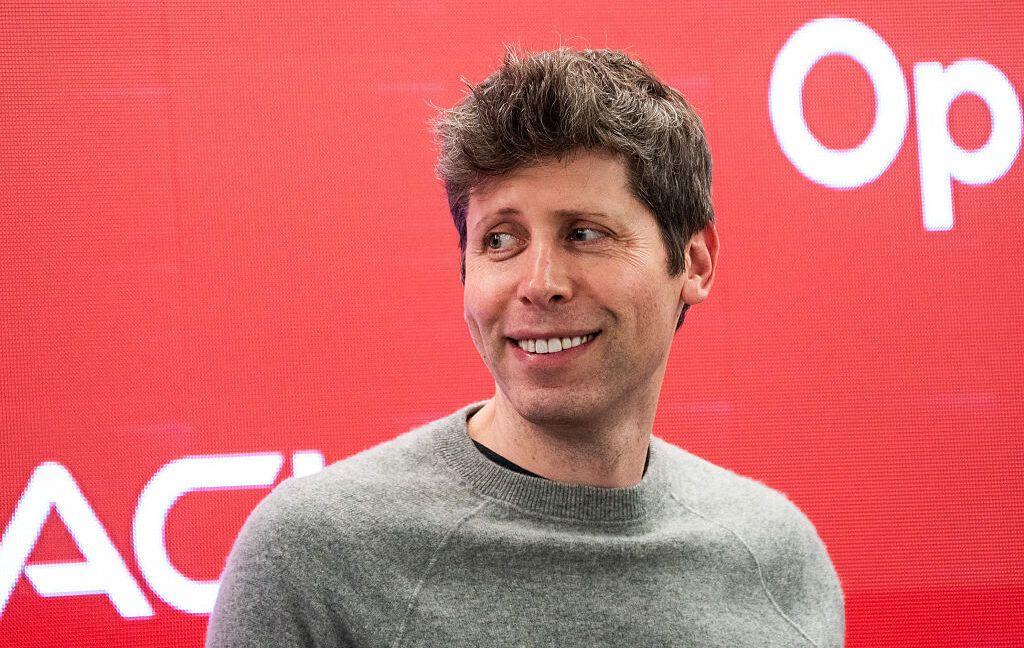



Your Daily Dose of Curated AI News
Don’t drown in AI news. We cut through the noise - filtering, ranking and summarizing the most important AI news, breakthroughs and research daily. Spend less time searching for the latest in AI and get straight to action.

