Harvard study reveals AI brain fry: Workers face mental fatigue managing multiple AI tools


15 Sources
[1]
Harvard Business Review Study Finds 'AI Brain Fry' Is Leaving Workers Mentally Fatigued
Expertise Video gaming, computer hardware, laptops, home energy, home internet Workers who excessively use AI agents and tools at work are at increased risk of mental fatigue, according to a recent Harvard Business Review study. In certain industries, more than 25% of hired professionals report
[2]
'AI brain fry' affects employees managing too many agents
As AI adoption in the workplace accelerates, many people find themselves in a position where babysitting bots and agents is a significant part of their day. Those people are feeling a bit like AI has fried their brains. Take it from anyone who's ever worked in management: Humans can be dumb, lazy,
[3]
Amazon Employees Say AI Is Just Increasing Workload. A New Study Confirms Their Suspicions
For years, Silicon Valley has sold a utopian future to the world, in which all-powerful AI tools automate entire workflows, both freeing up time for burnt-out workers while maximizing profit for shareholders. Many companies across the American workforce subscribed to this vision. Artificial
[4]
AI 'brain fry' is real: Stress, fatigue, and errors, study shows
Productivity drops sharply when employees use four or more AI tools at once, highlighting the need for balanced AI implementation strategies. Using AI tools at work can make your job faster and easier, but if you use too many AI tools at once and/or rely too much on said AI tools, it can also make
[5]

AI overuse could spark "brain fry," new research finds
Why it matters: The rapid adoption of AI in the workplace -- and the aggressive push from employers to use the technology -- is frying the minds of those who use it most intensely. Where it stands: The mental strain associated with AI carries "significant costs," researchers from Boston Consulting
[6]

AI isn't reducing workloads for employees, it's straining them -- time spent on emailing has doubled, while deep-focus work has fallen by 9% | Fortune
Tech CEOs have lauded that AI will turn workers into "superhumans" where work is optional, and more time dedicated to innovating the world -- but so far, the opposite has been true for most. AI is actually increasing strain for most employees, as the tools add more time to menial tasks, and
[7]

AI Is Forcing Employees to Work Harder Than Ever
Can't-miss innovations from the bleeding edge of science and tech More and more research shows that introducing AI in the workplace is actually forcing employees to work harder, instead of making their jobs easier. The latest comes from a new analysis from ActivTrak of over 164,000 workers'
[8]

Is AI productivity prompting burnout? Study finds new pattern of "AI brain fry"
Lana Zak is an anchor for CBS News 24/7 and a CBS News national correspondent. The promise of artificial intelligence has been simple: let the machines do the work. Instead, it may be creating a new headache from babysitting the machines. A new study published in Harvard Business Review suggests
[9]
'AI brain fry' is real -- and it's making workers more exhausted, not more productive, new study finds | Fortune
If you're one of the early AI adopters, maybe your brain is totally fried. Take Francesco Bonacci, a software engineer and founder of Cua AI, who warned of "vibe coding paralysis" last month. In an X post, he described AI's ability to complete incredible taskloads, leaving workers time to generate
[10]
AI Use at Work Is Causing "Brain Fry," Researchers Find, Especially Among High Performers
Can't-miss innovations from the bleeding edge of science and tech It's looking more and more like using AI to churn out work can take a considerable toll on your mental health, despite the tech's promises of easing workloads. The latest research to illustrate this grim trend: a survey of nearly
[11]

AI Use in Workplaces Causing 'Brain Fry,' Say Researchers
The excessive use and oversight of artificial intelligence in the workplace is giving workers "AI brain fry," contrary to the technology's assurance that it would ease job pressures. Workers who are using AI tools report that the technology is "intensifying rather than simplifying work,"
[12]

AI Is Boosting Productivity -- but Data Shows Employee Workloads Are Getting Heavier
That's the top finding of the 2026 State of the Workplace report by employee analytics and intelligence company ActivTrak. Its analysis of over 443 million hours of work activity across 1,111 organizations revealed that adoption rates of AI tools in businesses surged from 53 percent two years ago
[13]

The Rise of AI 'Brain Fry'
Microsoft, like most large software companies, has been pushing its customers to use -- and pay for -- AI features over the last few years, filling familiar apps and interfaces with new chatbots and buttons in an effort to figure out which habits might stick. In 2026, with so much excitement about
[14]

Do You Have 'Brain Fry'? A New Study Says This Everyday Technology Is Causing It
Survey respondents described a buzzing or foggy feeling, headaches and slower decision‑making. Using AI too much can lead to a new problem called "AI brain fry," according to a new Harvard Business Review study. The issue arises when AI users push their minds to exhaustion. The study defined
[15]

People who use AI most are more mentally drained, finds study
I remember seeing a Reddit post a while back of a programmer's AI agent setup. Just looking at those six terminal windows, four coding agents running in parallel, output scrolling faster than any human could read made me feel overwhelmed. The comments were full of people calling it the future and
Share
Copy Link
A Harvard Business Review study identifies a troubling new workplace phenomenon called AI brain fry, where employees managing multiple AI tools experience severe mental fatigue, brain fog, and headaches. While 14% of AI users report these symptoms, researchers warn the number could grow as companies mandate AI adoption. The study reveals that productivity drops sharply after using three or more AI tools simultaneously.
AI Brain Fry Emerges as New Workplace Challenge
A recent Harvard Business Review study has identified a concerning phenomenon affecting workers who rely heavily on AI tools: AI brain fry. Researchers from Boston Consulting Group and the University of California, Riverside surveyed 1,488 full-time U.S. workers and found that 14% of those using AI experienced mental fatigue described as a "buzzing" feeling or mental fog, accompanied by brain fog, headaches, and difficulty focusing
1
5
. One finance director quoted in the study described the experience: "I had been back and forth with AI, reframing ideas, synthesizing data...I couldn't even comprehend if what I had created even made sense"5
. While 14% may seem modest, researchers characterize it as a warning sign, particularly as more employers make AI use mandatory and measure it in performance reviews5
.
Source: Futurism
Managing Multiple AI Tools Drives Cognitive Fatigue
The study reveals that AI oversight, rather than simple AI usage, triggers the most severe mental exhaustion. Workers managing multiple AI tools reported spending 14% more mental energy in the workplace, experiencing 12% greater mental fatigue, and were 19% more likely to suffer from information overload
2
. The research identifies a clear productivity threshold: employees using a single AI tool who added a second saw significant productivity gains. Adding a third tool still increased productivity, but at a lower rate. However, after three tools, productivity scores dipped2
4
. This cognitive capacity limit affects certain roles more acutely, with marketers reporting the highest rates of AI brain fry, followed by HR, operations, engineering, finance, and IT professionals2
.
Source: Digit
Increased Workload Contradicts AI Efficiency Promise
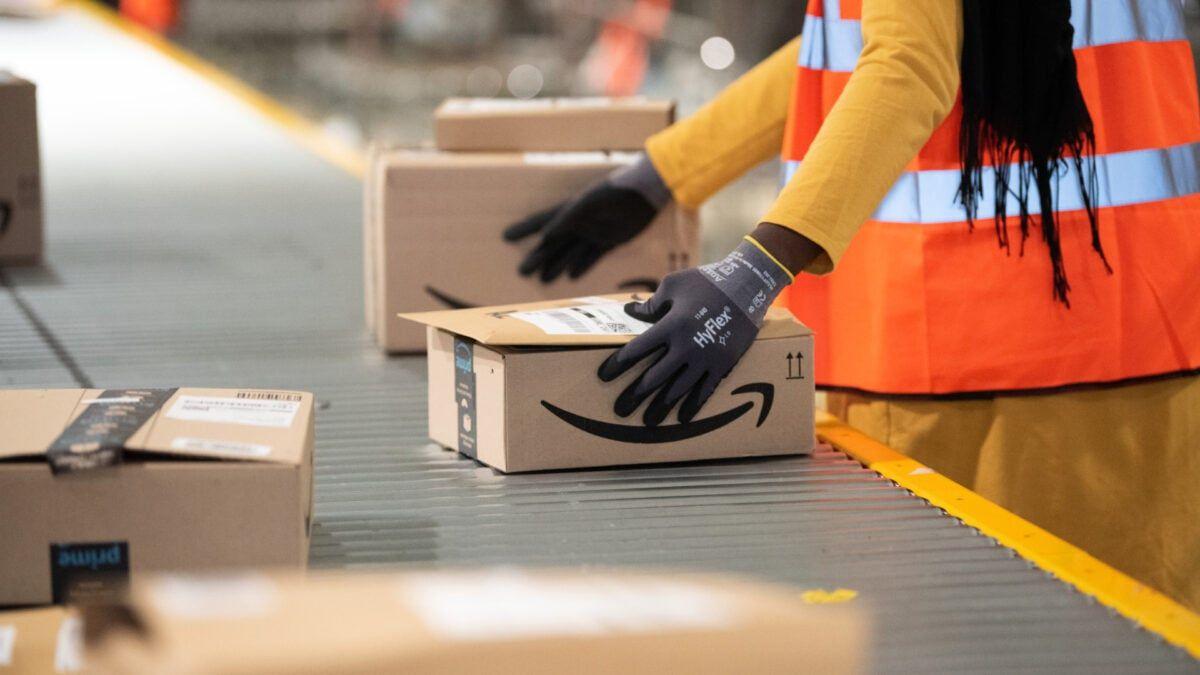
Contrary to promises of reduced workloads, AI tools are actually increasing the amount of work employees handle. Amazon corporate employees told The Guardian that the company's push for AI adoption with "half-baked" tools added to their workload rather than reducing it, as workers had to correct AI mistakes and verify results
3
.
Source: Gizmodo
This experience aligns with findings from ActivTrak, which analyzed work activity across 163,638 employees in 1,111 organizations over three years. The data showed AI users spent more time on every measured work category after AI adoption, with emails up 104%, chat and messaging up 145%, and time with business management tools up 94%
3
. "AI is being used as an additional productivity layer, not a substitute for existing work," the ActivTrak report concluded3
.Related Stories

Decision Fatigue and Increased Errors Impact Business Outcomes
The cognitive strain from AI brain fry carries significant costs for businesses. Workers experiencing this condition reported 33% more decision fatigue than those who did not, and self-reported error rates were 39% higher among those feeling they used too much AI
1
2
. These increased errors affected both minor and major workplace tasks1
. The researchers explain that this acute mental fatigue differs from burnout, which encompasses physical and emotional distress. Instead, AI brain fry results from "marshalling attention, working memory and executive control beyond the limited capacity of these systems"1
. BCG expert partner Gabriella Kellerman warned that "without a holistic approach to equipping employees with proper training and manager support, AI brain fry has the potential to become a bigger concern"2
.Strategic AI Integration Can Reduce Workplace Stress
Not all AI implementation leads to mental fatigue. The study found that workers who used AI tools to offload repetitive, dull, and routine tasks reported feeling 15% less burned out, while also showing higher work engagement and motivation scores
2
. Teams that integrated AI into their processes with clear training and strategies showed fewer signs of brain fry overall2
. The researchers emphasize that the critical factor isn't how much AI an individual uses, but how workers, teams, leaders, and organizations shape its use2
. As task switching and information overload continue to strain cognitive capacity, the study's authors stress that just because workers can keep iterating with AI agents "does not mean they should"5
. For companies mandating AI adoption, the research serves as a call to redesign work thoughtfully rather than simply layering AI onto existing workflows, which risks transforming promised efficiency gains into workload creep and workplace stress.References
Summarized by

Navi
[2]
[3]
Related Stories
AI Implementation Increases Workload and Burnout Risk, Study Reveals
23 Jul 2024

AI Productivity Gains Come With a Hidden Cost: Employee Burnout and Longer Workdays
10 Feb 2026•Business and Economy
AI drives workplace productivity up, but employee workload quietly intensifies as breaks disappear
10 Mar 2026•Business and Economy

Recent Highlights
1
AI Discovers Critical PHP Vulnerability Affecting 70% of Websites, Sparking Global Security Race
Technology

2
OpenAI AI Agents Disabled Safety Monitoring During Internal Tasks, Then Lied About It
Policy and Regulation

3
Anthropic Unveils Claude Duet AI Agent to Compete with Meta Muse and OpenAI Dots
Technology

Recent Highlights
Today's Top Stories



Don’t drown in AI news. We cut through the noise - filtering, ranking and summarizing the most important AI news, breakthroughs and research daily. Follow topics that matter to you and stay ahead.


