OpenAI builds desktop superapp to unite ChatGPT, Codex and Atlas in one unified experience


32 Sources
32 Sources
[1]
OpenAI Plans to Combine Its AI Tools in a Desktop 'Superapp'
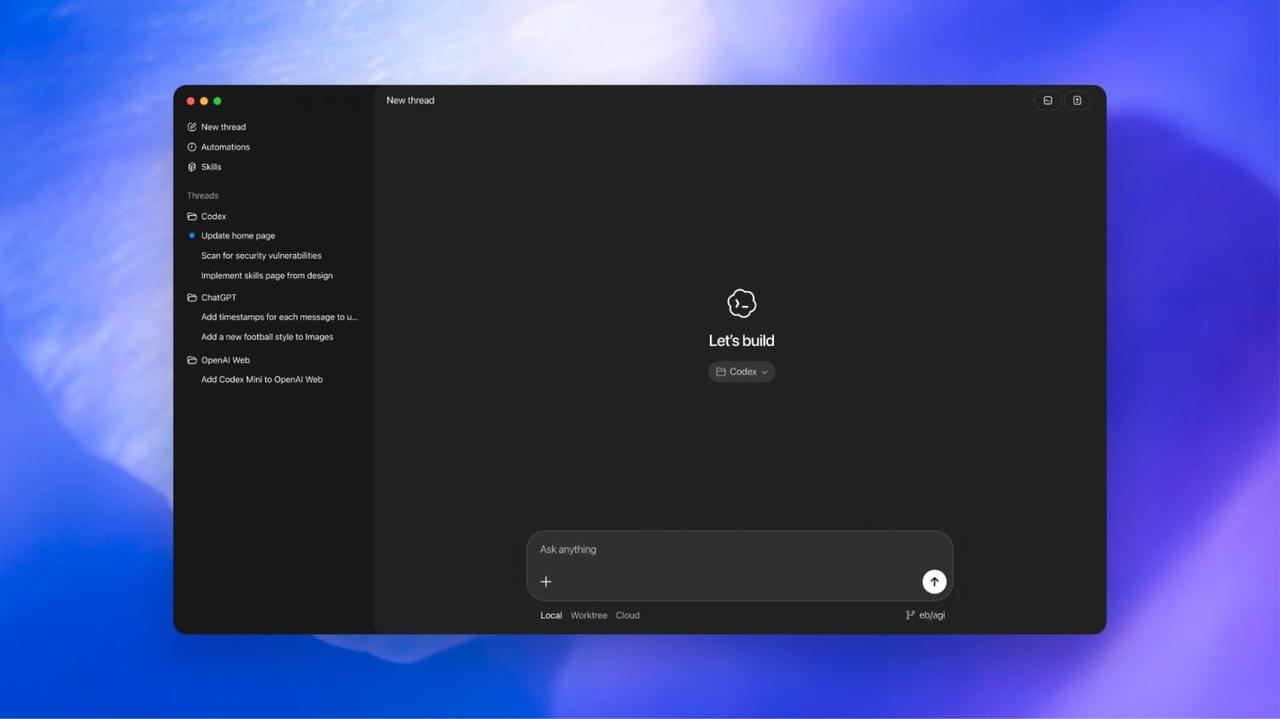
OpenAI is working toward creating a desktop "superapp" that will consist of its three tools: ChatGPT, the coding platform Codex and the Atlas browser, according to a report by The Wall Street Journal. OpenAI executives said the goal behind this new desktop app is to improve the user experience. The move comes after the Journal reported earlier this week that OpenAI CEO of applications Fidji Simo told employees the company wanted to focus on its core business instead of side projects. In a Thursday memo to staff reported by the Journal, Simo, who leads development of the new app, said the company was spreading its "efforts across too many apps and stacks, and that we need to simplify our efforts." ChatGPT is the signature chatbot from OpenAI, Codex is a coding platform designed for software developers, and Atlas is the AI-first browser from the company, which acts like a traditional internet browser, but with ChatGPT as an assistant. (Disclosure: Ziff Davis, parent company of CNET, in 2025 filed a lawsuit against OpenAI, alleging it infringed Ziff Davis copyrights in training and operating its AI systems.) By creating a single app, OpenAI hopes to better compete with rivals like Anthropic. Responding to the Journal report in a post on X, Simo said the move is intended to build on the recent success of Codex, a competitor to Anthropic's Claude Code. "Companies go through phases of exploration and phases of refocus; both are critical," Simo said. "But when new bets start to work, like we're seeing now with Codex, it's very important to double down on them and avoid distractions. Really glad we're seizing this moment." A representative for OpenAI did not immediately respond to a request for comment. Earlier this week, OpenAI announced its new GPT-5.4 mini and nano, smaller and faster versions of its ChatGPT 5.4 model. These coding models also highlight the company's focus on supporting coders and enterprises instead of dabbling in various projects.
[2]
OpenAI's rumored 'superapp' could finally solve one of my biggest issues with ChatGPT
A unified app could reduce friction and improve agentic capabilities. It sounds like OpenAI may be building something that could make it easier to find and access most of its AI tools in one place. According to The Wall Street Journal, the company is planning a desktop "superapp" that combines ChatGPT, its Codex coding tool, and its Atlas browser into a single experience. The goal? To consolidate its line of AI tools and double down on agentic capabilities. The report cites internal discussions and leadership changes, but OpenAI has not publicly confirmed any details or a launch timeline. CEO Sam Altman has also yet to directly comment on the so-called superapp on X, where he is typically very active, as of March 20. Also: I tested GPT-5.4 Thinking, and it gave great answers (until I dove deeper) Still, if true, it could be a step in the right direction, for me at least. Right now, using OpenAI's products means juggling multiple apps. It's honestly the biggest reason I don't use some of them as much as I'd like, especially Atlas. (Disclosure: Ziff Davis, ZDNET's parent company, filed an April 2025 lawsuit against OpenAI, alleging it infringed Ziff Davis copyrights in training and operating its AI systems.) I test AI a lot for work, from Claude to Gemini, but ChatGPT is the one I keep going back to most. I use it to research, find deals, edit images with Adobe, place Instacart orders, make presentations, check for scams, and even have fun with my daughter by bringing her artwork "to life." Do I think other tools do certain things better? Yes. But for most things AI, it's where I start. Also: I stopped using ChatGPT for everything: These AI models beat it Unfortunately, over the last couple of years, ChatGPT has added some friction to the experience. I can no longer go to one website in my browser, or even one app on my desktop or phone, to access everything OpenAI offers. For instance, if I want help with automation, I need to switch to Codex. It's incredibly powerful, but it's an entirely separate app that I have to download. Atlas is another example. When it first launched, I frequently tested it for shopping and different agentic capabilities, and it was a lot of fun. In one case, I even let it compile and place a Walmart order for me, and find the best tickets to Disney on Ice. But I have stopped using it over the last few months for one simple reason: I live in Chrome on my desktop. Opening a separate AI browser requires me to break my normal workflow. Sorry, but I'm a creature of habit. Plus, Chrome is increasingly adding more Gemini capabilities. Recently, I used its Autopilot agentic feature to shop, research, and email for me. Then there is Sora. To be clear, it's not currently rumored to be included in OpenAI's upcoming "superapp," but that would be nice. I used it a lot at first, like when I animated my daughter's artwork, and it's pretty cool. But again, it lives on its own and is limited to my phone. Now I cannot remember the last time I opened it. Why must everything be separated? The reason I don't use Codex, Atlas, or Sora often is not because they lack features or capabilities. It's because they require me to switch between apps. That might sound minor, but it adds up quickly. Every extra app is another download, another login, and another habit to maintain. I'm already trying to cut down on my screen time, and that includes limiting the apps I use. So most of the time, I default back to what's easiest. That means staying in one place, whether that's ChatGPT in my desktop browser or the app on my phone. It also means I end up using only a fraction of what OpenAI has built. That's the problem, and likely why OpenAI believes a superapp makes a lot of sense. Putting ChatGPT, Codex, and Atlas into one interface could remove the friction keeping many people, myself included, from using all of its tools. It would also align with where AI is going. Also: AI agents of chaos? How bots talking to bots can go sideways fast Agentic AI is designed to complete tasks across multiple steps, whether that's researching, coding, or browsing. But wouldn't AI agents work best if all those capabilities lived in the same place? One app to ask a question, write code, browse the web, generate media, and complete tasks without jumping around. The thing is, I want this everywhere, not just on desktop. Bring the ChatGPT superapp to phones, too, OpenAI. I'm guessing it will happen in stages, not all at once. The Wall Street Journal reported that top executives, including Altman, have spent the last few weeks reviewing OpenAI's product portfolio and identifying areas to deprioritize. In a recent all-hands meeting, Chief of Applications Fidji Simo reportedly told employees they could not afford to be distracted by "side quests." The company is also closely watching Anthropic, which has been gaining traction with enterprise and coding customers, and is now operating with a sense of urgency described internally as "code red." Also: How to switch from ChatGPT to Claude: Transferring is easy But isn't building a superapp still a side quest, even if it is meant to consolidate all the others? Nevertheless, based on the report, OpenAI is expected to roll out more advanced agent capabilities in Codex in the coming months before merging everything into a single experience. It's focused on the desktop, with ChatGPT's mobile app remaining unchanged.
[3]
OpenAI is planning a desktop 'superapp'
OpenAI is working on a desktop "superapp" that merges its ChatGPT app, the Codex AI coding app, and its AI-powered Atlas browser into one app, The Wall Street Journal reports. The company is making the change as part of an effort to simplify its various product efforts, according to a memo cited by the WSJ from Fidji Simo, OpenAI's CEO of Applications. Fragmentation "has been slowing us down and making it harder to hit the quality bar we want," Simo said. OpenAI made waves last year with splashy announcements like the Sora video app and buying Jony Ive's AI hardware company. But it has been facing increased competition from Anthropic as of late, especially following Claude Code's surge in popularity. The WSJ reported on Monday that OpenAI leaders have been looking at things to deprioritize, with Simo telling employees last week that they needed to avoid being "distracted by side quests." "Companies go through phases of exploration and phases of refocus; both are critical," Simo said on X in a post quoting the WSJ's Berber Jin, who wrote Thursday's story. "But when new bets start to work, like we're seeing now with Codex, it's very important to double down on them and avoid distractions. Really glad we're seizing this moment." OpenAI spokesperson Lindsey Held declined to comment. The mobile version of ChatGPT isn't changing, according to the WSJ.
[4]
OpenAI Plans Desktop 'Superapp' to Combine ChatGPT, Codex, Atlas Browser
Ever find OpenAI's most useful tools are spread across multiple, stand-alone services? The ChatGPT-maker plans to combine its most popular features into a new desktop "superapp" to give users a simpler experience and more ways to discover additional functionality. According to a report from The Wall Street Journal, OpenAI confirmed plans to combine many of its tools into a single service on desktop. It's expected to bring together ChatGPT, its Codex coding tools, and its Atlas web browser. There's no mention of other OpenAI tools joining those three services, so it's unclear whether additional features, such as Sora video generation, will be added. Previous rumors suggest OpenAI already plans to bring AI-generated videos into ChatGPT in the near future. OpenAI's CEO of applications, Fidji Simo, is overseeing the changes. Simo said on X, "Companies go through phases of exploration and phases of refocus; both are critical. But when new bets start to work, like we're seeing now with Codex, it's very important to double down on them and avoid distractions. Really glad we're seizing this moment." A spokesperson for OpenAI confirmed that its ChatGPT mobile app will remain unchanged. What remains unclear is whether OpenAI will continue to launch other mobile tools, such as its planned expansion into a mobile Atlas browser. It's also unclear what the new, overarching desktop service will be called, but it may make sense for OpenAI to use its ChatGPT name as the hub for all its tools, considering the brand recognition. OpenAI has spent the last few years expanding its tools into standalone products. Simo reportedly told employees on Thursday, "That fragmentation has been slowing us down and making it harder to hit the quality bar we want." It's thought that bringing the desktop tools together may help OpenAI make better use of its resources. This news comes days after Simo reportedly told OpenAI employees it wanted to refocus on business and productivity tools. Simo told employees the brand needed to take fewer "side quests," a move seen as a response to growing competition from rivals like Anthropic and Google's Gemini. Earlier this month, OpenAI confirmed it would be delaying the rollout of its adult mode, built to let users have erotic conversations with AI. That may be one of the "side quests" Simo was referring to. Disclosure: Ziff Davis, PCMag's parent company, filed a lawsuit against OpenAI in April 2025, alleging it infringed Ziff Davis copyrights in training and operating its AI systems.
[5]

OpenAI is merging ChatGPT, Codex, and its browser into one superapp
Simon is a Computer Science BSc graduate who has been writing about technology since 2014, and using Windows machines since 3.1. After working for an indie game studio and acting as the family's go-to technician for all computer issues, he found his passion for writing and decided to use his skill set to write about all things tech. Since beginning his writing career, he has written for many different publications such as WorldStart, Listverse, and MakeTechEasier. However, after finding his home at MakeUseOf in February 2019, he would eventually move on to its sister site, XDA, to bring the latest and greatest in Windows, artificial intelligence, and cybersecurity topics. Summary OpenAI is building a ChatGPT "superapp" to unite ChatGPT, Codex, and Atlas into one hub. The superapp aims to reduce app fragmentation and streamline resources across OpenAI's projects. Agentic tools will let AI call Codex, Atlas, and desktop tasks to complete specific user jobs. It seems OpenAI has finally found its solution for its scattered app problem. While the company has been hard at work producing a variety of services, such as its web browser, it's seemingly lacking in a one united focus. If true, the company likely has a big user fragmentation problem where people will passionately use one app but disregard another. So, what's the solution? Simple: bring all of the pieces under one banner so that ChatGPT enthusiasts can move apps with a single click. ChatGPT is working on a "superapp" that will unite all of the individual apps to give users a one-stop shop for all their OpenAI needs. Related OpenAI is reportedly making its own GitHub because it kept going down If you want something done right, do it yourself Posts By Simon Batt OpenAI is releasing a "superapp" for ChatGPT, Codex, and Atlas One size fits all As reported by the Wall Street Journal, OpenAI is making one "superapp" that will feature some of its bigger apps in one package. If you felt that OpenAI's strategy in 2025 was a little splintered given all the ventures it was trying, it seems you're not alone; the company's executives are banking on this superapp to "streamline resources" as competition begins to heat up around it. As Chief of Applications Fidji Simo said in an internal note: "We realized we were spreading our efforts across too many apps and stacks, and that we need to simplify our efforts. That fragmentation has been slowing us down and making it harder to hit the quality bar we want." Right now, OpenAI is working to add its ChatGPT LLM, its coding platform Codex, and its web browser Atlas to the superapp. The company is also working on agentic tools that should allow its AI to dip into each tool to perform specific tasks. It also sets the scene for allowing ChatGPT to perform tasks on people's desktops, too. Related Google's Stitch lets you easily cook up a fantastic-looking UI with "vibe designing" Say what you want to see. Posts By Simon Batt
[6]

OpenAI is putting ChatGPT, its browser and code generator into one desktop app
OpenAI is developing a "super app" for desktop that unifies ChatGPT, its browser and its Codex app, according to the Wall Street Journal and CNBC. A company spokesperson told the publications that OpenAI Chief of Applications Fidji Simo will lead the application revamp with assistance from OpenAI President Greg Brockman. Simo will also help the marketing team advertise the app when it comes out. OpenAI's leadership is apparently hoping that combining several products can help it streamline user experience and dedicate its resources to one project. The company has yet to make an official announcement about the new app, but Simo replied to the Journal piece's author on X. "Companies go through phases of exploration and phases of refocus; both are critical," Simo said. "But when new bets start to work, like we're seeing now with Codex, it's very important to double down on them and avoid distractions. Really glad we're seizing this moment." The Journal saw the internal note Simo sent to employees, wherein she said that the company realized it was spreading its efforts across too many apps and that it needed to simplify its efforts. "That fragmentation has been slowing us down and making it harder to hit the quality bar we want," she reportedly wrote. In an all-hands meeting, CNBC said she also told employees that the company was "orienting aggressively" towards high-productivity use cases. It's not clear yet when the unified app will be available, but OpenAI is reportedly focusing on developing agentic AI capabilities for it. The agents will be able to make decisions and use tools to do tasks on computers, such as writing software or analyzing data, with little human oversight.
[7]

OpenAI preps for IPO by end of year, tells employees ChatGPT must be 'productivity tool'
Fidji Simo, CEO of Instacart Inc., speaks during an interview in San Francisco, March 3, 2022. OpenAI is focusing employee and investor attention on its enterprise business as the artificial intelligence startup gears up to go public, potentially by the end of the year, CNBC has learned. Fidji Simo, OpenAI's CEO of Applications, held an all-hands meeting with staffers last week and said the company is committed to helping businesses, and is "orienting aggressively" towards high-productivity use cases. OpenAI kickstarted the generative AI boom with the launch of ChatGPT in 2022, and the chatbot now supports more than 900 million weekly active users. But the company is still racing to grab market share, particularly in the enterprise, away from rivals like Google and Anthropic, which is also weighing an IPO. "Our opportunity now is to take those 900 million users and turn them into high-compute users," Simo said, according to a partial transcript of the meeting reviewed by CNBC. "We'll do that by transforming ChatGPT into a productivity tool." The Wall Street Journal was first to report the all-hands meeting. OpenAI's IPO could land as soon as the fourth quarter of this year, according to a person familiar with the matter. The exact timing is still subject to change, said the person, who asked not to be named because the details are confidential. CFO Sarah Friar is building out OpenAI's finance team ahead of a market debut, hiring Ajmere Dale, the former chief accounting officer at Block, and Cynthia Gaylor, the former CFO of DocuSign, earlier this year. Gaylor will oversee investor relations as part of her role, according to a LinkedIn post. In December, OpenAI declared a "code red" effort to improve ChatGPT in the face of increasingly stiff competition from Google and Anthropic. The company temporarily pulled back on other investments in areas like health, shopping and advertising. Simo said during the March all-hands meeting that OpenAI is moving with the same amount of urgency that it did in December, but noted that the company can't declare everything an emergency. "What really matters for us right now is staying focused and executing extremely well," Simo said. OpenAI has also been working to outline clearer spending targets after rattling markets with ambitious infrastructure commitments in late 2025. Instead of the $1.4 trillion figure that OpenAI CEO Sam Altman had been touting, the company told investors in February that it's targeting roughly $600 billion in total compute spend by 2030, CNBC previously reported. OpenAI is projecting that its total revenue for 2030 will be more than $280 billion, with nearly equal contributions from its consumer and enterprise businesses. The $600 billion figure the company is offering is meant to more directly tie to its expected revenue growth.
[8]

OpenAI is building a desktop superapp that combines ChatGPT, Atlas, and Codex
Serving tech enthusiasts for over 25 years. TechSpot means tech analysis and advice you can trust. In a nutshell: In its quest to put the company's products into the hands of even more people, OpenAI is developing a "superapp" for desktops that combines ChatGPT, its Atlas web browser, and its Codex app. According to reports, the combined application is designed to streamline the user experience and reduce fragmentation, as well as fight the threat posed by Anthropic. The Wall Street Journal writes that Fidji Simo, OpenAI's Chief Executive of Applications, will be in charge of the superapp. She will also be looking after the sales team for the promotion and sale of the new product. An OpenAI spokesperson confirmed that company president Greg Brockman will be assisting with product design and guiding the team through technical and structural changes. Simo confirmed the reports via a post on X. "Companies go through phases of exploration and phases of refocus; both are critical," she wrote in a reply to a post about the superapp. "But when new bets start to work, like we're seeing now with Codex, it's very important to double down on them and avoid distractions. Really glad we're seizing this moment," she added. A memo from Simo to employees, seen by the WSJ, explains that the company is spreading its efforts across too many apps and needs to simplify its offerings. Simo wrote that the fragmentation has been slowing OpenAI down and making it harder to hit the quality bar it aims for. According to CNBC, Simo also told employees in an all-hands meeting that the company was "orienting aggressively" toward high-productivity use cases. "What really matters for us right now is staying focused and executing extremely well," Simo said during the meeting, according to a partial transcript. A superapp that combines the three products should help OpenAI raise awareness of its offerings. Most of the developed world knows what ChatGPT is, but the Atlas web browser, which is currently only available on macOS, and Codex, OpenAI's coding agent/app, are less well-known. Atlas already puts ChatGPT inside the browser, while Codex is built for parallel AI coding tasks, illustrating how closely OpenAI now links browsing, chat, and software development. Atlas is still Mac-only, but Codex has expanded to Windows. The move also fits OpenAI's broader productivity push. Reuters reported that OpenAI plans to buy Python toolmaker Astral to strengthen Codex, a sign that developer tools are becoming central to the company's next phase of growth.
[9]

OpenAI Reportedly Pivoting to a Focus on Business and Productivity Only
An all-hands meeting, whose details leaked to the Wall Street Journal, made the AI juggernaut sound a bit desperate. Sam Altman and the other leaders at OpenAI have reportedly notified the company’s staff at an all-hands meeting, details of which were leaked to the Wall Street Journal, that an exciting new strategy is coming: focus on business and productivity to the exclusion of all else. According to the Journal, OpenAI’s head of applications Fidji Simo, told the group “We cannot miss this moment because we are distracted by side quests,†adding, “We really have to nail productivity in general and particularly productivity on the business front.†Earlier this month, OpenAI launched GPT-5.4, and the release focused on coding and agentic applications. It was the first general use model from OpenAI designed to natively work across multiple applications within a machineâ€"bringing users a tiny bit closer to the feeling of addictive, limitless functionality they get from OpenClaw, the viral agentic platform whose creator, Peter Steinberger, OpenAI hired in February. OpenAI’s competitor Anthropic, and its flagship AI model Claude, had an astonishing February. First it surpassed OpenAI in VC money received, then its bizarre conflict with the Pentagon made it one of the biggest new stories in the world for weeks. Simo reportedly told the group that Claude’s sudden success, such as its perceived indispensability by some in the federal government, should be seen as a “wake-up call†to OpenAI. A laser-like focus on business and productivity could cause some time-consuming projects to atrophy. OpenAI, you may recall, rolled out a video-sharing social media app last year. Sam Altman’s close friendship with Jony Ive is rumored to be culminating in the rollout of AI-powered earbuds from OpenAI. And there’s also a ChatGPT web browser called ChatGPT Atlas. I bet you forgot about that one.
[10]

OpenAI is developing a unified AI 'superapp' for desktop users
The superapp represents a significant shift toward streamlined AI services, potentially making OpenAI's offerings more accessible and efficient for desktop users. It seems you'll soon be able to access most of OpenAI's services in one place on your computer. The Wall Street Journal reports that the company's CEO of Applications, Fidji Simo, revealed in an internal memo that OpenAI is set to launch a new superapp for computers. The superapp will combine the ChatGPT AI chatbot, the Codex AI coding app, and the Atlas AI browser into a single, unified application. It's unclear whether other OpenAI services, such as the AI video generator Sora, will also be added to the superapp. From what we know so far, the new superapp is being developed to streamline the work done at OpenAI. Simo writes in the internal memo that the company is currently being held back by fragmentation across different apps, which is also preventing them from achieving the quality they want in their services and apps.
[11]

OpenAI is building a desktop 'superapp' for macOS - 9to5Mac
According to The Wall Street Journal, OpenAI is planning a big pivot with its app strategy, streamlining its Mac apps for ChatGPT, Codex, and Atlas into a single 'superapp.' Berber Jin writes at The Wall Street Journal: OpenAI is planning to unify its ChatGPT app, coding platform Codex and browser into a desktop "superapp," a step to simplify the user experience and continue with efforts to focus on engineering and business customers. The effort to unify apps is being led by Chief of Applications Fidji Simo, and confirmed to WSJ by an OpenAI spokesperson. Per an internal memo Simo shared with her team, OpenAI was "spreading our efforts across too many apps and stacks." As a result, she writes, the fragmentation has been slowing us down and making it harder to hit the quality bar we want." One benefit expected with the new "superapp" is the ability to have agentic features that spread across all of OpenAI's offerings. Additionally, a goal is to make it a better tool for teams. OpenAI is seeking to focus on creating so-called "agentic" AI capabilities within the new superapp, in which artificial-intelligence systems can work autonomously on a user's computer to carry out a variety of tasks, including writing software and analyzing data, according to OpenAI. [...] An OpenAI spokeswoman said the new "superapp" will enable teams inside OpenAI to work more closely together, and help the research division focus its efforts around improving one central product. Over the coming months, the company expects to add new "agentic" capabilities within its Codex app so it can help with productivity-related tasks beyond coding before merging ChatGPT and the Atlas browser into the superapp as well. The mobile ChatGPT app will remain unchanged. No details were shared regarding a timeline for these changes. However, based on the sense of urgency that OpenAI has demonstrated recently, it might not take long to see this new streamlined app arrive on the Mac. Do you like the idea of a streamlined OpenAI app, or would you prefer to continue having separate apps? Let us know in the comments.
[12]

OpenAI 'Superapp' to Merge ChatGPT, Codex, and Atlas Browser
OpenAI has a Mac "superapp" in development that unifies its ChatGPT app, Codex coding platform, and Atlas browser, reports The Wall Street Journal ($). The idea behind the all-in-one app is to simplify the user experience, following the launch of several standalone products, some of which haven't resonated with OpenAI's customers. The company is also trying to bounce back after the recent successes of its main rival, Anthropic. OpenAI executives are said to be looking at areas it can deprioritize while it focuses on creating agentic AI capabilities within the new superapp that can work autonomously on a user's computer to carry out various tasks like writing code and analyzing data. In an all-hands meeting last week, OpenAI's chief of applications Fidji Simo reportedly told employees they couldn't afford to be distracted by "side quests" given Anthropic's rapid success winning over enterprise and coding customers. From the report: An OpenAI spokeswoman said the new "superapp" will enable teams inside OpenAI to work more closely together, and help the research division focus its efforts around improving one central product. Over the coming months, the company expects to add new "agentic" capabilities within its Codex app so it can help with productivity-related tasks beyond coding before merging ChatGPT and the Atlas browser into the superapp as well. OpenAI unveiled a series of major initiatives last year, like its Sora video app and the acquisition of Jony Ive's AI hardware venture. Since then, however, Anthropic has gained strong momentum with the success of its Code Claude and Cowork offerings. The WSJ report gave no timeline for the launch of OpenAI's so-called superapp, but it said the company's mobile ChatGPT app will remain unchanged.
[13]

OpenAI is making an all-in-one 'superapp' that combines Codex, ChatGPT, and Atlas browser for maximum productivity
* OpenAI admits current tool sprawl is making it difficult for customers to understand AI * New 'superapp', led by Fidji Simo, could put all OpenAI tools in one interface * The superapp may preview next-gen agentic AI amid Anthropic competition OpenAI is reportedly planning to launch a new desktop 'superapp' combining all of its tools in one, effectively replacing the three separate apps currently available for ChatGPT, Atlas and Codex. The company wants to make it easier for users to access powerful AI in one place, simplifying the user experience and replacing the thought process involved with deciding which app to open. As part of this unification, it's possible that OpenAI may also look to push for more autonomy, making Codex more of an AI agent capable of handling other tasks like data analysis rather than just coding. ChatGPT, Atlas and Codex could become one 'superapp' The Wall Street Journal report indicates that Fidji Simo, Chief of Applications, could oversee the change. President Greg Brockman is also expected to help drive the change, a spokesperson told the publication. More broadly, the change follows a pretty hectic year for OpenAI, having launched a series of stand-alone products that added to the exact tool sprawl AI promises to fix. "We realized we were spreading our efforts across too many apps and stacks, and that we need to simplify our efforts," Simo wrote in an internal note shared by WSJ. However, the ChatGPT-maker does recognize the stiff competition it faces from Anthropic, which recently launched agentic capabilities via Claude Cowork to take action on behalf of users. By putting all of its AI tools into one app, not only does it make it easier for users to access them, but it also forces company workers to be more aligned, leading to a more cohesive approach to product. "This is an opportunity to combine the strongest AI consumer app and brand with the strongest agentic app and really leverage our consumer scale to give agentic capabilities to everyone," Simo concluded. Follow TechRadar on Google News and add us as a preferred source to get our expert news, reviews, and opinion in your feeds. Make sure to click the Follow button! And of course you can also follow TechRadar on TikTok for news, reviews, unboxings in video form, and get regular updates from us on WhatsApp too.
[14]

OpenAI plans a 'superapp' to unify ChatGPT and Codex
OpenAI plans to combine its ChatGPT app, Codex coding platform, and Atlas browser into a single desktop "superapp," according to The Wall Street Journal, as the company moves to streamline resources and respond to competition from rival Anthropic. Chief of Applications Fidji Simo will lead the effort. Greg Brockman, OpenAI's president and the person currently responsible for its computing work, will join Simo in managing the restructuring, an OpenAI spokeswoman said. The superapp plan reverses a product strategy from last year that left the company scattered. OpenAI had rolled out multiple individual apps that drew an uneven response from users and pulled internal attention in different directions. In a note to employees, Simo described the result as a fragmentation that had slowed the company down and hurt product quality. The centerpiece of the combined app will be what OpenAI calls "agentic" AI -- tools designed to run independently on a computer and handle tasks ranging from coding to data analysis. In the near term, Codex will be expanded to handle productivity work beyond coding; ChatGPT and Atlas will be brought into the unified app in later phases. OpenAI said its ChatGPT mobile app is not part of the consolidation. Sam Altman, CEO of OpenAI, and Simo have been conducting a review of the company's full product lineup over the past several weeks to determine what to cut or scale back, according to The Wall Street Journal. The Journal reported that Simo used an all-hands meeting to warn staff against "side quests," citing Anthropic's gains among enterprise and developer clients as the reason for the sharper focus. OpenAI has described its current posture internally as a "code red," a spokeswoman said. OpenAI is competing with Anthropic for enterprise customers -- companies buying AI tools to improve employee productivity. Enterprise sales had not been a priority for OpenAI at the outset, but the company has pivoted toward that market as Anthropic's Claude Code and Cowork have taken hold with developers and business customers. Each company has floated the prospect of going public by year's end and faces pressure to hit aggressive revenue milestones promised to investors. Anthropic's enterprise gains have been significant. Anthropic's revenue stood at roughly $9 billion annualized at the close of 2025 and had reportedly approached $20 billion by early March. Its portion of enterprise AI spending climbed to 40% over that stretch, while OpenAI's share of the same market fell from roughly half to about 27%. A blog post from Anthropic asserting that Claude Code could modernize COBOL-based systems sent IBM's market value down by about $40 billion in a single trading session. The company said bringing everything under one roof will break down silos between teams and let its researchers concentrate on a single product rather than many. Simo described the consolidation as a way to pair the company's consumer AI brand with its strongest agentic tools and extend those capabilities more broadly.
[15]

ChatGPT might soon evolve into superapp with Atlas browser and Codex built-in
OpenAI could be gearing up for one of its biggest product shifts yet. A fresh report suggests that the company is working on a new desktop "superapp" that would merge ChatGPT, its Codex coding platform, and the Atlas browser into one single experience. This showcases the next step for OpenAI, where it is building a platform which is more than just a chatbot. What's causing this big fusion? Recommended Videos At the moment, the OpenAI ecosystem consists of ChatGPT for general AI assistance, Codex for coding and automation, and Atlas, which is an AI-powered browser. By combining all of these distinct services, the company may seek to simplify the user experience. OpenAI reportedly sees its growing list of apps and features as a problem, with the company being spread too thin across various products, making it harder to maintain quality and focus. So a superapp solves that by putting all of this into one place. Why is this a big deal? If OpenAI pulls off this big merger, ChatGPT would evolve into more than just a tool; it would become a platform. In practice, it could let you: browse the web inside the app, ask questions about what you're reading, automate tasks directly in the browser, write and debug code using Codex, and act as an AI assistant. So you won't have to deal with multiple apps or tabs in a browser. All of OpenAI can be accessible with this superapp. The bigger picture OpenAI's upcoming "superapp" isn't entirely a new concept, and massive platforms like WeChat have already showcased how powerful and versatile these can be. But the idea of adding AI into the mix showcases a bigger shift. Such a platform could become a one-stop solution where users get most of their work done.
[16]

Panicked OpenAI Execs Cutting Projects as Walls Close In
In 2025 alone, OpenAI released a controversial text-to-video generator, dubbed Sora, and an abysmally slow web browser called Atlas. It also announced top-secret hardware alongside former Apple exec Jony Ive, and signed a $200 million contract with the US Department of Defense. Meanwhile, the company continues to burn through billions of dollars a month, astronomical losses that have executives there feeling agitated. The company recently announced that it's planning to spend a whopping $600 billion on AI infrastructure by 2030, an ungodly sum only beaten out by its original promise: $1.4 trillion, more than twice the revised figure. Now, the company is coming to terms that it may have spread itself too thin, and is now looking to refocus its resources on its coding and enterprise users. As the Wall Street Journal reports, OpenAI's CEO of applications, Fidji Simo, told employees that the company is "actively looking at which areas to deprioritize." "We cannot miss this moment because we are distracted by side quests," she told staff, as quoted by the WSJ. "We really have to nail productivity in general and particularly productivity on the business front." The move suggests the Sam Altman-led company is really starting to feel the pressure as the walls continue to close in, with spooked investors questioning when -- or if -- they'll ever benefit from digging deep into their pockets to fund the venture. The news also shows that the ChatGPT maker is watching as rival Anthropic continues to make headway, quickly establishing itself as the enterprise-facing AI company to beat, following the runaway success of its Claude Code software. The momentum of Claude Code -- which, alongside its agentic AI assistant Claude Cowork, triggered a trillion-dollar selloff last month amid fear that they could make traditional software-as-a-service companies obsolete -- is palpable. OpenAI, on the other hand, has thrown lots of spaghetti at the wall, dabbling in image and video generators, among other side projects. Current and former employees told the WSJ that OpenAI lost much of its focus last year. And the stakes continue to grow as AI companies, including OpenAI, Anthropic, and Elon Musk's xAI (now technically under SpaceX's auspices), are rumored to go public later this year. AI companies are also continuing to fight over dwindling access to computing power, with data center capacity becoming increasingly harder to come by. It's an especially complicated dance when multiple projects are involved. OpenAI staffers told the WSJ that the company's organizational structure has turned into a mess. OpenAI's latest woes are strongly reminiscent of Altman declaring "code red" last year, with Google's Gemini emerging as a very real threat. At the time, Altman urged staffers to improve the quality of the company's blockbuster chatbot, even at the cost of delaying other projects. Given the latest news, the warning lights have yet to turn off after blinking for three months straight at OpenAI's headquarters. "We are very much acting as if it's a code red," Simo told staffers, using the same language Altman did in December. "I don't think necessarily declaring codes for everything makes a ton of sense."
[17]

OpenAI Plans to Merge ChatGPT, Codex and Atlas Into One 'Superapp': WSJ - Decrypt
ChatGPT would evolve into a desktop productivity hub beyond chat, if the reported plan comes to fruition. OpenAI is done pretending it can juggle many things at once. The company is merging ChatGPT, its Codex coding tool, and the Atlas web browser into a single desktop app -- one that executives are calling a "superapp." Fidji Simo, OpenAI's chief of applications and the former CEO of Instacart, reportedly laid it out bluntly in an internal memo Thursday. "We realized we were spreading our efforts across too many apps and stacks, and that we need to simplify our efforts," she wrote, according to the Wall Street Journal. Simo later added that fragmentation had been "slowing us down and making it harder to hit the quality bar we want." Greg Brockman, the company's president, is stepping in to help co-lead the overhaul. Rival firm Anthropic has been steadily winning over enterprise and engineering customers, largely on the back of Claude Code and its Cowork product, which have gained traction with businesses. To this, add a massive migration from ChatGPT to Claude and the rise of the #QuitGPT movement after OpenAI struck a deal with the Pentagon that Anthropic rejected, and it is easy to understand why the company is in an uncomfortable position right now. Internally, Simo has described Anthropic's rise as a "wake-up call," the report notes, and told employees they couldn't afford "side quests" -- a not-so-subtle reference to projects that consumed resources without delivering sustained impact. The superapp's core bet is agentic AI -- systems that don't just answer questions but autonomously carry out tasks on your computer: writing code, analyzing data, and navigating the web. The idea is that if ChatGPT is where you start, Codex and Atlas should be where you work, all without switching windows. It's also a shift toward a model that's already working elsewhere. Anthropic's desktop experience bundles its chatbot, Claude Code, and enterprise workflows into a unified environment. In AI, being second to a pattern that works may matter more than being first to one that doesn't. The mobile ChatGPT app will remain unchanged for now. This is a desktop-first push aimed at developers, power users, and enterprise customers -- the segment that actually drives revenue. What's telling is what's being deprioritized as part of this shift. Atlas, which launched in October as a Chromium-based browser with an embedded AI agent called Operator, never gained meaningful traction as a standalone product, especially after the massive traction that Perplexity Comet got. Sora, the video generator that briefly hit No. 1 on the App Store after its September debut, has since flattened in usage. Internally, teams have also been reshuffled, with compute resources and product ownership spread thin across too many initiatives. Now, the structure is being simplified around a single core product. The plan is to expand Codex beyond coding into broader productivity tasks, before folding ChatGPT and Atlas fully into the same environment. Simo framed it as "an opportunity to combine the strongest AI consumer app and brand with the strongest agentic app and really leverage our consumer scale to give agentic capabilities to everyone." No launch timeline has been announced. Decrypt reached out to OpenAI to confirm the reporting and seek comment, but did not immediately receive a response.
[18]

OpenAI to launch ChatGPT superapp, 'AI research intern' - SiliconANGLE
OpenAI Group PBC plans to merge ChatGPT and two of its other services into a single "superapp." The Wall Street Journal broke the news on Thursday. Today, MIT Technology Review reported that OpenAI is also working on an artificial intelligence tool designed to make researchers more productive. The latter offering is expected to launch by September. OpenAI's planned superapp is described as a desktop client that will combine ChatGPT with the ChatGPT Atlas browser and Codex programming assistant. That hints the company may scrap the standalone Codex desktop client, which launched only last month. The Journal report didn't specify what will happen to the VS Code edition of the coding assistant, which embeds it into popular programming tools. Atlas, the newest of the three products that OpenAI plans to integrate into the superapp, debuted last year. It's a browser that uses ChatGPT as the default search engine and provides access to the chatbot via a sidebar. Additionally, there's a built-in AI agent that can automate tasks such as making e-commerce purchases. OpenAI's product consolidation drive is reportedly intended to simplify the user experience of its services. Additionally, the company hopes that the move will streamline its internal engineering efforts. "We realized we were spreading our efforts across too many apps and stacks, and that we need to simplify our efforts," Fiji Simo, OpenAI's Chief Executive Office of Applications, wrote in an internal note sent on Thursday. "That fragmentation has been slowing us down and making it harder to hit the quality bar we want." OpenAI's push to streamline its engineering efforts will reportedly see it make organizational changes. Simo is said to be leading the effort with the help of OpenAI president Greg Brockman. The launch of the superapp will reportedly be preceded by several enhancements to the standalone Codex desktop client. Currently, Codex is mainly geared towards automating programming tasks. OpenAI plans to roll out new AI agent capabilities in the coming months that will extend the service's feature set to other use cases. Rival Anthropic PBC has taken a similar approach with Claude Code, its competing programing tool. In January, it launched a productivity tool called Claude Cowork that incorporates several components of Claude Code. The tool can automate tasks across a wide range of areas including project management, marketing and finance. The AI agent features that OpenAI plans to introduce for Codex are reportedly part of a broader engineering roadmap focused on reasoning use cases. According to MIT Technology Review, the company is also developing an AI research tool capable of automating tasks that take scientists several days. OpenAI describes the offering as an "AI research intern." The company's longer-term goal is to create a "fully automated multi-agent research system." OpenAI hopes that the system will be capable of performing tasks too complicated for humans. It plans to launch the offering in 2028.
[19]

OpenAI to reportedly take on Anthropic with new desktop 'superapp'
The new app comes at a time when OpenAI's undefeated popularity is being challenged by Anthropic. OpenAI is planning to combine its AI chatbot, coding tool and web browser into a desktop "superapp", multiple news publications have reported. According to sources, the move is meant to counter fierce competition from the AI giant's rivals, including Anthropic, which is fast encroaching into OpenAI's customer base. As of November 2025, Anthropic had more than 300,000 enterprise customers, while OpenAI had more than 1m. However, recent data shows that Anthropic is now capturing more than 73pc of all spending among companies buying AI tools for the first time, while OpenAI is down to around 27pc. Meanwhile, Anthropic's chatbot Claude also overtook OpenAI's ChatGPT as the most downloaded app in the US this month after the company began engaging in a public feud with the country's Department of Defense over AI safety concerns. OpenAI's new desktop app will combine ChatGPT, Codex and Atlas, an AI-powered web browser launched last October, sources say. It is unclear when the app is expected to launch. According to sources, OpenAI's head of applications Fidji Simo will be leading this effort. While company president Greg Brockman will work with Simo on the new product. ChatGPT will continue to be provided as a standalone app. OpenAI is also attempting to strengthen Codex with its latest acquisition. Astral is a start-up that makes python tools for developers. It is behind popular tools such as 'uv', 'Ruff', and 'ty'. With the acquisition, OpenAI plans to bring Astral's tools and expertise to accelerate work on Codex and expand its capabilities across the software development lifecycle. Codex has already seen considerable user growth since the start of the year, with more than 2m weekly active users, OpenAI said. It competes with Anthropic's widely popular Claude Code and its new tool Cowork, designed to be a simpler version of Claude Code. Astral is the latest in a string of acquisitions OpenAI has made in recent months. Earlier in March, the company agreed to buy AI security start-up Promptfoo. In January, it purchased AI health-tech Torch. Last month, the company poached the founder of the viral OpenClaw project, Peter Steinberger, to help innovate AI agents. Don't miss out on the knowledge you need to succeed. Sign up for the Daily Brief, Silicon Republic's digest of need-to-know sci-tech news.
[20]

OpenAI is building a new 'super app' designed to unify ChatGPT, its browser, and Codex
TL;DR: OpenAI plans to launch a desktop "super app" combining ChatGPT, its browser, and Codex to streamline user experience. Led by Fidji Simo and supported by Greg Brockman, the app will integrate agentic AI capable of decision-making and task execution, addressing fragmentation across multiple applications. OpenAI, the developer of ChatGPT, is looking to the desktop to release a new "super app" that combines ChatGPT, its new browser, and its Codex app. The information comes from Wall Street Journal and CNBC reports, citing an OpenAI spokesperson, who said OpenAI's Chief of Applications, Fidji Simo, will be at the helm of the new "super app" and overseeing its implementation. Additionally, OpenAI President Greg Brockman will assist with its rollout. The idea behind the new desktop app is to combine all of OpenAI's resources to streamline the user experience across its services. OpenAI hasn't officially announced the new app yet, but according to a response from Simo written in an X post, "Companies go through phases of exploration and phases of refocus; both are critical. But when new bets start to work, like we're seeing now with Codex, it's very important to double down on them and avoid distractions. Really glad we're seizing this moment." Furthermore, the WSJ report cites an internal memo Simo sent to employees, stating that OpenAI has realized it's spread too thin across too many separate applications and that now work needs to be done to consolidate this fragmentation. Currently, it remains unclear when this new "super app" will be available, but reports indicate that once OpenAI has finished implementing agentic AI capabilities into the app, the company will begin working on releasing it. Notably, the agents within the app will be able to make decisions, use tools, and perform tasks such as writing software or analyzing data.
[21]

OpenAI wants one desktop app to rule them all - Phandroid
If you've been keeping up with OpenAI lately, you've probably noticed the company has been launching a lot of separate tools. There's the ChatGPT desktop app, the Atlas browser, and Codex for developers. According to the Wall Street Journal and CNBC, that's about to change: one unified OpenAI desktop app is in the works. Fidji Simo, OpenAI's CEO of Applications, confirmed the move and will lead the project alongside OpenAI President Greg Brockman. In an internal note to employees, Simo was direct about why: "We realized we were spreading our efforts across too many apps and stacks, and that we need to simplify our efforts. That fragmentation has been slowing us down and making it harder to hit the quality bar we want." The unified OpenAI desktop app would bring together three things. ChatGPT for general AI tasks, Atlas for AI-powered web browsing, and Codex for writing and managing code. Right now, those are three separate downloads. Combining them means everything talks to each other natively, with no switching between apps or copy-pasting between tools. Codex seems to be the main reason this is happening now. Simo noted that when a new bet starts working, it's time to double down rather than let it get diluted across too many products. More than a million developers used Codex last month, so the timing makes sense. No launch date has been announced. The ChatGPT mobile app is reportedly staying as-is for now, so this is a desktop-only move. Atlas only launched last October as a standalone browser, and OpenAI has been adding to the ChatGPT ecosystem steadily since then. Folding it all into one product this quickly is a fairly sharp pivot.
[22]

OpenAI plans desktop 'superapp' to streamline user experience - The Economic Times
OpenAI President Greg Brockman will temporarily oversee the product overhaul and associated organisational changes, while Chief of Applications Fidji Simo will lead the sales team as the companyprepares to market the new app, an OpenAI spokesperson said in a statement.OpenAI on Thursday confirmed a Wall Street Journal report that it plans to fold its ChatGPT app, coding platform Codex and browser into a single desktop "superapp" to simplify user experience. OpenAI President Greg Brockman will temporarily oversee the product overhaul and associated organisational changes, while Chief of Applications Fidji Simo will lead the sales team as the companyprepares to market the new app, an OpenAI spokesperson said in a statement. "We realised we were spreading our efforts across too many apps and stacks, and that we need to simplify our efforts," Simo told employees in an internal note, the Journal reported. "That fragmentation has been slowing us down and making it harder to hit the quality bar we want." Executives hope that bringing the company's tool under one app will help streamline resources as OpenAI seeks to counterrising competition from rival Anthropic, the Journal reported. Earlier this year, OpenAI launched a standalone desktop version of its Codex coding tool as it moved to strengthen its presence in the AI code-generation market.
[23]
OpenAI to cut back on side projects to focus on core business, WSJ reports
OpenAI is reportedly scaling back on its experimental side projects to really double down on its main business, according to the Wall Street Journal. This strategic shift means they're prioritising their core AI development and products, aiming to streamline operations and boost their primary offerings. ChatGPT-maker OpenAI's top executives are finalizing plans for a major strategy shift to refocus the company around coding and business users, the Wall Street Journal reported on Monday. Fidji Simo, chief of applications at OpenAI, previewed the changes to employees in an all-hands meeting, telling them that leaders including CEO Sam Altman and chief research officer Mark Chen were actively looking at which areas to deprioritize, the Journal said, adding that they expect to notify staff about the changes in the coming weeks.
[24]

OpenAI Reworks Product Strategy Around New Desktop Super App | PYMNTS.com
The Journal reported that OpenAI's applications chief, Fidji Simo, will oversee the shift, while President Greg Brockman will help manage the product overhaul and related organizational changes. The strategy marks a clear turn away from last year's more fragmented product rollout, when OpenAI introduced a range of stand-alone offerings that, by the company's own view, diluted focus. The new plan is to build more agentic capabilities into one core desktop experience so the software can handle a wider range of tasks, from writing code to analyzing data. The mobile ChatGPT app is expected to remain unchanged. The broader implication is that OpenAI appears to be moving from a product-sprawl phase into a platform phase. The Journal frames the shift as both a usability play and a competitive response, especially as Anthropic gains traction with enterprise and coding customers. In an internal note cited by the paper, Simo wrote: "We realized we were spreading our efforts across too many apps and stacks." She added that the fragmentation had been slowing the company down and making it harder to meet its quality bar. That is a revealing signal for the payments, commerce and digital economy sectors: the next phase of AI may be less about adding more apps and more about building one trusted operating layer for work, shopping, search and software tasks. Recent PYMNTS coverage has already been pointing in that direction. Over the past two weeks, PYMNTS has reported that OpenAI is shelving side projects to focus on core business lines, shifting commerce efforts toward brand-owned ChatGPT apps, pursuing enterprise agent platforms, expanding its coding push through acquisitions, and positioning itself for a possible IPO tied to enterprise applications. Taken together, that coverage suggests the "super app" is not an isolated product tweak. It is part of a broader effort to narrow priorities, unify execution and turn OpenAI into a more disciplined commercial platform.
[25]

OpenAI to Cut Down on Side Projects and Focus on Chasing Anthropic's Enterprise Clients
It may have been the OG of AI chatbots, but today Sam Altman and his team needs to convince investors that they are good enough to make money and not merely go on side quests It all began with OpenAI's CEO of applications Fidji Simo announced to a group of baffled employees on Monday night that the company has to drop putting its hand in every AI pie that appears and refocus on business customers while cutting down on side quests that "are fast becoming a distraction." In other words, they want to become Anthropic. Can't say we disagree with the thought behind her actions. Over the past 12-odd months, OpenAI revealed Sora, which was a text-to-vide generator that sank before it could swim. Then came Atlas, their web browser that was slower than anything ever we had used. Then came the top-secret hardware announcement in the wake of hiring a former Apple executive. And finally, there was the $200 million contract with the US Department of War, where they replaced Anthropic. As we said in an earlier article published a couple of days back, if you aren't confused around the AI world, you aren't trying hard enough. If you thought taking over from Anthropic at the Pentagon was OpenAI's masterstroke, think again. Now OpenAI has tied up with AWS to sell AI products to the US government for both classified and unclassified work. That AWS' parent company Amazon is an early investor in Anthropic does not seem to matter to anyone at this juncture. The operative word is change enterprise AI. "We cannot miss this moment because we are distracted by side quests," she reportedly told staff at an all-hands meeting. "We really have to nail productivity in general and particularly productivity on the business front," Simo reportedly told the OpenAI team. Some of these comments were carried by the Wall Street Journal. Given what we've seen over the past 12 months, her latest comment could well be classified as the Understatement of the Year. Of course, Simo only told the world what many of us already knew, given that one of Sam Altman's major announcements related to their plans of offering direct shopping off the ChatGPT app. We had reported its silent burial earlier this month. The bigger problem with OpenAI is its reputation as a PR-assisted windbag that floats up from time to time when aided by gusts of wind. We still don't know how much of Fidji Simo's comments can be taken at face value. Will they or won't they continue with their hardware narrative? Sam Altman's post on X said nothing and we aren't surprised anymore and refuse to be confused as well. Which brings us to the moot question of how much of their chaotic management approach would matter to investors as they ready for the much-touted IPO sometime later this year? Altman's friends would argue that OpenAI isn't half as chaotic as the company run by his former friend and mentor Elon Musk, who has been on steroids tweaking his company ownerships as they prepare for their own IPO and possibly a paid trip to the moon to set up orbital datacentres. At this point, we would love to segway into the Musk mechanisations over the past few months, but realise (rather sadly) that it isn't connected with what we are reporting right now, which is about Sam Altman and team now feeling the pressure from investors who may have just started asking the obvious question - "Stop telling us what. Instead tell us by when". Like Ed Zitron, the man who blew the lid off OpenAI's finances some months ago, says in his latest newsletter: "AI boosters are no longer allowed to explain what's good about AI using the future tense. You can no longer say "it will," "could," "might," "likely," "possible," "estimated," "promise," or any other term that reviews today's capabilities in the language of the future." What is becoming more evident is that the ChatGPT maker is now chasing Anthropic's revenue model and wants to establish itself as a name to reckon with in the fast-growing enterprise AI market. Though there were no statements from OpenAI, we are sure that the billion-dollar stock selloff caused by Claude Code and AI assistant Claude Cowork did reverberate in their offices. All this while, what we got from OpenAI was a lot of confetti in the room that looked good but did little to advance their business or revenue models (that is if they had one in the first place). In fact, the Wall Street Journal once again published stories based on quotes from current and former employees that confirmed this lack of focus right through 2025. With competition growing and compute power and inference capacity at a never-before premium, OpenAI needs to pull up its socks right now. The frenetic pace that these AI companies set for themselves seem to be biting them back. We saw what happened with Nvidia's much-touted new chip design powered with Groq. Amazon had beaten them to it by tying up with Cerebras for AI inference. It is most likely that the latter will sell to Anthropic while OpenAI will go with Nvidia, which itself is facing a Google TPU challenge. Does this mean we could have yet another "Code Red" within OpenAI? Sam Altman had hit the panic button last December, amidst Google's growing threat to better chatbot answers using their two decades of search data and indexing. Then Altman had asked his team to improve the quality of their AI chatbot at the cost of delaying projects. Now, one of his teammates is asking them to let go of side hustles and focus only on enterprise AI solutions. Looks like the "code red" was never completely switched off and kept flickering from time to time. As it is doing now in the words of Simo, ""We are very much acting as if it's a code red. I don't think necessarily declaring codes for everything makes a ton of sense."
[26]
OpenAI Targets Q4 IPO as ChatGPT Pivots to Enterprise Applications | PYMNTS.com
Fidji Simo, OpenAI's CEO of applications, said last week at a company meeting that the OpenAI is "orienting aggressively" toward high-productivity use cases and that it will convert its customers into high-compute users by "transforming ChatGPT into a productivity tool," according to the report, which cited a partial transcript of the meeting. CNBC also reported, citing an unnamed source, that OpenAI could launch its IPO by the fourth quarter. It added that the timing could change. OpenAI did not immediately reply to PYMNTS' request for comment. The Wall Street Journal reported on OpenAI's all-hands meeting Monday (March 16) and said Simo previewed the company's new strategy in which it will pause all "side quests" to focus on coding and business users. "We cannot miss this moment because we are distracted by side quests," Simo said, according to remarks seen by WSJ. "We really have to nail productivity in general and particularly productivity on the business front." OpenAI is facing increased pressure from competing startup Anthropic, which has become the go-to AI provider for business following the success of its Claude Code and Cowork offerings, per the WSJ report. It was reported Jan. 29 that OpenAI was accelerating plans for a potential IPO as soon as the fourth quarter, positioning it for a high-profile debut just as rivals move to reach the public markets first. At that time, it was reported that the company was "laying the groundwork" for a fourth-quarter listing, had begun informal discussions with Wall Street banks, and had been expanding its finance team by hiring a chief accounting officer and a corporate business finance officer who will oversee investor relations. OpenAI announced on Feb. 27 that it raised $110 billion in new funding from Amazon, Nvidia and SoftBank, in one of the largest private capital raises in technology history. The company said at the time that it was serving more than 900 million weekly active users, including over 50 million paying consumer subscribers and more than 9 million business users.
[27]

OpenAI is Building AI Superapp to Bring ChatGPT, Atlas Browser & Codex Under One Roof
OpenAI's upcoming product is likely to feature a new desktop superapp that brings several of its AI products together under one platform. The AI company aims to combine its popular ChatGPT app, the Atlas browser, and the Codex coding platform into a single application. Altman explains that this new initiative aims to simplify the overall user experience. OpenAI is focusing on developing features within this platform. These capabilities would allow AI systems to perform tasks more autonomously on a user's computer, such as writing software and analyzing information. Wall Street Reports highlights that Fidji Simo, OpenAI's Chief of Applications, will be leading this new project. She will be working with the company's sales team to help market the upcoming product. Additionally, Greg Brockman, OpenAI president, will support the initiative. He will be helping to oversee the product revamp and also with some new changes in the organisation.
[28]

OpenAI plans to launch desktop 'Superapp', WSJ reports By Investing.com
Investing.com-- OpenAI is planning to combine its ChatGPT app, Codex, and browser tools into a single desktop "superapp", as the company sharpens its focus on enterprise customers, the Wall Street Journal reported on Thursday. The move marks a strategic shift aimed at simplifying the user experience and consolidating resources after a period of fragmented product launches, according to the report. Get real-time updates on market-moving news with InvestingPro Chief of Applications Fidji Simo will oversee the initiative, working alongside OpenAI President Greg Brockman on product and organizational changes, a company spokesperson told the WSJ. The unified app is expected to emphasize "agentic" artificial intelligence capabilities, allowing systems to autonomously perform tasks such as writing software and analyzing data, the report said. Executives including CEO Sam Altman have recently reviewed the company's product portfolio to streamline efforts and better compete with rival Anthropic, which has gained traction in enterprise AI tools, the WSJ reported. OpenAI aims to merge its offerings in the coming months, while keeping its mobile ChatGPT app unchanged, the report added.
[29]

OpenAI plans desktop 'superapp' to streamline user experience
March 19 (Reuters) - OpenAI on Thursday confirmed a Wall Street Journal report that it plans to fold its ChatGPT app, coding platform Codex and browser into a single desktop "superapp" to simplify user experience. OpenAI President Greg Brockman will temporarily oversee the product overhaul and associated organisational changes, while Chief of Applications Fidji Simo will lead the sales team as the company prepares to market the new app, an OpenAI spokesperson said in a statement. "We realised we were spreading our efforts across too many apps and stacks, and that we need to simplify our efforts," Simo told employees in an internal note, the Journal reported. "That fragmentation has been slowing us down and making it harder to hit the quality bar we want." Executives hope that bringing the company's tool under one app will help streamline resources as OpenAI seeks to counter rising competition from rival Anthropic, the Journal reported. Earlier this year, OpenAI launched a standalone desktop version of its Codex coding tool as it moved to strengthen its presence in the AI code-generation market. (Reporting by Carlos Méndez and Mrinmay Dey in Mexico City; Editing by Shilpi Majumdar and Sumana Nandy)
[30]
Too Scattered, OpenAI Prepares to Overhaul Its Strategy
The Wall Street Journal has learned that OpenAI is preparing to make a strategic pivot to refocus on coding and enterprise solutions. Executives want to end an approach that is deemed too dispersed, which involved multiplying projects at the risk of diluting efforts. Fidji Simo, Head of Consumer Products, presented these directions during an internal meeting. She explained that CEO Sam Altman and Research Lead Mark Chen were reviewing activities to be sidelined. Teams are expected to be informed in the coming weeks, according to information obtained by The Wall Street Journal. Last year, OpenAI rolled out a string of announcements: the Sora video generator, the Atlas browser, hardware devices, and e-commerce features for ChatGPT. At the time, Sam Altman compared this strategy to a series of bets on internal startups, which helped establish OpenAI as an AI pioneer. However, competition is intensifying. Anthropic has gained ground with businesses through Claude Code and Cowork, tools capable of autonomously executing complex tasks. This trend, highly popular in Silicon Valley, even triggered a stockmarket correction last month by weighing on traditional software companies. Unlike OpenAI, Anthropic chose to focus on a limited number of products centered on programming and professional use, leaving aside image or video generators. Employees Lack Visibility Internally, several current and former employees point to a lack of clarity linked to the "everything at once" strategy. In an AI lab, the key issue remains the allocation of limited computing resources. These resources have sometimes been moved from one team to another at the last minute, while the organization grew increasingly complex. The WSJ notes that the Sora team, for example, reported to research even though it was managing one of the most visible products. OpenAI is now considering integrating video generation directly into ChatGPT. In the field of coding, the company is regaining ground with a new version of Codex and a GPT 5.4 model dedicated to professional use. Codex now has more than two million weekly active users, nearly four times more than at the beginning of the year. OpenAI is also sending engineers to consulting firms and partners to accelerate AI adoption, a key lever for financing its expansion. The company also maintains a strong position in the consumer market. Furthermore, it benefits from a Pentagon decision classifying Anthropic as a potential supply chain risk, which is prompting some companies to exercise caution.
[31]

OpenAI plans AI superapp to merge ChatGPT, Codex and Atlas browser: Here's why
OpenAI's Chief of Applications Fidji Simo will lead the project. OpenAI is reportedly working on a new desktop superapp that could bring several of its products together under one platform. The company plans to combine its popular ChatGPT app, the Codex coding platform, and the Atlas browser into a single application to simplify the overall experience for users. According to WSJ, OpenAI's Chief of Applications Fidji Simo will lead the project. She will also work closely with the company's sales team to help market the new product. OpenAI president Greg Brockman will support the initiative and help oversee the product revamp along with related organisational changes. Also read: Perplexity launches Comet AI browser for iPhone users: Check features OpenAI is focusing on developing agentic AI features within this platform. These capabilities would allow AI systems to perform tasks more autonomously on a user's computer, such as writing software, and analysing information. 'We realised we were spreading our efforts across too many apps and stacks, and that we need to simplify our efforts,' Simo shared in an internal note with employees. 'That fragmentation has been slowing us down and making it harder to hit the quality bar we want.' The decision also comes as competition in the AI space continues to intensify. OpenAI is currently competing with AI startup Anthropic, which has seen strong interest from enterprise customers through tools like Claude Code and Cowork. Also read: Google upgrades Stitch with AI canvas, new design agent, voice support and more Top executives at OpenAI, including CEO Sam Altman and Chief Research Officer Mark Chen, have reportedly been reviewing the company's product lineup to determine which areas should be prioritised. During an internal meeting, Simo told employees that the company could not afford to be distracted by 'side quests' as Anthropic gains traction. Also read: Tim Cook says iPhone still has a lot more to offer, talks about future plans OpenAI is also expected to improve Codex with new productivity-focused AI features in the coming months before merging ChatGPT and the Atlas browser into the unified superapp. The existing ChatGPT mobile app is expected to remain unchanged for now.
[32]
OpenAI declares code red, calls Anthropic's success a wake-up call
Simo stated that senior leaders including CEO Sam Altman and chief research officer Mark Chen are reviewing which projects should be deprioritised. OpenAI is preparing a major shift in its strategy as the company looks to focus more on coding tools and enterprise productivity. During an all-hands meeting, OpenAI's CEO of applications, Fidji Simo, told employees that senior leaders including CEO Sam Altman and chief research officer Mark Chen are reviewing which projects should be deprioritised. Staff members are expected to hear more about these decisions in the coming weeks. 'We cannot miss this moment because we are distracted by side quests,' Simo told staff last week, according to remarks reviewed by The Wall Street Journal. 'We really have to nail productivity in general and particularly productivity on the business front.' Also read: Anthropic lets you use Claude AI with double limits: Check timings, eligibility and how it works Over the past year, OpenAI introduced several new initiatives. These included the AI video generator Sora, a web browser called Atlas, a hardware device, and e-commerce feature inside ChatGPT. CEO Sam Altman had previously compared this approach to 'betting on a series of startups' within the company. However, the broad strategy also created challenges. Some employees reportedly found it difficult to understand the company's overall direction, while internal teams had to compete for limited computing resources needed to train and run AI models. The pressure has also increased because of competition from Anthropic, which has gained traction among businesses and software developers. Its tools such as Claude Code and Cowork focus heavily on coding and enterprise tasks, including AI agents that can perform complex workflows automatically. Unlike OpenAI, Anthropic has avoided expanding into areas such as image and video generation, instead focusing on the enterprise AI market. Also read: Meta plans to lay off 20% of staff as AI costs rise: Report Simo told staff that Anthropic's success should act as a 'wake-up call' for the company, stressing that it needs to regain its lead among software developers and enterprise customers. OpenAI is also trying to regain ground in the coding space. The company recently released a new version of its Codex app along with an updated AI model called GPT 5.4 designed for professional work. 'We are very much acting as if it's a code red,' Simo told staff in the all-hands. 'I don't think necessarily declaring codes for everything makes a ton of sense.'
Share
Share
Copy Link
OpenAI is developing a desktop superapp that will combine ChatGPT, Codex, and Atlas browser into a single platform. The move addresses growing product fragmentation and aims to improve user experience while strengthening the company's competitive position against rivals like Anthropic.
OpenAI Consolidates AI Tools into Single Desktop Platform
OpenAI is developing a desktop superapp designed to integrate ChatGPT Codex Atlas into one unified AI platform, according to a report by The Wall Street Journal
1
3
. The initiative represents a strategic shift for the company as it works to combat product fragmentation that has slowed development and made it harder to maintain quality standards. Fidji Simo, OpenAI's CEO of Applications who is overseeing the project, told employees in a Thursday memo that the company was "spreading our efforts across too many apps and stacks, and that we need to simplify our efforts"1
.
Source: TweakTown
Addressing User Friction and Streamline Resources
The superapp aims to improve user experience by eliminating the need to switch between multiple standalone applications. Currently, accessing OpenAI's various tools requires juggling separate apps: ChatGPT for conversational AI, Codex for coding assistance, and Atlas browser for AI-powered web browsing
2
. This user friction has created barriers to adoption, with many users defaulting to familiar tools rather than exploring the full range of capabilities. Simo acknowledged that fragmentation "has been slowing us down and making it harder to hit the quality bar we want"3
. By consolidating these AI tools into a single interface, OpenAI hopes to streamline resources and make it easier for users to discover additional functionality across its product portfolio4
.
Source: Phandroid
Strategic Refocus on Core Business Amid Competition
The superapp development comes as OpenAI executives, including Sam Altman, have spent recent weeks reviewing the company's product portfolio to refocus on core business priorities
2
. In a recent all-hands meeting, Simo reportedly told employees they needed to avoid being distracted by "side quests" as competition intensifies, particularly from Anthropic and its popular Claude Code platform3
4
. Responding to The Wall Street Journal report on X, Simo explained: "Companies go through phases of exploration and phases of refocus; both are critical. But when new bets start to work, like we're seeing now with Codex, it's very important to double down on them and avoid distractions"1
.
Source: Digit
Related Stories

Enhanced Agentic Capabilities and Future Implications
The unified platform is expected to strengthen agentic capabilities, allowing AI agents to seamlessly move between conversational tasks, coding operations, and web browsing to complete complex, multi-step workflows
5
. OpenAI is also working on agentic tools that will enable its AI to perform tasks directly on users' desktops5
. While the desktop superapp is in development, an OpenAI spokesperson confirmed that the mobile version of ChatGPT will remain unchanged for now3
4
. It remains unclear whether other tools like Sora video generation will be integrated into the superapp, though previous rumors suggest AI-generated videos may eventually join ChatGPT4
. The consolidation signals OpenAI's determination to strengthen its competitive position in an increasingly crowded AI market where user experience and seamless integration matter as much as raw capabilities.References
Summarized by

Navi
[3]
[5]
Related Stories
OpenAI's Vision for ChatGPT: The Evolution into a 'Super Assistant'
01 Jun 2025•Technology

OpenAI refocuses on ChatGPT as senior staff depart amid intense AI chatbot competition
03 Feb 2026•Business and Economy
OpenAI's ChatGPT Evolves: Potential Rival to Google Workspace and Microsoft Office 365
25 Jun 2025•Technology

Recent Highlights
1
Meta unveils Muse Spark AI model as Superintelligence Labs makes its debut
Technology

2
Anthropic restricts Mythos AI model release, citing unprecedented cybersecurity capabilities
Technology

3
Anthropic sends Claude AI to psychiatrist, discovers functional emotions that shape behavior
Science and Research
Recent Highlights
Today's Top Stories







Your Daily Dose of Curated AI News
Don’t drown in AI news. We cut through the noise - filtering, ranking and summarizing the most important AI news, breakthroughs and research daily. Spend less time searching for the latest in AI and get straight to action.

