9 Sources
9 Sources
[1]
OpenAI Also Killed This Little-Used Shopping Feature This Week
OpenAI's decision to axe its AI video generator Sora, and stop work on a potentially controversial adult mode for ChatGPT may have been what got most of the attention this week, but it has also killed off a little-used shopping feature inside the flagship chatbot. Instant Checkout, first introduced in September 2025, allowed users to make purchases from Shopify, Etsy and Walmart sellers without leaving ChatGPT. Users could feed ChatGPT a prompt like "best running shoes under $100," and the chatbot would show relevant products from across the web. If a product supported Instant Checkout, users could tap Buy and then confirm their order, shipping, and payment details, and complete the purchase without ever leaving the chat. Explaining the move, OpenAI said that it found the initial version of Instant Checkout "did not offer the level of flexibility" that it aspired to provide, and will now enable merchants to use their own checkout experiences while focusing on improving product discovery. The good news is that even if you'll have to leave the app to make the purchase, OpenAI does seem to have upped its game when it comes to product discovery. Users can now upload images as inspiration, for example, images from magazines, blogs, or sites like Pinterest, and get suggestions for similar items. ChatGPT then presents product suggestions side-by-side with details like price, reviews, and features. These updates are rolling out to all ChatGPT free, Go, Plus, and Pro users this week. Instant Checkout may simply have had technical roadblocks. Analysts told CNBC last week about how onboarding merchants to the new feature was an "arduous process" which was prone to errors. OpenAI was able to scrape retailers' websites to obtain data on the products displayed in ChatGPT, but that often meant information on shipping costs, delivery timelines, or whether the item was even in stock were inaccurate.
[2]
OpenAI's ChatGPT App Store Took Aim at Apple, But Results Lag So Far
Last year, OpenAI unveiled an ambitious plan to let companies like Spotify Technology SA and Booking Holdings Inc. launch mini apps within ChatGPT, allowing users to access their services without leaving the chatbot. The move, reminiscent of Apple Inc.'s App Store debut, looked to be a key step toward OpenAI turning ChatGPT into an all-in-one platform. Six months later, the initiative is off to a sluggish start, according to interviews with app makers. While there are now more than 300 app integrations available, they're hidden away and the functionality has been limited by the partner companies, which are hesitant to hand off customer relationships and payments to OpenAI. Developers have also complained about a tedious app-approval process, a buggy coding system and a lack of usage data. The lackluster debut adds to a growing list of product bets by OpenAI that haven't yet paid off. The company said last week that it is discontinuing its Sora video generator, part of a push to streamline its offerings ahead of a possible IPO later this year. OpenAI is also working to fold its nascent browser into a single desktop app with its chatbot and coding tools. The browser, called Atlas, also had some early growing pains. The ChatGPT app push has the potential to escalate a growing rivalry with Apple, steering consumers toward a new ecosystem for apps and services outside the App Store. Apple moved to rein that in last November, introducing a "mini apps" policy requiring so-called super apps to hand over a 15% cut of in-app purchases. The third-party integrations will also be key to drawing in more users as OpenAI faces growing competition from Anthropic PBC and Alphabet Inc.'s Google. And it will bolster OpenAI's eventual goal of integrating its software into consumer devices. (It is working with ex-Apple executive Jony Ive on a family of products after acquiring his hardware startup for nearly $6.5 billion last year.) Stubhub Holdings Inc. and Booking don't yet see ChatGPT apps as a big marketing driver. "It's easier to discover listings on Booking.com," Booking Chief Executive Officer Glenn Fogel said in an interview, adding that referral traffic from ChatGPT is still "small." The company still "spends an enormous amount" on advertising with Google relative to what it spends on OpenAI's chatbot, he said. OpenAI said its app platform is central to its product strategy. "We're still early in building this out, and we recognize there are areas where the developer experience needs to improve," a spokesperson said, adding that the company is committed to making the platform "more reliable, more predictable and easier to build on over time." The mixed reception for OpenAI's apps endeavor also throws cold water on some of Wall Street's exuberance and fears around the technology. A long list of initial partners, including Figma Inc., Expedia Group Inc. and Target Corp., saw their stocks surge after the original announcement, as the tie-up offered a new way to acquire users in the age of AI rather than be disrupted by it. Some consumer companies consider it necessary to work with AI chatbots because they see them as an emerging search channel, not unlike Google. But AI assistants aren't the only places where consumers learn about a brand, and these chatbots are far from supplanting the search giant. DoorDash Inc. has also found that no single partner integration, whether it's the order button on ChatGPT, Google or Yelp Inc., "monopolizes customer attention," according to a company spokesperson. During recent earnings calls, executives from Airbnb Inc., Booking, Expedia, DoorDash and eBay Inc., highlighted what they characterize as superior payment systems, round-the-clock customer support, user verification and reviews as reasons for why they won't be replaced by AI-driven tools. AI models "do not currently have the capabilities to provide a better service," said Jefferies analyst John Colantuoni. "This creates a chicken-or-the-egg dynamic," where consumers won't switch to AI unless the service is better or cheaper, and the companies have no incentive to empower a middleman. Few apps offer a checkout option that doesn't force users to leave OpenAI's chatbot. In the case of Uber, users must start the experience with "@Uber" before telling the chatbot their pickup and dropoff points to see an estimated fare range. Riders can only complete the booking on Uber, where the whole process is faster. (Instacart, which was formerly led by OpenAI CEO of Applications Fidji Simo, is an exception and has deeper integration for payments.) StubHub, the ticket reseller, allows ChatGPT users to search for concerts, events and seat availability based on preferences like budget or viewing angles. But it also requires them to visit the website to complete their purchase, or even just to zoom in on a seating map. Customers aren't yet using chatbots as a "primary way" to buy things, said StubHub President and Chief Product Officer Nayaab Islam, who cited consumer apprehension around sharing credit card details with AI assistants. Still, he said it would be "imprudent" to not participate in chatbot apps given the billions of users they have. "Having more options is a great thing for a business like ours," he said. If consumers are uneasy about AI, they aren't alone: A new report released this month by advertising technology company Criteo found that 55% of more than 6,000 consumers surveyed globally are "extra cautious about sharing payment information with AI." Shoppers are experimenting with AI as an assistant, but "not yet surrendering control" to it, the firm said in its report. Instead, the study found, 96% of shoppers who regularly use AI chatbots also use other channels along the way, such as social media, traditional search and retailer websites. "The Floodgates Have Not Opened" It's not just consumers who have yet to fully embrace the ChatGPT app store. Developers have found the app development process frustrating. Getting an app published to the app store has been a lengthy ordeal for some developers, said Hanh Nguyen, CEO at Fractal, a startup that makes tools for non-coders to build chatbot apps. She said some rejections have included "false signals" flagged by OpenAI's AI-assisted review system, which required intervention from the company's human support staff to resolve, she said. OpenAI said it has been picking up the pace on approvals, citing both a streamlined process and developers addressing previously identified issues. The company greenlit nearly 70 apps last week, up from just three to five a day previously, according to Elliot Garreffa, who co-founded a third-party platform to track ChatGPT apps and test their performance. (OpenAI declined to disclose specific numbers.) Some developers run into problems even after their apps are accepted. Because OpenAI defines chatbot prompts as private data, the programmers have found they receive "very limited" analytics on their app's performance, leaving them "running quite blind" regarding user engagement, Garreffa said. Get the Tech Newsletter bundle. Get the Tech Newsletter bundle. Get the Tech Newsletter bundle. Bloomberg's subscriber-only tech newsletters, and full access to all the articles they feature. Bloomberg's subscriber-only tech newsletters, and full access to all the articles they feature. Bloomberg's subscriber-only tech newsletters, and full access to all the articles they feature. Plus Signed UpPlus Sign UpPlus Sign Up By continuing, I agree to the Privacy Policy and Terms of Service. "A pain point that we've constantly been hearing from companies is, 'I've got this app live, but I have no idea if it's failing. I have no idea if it's consistently working" or showing up for the right users, Garreffa added. Since the platform is new, there isn't yet a proven method to influence how apps are discovered, unlike how iOS app developers can test different ways to boost their rankings. Those concerns about discoverability could intensify now that OpenAI has begun including advertising within the chatbot, meaning partner apps could increasingly find themselves competing with sponsored content for user attention. Meanwhile, developers are contending with bugs in the development tools that have made their jobs more difficult. "An app in dev mode will break and we'll have to be like 'Oh, why is that?' and then we'll have to go inspect what they're doing and figure out that they changed something before they announce it," said Max Ockner, Fractal's chief technology officer. OpenAI has kept a changelog of the apps framework, but the documentation has not caught up with bugs that users flag on its public developer forum. "The floodgates have not opened yet," said Ockner. "We're still actually waiting for that moment."
[3]
OpenAI revamps shopping experience in ChatGPT after struggling with Instant Checkout offering
OpenAI CEO Sam Altman attends an event to pitch AI for businesses in Tokyo, Feb. 3, 2025. OpenAI is rolling out a new shopping experience within ChatGPT to make it easier for users to find and compare products, after its Instant Checkout feature failed to take off. The company said on Tuesday that shoppers will be able to find products they're looking for by uploading images or describing items and including criteria like their budget, preferences and other constraints. ChatGPT will offer more visual results that people can use to compare different product offerings. "Under the hood, we've improved speed, relevance, and product coverage -- so results are more up-to-date and more useful," OpenAI said in a blog post. The update comes after OpenAI pivoted away from Instant Checkout, which allowed users to purchase select items from retailers like Etsy, Walmart and Shopify directly within ChatGPT. OpenAI announced that feature last year and initially billed it as the "next step" in AI-enabled commerce. Analysts previously told CNBC that OpenAI underestimated how difficult the enablement of transactions would be. It struggled to onboard merchants, show accurate data about products, and introduce multi-item carts or connect loyalty memberships. "We've found that the initial version of Instant Checkout did not offer the level of flexibility that we aspire to provide, so we're allowing merchants to use their own checkout experiences while we focus our efforts on product discovery," OpenAI said in the latest post. OpenAI said merchants can now share their product feeds and promotions with the company, which means their products are "fully represented" within ChatGPT. Retailers like Target, Sephora and Nordstrom already support OpenAI's new product discovery experience. Merchants interested in deeper integrations can also continue to develop custom apps within ChatGPT, OpenAI said. The company introduced that functionality at its annual developer conference in October and began adding dedicated retail apps from Instacart, Target and others last year. Triggering an app within the chatbot will help give those companies more control of the customer experience and the transaction process. Walmart introduced an in-app ChatGPT service on Tuesday that supports linking, loyalty and Walmart payments, OpenAI said. Alongside OpenAI's announcement, Shopify said Tuesday that it's "upgrading the shopping experience" in ChatGPT. It will allow Shopify merchants to connect their storefronts to its catalog, "then complete purchases via an in-app browser." Shopify is also rolling out a new service called Agentic Plan that lets merchants who don't have a storefront with the company surface their products via Shopify's own tools in ChatGPT, Google Gemini and elsewhere.
[4]
ChatGPT Revamps Shopping Features, Drops In-App Checkout
OpenAI is overhauling the shopping experience in its ChatGPT app by shifting the focus from in-app purchases to product discovery, after the company's Instant Checkout feature apparently failed to gain traction. Launched in September, Instant Checkout let users buy items from retailers like Etsy, Walmart, and Shopify directly within ChatGPT. In a new product post, OpenAI now says it is deprioritizing the feature as a standalone offering, because it "did not offer the level of flexibility that we aspire to provide." In place of it, ChatGPT is getting richer visual shopping tools, including side-by-side product comparisons, image-based search for finding similar items, and conversational result filtering. OpenAI says the updates are powered by an expansion of its Agentic Commerce Protocol, which lets merchants feed product catalogs and promotions directly into ChatGPT. Retailers including Target, Sephora, Nordstrom, Best Buy, and The Home Depot are already on board. Meanwhile, Walmart is launching a dedicated in-app ChatGPT experience that supports account linking, loyalty programs, and its own payment system. The updates are rolling out this week to all ChatGPT Free, Go, Plus, and Pro users. In related news, OpenAI yesterday said that it is ending support for its Sora AI video app just six months after it initially launched.
[5]
Shopping in ChatGPT is about to get a lot more interactive - users promised 'improved speed, relevance and product coverage'
* OpenAI is making it easier to discover new products and compare them in ChatGPT * Buyers weren't so fond of Instant Checkout, the company admits * Companies like Walmart are linking their own environment into ChatGPT OpenAI has announced a new shopping experience coming to ChatGPT designed to better help users discover new products and compare multiple options. The updates are all about a more visual interface - ChatGPT users can upload images as well as texts, setting out budget constraints and preferences, and the results are also now more visual with clearer side-by-side comparisons. Besides the customer-facing interface, OpenAI has also made under-the-hood changes to improve speed, relevant and product coverage. ChatGPT shopping is getting even better However, the company has also recognized that, while buyers are keen to learn more about potential purchases through AI, they're not so keen on buying through ChatGPT. As a result, Instant Checkout is being scaled back and ChatGPT will focus on more conventional merchant buying journeys. There are still opportunities for merchants to link in more closely to the chatbot interaction. For example, Walmart (a company that sat at the top for years before being dethroned by Amazon) will be supporting account linking, loyalty and Walmart payments within ChatGPT. "By partnering closely with OpenAI, we've been able to learn together as we move quickly to shape what agentic commerce can become," Walmart EVP Daniel Danker wrote. And while Anthropic has been praised for opening up the MCP, OpenAI wants to be known for ACP, the Agentic Commerce Protocol, which acts as a backend layer to connect merchants with users. The latest ACP improvements help product discovery. "As with other parts of ChatGPT, we're building iteratively," the company wrote, suggesting it may continue to change course as it has done with Instant Checkout. "We're learning from early launches, incorporating feedback from users and merchants, and continuing to improve the experience over time." The updated buying experience is rolling out for Free, Go, Plus and Pro users now. Follow TechRadar on Google News and add us as a preferred source to get our expert news, reviews, and opinion in your feeds. Make sure to click the Follow button! And of course you can also follow TechRadar on TikTok for news, reviews, unboxings in video form, and get regular updates from us on WhatsApp too.
[6]
The Reason Walmart's ChatGPT Experience Flopped, and What It Means for AI Shopping
Just over five months after Walmart and OpenAI partnered to create AI-first shopping experiences, the first results are in. They're not especially encouraging. Conversion rates for ChatGPT checkouts were reportedly three times lower than those on the company's website, after customers found the experience "unsatisfying." (OpenAI, in announcing changes to its product discovery tool, acknowledged the need to improve "speed, relevance, and product coverage -- so results are more up-to-date and more useful.") Now Walmart is making some notable changes to try to improve those figures. To be clear, Walmart isn't retreating for AI shopping experiences. It announced a partnership with Google's Gemini in January, which has yet to launch, and will continue to work with OpenAI. And while ChatGPT users might not notice much of a difference in their experience, there will be some big changes in the backend. Walmart will embed its own AI assistant (called "Sparky") within ChatGPT for shoppers that are looking at its products. Using Sparky to power the experience ensures Walmart owns the customer experience and shoppers get the same benefits and customizations they would if they had gone to Walmart.com, the retailer says.
[7]
OpenAI Aims to Improve Developer Experience Around Third-Party ChatGPT Apps | PYMNTS.com
While there are 300 integrations available, they are not easy for users to find, and they have delivered little traffic to partnering companies, according to the report. In addition, some partners have limited the functionality of their mini apps to retain their customer relationships and payments; some find consumers are hesitant to share credit card details with AI assistants; some have received little data about how their mini apps are performing in terms of user engagement; and some have said that OpenAI's app-approval process has been slow, per the report. An OpenAI spokesperson told Bloomberg: "We're still early in building this out, and we recognize there are areas where the developer experience needs to improve." The spokesperson added that the company is working to make the platform "more reliable, more predictable and easier to build on over time." OpenAI announced the launch of Apps in ChatGPT, which lets users chat with third-party apps while in conversation with the chatbot, in October. The company also announced an Apps SDK for developers that enables them to build these apps. Two months later, in December, OpenAI opened its ChatGPT App Directory, which is a marketplace of third-party applications that run directly within the ChatGPT interface. The move allows developers to submit apps for review and publication, and users to discover and use those apps without leaving ChatGPT. On March 11, OpenAI said it is shifting the focus of its commerce efforts to retailers' ChatGPT apps after scaling back its plans to sell products directly through ChatGPT checkouts. An OpenAI spokesperson said at the time that this approach will give merchants greater control over the purchasing experience. The company announced March 24 that it was enhancing the experience of shopping within ChatGPT by including more visual shopping in ChatGPT and by adding more support for product discovery via the Agentic Commerce Protocol (ACP), which will bring additional information to the AI assistant. For all PYMNTS AI coverage, subscribe to the daily AI Newsletter.
[8]
OpenAI Enhances Product Discovery With Visual Shopping | PYMNTS.com
The updates include more visual shopping in ChatGPT and support for product discovery by the Agentic Commerce Protocol (ACP), which will bring additional information into ChatGPT, the company said in a Tuesday (March 24) blog post. OpenAI is rolling out these updates to all ChatGPT free, Go, Plus and Pro users this week, according to the post. With the enhancements to ChatGPT, users can browse products visually; upload images to find similar items; compare options side-by-side, including prices, reviews and features; get detailed, up-to-date information; and refine results conversationally, per the post. "For users, this turns shopping from a fragmented, time-consuming process into a single, seamless experience," OpenAI said in the post. "For merchants, it brings higher-intent shoppers who are closer to making a decision." ACP powers this shopping experience by enabling merchants to share product feeds and promotions, and by supporting multiple delivery paths so that merchants can participate with the systems they already use, including those from Salesforce and Stripe, according to the post. ACP was co-developed by OpenAI and Stripe and open-sourced from day one. OpenAI also said in the post that it is focusing on product discovery and is allowing merchants to use their own checkout experiences. Merchants can experiment with native experiences on ChatGPT while also developing ChatGPT apps. Walmart is introducing an in-ChatGPT app experience that takes users from discovery in ChatGPT to checkout in a tailored Walmart experience, per the post. This is now available in web browsers and will soon be added to apps. Daniel Danker, executive vice president, AI acceleration, product and design at Walmart, said in the post that the retailer and OpenAI have been learning about the potential of agentic commerce as they partner on this project. "Today's launch brings Walmart directly into the ChatGPT experience, combining leading conversational AI with the decades of retail expertise we've built serving consumers," Danker said in the post. OpenAI announced in October that it enabled ChatGPT users to chat with third-party apps while in conversation with the chatbot. The company did so by launching a feature called Apps in ChatGPT, together with an Apps SDK that allows developers to build these kinds of apps.
[9]
Walmart Shuts Down Agentic Commerce With OpenAI | PYMNTS.com
By completing this form, you agree to receive marketing communications from PYMNTS and to the sharing of your information with our sponsor, if applicable, in accordance with our Privacy Policy and Terms and Conditions. The shift marks an early stress test for the agentic shopping model that drew industry attention when the companies partnered in October. According to CNBC, OpenAI is now reworking Instant Checkout in favor of a more merchant-controlled architecture, reflecting growing concern among retailers about handing over the transaction layer to AI platforms. As reported by PYMNTS, Walmart joined Instant Checkout in October to let ChatGPT users purchase roughly 200,000 items without leaving the chat interface. OpenAI built the system with Stripe through what it described as the Agentic Commerce Protocol, aiming to pass order details, payment credentials and shipping preferences in a seamless handoff. The experience did not perform as expected. Daniel Danker, Walmart's executive vice president of AI acceleration, product and design, told Wired that conversion rates inside ChatGPT reached only about one-third of Walmart's native channels and called the experience "unsatisfying." CNBC reported that the feature offered a limited product selection months after launch and did not always display current item information. The design of the interface created additional friction. Walmart excluded high-consideration purchases such as televisions because the chat flow could not support bundling and accessory recommendations. The linear, single-query format did not match the multi-item basket behavior that drives order value on Walmart's own platforms. Shoppers also hesitated at checkout. Customers who typically complete purchases within Walmart's ecosystem encountered an unfamiliar payment flow inside a third-party interface. Gartner analyst Bob Hetu told CNBC that OpenAI "underestimated how difficult the enablement of transactions was going to be." Walmart is now replacing Instant Checkout with a model that keeps control inside its own systems. Walmart will soon deploy its in-house assistant, Sparky, inside ChatGPT. Danker said the company plans to extend a similar integration to Google's Gemini. Under this structure, users interact with Sparky inside ChatGPT but log directly into their Walmart accounts. Walmart keeps control of the underlying systems. The company synchronizes shopping carts across its website, mobile app and ChatGPT, allowing purchases to reflect ongoing shopping behavior rather than a single session. Walmart continues to run checkout entirely on its own infrastructure. The Information reported that this shift complicates OpenAI's enterprise strategy, which initially positioned the platform as owning the transaction layer. The revised model shifts that control back to merchants. OpenAI provides discovery and distribution, while retailers retain the cart, customer identity, loyalty data and transaction economics. Early internal data shows the new model performing better. Sparky inside ChatGPT is converting at roughly 70% of Walmart.com's rate, a significant improvement over Instant Checkout, though the figures remain preliminary. Danker told Wired that Walmart is bringing its store directly to the customer rather than routing customers through a disconnected checkout flow. Walmart's disclosure provides one of the first publicly reported performance benchmarks from a major retailer testing AI-driven commerce. The results are already influencing how the broader ecosystem approaches AI shopping. Shopify told CNBC it will no longer support native checkout inside ChatGPT and will instead route transactions back to merchant storefronts. Etsy confirmed to CNBC that the company is building a dedicated ChatGPT app to maintain control over its shopping experience. OpenAI said it is focusing on product discovery and search, where user engagement has been stronger than transaction completion. Amazon is taking a different path by keeping AI commerce tightly integrated within its own ecosystem. The company continues to expand tools such as its Rufus shopping assistant and "Buy for Me" agent, while also rolling out features like "Shop Direct," which allow customers to browse and purchase items beyond Amazon's core marketplace. Rather than relying on third-party AI interfaces, Amazon is embedding discovery, recommendation and transaction flows within its own platform, reinforcing control over the full shopping journey.
Share
Share
Copy Link
OpenAI has discontinued its Instant Checkout feature in ChatGPT after the in-app purchase option failed to gain traction with users and merchants. Launched in September 2025, the feature allowed direct purchases from retailers like Walmart, Etsy, and Shopify but struggled with technical roadblocks and merchant onboarding. The company is now pivoting to enhanced product discovery features with visual search and side-by-side comparisons.
OpenAI has pulled the plug on Instant Checkout, a shopping feature that allowed ChatGPT users to make direct purchases from retailers without leaving the chatbot
1
. First introduced in September 2025, the discontinued shopping feature enabled users to buy items from Shopify, Etsy, and Walmart sellers directly within the ChatGPT interface1
. Users could prompt the chatbot with requests like "best running shoes under $100," browse relevant products, and complete transactions without switching apps. However, the company acknowledged that the initial version of Instant Checkout "did not offer the level of flexibility" it aspired to provide3
.The decision to abandon in-app checkout comes as analysts revealed that onboarding merchants to the new feature was an "arduous process" prone to errors
1
. While OpenAI could scrape retailers' websites to obtain product data displayed in ChatGPT, this approach frequently resulted in inaccurate information about shipping costs, delivery timelines, and stock availability1
. Analysts told CNBC that OpenAI underestimated how difficult enabling transactions would be, struggling to introduce multi-item carts or connect loyalty memberships3
.Rather than facilitating direct purchases from retailers, OpenAI is now allowing merchants to use their own checkout experiences while focusing efforts on product discovery features
4
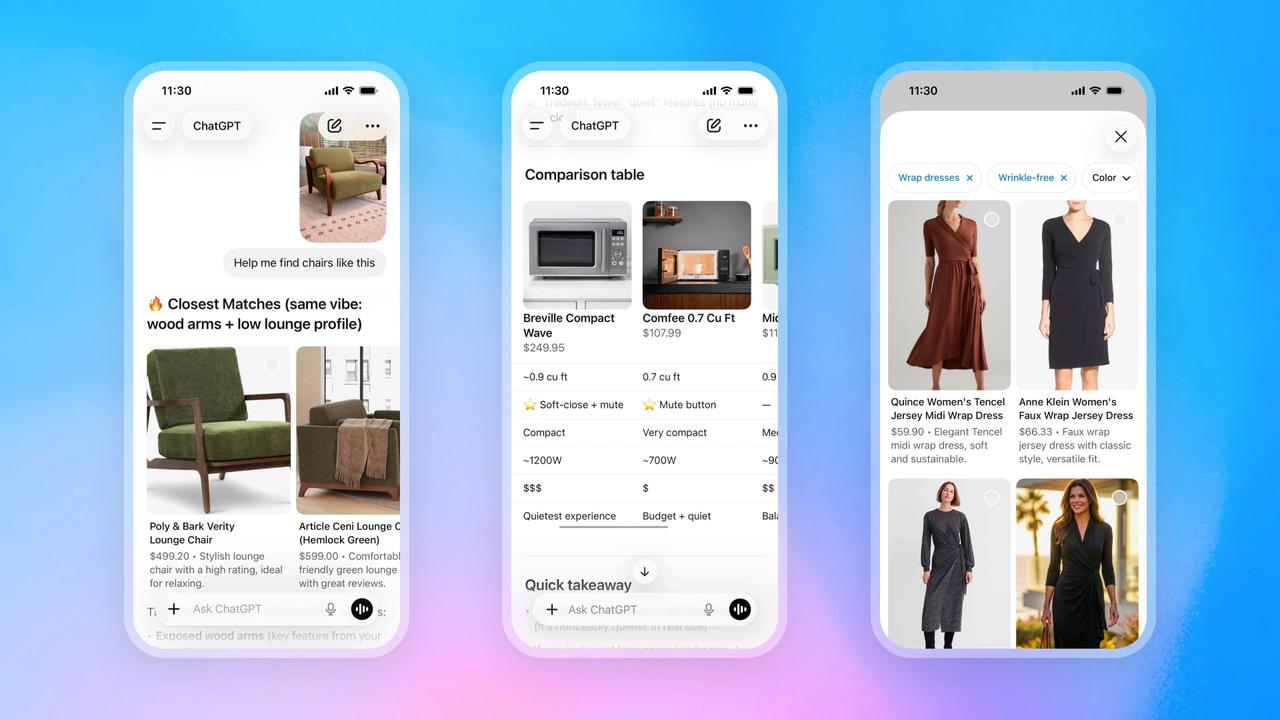
. The revamped shopping experience enables users to upload images from magazines, blogs, or sites like Pinterest as inspiration and receive suggestions for similar items1
. ChatGPT now presents product suggestions side-by-side with details like price, reviews, and features, creating a more visual and comparative shopping experience5
.
Source: MacRumors
Under the hood, OpenAI has improved speed, relevance, and product coverage to deliver more up-to-date and useful results
3
. These updates are rolling out to all ChatGPT Free, Go, Plus, and Pro users this week4
. Retailers including Target, Sephora, Nordstrom, Best Buy, and The Home Depot have already joined the platform4
.The pivot reflects a broader reality about customer relationships and payment systems in the AI era. Merchants can now share their product feeds and promotions with OpenAI through an expansion of its Agentic Commerce Protocol, ensuring their products are "fully represented" within ChatGPT
3
. This backend layer connects merchants with users while allowing retailers to maintain control over transactions5
.Walmart is launching a dedicated in-app ChatGPT experience that supports account linking, loyalty programs, and its own payment system
3
. "By partnering closely with OpenAI, we've been able to learn together as we move quickly to shape what agentic commerce can become," said Walmart EVP Daniel Danker5
. Shopify announced it's "upgrading the shopping experience" in ChatGPT, allowing Shopify merchants to connect their storefronts and complete purchases via an in-app browser3
.

Source: Inc.
Related Stories
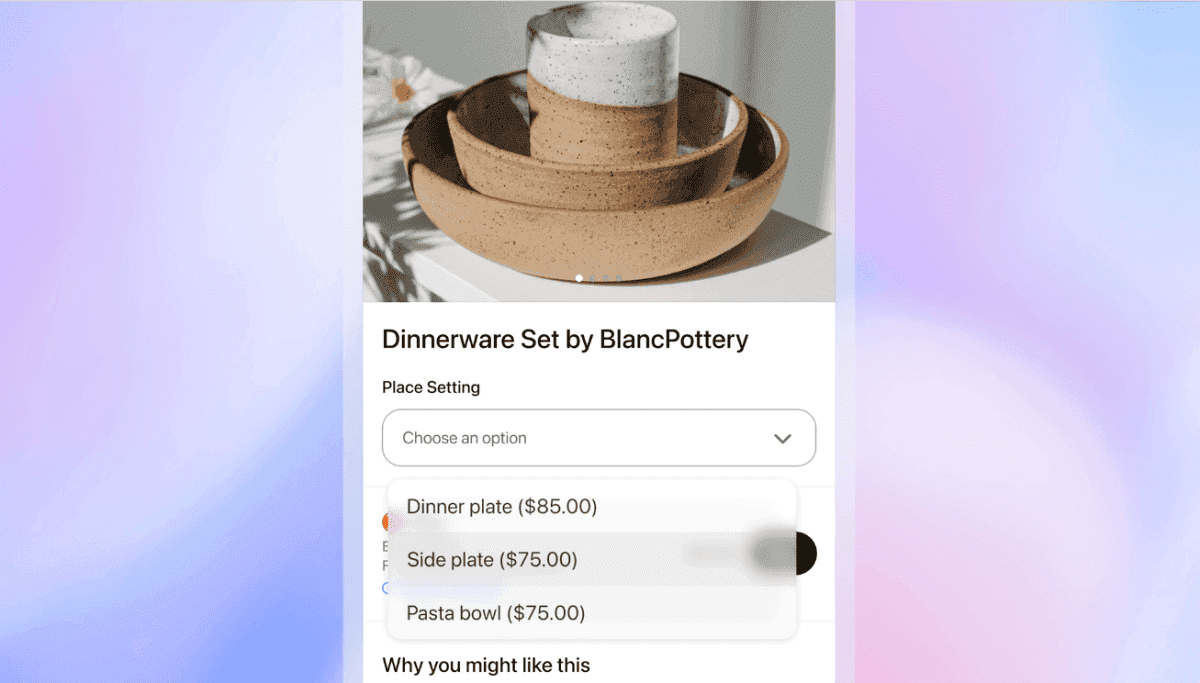
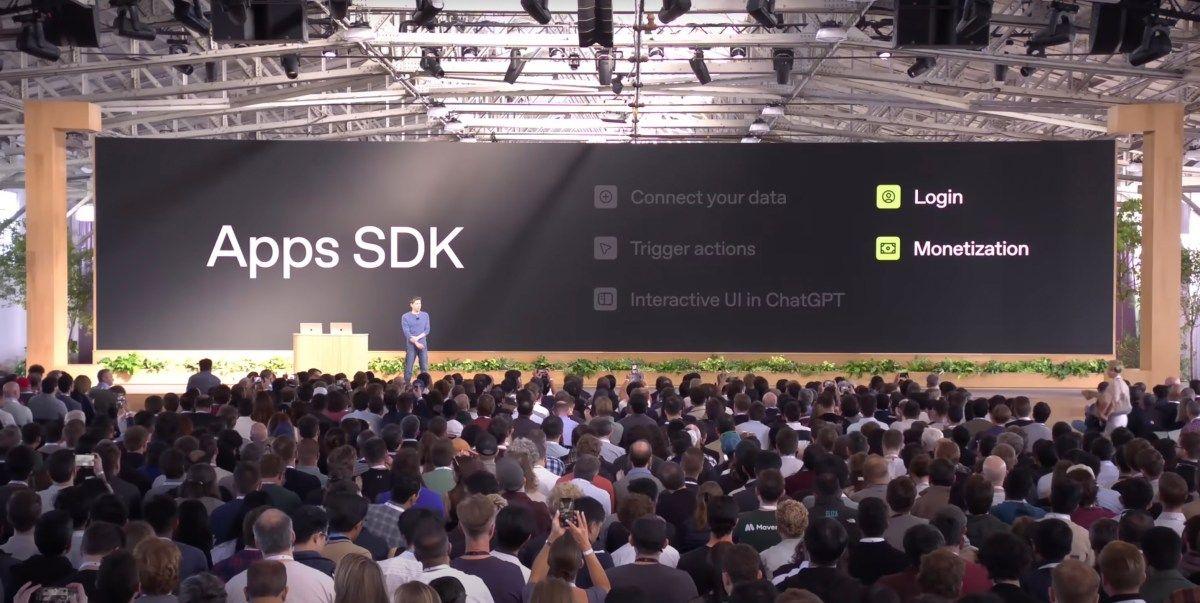
The Instant Checkout failure adds to mounting challenges with OpenAI's broader app ecosystem strategy. Last year, OpenAI unveiled an ambitious plan to let companies like Spotify and Booking Holdings launch mini apps within ChatGPT, creating an all-in-one platform reminiscent of the Apple App Store . Six months later, the ChatGPT app store initiative is off to a sluggish start, according to interviews with app makers .

Source: Bloomberg
While there are now more than 300 integrations available, they're hidden away and functionality has been limited by partner companies hesitant to hand off customer relationships and payments to OpenAI . Developers have complained about a tedious app-approval process, buggy coding systems, and lack of usage data . Few apps offer a checkout option that doesn't force users to leave OpenAI's chatbot, with Instacart being a notable exception with deeper integration .
Booking CEO Glenn Fogel noted that referral traffic from ChatGPT remains "small" and that his company still "spends an enormous amount" on advertising with Google relative to what it spends on OpenAI's chatbot . This creates a chicken-or-the-egg dynamic where consumers won't switch to AI unless the service is better or cheaper, and companies have no incentive to empower a middleman, according to Jefferies analyst John Colantuoni .
The lackluster debut of shopping features adds to a growing list of product bets by OpenAI that haven't yet paid off. The company discontinued its Sora AI video generator last week as part of a push to streamline offerings ahead of a possible IPO later this year . OpenAI is also working to fold its nascent browser, called Atlas, into a single desktop app with its chatbot and coding tools .
An OpenAI spokesperson emphasized that the app platform remains central to its product strategy, stating: "We're still early in building this out, and we recognize there are areas where the developer experience needs to improve" . The company is committed to making the platform "more reliable, more predictable and easier to build on over time" . OpenAI noted it's "building iteratively," learning from early launches and incorporating feedback from users and merchants to continue improving the experience
5
.Summarized by
Navi
[3]
09 Mar 2026•Technology

18 Dec 2025•Technology

06 Oct 2025•Technology

1
Policy and Regulation

2
Policy and Regulation

3
Technology