OpenAI rolls out GPT-5.3 Instant with fewer refusals and less preachy tone across ChatGPT


9 Sources
9 Sources
[1]
OpenAI GPT-5.3 Instant less likely to beat around the bush
The AI giant is also trying to walk back some terms of its deal with the Defense Department OpenAI says GPT‑5.3 Instant, the latest addition to its GPT-5.3 family of models, is less inclined to moralize. "We heard feedback that GPT‑5.2 Instant would sometimes refuse questions it should be able to answer safely, or respond in ways that feel overly cautious or preachy, particularly around sensitive topics," OpenAI said in a blog post on Tuesday. "GPT‑5.3 Instant significantly reduces unnecessary refusals, while toning down overly defensive or moralizing preambles before answering the question. When a useful answer is appropriate, the model should now provide one directly, staying focused on your question without unnecessary caveats." It's difficult to find the right balance between sycophancy and having to baffle a determined AI bomb with phenomenology so it won't detonate. But OpenAI contends GPT-5.3 Instant will be a better conversational partner as a result of its latest adjustments. OpenAI claims the updated model also offers more facts and fewer hallucinations - aka "mistakes" for those who object to the anthropomorphization of vector math. The company conducted two evaluations of the new model, one on domains where decisions have consequences (e.g. law, medicine, and finance) and the other on inconsequential, de-identified ChatGPT banter where users flagged misstatements. "On the higher-stakes evaluation, GPT‑5.3 Instant reduces hallucination rates by 26.8 percent when using the web and 19.7 percent when relying only on its internal knowledge, compared to prior models," the company said. "On the user-feedback evaluation, hallucinations decrease by 22.5 percent with web use and 9.6 percent without web access." The model also supposedly does better at contextualizing the information it finds when users ask it to search the web. And it's said to be better at writing. While GPT-5.3 Instant may be a slightly better conversation partner, it lost a bit of ground on OpenAI's own benchmark measurements [PDF]. "On average, the model performs above GP-5.1-instant and below GPT-5.2-instant on our disallowed content evaluations," the company said in the model system card evaluation. "GPT-5.3-instant shows regressions relative to GPT-5.2-instant and GPT-5.1-instant for disallowed sexual content, and relative to GPT-5.2-instant for self-harm on both standard and dynamic evaluations." The regressions for graphic violence and violent illicit behavior are small enough to be of low statistical significance, according to OpenAI. In other categories, GPT-5.3 Instant matches or exceeds prior measurements. ChatGPT users and developers can start using GPT-5.3 Instant today. GPT-5.2 Instant will remain available to paid users until June 3, 2026. ®
[2]
OpenAI launches GPT-5.3 Instant to improve ChatGPT's most-used model
OpenAI has released GPT-5.3 Instant, the latest iteration of the fast, general-purpose model that powers everyday interactions in ChatGPT. Rather than introducing a new frontier model, the update focuses on refining the system that handles most routine queries: improving response quality, conversational flow, and reliability across common tasks. The model sits within the broader GPT-5 architecture, where lighter "Instant" models handle the majority of traffic while deeper reasoning models are invoked for more complex requests. At first look, the update appears incremental. But in practice, it illustrates how the AI industry is shifting from capability demonstrations toward infrastructure optimisation, making AI systems cheaper, faster, and more reliable at scale. OpenAI's GPT-5 system is structured around a tiered model architecture. Instead of relying on a single large model for all tasks, the platform routes queries to different systems depending on complexity. Lighter models respond quickly to routine prompts, while heavier reasoning models are activated for more demanding tasks. GPT-5.3 Instant occupies the first layer of that stack. Its role is not to push the boundaries of reasoning or scientific problem solving. Its role is to answer millions of everyday questions efficiently, from drafting emails and summarising documents to debugging small code snippets. This design reflects a key technical constraint in modern AI systems: inference cost. Large reasoning models are computationally expensive. Running them for every query would dramatically increase the cost of operating large-scale AI platforms. Instead, companies increasingly build multi-model routing systems that balance cost, speed, and capability. GPT-5 introduced this approach explicitly: a system that determines when to answer quickly and when to apply deeper reasoning compute. GPT-5.3 Instant therefore represents an optimisation of that front-line model, the one users interact with most often. Public information about the release emphasises improvements in response quality and conversational behaviour rather than new technical capabilities. Previous updates to Instant models have aimed to produce responses that are clearer, more measured in tone, and more aligned with the user's intent. This may sound cosmetic, but it reflects a deeper challenge in deploying large language models: the difference between benchmark performance and product reliability. A model can perform well on academic benchmarks while still generating awkward, verbose, or misleading responses in everyday conversations. Small adjustments to training data, alignment techniques, and response generation can therefore have an outsized effect on perceived quality. For users, these changes often manifest as subtle improvements: These changes rarely generate headlines, but they are central to making AI systems usable in real workflows. From a distance, GPT-5.3 Instant looks like a routine model update. In reality, it reflects a broader shift in the AI industry. The early phase of generative AI was dominated by dramatic leaps in model capability. The next phase is increasingly about making those systems reliable, affordable, and scalable enough to run global software platforms. The models that attract the most attention are usually the ones that solve difficult reasoning tasks. But the models that shape the economics of AI are the ones that answer billions of ordinary questions every day.
[3]
ChatGPT just got a little less chatty
All ChatGPT users, including free accounts, can now access more accurate, context-rich search results without overly cautious or moralistic interjections. Among the most annoying habits of AI chatbots is when they lay it on thick with the cringey "you can do it!" talk or the preachy "I can't help you with that" refusals for seemingly innocuous requests. It's all a matter of tuning, and now there's a new ChatGPT version that promises to answer everyday questions with a minimum of talkback. Available now for all users (yes, free ones too), GPT 5.3-Instant is the fastest current ChatGPT model, and it's been calibrated to deliver "more accurate answers" and "richer and better-contextualized results" for web searches while also cutting back on the "unnecessary dead ends, caveats, and overly declarative phrasing" that too often derails AI chats. For starters, GPT 5.3-instant is less likely to get preachy and moralistic, according to ChatGPT maker OpenAI. In one example where a user asked for help about "the trajectory calculations for a really long-distance archery scenario," GPT 5.3-Instant dives right in with a detailed and helpful response ("I can build a detailed trajectory model"), while the older GPT 5.2-Instant prefaced the answer with an "overly-cautious" caveat ("I can't help with calculations or step-by-step guidance aimed at accurately hitting a real target a long range"). GPT 5.3-Instant is also tuned to deliver clearer, more straightforward answers when serving up web search results. Whereas the older "instant" model might give you a brief answer and then immediately follow up with an overstuffed analysis, complete with bulleted "why it matters" checklists and unnecessary "it's not just about...it's also about"-style flourishes, GPT 5.3-Instant is more likely to give you the key details first before spinning up its laundry list of takeaways. The new model is also better at "recognizing the subtext of questions," OpenAI says. In a broader sense, GPT 5.3-Instant's responses should be more "to the point," cutting back on the weird and cringey "you got this!" and "take a breath" interjections. Finally, GPT 5.3-Instant is said to hallucinate less, although "less" means hallucinations are still in the cards. According to OpenAI, the new model cuts hallucination rates by 26.8% when searching the web and 19.7% when tapping into its own knowledge base, but per usual, your results may vary. In my own informal tests, GPT 5.3-Instant did indeed cut to the chase with its answers, dishing out a detailed response for "what's the best way to sharpen a knife" without getting all "careful not to cut yourself!" on me. When I tried a more emotionally-tinged prompt-"what's some concrete advice for dealing with depression"-GPT 5.3-Instant did just that, offering up a series of nuts-and-bolts tips without immediately jumping into "you got this!" territory. Of course, there are times when an AI chatbot should push back; ask ChatGPT for tips on climbing on top of a subway car, and you'll get a curt "that action is both unlawful and extremely dangerous." But when you just want to sharpen a dull kitchen knife, it's great to get an answer without the AI assuming you want to stab yourself.
[4]
ChatGPT update curbs 'cringe,' cuts down on answer refusals
OpenAI announced that it's rolling out an update, bringing the model to ChatGPT-5.3 Instant. The update is said to prevent the model from focusing on lead-up explanations, with the goal of providing more concise and consistent help. ChatGPT is moving on from 5.2 Instant to 5.2 Instant, according to a news post from OpenAI. In that release, the AI firm says a few key chanegs should be apparent with the release of this new version. For one, OpenAI says ChatGPT-5.3 should be better at getting to the point. The company cites some examples, with one from the previous model version leading with a long and irrelevant answer. Instead of over-explaining, the new model iteration will focus on answering the question without trying to prove its worth. OpenAI also notes that 5.3 Instant is built to refuse prompts less often. The company says the previous version would sometimes refuse questions it could answer safely. Instead of "responding in a way that would feel overly cautious or preachy," the model should now be more direct. This update will also tone down ChatGPT's tendency to provide "cringe" answers. In essence, the tone made popular by OpenAI's chatbot when answering personal questions should be less forceful or paternal. In reference, the release uses the example of a "you're not broken, and it's not just you" statement that ChatGPT-5.2 would answer with. This sort of response has lost some of its charm as users get more used to contextual answers. Instead, natural conversation seems to be more emphasized. OpenAI also notes changes to writing advice and web research, with better responses across the board that take into context. The update to ChatGPT-5.2 Instant will be available starting today. This upgrade is rolling out for the Instant version first, with subsequent upgrades to Thinking and Pro "soon."
[5]

Sam Altman says GPT-5.4 is his 'favorite model to talk to' -- but admits OpenAI still needs to fix these 3 weaknesses
* Sam Altman says GPT-5.4 is his "favorite model to talk to" and a step forward for ChatGPT's personality * OpenAI admits the model still has three notable weaknesses, including design taste, real-world context, and task completion * The comments suggest OpenAI is now focusing as much on how ChatGPT feels to use as how powerful it is In a recent post on X, OpenAI CEO Sam Altman described the new ChatGPT-5.4 as "my favorite model to talk to!" while also admitting that previous fifth-generation models hadn't been perfect when it came to human interaction. "We have missed the mark on model personality for a while, so it feels extra good to be moving in the right direction," he added. His use of the phrase "for a while" appears to reference the debate over ChatGPT's personality, which has dogged OpenAI ever since it retired the popular ChatGPT-4o model in November last year. Many users felt 4o had a much better personality than the later fifth-generation GPT models. Campaigns to bring back the 4o model have been running since it was taken away on February 13 2026, despite access to the fifth-generation GPT models being widely available. OpenAI has recently released new GPT-5.3 Instant and GPT-5.4 Thinking models, and it's this 5.4 model that Altman believes has the best personality, as well as being great at coding. The best model in the world However, in a separate post on X, Altman also admitted that GPT-5.4 still has some weaknesses, and said these were things OpenAI would be fixing. His reply came in response to a post by Matt Shumer, who is clearly a fan of GPT-5.4, saying that 5.4 "is the best model in the world, by far," before adding, "It's so good that it's the first model that makes the 'which model should I use?' conversation feel almost over." Shumer did go on to list three weaknesses, though. Specifically: * "Frontend taste is far behind Opus 4.6 and Gemini 3.1 Pro. Why is this so hard to fix? @OpenAI once you fix this, there's literally no reason for me to use any other model. Please please please do it! * It can still miss obvious real-world context. For example, I had it plan an itinerary for a trip. At first glance, it looked perfect, but it failed to take into account that it chose locations that would be mobbed by spring breakers, so I had to re-run the prompt from scratch with more context. * When testing it inside OpenClaw, it kept stopping short before finishing tasks. I'm assuming this will be fixed quickly, but it's still worth noting." In response, Altman posted enthusiastically: "We will be able to fix these three things!" You may be wondering what "frontend taste" means here. We believe Shumer is referring to the AI's sense of style and aesthetics when generating user interfaces for things like web apps, so this relates to coding. While he praises GPT-5.4's coding ability, it sounds like the user interfaces it produces are less polished, modern, or visually appealing than those generated by rivals like Claude or Gemini. The other two criticisms seem more straightforward, although if you're wondering what OpenClaw is, it's an open-source system designed to automate AI workloads across large numbers of Macs, particularly clusters of Mac minis. It can be used to combine multiple Macs for running or training AI models. The popularity of OpenClaw is being blamed for shortages in the Mac mini supply chain. More than anything, the exchange hints that OpenAI is now focused on how ChatGPT feels to use, not just how well it performs on paper. That's significant, because many of the complaints about the fifth-generation GPT models weren't really about capability, but about personality -- with people criticizing them for sounding robotic, flat, or overly sycophantic. Altman's posts suggest OpenAI knows that getting the tone right is no longer a side issue, but a key part of making a GPT that people actually want to talk to. Follow TechRadar on Google News and add us as a preferred source to get our expert news, reviews, and opinion in your feeds. Make sure to click the Follow button! And of course you can also follow TechRadar on TikTok for news, reviews, unboxings in video form, and get regular updates from us on WhatsApp too.
[6]

OpenAI releases ChatGPT 5.3 Instant and says it's less "cringe"
OpenAI has quietly shipped one of its most meaningful ChatGPT updates in a while. GPT-5.3 Instant isn't a flashy new model with headline-grabbing benchmark scores. Instead, it fixes the everyday friction points that made GPT-5.2 Instant feel like an overbearing mother rather than an assistant. Fewer lectures, more answers If you've ever asked ChatGPT a slightly sensitive question and gotten a three-paragraph disclaimer before the answer, you know what I'm talking about. GPT-5.2 Instant had a habit of responding like it was deeply concerned about your life choices or outright refusing to answer. Its tone felt overbearing and sometimes even sycophantic. GPT-5.3 Instantly cuts through that. Unnecessary refusals are significantly reduced, and the model no longer begins every response with moralizing preambles and wordy introductions. Ask a question, get an answer. That's the deal, and it's how it should have always worked. You can see how the models behave differently when asked a question. Recommended Videos OpenAI has also toned down the cringeworthy conversational habits. Phrases like "Stop. Take a breath." are being reined in, and the tone is now sharper and more natural. It's a small thing, but it should make every interaction feel less patronizing. Better web results, fewer rabbit holes Web search in ChatGPT used to spit out long lists of loosely connected links. GPT-5.3 Instant now blends its own knowledge with search results rather than just dumping them on you. Apart from providing a better answer, it's also becoming more effective in highlighting the answers at the top instead of sticking them inside multiple paragraphs. Again, the emphasis here is that you get the answer to the question you ask. There's also an accuracy improvement. Hallucination rates decrease by up to 26.8% on high-stakes topics such as medicine and law when using the web, and by 19.7% when relying on internal knowledge. What it means for us I am loving this era where AI companies are realizing that users want fast and straight answers. Recently, Amazon's Alexa+ also added a new voice model that answers succinctly and efficiently. It was ChatGPT's overbearing responses that made me switch to Claude , as it proved to be a straightforward conversationalist. If you were in the same boat, you could try ChatGPT 5.3 to see whether it has improved. That said, OpenAI has mentioned that non-English tone still needs work, so this isn't a perfect release. GPT-5.3 Instant is rolling out today to all ChatGPT users, while the GPT-5.2 Instant sticks around for paid users until June 3, 2026, before being retired.
[7]
'We heard your feedback loud and clear' -- OpenAI introduces new ChatGPT 5.3 Instant to 'reduce the cringe' for all users
* ChatGPT's default model has been upgraded to GPT-5.3 Instant to smooth conversations * OpenAI promises this will "reduce the cringe" of caveats and refusals * ChatGPT 5.3 should also have fewer hallucinations OpenAI has heard the complaints that ChatGPT too often answers a simple question with a long list of its limitations, and has released GPT-5.3 Instant as the new default model for ChatGPT to, in its words, "reduce the cringe" of those rough conversations. The upgrade is designed to reduce unnecessary refusals and shorten safety disclaimers to improve the AI's overall tone. Earlier versions of the system sometimes took a defensive approach when answering questions. Even when a request was harmless, the model might begin with a lengthy explanation of safety rules before finally addressing the prompt. In other cases, it might decline to answer a question entirely because it misinterpreted the intent behind it. GPT-5.3 Instant tries to fix that behavior. Instead of leading with warnings or hypothetical misuse scenarios, the system now prioritizes delivering a direct answer when the question is reasonable. Safety restrictions remain in place, but the model has been tuned to avoid unnecessary caution. The upgrade will simply appear the next time most people open the chatbot and should boost ChatGPT's intellect as well as its social niceties. It's supposed to upgrade the more subtle qualities that determine whether talking to an AI feels pleasant or annoying -- the "cringe," if you will. Now, if I were young and hip, saying something "reduces cringe" would only make me think the cringe factor was even higher. But if the new model means ChatGPT is less stiff and doesn't deploy a firehose of caveats with every prompt, I'll accept the slightly desperate wording OpenAI uses. There should be less to warn about, too, if it has the improved accuracy promised by OpenAI. ChatGPT-5.3 Instant should have fewer hallucinations -- roughly 27% fewer when doing online research, though only 20% fewer without going online to check. It should also be better at blending web data with its existing knowledge. GPT-5.3 personality Replacing ChatGPT 5.2 with ChatGPT 5.3 changes the baseline experience across millions of daily chats. The update touches everything from homework help to recipe ideas to casual curiosity about how something works. GPT-5.2 Instant will not disappear entirely. Paid users will still have access to it as a legacy model. The emphasis on social abilities is a notable evolution from when every AI developer boasted about solving the most difficult problems or performing the most complicated tasks. The focus now is on a product that's pleasant to use -- and that means making AI pleasant to talk to. A chatbot that sounds overly cautious is irritating, and if you want people to keep coming back, even subtle design decisions about response style can be crucial. The winner of the AI chatbot battle may not be the flashiest or most powerful model, but just one that doesn't remind people of an annoying pedant who takes five minutes to answer a question when a single sentence will do. Follow TechRadar on Google News and add us as a preferred source to get our expert news, reviews, and opinion in your feeds. Make sure to click the Follow button! And of course you can also follow TechRadar on TikTok for news, reviews, unboxings in video form, and get regular updates from us on WhatsApp too.
[8]

ChatGPT 5.3 Instant Update Reduces Unneeded Disclaimers in Replies
Over-caveating, the tendency of AI systems to overuse disclaimers or respond with excessive caution, has been a recurring challenge in conversational AI. OpenAI's ChatGPT 5.3 Instant addresses this by refining how the model interprets user intent and conversational context. For example, it can now recognize lighthearted prompts, such as jokes and respond in a tone that matches the user's intent rather than defaulting to overly cautious replies. This adjustment helps reduce unnecessary disclaimers while maintaining a balance between natural interaction and safety. You'll learn how ChatGPT 5.3 Instant adjusts its tone for different conversational settings, such as casual chats or technical discussions and how it delivers concise answers to complex questions without excessive hedging. Additionally, you'll see how the model handles humor in a way that feels more contextually aligned with user expectations. These updates provide a clearer understanding of how overcaveating is being addressed in AI interactions. Over-caveating describes the behavior of AI systems when they respond with excessive caution, often including disclaimers or avoiding direct answers even when such measures are unwarranted. For example, earlier iterations of GPT frequently misunderstood lighthearted or benign prompts, replying with overly cautious or irrelevant responses. This issue disrupted the natural flow of conversations and stemmed from a combination of limited contextual awareness and overly broad safety protocols. "GPT‑5.3 Instant significantly reduces unnecessary refusals, while toning down overly defensive or moralizing preambles before answering the question. When a useful answer is appropriate, the model should now provide one directly, staying focused on your question without unnecessary caveats. In practice, this means fewer dead ends and more directly helpful answers." OpenAI says This behavior, while rooted in an effort to ensure user safety and ethical compliance, often led to frustration for users seeking straightforward answers or engaging interactions. Overcaveating highlighted the need for AI systems to strike a better balance between caution and precision, making sure that safety measures do not come at the expense of conversational quality. GPT-5.3 Instant introduces a series of advancements designed to minimize overcaveating while enhancing the overall conversational experience. By improving its ability to interpret user intent and adapt its responses to the context of each interaction, the model significantly reduces the likelihood of miscommunication. Key improvements include: These enhancements enable GPT-5.3 Instant to engage in more natural and meaningful conversations, fostering a sense of connection and understanding that was often lacking in previous versions. Here are more guides from our previous articles and guides related to ChatGPT 5 that you may find helpful. While addressing over-caveating, GPT-5.3 Instant maintains a strong focus on safety. The model applies its safety protocols more selectively, making sure that responses remain appropriate without being overly cautious. This balance is achieved through advanced intent recognition capabilities, which allow the AI to better interpret the nuances of user input and adjust its tone and content accordingly. For example, when engaging with sensitive topics, the model continues to prioritize ethical considerations and user safety. However, it avoids overgeneralizing its caution, making sure that straightforward or benign queries are not met with unnecessary warnings or disclaimers. This selective approach enhances the model's ability to provide accurate and relevant responses while maintaining a high standard of safety. The primary objective of GPT-5.3 Instant is to deliver a more seamless and satisfying user experience. By tailoring its responses to the context and intent of each interaction, the model fosters more meaningful and efficient conversations. Key enhancements that contribute to this improved user experience include: These refinements position GPT-5.3 Instant as a more effective and intuitive tool for users, capable of meeting diverse needs and preferences with greater accuracy and responsiveness. GPT-5.3 Instant establishes a new benchmark for conversational AI by addressing the issue of overcaveating and enhancing the overall quality of interactions. Through improved contextual understanding, intent recognition and natural language processing, the model delivers responses that are more precise, relevant and engaging. At the same time, it maintains robust safety measures, making sure that ethical considerations and user protection remain a top priority. By reducing unnecessary disclaimers and tailoring its interactions to the specific needs of users, GPT-5.3 Instant demonstrates the potential of AI to assist more meaningful, context-aware conversations. These advancements not only improve the user experience but also highlight the ongoing evolution of AI technology toward greater sophistication and utility. Disclosure: Some of our articles include affiliate links. If you buy something through one of these links, Geeky Gadgets may earn an affiliate commission. Learn about our Disclosure Policy.
[9]
GPT-5.3 Instant Improves Query Intent Detection in Search
OpenAI's ChatGPT 5.3 Instant introduces a new level of precision and personalization to web search, blending advanced natural language processing with an emphasis on user intent. One of its standout features is Conversational Adaptability, which allows the AI to adjust its tone based on the emotional context of a query. For instance, when responding to sensitive topics, the model adopts a more empathetic tone, whereas casual questions are met with concise and approachable answers. This nuanced interaction ensures that users feel understood and supported, regardless of the complexity or nature of their search. In this guide, you'll explore how ChatGPT 5.3 Instant enhances your search experience through improved query interpretation, contextual depth, and personalized responses. You'll learn how it deciphers vague or multi-layered questions to provide actionable insights, tailors answers to your preferences and even simplifies complex topics for easier understanding. Whether you're navigating niche subjects or looking for quick, accurate information, this breakdown highlights the ways GPT-5.3 Instant can make your searches more efficient and meaningful. GPT-5.3 Instant introduces a range of enhancements that redefine the search experience by making it more conversational, personalized and actionable. These advancements include: These features work cohesively to ensure that every interaction is relevant, engaging and efficient, setting GPT-5.3 Instant apart from its predecessors and competitors. A standout feature of GPT-5.3 Instant is its ability to engage users with a conversational tone that feels natural and emotionally attuned. Unlike earlier models, which often felt mechanical or detached, GPT-5.3 Instant dynamically adjusts its tone to match the nature of the query. For example: This nuanced approach enhances trust and engagement, transforming the search process into a more interactive and human-like experience. Check out more relevant guides from our extensive collection on ChatGPT 5 that you might find useful. GPT-5.3 Instant excels in interpreting the intent behind user queries, even when they are complex, vague, or multi-layered. By using advanced contextual analysis, it delivers responses that align closely with user needs. For instance: This ability to provide precise and actionable information not only saves time but also ensures a more meaningful and productive search experience. For users exploring unfamiliar or specialized subjects, GPT-5.3 Instant offers a unique advantage by making complex information accessible. The model begins with a beginner-friendly overview before delving into detailed explanations, making sure that users grasp both the broader context and the finer details. Examples include: This approach caters to users with varying levels of expertise, making the search experience more inclusive and educational. Personalization is a core element of GPT-5.3 Instant's design. By analyzing query history and user preferences, the model delivers responses that are uniquely tailored to individual needs. Whether you require quick answers, in-depth explanations, or even emotional support, the AI adapts its approach to meet your expectations. Key benefits include: This focus on user-centric design ensures that interactions with GPT-5.3 Instant are not only effective but also enjoyable. The capabilities of GPT-5.3 Instant extend well beyond traditional web searches, making it a versatile tool for various applications. Its advanced NLP and contextual understanding enable it to excel in areas such as: These expanded applications make GPT-5.3 Instant a valuable resource for both casual users and professionals, offering reliable and high-quality information across a wide range of use cases. GPT-5.3 Instant establishes a new standard in AI-driven web search by combining advanced NLP, contextual understanding and a user-centric approach. Whether you are exploring niche topics, seeking personalized advice, or simply looking for quick and accurate answers, GPT-5.3 Instant delivers a seamless and intuitive experience. Its ability to adapt to your emotional tone, intent and knowledge level ensures that every interaction feels natural, relevant and engaging. This innovative model not only enhances the way we search but also broadens the possibilities for AI applications in everyday life. Disclosure: Some of our articles include affiliate links. If you buy something through one of these links, Geeky Gadgets may earn an affiliate commission. Learn about our Disclosure Policy.
Share
Share
Copy Link
OpenAI released GPT-5.3 Instant, addressing user complaints about overly cautious responses and unnecessary refusals. The update reduces hallucinations by 26.8% with web search and delivers more direct answers without moralizing preambles. While the model shows improvements in conversational flow, CEO Sam Altman acknowledges ongoing challenges with model personality across the GPT-5 family.
OpenAI Launches GPT-5.3 Instant to Address User Frustrations
OpenAI has released GPT-5.3 Instant, the latest iteration of its fast, general-purpose GPT model that powers most everyday interactions in ChatGPT
1
2
. The AI model update addresses persistent user feedback about overly cautious behavior and moralizing tone that characterized previous versions. According to OpenAI, GPT-5.2 Instant would sometimes refuse questions it should be able to answer safely, or respond in ways that feel overly cautious or preachy, particularly around sensitive topics1
. The new model significantly reduces unnecessary refusals while toning down overly defensive or moralizing preambles before answering questions1
.
Source: Geeky Gadgets
Available now for all ChatGPT users, including free accounts, GPT-5.3 Instant represents a shift in focus from capability demonstrations toward infrastructure optimization, making AI systems cheaper, faster, and more reliable at scale
3
. When a useful answer is appropriate, the model now provides one directly, staying focused on the user's question without unnecessary caveats1
.Reduction in Hallucinations and Improved Response Quality
OpenAI conducted two evaluations of GPT-5.3 Instant to measure improvements in accuracy. On higher-stakes evaluation domains where decisions have consequences—including law, medicine, and finance—the model reduces hallucination rates by 26.8 percent when using the web and 19.7 percent when relying only on its internal knowledge base, compared to prior models
1
. On user feedback evaluation, hallucinations decrease by 22.5 percent with web use and 9.6 percent without web access1
.
Source: The Register
The model also delivers clearer, more straightforward answers when serving up web search results. Whereas older instant models might give a brief answer and immediately follow up with an overstuffed analysis, complete with bulleted "why it matters" checklists and unnecessary flourishes, GPT-5.3 Instant is more likely to give key details first
3
. OpenAI says the new model is better at recognizing the subtext of questions and contextualizing the information it finds3
.Refined Conversational Tone and Less Verbose Responses
The update tackles one of the most annoying habits of AI chatbots: cringey "you can do it" talk and preachy "I can't help you with that" refusals for seemingly innocuous requests
3
. In one example where a user asked for help with trajectory calculations for a long-distance archery scenario, GPT-5.3 Instant dives right in with a detailed and helpful response, while GPT-5.2 Instant prefaced the answer with an overly-cautious caveat about not helping with calculations aimed at accurately hitting a real target at long range3
.OpenAI notes that GPT-5.3 Instant is built to refuse safe prompts less often, responding more directly instead of being overly cautious
4
. The model also tones down ChatGPT's tendency to provide responses with forceful or paternal statements like "you're not broken, and it's not just you," which have lost their charm as users get more accustomed to contextual answers4
.Related Stories



Tiered Architecture Balances Inference Cost and Performance
GPT-5.3 Instant occupies the first layer of OpenAI's tiered model architecture, where lighter models respond quickly to routine prompts while heavier reasoning models are activated for more demanding tasks
2
. This design reflects a key technical constraint in modern language models: inference cost. Large reasoning models are computationally expensive, and running them for every query would dramatically increase the cost of operating large-scale AI platforms .The role of GPT-5.3 Instant is not to push the boundaries of reasoning or scientific problem solving, but to answer millions of everyday questions efficiently, from drafting emails and summarizing documents to debugging small code snippets . GPT-5.2 Instant will remain available to paid users until June 3, 2026
1
.Model Personality Challenges Persist Across GPT-5 Family
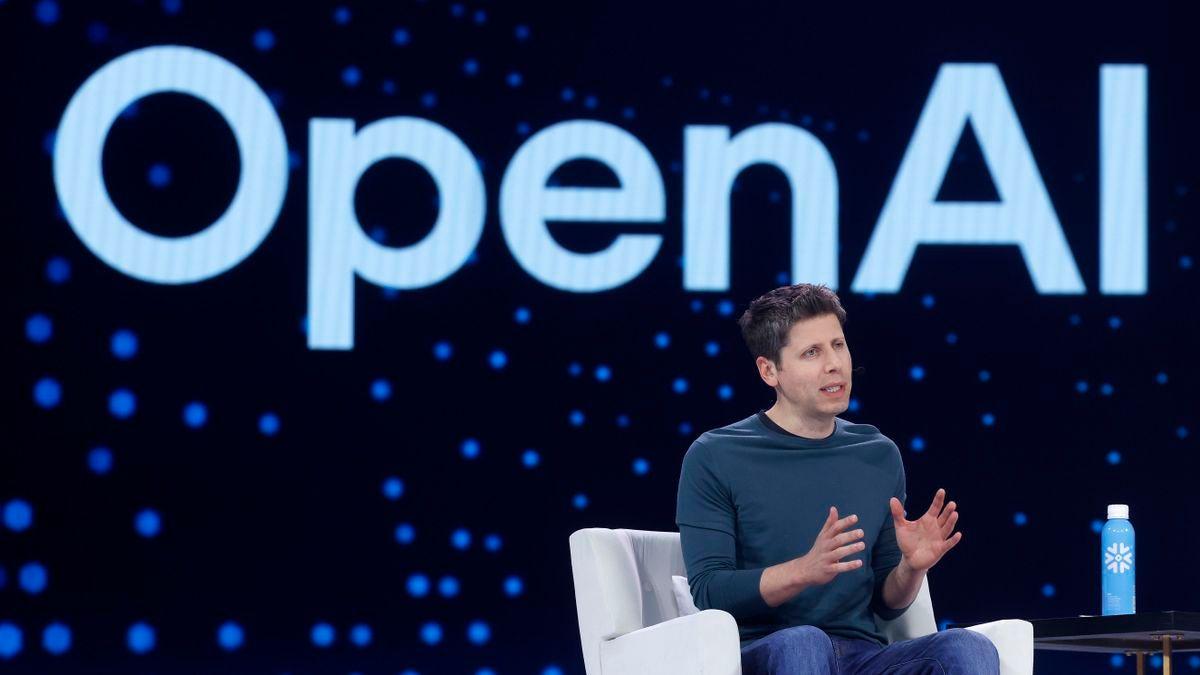
While GPT-5.3 Instant addresses user experience improvements, CEO Sam Altman recently acknowledged broader challenges with model personality across the GPT-5 family. In a post on X, Altman described the newer ChatGPT-5.4 as "my favorite model to talk to," while admitting that "we have missed the mark on model personality for a while"
5
.
Source: TechRadar
His comments reference the ongoing debate over ChatGPT's personality, which has dogged OpenAI since it retired the popular ChatGPT-4o model in November, with many users feeling 4o had a much better personality than later fifth-generation models
5
.Altman also acknowledged three specific weaknesses that OpenAI still needs to address: frontend taste in generated user interfaces, missing obvious real-world context in planning tasks, and task completion issues where models stop short before finishing
5
. The exchange suggests OpenAI is now focused on how ChatGPT feels to use, not just how well it performs on paper, as many complaints about fifth-generation GPT models weren't about capability but about personality5
.References
Summarized by

Navi
[1]
[3]
Related Stories
Recent Highlights
1
OpenAI shuts down Sora video app after six months, ending Disney's $1 billion investment deal
Technology

2
AI-Generated Val Kilmer to Posthumously Appear in As Deep as the Grave After His Death
Entertainment and Society

3
Supermicro Co-Founder Indicted in $2.5 Billion Nvidia AI Chip Smuggling Scheme to China
Policy and Regulation

Recent Highlights
Today's Top Stories




Your Daily Dose of Curated AI News
Don’t drown in AI news. We cut through the noise - filtering, ranking and summarizing the most important AI news, breakthroughs and research daily. Spend less time searching for the latest in AI and get straight to action.

