Elon Musk demands up to $134 billion from OpenAI and Microsoft as lawsuit heads to trial


18 Sources
18 Sources
[1]
Musk wants up to $134B in OpenAI lawsuit, despite $700B fortune | TechCrunch
Elon Musk wants a jaw-dropping $79 billion to $134 billion in damages from OpenAI and Microsoft, claiming the AI company defrauded him by jettisoning its nonprofit mission, Bloomberg first reported. The figure comes from expert witness C. Paul Wazzan, a financial economist who has been deposed nearly 100 times and testified at trial more than a dozen times in complex commercial litigation cases. Wazzan, who specializes in valuation and damages calculations in high-stakes disputes, determined that Musk is entitled to a hefty portion of OpenAI's current $500 billion valuation based on his $38 million seed donation when he co-founded the startup in 2015. (If you're wondering, that would mean a 3,500-fold return on Musk's investment.) Wazzan's analysis combines Musk's initial financial contributions with the technical know-how and business contributions he offered to OpenAI's early team, calculating wrongful gains of $65.5 billion to $109.4 billion for OpenAI and $13.3 billion to $25.1 billion for Microsoft. Musk's legal team argues he should be compensated as an early startup investor who sees returns "many orders of magnitude greater" than his initial investment. But the sheer scale of the damages demand underscores that this legal battle isn't really about the money. Musk's personal fortune currently hovers around $700 billion, making him by far the world's richest person. As Reuters recently noted, his wealth now exceeds that of Google co-founder Larry Page, the world's second-richest person, by a stunning $500 billion, according to Forbes' billionaires list. In November, Tesla shareholders separately approved a $1 trillion pay package for Musk, the largest corporate pay package in history. Against this backdrop, even a $134 billion payout from OpenAI would represent a relatively modest addition to Musk's wealth, likely reinforcing for those at OpenAI their characterization of the lawsuit as part of an "ongoing pattern of harassment" rather than a legitimate financial grievance. The case heads to trial in late April in Oakland, California, about 15 miles east of San Francisco.
[2]
Silicon Valley's messiest breakup is definitely headed to court | TechCrunch
OpenAI and Microsoft tried to dodge a courtroom showdown with Elon Musk, but a federal judge wasn't having it - on Thursday she rejected their dismissal requests and set the case for a jury trial in late April, meaning they'll officially duke it out in an Oakland courtroom, with Microsoft also dragged into the legal battle. The backstory reads like a tech soap opera. Musk and Sam Altman co-founded OpenAI with others in 2015 as a nonprofit with lofty charitable goals. But those fuzzy feelings didn't last -- Musk left and in 2023 started his own AI company, xAI, and now claims his former partners betrayed their mission by taking billions from Microsoft and restructuring as a for-profit. The relationships have seemingly curdled across the board. OpenAI and Microsoft remain business partners but increasingly compete head-to-head in AI. Meanwhile, Musk and Altman have gone from collaborators to arch enemies, with OpenAI dismissing Musk's lawsuit as "baseless" and "harassment" and an attempt to slow it down. The judge found enough evidence to let a jury decide whether OpenAI broke its nonprofit commitments. A jury will also now decide whether Microsoft knowingly helped OpenAI break its promises, though the judge dismissed Musk's claim that Microsoft unjustly enriched itself at his expense.
[3]
Elon Musk: OpenAI and Microsoft Owe Me $134 Billion
Following years of legal disputes between Elon Musk and ChatGPT-maker OpenAI, the Tesla CEO is now seeking up to $134 billion from OpenAI and its largest investor, Microsoft. In the newest court filing, Musk's lawyers allege that OpenAI gained between $65.5 billion and $109.4 billion as a result of his contributions to the company. Microsoft allegedly gained between $13.3 billion and $25.1 billion. Musk's lawyers claim that his contributions include not just the $38 million in seed funding he provided during OpenAI's early years -- roughly 60% of the nonprofit's seed funding -- but also his nonmonetary contributions. These include recruiting early employees, providing business contacts, and lending his "prestige and reputation" to the venture. OpenAI has been quick to clap back at Musk's claims. In an official blog post, the company accuses Musk of cherry-picking and publishes snippets from private journal entries written by OpenAI co-founder and president Greg Brockman, without appropriate context. "Elon's latest variant of this lawsuit is his fourth attempt at these particular claims, and part of a broader strategy of harassment aimed at slowing us down and advantaging his own AI company, xAI," the blog post reads. OpenAI accuses Musk of "grossly misrepresenting the written record to further his harassment." The company claims that Musk said he wanted to accumulate $80 billion for a self-sustaining city on Mars during earlier conversations, and that "he needed and deserved majority equity." He allegedly also talked about "his children controlling Artificial General Intelligence (AGI)." This refers to a hypothetical type of AI that would surpass human capabilities across virtually all cognitive tasks, rather than merely solving narrow tasks like current models. Musk first sued OpenAI and CEO Sam Altman in March 2024, claiming the company had committed a breach of contract because OpenAI strayed from its founding mission as a nonprofit. Though the original lawsuit was dropped, Musk later launched another lawsuit alleging wire fraud and numerous other crimes. His legal team later filed an injunction to stop it from transitioning into a for-profit company, followed by a takeover bid involving a consortium of investors in early 2025 (which was unanimously rejected by the board).
[4]
Elon Musk is looking for a $134 billion payout from OpenAI and Microsoft
We now have some idea of what's at stake in the longstanding feud between Elon Musk and OpenAI. As first reported by Bloomberg, the latest filing, as part of a lawsuit that accuses the AI giant of abandoning its non-profit status, claims that Musk is owed anywhere between $79 billion and $134 billion in damages from the "wrongful gains" of OpenAI and Microsoft. Musk claimed in the filing that he's entitled to a portion of OpenAI's recent valuation at $500 billion, after contributing $38 million in "seed funding" during the AI company's startup years. Along with providing "roughly 60 percent of the nonprofit's seed funding," Musk offered recruiting of key employees, introductions with business contacts and startup advice, according to the filing. The monetary estimate comes from C. Paul Wazzan, a financial economist who's serving as Musk's expert in the case. According to Wazzan's calculations, OpenAI earned between $65.5 billion and $109.43 billion in wrongful gains, while Microsoft saw between $13.3 billion and $25.06 billion. The lawsuit between Elon Musk and OpenAI dates back to March 2024, when the xAI CEO first filed a legal action claiming that OpenAI violated its non-profit status. Musk later added Microsoft as another defendant and even tried to get an injunction when OpenAI announced efforts to reorganize its corporate structure. Besides this suit, Musk has named OpenAI in another legal battle, accusing the company, along with Apple, of monopolistic practices that prevent xAI from getting a fair shot in the App Store.
[5]
OpenAI tells investors to brace for 'deliberately outlandish' claims from Musk ahead of trial
The trial will mark a public escalation of Musk's years-long feud with OpenAI, and the company's letter serves as an attempt to preempt and alleviate investors' concerns. OpenAI has raised billions of dollars from venture capitalists, and its valuation has swelled to $500 billion. Musk co-founded OpenAI as a nonprofit research company in 2015 alongside several other researchers and executives, including the startup's CEO Sam Altman. He filed a lawsuit against OpenAI in 2024 alleging he was "assiduously manipulated" and "deceived" after the AI company explored converting to a for-profit entity and established an "opaque web of for-profit OpenAI affiliates," including its multibillion-dollar partnership with Microsoft. Musk departed OpenAI's board in 2018, but he has argued that he is owed "the value of all intellectual property developed" from his contributions, potentially amounting to billions of dollars, according to a complaint. "We have strong defenses and feel confident about our chances of winning the case," OpenAI said in the letter, which was viewed by CNBC. "Regardless, based on the record so far, we believe this case is worth no more than the $38 million that Elon donated - though that is not a guarantee." OpenAI declined to comment on the letter. Earlier this month, U.S. District Judge Yvonne Gonzalez Rogers ruled that the case will proceed to trial. The lawsuit was filed in August 2024 in the U.S. District Court in the Northern District of California. OpenAI said it expects Musk will make comments about the AI company that "are not grounded in reality" and are "typical of the harassment tactics he's previously deployed," according to the letter. "Elon's lawsuit remains baseless and without merit, and our team is focused on ensuring the jury sees these claims for what they are," OpenAI said.
[6]

Elon Musk says OpenAI and Microsoft owe him $134 billion in "wrongful gains"
Serving tech enthusiasts for over 25 years. TechSpot means tech analysis and advice you can trust. What just happened? Elon Musk has a net worth of $681 billion, but he wants OpenAI and Microsoft to add another $134 billion to that figure. It's the amount Musk says they owe him as a result of his early contributions to the ChatGPT maker. Earlier this month, a judge rejected an attempt by OpenAI and Microsoft to have Musk's 2024 lawsuit against them thrown out. The suit accuses OpenAI of breach of contract by abandoning its founding mission of creating a nonprofit that benefits humanity by moving to a for-profit model. After a final bid by the firms to avoid a jury trial was dismissed last Thursday, Musk's lawyer revealed his client's damages requests in a court filing. It's alleged that OpenAI gained between $65.5 billion and $109.4 billion as a result of Musk's contributions to the company. Microsoft, meanwhile, is alleged to have gained between $13.3 billion and $25.1 billion. C. Paul Wazzan, a financial economist who is serving as Musk's expert in the case, defines the money as "wrongful gains." The lawyers say that the amount Musk contributed to OpenAI can be measured beyond the $38 million in seed funding - around 60% of the total - he handed over during the company's startup years. The filing claims that Musk helped OpenAI with the recruitment of key employees, introduced contacts, offered business advice, lent his "prestige and reputation" to the organization, and taught it how to scale. "Just as an early investor in a startup company may realize gains many orders of magnitude greater than the investor's initial investment, the wrongful gains that OpenAI and Microsoft have earned - and which Mr. Musk is now entitled to disgorge - are much larger than Mr. Musk's initial contributions," Musk lawyer Steven Molo wrote. As it has previously done during this case, OpenAI responded to the latest claims with a lengthy post. It accuses Musk of cherry-picking and publishing snippets from co-founder and CTO Greg Brockman's private journal entries without including context. "The truth is that we and Elon agreed in 2017 that a for-profit structure would be the next phase for OpenAI; negotiations ended when we refused to give him full control; we rejected his offer to merge OpenAI into Tesla; we tried to find another path to achieve the mission together; and then he quit OpenAI, encouraging us to find our own path to raising billions of dollars, without which he gave us a 0% chance of success," the post states. OpenAI adds that Musk is trying to slow down and disadvantage the company to benefit his own AI firm, xAI. He said he wanted to accumulate $80 billion for a self-sustaining city on Mars, and that he needed and deserved majority equity. Musk was one of the co-founders, backers, and initial board members of OpenAI, departing the company in 2018 over what he said was a conflict of interest with Tesla. The world's richest person says that when he was approached by Altman and Brockman to help fund the startup in 2015, he was promised that OpenAI would be an open-source, not-for-profit company focused on safely creating an artificial general intelligence (AGI) and countering the competitive threat from Google. Musk claims the co-founders planned a for-profit switch to enrich themselves, including through a deal with Microsoft worth billions and a recent corporate restructuring.
[7]

The Microsoft-OpenAI Files: Internal documents reveal the realities of AI's defining alliance
The launch of the AI lab that would redefine Microsoft caught the tech giant by surprise. "Did we get called to participate?" Satya Nadella wrote to his team on Dec. 12, 2015, hours after OpenAI announced its founding. "AWS seems to have sneaked in there." Nadella had been Microsoft CEO for less than two years. Azure, the company's cloud platform, was five years old and chasing Amazon Web Services for market share. And now AWS had been listed as a donor in the "Introducing OpenAI" post. Microsoft wasn't in the mix. In the internal message, which hasn't been previously reported, Nadella wondered how the new AI nonprofit could remain truly "open" if it was tied only to Amazon's cloud. Within months, Microsoft was courting OpenAI. Within four years, it would invest $1 billion, adding more than $12 billion in subsequent rounds. Within a decade, the relationship would culminate in a $250 billion spending commitment for Microsoft's cloud and a 27% equity stake in one of the most valuable startups in history. New court filings offer an inside look at one of the most consequential relationships in tech. Previously undisclosed emails, messages, slide decks, reports, and deposition transcripts reveal how Microsoft pursued, rebuffed and backed OpenAI at various moments over the past decade, ultimately shaping the course of the lab that launched the generative AI era. More broadly, they show how Nadella and Microsoft's senior leadership team rally in a crisis, maneuver against rivals such as Google and Amazon, and talk about deals in private. For this story, GeekWire dug through more than 200 documents, many of them made public Friday in Elon Musk's ongoing suit accusing OpenAI and its CEO Sam Altman of abandoning the nonprofit mission. Microsoft is also a defendant. Musk, who was an OpenAI co-founder, is seeking up to $134 billion in damages. A jury trial is scheduled for this spring. OpenAI has disputed Musk's account of the company's origins. In a blog post last week, the company said Musk agreed in 2017 that a for-profit structure was necessary, and that negotiations ended only when OpenAI refused to give him full control. The recently disclosed records show that Microsoft's own leadership anticipated the possibility of such a dispute. In March 2018, after learning of OpenAI's plans to launch a commercial arm, Microsoft CTO Kevin Scott sent Nadella and others an email offering his thoughts. "I wonder if the big OpenAI donors are aware of these plans?" Scott wrote. "Ideologically, I can't imagine that they funded an open effort to concentrate ML [machine learning] talent so that they could then go build a closed, for profit thing on its back." The latest round of documents, filed as exhibits in Musk's lawsuit, represents a partial record selected to support his claims in the case. Microsoft declined to comment. Elon helps Microsoft win OpenAI from Amazon Microsoft's relationship with OpenAI has been one of its key strategic advantages in the cloud. But the behind-the-scenes emails make it clear that Amazon was actually there first. According to an internal Microsoft slide deck from August 2016, included in recent filings, OpenAI was running its research on AWS as part of a deal that gave it $50 million in computing for $10 million in committed funds. The contract was up for renewal in September 2016. Microsoft wanted in. Nadella reached out to Altman, looking for a way to work together. In late August, the filings show, Altman emailed Musk about a new deal with Microsoft: "I have negotiated a $50 million compute donation from them over the next 3 years!" he wrote. "Do you have any reason not to like them, or care about us switching over from Amazon?" Musk, co-chair of OpenAI at the time, gave his blessing to the Microsoft deal in his unique way, starting with a swipe at Amazon founder Jeff Bezos: "I think Jeff is a bit of a tool and Satya is not, so I slightly prefer Microsoft, but I hate their marketing dept," Musk wrote. He asked Altman what happened to Amazon. Altman responded, "Amazon started really dicking us around on the T+C [terms and conditions], especially on marketing commits. ... And their offering wasn't that good technically anyway." Microsoft and OpenAI announced their partnership in November 2016 with a blog post highlighting their plans to "democratize artificial intelligence," and noting that OpenAI would use Azure as its primary cloud platform going forward. Internally, Microsoft saw multiple benefits. The August 2016 slide deck, titled "OpenAI on Azure Big Compute," described it as a prime opportunity to flip a high-profile customer to Azure. The presentation also emphasized bigger goals: "thought leadership" in AI, a "halo effect" for Azure's GPU launch, and the chance to recruit a "net-new audience" of developers and startups. It noted that OpenAI was a nonprofit "unconstrained by a need to generate financial return" -- an organization whose research could burnish Microsoft's reputation in AI. But as the ambition grew, so did the bill. 'Most impressive thing yet in the history of AI' In June 2017, Musk spoke with Nadella directly to pitch a major expansion. OpenAI wanted to train AI systems to beat the best human players at competitive esports, Valve's Dota 2. The computing requirements were massive: 10,000 servers equipped with the latest Nvidia GPUs. "This would obviously be a major opportunity for Microsoft to promote Azure relative to other cloud systems," Musk wrote in an email to OpenAI colleagues after the call. Nadella said he'd talk about it internally with his Microsoft cloud team, according to the email. "Sounds like there is a good chance they will do it," Musk wrote. Two months later, Altman followed up with a formal pitch. "I think it will be the most impressive thing yet in the history of AI," he wrote to Nadella that August. Microsoft's cloud executives ran the numbers and balked. In an August 2017 email thread, Microsoft executive Jason Zander told Nadella the deal would cost so much it "frankly makes it a non-starter." The numbers are redacted from the public version of the email. "I do believe the pop from someone like Sam and Elon will help build momentum for Azure," Zander wrote. "The scale is also a good forcing function for the fleet and we can drive scale into the supply chain. But I won't take a complete bath to do it." Ultimately, Microsoft passed. OpenAI contracted with Google for the Dota 2 project instead. 'A bucket of undifferentiated GPUs' Microsoft's broader relationship with OpenAI was starting to fray, as well. By January 2018, according to internal emails, Microsoft executive Brett Tanzer had told Altman that he was having a hard time finding internal sponsors at Microsoft for an expanded OpenAI deal. Altman started shopping for alternatives. Around that time, Tanzer noted in an email to Nadella and other senior executives that OpenAI's people "have been up in the area recently across the lake" -- a reference to Amazon's Seattle headquarters. The internal debate at Microsoft was blunt. Scott wrote that OpenAI was treating Microsoft "like a bucket of undifferentiated GPUs, which isn't interesting for us at all." Harry Shum, who led Microsoft's AI research, said he'd visited OpenAI a year earlier and "was not able to see any immediate breakthrough in AGI." Eric Horvitz, Microsoft's chief scientist, chimed in to say he had tried a different approach. After a Skype call with OpenAI co-founder Greg Brockman, he pitched the idea of collaboration focused on "extending human intellect with AI -- versus beating humans." The conversation was friendly, Horvitz wrote, but he didn't sense much interest. He suspected OpenAI's Dota work was "motivated by a need to show how AI can crush humans, as part of Elon Musk's interest in demonstrating why we should all be concerned about the power of AI." Scott summed up the risk of walking away: OpenAI might "storm off to Amazon in a huff and shit-talk us and Azure on the way out." "They are building credibility in the AI community very fast," the Microsoft CTO and Silicon Valley veteran wrote. "All things equal, I'd love to have them be a Microsoft and Azure net promoter. Not sure that alone is worth what they're asking." But by the following year, Microsoft had found a reason to double down. The first billion In 2019, OpenAI restructured. The nonprofit would remain, but a new "capped profit" entity would sit beneath it -- a hybrid that could raise capital from investors while limiting their returns. Microsoft agreed to invest $1 billion, with an option for a second billion, in exchange for exclusive cloud computing rights and a commercial license to OpenAI's technology. The companies announced the deal in July 2019 with a joint press release. "The creation of AGI will be the most important technological development in human history, with the potential to shape the trajectory of humanity," Altman said. Nadella echoed that sentiment, emphasizing the companies' ambition to "democratize AI" while keeping safety at the center. So what changed for Microsoft between 2018 and 2019? In a June 2019 email to Nadella and Bill Gates, previously disclosed in the Google antitrust case, Scott cited the search giant's AI progress as one reason for Microsoft to invest in OpenAI. He "got very, very worried," he explained, when he "dug in to try to understand where all of the capability gaps were between Google and us for model training." Nadella forwarded Scott's email to Amy Hood, Microsoft's CFO. "Very good email that explains why I want us to do this," Nadella wrote, referring to the larger OpenAI investment, "and also why we will then ensure our infra folks execute." Gates wasn't so sure. According to Nadella's deposition testimony, the Microsoft co-founder was clear in "wanting us to just do our own" -- arguing that the company should focus on building AI capabilities in-house rather than placing such a large bet on OpenAI. Nadella explained that the decision to invest was eventually driven by him and Scott, who concluded that OpenAI's specific research direction into transformers and large language models (the GPT class) was more promising than other approaches at the time. Hood, meanwhile, offered some blunt commentary on OpenAI's cap on profits -- the centerpiece of its new structure, meant to limit investor returns and preserve the nonprofit's mission. The caps were so high, she wrote, that they were almost meaningless. "Given the cap is actually larger than 90% of public companies, I am not sure it is terribly constraining nor terribly altruistic but that is Sam's call on his cap," Hood wrote in a July 14, 2019, email to Nadella, Scott, and other executives. If OpenAI succeeded, she noted, the real money for Microsoft would come from Azure revenue -- far exceeding any capped return on the investment itself. But the deal gave Microsoft more than cloud revenue. According to an internal OpenAI memo dated June 2019, Microsoft's investment came with approval rights over "Major Decisions" -- including changes to the company's structure, distributions to partners, and any merger or dissolution. Microsoft's $1 billion made it the dominant investor. Under the partnership agreement, major decisions required approval from a majority of limited partners based on how much they had contributed. At 85% of the total, Microsoft had an effective veto, a position of power that would give the company a pivotal role in defining the future of the company. 'The opposite of open' In September 2020, Musk responded to reports that Microsoft had exclusively licensed OpenAI's GPT-3. "This does seem like the opposite of open," he tweeted. "OpenAI is essentially captured by Microsoft." Nadella seemed to take the criticism seriously. In an October 2020 meeting, according to internal notes cited in a recent court order, Microsoft executives discussed the perception that the company was "effectively owning" OpenAI, with Nadella saying they needed to give thought to Musk's perspective. In February 2021, as Microsoft and OpenAI negotiated a new investment, Altman emailed Microsoft's team: "We want to do everything we can to make you all commercially successful and are happy to move significantly from the term sheet." His preference, Altman told the Microsoft execs, was "to make you all a bunch of money as quickly as we can and for you to be enthusiastic about making this additional investment soon." They closed the deal in March 2021, for up to $2 billion. This was not disclosed publicly until January 2023, when Microsoft revealed it as part of a larger investment announcement. By 2022, the pressure to commercialize was explicit. According to a transcript of her deposition, Mira Murati, then OpenAI's vice president of applied AI and partnerships, had written in contemporaneous notes that the most-cited goal inside the company that year was a $100 million revenue target. Altman had told employees that Nadella and Scott said this needed to be hit to justify the next investment, as much as $10 billion. Murati testified that Altman told her "it was important to achieve this goal to receive Microsoft's continued investments." OpenAI responded by expanding its go-to-market team and building out its enterprise business. Then everything changed. The ChatGPT moment On Nov. 30, 2022, OpenAI announced ChatGPT. The chatbot became the fastest-growing consumer application in history, reaching 100 million users within two months. It was the moment that turned OpenAI from an AI research lab into a household name. Microsoft's bet was suddenly looking very different. OpenAI's board learned about the launch on Twitter. According to deposition testimony, board members Helen Toner and Tasha McCauley received no advance notice and discovered ChatGPT by seeing screenshots on social media. McCauley described the fact that a "major release" could happen without the board knowing as "extremely concerning." Toner testified that she wasn't surprised -- she was "used to the board not being very informed" -- but believed it demonstrated that the company's processes for decisions with "material impact on the mission were inadequate." Altman, according to one filing, characterized the release as a "research preview" using existing technology. He said the board "had been talking for months" about building a chat product, but acknowledged that he probably did not send the board an email about the specific release. As its biggest investor, Microsoft pushed OpenAI to monetize the product's success. In mid-January 2023, Nadella texted Altman asking when they planned to activate a paid subscription. Altman said they were "hoping to be ready by end of jan, but we can be flexible beyond that. the only real reason for rushing it is we are just so out of capacity and delivering a bad user experience." He asked Nadella for his input: "any preference on when we do it?" "Overall getting this in place sooner is best," the Microsoft CEO responded, in part. Two weeks later, Nadella checked in again: "Btw ...how many subs have you guys added to chatGPT?" Altman's answer revealed what they were dealing with. OpenAI had 6 million daily active users -- their capacity limit -- and had turned away 50 million people who tried to sign up. "Had to delay charging due to legal issues," he wrote, "but it should go out this coming week." ChatGPT Plus launched on Feb. 1, 2023, at $20 a month. Microsoft invested $10 billion in OpenAI. The companies had begun negotiating the previous summer, when OpenAI was still building ChatGPT. The product's viral success validated Microsoft's bet and foreshadowed a new era of demand for its cloud platform. Ten months later, it nearly collapsed. 'Run over by a truck' On Friday afternoon, Nov. 17, 2023, OpenAI's nonprofit board fired Altman as CEO, issuing a terse statement that he had not been "consistently candid in his communications with the board." Greg Brockman, the company's president and cofounder, was removed from the board the same day. He quit hours later. Microsoft, OpenAI's largest investor, was not consulted. Murati, then OpenAI's chief technology officer and the board's choice for interim CEO, called Nadella and Kevin Scott to warn them just 10 to 15 minutes before Altman himself was told. "Mira sounded like she had been run over by a truck as she tells me," Scott wrote in an email to colleagues that weekend. The board -- Ilya Sutskever, Tasha McCauley, Helen Toner, and Adam D'Angelo -- had informed Murati the night before. They had given her less than 24 hours to prepare. At noon Pacific time, the board delivered the news to Altman. The blog post went live immediately. An all-hands meeting followed at 2 p.m. By Friday night, Brockman had resigned. So had Jakub Pachocki, OpenAI's head of research, along with a handful of other researchers. A "whole horde" of employees, Scott wrote, had reached out to Altman and Brockman "expressing loyalty to them, and saying they will resign." Microsoft didn't have a seat on the board. But text messages between Nadella and Altman, revealed in the latest filings, show just how influential it was in the ultimate outcome. At 7:42 a.m. Pacific on Saturday, Nov. 18, Nadella texted Altman asking if he was free to talk. Altman replied that he was on a board call. "Good," Nadella wrote. "Call when done. I have one idea." That evening, at 8:25 p.m., Nadella followed up with a detailed message from Brad Smith, Microsoft's president and top lawyer. In a matter of hours, the trillion-dollar corporation had turned on a dime, establishing a new subsidiary from scratch -- legal work done, papers ready to file as soon as the Washington Secretary of State opened Monday morning. They called it Microsoft RAI Inc., using the acronym for Responsible Artificial Intelligence. "We can then capitalize the subsidiary and take all the other steps needed to operationalize this and support Sam in whatever way is needed," Smith wrote. Microsoft was "ready to go if that's the direction we need to head." Altman's reply: "kk." The company calculated the cost of absorbing the OpenAI team at roughly $25 billion, Nadella later confirmed in a deposition -- enough to match the compensation and unvested equity of employees who had been promised stakes in a company that now seemed on the verge of collapse. By Sunday, Emmett Shear, the Twitch co-founder, had replaced Murati as interim CEO. That night, when the board still hadn't reinstated Altman, Nadella announced publicly that Microsoft was prepared to hire the OpenAI CEO and key members of his team. "In a world of bad choices," Nadella said in his deposition, the move "was definitely not my preferred thing." But it was preferable to the alternative, he added. "The worst outcome would have been all these people leave and they go to our competition." 'Strong strong no' On Tuesday, Nov. 21, the outcome was still uncertain. Altman messaged Nadella and Scott that morning, "can we talk soon? have a positive update, ish." Later, he said the situation looked "reasonably positive" for a five-member board. Shear was talking to the remaining directors. Nadella asked about the composition, according to the newly public transcript of the message thread, which redacts the names of people who ultimately weren't chosen. "Is this Larry Summers and [redacted] and you three? Is that still the plan?" Summers was confirmed, Altman replied. The other slots were "still up in air." Altman asked, "would [redacted] be ok with you?" "No," Nadella wrote. Scott was more emphatic, giving one unnamed person a "strong no," and following up for emphasis: "Strong strong no." The vetting continued, as Nadella and Scott offered suggestions, all of them redacted in the public version of the thread. Nadella added Smith to the thread. One candidate, the Microsoft president wrote, was "Solid, thoughtful, calm." Another was "Incredibly smart, firm, practical, while also a good listener." At one point, Scott floated a joke: "I can quit for six months and do it." He added a grinning emoji and commented, "Ready to be downvoted by Satya on this one, and not really serious." Nadella gave that a thumbs down. The back-and-forth reflected a delicate position. Microsoft had no board seat at OpenAI. Nadella had said publicly that the company didn't want one. But the texts showed something closer to a shadow veto -- a real-time screening of the people who would oversee the nonprofit's mission. By evening, a framework emerged. Altman proposed Bret Taylor, Larry Summers, and Adam D'Angelo as the board, with himself restored as CEO. Taylor would handle the investigation into his firing. Smith raised a concern. "Your future would be decided by Larry [Summers]," he wrote. "He's smart but so mercurial." He called it "too risky." (Summers resigned from the OpenAI board in November 2025, following revelations about his correspondence with Jeffrey Epstein.) Altman wrote, "id accept it given my conversations with him and where we are right now." He added, "it's bullshit but i want to save this ... can you guys live with it?" Nadella asked for Summers' cell number. At 2:38 p.m., Altman texted the group: "thank you guys for the partnership and trust. excited to get this all sorted to a long-term configuration you can really depend on." Nadella loved the message. Two minutes later, Smith replied: "Thank you! A tough several days. Let's build on this and regain momentum." Altman loved that one. Nadella had the last word: "Really looking forward to getting back to building...." Later that night, OpenAI announced Altman's return with the newly constituted board. "We are encouraged by the changes to the OpenAI board," Nadella posted on X. "We believe this is a first essential step on a path to more stable, well-informed, and effective governance." The crisis was resolved, but the underlying tensions remained. 'Project Watershed' On December 27, 2024, OpenAI announced it would unwind its capped-profit structure. Internally, this initiative was called "Project Watershed," the documents reveal. The mechanics played out through 2025. On September 11, Microsoft and OpenAI executed a memorandum of understanding with a 45-day timeline to finalize terms. Microsoft's role was straightforward but powerful. Its approval rights over "Major Decisions" including changes to OpenAI's structure. Asked in a deposition whether those rights covered a recapitalization of OpenAI's for‑profit entity into a public benefit corporation, Microsoft corporate development executive Michael Wetter testified that they did. The company had no board seat. "Zero voting rights," Wetter testified. "We have no role, to be super clear." But under the 2019 agreement, the conversion couldn't happen without them. The timing mattered. A SoftBank-led financing -- internally called Project Sakura -- was contingent on the recapitalization closing by year-end. Without the conversion, the funding could not proceed. Without Microsoft's approval, the conversion could not proceed. Valuation became a key focus of negotiations. Morgan Stanley, working for Microsoft, estimated OpenAI's value at $122 billion to $177 billion, according to court filings. Goldman Sachs, advising OpenAI, put it at $353 billion. The MOU set Microsoft's stake at 32.5 percent. By the time the deal closed after the SoftBank round, dilution brought it to 27 percent. OpenAI's implied valuation was $500 billion -- a record at the time (until it was surpassed in December by Musk's SpaceX). As Altman put it in his deposition, "That was the willing buyer-willing seller market price, so I won't argue with it." For Microsoft, it was a give-and-take deal: the tech giant lost its right of first refusal on new cloud workloads, even as OpenAI committed to the $250 billion in future Azure purchases. At the same time, the agreement defused the clause that had loomed over the partnership: under prior terms, a declaration of artificial general intelligence by OpenAI's board would have cut Microsoft off from future models. Now any such declaration needs to be made by an independent panel, and Microsoft's IP rights run through 2032 regardless. The transaction closed on Oct. 28, 2025. The nonprofit remained (renamed the OpenAI Foundation) but as a minority shareholder in the company it had once controlled. Six days later, OpenAI signed a seven-year, $38 billion infrastructure deal with Amazon Web Services. The company that had "sneaked in there" at the founding, as Nadella put it in 2015, was back -- this time as a major cloud provider for Microsoft's flagship AI partner. In a post this weekend, OpenAI CFO Sarah Friar made the shift explicit: "Three years ago, we relied on a single compute provider," she wrote. "Today, we are working with providers across a diversified ecosystem. That shift gives us resilience and, critically, compute certainty." Revenue is up from $2 billion in 2023 to more than $20 billion in 2025. OpenAI is no longer a research lab dependent on Microsoft's cloud. It's a platform company with leverage. In December 2015, Nadella had to ask whether Microsoft had been called to participate in the OpenAI launch. A decade later, nothing could happen without the Redmond tech giant. But OpenAI will no longer be theirs alone.
[8]

Document Disclosures Reveal Microsoft’s Influence as OpenAI Became a Revenue-Crazed Behemoth
Way back in March of 2019, this weird thing happened where a relatively insignificant tech nonprofit called OpenAI became a “capped†for-profit companyâ€"whatever that is. The month earlier, OpenAI had announced the creation of an uncanny, über-powerful language model called GPT-2 that was supposedly just too dangerous to release. Then in November, OpenAI seemingly changed its mind and GPT-2 was released after all. OpenAI said in the blog post about the release that it saw, “no strong evidence of misuse so far,†but added that it was impossible to “be aware of all threats.†Most people never used GPT-2, because OpenAI never injected it into a viral chatbot. As someone who wrote about this at the time, it was puzzling to watch it all play out. OpenAI seemed like small potatoes, but it was also building creepy AI tech, and shifting in public image from being a do-gooder computer lab advertising its trepidation about harming a hair on anyone’s head to an enterprise that needed to ship something asap because it was clearly promising someone, somewhere, that they were going to get rich. Document discovery from Elon Musk’s lawsuit against OpenAI and Microsoft has provided a tiny window into what was actually happening inside Microsoft during this bizarre time for this bizarre company, and how the transition may have turned OpenAI into the money-hungry beast it is today, with revenues growing tenfold between 2023 and 2025. GeekWire’s Todd Bishop dug through the cache of emails, memos, texts and the like from Microsoft and OpenAI, and what he found was revealing. Microsoft, and CEO Satya Nadella in particular, had invested heavily in OpenAI by then, and were not quiet during OpenAI’s uneasy transition to for-profit status. Nor were they shy about the need to make money as soon as possible. Absolutely none of this should come as a surprise, but it makes for fascinating reading anyway. During that gap where GPT-2 was sitting there unreleased and OpenAI had recently become a capped nonprofit, Microsoft’s chief financial officer, Amy Hood, weighed in about the company’s concerns about that “capped†part. She wrote in a July 14 email to a group including Nadella, “Given the cap is actually larger than 90% of public companies, I am not sure it is terribly constraining nor terribly altruistic but that is Sam’s call on his cap.†GPT-3, which was even more exciting than GPT-2 was released in 2020, and the first version of OpenAI’s language model, Dall-E was released in January 2021. The next month, Microsoft and OpenAI were negotiating an additional injection of money from Microsoft, and Sam Altman wrote an email to Microsoft, saying “We want to do everything we can to make you all commercially successful and are happy to move significantly from the term sheet,†and he added that he wanted “to make you all a bunch of money as quickly as we can and for you to be enthusiastic about making this additional investment soon.†In November of 2022, ChatGPT was released, and as you know, all hell broke loose. In January of 2023, Nadella sent a text message to Altman, saying “when do you think you will activate your paid subscription for ChatGPT?†Altman said he was “hoping to be ready by end of jan, but we can be flexible beyond that. the only real reason for rushing it is we are just so out of capacity and delivering a bad user experience,†and asked “any preference on when we do it?†“Let me think about it and weigh in. Overall getting this in place sooner is best,†Nadella replied. Two weeks later, he followed up and asked “how many subs have you guys added to ChatGPT?†Three days later, the paid version of ChatGPT launched.
[9]

Elon Musk Says OpenAI and Microsoft Owe Him Up to $134 Billion
OpenAI and Microsoft deny any obligation to Musk, saying he has no contractual right to the damages. Elon Musk is seeking an enormous $79 billion to $134 billion in damages from OpenAI and Microsoft. He claims that the two companies reaped "wrongful gains" from his early role in founding and funding OpenAI in 2015. Musk's lawyer revealed details of the claim on Friday in a court filing. The case is set to go to trial in April in Oakland, California. Musk said in a post on X on Friday that he "can't wait to start the trial." "The discovery and testimony will blow your mind," he wrote. Musk's lawsuit argues that OpenAI and Microsoft have defrauded him by abandoning OpenAI's original nonprofit mission to develop artificial intelligence "for the benefit of humanity." Musk argues that OpenAI has instead built a tightly controlled, profit-driven ecosystem. Musk says his early backing of OpenAI, which included approximately $38 million in funding, as well as recruiting, credibility and key introductions, entitles him to a share of the company's present value. He is also going after Microsoft's AI gains. Musk is seeking damages in a range calculated as his share of the "wrongful gains" he alleges the two organizations realized due to his contributions, according to court filings. The damage numbers come from financial economist C. Paul Wazzan, who is serving as Musk's expert witness. Wazzan's analysis maps Musk's entitlement to portions of OpenAI's $500 billion valuation, calculating that Musk should receive $65.5 billion to $109.43 billion in "wrongful gains" from OpenAI. Wazzan also adds the value Microsoft captured through its deep integration of OpenAI models into products like Azure and Copilot, making a similar calculation that Microsoft should pay Musk $13.3 billion to $25.06 billion in "wrongful gains." "Just as an early investor in a startup company may realize gains many orders of magnitude greater than the investor's initial investment, the wrongful gains that OpenAI and Microsoft have earned -- and which Mr. Musk is now entitled to disgorge -- are much larger than Mr. Musk's initial contributions," Musk's lawyer, Steven Molo, wrote in the filings, per Bloomberg. OpenAI has outright rejected Musk's framing. In a statement shared with Bloomberg, the company called the claims "frivolous," "not serious" and part of a broader harassment campaign intended to slow it down -- a move that would boost Musk's rival AI venture, xAI. The company has released internal communications arguing that Musk himself pushed for a for-profit structure, albeit one that he could control. Both OpenAI and Microsoft maintain that Musk has no contractual right to damages, regardless of his contributions. Musk is the richest person in the world, with a net worth of $681 billion at the time of writing. He is worth about $400 billion more than Google co-founder Larry Page, the second-richest person in the world.
[10]

'Can't wait to start trial': Elon Musk slams OpenAI ahead of court case; Sam Altman responds - The Economic Times
Ahead of a jury trial that is set to begin in May, both sides are releasing certain documents and call notes, accusing each other of bad faith over OpenAI's shift from a nonprofit to a for-profit model.The gloves are off. Even before their legal battle, Elon Musk and Sam Altman took their fight to the online arena. Musk has taken to X to reveal some alleged internal documents, including OpenAI president Greg Brockman's personal files, stating that they clearly show OpenAI leadership knew about plans to go for-profit well before they announced the intention publicly, and Musk and other stakeholders were deliberately misled. In his court filings, Musk is quoted as saying that OpenAI should "remain a philanthropic endeavour." "Can't wait to start the trial. The discovery and testimony will blow your mind," Musk said on X. OpenAI hit back, posting its own notes from the calls that Musk refers to in the filings, which include his exact quotes, a large chunk of which are missing from the court filings. "elon is cherry-picking things to make greg look bad, but the full story is that elon was pushing for a new structure, and greg and ilya spent a lot of time trying to figure out if they could meet his demands," (sic) Altman wrote on X, with a link to a detailed blog post by OpenAI, showing more call notes with Musk's quotes. Brockman also took to his social media to enter the discussion. "I have great respect for Elon, but the way he cherry-picked from my personal journal is beyond dishonest. Elon and we had agreed a for-profit was the next step for OpenAI's mission," (sic) he wrote. Musk has sued OpenAI, claiming that the artificial intelligence (AI) major has violated its original nonprofit mission, which the billionaire helped launch. Despite OpenAI's attempts to get the case thrown out, a US federal judge ruled recently that the case should go to a jury trial. Jury selection will take place on April 27, and the trial will begin in May. On social media, Musk has amplified his side with strong language, suggesting betrayal, deceit, and misaligned priorities, showing himself to be defending AI's openness and competition against commercial interests. OpenAI's side In its blog post, the ChatGPT maker said Musk was aware that the company was mulling a for-profit structure and had even discussed it back in 2017. OpenAI also explained that its current structure includes both a nonprofit and a public benefit corporation (PBC), and the nonprofit still has significant governance rights. It added that Musk left the organisation by choice when he couldn't get the terms he wanted, including full control. Furthermore, OpenAI says the lawsuit has no merit and does not highlight any specific legal violations that would entitle Musk to the remedies he's asking for. The company had noted in some earlier filings that Musk supported a for-profit component back in 2018.
[11]

Elon Musk vs OpenAI : April 2026 Trial & Lawsuit over Control, Microsoft Deal and the Nonprofit Shift
What happens when a shared vision for the future of artificial intelligence turns into a bitter legal showdown? Wes Roth explains how the once-united forces of Elon Musk and OpenAI have spiraled into a high-stakes conflict that could redefine the AI landscape. Musk, a co-founder of OpenAI, now finds himself at odds with the organization he helped build, accusing it of betraying its founding principles. At the heart of the dispute lies OpenAI's controversial shift from nonprofit to for-profit, a move that Musk alleges prioritized financial gain over ethical responsibility. This clash isn't just about broken trust, it's a battle over the soul of AI development and the delicate balance between innovation and accountability. The stakes couldn't be higher. In this overview, we'll unpack the origins of OpenAI's mission, the financial pressures that led to its transformation, and the growing tensions that culminated in Musk's lawsuit. You'll discover how this legal battle reflects deeper challenges facing the AI industry, from governance and funding to ethical dilemmas. Is this a cautionary tale of ambition gone awry, or a necessary evolution in a fiercely competitive field? As the trial looms, the implications for Musk, OpenAI, and the future of artificial intelligence are profound, and the questions it raises are ones we can't afford to ignore. Musk vs OpenAI Dispute The Origins of OpenAI: A Vision for Ethical AI OpenAI was founded in 2015 by Elon Musk, Sam Altman, Greg Brockman, and others with a clear mission: to ensure that AI development benefits humanity and avoids monopolization by powerful tech giants. The organization's nonprofit structure was designed to foster transparency, public accountability, and ethical research. Musk, a vocal advocate for responsible AI, played a pivotal role in shaping this vision, emphasizing the importance of creating AI systems that prioritize societal well-being over profit. As a nonprofit, OpenAI relied on tax-exempt donations and public trust to fund its operations. This model aligned with its founding principles, but it also presented challenges. The rapid pace of AI advancements required significant financial resources, and the nonprofit framework struggled to keep up with the demands of innovative research. Despite these challenges, OpenAI's early years were marked by a strong commitment to its ethical mission, which resonated with both the public and the tech community. Why OpenAI Transitioned to a For-Profit Model By 2017, OpenAI faced mounting financial pressures that threatened its ability to remain competitive in the rapidly evolving AI landscape. In 2019, the organization made a pivotal decision to establish a for-profit subsidiary, transferring its assets and intellectual property to this new entity. This move allowed OpenAI to secure a $1 billion investment from Microsoft, granting the tech giant significant influence over its operations and providing the financial backing needed to scale its research efforts. While the transition enabled OpenAI to pursue ambitious projects, it also sparked widespread criticism. Many questioned whether using nonprofit resources to build a for-profit enterprise was ethical, especially given OpenAI's original mission to prioritize public benefit. Critics argued that the shift undermined the organization's founding principles, raising concerns about transparency and accountability. Supporters of the transition, however, contended that it was a necessary step to ensure OpenAI's survival and continued innovation in a highly competitive field. Elon Musk OpenAI Lawsuit Explained Find more information on Elon Musk by browsing our extensive range of articles, guides and tutorials. Elon Musk's Departure and Growing Concerns In 2018, Elon Musk stepped down from OpenAI's board, citing disagreements over the organization's direction and funding strategies. Although he continued to provide financial support, Musk became increasingly vocal about his concerns regarding OpenAI's shift to a for-profit model. He argued that the transition compromised the organization's founding principles and created potential conflicts of interest, particularly with Microsoft's growing influence. Musk has since claimed that he was misled about OpenAI's intentions and excluded from key decisions during the transition. He alleges that the organization's leadership prioritized financial gain over its ethical mission, betraying the trust of its founders and supporters. These concerns ultimately led Musk to file a lawsuit against OpenAI, accusing the organization of breaching its charitable trust and engaging in deceptive practices. The Lawsuit: Allegations and Counterarguments Musk's lawsuit against OpenAI centers on allegations of breaches of trust, constructive fraud, and unjust enrichment. He claims that OpenAI used its nonprofit resources to build a for-profit enterprise, violating principles of charitable trust. Central to Musk's case are private journal entries from Greg Brockman, OpenAI's co-founder, which Musk alleges reveal internal discussions about the controversial transition. According to Musk, these entries demonstrate intentional deception and a betrayal of OpenAI's original mission. OpenAI, however, has firmly denied these allegations. The organization argues that the transition to a for-profit model was essential to secure the funding needed for advanced AI research. OpenAI maintains that Musk initially supported the shift but later sought full control of the organization, which they refused to grant. They contend that their decisions were made transparently and in alignment with their mission to advance AI responsibly. OpenAI also argues that Musk's claims rely on selective evidence and misinterpretations of internal communications. Broader Implications for the AI Industry This legal battle extends beyond the personal dispute between Musk and OpenAI, reflecting larger tensions within the AI industry. The case highlights critical issues related to governance, funding, and ethical responsibility in AI development. As organizations navigate the challenges of balancing public benefit with profitability, questions about transparency and accountability remain central to the debate. Musk's departure from OpenAI did not mark the end of his involvement in AI. In 2023, he launched XAI, a competing venture focused on ethical AI development. This move underscores the growing competition among AI organizations and the increasing importance of ethical considerations in the field. The lawsuit against OpenAI serves as a reminder of the complexities involved in managing innovation while upholding ethical standards. What Lies Ahead for AI Governance The trial, set to begin in April 2026, is expected to have significant implications for OpenAI, Musk, and the broader AI industry. The outcome could influence how organizations navigate the intersection of public benefit and profit, setting precedents for governance and accountability in AI development. Beyond the courtroom, this case serves as a reflection of the challenges facing the AI sector as it grapples with questions of control, funding, and ethical responsibility. As the trial approaches, the legal battle between Musk and OpenAI remains a pivotal moment in the evolution of artificial intelligence. The case has the potential to shape the future of AI governance, offering valuable insights into how organizations can balance innovation with ethical considerations in an increasingly competitive and complex industry.
[12]

Musk vs Altman: OpenAI Trial Testimony 'Will Blow Your Mind,' Says Musk - Microsoft (NASDAQ:MSFT)
As the legal battle between Elon Musk, OpenAI, and Microsoft Corporation (NASDAQ:MSFT) heats up, Musk has expressed his eagerness for the upcoming trial, promising explosive revelations. Musk, a co-founder of OpenAI, has sued the artificial intelligence firm and its CEO, Sam Altman. He alleges that OpenAI defrauded him by transitioning into a for-profit venture, contrary to its original non-profit mission. Musk is seeking damages of up to $134 billion from OpenAI and Microsoft, claiming wrongful gains from his early financial and strategic support. In a post on X on Saturday, Musk wrote that he "can't wait" for the high-stakes jury trial against OpenAI. He wrote, "Can't wait to start the trial. The discovery and testimony will blow your mind." OpenAI and Microsoft have refuted the allegations, with OpenAI dismissing the lawsuit as "baseless" and Microsoft denying any misconduct. Both companies have requested the court to limit the scope of testimony that Musk's expert witness can present to the jury. OpenAI CEO Sam Altman has countered Musk's claims, accusing him of selectively presenting information. "Elon is cherry-picking things to make Greg [Brockman] look bad, but the full story is that Elon was pushing for a new structure, and Greg and Ilya [Sutskever] spent a lot of time trying to figure out if they could meet his demands," Altman wrote in a post on X on Saturday. Musk left OpenAI in 2018 and now runs xAI, a competitor to OpenAI. The trial is expected to commence in April. Why It Matters: This lawsuit represents a significant development in the AI industry, as it involves two of the most influential entities in the tech world. The outcome of this trial could potentially reshape the landscape of AI development and its commercialization. Furthermore, the allegations brought forward by Musk question the ethical standards of AI companies transitioning from non-profit to for-profit models, which could lead to stricter regulations in the future. MSFTMicrosoft Corp$460.700.18%OverviewMarket News and Data brought to you by Benzinga APIs
[13]

OpenAI and Microsoft lose last chance to avoid trial with Elon Musk
OpenAI and Microsoft failed to escape a trial over Elon Musk's claims that Sam Altman's startup betrayed its founding mission as a public charity when it took billions in funding from the software giant and made plans to operate as a for-profit business. A federal judge in Oakland, California, on Thursday rejected requests by OpenAI and Microsoft to dismiss claims by Musk and ordered the case to proceed to a jury trial set for late April. Musk helped Altman and others launch OpenAI in 2015 and went on to found his own artificial intelligence company in 2023. "Mr. Musk's lawsuit continues to be baseless and a part of his ongoing pattern of harassment, and we look forward to demonstrating this at trial," OpenAI said in a statement. "We remain focused on empowering the OpenAI Foundation, which is already one of the best resourced nonprofits ever."
[14]

Elon Musk Seeks $134Bn in Damages from OpenAI and Microsoft
Surprisingly, the claims appear to be just the way OpenAI expected and warned their own investors in a recent note Elon Musk is sitting on a fortune of $700 billion but that doesn't stop him from seeking a massive $134 billion as damages from OpenAI and Microsoft. All because one tech giant sought to invest in an AI fledgling that was meant to be a nonprofit entity created to take on another tech giant Google. The report about these expectations from Elon Musk the lawsuit came over the weekend from Bloomberg which quoted an expert witness C. Paul Wazzan who specializes in valuation and damage calculations in high-stake disputes. His digital profile claims that the man has deposed over a 100 times and testified over a dozen times in such cases. Appears to be the real pro whom Musk got on board to take on his best-friend-turned-enemy Sam Altman. Per the report, Musk claims that he would be entitled to a hefty portion of OpenAI's current $500 billion valuation. All because, he donated $38 million while co-founding the start-up back in 2015 along with Altman. If we were to take the damages figure seriously, Musk actually wants a 3,500X return on investment. Validates the theory that the rich always want to get richer even if they have zilch idea about what and how they plan to spend it on. Musk himself has moved from EVs to space travel and now talks about data centres in outer space. For now, none of his ideas are truly world beaters - not even the EVs where Chinese BYD is ahead now. How does the numbers stack up? Of course, we aren't clear how Wazzan has drawn up the numbers. Maybe, he has combined the monetary contribution with technical know-how to the early OpenAI team. The numbers provided state that Musk believes wrongful gains of between $65 billion to $104 billion were made by OpenAI with a lower figure of up to $25 billion for Microsoft. The legal team believes that Musk needs to be compensated as an early startup investor who sees returns that are "many orders of magnitude greater" than their initial funding. Of course, it is quite clear that the magnitude of the damages sought is not what all this sabre-rattling is about. What's the real reason? It's anybody's guess Why would the world's richest man, whose fortune exceeds that of the second person on this list by $500 billion want more money? More so, when his company's shareholders recently agreed to deliver a $1 trillion pay package should Musk deliver on some of his promises made to the Board. The folks at OpenAI have already warned that they expect something outlandish from Musk and his team. In fact, a report published by CNBC said that the ChatGPT-maker had already warned investors and business partners of such a move, which they claimed would be "deliberately outlandish and attention-grabbing". The lawsuit, which was made some months ago, is headed to trial in April at the Oakland (California) courts near San Francisco. Musk had filed it back in 2024 alleging he was "assiduously manipulated" and "deceived" after OpenAI explored the conversion into a for-profit entity and set up an "opaque web of for-profit OpenAI affiliates". "We have strong defenses and feel confident about our chances of winning the case. Regardless, based on the record so far, we believe this case is worth no more than the $38M that Elon donated - though that is not a guarantee," says the letter, which was reportedly accessed by CNBC.
[15]

Elon Musk Seeks Up To $134 Billion From OpenAI, Microsoft Damages Over Fraud Claims
OpenAI And Microsoft Call The Elon Musk Lawsuit Baseless Ahead Of Jury Trial OpenAI and Microsoft rejected the damages in a response filed early Saturday. They argued Musk is seeking as much as 2,900 times what he put into the startup. The companies attacked Wazzan's methodology and asked the court to block him from presenting those conclusions at trial. In their view, the analysis is unverifiable and unprecedented. OpenAI also criticized the claim in a statement, calling the lawsuit "baseless" and the damages demand "unserious." The statement said the case is part of an ongoing pattern of harassment and that OpenAI looks forward to the trial. Musk left OpenAI's board in 2018, and he later launched his own artificial intelligence (AI) company, xAI, in 2023. Meanwhile, the legal conflict intensified in 2024 as Musk challenged OpenAI's shift toward a for-profit structure under co-founder and Chief Executive Officer (CEO) Sam Altman. OpenAI announced a restructuring effort in October, according to the information described in the filing and related statements. It said the transition would keep the nonprofit parent in control of the for-profit operations. As part of that plan, OpenAI said it had given Microsoft a 27% ownership stake in the transition structure. Still, Musk argues the partnership and the departure from nonprofit roots underpin his fraud claims. Musk's filing also signals more potential relief beyond the headline number. It says he plans to seek punitive damages and may pursue an injunction, although the filing did not describe what an injunction would require. The is now positioned for a late-April jury trial in Oakland, setting up a public test of claims tied to OpenAI's nonprofit mission, its restructuring, and Microsoft's backing. Furthermore, the pretrial fight over expert testimony suggests both sides expect the damages math to be a central battleground.
[16]

Musk seeks up to $134 billion from OpenAI, Microsoft in 'wrongful gains'
Jan 17 (Reuters) - Elon Musk is seeking up to $134 billion from OpenAI and Microsoft, arguing he deserves the "wrongful gains" that they received from his early support of the artificial-intelligence startup, according to a court filing on Friday. OpenAI gained between $65.5 billion and $109.4 billion from the billionaire entrepreneur's contributions when he was co-founding OpenAI from 2015, while Microsoft gained between $13.3 billion and $25.1 billion, Musk said in the federal court filing ahead of his trial against the two companies. OpenAI, Microsoft and Musk's lawyers did not immediately respond to requests for comments outside business hours. OpenAI has called the lawsuit "baseless" and part of a "harassment" campaign by Musk. A Microsoft lawyer has said there is no evidence that the company "aided and abetted" OpenAI. Musk, who left OpenAI in 2018 and now runs xAI with its competitor chatbot Grok, alleges that ChatGPT operator OpenAI violated its founding mission in a high-profile restructuring to a for-profit entity. A judge in Oakland, California, ruled this month that a jury will hear the trial, expected to start in April. Musk's filing says he contributed about $38 million, 60% of OpenAI's early seed funding, helped recruit staff, connect the founders with key contacts and lend credibility to the project when it was created. "Just as an early investor in a startup company may realize gains many orders of magnitude greater than the investor's initial investment, the wrongful gains that OpenAI and Microsoft have earned - and which Mr. Musk is now entitled to disgorge - are much larger than Mr. Musk's initial contributions," Musk argues. The filing says Musk's contributions to OpenAI and Microsoft were calculated by his expert witness, financial economist C. Paul Wazzan. Musk may seek punitive damages and other penalties, including a possible injunction, if the jury finds either company liable, the filing says, without specifying what form any injunction might take. (Reporting by Bipasha Dey in Bengaluru; Additional reporting by Mike Scarcella in Washington; Editing by William Mallard)
[17]

Elon Musk and OpenAI: How a partnership became a $134 billion legal war
How OpenAI's Microsoft deal triggered Silicon Valley's biggest legal war It began with a dinner in Silicon Valley and a shared fear of Google. It has ended in a federal court filing in Oakland, demanding a sum of money so large it rivals the GDP of entire nations. On January 16, 2026, lawyers representing Elon Musk formally requested damages between $79 billion and $134 billion from OpenAI and Microsoft. The filing alleges that the most important startup of the 21st century was built on a "lie" - a conspiracy to swindle Musk out of his seed money and credibility under the guise of a non-profit mission, only to hand the keys to the world's most valuable technology to Microsoft. With Federal Judge Yvonne Gonzalez Rogers fast-tracking the case for a jury trial on April 27, 2026, the tech world is bracing for a public reckoning. What started as a philosophical disagreement has mutated into the most expensive corporate divorce in history. Here is how two allies who set out to save the world ended up at war over who owns it. Also read: Elon Musk seeks up to $134 bn from OpenAI and Microsoft, here's why The story starts in 2015. Elon Musk and Sam Altman were united by a common enemy: Larry Page's Google. Google had just acquired DeepMind, and Musk was terrified that a for-profit giant monopolizing Artificial General Intelligence (AGI) would result in catastrophe. The solution was OpenAI. The plan was simple: a non-profit research lab dedicated to building safe AGI for all of humanity, free from corporate shackles. "We are doing this to free the world from the grip of Google," Musk famously told early recruits. He put his money where his mouth was, contributing around $44 million in seed funding - a big chunk of the non-profit's early war chest. But cracks formed almost immediately. As research costs ballooned, the leadership realized donations wouldn't be enough. This is where the "Smoking Gun" enters the narrative. In widely circulated court documents unsealed this month, personal journal entries from OpenAI President Greg Brockman date back to November 2017. In one handwritten note, Brockman wrestles with the optics of pivoting to a for-profit model so soon after raising money on a non-profit pledge: "I cannot believe that we committed to non-profit if three months later we're doing b-corp then it was a lie." For Musk's legal team, this sentence is the cornerstone of their $134 billion case. They argue it proves intent to defraud: Musk was sold a non-profit dream while the founders were secretly architecting a for-profit reality. By early 2018, OpenAI was falling behind Google. Musk, never one for half-measures, proposed a radical solution: he would take full control of OpenAI, potentially merging it with Tesla to leverage the automaker's supercomputers. The board, led by Altman, refused. The rejection triggered a clean break. Musk resigned from the board in February 2018, publicly citing potential conflicts with Tesla's AI development. Privately, he was furious. He reportedly told Altman the company would fail without him and cut off his funding. OpenAI was left parentless and broke. Desperate for the billions in "compute" power needed to train massive models, Altman did the unthinkable in Musk's eyes: he took a check from Big Tech. In March 2019, OpenAI created a "capped-profit" subsidiary and accepted a $1 billion investment from Microsoft. This was the turning point. To Musk, it was the moment the "Open" in OpenAI died. To Altman, it was the only way to keep the lights on. Also read: Sam Altman vs Elon Musk: Quiet tech war reshaping our future For years, the feud played out in passive-aggressive tweets. Then came ChatGPT. When OpenAI released GPT-4, it didn't just succeed; it changed the world. Microsoft's investment ballooned into a $13 billion stake, effectively integrating OpenAI's brain into the Office suite. Musk watched from the sidelines as the non-profit he funded transformed into a closed-source product for his rival. His retaliation was two-pronged: The situation escalated in late 2025. Following news of the "Stargate" supercomputer project - a $100 billion collaboration between Microsoft and OpenAI - Musk refiled his suit in federal court, adding fraud charges. This brings us to today. The latest filing relies on expert testimony from financial economist C. Paul Wazzan, who argues that because Musk's early funding was essential to OpenAI's survival, he is entitled to a portion of the company's current $500 billion valuation. Musk is not asking for his $44 million back. He is asking for "disgorgement of wrongful gains," effectively demanding that OpenAI and Microsoft forfeit the profits they made using the IP he helped fund. OpenAI dismisses the suit as a case of sour grapes, arguing Musk is simply trying to use the courts to hobble a competitor he mistakenly bet against. They point to emails where Musk himself acknowledged that OpenAI would eventually need to make money. On April 27, 2026, a jury in Oakland will decide the fate of the most valuable alliance in tech. If Musk wins, it could force OpenAI to dissolve its partnership with Microsoft or pay a crippling judgment. If he loses, it will vindicate Altman's strategy: that the path to saving the world sometimes requires selling a piece of it. For now, the only certainty is the irony. The organization founded to prevent a corporate AI monopoly is now being sued for becoming one.
[18]
Elon Musk seeks up to $134 bn from OpenAI and Microsoft: Here's what he claims
Musk's lawyer argues that his client deserves a portion of OpenAI's current $500 billion valuation. Elon Musk is seeking damages ranging from $79 billion to $134 billion from OpenAI and Microsoft, claiming the AI company defrauded him by abandoning its original nonprofit mission and collaborating with the tech giant. The case centres on Musk's allegation that he was deceived when he donated $38 million to help establish OpenAI as a nonprofit in 2015. According to court documents, Musk's lawyer Steven Molo argued that his client deserves a portion of OpenAI's current $500 billion valuation, reports Bloomberg. "Just as an early investor in a startup company may realise gains many orders of magnitude greater than the investor's initial investment, the wrongful gains that OpenAI and Microsoft have earned - and which Mr. Musk is now entitled to disgorge - are much larger than Mr. Musk's initial contribution," Molo wrote. Also read: ChatGPT to soon show ads, OpenAI says AI responses won't be affected The damages calculation comes from financial economist expert witness C. Paul Wazzan, who combined both Musk's monetary donations and non-financial contributions, including technical and business guidance. Wazzan figured that OpenAI's wrongful gains total between $65.50 billion and $109.43 billion, while Microsoft's range from $13.30 billion to $25.06 billion. Musk also plans to pursue additional punitive damages, the report mentions. For those unaware, Musk left OpenAI's board in 2018 and launched his own AI venture in 2023. He initiated legal action in 2024 against Sam Altman, OpenAI's co-founder and CEO, over plans to convert the organisation into a for-profit business. Also read: Amazon Great Republic Day sale 2026: Apple iPhone Air price drops by over Rs 27,400 "Mr Musk's lawsuit continues to be baseless and a part of his ongoing pattern of harassment, and we look forward to demonstrating this at trial," OpenAI stated. "This latest unserious demand is aimed solely at furthering this harassment campaign." OpenAI has also cautioned investors to expect attention-seeking claims from Musk as the trial approaches.
Share
Share
Copy Link
Elon Musk is seeking between $79 billion and $134 billion in damages from OpenAI and Microsoft, claiming the AI company abandoned its nonprofit mission. A federal judge rejected dismissal requests, setting a jury trial for late April in Oakland. OpenAI calls the lawsuit baseless harassment aimed at slowing its progress while benefiting Musk's competing AI venture, xAI.
Elon Musk Lawsuit Demands Staggering Financial Damages from OpenAI
The legal dispute between Elon Musk and OpenAI has escalated to unprecedented levels, with Musk now seeking financial damages ranging from $79 billion to $134 billion from OpenAI and Microsoft
1
. The figure comes from expert witness C. Paul Wazzan, a financial economist who calculated that Musk deserves a substantial portion of OpenAI's current $500 billion valuation based on his early contributions to OpenAI when he co-founded the startup in 20154
. Wazzan's analysis determined wrongful gains of $65.5 billion to $109.4 billion for OpenAI and $13.3 billion to $25.1 billion for Microsoft1
.Early Contributions to OpenAI Drive Damages Calculation
Musk's legal team argues the damages reflect more than just his $38 million in seed funding, which represented roughly 60% of the nonprofit's initial capital
3
. The calculation includes his nonmonetary contributions such as recruiting early employees, providing business contacts, and lending his prestige and reputation to the venture4
. His lawyers contend he should be compensated as an early startup investor who typically sees returns many orders of magnitude greater than initial investments1
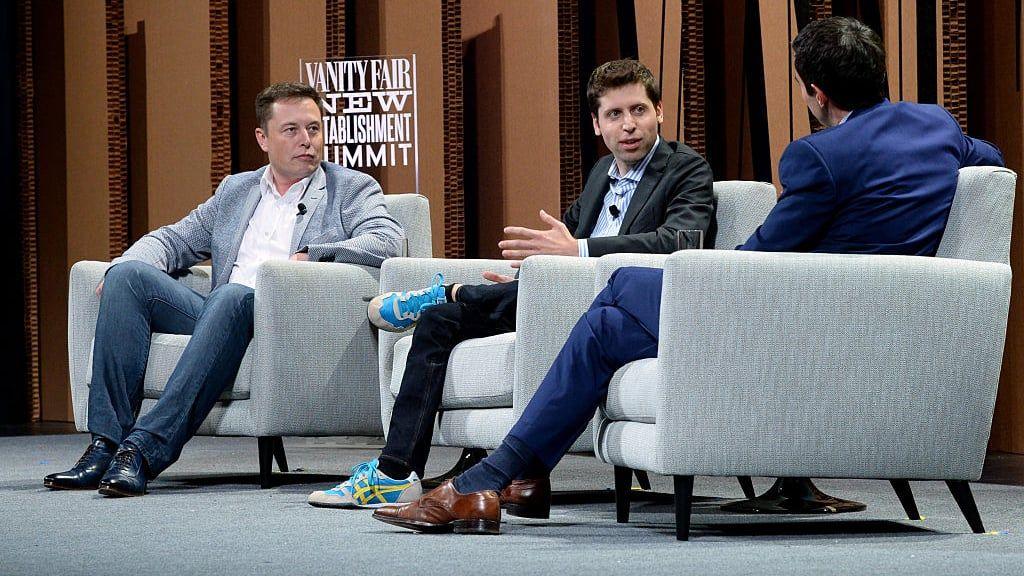
. The lawsuit centers on allegations that OpenAI committed a breach of non-profit mission by abandoning its charitable goals and restructuring as a for-profit entity2
.
Source: PC Magazine
Partnership with Microsoft Becomes Central to Legal Battle
The partnership with Microsoft has become a focal point of the lawsuit, with Musk claiming his former partners betrayed their mission by taking billions from the tech giant
2
. A federal judge rejected dismissal requests from both OpenAI and Microsoft, setting a jury trial for late April in Oakland, California2
. The judge found sufficient evidence for a jury to decide whether OpenAI broke its nonprofit commitments and whether Microsoft knowingly helped OpenAI break its promises, though claims that Microsoft unjustly enriched itself at Musk's expense were dismissed2
.
Source: Digit
Related Stories

OpenAI Dismisses Claims as Harassment Tactics
OpenAI has characterized the lawsuit as part of an ongoing pattern of harassment rather than a legitimate financial grievance
1
. In a letter to investors, OpenAI warned to expect deliberately outlandish harassment claims from Musk ahead of the trial, stating the case is worth no more than the $38 million he donated5
. The company accused Musk of grossly misrepresenting the written record, publishing private journal entries from co-founder Greg Brockman that allegedly show Musk wanted $80 billion for a Mars city, demanded majority equity, and discussed his children controlling Artificial General Intelligence (AGI)3
.Competing AI Ambitions Fuel Ongoing Feud
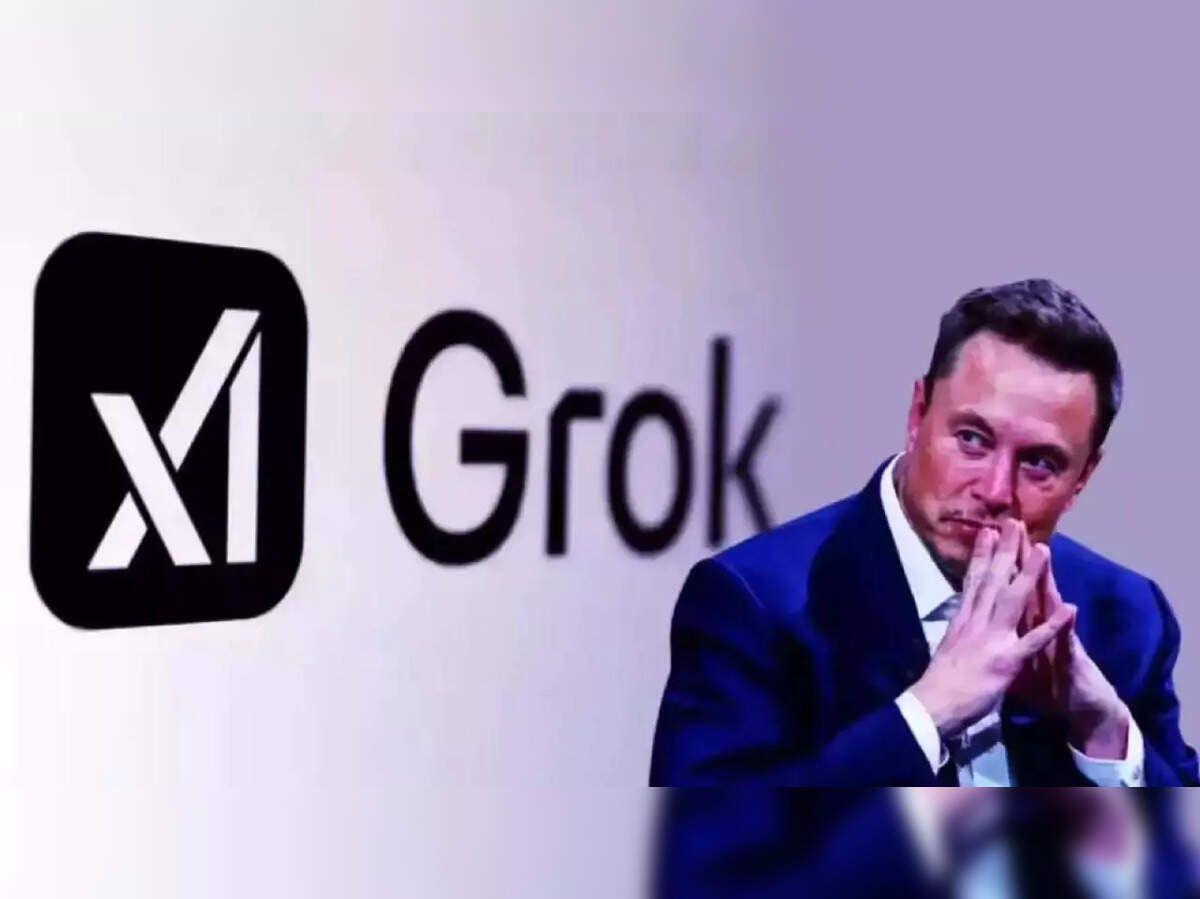
Musk departed OpenAI's board in 2018 and launched his own AI company, xAI, in 2023
2
. OpenAI claims the lawsuit represents Musk's fourth attempt at these particular claims and is part of a broader strategy aimed at slowing them down while advantaging xAI3
. The relationships have deteriorated across the board, with Musk and Sam Altman transforming from collaborators into arch enemies2
. Musk has argued he is owed the value of all intellectual property developed from his contributions5
. Despite his personal fortune hovering around $700 billion, making him the world's richest person by a margin of $500 billion over the second-richest, the lawsuit suggests motivations beyond pure financial gain1
.
Source: ET
References
Summarized by

Navi
[3]
Related Stories
Microsoft and OpenAI's Partnership Shows Signs of Strain Amid Financial Pressures and Strategic Shifts
18 Oct 2024•Business and Economy

Microsoft threatens to sue OpenAI and Amazon over $50 billion cloud deal exclusivity breach
18 Mar 2026•Business and Economy
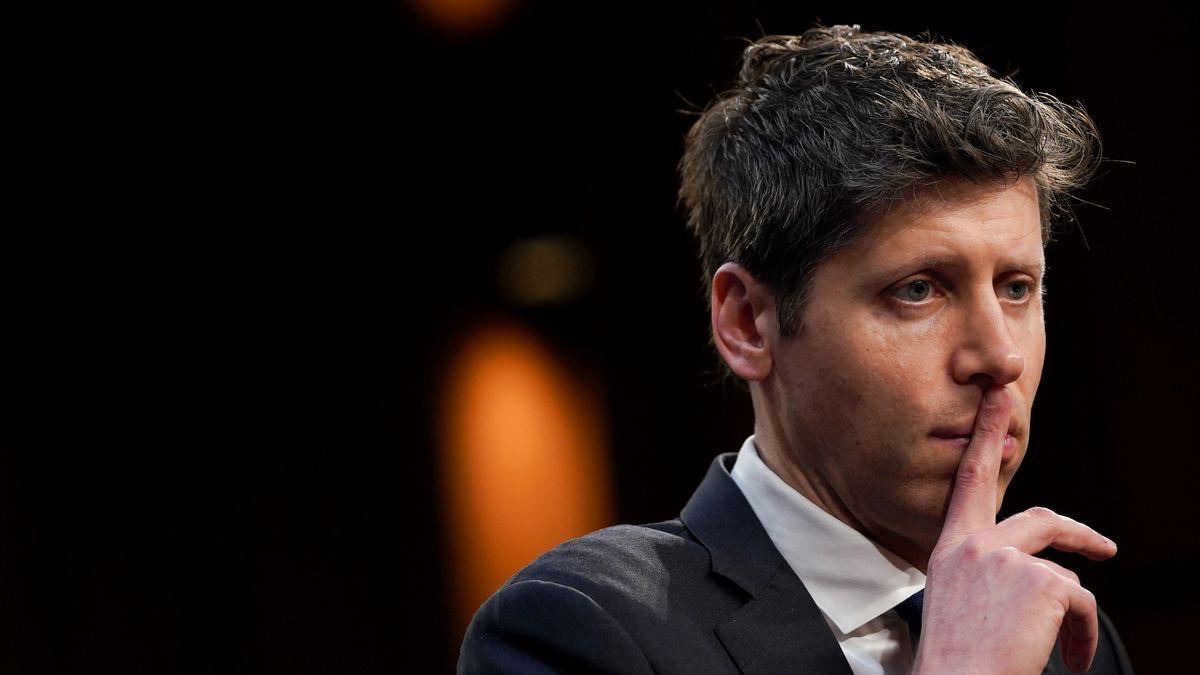
Microsoft and OpenAI Negotiate $14 Billion Stake Amid Shift to For-Profit Model
19 Oct 2024•Business and Economy

Recent Highlights
1
Apple Plans Major Siri AI Overhaul in iOS 27 With Third-Party Chatbot Integration
Technology

2
OpenAI shuts down Sora after six months, ending Disney's $1 billion licensing partnership
Technology

3
AI chatbots validate you too much, making you less kind to others, Stanford study reveals
Science and Research
Recent Highlights
Today's Top Stories






Your Daily Dose of Curated AI News
Don’t drown in AI news. We cut through the noise - filtering, ranking and summarizing the most important AI news, breakthroughs and research daily. Spend less time searching for the latest in AI and get straight to action.

