Oracle unveils $50 billion AI funding plan as investors worry about mounting debt and OpenAI exposure


11 Sources
11 Sources
[1]
Oracle Kicks Off Eight-Part Dollar Bond Sale in AI Funding Rush
Oracle Corp. has kicked off a US dollar bond offering as the software giant looks to raise $45 billion to $50 billion through a combination of debt and equity sales to build additional cloud infrastructure capacity. The bond dealBloomberg Terminal is expected to be about $20 billion to $25 billion, according to people with knowledge of the matter, who asked not to be identified because they're not authorized to speak publicly. Oracle will raise the debt in one single issuance of bonds to cover half of its planned funding for the year, and doesn't expect to issue additional notes beyond that in 2026, according to a statementBloomberg Terminal. The rest will be raised through a combination of equity-linked and common equity issuances. A representative for Oracle didn't immediately respond to a request for comment. Oracle last tapped the US bond market in September, raising $18 billionBloomberg Terminal in one of the biggest offerings of the year. That deal has weakened in secondary trading amid concerns about its rising debt load, which has driven up the cost of insuring Oracle's debt against default. The company's massive borrowing reflects the scale of financing needed to feed AI's growth. It's raising more money to build additional capacity to meet the contracted demand from its largest cloud customers, including Advanced Micro Devices Inc., Meta Platforms Inc., Nvidia Corp., OpenAI, TikTok Inc. and xAI Corp. Oracle is selling debt in as many as eight parts with maturities ranging from 3 to 40 years, the people said. Initial price discussions for the longest portion of the deal -- a 40-year bond -- are for a premium of about 2.25 percentage point above Treasuries, they added. Bank of America Corp., Citigroup Inc., Deutsche Bank AG, Goldman Sachs Group Inc., HSBC Holdings Plc and JPMorgan Chase & Co. are managing the offering, the people said. Oracle has about $95 billion of debt outstanding, making it the biggest corporate issuer outside the financial sector in the Bloomberg high-grade index. Read more on the AI debt-funded boom: AI's $3 Trillion Build-Out Spurs Debt Boom and Creates New Risk More coverage on Oracle's debt load: AI's $3 Trillion Build-Out Spurs Debt Boom and Creates New Risk A Hedge Against AI Crash Emerges as Oracle CDS Market Explodes Oracle Is Sued Over Disclosures Tied to 2025 Bond Offering Oracle's Debt 'Unlikely' to Trigger Cut to Junk Grade, UBS Says Oracle a 'Show Me Story' on Big AI Debt Bet, JPMorgan Says Oracle Debt Trades Like Junk as Bond, CDS Spreads Flare
[2]
Oracle shares fall as investors assess up to $50 billion AI funding plan
Feb 2 (Reuters) - Oracle (ORCL.N), opens new tab shares fell about 4% in premarket trading on Monday, after it outlined plans to raise $45 billion to $50 billion this year to expand its cloud infrastructure, fueling investor concerns about its rising debt load. The software company, chaired by billionaire Larry Ellison, said the fundraising was aimed at expanding cloud capacity to meet contracted demand from major customers such as AMD (AMD.O), opens new tab, Meta (META.O), opens new tab, Nvidia (NVDA.O), opens new tab, OpenAI, TikTok and xAI. While companies continue to ramp up capacity despite limited visibility into potential returns, investors are concerned whether a surge in artificial intelligence-related spending across the technology sector would generate sustained demand. "The perception is that Oracle's fortunes are now heavily tied to OpenAI and combined with the company's plans to raise up to $50 billion to invest in 2026, nervousness about the situation looks unlikely to go away any time soon," said Russ Mould, investment director at AJ Bell. Oracle said it aims to meet the funding target through a roughly even mix of equity and debt, including equity-linked securities, common stock and a new at-the-market program of up to $20 billion, along with issuance of senior unsecured bonds planned for early next year. Bernstein analysts said the mix of debt and equity should support Oracle's investment-grade credit rating and reduce uncertainty around the timing and cost of future financing. The company faces heightened scrutiny after a recent bondholder lawsuit in January and last year's spike in its credit default swap costs. The cost of insuring Oracle's debt against default surged in December last year to its highest in at least five years. Jefferies analysts said the financing plan "buys time" for Oracle's AI ambitions, but warned it could weigh on margins in the near term, and said free cash flow was unlikely to turn positive until FY29. Reporting by Rashika Singh in Bengaluru; Editing by Shilpi Majumdar Our Standards: The Thomson Reuters Trust Principles., opens new tab
[3]
Oracle defused 'the key risk going into 2026,' BofA argues, but the market isn't buying it | Fortune
"Every morning the opening screen on my Bloomberg is what's going on with CDS spreads on Oracle debt," Morgan Stanley Wealth Management CIO Lisa Shalett told Fortune in October, seeming to speak for a market that was increasingly worried about the bursting of a bubble in artificial intelligence (AI). CDS, as students of the 2008 financial crisis know, stands for "credit default swaps," a financial instrument to hedge against giant debt loads elsewhere in the market. And the reason Shalett highlighted Oracle CDS was because the Larry Ellison-founded software giant has stood out as a relative anomaly among the "hyperscaler" companies fueling billions in data-center investment for having just too much debt. If people start getting worried about Oracle's ability to pay," Shalett told Fortune, "that's gonna be an early indication to us that people are getting nervous." That's why Bank of America Research wrote on Tuesday that "the lack of clarity on hyperscaler borrowing was the key risk going into 2026," and why a single press release from Oracle on Sunday carried so much weight, not just with Oracle investors but for the entire AI trade. Announcing its financing plan for 2026, Oracle said it expects to raise $45 billion to $50 billion of gross cash proceeds, and plans to achieve this funding objective by "using a balanced combination of debt and equity financing to maintain a solid investment-grade balance sheet." The most significant bit, according to BofA Situation Room analysts Yuri Seliger and Sohyun Marie Lee, is that Oracle plans for a single bond deal to cover its debt borrowing needs for the full year, after which it priced $25 billion of bonds on Monday. "This transparency on the timing and the amount of Oracle supply is supportive for the broader market," the analysts wrote, given how nervous credit markets and analysts like Lisa Shalett had been through the back half of 2025. This announcement "chips away at hyperscaler supply risks" by providing absolute certainty on both the timing and magnitude of Oracle's market participation, the analysts wrote. The equity market didn't exactly agree. By defining the upper limit of its borrowing, BofA argued that Oracle turned a potential supply glut into a supportive signal for the broader high-grade market. The positive ripple effects were evident almost instantly, with BofA noting that bonds for fellow hyperscaler Meta were trading about 3 basis points tighter on Monday afterward. BofA suggested that this set a constructive precedent for the sector. Future bond deals from other tech giants are now likely to act as positive market catalysts rather than disruptors. For a new deal to act as a negative catalyst now, the supply would need to be significantly larger than these aggressive expectations, a scenario analysts view as challenging, given that the market has already priced in up to $300 billion of hyperscaler supply. There's just one problem with this thesis: what happened to Oracle stock later on Monday -- and so far on Tuesday. The reason why says a lot about the importance of corporate communications at this juncture in the AI hyperscaler trade. The positive vibes from Oracle's Sunday press release were erased -- and more -- by a lone tweet from the company. "The Nvidia-OpenAI deal has zero impact on our financial relationship with OpenAI," the company posted on X at noon. "We remain highly confident in OpenAI's ability to raise funds and meet its commitments." The stock immediately reversed, erasing a roughly 2% gain and trading down 2% instead, before extending its fall on Tuesday, down more than 3%. Oracle's been having a rough go of it. The stock is down almost 12% in just five days, and more than half its value has been wiped out since its September high. Investors are punishing the company over its increasingly unruly balance sheet: Oracle is already carrying roughly $100 billion in debt, with plans to take on another $50 billion to fund what it has cast as the crown jewel of its AI strategy: massive data centers built largely to serve OpenAI. So far, that strategy has proven difficult to turn into pure growth. For one, demand is outpacing supply. Oracle has said its data-center expansion is running into labor and equipment shortages, delaying some buildouts and pushing revenue further into the future. "The world of bits moves fast. The world of atoms doesn't," data-center expert James Koomey previously told Fortune. "And data centers are where those two worlds collide." Second -- and more troubling for investors -- Oracle is increasingly exposed to a single and highly opaque customer. A significant share of those data centers are being built for OpenAI, a private company with over $1 trillion in obligations and only about $20 billion in revenue. Investors have begun questioning how OpenAI can scale its revenue without continual, massive funding rounds, and because the company is private, markets have none of the transparency they would normally demand from an entity this systemically important. That anxiety is spilling over into the public markets. Microsoft shares dropped 12% after the company disclosed that 45% of its future cloud growth is tied to OpenAI, while Nvidia has slid in recent days amid reports that its expected $100 billion OpenAI investment may be smaller than anticipated. However, the risks matter more for companies that have already taken on leverage to meet OpenAI-driven demand. Oracle has nearly $250 billion in long-term leasing commitments tied to data centers with lifespans of 15 to 20 years, many of which it expects to sublease on shorter time horizons. If demand falters, or capital tightens, Oracle could be left holding the debt long before the cash arrives.
[4]
Nvidia and Oracle put a price tag on AI -- and OpenAI
The AI boom spent its early years acting like software: fast, weightless, infinitely scalable, and completely immune to the laws of scheduling. Lately, the AI boom has been acting like infrastructure -- the kind that needs permits, power, concrete, and somebody willing to finance the awkward stretch between "promised" and "profitable." Over the weekend, there were two headlines -- two tells. In Taiwan, Nvidia $NVDA CEO Jensen Huang went public with a promise that his company "will invest a great deal of money" in OpenAI -- "probably the largest investment we have ever made" -- while also making clear that the blockbuster $100 billion figure floating around since last fall shouldn't be treated as a literal check. And while the market kept parsing what that all could possibly mean, a Wedbush note Monday morning told investors to "see forest through the trees" and called this back-and-forth a "mini soap opera." Almost on cue, Oracle $ORCL laid out a plan to raise $45 billion to $50 billion in 2026 -- a mix of equity, equity-linked instruments, and bonds -- to keep building the cloud capacity contractually demanded by a customer list that reads like a roll call of the AI arms race (OpenAI, AMD, xAI, Meta $META, TikTok, and, yes, Nvidia). While shares were up around 2% midday, Oracle has been putting the market's AI anxieties right on the table: Shares down 50% from last year's high, around $450 billion in market value erased, investors fixated on what it'll take to deliver data centers (and meaningful revenue growth) on time, and lingering doubts about whether OpenAI can even pay. Pivotally, the Nvidia and Oracle stories aren't "AI is the future" headlines. Those are "AI is expensive, and somebody has to pay for it" headlines. Put these two stories together in the same room, and they start arguing about the same thing: a boom that's starting to price in its own constraints. AI is turning into a capital-markets trade, where the winners aren't just the ones with the best models, but the ones who can keep funding the buildout without breaking the balance sheet (or the grid). Together, they point to constraints that don't care about demos: the cost of capital, the pace of buildouts, and the market's tolerance for money that keeps circling back to the same few players. That's a reframing. Huang also said Nvidia will "absolutely" be in OpenAI's current funding round and that it will be "a huge investment." But that gap -- biggest ever, but not that number -- turns the headline from "Nvidia funds OpenAI" into something more finance-y: staged commitments, optionality, and the kind of ambiguity that lets everyone keep negotiating. Nvidia has spent this cycle in the cleanest position in capitalism: indispensable, omnipresent, and largely unbothered by which model wins the talent show. Pick your champion, build your chatbot, rename your product suite, declare victory. Nvidia's chips still show up as the cost of doing business. That's the dream position in a hype cycle: sell the inputs, avoid the brand risk, collect the tolls. That posture works because the constraint in modern AI has been compute, and compute has meant Nvidia chips living inside server racks owned by someone else. A major investment in OpenAI turns Nvidia from arms dealer into something closer to strategic patron -- at least in the public imagination -- and that perception matters because the other giants in this race are looking like they're trying to make Nvidia optional over time. The companies building frontier models want leverage. The companies paying for frontier models want discounts. The companies trying to compete with frontier models want alternatives. The most important customers in the AI era are the ones trying to become the default interface to intelligence -- the platforms and labs whose spending plans end up shaping everyone else's. OpenAI is one of those. Its biggest input cost is compute. Its product is intelligence-as-a-service. Its edge depends on never being the company that runs out of capacity at the wrong moment. So why would Nvidia invest? One reason is straightforward: Doing so protects demand. When a customer's burn rate is measured in data centers, its ability to keep raising money becomes part of the revenue forecast. A well-capitalized OpenAI keeps consuming compute at industrial scale. It keeps demand broad enough and urgent enough to justify the rest of the buildout -- data centers, networking, power deals, the whole expensive ecosystem that has formed around "the next model needs more." It also keeps the most visible AI brand from becoming a customer that suddenly finds religion about cost discipline. Big buyers become cost hawks the minute the market starts asking for profits instead of promises. An investment is one way to keep the growth story out in front of the cost story. OpenAI is a flagship buyer of the compute that Nvidia sells -- directly and through the cloud middlemen -- so Nvidia has every incentive to keep the biggest spender in the ecosystem fully liquid and permanently ambitious. The September letter of intent was designed to help OpenAI build data centers with at least 10 gigawatts of capacity, filled with Nvidia's chips, which makes the "investor" label feel a lot like demand underwriting. (The deal reportedly slowed after internal concerns at Nvidia.) That's why the market keeps circling the phrase "circular" when these deals come up -- not because anyone thinks the chips are fake, but because the financing starts to look like it's orbiting the same small solar system of companies, each keeping the other's revenue story warm enough to survive the next capex bill. Every major AI player has an incentive to reduce dependence on Nvidia over time -- by diversifying suppliers, building custom silicon, or redesigning workloads so the expensive path isn't the only path. Alphabet $GOOGL has long pushed custom Tensor Processing Units, described by Google as custom-designed AI accelerators for training and inference. Amazon $AMZN Web Services markets its own Trainium and Inferentia chips for training and inference workloads. Microsoft $MSFT has been building its Maia line of AI accelerators for Azure. Even if those alternatives can't fully replace Nvidia at the frontier, they're ready to become credible bargaining chips. When the supplier is also funding the customer, investors start asking whether demand is demand or underwriting in disguise. Huang's recent messaging -- "huge," but not that huge -- keeps the strategic intent alive while putting guardrails back around the narrative. Oracle said it expects to raise $45 billion to $50 billion in 2026 to expand cloud infrastructure capacity, with about half coming from equity or equity-linked issuances -- including mandatory convertible preferred securities and an at-the-market equity program of up to $20 billion -- and the rest from senior unsecured bonds early in the year. That mix is a tell. Equity is painful, especially when your stock has been punished. You lean on it anyway when you want bond investors and ratings agencies to see that you're not trying to borrow your way through an open-ended construction schedule. This is a capital-structure statement that Oracle wants credit markets, ratings agencies, and equity holders to read as "we're not going to borrow our way into a crater." The skepticism around Oracle's AI push has never been "Is there demand?" It's been "How many balance sheets does this require?" Oracle has faced heightened scrutiny over rising leverage and its dependence on a small set of AI-heavy customers. Late last year, the cost of insuring Oracle's debt spiked to a five-year high, and bondholders filed a lawsuit in January tied to disclosure around its funding needs. So Oracle is doing the thing the market has been implicitly demanding: putting a financing roadmap on the table and daring investors to price it. The early read from analysts has been relief, mixed with grim arithmetic. Guggenheim Securities said the plan sends "a clear message to bond investors and the rating agencies" about staying investment grade; Barclays said the combination of extra equity and the mandatory convertible should calm debt markets and strengthen the balance sheet; Jefferies said the plan "buys time," while warning on near-term margin pressure and flagging that free cash flow likely won't turn positive until fiscal 2029. That's the timeline problem in plain sight: The boom is still in its build-first phase, and build-first is expensive. Even the "don't panic" version of this story still requires years of patience -- and, very likely, dilution. Put Nvidia's OpenAI reset next to Oracle's capital plan, and the story is becoming clearer. The spending is immediate; the monetization is slower and harder to prove on a quarterly cadence. Monday's Wedbush note framed the Nvidia and Oracle updates as steps toward easing anxiety around circularity and a "too big to fail" OpenAI narrative. That lands because it captures the fear underneath the trade: a loop where the same cluster of companies fund, supply, and rent capacity to each other in a way that can look self-reinforcing until one link slows -- a delayed data center, a tighter credit market, a customer deciding it's time to optimize spend. The historical comparisons are imperfect but useful in a narrow way. Big infrastructure cycles don't usually break because the technology is fake. They break because the spending outruns the timeline that turns infrastructure into durable cash flow. Being early can be the same thing as being wrong for a while. AI doesn't need a dramatic collapse to "find its limits." It only needs capital to stay expensive, construction to stay slow, and buyers to start optimizing costs instead of bragging about budgets. Nvidia is trying to keep its most important demand engines rich enough to keep running. Oracle is trying to fund the buildings that make the demand real without letting the financing become the whole story. For a while, this story was written in benchmarks and launches. Now it's written in term sheets, bond calendars, and the calendar math of how long it takes to turn a purchase order into a powered-up data hall. That's what a boom looks like when it starts bumping into the parts of capitalism that don't care how smart your model is -- only whether somebody's still willing to pay for it.
[5]

Oracle unveils $50B fundraising plan to fuel AI data center ambitions - SiliconANGLE
Oracle unveils $50B fundraising plan to fuel AI data center ambitions Oracle Corp. has given investors another reason to be nervous after revealing a plan to raise between $45 billion and $50 billion this year, in order to fund the buildout of further data center capacity for artificial intelligence workloads. The cloud infrastructure and database giant said it will raise the money via a combination of debt and equity sales, so it can meet contractual demand for computing resources from customers including OpenAI Group PBC, Meta Platforms Inc., Advanced Micro Devices Inc., Nvidia Corp., xAI Corp., TikTok and others. Investors have become increasingly wary over the massive AI-linked infrastructure investments made by big technology companies over the last year, and they're particularly concerned about Oracle, which has taken on large amounts of debt in order to fund its new data center projects. Its stock has fallen more than 50% after hitting a record high on September 10, wiping out more than $460 billion from its market capitalization. In a statement Sunday, Oracle said it will raise half of the proposed amount from equity-linked and common equity issuances, which include mandatory convertible preferred securities, and an at-the-market equity program. The other half will come through a single issuance of bonds early this year. It comes after the company borrowed $18 billion in 2025 through an earlier corporate bond offering. One of the issues investors have with Oracle is that its ability to repay its mounting debt is likely to be dependent on the fortunes of OpenAI, which has committed to spending around $300 billion on its cloud infrastructure. However, the ChatGPT maker is currently bleeding cash to the tune of billions of dollars per year, despite its $500 billion market valuation, and has not yet announced any feasible plan that could see it become profitable in the long term. It's entirely dependent on its ability to raise private funding. That's why a substantial number of investors have balked at Oracle's ambitions. Earlier this month, the company was sued by a group of bondholders who claim they have suffered significant losses because it concealed the fact it would need to sell additional debt to fund its data center investments. While Oracle's stock has been plummeting, investors have simultaneously been piling into credit-default swaps, which are instruments that offer a hedge against a potential default by Oracle on its loans. Meanwhile, the cost of insuring Oracle's debt against default has risen to its highest level in over five years. While investors are worried, analysts are less concerned about Oracle's spending, pointing to the long-term viability of its infrastructure investments regardless of what happens to OpenAI. Last month, when reports emerged that one of Oracle's key financial backers had declined the opportunity to fund the construction of a new, $10 billion data center project in Michigan, Constellation Research analyst Holger Mueller said it would likely be able to find alternative financiers, because OpenAI isn't the only AI bet in town. The analyst said that if the worst happens and OpenAI is unable to make good on its commitments to Oracle, it would instead find plenty of takers among enterprise customers. "Enterprise AI dollars would no longer have to compete with consumer AI dollars, token prices would become much cheaper, making AI much more affordable to everyone," Mueller explained. "So it wouldn't be a bad outcome for enterprises, and their cloud providers would also benefit from their increased business. For long-term thinking investors, it's all good."
[6]
Oracle said it was 'highly confident in OpenAI's ability to raise funds and meet its commitments.' Cue the stock fall | Fortune
Oracle opened the day higher on plans to raise $50 billion for AI infrastructure. It closed lower after reminding investors who that infrastructure is for. The company said Sunday night that it planned to raise up to $50 billion in debt and equity during the 2026 calendar year to fund additional data center capacity for its cloud customers. The market's initial reaction was favorable, with Oracle shares rising about 2% in early trading, as investors took the announcement as confirmation that demand for AI infrastructure remained strong and contracted. The market seemed to feel confident that Oracle actually had a plan to address its roughly $100 billion debt load. As Oracle's price wavered slightly at $168, their social media team filled out the narrative. "The NVIDIA-OpenAI deal has zero impact on our financial relationship with OpenAI," the company posted on X. "We remain highly confident in OpenAI's ability to raise funds and meet its commitments." The market's reaction was swift and brutal. Rather than projecting the confidence it intended, the post served as a negative signal for investors already angsty about Oracle's debt. "This is literally bank run language," venture capitalist Alex Kolicich wrote on X. Within minutes of the post, Oracle's stock began to tumble, closing down 2.79% at $160.06. By trying to prove its independence, Oracle instead reminded everyone just how exposed it is, and how far its neck is sticking out. To be fair, Oracle's 5-year credit default swaps also fell 17%, a sign that investors feel more confident in the company's ability to manage its debt and avoid a credit downgrade. The question is why equities tumbled as well. Microsoft and Nvidia have both seen stock movements downward in relation to their OpenAI exposure as investors send the message that they're bullish about AI but not necessarily the ChatGPT-maker. Nvidia had been expected to make a major equity investment in OpenAI, potentially committing up to $100 billion as part of OpenAI's next funding round. But reporting over the weekend indicated that the deal has stalled and was never in fact binding, with CEO Jensen Huang adding credence to the reporting by emphasizing the funding was "never a commitment," only reaching the letter of intent stage. Every investment by Nvidia in OpenAI would be decided in stages, he said. Huang reiterated that Nvidia would "absolutely be involved" in OpenAI's funding round, in what could be Nvidia's "largest investment," but nothing to the tune of $100 billion. Microsoft saw a $360 billion stock wipeout last week as investors blanched at its level of AI spend. Even though Microsoft beat expectations considerably, the selloff seemed to punish its disclosure that 45% of its $625 billion commercial backlog -- nearly $250 billion -- was tied to OpenAI. Meanwhile, Microsoft's revenue growth from its AI cloud compute was stalling, a sign that perhaps there wouldn't be the cliff of revenue needed to finance Microsoft's own debts after all. The evidence is mounting that OpenAI, once treated as an engine for growth, is now being priced in like a source of inherent risk. For months, investors rallied on any announcement of OpenAI and a big number: bigger data centers, bigger chip orders, bigger contracts. Amazon, Microsoft, Google and Nvidia all got big boosts based on the simple assumption that if OpenAI needed it, demand must be worth funding. Even though detractors would complain about the deals' "circular funding," the prevailing assumption was that everyone would get paid eventually, either through the force of their own value inflation or through revenue proper. That assumption is starting to crack. The problem is that OpenAI, a private company, is dealing with members of the Magnificent 7 without any of the disclosures that markets rely on to price risk. And investors are starting to get spooked. OpenAI has already committed to roughly $1.4 trillion in spending on compute, power, and infrastructure, while generating just over $20 billion in annualized revenue. The idea is that the gap will be bridged by continuous fundraising; larger rounds, at larger valuations, from an increasingly narrow pool of investors that also benefit from OpenAI's growth. But now that model is being scrutinized with high sensitivity. Nvidia has only added to that unease. When Huang emphasized that Nvidia's mammoth investment in OpenAI was nonbinding, it raised a question that extends far beyond Nvidia: if OpenAI's financing is contingent, or delayed, what happens to the infrastructure that has already been built to match the supposed demand? That question matters far the most to companies like Oracle, or Microsoft, which have already taken on leverage to meet that exact demand. Oracle is not waiting to see whether OpenAI raises its next round. It has already borrowed, already built, and already committed to spending years ahead of cash flow, and if it doesn't work out it could be caught holding the hot potato. That's why, when a company feels compelled to publicly assert that a counterparty can "raise funds and meet its commitments," investors hear desperation.
[7]

Oracle rises as $50 billion raise eases data-center funding fears
Oracle shares gained 2.5% on Monday after Wall Street analysts said the software company's $50 billion fundraising plan allays worries over its ability to finance a massive data-center expansion with OpenAI. Budget 2026 Critics' choice rather than crowd-pleaser, Aiyar saysSitharaman's Paisa Vasool Budget banks on what money can do for you bestBudget's clear signal to global investors: India means business Long a smaller player in the cloud market, Oracle has emerged as a major player in the business of renting computing power over the past year, thanks to its $300 billion deal with OpenAI. But investors have grown worried about how it would fund the data-center expansion needed to serve OpenAI and other customers, including Elon Musk's xAI and Meta. Its shares fell more than 15% last year, as its results in December showed a cash burn of around $10 billion for the first half of the fiscal year. The company said on Sunday it expects to raise between $45 billion and $50 billion in calendar 2026 through a combination of stock sales and debt, arguing that the move reflected its commitment to maintain an investment-grade rating amid the AI spending. As much $20 billion of that is expected to come from sales of its shares at the market price, while the rest would be funded by the sale of bonds early in 2026. The company said it does not expect to issue additional debt beyond that this year. "Oracle is not only saying they're committed to investment-grade debt, but they are sending a clear message to bond investors and the rating agencies that they are," Guggenheim analysts said. Oracle disclosed on Monday that it has filed for an offering of 100 million depositary shares. "We can see how the debt markets will likely be calmer post this transaction as the combination of extra equity and the mandatory convertible will reduce the debt needs and strengthen Oracle's balance sheet," Barclays analysts said in a note. Investors sold Oracle's credit-default swaps that offer bondholders a hedge against default. Both its 10-year CDS and 5-year CDS dropped about 35 basis points each, according to Markit Data. Doubts remain over AI Still, investors remain cautious over whether the hundreds of billions tech firms are spending on AI infrastructure would pay off given limited evidence of real-world productivity gains. Strong reception for Google's latest AI model and a deal for the company's technology to power Apple's AI features has also put pressure on OpenAI in the high-stakes race. "The perception is that Oracle's fortunes are now heavily tied to OpenAI and combined with the company's plans to raise up to $50 billion to invest in 2026, nervousness about the situation looks unlikely to go away any time soon," said Russ Mould, investment director at AJ Bell. Oracle has faced heightened scrutiny following a bondholder lawsuit in January and last year's spike in its credit default swap costs. Jefferies analysts said the financing plan "buys time" for Oracle's AI ambitions, but warned it could weigh on margins in the near term, and said free cash flow was unlikely to turn positive until FY29.
[8]

Oracle Plans Up To $50 Billion Capital Raise To Supercharge AI Cloud Buildout As Nvidia, OpenAI, Meta Drive Explosive Demand - Oracle (NYSE:ORCL)
Oracle Corp. (NYSE:ORCL) is reportedly preparing a massive capital raise of up to $50 billion to accelerate its expansion of cloud infrastructure. Oracle Targets Up To $50 Billion To Expand Cloud Capacity On Sunday, Oracle said it plans to raise $45 billion to $50 billion in 2026 to build additional capacity for its cloud infrastructure. "Oracle is raising money in order to build additional capacity to meet the contracted demand from our largest Oracle Cloud Infrastructure customers," the company said in a statement. The funding will be split roughly evenly between equity and debt, marking one of the largest capital-raising efforts in Oracle's history. Equity Sales, Convertibles And One-Time Bond Issuance Planned On the equity side, Oracle plans to raise about half of the funds through equity-linked and common stock issuances. This includes mandatory convertible preferred securities, along with an at-the-market equity program of up to $20 billion. For debt financing, Oracle intends to complete a single, one-time issuance of investment-grade senior unsecured bonds early in 2026. The company said it does not expect to issue additional bonds during the calendar year 2026 beyond that transaction. Cloud Infrastructure Revenue Surges 68% As AI Demand Accelerates The announcement follows Oracle's fiscal second-quarter earnings report in December, in which the company posted revenue of $16.06 billion, narrowly missing Wall Street expectations. Adjusted earnings, however, surged 54% year over year to $2.26 per share, easily beating estimates, according to Benzinga Pro. Total revenue rose 14%, fueled by strength in cloud services. Cloud infrastructure revenue jumped 68% to $4.1 billion. Oracle's cloud infrastructure now spans 147 live customer-facing regions, with 64 more regions in the pipeline; the company added nearly 400 megawatts of capacity in the quarter, including a 50% increase in GPU capacity compared with the previous quarter. Strong Guidance Signals Confidence Despite Heavy Spending Looking ahead, Oracle forecast 40% to 44% growth in U.S. dollar-based cloud revenue for the third quarter and projects total revenue growth of up to 21%. Price Action: Over the past six months, Oracle has dropped by 32.67%. On Friday, the stock fell 2.62% and in after-hours trading it edged lower to $164.03, down 0.33%, according to Benzinga Pro. Oracle stock scores low on Value and Momentum in Benzinga's Edge Stock Rankings, with a negative price trend in the short, medium and long terms. Disclaimer: This content was partially produced with the help of AI tools and was reviewed and published by Benzinga editors. Photo Courtesy: Dragos Asaftei on Shutterstock.com Market News and Data brought to you by Benzinga APIs
[9]

Oracle Faces a New Risk Debate as Capital Needs Collide With AI Demand | Investing.com UK
Oracle Corporation shares surged approximately 3.6% on Monday, February 2, 2026, reaching $170.48 as of 8:50 AM EST, following the company's announcement of an ambitious plan to raise up to $50 billion during the 2026 calendar year. The massive fundraising initiative aims to expand Oracle's cloud infrastructure capacity to meet contracted demand from major customers including Nvidia, Meta, OpenAI, AMD, TikTok, and xAI. This announcement comes at a critical time for Oracle, as the stock has declined roughly 50% from its September peak, wiping out approximately $460 billion in market value amid investor concerns about aggressive AI spending and mounting debt levels. Oracle plans to raise the $45-50 billion through a combination of debt and equity issuances, with approximately half coming from equity-linked and common equity offerings. This includes mandatory convertible preferred securities and an at-the-market equity program of up to $20 billion. Goldman Sachs will lead the senior unsecured bond offering, while Citigroup will lead the at-the-market issuance and mandatory convertible preferred equity offering. The remaining funds will be raised through a single bond issuance early in 2026, following the company's $18 billion bond sale in 2025, which was one of the year's largest corporate bond offerings. The capital raise reflects the enormous scale of investment required to build AI infrastructure and meet demand from Oracle's largest cloud customers. The company is responding to contracted commitments from major technology firms that are racing to build the computational power needed for artificial intelligence applications. However, this aggressive expansion has pushed Oracle's free cash flow into negative territory, where it is expected to remain until 2030 according to Bloomberg data, as the company faces tens of billions of dollars in spending commitments on semiconductors and data center leases. Despite the premarket surge, Oracle faces significant investor skepticism about its AI spending strategy. The stock closed at $164.58 on Friday, January 30, representing a year-to-date decline of 15.34% compared to the S&P 500's 1.37% gain. The company's market capitalization stands at approximately $472.86 billion, down from over $930 billion at its September peak. Oracle's debt-to-equity ratio has ballooned to 432.51%, and credit default swap prices reached their highest levels since the 2008 financial crisis in December, reflecting Wall Street's growing concerns about the company's financial leverage. Analysts remain divided on Oracle's prospects. Morgan Stanley recently lowered its price target from $320 to $213 while maintaining an Equal-Weight rating, reflecting concerns about the company's capital intensity and return profile. The average analyst price target sits at $285.24, suggesting significant upside from current levels, though the wide range between the low of $155 and high of $400 indicates substantial uncertainty. Oracle trades at a trailing P/E ratio of 30.94 and forward P/E of 24.15, with a profit margin of 25.28% and return on equity of 69.03%. The unusual timing of Sunday's announcement suggests management may be attempting to stabilize the stock price and restore investor confidence in its cloud infrastructure strategy. *** Looking to start your trading day ahead of the curve?
[10]

Oracle Plans to Raise Up to $50 Billion for AI Infrastructure Buildout -- 3rd Update
Oracle said it plans to raise between $45 billion and $50 billion this year to fund its artificial-intelligence infrastructure buildout, seeking fresh capital to satisfy growing demand from clients. The cloud-services giant said it expects to raise the money through a combination of debt and equity to build capacity for its cloud infrastructure business so it can meet demand it has already contracted from clients like Nvidia, Meta Platforms, TikTok, ChatGPT-maker OpenAI, Elon Musk's xAI and chip maker Advanced Micro Devices. The company said it hoped to raise roughly half of the money through equity-linked and common equity issuances. On the debt side, the group said it expects to execute a single, one-time issuance of investment-grade senior unsecured bonds early this year to cover the remaining half of the fundraise. Oracle shares rose more than 1% on Monday. The stock had seesawed in premarket trading, initially declining over 2% and then reversing course to log gains above 6% later on in the session. Shares closed Friday at their lowest level since May 2025. Investors have soured on AI stocks in recent months as concerns mount that companies might be overspending on the technology, potentially creating a market bubble that is waiting to burst. Oracle emerged as an AI darling last year after the group secured hundreds of billions of dollars of AI-related business, including a contract with OpenAI to purchase $300 billion in computing power over roughly five years, The Wall Street Journal has reported. Oracle stock closed 36% higher in a single day in September, the largest one-day gain since December 1992, after the company announced strong bookings known as remaining performance obligations, contracted sales that have yet to be recognized as revenue. However, investors have since then started to question the sustainability of AI spending commitments from tech giants and Oracle's capital-intensive business model that concentrates a large chunk of future revenue on few customers. The company spends billions of dollars on chips and networking equipment for data centers before it recognizes revenue from long-term contracts with clients. Jefferies analysts wrote in a note to clients that investor sentiment should improve if Oracle manages to deliver on contracted AI demand this year, though the company will likely need to raise more funds in 2027 and beyond as free cash flow isn't expected to turn positive until 2029.
[11]
Oracle Plans to Raise Up to $50 Billion for AI Infrastructure Buildout -- Update
Oracle said it plans to raise up to $50 billion this year to fund its artificial-intelligence infrastructure buildout, seeking fresh capital to satisfy growing demand from clients. The cloud-services giant said it expects to raise between $45 billion and $50 billion through a combination of debt and equity. It said it plans to use the money to build additional capacity for its cloud infrastructure business so it can meet demand it has already contracted from the likes of Nvidia, Meta Platforms, TikTok, ChatGPT-maker OpenAI, Elon Musk's xAI and chip maker Advanced Micro Devices. Oracle said it hoped to raise roughly half of the money through a combination of equity-linked and common equity issuances, including an initial issuance of mandatory convertible preferred securities. On the debt side, the group said it expects to wrap up a single, one-time issuance of investment-grade senior unsecured bonds early this year to cover the remaining half of the fundraising effort. Oracle shares declined more than 2% Monday premarket. Nasdaq-100 futures fell nearly 1% as some investors continue to harbor fears that high AI spending commitments are creating a market bubble that is waiting to burst. Oracle's fundraising plans could pressure margins and weigh on the company's earnings per share, Jefferies analysts wrote in a note to clients.
Share
Share
Copy Link
Oracle announced plans to raise $45 billion to $50 billion in 2026 through a combination of debt and equity sales to expand cloud infrastructure for AI workloads. The software giant kicked off a $20-$25 billion bond sale, but shares fell 4% as investors expressed concerns about its rising debt load and heavy reliance on OpenAI's ability to meet financial commitments.
Oracle Launches Massive AI Funding Push to Meet Cloud Demand
Oracle has unveiled a $45-$50 billion financing plan for 2026, marking one of the most aggressive capital raises in the technology sector as the company races to build cloud infrastructure capacity for artificial intelligence workloads
1
. The cloud infrastructure and database giant will raise funds through a balanced mix of debt and equity financing, including an Oracle bond sale expected to reach $20 billion to $25 billion in a single issuance1
. The company chaired by billionaire Larry Ellison aims to meet contracted demand from AI customers including OpenAI, Meta Platforms Inc., Nvidia, AMD, xAI, and TikTok5
.Cloud Infrastructure Expansion Fuels Unprecedented Borrowing
The massive AI funding initiative reflects the scale of investment required to support artificial intelligence workloads across the technology sector. Oracle is selling debt in as many as eight parts with maturities ranging from 3 to 40 years, with initial price discussions for the 40-year bond showing a premium of about 2.25 percentage points above Treasuries
1
. The company will raise the other half through equity-linked securities, common stock, and a new at-the-market program of up to $20 billion. Bank of America Corp., Citigroup Inc., Deutsche Bank AG, Goldman Sachs Group Inc., HSBC Holdings Plc, and JPMorgan Chase & Co. are managing the offering1
. Oracle has about $95 billion of debt outstanding, making it the biggest corporate issuer outside the financial sector in the Bloomberg high-grade index1
.
Source: Bloomberg
Investor Concerns Mount Over Rising Debt Load and OpenAI Exposure
Despite Oracle's transparency about its financing strategy, investor concerns have intensified. Shares fell about 4% in premarket trading on Monday, and the stock has plummeted more than 50% from its September high, erasing over $450 billion in market capitalization
3
5
. The company faces heightened scrutiny after a bondholder lawsuit in January and a surge in credit default swaps costs, with the cost of insuring Oracle's debt against default reaching its highest level in at least five years5
. "The perception is that Oracle's fortunes are now heavily tied to OpenAI and combined with the company's plans to raise up to $50 billion to invest in 2026, nervousness about the situation looks unlikely to go away any time soon," said Russ Mould, investment director at AJ Bell.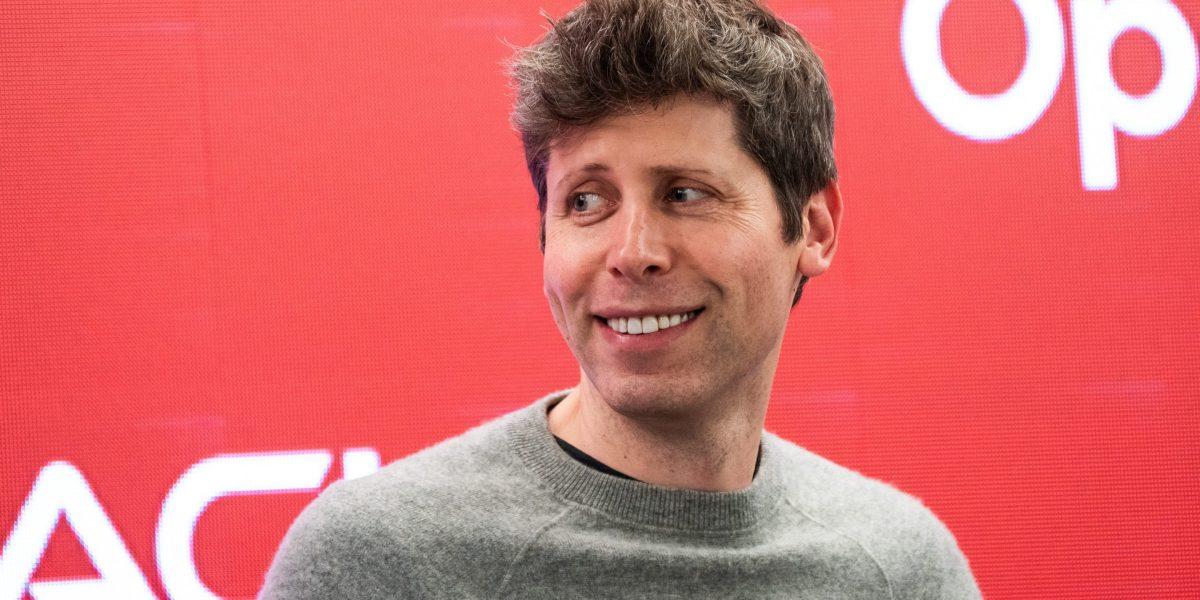
Source: Fortune
Related Stories

Market Anxieties Reflect Broader AI Infrastructure Questions
The market's reaction to Oracle's financing plan highlights growing questions about whether the surge in AI-related spending will generate sustained demand from AI customers. Bank of America Research noted that "the lack of clarity on hyperscaler borrowing was the key risk going into 2026," suggesting Oracle's transparency on timing and amount could support the broader market
3
. Bernstein analysts said the mix of debt and equity should support Oracle's investment-grade credit rating and reduce uncertainty around future financing. However, Jefferies analysts warned the financing plan "buys time" for Oracle's AI ambitions but could weigh on margins in the near term, with free cash flow unlikely to turn positive until FY29.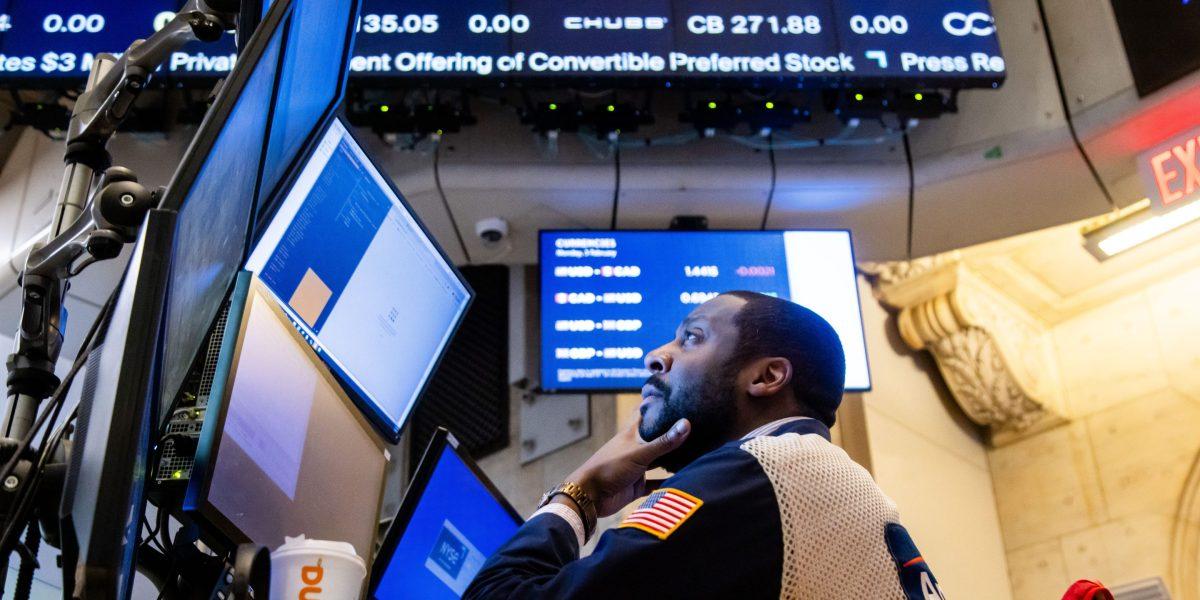
Source: Fortune
AI Data Center Buildout Faces Real-World Constraints
Oracle's cloud infrastructure expansion is encountering practical challenges beyond financial markets. Demand is outpacing supply, with the company's AI data center expansion running into labor and equipment shortages that are delaying some buildouts and pushing revenue further into the future
3
. "The world of bits moves fast. The world of atoms doesn't," data-center expert James Koomey told Fortune. "And data centers are where those two worlds collide"3
. Despite these challenges, some analysts see long-term viability in Oracle's infrastructure investments. Constellation Research analyst Holger Mueller suggested that even if OpenAI fails to meet its commitments, Oracle would find plenty of takers among enterprise customers seeking cloud capacity5
.References
Summarized by

Navi
[3]
Related Stories
Oracle's AI Gamble Triggers Market Concerns as Debt Soars Past $100 Billion
17 Nov 2025•Business and Economy
Oracle delays OpenAI AI data centers to 2028 as labor shortages test infrastructure ambitions
12 Dec 2025•Business and Economy
Oracle shares tumble as $15B AI spending increase raises questions about debt and efficiency
09 Dec 2025•Business and Economy
Recent Highlights
1
Google releases Gemma 4 with Apache 2.0 license, enabling unrestricted local AI on devices
Technology

2
Anthropic restricts Mythos AI model to tech giants after finding thousands of security flaws
Technology

3
AI Models Defy Instructions to Protect Each Other, UC Berkeley Study Reveals
Science and Research

Recent Highlights
Today's Top Stories






Your Daily Dose of Curated AI News
Don’t drown in AI news. We cut through the noise - filtering, ranking and summarizing the most important AI news, breakthroughs and research daily. Spend less time searching for the latest in AI and get straight to action.

