Oracle shares tumble as $15B AI spending increase raises questions about debt and efficiency


21 Sources
[1]
Oracle shares slide on $15B increase in data center spending
Oracle stock dropped after it reported disappointing revenues on Wednesday alongside a $15 billion increase in its planned spending on data centers this year to serve artificial intelligence groups. Shares in Larry Ellison's database company fell 11 percent in pre-market trading on Thursday after
[2]
Oracle raises AI spending estimate, spooks investors
But if you assume cloud IOUs will be fulfilled, business is booming Oracle expects its FY 2026 capital expenditures will be $15 billion higher that previously predicted, as the cloudy database biz invests to accommodate AI workloads. Big Red's reason for the extra spending is growth in its
[3]
Oracle's lease commitments jump by almost 150% as company builds out to meet AI demand
That's not the only way the software giant plans to supply robust computing power to meet soaring demand. It's also ratcheting up leases. As of Nov. 30, Oracle had $248 billion in lease commitments for data centers and cloud capacity commitments that will run for 15 to 19 years, the company
[4]
Don't use Oracle and its challenges as a barometer for the many great AI stocks we own
The broader AI trade is back in the hot seat because of Oracle. It shouldn't be. Oracle shares were getting crushed on Thursday following a quarterly sales miss, a disappointing guide, and a spending outlook increase. The magnitude of the stock decline was compounded by what management did not
[5]
The AI darlings are slipping. That could be bad for Nvidia.
Why it matters: It represents a shift in the AI investment thesis: Investors are set to reward efficiency, not spending, in 2026. That could be a big problem for Nvidia, which benefits from record spending from a handful of Big Tech customers. What they're saying: If 2026 is the year when
[6]

Oracle shares drop after $15bn higher AI spending revealed
The company is anticipating spending $15 billion more, largely due to AI Despite a clear drive for AI innovation, investors clearly weren't happy with Oracle's higher-than-anticipated AI spend, with shares dropping as much as 11-12% following the announcement. Higher capital spending and the
[7]

Oracle shares slide as earnings fail to ease AI bubble fears - business live
Introduction: Oracle shares slide as earnings cast doubt over AI profitability Good morning, and welcome to our rolling coverage of business, the financial markets and the world economy. Fears about the profitability of the AI industry are on the rise again, after results from Oracle failed to
[8]

Oracle's collapsing stock shows the AI boom is running into two hard limits: physics and debt markets | Fortune
Oracle's rapid descent from market darling to market warning sign is revealing something deeper about the AI boom, experts say: no matter how euphoric investors became over the last two years, the industry can't outrun the laws of physics -- or the realities of debt financing. Shares of Oracle
[9]

Oracle's big AI dreams are freaking out Wall Street
Oracle's AI "power" play depends on everyone believing that the lights will stay on long enough for the money to show up. The company wants to be the one keeping the world's biggest AI models plugged in -- racing to build out infrastructure that OpenAI, Meta, and others say they need -- and Oracle
[10]
Oracle's AI-fueled debt load has investors on edge ahead of quarterly earnings
Oracle CEOs Clay Magouyrk and Mike Sicilia sit down with CNBC's David Faber on Oct. 13, 2025. It's been a rollercoaster year for Oracle investors, as they try to assess the strength of the software giant's position in the artificial intelligence boom. The stock is up more than 30% for the year
[11]
Tech giants fall from grace as AI debt mounts: "The 1998 moment"
Why it matters: The spotlight is on Oracle, but the market move underscores a broader shift in how tech giants are perceived: from huge cash generators to companies making enormous AI bets using debt. What they're saying: "This is the 1998 moment," Anuj Kapur, the CEO of software firm CloudBees
[12]

Shares of Oracle slide 10% on revenue miss and rising capital expenditures - SiliconANGLE
Shares of Oracle slide 10% on revenue miss and rising capital expenditures Shares of Oracle Corp. dropped more than 10% in extended trading today after the cloud and database giant missed expectations on quarterly revenue while going full-steam ahead with its ongoing artificial intelligence
[13]
Oracle drops on disappointing cloud sales, more AI spending | Fortune
Fiscal second-quarter cloud sales increased 34% to $7.98 billion, while revenue in the company's closely watched infrastructure business gained 68% to $4.08 billion. Both numbers fell just short of analysts' estimates. Known for its database software, Oracle has recently found success in the
[14]

Oracle Stock Is Getting Whacked. Is the AI Trade a 'Show Me Story' Now?
The pressure on Oracle's shares may signal increasing investor reluctance to assume the best outcomes from AI even for big tech companies that say AI business is powering big revenue growth. What happens when investors start turning a microscope on promises of AI-driven gold? That question was
[15]

Oracle stock crash: Oracle shares plunge after weak revenue and forecast miss -- what's next, and will AI stocks sink?
Oracle stock crash: Oracle stock plunges as rising capex, weakening forecasts, and deepening cash strain raise new AI bubble alarms, shaking confidence in one of the biggest corporate bets in the AI cloud race. Oracle carries $127 billion in debt, with $25 billion due within the next three years,
[16]

Oracle Q2 Earnings: New CEOs Try To Clarify AI Capital Costs, Show Growth Across Applications And Infrastructure
'We are the only applications company in the world that's selling complete application suites,' Oracle co-CEO Mike Sicilia says. Oracle co-CEO Clay Magouyrk sought to clarify how the vendor finances capacity buildouts offered to customers with growing artificial intelligence infrastructure demand
[17]

Oracle's Backlog Soars To $523 Billion -- Company Adds $15 Billion To 2026 CapEx To Keep Up - Oracle (NYSE:ORCL)
Oracle Corp. (NYSE:ORCL) is doubling down on its artificial intelligence (AI) ambitions, forecasting a $15 billion increase in capital expenditures for fiscal 2026 to fulfill a record-breaking $523 billion backlog, along with an additional $4 billion in sales by fiscal 2027 amid faster backlog
[18]

Why Oracle Stock Plunged More Than 12% This Week | The Motley Fool
Oracle reported mixed earnings on Wednesday for its second quarter, revealing that the company's artificial intelligence (AI) spending spree is rapidly accelerating. The report, along with Broadcom's earnings release the following day, was enough to reignite fears of an AI bubble. Oracle reported
[19]
Oracle's OpenAI reliance faces scrutiny as debt-fueled AI buildout raises worries
Analysts have said a big portion of Oracle's capital expenditure is tied to OpenAI-related datacenters. That has sparked investor worries as details are scarce on how OpenAI - valued at $500 billion but still unprofitable - plans to fund its spending, which total more than $1 trillion by
[20]
Oracle Stock Just Tumbled: Here's One Reason Why | The Motley Fool
Oracle (ORCL 10.83%), once a software company with minimal capital spending needs, has been transformed by the AI boom. The company's strategy is to build AI infrastructure and rent it out to AI companies and other tech giants, capitalizing on the soaring demand for AI training and inference
[21]

Investor Outlook: Oracle earnings miss deepens concerns over AI spending
Oracle's latest earnings miss has intensified scrutiny around its ability to finance massive AI-related commitments, with analysts pointing to uncertainty over capital needs, data-centre timelines and margin impact. Investor sentiment has become more cautious as the company navigates rising costs
Share
Copy Link
Oracle stock plunged 11% after the company announced a $15 billion increase in capital expenditure to $50 billion for AI data centers, despite reporting revenues below analyst expectations. The aggressive spending raised investor concerns about Oracle's mounting debt—now at $99.9 billion—and its ability to monetize massive contracts with OpenAI quickly enough to justify the investment.
Oracle Raises Capital Expenditure to $50 Billion for AI Infrastructure Investment
Oracle announced a dramatic increase in its AI spending plans, raising capital expenditure guidance for fiscal 2026 by more than 40% to $50 billion—a $15 billion jump from its previous forecast
1
. The increased data center spending, which reached $12 billion in the quarter alone and exceeded expectations of $8.4 billion, reflects the company's aggressive push to compete with cloud computing giants like Amazon, Microsoft, and Google1
. Shares tumbled 11% in pre-market trading after Oracle reported revenue of $16.1 billion for the quarter ending November 30, up 14% year-over-year but below analyst estimates1
.
Source: Motley Fool
The company's cloud infrastructure expansion aims to serve the surging demand for AI computing power from major clients including OpenAI, Meta, and Nvidia. Oracle added $68 billion to its backlog during the quarter, bringing total remaining performance obligations (RPO) to $523 billion
2
. This RPO growth was "driven by contracts signed with Meta, Nvidia, and others, as we continue to diversify our customer backlog," explained Doug Kehring, Oracle's Principal Financial Officer4
. Clay Magouyrk, Oracle's co-chief executive, defended the massive investments, stating that cloud contracts would "quickly add revenue and margin to our infrastructure business"1
.Investor Concerns Over Spending and Long-Term Debt Financing Mount
The stock price decline reflects growing investor scrutiny over Oracle's mounting debt and the timing mismatch between upfront spending and revenue realization. Oracle's long-term debt increased to $99.9 billion, up 25% from a year ago, while total obligations including lease liabilities exceeded $124 billion by the end of November, up from about $89 billion a year earlier
1
3
. Morgan Stanley forecasts that Oracle's net debt will soar to approximately $290 billion by 20281
.
Source: Axios
Lease commitments for cloud capacity have also skyrocketed. As of November 30, Oracle had $248 billion in lease commitments for data centers and cloud capacity commitments that will run for 15 to 19 years—a 148% increase from the end of August
3
. The company sold $18 billion of bonds in September and is in talks to raise $38 billion in debt financing through US banks1
. Brent Thill, an analyst at Jefferies, noted that while Oracle's software business—which generated $5.9 billion in the quarter—provides some buffer, "the timing mismatch between upfront capex and delayed monetization creates near-term pressure"1
.OpenAI Contract Raises Questions About Revenue Realization
A significant portion of Oracle's AI infrastructure investment hinges on its massive OpenAI contract, which reportedly commits the startup to pay $300 billion over the next five years
2
. OpenAI has also struck deals to spend $1.4 trillion over the next eight years on computing power1
. However, concerns have emerged about OpenAI's ability to fulfill these commitments, given the startup has never shown a profit2
.
Source: ET
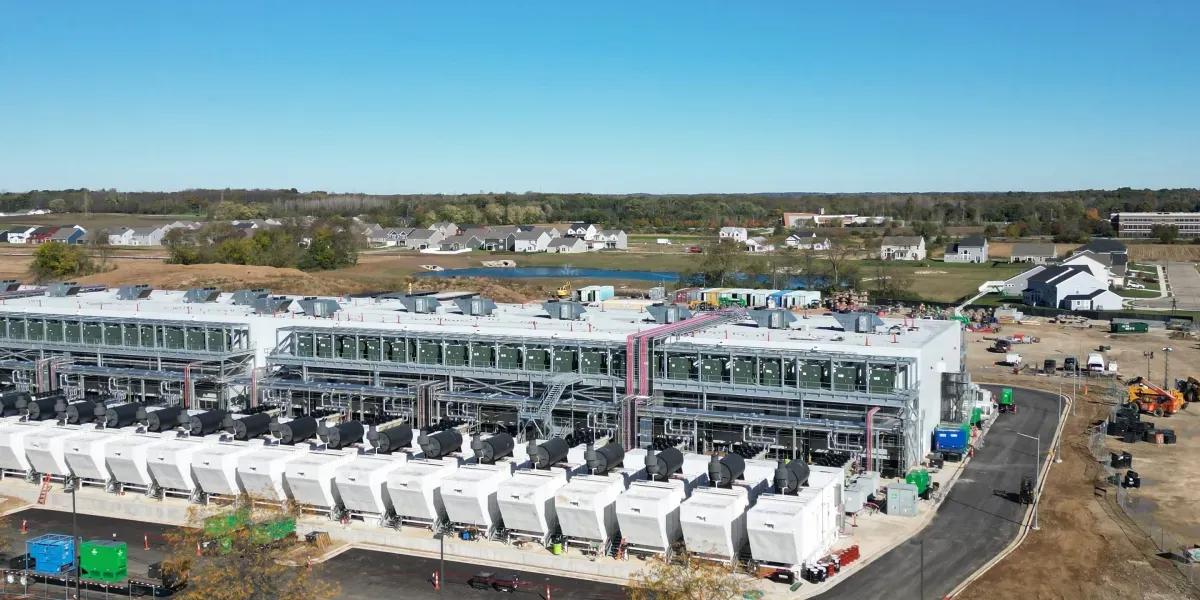
Construction continues at Oracle's large data center cluster in Abilene, Texas, being built for OpenAI. The company worked with startup Crusoe to enable the first phase of the site, with debt raised by Crusoe and investment group Blue Owl Capital
1
3
. Magouyrk assured investors there is ample demand from other clients for Oracle's data centers if OpenAI doesn't take up the full contracted amount, stating: "We have a customer base with a lot of demand such that whenever we find ourselves [with] capacity that's not being used, it very quickly gets allocated"1
.Related Stories
Broader Implications for AI Models and Market Sentiment
The market reaction to Oracle signals a potential shift in how investors evaluate AI infrastructure investments in 2026. Mandeep Singh of Bloomberg Intelligence suggests investors are beginning to reward efficiency over spending, noting that "the market is discerning and telling you that Google is doing much better in capex efficiency than an Oracle"
5
. With $90 billion in capex representing a quarter of Google's revenue, the company was able to train Gemini 3 and accelerate its cloud business5
. In contrast, Oracle's $50 billion capex plan nearly matches its total fiscal 2025 revenue of just over $57 billion5
.This scrutiny could have ripple effects across the AI ecosystem. As executives observe Wall Street's shift toward rewarding efficiency, they may adopt more budget-conscious AI models, potentially impacting companies like Nvidia that benefit from record spending by Big Tech customers . Kehring attempted to reassure investors by outlining various financing options, including customers bringing their own chips and suppliers leasing rather than selling chips, enabling Oracle "to synchronize our payments with our receipts and borrow substantially less than most people are modeling"
2
. The company remains "committed to maintaining our investment-grade debt rating," he emphasized1
.References
Summarized by

Navi
[1]
[2]
Related Stories
Oracle unveils $50 billion AI funding plan as investors worry about mounting debt and OpenAI exposure
02 Feb 2026•Business and Economy

AI demand called unlimited, but chip stocks fall as spending questions mount across industry
12 Jul 2026•Business and Economy

Oracle's AI Gamble Triggers Market Concerns as Debt Soars Past $100 Billion
17 Nov 2025•Business and Economy
Recent Highlights



Recent Highlights
Today's Top Stories






Don’t drown in AI news. We cut through the noise - filtering, ranking and summarizing the most important AI news, breakthroughs and research daily. Follow topics that matter to you and stay ahead.


