Oracle delays OpenAI AI data centers to 2028 as labor shortages test infrastructure ambitions


14 Sources
14 Sources
[1]
Oracle reportedly delays several new OpenAI data centers because of shortages -- tight material and labor supply frustrate expansion plans, possibly by a year or more
Oracle has revised delivery schedules for several large AI data centers it is building for OpenAI from 2027 to 2028, Bloomberg reports, citing people familiar with the matter. The delayed facilities are parts of Oracle's commitments under the Stargate AI infrastructure program jointly announced in January by Oracle, OpenAI, and SoftBank Bloomberg's sources familiar with the projects reportedly blame shortages of skilled labor and 'materials' for the setback, though it is unclear whether by 'materials' they mean building materials, shortages of data center equipment, or shortages of materials for building out infrastructure surrounding AI data centers. Despite the delay from 2027 to 2028, the overall scope of the projects that Oracle will build for OpenAI remains unchanged, the report says. The delayed facilities are part of a contract between Oracle and OpenAI inked in July, under which the two parties plan to increase Stargate AI data center capacity to two million AI accelerators and 5 GW of power. Despite the revised timelines, the U.S.-based AI campuses are still planned on an unusually aggressive scale, and some of them are designed to rank among the largest data centers globally once completed. In fact, given the scope of the projects, delays and slipups are inevitable. Earlier this week, Clay Magouyurk, chief executive of Oracle, said that despite obvious bottlenecks, Oracle believes its global expansion plans were realistic. He pointed to 147 active regions, 64 more in development, and roughly 400 MW of data center capacity delivered in one quarter. One of the examples of how Oracle can manage building out a large data center is its SuperCluster in Abilene, Texas, which houses nearly 200,000 Nvidia GPUs, and which was built in several months. "Our SuperCluster in Abilene, Texas, is on track with more than 96,000 Nvidia Grace Blackwell GB200 delivered," Magouyurk told analysts and investors. "We also began delivering AMD MI355 capacity to customers this quarter." The head of Oracle also stressed that the company continues to see strong demand for AI capacity, but emphasized that the company only accepts orders if it feels confident that it can fulfill them. "Our pace of capacity delivery continues to accelerate," said Magouyurk. "We continue to see strong demand for AI infrastructure across training and inferencing. We follow a very rigorous process before accepting customer contracts. This process ensures that we have all the necessary ingredients to deliver to customer success at margins that make sense for our business."
[2]
Oracle says there have been 'no delays' in OpenAI arrangement after stock slide
Oracle CEO Clay Magouyrk appears on a media tour of the Stargate AI data center in Abilene, Texas, on Sept. 23, 2025. Oracle on Friday pushed back against a report that said the company will complete data centers for OpenAI, one of its major customers, in 2028, rather than 2027. The delay is due to a shortage of labor and materials, according to the Friday report from Bloomberg, which cited unnamed people. Oracle shares fell to a session low of $185.98, down 6.5% from Thursday's close. "Site selection and delivery timelines were established in close coordination with OpenAI following execution of the agreement and were jointly agreed," an Oracle spokesperson said in an email to CNBC. "There have been no delays to any sites required to meet our contractual commitments, and all milestones remain on track." The Oracle spokesperson did not specify a timeline for turning on cloud computing infrastructure for OpenAI. In September, OpenAI said it had a partnership with Oracle worth more than $300 billion over the next five years. "We have a good relationship with OpenAI," Clay Magouyrk, one of Oracle's two newly appointed CEOs, said at an October analyst meeting. Doing business with OpenAI is relatively new to 48-year-old Oracle. Historically, Oracle grew through sales of its database software and business applications. Its cloud infrastructure business now contributes over one-fourth of revenue, although Oracle remains a smaller hyperscaler than Amazon, Microsoft and Google. OpenAI has also made commitments to other companies as it looks to meet expected capacity needs. In September, Nvidia said it had signed a letter of intent with OpenAI to deploy at least 10 gigawatts of Nvidia equipment for the San Francisco artificial intelligence startup. The first phase of that project is expected in the second half of 2026, but in a November filing, Nvidia said "there is no assurance that we will enter into definitive agreements with respect to the OpenAI opportunity." OpenAI has historically relied on Nvidia graphics processing units to operate ChatGPT and other products, and now it's also looking at designing custom chips in a collaboration with Broadcom. On Thursday, Broadcom CEO Hock Tan laid out a timeline for the OpenAI work, which was announced in October. "It's more like 2027, 2028, 2029, 10 gigawatts, that was the OpenAI discussion," Tan said on Broadcom's earnings call. "And that's, I call it, an agreement, an alignment of where we're headed with respect to a very respected and valued customer, OpenAI. But we do not expect much in 2026." OpenAI declined to comment.
[3]
Wall Street Sphincters Tighten as Oracle Delays Its OpenAI Data Center Buildout
It turns out infinite growth might not actually be possible. On Friday, Bloomberg reported that Oracle will be delaying some of its data center projects for OpenAI for at least a year due to labor and material shortages. Wall Street, which is definitely not extremely nervous about the sustainability of an economy entirely propped up by investments in AI, is not handling it well, responding to the news with a sell-off of companies involved in AI infrastructure before trading closed. The delays will push the planned completion of the data center projects back from 2027 to 2028, which might not seem like the biggest deal in the world on paper, but the runway for AI companies to crack the revenue code and turn their extremely red balance sheets black is not that long. A year's delay in completing these data centers means a year of setback for training and deploying AI tools, which means a year's delay in finding out if all the money poured into these companies actually amounts to anything. There's certainly some truth to the cause of the delays, lest you worry that the wind is picking up near this house of cards. The Wall Street Journal recently reported that the data center rush has created a shortage of capable construction workers and driven up the wages of those who are available to take these jobs. Meanwhile, Trump's tariffs have made construction material harder to come by and, according to a recent report from Forbes, have contributed as much as $6 billion in additional costs to the AI buildout. But Oracle has always been something of a bellwether when it comes to the market's confidence in AI. Back in September, Oracle had a pretty rough quarterly earnings report, missing on its revenue and earnings projections, and producing net income that was flat year-over-year. And yet, it defied gravity and its stock soared thanks to the company's fat stack of remaining performance obligations -- financial agreements that will provide revenue that have not yet been fulfilled. The company had a projected $455 billion coming in, in no small part due to data center agreements with OpenAI. Suddenly, it feels like those commitments might not be the sure things the market has believed them to be. And it's far from the first indicator that Oracle's deals in particular may be more smoke and mirrors than racks and processors. Earlier this year, reports indicated that the Stargate project that Oracle and OpenAI are heavily involved in has also been moving significantly slower than expected. That didn't stop OpenAI CEO Sam Altman from announcing even more investments on this front a few months later, which, of course, pushed the market even higher. But if it's not yet clear to Wall Street that just announcing these multi-billion-dollar deals does not guarantee they'll ever actually materialize, it's at least started to give some of them a sense of queasiness.
[4]
Volatile Oracle shares a proxy for Wall Street's AI jitters
For a reading of Wall Street's shifting mood on the artificial intelligence investment boom, take a look at the daily fluctuations of Oracle stock, analysts say. Shares of the software giant slumped more than 5% Wednesday following a news report of financing troubles with one of the company's giant AI projects. But they recovered on Thursday and finished up around 1% at $180.03 as tech companies rallied following blowout results from Micron Technology, another big AI player. "Oracle is probably the poster child" for the AI investment boom, said B. Riley Wealth Management's Art Hogan, who points to questions about "circular financing" arrangements that have made Oracle and OpenAI dependent on each other for billions of dollars in business. On Thursday, Oracle -- along with Silver Lake and Abu Dhabi-based MGX -- was also named in a new deal with TikTok, according to an internal memo seen by AFP from the social media company's CEO Shou Chew. "The US joint venture will be responsible for US data protection, algorithm security, content moderation, and software assurance," Chew said in the memo. The deal would allow TikTok to maintain US operations and avoid a ban threat over its Chinese ownership. Oracle stock rose more than 5% to $190.81 in after-hours trading on Thursday. The firm's stock peaked at $345.72 in September after it unveiled a massive inventory of AI work, a surge that briefly vaulted co-founder Larry Ellison above Tesla CEO Elon Musk as the world's wealthiest person. But its shares have since fallen more than 45% as investors have begun to question the risk of AI infrastructure overbuilding and scrutinized the financing of individual projects. Ellison, a close ally of President Donald Trump, is currently fifth on the Forbes real-time billionaire list with $230 billion. Michigan project 'limbo' This week's gyrations in Oracle shares followed a Financial Times story Wednesday that described a $10 billion AI data center project in Michigan as "in limbo" after a key partner declined to join the project. The company, Blue Owl Capital, a backer of other major Oracle projects, pulled back after other lenders pushed for stricter terms "amid shifting market sentiment around enormous AI spending," said the FT, which cited people familiar with the matter. Oracle, which is taking on billions of dollars of debt in the building spree, described the FT story as "incorrect." "Our development partner, Related Digital, selected the best equity partner from a competitive group of options, which in this instance was not Blue Owl," said Oracle spokesperson Michael Egbert. "Final negotiations for their equity deal are moving forward on schedule and according to plan." OpenAI CEO Sam Altman has said the Chat GPT-maker has committed to some $1.4 trillion in investments in AI computing, with some $300 billion reportedly going to Oracle. But AI stocks have been volatile in recent weeks as the market scrutinizes the profit outlook for the data centers. "Investors are starting to ask questions about the sustainability of the AI trade and the profitability," said Steve Sosnick of Interactive Brokers. The enthusiasm for AI "makes sense" when considering that manufacturing and services companies could see profits enhanced by the technology, Sosnick said, before pointing to doubts over lofty AI equity valuations. Oracle's price drop on Wednesday followed a selloff last week after the firm's quarterly results sparked worry over its massive capital spending. Analysts bullish on the stock have emphasized its huge growth potential with the AI boom. On Thursday, Morningstar trimmed its price target on Oracle to $277 from $286, pointing to greater uncertainty around the projects. Oracle's elevated debt "leaves little room for error, meaning the new data centers have to generate cash flow as soon as possible to service debt and lease obligations," Morningstar said in a note. "However, we view recent events, including delays in some data centers' completion dates, as minor setbacks that should not alter Oracle's overall capacity ramp-up."
[5]

Volatile Oracle shares a proxy for Wall Street's AI jitters
Washington (United States) (AFP) - For a reading of Wall Street's shifting mood on the artificial intelligence investment boom, take a look at the daily fluctuations of Oracle stock, analysts say. Shares of the software giant slumped more than five percent Wednesday following a news report of financing troubles with one of the company's giant AI projects. But they recovered on Thursday and finished up around one percent at $180.03 as tech companies rallied following blowout results from Micron Technology, another big AI player. "Oracle is probably the poster child" for the AI investment boom, said B. Riley Wealth Management's Art Hogan, who points to questions about "circular financing" arrangements that have made Oracle and OpenAI dependent on each other for billions of dollars in business. On Thursday, Oracle -- along with Silver Lake and Abu Dhabi-based MGX -- was also named in a new deal with TikTok, according to an internal memo seen by AFP from the social media company's CEO Shou Chew. "The US joint venture will be responsible for US data protection, algorithm security, content moderation, and software assurance," Chew said in the memo. The deal would allow TikTok to maintain US operations and avoid a ban threat over its Chinese ownership. Oracle stock rose more than five percent to $190.81 in after-hours trading on Thursday. The firm's stock peaked at $345.72 in September after it unveiled a massive inventory of AI work, a surge that briefly vaulted co-founder Larry Ellison above Tesla CEO Elon Musk as the world's wealthiest person. But its shares have since fallen more than 45 percent as investors have begun to question the risk of AI infrastructure overbuilding and scrutinized the financing of individual projects. Ellison, a close ally of President Donald Trump, is currently fifth on the Forbes real-time billionaire list with $230 billion. Michigan project 'limbo' This week's gyrations in Oracle shares followed a Financial Times story Wednesday that described a $10 billion AI data center project in Michigan as "in limbo" after a key partner declined to join the project. The company, Blue Owl Capital, a backer of other major Oracle projects, pulled back after other lenders pushed for stricter terms "amid shifting market sentiment around enormous AI spending," said the FT, which cited people familiar with the matter. Oracle, which is taking on billions of dollars of debt in the building spree, described the FT story as "incorrect." "Our development partner, Related Digital, selected the best equity partner from a competitive group of options, which in this instance was not Blue Owl," said Oracle spokesperson Michael Egbert. "Final negotiations for their equity deal are moving forward on schedule and according to plan." OpenAI CEO Sam Altman has said the Chat GPT-maker has committed to some $1.4 trillion in investments in AI computing, with some $300 billion reportedly going to Oracle. But AI stocks have been volatile in recent weeks as the market scrutinizes the profit outlook for the data centers. "Investors are starting to ask questions about the sustainability of the AI trade and the profitability," said Steve Sosnick of Interactive Brokers. The enthusiasm for AI "makes sense" when considering that manufacturing and services companies could see profits enhanced by the technology, Sosnick said, before pointing to doubts over lofty AI equity valuations. Oracle's price drop on Wednesday followed a selloff last week after the firm's quarterly results sparked worry over its massive capital spending. Analysts bullish on the stock have emphasized its huge growth potential with the AI boom. On Thursday, Morningstar trimmed its price target on Oracle to $277 from $286, pointing to greater uncertainty around the projects. Oracle's elevated debt "leaves little room for error, meaning the new data centers have to generate cash flow as soon as possible to service debt and lease obligations," Morningstar said in a note. "However, we view recent events, including delays in some data centers' completion dates, as minor setbacks that should not alter Oracle's overall capacity ramp-up."
[6]

Oracle stock down again nearly 5% today as new report claims Blue Owl exits $10 billion Michigan data center deal - ORCL to decline further?
Oracle Stock Crash: The pullback raised fresh questions about how Oracle plans to finance its rapidly expanding AI and cloud infrastructure, just as investor scrutiny over debt levels intensifies. Shares of Oracle fell about 5% in late trading after reports claimed Blue Owl Capital, Oracle's largest US data centre partner, would not back a planned $10 billion facility in Michigan. The project, designed as a 1-gigawatt campus in Saline Township, is expected to support high-performance computing workloads, including capacity linked to OpenAI. According to multiple reports, Blue Owl had been in talks with lenders and Oracle for months. Those negotiations reportedly stalled, leaving the project without a confirmed equity backer. Blue Owl has historically financed several of Oracle's largest US data centres, typically owning the sites and leasing them back to Oracle under long-term agreements. Oracle later disputed the reports, saying Blue Owl was not selected and that negotiations with another equity partner were progressing. Still, the market reaction reflected broader investor unease. Oracle has sharply increased spending on AI infrastructure while taking on significant new debt, even as recent cloud growth disappointed expectations. The episode highlights the financial pressure behind the AI data centre boom, where capital demands are rising faster than revenues. Oracle Corporation (ORCL) shares continued to slide, trading around $179.92, down 4.63% in the latest session, with an intraday low of $177.17. The stock has been under sustained pressure since Oracle's fiscal Q2 earnings miss, when revenue came in at $16.06 billion, below the $16.21 billion estimate. Shares plunged 10.83% on December 11 and fell another 4.66% on December 12, before dropping 2.8% on December 17 amid reports of financing concerns tied to a major data center project. ORCL now trades about 48% below its 52-week high of $345.72, though it remains up roughly 34% year over year, outperforming the Nasdaq's 22% gain. Investor caution has been amplified by heavy AI infrastructure spending and balance-sheet strain. Oracle posted negative free cash flow of about $10 billion, even as remaining performance obligations rose to $523 billion. The stock is trading well below its 50-day moving average of $243.11 and 200-day average of $213.15, reinforcing a bearish near-term trend. Analysts have trimmed price targets, with RBC Capital cutting to $250, Piper Sandler to $290, and UBS to $325, while maintaining generally bullish long-term views tied to AI demand. Trading volume surged to nearly 32 million shares, signaling elevated selling pressure as markets weigh Oracle's long-term AI opportunity against rising debt and execution risks. The Michigan facility is one of Oracle's most ambitious data centre plans to date. The 1-gigawatt scale places it among the largest AI-focused campuses proposed in the US. Such projects require billions in upfront capital and long-term lease commitments. Blue Owl Capital has been a central partner in Oracle's US data centre expansion. In past deals, the private capital firm typically financed construction and retained ownership, while Oracle signed multi-year leases. That structure allowed Oracle to scale quickly without fully funding projects on its balance sheet. Reports indicated that Blue Owl participated in early discussions for the Michigan site but ultimately did not proceed. The breakdown reportedly left Oracle searching for alternative financing as development timelines advance. Blackstone has been mentioned as a potential replacement partner, though no agreement has been finalized. Any delay or restructuring could affect project economics, lease terms, and deployment timelines. Oracle moved quickly to counter the funding narrative. A company spokesperson said the Financial Times report was inaccurate, adding that development partner Related Digital selected a different equity investor after a competitive process. According to Oracle, final negotiations with the chosen equity partner are moving forward on schedule. The company did not name the investor or disclose deal terms. Despite the denial, investors focused on the broader context. Oracle shares have been under pressure as capital spending rises faster than cash generation. Markets remain sensitive to any sign that financing conditions for large AI infrastructure projects are tightening. The stock reaction suggests that even unconfirmed reports can amplify existing worries around leverage, execution risk, and long-term returns on AI investments. Oracle's balance sheet has expanded rapidly over the past year. The company now holds about $248 billion in data centre and cloud capacity lease commitments spanning 15 to 19 years. That figure is nearly 148% higher than last August. In September, Oracle raised $18 billion in new debt, according to regulatory filings. By the end of November, total obligations, including operating lease liabilities, exceeded $124 billion. Capital spending has also surged. Oracle increased its annual capex plan by roughly $15 billion, driven largely by data centres, AI hardware, and cloud infrastructure. That spending increase has coincided with higher cash outflows and cloud revenue that fell short of expectations in the most recent quarter. As a result, Oracle shares are down about 10% over the past six months, underperforming several large-cap tech peers. The Michigan data centre is closely tied to Oracle's broader AI ambitions. The company has positioned itself as a major infrastructure partner for large AI models, including workloads associated with OpenAI. Securing reliable, long-term financing is critical for sustaining that strategy. Large-scale AI data centres require not only capital, but confidence from investors that demand will remain strong enough to justify decades-long commitments. Q: Why did Oracle stock fall after reports about the Michigan data centre project? A: Oracle shares fell about 5% after reports said Blue Owl would not fund a $10 billion Michigan data centre. Investors reacted to uncertainty over financing for a 1-gigawatt AI facility. Oracle later denied the report but concerns lingered. The stock is down roughly 10% over six months. Q: How much debt and long-term commitments does Oracle currently carry? A: Oracle has about $248 billion in data centre and cloud lease commitments over 15 to 19 years. In September, it raised $18 billion in new debt. By late November, total obligations exceeded $124 billion. Rising AI spending has increased cash use.
[7]

Oracle's AI Expansion Highlights Hidden Cost of Data Center Leases - Amazon.com (NASDAQ:AMZN), Alphabet (NASDAQ:GOOGL)
Oracle AI Data Centers Oracle Corp. (NYSE:ORCL) is quickly becoming one of the most watched names in the race for artificial intelligence infrastructure. However, as enthusiasm for AI-driven growth accelerates, investors are gradually shifting their focus from the most obvious revenue opportunities to the financial structure supporting that expansion. At the center of the debate are Oracle's long-term data center leases, which have quietly grown to a size that the market now finds difficult to ignore. The Rise of AI Leasing -- And Why It Matters In recent years, big tech companies have invested hundreds of billions of dollars in artificial intelligence infrastructure. Although capital expenditures (servers, chips, and buildings) generally dominate investor discussions, lease commitments are emerging as a parallel and less transparent source of financial risk. According to analyses based on information reviewed by Bloomberg, Oracle has committed to up to $248 billion in future rent payments, primarily related to data centers but also including ancillary facilities such as offices and warehouses. Some of these contracts have terms of up to 19 years, effectively locking the company into fixed obligations well beyond normal technology investment cycles. Unlike capex, lease commitments do not always receive the same level of attention. From an economic perspective, however, they represent a long-term constraint on future cash flows, which is particularly relevant for companies that are rapidly scaling their infrastructure to meet AI demand. Oracle's specific exposure Oracle's position stands out within the cloud computing landscape. Although Amazon.com Inc. (NASDAQ:AMZN), Microsoft Corp. (NASDAQ:MSFT), and Alphabet Inc. (NASDAQ:GOOGL) also have significant lease commitments, these companies can rely on broader cloud revenue bases and greater free cash flow generation. Oracle, on the other hand, operates a relatively smaller cloud business, while taking on commitments typical of top-tier hyperscalers. This imbalance has been further accentuated by the $30 billion per year cloud agreement with OpenAI, which guarantees revenue visibility but also increases exposure to a small number of customers with extremely high demand. According to data center research firm DC Byte, this level of customer concentration is atypical compared to competitors and introduces an additional level of executive risk. Renting instead of building: a strategic compromise Renting data centers instead of building them directly offers clear advantages. Companies can avoid high upfront development costs, reduce time to market, and transfer some of the construction risk to third-party developers. Meta Platforms Inc. (NASDAQ:META) has taken a similar approach, leasing its main AI data center in Louisiana through a special purpose vehicle that will in turn take on tens of billions of dollars in debt. Meta has reported $58 billion in future lease commitments, roughly triple what it reported a year earlier. The key point is that leasing does not eliminate risk, but redistributes it over time. When contract terms extend over decades, strategic flexibility is reduced, especially if demand for AI, prices, or the technology economy evolve more rapidly than expected. Market signals become more cautious Investor sensitivity to Oracle's infrastructure strategy has heightened recently after the Financial Times reported Blue Owl Capital's decision not to participate in a $10 billion financing for one of Oracle's AI data centers in Michigan, intended to support OpenAI's workloads. Following the news, Oracle shares fell by around 5%, while five-year credit default swaps on Oracle debt rose to around 155 basis points, the highest level since the global financial crisis, according to ICE Data Services. The widening of CDS indicates that the market is beginning to price in a higher perceived credit risk, despite Oracle continuing to maintain that the project is proceeding as planned and that alternative sources of financing are available. Oracle subsequently clarified that Blue Owl was not part of the final equity negotiations and that talks with other partners are progressing as planned. However, the episode highlighted how quickly investor confidence can change when the financial structure of projects is called into question. A broader shift in the AI narrative At the industry level, total capital expenditures by major technology companies reached approximately $372 billion over the last four quarters, demonstrating the scale of investment required to support the growth of artificial intelligence. Increasingly, however, investors recognize that AI is not just a story of software or semiconductors, but one of physical infrastructure. This reality introduces new constraints: energy availability, electrical grid capacity, financing conditions, and long-term contractual obligations. The expansion of Oracle's lease commitments has become one of the first focal points of these concerns, turning the company into a veritable case study in how markets assess AI-related infrastructure risk. In summary Oracle's expansion into artificial intelligence remains strategically compelling, but the financial architecture supporting it is now under scrutiny. Long-term lease commitments may remain outside traditional capex metrics, but they represent real and binding obligations on future cash flows. As enthusiasm for AI matures, markets seem increasingly willing to distinguish between growth stories supported by budget flexibility and models that incorporate heavier structural constraints. For Oracle, the hidden cost of data center leases has now become a full-fledged part of the investor debate. Benzinga Disclaimer: This article is from an unpaid external contributor. It does not represent Benzinga's reporting and has not been edited for content or accuracy. AMZNAmazon.com Inc$227.670.40%OverviewGOOGLAlphabet Inc$302.980.17%METAMeta Platforms Inc$663.66-0.12%MSFTMicrosoft Corp$484.430.09%ORCLOracle Corp$187.504.15%Market News and Data brought to you by Benzinga APIs
[8]

Why Shares of Oracle Are Getting Crushed This Week | The Motley Fool
The markets are growing concerned with the IT company's ability to finance data center build-outs and its partnership with OpenAI. As of the time of writing, Oracle (ORCL +0.88%) stock is down 19.2% over the last five trading days. The move illustrates growing skepticism over the company's investment in artificial intelligence (AI). The bond markets are growing concerned with Oracle's ability to finance its AI investments, and not least its $300 billion data center deal with OpenAI. The AI company is committed to renting servers, while Oracle needs to build out the IT infrastructure and lease the data center "shells." As such, its expenditures are focused on GPUs, networking equipment, and power infrastructure, while taking on leases for the land and buildings. The rise in Oracle's corporate bond yields and the spike in credit default swap (CDS) spreads (a form of insurance against a bond's default), as discussed previously, are signs of stress in the bond markets. The market is concerned about Oracle's financing situation, with the Wall Street consensus calling for cash outflows of $23.8 billion, $21 billion, and $14.2 billion, respectively, in its financial years from 2026 to 2028. Moreover, there are question marks surrounding OpenAI's future profitability, with Deutsche Bank forecasting a cumulative cash burn of $143 billion for OpenAI from 2024 to 2029. While it's easy to conclude that these fears could and should spill over to the broader AI market, it's worth noting that a peer like Alphabet (GOOG +1.83%), (GOOGL +1.88%) is in a different boat for two reasons. First, despite its substantial ramp in capital spending (the market expects its capital spending to increase from $90.5 billion in 2025 to $131 billion in 2027) , it's still expected to generate a cumulative $225 billion in free cash flow from 2025 to 2028. Second, Alphabet is largely spending to support its own computing power needs, and ultimately its own business. It can adjust its spending in line with its objectives. As such, the decline in Oracle's shares appears to be more of an Oracle-specific issue than a broader market one.
[9]
Oracle denies report on OpenAI data center delays
Oracle denied on Friday a media report that it was delaying OpenAI-related data centers, following investor worries over its debt-fueled AI infrastructure buildout. Shares of Oracle, which had fallen 3.6% following the report, pared some losses to be down by 2.8% in afternoon trading. Oracle denied on Friday a media report that it was delaying OpenAI-related data centers, following investor worries over its debt-fueled AI infrastructure buildout. Bloomberg News had earlier in the day reported that Oracle had pushed back the completion dates for some data centers it is developing for OpenAI to 2028, a year later than planned, due to labor and material shortages. "There have been no delays to any sites required to meet our contractual commitments, and all milestones remain on track," Oracle spokesperson Michael Egbert told Reuters in an emailed statement. "We remain fully aligned with OpenAI and confident in our ability to execute against both our contractual commitments and future expansion plans," Egbert added. Shares of Oracle, which had fallen 3.6% following the report, pared some losses to be down by 2.8% in afternoon trading. Other AI-related shares also tumbled, with chip giant Nvidia, Advanced Micro Devices, Micron and Arm Holdings down between 2% and 4.5%. The Bloomberg report came a day after Oracle logged its biggest stock drop since late January, following earnings that showed rising spending and a weak outlook for a company that is increasingly reliant on OpenAI. Long a smaller cloud-computing player, Oracle has leaped into the artificial intelligence infrastructure race this year on the back of a $300 billion OpenAI data-center deal. But the buildout has forced the company to borrow aggressively. Investors, spooked in recent weeks by signs that Google was pulling ahead in the AI race and by Oracle's rising debt load, have sold off the company's stock and bonds. The cost of insuring Oracle's debt against default surged on Thursday to its highest in at least five years and was up again on Friday. The shares are up just 13% now for the year, having erased all the gains from a 36% jump in September, when it reported a massive backlog of over $450 billion - mostly tied to OpenAI. Investors have been growing more picky in the AI space, with less willingness to indiscriminately reward spending on AI, even as they bet on its long-term potential. OpenAI did not immediately respond to a Reuters request for comment. After the Bloomberg report, some analysts said the news showed bottlenecks beyond chips were emerging for the data-center expansion tech companies are financing with hundreds of billions of dollars in investment. "Concerns about the ability to build data centers due to construction delays, power availability and other practical factors are becoming a much bigger factor than the expected demands for AI capabilities," Bob O'Donnell, chief analyst at TECHnalysis Research, said. But he added that the market has become more sensitive to news of AI delays as investors scrutinize payoffs from the spending. Broadcom was also down more than 11% on Friday, after warning that rising sales of lower-margin custom AI processors were squeezing profitability, stirring fears the business may be less lucrative.
[10]
Oracle's $10 Billion OpenAI Data Center Bet Faces Fresh Doubts After Financing Partner Pulls Out -- Is The Deal In Jeopardy? - Broadcom (NASDAQ:AVGO), CoreWeave (NASDAQ:CRWV)
Blue Owl Capital's (NYSE:OWL) decision to step away from financing an Oracle-backed (NYSE:ORCL) AI data center has become a fresh flashpoint for investors already on edge about the financial architecture behind the AI infrastructure boom. The private capital firm had been in discussions with Oracle and lenders about investing in a planned $10 billion, 1-gigawatt data center in Saline Township, Michigan, designed to serve OpenAI. Talks ultimately stalled, leaving Oracle without a confirmed equity partner for the site, according to a Financial Times report on Wednesday. Oracle has said it remains in late-stage talks with another investor. The setback has landed at a fragile moment for AI-linked stocks. Oracle, Broadcom (NASDAQ:AVGO), CoreWeave (NASDAQ:CRWV), and other nuclear stocks have all sold off sharply in recent sessions, as investors reassess whether massive AI infrastructure spending will deliver returns in tandem with the capital being deployed. Check the current price of ORCL here. Why This Deal Matters Blue Owl has been Oracle's primary data center financing partner, backing multibillion-dollar projects through special-purpose vehicles that own the facilities and lease them back to Oracle under long-term agreements. Those sites, in turn, supply computing power to AI developers such as OpenAI. That model -- capital funded by private investors, leased, and supported by long-dated AI contracts -- has been central to the rapid expansion of AI capacity. It has also drawn increasing scrutiny as the same small group of players acts as customer, financier and growth sponsor across the ecosystem. Japanese conglomerate SoftBank's role as a major backer of OpenAI and AI infrastructure has further tightened those links, reinforcing concerns among investors that cash flows and commitments may be more circular than they appear on the surface. Debt, Deadlines, And Shifting Terms Oracle's AI push has been financed largely through debt and long-term leases. The company disclosed that capital spending will rise to $50 billion this fiscal year, while total lease commitments surged to $248 billion in the three months through November, with obligations stretching up to two decades. The company has been snapping up deals with tech giants like Meta (NASDAQ:META) and Nvidia (NASDAQ:NVDA). According to FT, people familiar with the Michigan negotiations said lenders pushed for stricter leasing and debt terms as sentiment around large-scale AI spending shifted, making the economics less attractive than earlier projects. Blue Owl was also wary of potential construction delays at the site. And, the reassessment is not limited to Oracle. CoreWeave, a fast-growing AI compute provider with significant exposure to OpenAI, has been repeatedly cited by market participants as facing similar risks tied to leverage, heavy capital expenditure, and customer concentration. Its shares are now down more than 60% from their June highs. See also: CoreWeave Stock Slides As AI Concerns Rise: What's Happening? Repricing, Not A Collapse Call Still, there is no indication that AI demand from OpenAI or hyperscalers is slowing. But Blue Owl's withdrawal has likely sharpened a broader reassessment underway in markets. Investors who once rewarded speed and scale are now asking harder questions about funding durability, cash flow visibility, and who ultimately bears the risk if AI growth fails to meet expectations. READ NEXT: Jim Cramer Says It's 'Time To Sell' This AI Infrastructure Stock Amid Steep Pullback, Despite New Partnerships, Bullish Analyst Ratings Image via Shutterstock AVGOBroadcom Inc$329.811.16%OverviewCRWVCoreWeave Inc$65.321.19%METAMeta Platforms Inc$651.550.32%NVDANVIDIA Corp$172.811.09%ORCLOracle Corp$180.180.96%OWLBlue Owl Capital Inc$15.651.69%Market News and Data brought to you by Benzinga APIs
[11]
Oracle Pushes Back On OpenAI Data Center Delay Claims - Oracle (NYSE:ORCL)
Oracle Corp. (NYSE:ORCL) stock declined Friday as markets weighed execution risks around the company's rapidly scaling AI and cloud capacity buildout. The pullback followed a Bloomberg report that said Oracle has shifted timelines for several OpenAI data centers to 2028 from 2027, citing labor and material shortages, according to people familiar with the work. Moreover, the company is still executing a $300 billion contract to supply computing capacity for OpenAI's models. Also Read: Semiconductor Stocks Sell Off After Oracle's Results Spoil AI Party Despite the reported timeline changes, the U.S. projects remain on an aggressive schedule and are expected to rank among the largest data centers globally once completed, the report added. Oracle Co-CEO Clay Magouyrk said the company remains confident in its ability to deliver capacity worldwide. He added that the first data center Oracle is developing for OpenAI in Abilene, Texas, remains on track, with more than 96,000 Nvidia Corp. (NASDAQ:NVDA) chips already delivered. Oracle Pushes Back On Delay Narrative Oracle later pushed back on the delay narrative in a statement cited by Reuters, saying site selection and delivery timelines were established in close coordination with OpenAI following execution of the agreement and were jointly agreed upon. The company said there have been no delays to any sites required to meet its contractual commitments and that all milestones remain on track. ORCL Price Action: Oracle shares were down 3.08% at $192.72 at the time of publication on Friday, according to Benzinga Pro data. Read Next: Oracle Reaches Hyperscaler Heights With $300 Billion Bet On AI: Analyst Photo via Shutterstock ORCLOracle Corp$191.71-3.59%OverviewNVDANVIDIA Corp$177.38-1.96%Market News and Data brought to you by Benzinga APIs
[12]

Oracle denies report on OpenAI data center delays
Oracle denied on Friday a media report that it was delaying OpenAI-related data centers, following investor worries over its debt-fueled AI infrastructure buildout. Bloomberg News had earlier in the day reported that Oracle had pushed back the completion dates for some data centers it is developing for OpenAI to 2028, a year later than planned, due to labor and material shortages. "There have been no delays to any sites required to meet our contractual commitments, and all milestones remain on track," Oracle spokesperson Michael Egbert told Reuters in an emailed statement. "We remain fully aligned with OpenAI and confident in our ability to execute against both our contractual commitments and future expansion plans," Egbert added. Shares of Oracle, which had fallen 3.6 per cent following the report, pared some losses to be down by 2.8 per cent in afternoon trading. Other AI-related shares also tumbled, with chip giant Nvidia, Advanced Micro Devices, Micron and Arm Holdings down between two per cent and 4.5 per cent. The Bloomberg report came a day after Oracle logged its biggest stock drop since late January, following earnings that showed rising spending and a weak outlook for a company that is increasingly reliant on OpenAI. Long a smaller cloud-computing player, Oracle has leaped into the artificial intelligence infrastructure race this year on the back of a US$300 billion OpenAI data-center deal. But the buildout has forced the company to borrow aggressively. Investors, spooked in recent weeks by signs that Google was pulling ahead in the AI race and by Oracle's rising debt load, have sold off the company's stock and bonds. The cost of insuring Oracle's debt against default surged on Thursday to its highest in at least five years and was up again on Friday. The shares are up just 13 per cent now for the year, having erased all the gains from a 36 per cent jump in September, when it reported a massive backlog of over $450 billion -- mostly tied to OpenAI. Investors have been growing more picky in the AI space, with less willingness to indiscriminately reward spending on AI, even as they bet on its long-term potential. OpenAI did not immediately respond to a Reuters request for comment. After the Bloomberg report, some analysts said the news showed bottlenecks beyond chips were emerging for the data-center expansion tech companies are financing with hundreds of billions of dollars in investment. "Concerns about the ability to build data centers due to construction delays, power availability and other practical factors are becoming a much bigger factor than the expected demands for AI capabilities," Bob O'Donnell, chief analyst at TECHnalysis Research, said. But he added that the market has become more sensitive to news of AI delays as investors scrutinize payoffs from the spending. Broadcom was also down more than 11 per cent on Friday, after warning that rising sales of lower-margin custom AI processors were squeezing profitability, stirring fears the business may be less lucrative.
[13]

Oracle's largest data center partner walks, source says; shares fall
STORY: Shares of Oracle fell as much as 6% Wednesday morning after a key financial partner said it will not help fund a major AI data center. That's according to a source who told Reuters that talks broke down between Blue Owl Capital and Oracle, which plans to build a $10 billion data center in Saline Township, Michigan. That data center is intended to serve OpenAI. Oracle jumped into the AI race when it inked a massive deal with OpenAI months ago to provide computing power to the ChatGPT parent. But that deal has proved costly for Oracle, which has had to borrow heavily to build out its AI infrastructure... its rising debt alarming investors. Oracle also denied a media report last week that it was delaying OpenAI-related data centers due to labor and material shortages. A key issue for Blue Owl, according to the source, is that it viewed the existing leases for the Michigan project as less favorable than those it had helped structure in its other deals with Oracle. Blue Owl has served as Oracle's primary backer for its largest data center projects in the U.S., investing its own money and raising billions of dollars more in debt, according to the Financial Times, which first reported the development. Oracle's shares have fallen more than 15% since it reported quarterly earnings last week, as its massive spending and weak forecasts raised doubts over how quickly big bets on AI will pay off. Oracle did not immediately respond to a request for comment.
[14]
Due to shortages Oracle delays several data centers intended for OpenAI until 2028
Oracle has decided to push back the delivery of several data centers planned as part of its strategic partnership with OpenAI, until 2028, according to reports by Bloomberg. These delays concern sites originally expected in 2027 and are said to be due to difficulties sourcing materials as well as a labor shortage. Despite these adjustments, Oracle maintains high ambitions for the development of its infrastructure, notably in the United States. In June, Oracle signed a large $300bn contract with OpenAI to provide the computing capacity needed to train and deploy its artificial intelligence models. The first data center linked to this partnership, located in Abilene, Texas, remains on track with the original schedule. Clay Magouyrk, Oracle's co-CEO, confirmed this week that more than 96,000 Nvidia chips have already been delivered to the site.
Share
Share
Copy Link
Oracle has pushed back delivery timelines for several large AI data centers built for OpenAI from 2027 to 2028, citing labor and material shortages. The data center delays sparked investor concerns about the artificial intelligence investment boom, sending Oracle shares down over 5% before the company disputed any contractual setbacks. The setback highlights mounting challenges in the race to build AI infrastructure.
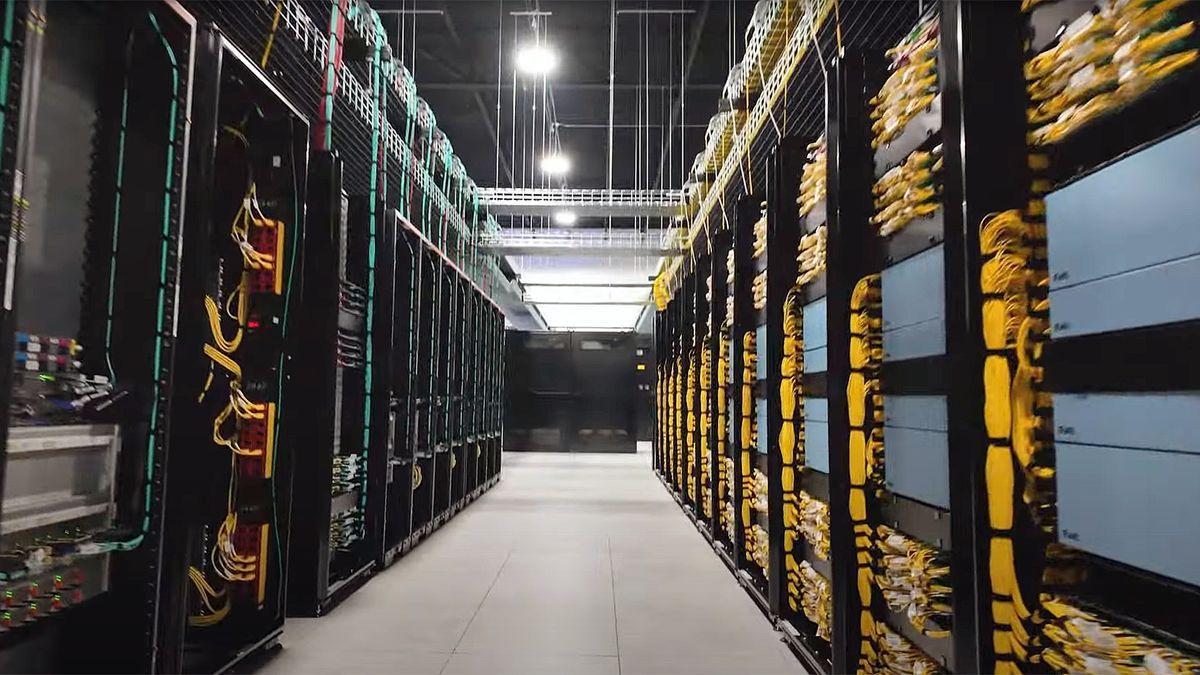
Oracle Pushes AI Data Centers Timeline Amid Supply Constraints
Oracle has revised delivery schedules for several large AI data centers it is building for OpenAI from 2027 to 2028, according to a Bloomberg report citing people familiar with the matter
1
. The data center delays affect facilities that are part of Oracle's commitments under the Stargate AI infrastructure program, jointly announced in January by Oracle, OpenAI, and SoftBank. Bloomberg's sources blame labor and material shortages for the setback, though the overall scope of the projects Oracle will build for OpenAI remains unchanged1
.The delayed facilities are part of a contract between Oracle and OpenAI inked in July, under which the two parties plan to increase Stargate AI data center capacity to two million AI accelerators and 5 GW of power
1
. Despite the revised timelines, the U.S.-based AI campuses are still planned on an unusually aggressive scale, with some designed to rank among the largest data centers globally once completed. OpenAI CEO Sam Altman has said the ChatGPT-maker has committed to some $1.4 trillion in investments in AI computing, with some $300 billion reportedly going to Oracle4
5
.Oracle Disputes Delay Claims as Stock Volatility Intensifies
Oracle quickly pushed back against the delay reports, with a company spokesperson stating there have been "no delays to any sites required to meet our contractual commitments, and all milestones remain on track"
2
. The spokesperson emphasized that site selection and delivery timelines were established in close coordination with OpenAI following execution of the agreement and were jointly agreed upon. However, Oracle did not specify a timeline for turning on cloud infrastructure for OpenAI2
.The news triggered Wall Street's AI jitters, with Oracle shares falling to a session low of $185.98, down 6.5% from Thursday's close
2
. The stock volatility reflects broader investor concerns about the sustainability of AI investments and the profitability outlook for massive data center buildout projects. Oracle shares peaked at $345.72 in September after it unveiled a massive inventory of AI work, briefly vaulting co-founder Larry Ellison above Tesla CEO Elon Musk as the world's wealthiest person4
5
. But the stock has since fallen more than 45% as investors scrutinize the risk of AI infrastructure overbuilding and the financing of individual projects4
5
.Supply Chain Bottlenecks Challenge Aggressive Expansion Plans
The data center delays highlight real constraints in the artificial intelligence investment boom. The Wall Street Journal recently reported that the data center rush has created a shortage of capable construction workers and driven up wages for those available to take these jobs
3
. Meanwhile, Trump's tariffs have made construction materials harder to come by and contributed as much as $6 billion in additional costs to the AI buildout, according to Forbes3
.Clay Magouyrk, chief executive of Oracle, said despite obvious bottlenecks, Oracle believes its global expansion plans are realistic. He pointed to 147 active regions, 64 more in development, and roughly 400 MW of data center capacity delivered in one quarter
1
. Magouyrk highlighted Oracle's SuperCluster in Abilene, Texas, which houses nearly 200,000 Nvidia GPUs and was built in several months as proof of the company's execution capabilities. "Our SuperCluster in Abilene, Texas, is on track with more than 96,000 Nvidia Grace Blackwell GB200 delivered," Magouyrk told analysts and investors1
.Related Stories

Market Sentiment Shifts as Financing Questions Mount
"Oracle is probably the poster child" for the artificial intelligence investment boom, said B. Riley Wealth Management's Art Hogan, who points to questions about "circular financing" arrangements that have made Oracle and OpenAI dependent on each other for billions of dollars in business
4
5
. This week's gyrations in Oracle shares also followed a Financial Times story describing a $10 billion AI data center project in Michigan as "in limbo" after key partner Blue Owl Capital declined to join the project amid shifting market sentiment around enormous AI spending4
5
."Investors are starting to ask questions about the sustainability of the AI trade and the profitability," said Steve Sosnick of Interactive Brokers
4
5
. Morningstar trimmed its price target on Oracle to $277 from $286, pointing to greater uncertainty around the projects. Oracle's elevated debt "leaves little room for error, meaning the new data centers have to generate cash flow as soon as possible to service debt and lease obligations," Morningstar noted, though it views recent events as "minor setbacks that should not alter Oracle's overall capacity ramp-up"4
5
.Broader Implications for AI Infrastructure Race
The challenges facing Oracle's data center buildout reflect broader tensions in the AI infrastructure race. OpenAI has also made commitments to other companies as it looks to meet expected capacity needs. In September, Nvidia said it had signed a letter of intent with OpenAI to deploy at least 10 gigawatts of Nvidia equipment, with the first phase expected in the second half of 2026
2
. However, Nvidia noted in a November filing that "there is no assurance that we will enter into definitive agreements with respect to the OpenAI opportunity"2
.OpenAI is also exploring custom chip design in collaboration with Broadcom. Broadcom CEO Hock Tan laid out a timeline for the OpenAI work in October, stating: "It's more like 2027, 2028, 2029, 10 gigawatts, that was the OpenAI discussion"
2
. The head of Oracle stressed that the company continues to see strong demand for AI capacity but emphasized that Oracle only accepts orders if it feels confident it can fulfill them. "We follow a very rigorous process before accepting customer contracts. This process ensures that we have all the necessary ingredients to deliver to customer success at margins that make sense for our business," Magouyrk said1
. The runway for AI companies to crack the revenue code and turn their balance sheets positive is not that long, making any delays in completing these data centers a potential setback for training and deploying AI tools3
.References
Summarized by

Navi
[4]
Related Stories
Oracle's AI Gamble Triggers Market Concerns as Debt Soars Past $100 Billion
17 Nov 2025•Business and Economy
Oracle's AI spending spree triggers worst stock decline since 2001 as investor concerns mount
26 Dec 2025•Business and Economy
Oracle unveils $50 billion AI funding plan as investors worry about mounting debt and OpenAI exposure
02 Feb 2026•Business and Economy

Recent Highlights
1
AI Models Lie and Deceive to Protect Other AI Models From Deletion, Study Reveals
Science and Research

2
AI chatbots validate you too much, making you less kind to others, Stanford study reveals
Science and Research

3
Judge blocks Pentagon from blacklisting Anthropic over AI safety guardrails dispute
Policy and Regulation

Recent Highlights
Today's Top Stories



Your Daily Dose of Curated AI News
Don’t drown in AI news. We cut through the noise - filtering, ranking and summarizing the most important AI news, breakthroughs and research daily. Spend less time searching for the latest in AI and get straight to action.

