Oracle's AI spending spree triggers worst stock decline since 2001 as investor concerns mount


2 Sources
[1]
Oracle’s AI Push Is Leading to Its Worst Quarter Since 2001
After spending a year making it clear that it believes AI will drive its future growth, Oracle’s stock is now facing its worst quarter since the dog days of the dot-com bubble burst in 2001. Oracle shares have cratered about 30% so far this quarter after peaking in September, when the company
[2]
Why Oracle's AI Spending Spree Is Spooking Wall Street - Oracle (NYSE:ORCL)
Oracle Corp. (NYSE:ORCL) is facing mounting investor scrutiny just months after a major leadership change, as concerns grow over the company's aggressive push into artificial intelligence infrastructure. Shares of the software giant have fallen about 30% this quarter, reflecting skepticism around
Share
Copy Link
Oracle shares have plummeted 30% this quarter, marking the company's steepest decline since the dot-com crash. Wall Street grows skeptical as the software giant's aggressive AI push strains its balance sheet with $50 billion in planned capital expenditures and delayed OpenAI data center projects.
Oracle Faces Steepest Stock Decline in Over Two Decades
Oracle shares have cratered approximately 30% this quarter after peaking in September, putting the company on track for its worst quarterly performance since 2001 during the dot-com bubble burst
1
. The dramatic stock decline comes as Wall Street grows increasingly skeptical about whether Oracle's expensive bet on AI infrastructure will deliver returns anytime soon. The selloff reflects mounting investor concerns over the company's aggressive AI push, which has placed significant financial strain on its balance sheet while core software revenue shows signs of weakness2
.
Source: Benzinga
Massive Capital Expenditures Drive Financial Pressure
The company's Chief Financial Officer Doug Kehring announced plans for $50 billion in capital expenditures in fiscal 2026, roughly double what Oracle spent a year ago
1
. To fund these costly AI data center projects, Oracle raised $18 billion in a bond sale in September, significantly increasing its debt load. The aggressive spending also includes approximately $248 billion in long-term leases to support cloud expansion2
. This capital-intensive strategy has intensified scrutiny from investors who question whether the company can maintain financial stability while pursuing such ambitious growth targets.OpenAI Partnership and Stargate Project Face Delays
Oracle shares hit an all-time high in September when the company announced it was building additional data centers as part of OpenAI's massive Stargate project
1
. The OpenAI partnership involves more than $300 billion in spending commitments, raising questions about how quickly Oracle can build sufficient capacity2
. However, Bloomberg reported earlier this month that Oracle is delaying some of its OpenAI data center projects by at least a year due to labor and material shortages, triggering a significant sell-off. The Stargate project, first announced in January at the White House with President Donald Trump and Oracle executive chairman Larry Ellison, was expected to bring nearly 7 gigawatts of planned capacity and more than $400 billion in investment over three years.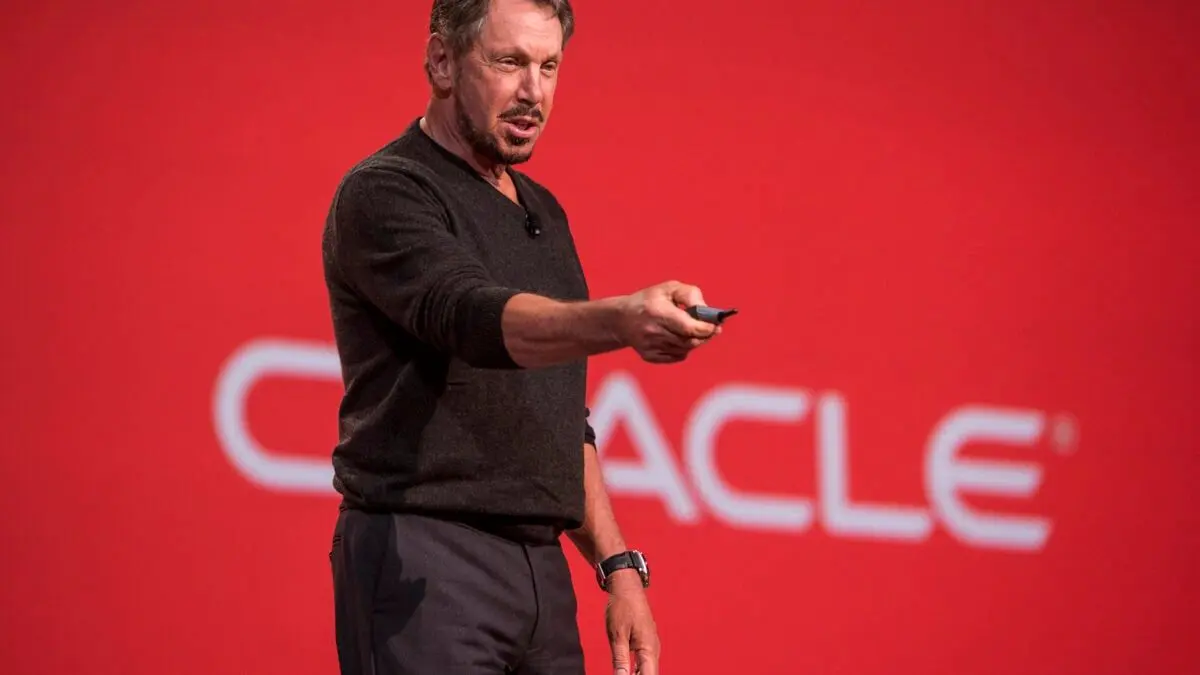
Source: Gizmodo
Weak Earnings Results Disappoint Investors
Oracle's most recent earnings results at the end of November left investors unimpressed, with revenue coming in at $16.06 billion, below analyst expectations of $16.21 billion
2
. While adjusted earnings surged 54% year over year to $2.26 per share, topping estimates, the company's software revenue fell 3% to $5.88 billion in the third quarter1
. Free cash flow also disappointed, prompting several Wall Street firms to cut their price forecasts despite the earnings beat.Related Stories

Ambitious Revenue Targets Face Growing Uncertainty
In October, Oracle announced plans to grow its revenue to $225 billion by fiscal year 2030, up from $57 billion in 2025, with much of that growth expected to come from AI infrastructure
1
. With some projects now delayed and debt rising, it remains an open question whether the company can still hit that target. Additional pressure emerged after Blue Owl Capital exited a planned $10 billion data center project2
. The company has also adopted a chip-neutral strategy, committing to work with multiple CPU and GPU suppliers while continuing to source leading GPUs from Nvidia Corp.Competition Intensifies in AI Infrastructure Race
The competitive landscape in AI infrastructure continues to intensify, with reports indicating TikTok parent ByteDance plans to invest $23 billion in AI infrastructure in 2026 to compete with U.S. tech giants
2
. This highlights the capital-intensive nature of the sector Oracle is navigating. Meanwhile, uncertainty around a potential TikTok partnership added volatility to Oracle's stock, with initial optimism fading after details showed new investors would not control key revenue drivers. The mounting challenges suggest that Oracle's bet on AI spending, while potentially transformative, carries substantial risks as investors grow increasingly restless about the timeline for returns.References
Summarized by

Navi
Related Stories
Oracle plans $70B AI infrastructure buildout as investors flee, sending stock down 12%
11 Jun 2026•Business and Economy

Oracle's AI Gamble Triggers Market Concerns as Debt Soars Past $100 Billion
17 Nov 2025•Business and Economy
Oracle delays OpenAI AI data centers to 2028 as labor shortages test infrastructure ambitions
12 Dec 2025•Business and Economy
Recent Highlights



Recent Highlights
Today's Top Stories






Don’t drown in AI news. We cut through the noise - filtering, ranking and summarizing the most important AI news, breakthroughs and research daily. Follow topics that matter to you and stay ahead.


