Oracle launches 22 AI agents to transform Fusion Cloud into autonomous enterprise software


6 Sources
6 Sources
[1]
Oracle is revamping how businesses procure AI agents -- leave the invoices to AI while you handle the negotiations
* Oracle's new AI agents let automation handle some low-value work so humans can focus on negotiations * The AI Agent Studio is also easier to use with a new no-code, natural language agent builder * Share prices are up slightly, but investors are still worried about traditional software's longevity Oracle is looking to inject even more agentic AI into enterprise software, leaving low-value admin work like invoicing, purchase orders and data entry to the computer so that humans can focus more on negotiation, strategy and risk decisions. The news comes as part of a broader revamp of the Fusion cloud apps announced at its Oracle AI World Tour London event, but it also responds to growing concern over the role of traditional software in the modern workplace. Investors are already worried about existing types of software, with company shares down around 20% year-to-date, but the company is fighting back with more AI tools. Oracle is adding more AI to its software Oracle has added 22 new Fusion Agentic Applications across finance, HR, supply chain and customer experience to help realize four goals: fewer payroll issues, lower supplier sourcing costs, lower customer acquisition costs, and faster cash collection. Fusion Agentic Applications are described as teams of AI agents that can reason, decide and act, just like a team of human workers, but they're built directly into transactional systems rather than being copilot-style add-ons. "With Fusion Agentic Applications, we are moving enterprise software beyond passive systems of record and providing our customers with applications that can reason, decide, and act in pursuit of defined business objectives," Applications Development EVP Steve Miranda wrote. At the same time, Oracle has also updated its AI Agent Audio to include a no-code, natural language agent builder as well as a dedicated ROI dashboard. Applications Development EVP Chris Leone explained that companies need this support to fine-tune their agents based on workflows and priorities. Follow TechRadar on Google News and add us as a preferred source to get our expert news, reviews, and opinion in your feeds. Make sure to click the Follow button! And of course you can also follow TechRadar on TikTok for news, reviews, unboxings in video form, and get regular updates from us on WhatsApp too.
[2]
Oracle Fusion agentic applications signal shift toward autonomous enterprise software - SiliconANGLE
Oracle Fusion agentic applications signal shift toward autonomous enterprise software Oracle Corp. is imbuing its Fusion applications with agentic artificial intelligence in a move aimed at shifting operational software from an assistive role into direct execution of business processes. The company today unveiled Fusion Agentic Applications, a set of AI-powered applications embedded within its Oracle Fusion Cloud suite. They're designed to reason, make decisions and take action across finance, human resources, supply chain and customer experience workflows. The announcement reflects a broader transition in enterprise software that is seeing vendors attempt to evolve from systems of record into systems of execution. Oracle executives said the move builds on earlier investments in copilots and AI assistants but represents a more fundamental architectural change. "We believe that AI is, especially for enterprise organizations, moving from advisers and copilots to being able to execute work," said Chris Leone, executive vice president of applications development at Oracle. Fusion Agentic Applications are built around coordinated groups of specialized AI agents that collaborate to achieve specific business objectives. Rather than responding to prompts or generating reports, they are designed to continuously improve outcomes by orchestrating tasks, evaluating tradeoffs and recommending or executing actions. Leone compared the model to assembling a team of specialists to solve a problem. "Each agent has a specialty and the overall agentic application has a particular outcome that it's trying to achieve," he said. The applications operate natively within Oracle's transactional systems, giving them access to enterprise data, workflows, policies and approval hierarchies. Oracle said this tight integration allows agents to executive sophisticated workflows while maintaining governance and auditability. Oracle is initially launching 22 agentic applications targeting use cases that span multiple business functions including workforce scheduling, supplier sourcing, cross-sell program management and cash collection. Leone said the first set of use cases addresses what he described as high "cognitive load," where work is often fragmented across systems or handled manually. In the case of workforce management, "The agent can reason over all the information, understand context and make recommendations as to specifically which absences and schedules to approve," he said, The agents are designed to operate with varying levels of autonomy. In a "human in the loop" mode, agents generate recommendations for approval by users. Organizations can also allow certain actions to be executed automatically, with the ability to increase autonomy over time. "Customers can turn the dial up for more automation," Leone said. A core component of the new features strategy is Oracle AI Agent Studio, which has been updated with a new Agentic Applications Builder. The tool allows customers to create their own agent-driven applications using natural language, assemble teams of agents and connect them to enterprise data and workflows. The platform also includes capabilities for workflow orchestration, contextual memory, content intelligence and performance monitoring, including dashboards to measure the return on investment of AI-driven processes. Oracle said the system supports integration with external platforms through application programming interfaces and the open-source Agent2Agent protocol developed by Google LLC. "We can send a query or question to another agent [in an external application] and get a response back," Leone said. Agents inherit role-based access controls and data permissions from existing application security frameworks in Fusion Applications. Oracle has also implemented auditability features to track changes to agent behavior and ensure accountability. "If someone changes a system prompt we can track that," Leone said. In early testing, organizations have reported time savings of up to 40% to 50% in support scenarios, he said. Oracle is adopting a hybrid pricing model for the new capabilities. Basic agents using built-in models are included with existing applications at no additional charge. More advanced capabilities powered by premium large language models will incur usage-based charges. The company also plans to expand the ecosystem by enabling partners to build and distribute their own agentic applications, positioning the platform as a foundation for broader enterprise automation. Leone said the shift toward agent-driven execution is likely to become standard across the industry. "We believe all systems of record will have to become systems of execution," he said.
[3]
Oracle Fusion Cloud Gains New Agentic AI Capabilities - Oracle (NYSE:ORCL)
The move is also coming with S&P 500 futures slightly lower, setting up a mixed tape heading into the open. Fusion Agentic Application Launch Oracle is launching Fusion Agentic Applications, describing them as a new class of enterprise apps that run on Oracle Cloud Infrastructure and are powered by "industry-leading LLMs." The company said 22 new Fusion Agentic Applications are now available, targeting specific objectives for leaders across finance, HR, supply chain, and customer experience. Oracle framed the release around helping organizations "unlock time, capacity, and outcomes that were previously out of reach," positioning the tools as an extension of its Fusion Cloud Applications suite. AI Product Expansion Also, Oracle is expanding its AI Agent Studio for Fusion Applications with an "Agentic Applications Builder" plus new intelligent workflow tools. The company has positioned the update as a way for customers to scale "outcome-driven AI" and measure value. The company also said the tools are available at no additional cost and highlighted a partner ecosystem of 63,000-plus certified experts trained in Oracle AI Agent Studio. Oracle also pointed to added capabilities inside the studio, such as orchestration, advanced testing, validation, and built-in security to help customers and partners create and manage AI agents and agentic applications. AI Database Innovations Also, the company rolled out agentic innovations for its AI Database, leaning into the "AI-era" security and data-governance conversation. Oracle's announcement centers on "Oracle AI Database," adding new "agentic AI capabilities designed for business data," with the company positioning the update as a way to "eliminate the need to build and maintain data-movement pipelines" that can add complexity and security risk. On the security side, Oracle says Oracle AI Database is built to help customers "safeguard data from external attacks, insider misuse, accidental disclosure, and unintended exposure to LLMs" across "multicloud, hybrid, and on-premises environments." Oracle Analyst Outlook The stock carries a Buy Rating with an average price target of $252.92. Recent analyst moves include: Mizuho: Outperform (Lowers Target to $320.00) (Mar. 16) Guggenheim: Buy (Maintains Target to $400.00) (Mar. 13) Citigroup: Buy (Raises Target to $320.00) (Mar. 12) Top ETF Exposure Stock Price Activity: Oracle shares were up 0.43% at $155.00 during premarket trading on Tuesday, according to Benzinga Pro data. Photo via Shutterstock This content was partially produced with the help of AI tools and was reviewed and published by Benzinga editors. Market News and Data brought to you by Benzinga APIs To add Benzinga News as your preferred source on Google, click here.
[4]
Oracle Launches Tools to Help Enterprises Deploy AI Agents | PYMNTS.com
The company's new Fusion Agentic Applications are built into Oracle Fusion Cloud Applications and are powered by teams of specialized AI agents, according to a Tuesday (March 24) press release. Twenty-two new Fusion Agentic Applications are available, including ones designed to assist human resources (HR) leaders, supply chain leaders, sales teams and finance teams, according to the release. "With Fusion Agentic Applications, we are moving enterprise software beyond passive systems of record and providing our customers with applications that can reason, decide and act in pursuit of defined business objectives," Steve Miranda, executive vice president of applications development at Oracle, said in the release. Oracle announced in another Tuesday press release that it updated its Oracle AI Agent Studio to add a new agentic applications builder and new capabilities that support workflow orchestration, content intelligence, contextual memory and return on investment (ROI) measurement. Oracle AI Agent Studio is the company's development platform for AI automation and agentic applications. "Builders can create AI automations and agentic applications using natural language that are powered by enterprise AI agents capable of reasoning, taking actions across business systems and continuously executing processes," Chris Leone, executive vice president of applications development at Oracle, said in the release. A third new offering introduced Tuesday by Oracle is new agentic AI innovations for Oracle AI Database, which architects agentic AI and data together across operational databases and analytic lakehouses. This product enables AI agents to securely access real-time enterprise data and use it with large language models to provide business insights, according to a Tuesday press release. "With Oracle AI Database, customers don't just store data, they activate it for AI," Juan Loaiza, executive vice president, Oracle Database Technologies, said in the release. PYMNTS reported in October 2025 that Oracle is rebuilding the data foundation for AI by merging data governance, analytics and AI in one environment. The company's architecture allows enterprises to run AI workloads without moving sensitive data into external stores. During the same month, Oracle brought embedded AI agents and a new AI Agent Marketplace into its Fusion Cloud Applications and Industry Applications. More than 600 embedded agents were available at that time.
[5]

Oracle Reworks Fusion Finance and Procurement Apps for AI Agents
Oracle Revamps Fusion Software to Let AI Agents Manage Finance and Procurement Tasks Oracle is updating its cloud finance and procurement software so companies can use AI agents inside routine business processes. The move is part of a wider shift in enterprise software, where vendors are adapting products for AI tools that can complete tasks on behalf of users. Oracle plans to announce the changes at an event in London on Tuesday local time. The update applies to Oracle Fusion, which supports finance, supply chain, human resources, and . The firm said users will be able to ask business questions in simple language, while AI finds data across Oracle systems and connected third-party software. The company added that the software will keep operating within existing controls, including permissions, approvals, and policy rules.
[6]

Oracle reworks its finance, procurement apps for AI agents
SAN FRANCISCO, March 23 (Reuters) - Oracle is revamping its cloud-based financial software used by large companies to work with artificial intelligence agents, with a goal of having humans ask the system business questions and letting AI figure out how to find the data. The changes, which Oracle planned to announce at an event in London on Tuesday local time, are part of a broader trend in which providers of highly specialized corporate software are revamping it to be used by AI agents that can carry out tasks on behalf of human users. Oracle's shares are down about 40% this year as the company has been swept by investor concerns that AI tools will largely supplant complicated business software. Oracle's executives have argued that the company is embracing AI tools to keep its software ahead of those changes. In the latest case, Oracle is updating its Fusion suite of software, which includes core business tasks such as planning production in factories and collecting money from customers. Steve Miranda, executive vice president of applications development at Oracle, said the company's goal is to make it easier to focus on business questions, such as how to make a new product design cheaper and faster, while minimizing the risks to supply chain disruptions. The data needed for those decisions, Miranda said, is scattered among the various applications in Oracle's suite and third-party software connected to it. AI will take on tasks such as entering and gathering data and making recommendations, while for human employees there will be more emphasis on skills like knowing how to negotiate with suppliers and what kind of risk tolerance for supply disruption a company has, Miranda said. "Typing in an invoice isn't a particularly high-value skill to your enterprise or to the person you know who does that part of their job," Miranda said. "Decision making is still kind of up to that human and weighing the different pros and cons of that case. But certainly the execution, the typing of the invoices, the typing of the purchase order, that is what is going to be replaced in whole in AI." (Reporting by Stephen Nellis in San Francisco; Editing by Bill Berkrot)
Share
Share
Copy Link
Oracle unveiled Fusion Agentic Applications, embedding 22 AI agents across its cloud suite to handle invoicing, procurement, and data entry autonomously. The move shifts enterprise software from passive record-keeping to active execution, letting humans focus on strategy while AI agents manage routine workflows across finance, HR, and supply chain operations.
Oracle Embeds AI Agents Directly Into Core Business Workflows
Oracle announced a major shift in how enterprises handle routine operations by launching Fusion Agentic Applications, a new class of AI-powered tools embedded directly into Oracle Fusion Cloud Applications
2
. The company introduced 22 new agentic AI capabilities designed to reason, decide, and act across finance, HR, supply chain, and customer experience functions3
. Unlike traditional copilot-style add-ons, these AI agents operate natively within transactional systems, giving them direct access to enterprise data, workflows, policies, and approval hierarchies2
.
Source: Market Screener
The announcement, made at Oracle's AI World Tour London event, addresses growing investor concerns about traditional software's longevity, with company shares down roughly 20% year-to-date
1
. Chris Leone, executive vice president of applications development at Oracle, explained that the company believes AI is moving from advisory roles to actual work execution for enterprise organizations2
.Autonomous Enterprise Software Handles Low-Value Administrative Work
The new Fusion Agentic Applications are built around coordinated groups of specialized AI agents that collaborate to achieve specific business objectives, fundamentally changing how companies automate administrative tasks
2
. Oracle designed these AI-powered tools to handle invoicing, purchase orders, data entry, and other low-value administrative work, freeing humans to focus on negotiations, strategy, and risk decisions1
.
Source: SiliconANGLE
The applications target four primary goals: fewer payroll issues, lower supplier sourcing costs, reduced customer acquisition costs, and faster cash collection
1
. Leone compared the model to assembling a team of specialists, noting that each agent has a specialty while the overall agentic application pursues a particular outcome2
. Early testing shows organizations have reported time savings of 40% to 50% in support scenarios2
.AI Agent Studio Gets No-Code Builder and ROI Dashboard
Oracle updated its AI Agent Studio with an Agentic Applications Builder that allows customers to create their own agent-driven applications using natural language
2
. The no-code agent builder enables companies to assemble teams of AI agents and connect them to enterprise data and workflows without requiring technical expertise1
.The platform now includes capabilities for workflow orchestration, contextual memory, content intelligence, and performance monitoring, including dedicated ROI dashboards to measure the return on investment of AI-driven processes . Leone emphasized that companies need this support to fine-tune their agents based on workflows and priorities
1
. Oracle also highlighted a partner ecosystem of more than 63,000 certified experts trained in AI Agent Studio3
.Related Stories

Data Governance and Security Built Into Oracle Cloud Infrastructure
Oracle introduced agentic AI innovations for Oracle AI Database, designed to architect agentic AI and data together across operational databases and analytic lakehouses
4
. The system enables AI agents to securely access real-time enterprise data and use it with Large Language Models (LLMs) to provide business insights without building and maintaining complex data-movement pipelines3
.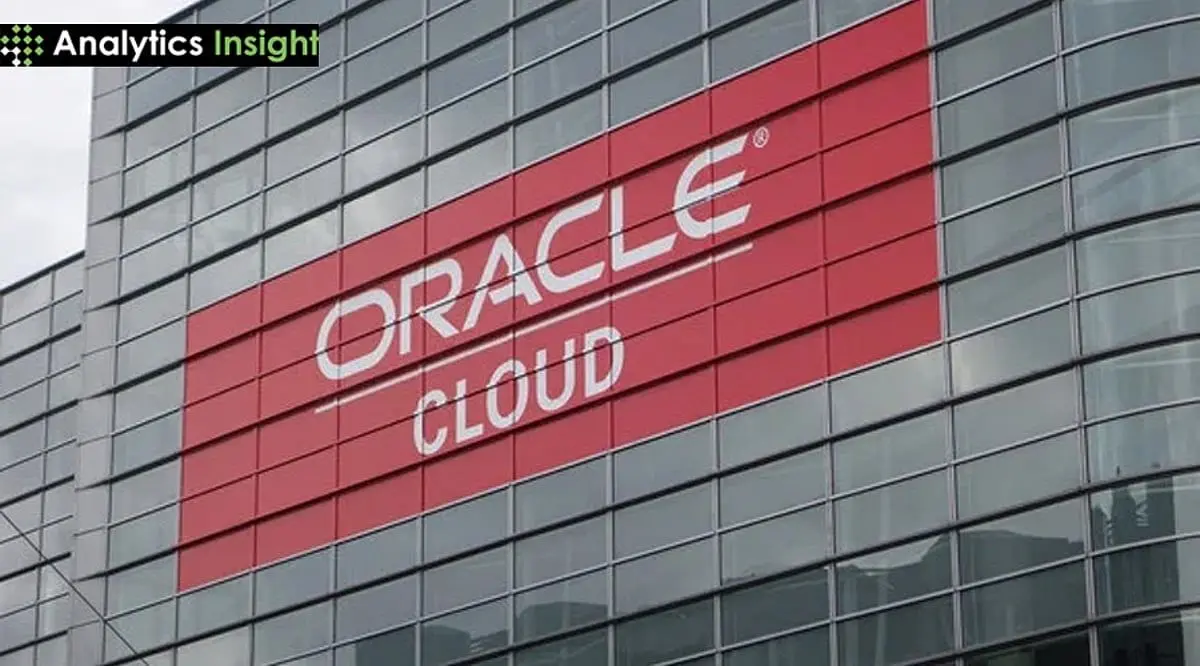
Source: Analytics Insight
Oracle emphasized that its AI Database is built to safeguard data from external attacks, insider misuse, accidental disclosure, and unintended exposure to LLMs across multicloud, hybrid, and on-premises environments
3
. The agents inherit role-based access controls and data permissions from existing application security frameworks in Fusion Applications, with auditability features to track changes to agent behavior2
. The software continues operating within existing controls, including permissions, approvals, and policy rules5
.Enterprise Automation Pricing Model and Partner Ecosystem
Oracle is adopting a hybrid pricing model for the new capabilities. Basic agents using built-in models are included with existing applications at no additional cost, while more advanced capabilities powered by premium Large Language Models will incur usage-based charges
2
. The company plans to expand the ecosystem by enabling partners to build and distribute their own agentic applications, positioning the platform as a foundation for broader task automation2
.The system supports integration with external platforms through application programming interfaces and the open-source Agent2Agent protocol developed by Google, allowing queries to be sent to agents in external applications
2
. Leone indicated that the shift toward agent-driven execution is likely to become standard across the industry, stating that all systems of record will need to become systems of execution2
.References
Summarized by

Navi
[1]
[2]
[5]
Related Stories
Oracle Unveils AI Agents for Marketing, Sales, and Customer Service in Fusion Cloud
06 Oct 2025•Technology

Oracle Unveils AI Agent Studio: Empowering Businesses to Create Custom AI Agents
20 Mar 2025•Technology

Oracle AI World 2025: A New Era of AI Integration and Multicloud Strategy
16 Oct 2025•Technology
Recent Highlights
1
Tennessee Teens Sue Elon Musk's xAI Over Grok AI-Generated Child Abuse Images
Policy and Regulation

2
Supermicro Co-Founder Indicted in $2.5 Billion Nvidia AI Chip Smuggling Scheme to China
Policy and Regulation

3
Val Kilmer to appear posthumously in As Deep as the Grave through AI-generated performance
Entertainment and Society

Recent Highlights
Today's Top Stories







Your Daily Dose of Curated AI News
Don’t drown in AI news. We cut through the noise - filtering, ranking and summarizing the most important AI news, breakthroughs and research daily. Spend less time searching for the latest in AI and get straight to action.

