Oracle shares tumble as $15B AI spending increase raises questions about debt and efficiency


21 Sources
21 Sources
[1]
Oracle shares slide on $15B increase in data center spending
Oracle stock dropped after it reported disappointing revenues on Wednesday alongside a $15 billion increase in its planned spending on data centers this year to serve artificial intelligence groups. Shares in Larry Ellison's database company fell 11 percent in pre-market trading on Thursday after it reported revenues of $16.1 billion in the last quarter, up 14 percent from the previous year, but below analysts' estimates. Oracle raised its forecast for capital expenditure this financial year by more than 40 percent to $50 billion. The outlay, largely directed to building data centers, climbed to $12 billion in the quarter, above expectations of $8.4 billion. Its long-term debt increased to $99.9 billion, up 25 percent from a year ago. Oracle has launched an aggressive bid to catch up to much larger cloud players such as Google, Amazon, and Microsoft in the race to supply the vast amount of computing power that AI groups including OpenAI and Anthropic need to train and run their models. Clay Magouyrk, Oracle's co-chief executive, said its cloud contracts would "quickly add revenue and margin to our infrastructure business" as he defended the vast investments. Yet the company said it expected full-year revenues to remain unchanged from its previous forecast of $67 billion. It expected to generate $4 billion more in revenue the following fiscal year. Total bookings for future revenue, known as remaining performance obligations, rose 15 percent to $523 billion in the three months to the end of November, supported by deals with Meta and Nvidia. Investors initially welcomed the push into AI from Oracle. Shares surged after its last earnings in September when it disclosed it had added more than $300 billion in bookings, largely driven by data center contracts with OpenAI. But the stock has given up its gains since then as investors worry about the large amounts Oracle will have to borrow and spend on infrastructure for the ChatGPT maker -- and concerns over the start-up's ability to pay for these contracts in the years ahead. OpenAI has struck deals to spend $1.4 trillion over the next eight years on computing power. Oracle's Big Tech rivals such as Amazon, Microsoft, and Google have helped reassure investors about their large capital investments by posting strong earnings from their vast cloud units. But in the last quarter, Oracle's cloud infrastructure business, which includes its data centers, posted worse than expected revenues of $4.1 billion. Ellison's company is also relying more heavily on debt to fuel its expansion. Net income rose to $6.1 billion in the quarter, boosted by a $2.7 billion pre-tax gain from the sale of semiconductor company Ampere to SoftBank. The company added an additional 400 MW of data center capacity in the quarter, Magouyrk told investors. Construction was on track at its large data center cluster in Abilene, Texas, which is being built for OpenAI, he added. Magouyrk, who took over from Safra Catz in September, said there was ample demand from other clients for Oracle's data centers if OpenAI did not take up the full amount it had contracted for. "We have a customer base with a lot of demand such that whenever we find ourselves [with] capacity that's not being used, it very quickly gets allocated," he said. Co-founded by Ellison as a business software provider, Oracle was slow to pivot to cloud computing. The billionaire remains chair and its largest shareholder. Investors and analysts have raised concerns in recent months about the upfront spending required by Oracle to honor its AI infrastructure contracts. Moody's in September flagged the company's reliance on a small number of large customers such as OpenAI. Morgan Stanley forecasts that Oracle's net debt will soar to about $290 billion by 2028. The company sold $18 billion of bonds in September and is in talks to raise $38 billion in debt financing through a number of US banks. Brent Thill, an analyst at Jefferies, said Oracle's software business -- which generated $5.9 billion in the quarter -- provided some buffer amid accelerated spending. "But the timing mismatch between upfront capex and delayed monetization creates near-term pressure." Doug Kehring, principal financial officer, said the company was renting capacity from data center specialists to reduce its direct borrowing. The debt to build the Abilene site was raised by start-up Crusoe and investment group Blue Owl Capital, and Oracle has signed a 15-year lease for the site. "Oracle does not pay for these leases until the completed data centers... are delivered to us," Kehring said, adding that the company was "committed to maintaining our investment-grade debt ratings."
[2]
Oracle raises AI spending estimate, spooks investors
But if you assume cloud IOUs will be fulfilled, business is booming Oracle expects its FY 2026 capital expenditures will be $15 billion higher that previously predicted, as the cloudy database biz invests to accommodate AI workloads. Big Red's reason for the extra spending is growth in its Remaining Performance Obligations (RPO), services its clients have contracted to consume but haven't yet paid for. During the company's fiscal Q2 2026 earnings call, Doug Kehring, Oracle Principal Financial Officer, said, "Given the added RPO this quarter that can be monetized quickly starting next year, we now expect fiscal 2026 capex will be about fifteen billion higher than we forecasted after Q1." Oracle said its backlog increased by $68 billion in the quarter ended Nov. 30, driven by commitments from Meta and Nvidia, and now totals $523 billion. The promised business offers a hedge against Oracle's reliance on OpenAI, which is reportedly aiming to pay $300 billion to Big Red over the next five years despite having never yet shown a profit. The database biz also saw significant growth in its restructuring costs, which reached $406 million for the quarter, an increase of 387 percent year-on-year, but a few million less than the $415 million recognized in fiscal Q1 2026. The outlay is attributable largely to the layoffs and severance obligations following from the company's $1.6 billion Fiscal 2026 Restructuring Plan. All told, Oracle reported revenue of $16.1 billion, up 14 percent year-on-year, for EPS of $2.10, an increase of 91 percent. By segment: cloud revenue was $8 billion (up 34 percent); cloud infrastructure revenue was $4.1 billion, up 68 percent; cloud application revenue was $3.9 billion, up 11 percent; fusion cloud revenue was $1.1 billion, up 18 percent; and NetSuite Cloud ERP revenue was $1 billion, up 13 percent. Those numbers proved insufficiently robust for investors, whose dissatisfaction led to a share price decline of more than 11 percent in after-hours trading. Oracle in November suffered an even more severe stock shock when shares fell 23 percent - shares started the month around $250 and ended the month around $200. That appears to be largely the result of concern about the amount of debt Oracle has taken on to fund its AI buildout, a financial bet sufficient to prompt financial firm Morgan Stanley to argue for shorting Oracle stock. Kehring attempted to calm investors during the earnings call by insisting that the company can access capital from several sources, including public bonds, banks, and private debt markets. "In addition, there are other financing options through customers that may bring their own chips to be installed in our data centers and suppliers who may lease their chips rather than sell them," he explained. "Both of these options enable Oracle to synchronize our payments with our receipts and borrow substantially less than most people are modeling. As a foundational principle, we expect and are committed to maintaining our investment grade debt rating." Oracle stock is still up about 20 percent for the year, roughly the same as the NASDAQ. ®
[3]
Oracle's lease commitments jump by almost 150% as company builds out to meet AI demand
That's not the only way the software giant plans to supply robust computing power to meet soaring demand. It's also ratcheting up leases. As of Nov. 30, Oracle had $248 billion in lease commitments for data centers and cloud capacity commitments that will run for 15 to 19 years, the company disclosed in a quarterly filing on Thursday. That's up 148% from the end of August. Oracle had $10 billion in cloud capacity arrangements at the end of the quarter, according to the filing. Over the past decade, Oracle has diversified into cloud infrastructure, where it now goes up against Amazon, Microsoft and Google to rent out access to servers, storage and Nvidia graphics chips for running artificial intelligence models. OpenAI has become a major Oracle cloud customer, having announced a commitment worth over $300 billion in September. Microsoft, a major OpenAI investor that for years served as the startup's sole cloud provider, has also ramped up leases to augment its in-house data center footprint. Microsoft has struck deals with so-called neoclouds CoreWeave and Lambda. Oracle worked with startup Crusoe to enable the first phase of OpenAI's Stargate data center site in Abilene, Texas. Investors are questioning how Oracle will pay for its AI data center build-outs, RBC analyst Rishi Jaluria, who has the equivalent of a hold rating on the stock, told CNBC earlier this week. In September Oracle raised $18 billion in new debt. By the end of November, the company owed over $124 billion when including operating lease liabilities, according to the filing, up from about $89 billion a year earlier. "In terms of funding our growth, there are a variety of sources available to us throughout our debt structure in public bond, bank and private debt markets," Doug Kehring, Oracle's principal financial officer, told analysts on Wednesday's conference call. Some customers can also bring their own chips, which could lower Oracle's costs, said Clay Magouyrk, one of the company's two recently appointed CEOs. In its earnings release on Wednesday, Oracle reported weaker-than-expected revenue despite booming demand for its AI infrastructure. The stock ended the day down almost 11% on Thursday.
[4]
Don't use Oracle and its challenges as a barometer for the many great AI stocks we own
The broader AI trade is back in the hot seat because of Oracle. It shouldn't be. Oracle shares were getting crushed on Thursday following a quarterly sales miss, a disappointing guide, and a spending outlook increase. The magnitude of the stock decline was compounded by what management did not address on Wednesday evening's conference call, concerning OpenAI's ability to make good on its massive commitments to buy AI computing power from Oracle. The combination of that omission, as well as the reported results and forecasts, has put pressure back on AI-related stocks. While the Investing Club does not own Oracle, its importance to the AI ecosystem demands our attention. Much of Oracle's future revenue depends on whether OpenAI can actually grow its business fast enough to execute the $300 billion five-year contract that it signed. Oracle did not talk about that on the call Wednesday night, and OpenAI CEO Sam Altman on Thursday morning on CNBC did little to quash those worries. Altman was asked directly about Oracle but deflected, saying OpenAI is growing its business quickly and future growth depends on more computing power, the kind it promised to buy from Oracle and others. "Without this compute ramp, we can't drive this revenue growth," Altman explained. "We see way more reasons to be optimistic than pessimistic." Altman alluded to future models in the works -- and then hours after appearing on CNBC, OpenAI announced a new one . The other part of the Oracle equation is the need to continue to build out its AI infrastructure capabilities. To keep that going, the company raised its full-year, fiscal 2026, capital expenditures guidance to about $50 billion, up from $35 billion as of September. Capex for fiscal 2025 was $21.2 billion. "Oracle has to be able to borrow to build," Jim Cramer said during Thursday's Morning Meeting. "[But] they don't have the kind of capital to do $50 billion." He added, "Oracle bit off a little more than it can chew." That's especially true when revenue in the reported fiscal 2026 second quarter of $16.06 billion missed analyst estimates at a time of surging demand for the kind of AI infrastructure capacity that Oracle provides - not to mention Oracle's fiscal Q2 free cash flow burn of nearly $10 billion, almost double the burn that was expected. There is no question that Oracle is seeing tremendous demand, as the company added $69 billion to its remaining performance obligation (RPO) during the quarter. As a result, Oracle's RPO, which again is heavily dependent on OpenAI, skyrocketed over 430% year over year to $523 billion. RPO speaks to future revenue. Current Street estimates for revenue in fiscal 2027, 2028, and 2029 combined amount to less than that, at just under $388 billion. On the call, Oracle Principal Financial Officer Doug Kehring said RPO growth was "driven by contracts signed with Meta , Nvidia , and others, as we continue to diversify our customer backlog." Kehring, meanwhile, downplayed concerns about Oracle's debt. "There are a variety of sources available to us throughout our debt structure in public bond, bank, and private debt markets. In addition, there are other financing options through customers that may bring their own chips to be installed in our data centers and suppliers who may lease their chips rather than sell them." He continued, "Both of these options enable Oracle to synchronize our payments with our receipts and borrow substantially less than most people are modeling. As a foundational principle, we expect and are committed to maintaining our investment-grade debt rating." Bottom line The Oracle situation is concerning and warrants additional monitoring, as the company is not in the same position as the tech megacaps, many of which are in our portfolio, which generate enormous levels of positive free cash flow and can, therefore, fund their investments without massive borrowing. However, what we heard on the Oracle call doesn't give us cause to change our view on the AI trade more broadly. While Oracle may need to get creative with its financing, we think that is an Oracle challenge, not an indication of a change in the AI outlook. It's clear to us that the demand for AI computing power is real, and the likes of Meta Platforms, Microsoft , and Amazon can meet their financial obligations. Take Thursday's news that Disney is going to invest $1 billion in OpenAI. The entertainment giant will also license 200 characters across its Disney, Marvel, Pixar, and Star Wars franchises to allow users of OpenAI's short-form video generator, Sora, to create content. This kind of arrangement only adds to our view that demand for AI products and, therefore, additional computing power, is going to increase materially in the years to come. That will provide a strong payoff for those companies able to fund the infrastructure buildout without ruining their balance sheets in the process. So, while the AI trade on Thursday may be under pressure for sentiment reasons, sustained weakness in any of our names will ultimately prove to be a buying opportunity. (Jim Cramer's Charitable Trust is long AMZN, MSFT, META, MSFT. See here for a full list of the stocks.) As a subscriber to the CNBC Investing Club with Jim Cramer, you will receive a trade alert before Jim makes a trade. Jim waits 45 minutes after sending a trade alert before buying or selling a stock in his charitable trust's portfolio. If Jim has talked about a stock on CNBC TV, he waits 72 hours after issuing the trade alert before executing the trade. THE ABOVE INVESTING CLUB INFORMATION IS SUBJECT TO OUR TERMS AND CONDITIONS AND PRIVACY POLICY , TOGETHER WITH OUR DISCLAIMER . NO FIDUCIARY OBLIGATION OR DUTY EXISTS, OR IS CREATED, BY VIRTUE OF YOUR RECEIPT OF ANY INFORMATION PROVIDED IN CONNECTION WITH THE INVESTING CLUB. NO SPECIFIC OUTCOME OR PROFIT IS GUARANTEED.
[5]
The AI darlings are slipping. That could be bad for Nvidia.
Why it matters: It represents a shift in the AI investment thesis: Investors are set to reward efficiency, not spending, in 2026. That could be a big problem for Nvidia, which benefits from record spending from a handful of Big Tech customers. What they're saying: If 2026 is the year when investors reward efficient spending, "that certainly would be bad" for Nvidia, Mandeep Singh of Bloomberg Intelligence tells Axios. * Oracle is seen as Exhibit A for inefficient spending within the AI elite class, while Google as seen as the North Star. * "The market is discerning and telling you that Google is doing much better in capex efficiency than an Oracle," Singh says. Driving the news: In early afternoon trading on Friday, Oracle shares were down more than 4% after tumbling on Thursday, while Broadcom was down more than 10%. Nvidia shares were off nearly 2%. Threat level: As executives see this turn in Wall Street's reward mechanism toward efficiency versus spending, they may shift to more budget-conscious models. * "If OpenAI and Oracle get scrutinized in terms of their investments, how does that affect Nvidia?" Singh says. * "To my mind, that's why Nvidia may remain under pressure." By the numbers: With $90 billion in capex, Google was able to train Gemini 3, accelerate its cloud business and service generative AI into its search. * That capex represents a quarter of Google's revenue. * In contrast, Oracle reported a capex plan of $50 billion for the year. Its total revenue for fiscal year 2025 is just over $57 billion. * Meta, meanwhile, is set to spend over $70 billion this year, which makes up nearly half of its revenue. The bottom line: 2026 may be the year investors seek a return to fundamentals that historically define prices on Wall Street: Revenue. Debt. Earnings. You know, the boring stuff. * A return to boring may be healthy for the market, but it would take the air out of Nvidia's stock, whose rise has made it the most valuable company in the world. Yes, but: Any selloff tied to AI helps quell the bubble concerns.
[6]

Oracle shares drop after $15bn higher AI spending revealed
The company is anticipating spending $15 billion more, largely due to AI Despite a clear drive for AI innovation, investors clearly weren't happy with Oracle's higher-than-anticipated AI spend, with shares dropping as much as 11-12% following the announcement. Higher capital spending and the company missing estimates on sales and profit forecasts ultimately led to a decline in share prices following Oracle's second-quarter earnings call. Just halfway through the year and the company has had to adjust its Capex quite significantly - $15 billion more, in fact. Investor dissatisfaction comes despite the company posting a healthy 14% rise in quarterly revenue, to $16.1 billion. Speaking about revised spending expectations, Chairman Larry Ellison noted: "There are going to be a lot of changes in AI technology over the next few years and we must remain agile in response to those changes." Oracle growth expectations are driven by Meta and Nvidia commitments, which will help diversify the company's portfolio, which currently comprises a $300 billion five-year deal with OpenAI. The cloud computing company was also hit with $406 million in restructuring costs - 387% more than it faced this time last year. 2025 has seen several series of smaller layoffs at the firm, but Oracle does have a $1.6 billion restructuring plan for this fiscal year, so further expenses will continue to roll in under that. Reassuring investors, Clay Magouyrk reminded us that "Oracle has over 211 live and planned regions worldwide -- more than any of our cloud competitors." Still, Oracle shares are up 18.9% this year to date, despite being lower than the mid-September high.
[7]

Oracle shares slide as earnings fail to ease AI bubble fears - business live
Introduction: Oracle shares slide as earnings cast doubt over AI profitability Good morning, and welcome to our rolling coverage of business, the financial markets and the world economy. Fears about the profitability of the AI industry are on the rise again, after results from Oracle failed to impress Wall Street. Oracle, part of the race to provide huge computing power for AI companies, missed revenue and profit expectations last night. It also reported a jump in spending on AI data centers - an area where it has already been spending (and borrowing) heavily. Capital expenditure for the 2026 fiscal year is now expected to be $15bn higher than the $35bn Oracle estimated in September, showing that the cost of constructing the infrastructure for the AI revolution is rising fast... before many profits show up. Oracle also booked a one-off $2.7bn pre-tax gain through the sale of its stake in chip designer Ampere Computing. Oracle chairman Larry Ellison took time out of reshaping the media industry to explain: "Oracle sold Ampere because we no longer think it is strategic for us to continue designing, manufacturing and using our own chips in our cloud datacenters. We are now committed to a policy of chip neutrality where we work closely with all our CPU and GPU suppliers. Of course, we will continue to buy the latest GPUs from NVIDIA, but we need to be prepared and able to deploy whatever chips our customers want to buy. There are going to be a lot of changes in AI technology over the next few years and we must remain agile in response to those changes." For the last quarter, Oracle reported total revenue of $16.06bn, below with analysts' average estimate of $16.21bn. And looking ahead, Oracle said that adjusted profit for the current fiscal third quarter would be $1.64 to $1.68 per share, below analyst estimates of $1.72 per share, according to LSEG data. Oracle's third-quarter revenue growth forecast of between 16% and 18% also missed analyst estimates of 19.4% growth to $16.87 billion,
[8]

Oracle's collapsing stock shows the AI boom is running into two hard limits: physics and debt markets | Fortune
Oracle's rapid descent from market darling to market warning sign is revealing something deeper about the AI boom, experts say: no matter how euphoric investors became over the last two years, the industry can't outrun the laws of physics -- or the realities of debt financing. Shares of Oracle have plunged 45% from their September high and lost 14% this week after a messy earnings report revealed it spent $12 billion in quarterly capital expenditures, higher than the $8.25 billion expected by analysts. Earnings guidance was also weak, and the company raised its forecast for fiscal 2026 capex by another $15 billion. The bulk of that is going into data centers dedicated to OpenAI, Oracle's $300 billion partner in the AI cycle. "We have ambitious achievable goals for capacity delivery worldwide," Oracle co-CEO Clay Magouyrk said on an earnings call this week. Investors worry how Oracle will pay for these massive outlays as its underlying revenue streams, cloud revenue and cloud-infrastructure sales, also fell short of Wall Street's expectations. Analysts have described its AI buildout as debt-fueled, even though the company does not explicitly link specific debt to specific capital projects in its filings. And by Friday, even the crown jewel of Oracle's AI strategy -- its OpenAI data centers -- was showing cracks. Bloomberg disclosed that Oracle has pushed back completion of some U.S. data centers for OpenAI from 2027 to 2028 because of "labor and material shortages." "It's perfectly plausible that they're seeing labor and materials shortages," said data-center researcher Jonathan Koomey, who has advised utilities and hyperscalers including IBM and AMD. In his view, the AI boom is running directly into the difference between digital speed and physical speed. "The world of bits moves fast. The world of atoms doesn't. And data centers are where those two worlds collide." Although Bloomberg didn't identify which specific facilities were being delayed, Koomer said one likely candidate is Project Jupiter, Oracle's gargantuan data-center complex proposed for a remote stretch of New Mexico. Local reporting has described Jupiter as a $160 billion-plus mega-campus, one of the most ambitious AI infrastructure projects ever attempted and a core piece of Oracle's commitment to provide compute to OpenAI. Koomey describes an industry where capital can be deployed instantly, but the equipment that capital must buy cannot. The timelines for turbines, transformers, specialized cooling systems, and high-voltage gear have stretched into years, he explained. Large transformers can take four to five years to arrive. Industrial gas turbines, which companies increasingly rely on for building microgrids, can take six or seven. Even if a company is willing to pay a premium, the factories that produce these components cannot magically expand overnight, and the manufacturing industry trained to install them is already stretched thin. AI companies may want to move at the pace of model releases, but the construction and utility sectors operate on a fundamentally different timeline. Koomey made it clear that the physical constraints he describes apply to all hyperscalers, but Oracle worries investors in particular because it's getting into the AI infrastructure game late and tying much of its capex to one customer, OpenAI. "This happens every time there's a massive shift in investment," he said. "Eventually manufacturers catch up, but not right away. Reality intervenes." That friction becomes ever clearer once the financial limit enters the picture. While Oracle's stock slide is dramatic, the bond-market reaction may be more important. Oracle's bond yields blew out, with some newer notes that were once investment grade now trading like junk, as its credit-risk gauge hit the highest level since 2009. It signals that investors who lend to companies, historically the most sober observers of tech cycles, are beginning to reassess the risk of lending into the AI buildout. For the past few decades, the norm for tech companies was to pay for growth with earnings. Now many of them, including Oracle, are turning to credit markets to fund their sprawling expansions. According to a Bank of Americaanalysis, the five biggest AI hyperscalers -- Google, Meta, Amazon, Microsoft and Oracle -- have collectively issued roughly $121 billion in bonds this year to fund AI data-center buildouts, a level of issuance far above historical averages and one that signals a major shift toward debt financing for infrastructure. Oracle, however, has made some of the biggest deals out of the five, like its $18 billion September bond sale. Its total stack of debt is roughly $100 billion. The other four are also in stronger cash positions and have higher credit ratings (AA/A vs Oracle in BBB area), and are able to generate large positive free cash flow. So while Oracle isn't the only tech giant tapping the debt markets for its AI outlays, its size, cash generation, and credit ratings make it one of the most leveraged. Debt investors do not necessarily need blowout returns; they just need certainty that they will get their money back, with interest. If confidence wavers even a little, yields rise. "This feels like the 1998 moment," Anuj Kapur, CEO of CloudBees and a former tech executive during the dot-com era, told Axios. There's enormous promise, but also enormous uncertainty about how quickly the returns show up. Koomer saw a simple throughline. "You have a disconnect between the tech people who have lots of money and are used to moving super fast, and the people who make the equipment and build the facilities, who need years to scale up their manufacturing," he said.
[9]

Oracle's big AI dreams are freaking out Wall Street
Oracle's AI "power" play depends on everyone believing that the lights will stay on long enough for the money to show up. The company wants to be the one keeping the world's biggest AI models plugged in -- racing to build out infrastructure that OpenAI, Meta, and others say they need -- and Oracle has the contracts, the backlog, and the talking points to prove it. But this quarter's earnings, for the second quarter of the 2026 fiscal year, just made it painfully clear that the grid is wired to a very nervous bond market -- and that the AI boom Oracle is selling is being financed on credit first, cash later. On paper, this is the kind of order book people were promising when they said AI would pay for itself. So all good, right? Wrong. Oracle stock fell about 16% in early-morning trading Thursday after it reported earnings late Wednesday, wiping out something in the ballpark of $70 billion from the company's market value as investors instead saw a funding story they didn't love. The same earnings that touted the massive backlog also showed that, over the quarter, Oracle has burned more than $10 billion of free cash, even as AI-branded cloud sales surge. In other words, the build is outrunning the cash. The company is busy telling the market that its AI contracts are real and enormous -- but the capacity has to exist now, while the money that's supposed to justify it drips in over years and years. So the company is plugging the gap with its balance sheet. Its debt load has swelled to roughly $100-$112 billion -- after a recent $18 billion bond sale and what looks like close to $38 billion of additional loans and structured financings tied to the company's Stargate data-center build -- pushing its debt-to-equity ratio to a level that looks more like a utility or project-finance vehicle than a traditional software vendor. For now, at least the company's income statement still looks OK. Revenue grew 14% to about $16 billion, just below Wall Street expectations. And Oracle beat the Street's earnings expectations with an adjusted earnings per share of $2.26, although that's largely because of a $2.7 billion gain on the sale of Oracle's stake in Ampere to SoftBank. Executive chairman and chief technology officer Larry Ellison used the sale to tell everyone on the earnings call that Oracle is "chip neutral" and happy to deploy whatever CPUs and GPUs customers want. The cosmetic message is that Oracle is surfing the AI wave on skill and flexibility. The financial message is that a one-time asset sale is flattering the quarter at the exact moment the core business is bleeding cash to keep the GPU arms race going. Underneath Oracle's "strong quarter with a small revenue miss" storyline lies negative free cash flow, narrowing margins, a sharply higher capital-spending plan -- full-year capex bumped to roughly $50 billion from about $35 billion just three months ago -- and a balance sheet that's doing most of the work to keep the AI story turning the pages. That massive 438% RPO jump is only comforting if the company can build the infrastructure without overstretching its credit. Moody's has already moved Oracle's outlook from stable to negative, tying that to the AI buildout. The firm expects debt to rise faster than EBITDA and emphasizes that free cash flow is likely to stay negative "for an extended period before reaching breakeven." Credit analysts now put Oracle's debt-to-equity ratio in the 450%-500% range, compared with something closer to 30%-50% for Microsoft and Amazon. Oracle doesn't have Microsoft or Google's cash engines or net-cash balance sheets. So if this is how stretched the numbers look at a company with a $523 billion backlog and marquee AI names on the hook, smaller clouds, GPU lessors, and sovereign-AI hopefuls are going to have a harder time convincing bond investors that their own capex binges will pay off. Oracle matters because it's about as clean a test case as public markets are going to get. It has a cloud business that's growing like it means it, big AI partners, and a backlog with a staggering anchor: more than $300 billion of committed compute spending from OpenAI over five years, starting in 2027. (Ignore for a second that Oracle is already underwater on the deal.) If any non-hyperscaler should be able to show a self-funding AI build, it's this one. But it just showed the opposite. That's why this quarter reads like a dress rehearsal for an "AI bubble -- bond market first" scenario. On one side, there's a half-trillion-dollar backlog, double-digit cloud growth, and big customers signing big contracts that stretch out to the end of the decade. On the other side, there's free cash flow that has gone deeply, deeply negative, a debt stack marching toward 12 digits, and a credit rating agency already running the math on how long that combination can stay investment-grade. The generous read is that Oracle is simply early, effectively front-loading the infrastructure so it can lock in tenants for a decade. The harsher read is the one that has traders and analysts circling AI as the purest AI-debt proxy. If this quarter is what the numbers look like for a supposed AI winner, the rest of the field has to lean just as hard on its balance sheet to chase GPUs -- or admit that the AI infrastructure supercycle is going to be smaller, slower, and less predictable than the trillion-by-2028 pitch decks have been promising.
[10]
Oracle's AI-fueled debt load has investors on edge ahead of quarterly earnings
Oracle CEOs Clay Magouyrk and Mike Sicilia sit down with CNBC's David Faber on Oct. 13, 2025. It's been a rollercoaster year for Oracle investors, as they try to assess the strength of the software giant's position in the artificial intelligence boom. The stock is up more than 30% for the year even after a 23% plunge in October, which was its worst month since 2001. It's recovered a bit in November, climbing almost 10% for the month as of Tuesday. Heading into the company's fiscal second-quarter earnings report on Wednesday, pressure is building on management -- and newly installed CEOs Clay Magouyrk and Mike Sicilia -- to show that Oracle can continue to finance the company's aggressive infrastructure plans while simultaneously convincing Wall Street that the AI-fueled hypergrowth story remains intact. In recent months, Oracle has emerged as a more central player in AI, largely due to a $300 billion deal with OpenAI, which came to light in September, an agreement that involves the AI startup buying computing power over about five years, starting in 2027. Funding Oracle's compute buildout is going to require mounds of debt. In late September, Oracle raised $18 billion in a jumbo bond sale, one of the largest debt issuances on record in the tech industry, and the company is now the biggest issuer of investment grade debt among non-financial firms, according to Citi. "There is something inherently uncomfortable as a credit investor about the transformation of the sort we're facing that is going to require an enormous amount of capital," Daniel Sorid, head of U.S. investment grade credit strategy at Citi, said on a video call to investors on Friday, a replay of which was provided to reporters.
[11]
Tech giants fall from grace as AI debt mounts: "The 1998 moment"
Why it matters: The spotlight is on Oracle, but the market move underscores a broader shift in how tech giants are perceived: from huge cash generators to companies making enormous AI bets using debt. What they're saying: "This is the 1998 moment," Anuj Kapur, the CEO of software firm CloudBees and a tech executive who worked during the dot-com bubble, tells Axios. * The promise of AI is meeting "the inconvenient math of debt and capex," Mark Malek, chief investment officer at Siebert, writes in a note. State of play: The biggest tech companies are expected to spend over $700 billion next year to finance their AI buildouts, according to Bloomberg data and earnings reports. * Historically, the fortress balance sheets of these large tech firms allowed them to finance these ambitions through their own cash on hand. * Now, firms like Meta, Google and CoreWeave as well as Oracle are tapping the debt markets and issuing $121 billion in investment-grade supply this year, up from just $17 billion last year, according to Bank of America. Zoom out: The state of the debt market is "so much more important" than the equity market, Kapur says. * That's because debt investors don't need moonshot returns. They just need confidence that they will get their principal back plus interest. * If investors think that's a riskier proposition, they will demand more compensation for owning the debt, pushing bond yields higher. * That happens any time there is a shift in sentiment around the AI trade, which we now see more and more frequently from investors. Between the lines: While corporate debt may be the best broad indicator, credit default swaps -- derivatives betting on the possibility of underlying debt defaulting -- are also flashing warning signs. * "Oracle's credit default swaps are priced like the company is jogging barefoot across a field of Legos," Malek writes. * Some investors do trade CDS to express more speculative views. Reality check: Other data center giants are still financing their expansions predominantly through cash rather than debt. * "That could change going forward," Joseph Briggs, an economist with Goldman Sachs, tells Axios. "We saw that happen, and a rise in debt in the late 1990s...But that's certainly not the bulk of what's happening today." * Goldman Sachs, he says, is confident "we're not in a bubble yet." What to watch: Demand. * If there is a whiff that enterprises are ready to slow down their AI spending, investors could get nervous, Kapur says. The bottom line: Investors are starting to separate AI companies by the strength of their balance sheets instead of just their growth potential.
[12]

Shares of Oracle slide 10% on revenue miss and rising capital expenditures - SiliconANGLE
Shares of Oracle slide 10% on revenue miss and rising capital expenditures Shares of Oracle Corp. dropped more than 10% in extended trading today after the cloud and database giant missed expectations on quarterly revenue while going full-steam ahead with its ongoing artificial intelligence infrastructure buildout. The company reported second-quarter earnings before certain costs such as stock compensation of $2.26 per share, easily beating Wall Street's target of $1.64 per share. However, while revenue grew by 16% from a year earlier to $16.06 billion, it fell short of the $16.21 billion analyst estimate. In terms of profitability, Oracle showed a big improvement, with net income of $6.14 billion in the quarter, up from just $3.15 billion in the year-ago quarter. However, the company's guidance was perhaps a tad discouraging for investors. Oracle executives said they're looking for earnings of between $1.70 and $1.74 in the third-quarter, which is only in-line with the Street's forecast of $1.72. The company also called for revenue growth of between 19% and 21% versus the Street's $16.87 billion estimate, which implies 19% growth. Oracle said it delivered $7.98 billion in cloud revenue during the quarter, above the $7.92 billion consensus estimate. Within that segment, cloud infrastructure revenue came to $4.1 billion, up 68% from a year ago. Today was the first quarterly earnings call by Oracle's new co-Chief Executive Officers Clay Magouyrk and Mike Sicilia, who took over the job from former CEO Safra Catz in September. In a call with analysts, Sicilia highlighted a number of new cloud infrastructure customer wins with companies including Airbus, Deutsche Bank, LSEG, Panasonic, Canon and Rubrik. Valoir analyst Rebecca Wettemann told SiliconANGLE that it's quite telling that Sicilia felt the need to highlight so many customer wins during the call. "The market has been really nervous about Oracle's overreliance on OpenAI and other AI plays from a RPO and forecast perspective, so this litany of customer wins and apps growth acceleration shows some welcome diversity," she said. Oracle's software business didn't fare so well, however, with revenue declining 3% to just $5.88 billion, falling short of the Street's $6.06 billion estimate. On the other hand, Oracle's future does look promising, with the company pointing to remaining performance obligations that soared 438% from a year ago to a staggering $523 billion. RPO, as the metric is known, refers to contracted revenue that has not yet been realized, and is really a measure of the company's enormous backlog of orders, mostly for cloud infrastructure capacity. Wall Street had been forecasting RPO of just $501.8 billion. Oracle Principle Financial Officer Doug Kehring said on the call that the increase was the result of new commitments by customers including Meta Platforms Inc., Nvidia Corp. and others, and told analysts that the company is hoping to be able to convert this revenue sooner than expected. "This is good news for Oracle and its capex story," Wettemann said, referring to Oracle's runaway capital expenditures. The company has been trying to position itself at the center of the AI boom by committing to a massive data center buildout, and expects capex to increase to $50 billion this year, up from $21.2 billion in the previous fiscal year. While the increased capex has boosted the company's revenue and backlog, some investors have become worried about the enormous amounts of debt it has taken on to fund its investments. Much of Oracle's backlog stems from OpenAI Group PBC, which has committed to spending more than $300 billion on Oracle's cloud infrastructure services over the next five years. "The longer the backlog sits there, the greater the risk that Oracle can't monetize it, or the AI landscape changes enough that certain customers can't pay on their commitments," Wettemann explained. Kehring tried to further reassure investors, telling analysts on the call that the company remains committed to maintaining its investment-grade debt rating. "There are other financing options through customers that may bring their own chips to be installed in our data centers and suppliers who may lease their chips rather than sell them," he said. "Both of these options enable Oracle to synchronize our payments with our receipts and borrow substantially less than most people are modeling." Oracle said its earnings during the quarter were boosted by a $2.7 billion pre-tax gain on the sale of its chip design business Ampere, which is set to be acquired by SoftBank Group Corp. for $6.5 billion. Oracle announced the sale in March. Oracle founder, Chairman and Chief Technology Officer Larry Ellison (pictured), who remains the company's most influential executive, said the decision to sell Ampere was taken because he thinks it no longer makes sense to continue designing, manufacturing and using its own chips in its data centers. "The company is committed to a policy of chip neutrality," he said. "[It needs] to be prepared and able to deploy whatever chips our customers want to buy." The earnings call comes on the back of a 23% drop in Oracle's share price last month, its worst monthly performance since 2021. But although the stock declined further today, it's still up more than 33% in the year to date, ahead of the broader, technology-focused Nasdaq index, which has gained just 22% this year.
[13]
Oracle drops on disappointing cloud sales, more AI spending | Fortune
Fiscal second-quarter cloud sales increased 34% to $7.98 billion, while revenue in the company's closely watched infrastructure business gained 68% to $4.08 billion. Both numbers fell just short of analysts' estimates. Known for its database software, Oracle has recently found success in the competitive cloud computing market. It's engaging in a massive data center build-out to power AI work for OpenAI and also counts companies such as ByteDance Ltd.'s TikTok and Meta Platforms Inc. as major cloud customers. Remaining performance obligation, a measure of bookings, jumped more than fivefold to $523 billion in the quarter, which ended Nov. 30, the company said Wednesday in a statement. Analysts, on average, estimated $519 billion, according to data compiled by Bloomberg.Play Video Still, Wall Street has raised doubts about the costs and time required to develop AI infrastructure at such a massive scale. Oracle has taken out significant sums of debt and committed to leasing multiple data center sites. "Oracle faces its own mounting scrutiny over a debt-fueled data center build-out and concentration risk amid questions over the outcome of AI spending uncertainty," said Jacob Bourne, an analyst at Emarketer. "This revenue miss will likely exacerbate concerns among already cautious investors about its OpenAI deal and its aggressive AI spending." Investors want to see Oracle turn its higher spending on infrastructure into revenue as quickly as it has promised. Capital expenditures, a metric of data center spending, were about $12 billion in the quarter, an increase from $8.5 billion in the preceding period. Analysts anticipated $8.25 billion in capital spending in the quarter. Oracle now expects capital expenditures will reach about $50 billion in the fiscal year ending in May 2026 -- a $15 billion increase from its September forecast -- executives said on a conference call after the results were released. "The vast majority of our cap ex investments are for revenue generating equipment that is going into our data centers and not for land, buildings or power that collectively are covered via leases," Principal Financial Officer Doug Kehring said on the call. "Oracle does not pay for these leases until the completed data centers and accompanying utilities are delivered to us."Play Video Annual revenue will be $67 billion, affirming an outlook the company gave in October. "As a foundational principle, we expect and are committed to maintaining our investment grade debt rating," Kehring added. Oracle's cash burn increased in the quarter and its free cash flow reached a negative $10 billion. Overall, the company has about $106 billion in debt, according to data compiled by Bloomberg. The shares fell 11% to $198.30 in early trading before markets opened in New York. The stock has lost about a third of its value since Sept. 10, when investor enthusiasm about Oracle's cloud business pushed the company to an all-time high. "Oracle is very good at building and running high-performance and cost-efficient cloud data centers," Clay Magouyrk, one of Oracle's two chief executive officers, said in the statement. "Because our data centers are highly automated, we can build and run more of them." This is Oracle's first earnings report since longtime Chief Executive Officer Safra Catz was succeeded by Magouyrk and Mike Sicilia, who are sharing the CEO post. Part of the negative sentiment from investors in recent weeks is tied to increased skepticism about the business prospects of OpenAI, which is seeing more competition from companies like Alphabet Inc.'s Google, wrote Kirk Materne, an analyst at Evercore ISI, in a note ahead of earnings. Investors would like to see Oracle management explain how they could adjust spending plans if demand from OpenAI changes, he added. In the quarter, total revenue expanded 14% to $16.1 billion. The company's cloud software application business rose 11% to $3.9 billion. This is the first quarter that Oracle's cloud infrastructure unit generated more sales than the applications business. Earnings, excluding some items, were $2.26 a share. The profit was helped by the sale of Oracle's holdings in chipmaker Ampere Computing, the company said. That generated a pretax gain of $2.7 billion in the period. Ampere, which was backed early in its life by Oracle, was bought by Japan's SoftBank Group Corp. in a transaction that closed last month. In the current period, which ends in February, total revenue will increase 19% to 22%, while cloud sales will increase 40% to 44%, Kehring said on the call. Both forecasts were in line with analysts' estimates.
[14]

Oracle Stock Is Getting Whacked. Is the AI Trade a 'Show Me Story' Now?
The pressure on Oracle's shares may signal increasing investor reluctance to assume the best outcomes from AI even for big tech companies that say AI business is powering big revenue growth. What happens when investors start turning a microscope on promises of AI-driven gold? That question was hammering AI stocks on Thursday after tech giant Oracle (ORCL) last night reported results that did little to resolve Wall Street's concerns about an AI bubble inflated by debt-laden investments. The answer wasn't pretty: Oracle's shares -- which which doubled in value between January and early September -- were down nearly 15% in recent trading, touching six-month lows. Oracle wasn't the only AI-powered stock to feel the pressure today. Nvidia (NVDA), Palantir (PLTR), and Broadcom (AVGO) were all down more than 3% in recent trading. Roundhill's Magnificent 7 ETF, or MAGS, was off a bit less than 1% while the S&P 500 treaded water and the blue-chip Dow industrials climbed. The market's reaction to Oracle's earnings could reflect a growing desire among investors to be shown, not told of, AI's commercial benefits. "Investors are no longer rewarding AI narratives without proof of execution," said Shay Boloor, Chief Market Strategist at Futurum Equities, in an interview. Oracle shocked Wall Street with its fiscal first quarter earnings report in September, when the company said its backlog grew more than $300 billion, sending its shares 36% higher in a single day and briefly making Larry Ellison the world's richest person -- and the company a poster child for the tech boom. The company on Wednesday said its backlog increased nearly $70 billion last quarter to $523 billion. But ever since September's report investors have been concerned that OpenAI, the unprofitable maker of ChatGPT, accounts for too much of Oracle's future revenue. Executives addressed those fears on Wednesday, highlighting new contracts with Meta Platforms (META) and Nvidia, and said cloud resources could be reassigned to new customers in a matter of hours. Investors are also worried about the size of Oracle's AI investments, and how it's paying for them. The company's capital expenditures totaled $12 billion last quarter, $4 billion more than Wall Street expected. Oracle also raised its full-year capex target to $50 billion from $35 billion. "Oracle is taking on the most aggressive capex plan in the industry and building a data-center footprint that looks oversized relative to its revenue base," said Boloor in a Thursday note. "Investors may be increasingly losing confidence in Oracle's ability to convert this large (and still expanding) backlog into durable, profitable revenue streams," said Morgan Stanley analysts. Bank of America analysts said investors were acting "skittish"; William Blair said it was becoming a "show-me story." Oracle is borrowing heavily to finance its data center buildout. It sold $18 billion of debt in September in one of the largest-ever bond sales by a tech company. Investors have in recent months bid up Oracle's credit default swaps -- effectively, insurance against the company defaulting on its debt -- and that trend continued Thursday. Oracle's management on Wednesday assured Wall Street that it will need to borrow less, "if not substantially less," than analysts are forecasting. While much of today's pullback was due specifically to Oracle's report, market watchers -- including, for example, Bill Gates -- are increasingly suggesting that investors can't just throw a dart blindly and hit a surefire AI winner.
[15]

Oracle stock crash: Oracle shares plunge after weak revenue and forecast miss -- what's next, and will AI stocks sink?
Oracle stock crash: Oracle stock plunges as rising capex, weakening forecasts, and deepening cash strain raise new AI bubble alarms, shaking confidence in one of the biggest corporate bets in the AI cloud race. Oracle carries $127 billion in debt, with $25 billion due within the next three years, and the company remains free cash flow negative at nearly -$13 billion over the past 12 months. Investors are now asking whether Oracle's AI strategy is turning into a financial squeeze rather than a growth engine. Oracle shares fell 13% in premarket Thursday, extending Wednesday's decline, after the company reported quarterly revenue of $16.06 billion, missing the $16.21 billion expected by analysts. Nvidia slipped 1.4%. Micron fell 1%. AMD dropped 1.3%. Microsoft dipped 0.4%. Cloud infrastructure player CoreWeave slid 3.9%. Oracle stunned markets by warning that capital expenditures for fiscal 2026 will be $15 billion higher than the earlier estimate of $35 billion. The company says the spending is needed to build massive AI-ready cloud data centers, but the timing is painful. Rising debt, negative cash flow, and soaring capex are now colliding, and that collision drove a sharp selloff. Many investors expected AI revenue to start showing up faster, not later. This mismatch has triggered new debate about whether the AI boom is becoming an expensive bubble for early movers like Oracle. The company carries $127 billion in debt, with $25 billion due in the next three years. Free cash flow is -$13 billion over the past 12 months. Citi estimates Oracle may need to raise $20-$30 billion in new debt every year for the next three years. Investors are now asking a blunt question: Is Oracle building the future of AI -- or overspending into a financial squeeze? Shares had been up 34% this year, supported by optimism around AI partnerships and large cloud infrastructure contracts. But sentiment flipped quickly after Oracle revealed softer growth expectations and heavier near-term financial pressure. Some analysts say there is growing worry that Oracle is stretching too aggressively to keep up with AI leaders. Others warn that if major customers reduce demand or shift workloads elsewhere, Oracle could be left with oversized infrastructure and weaker margins. One of the biggest red flags came from future cloud contract bookings. Oracle reported $523 billion in future agreements, missing expectations of $526 billion. The shortfall may appear small, but for a company betting its future on cloud and AI scale, even a minor miss can rattle confidence. Bookings are watched closely as a signal of long-term demand. A slowdown, even a slight one, raises uncomfortable questions. Financing the buildout remains another concern. Oracle executives said some customers may bring their own chips, reducing Oracle's upfront capital costs. But analysts say this model, while helpful, may not be enough to offset the surge in spending. The company is expanding global data center capacity at a pace that now outstrips the cash it is generating. Being free cash flow negative until at least 2028 adds more tension to the story, especially in a tightening economic environment. Oracle's revenue forecast also contributed to the selloff. The company expects third-quarter revenue growth of 16% to 18%, below expectations near 19.4%. Investors looking for strong AI-driven acceleration instead saw a forecast that suggests the payoff is still years away. The company insists the AI boom is real and will deliver massive long-term gains, but says the buildout phase requires patience. That message is a tough sell when spending is rising faster than revenue. Valuation adds another layer of pressure. Oracle trades at a forward P/E of 29.56, above Microsoft at 27.24 and slightly above Amazon at 29.06. A higher valuation only works when growth is accelerating. When it slows, the premium becomes harder to justify, especially for a company taking on large debts and heavy capex. The company's financial profile now stands in sharp contrast to its AI ambitions. Oracle expanded its capital expenditure plan significantly. The company now expects fiscal 2026 spending to rise by $15 billion above the earlier estimate of $35 billion. This sharp jump shows how fast Oracle is racing to build out AI-ready cloud data centers. The company believes that large-scale AI growth demands massive long-term infrastructure. Even though this buildout is costly, Oracle says these investments are critical to support growing demand from customers in AI model training, inference, and enterprise cloud services. Partners working on large AI workloads require reliable and scalable computing. That has pushed Oracle to commit billions to expand capacity faster than competitors expected. But this spending comes with risk. If AI demand slows or shifts, Oracle could be left with a highly expensive footprint that does not produce the expected returns. Some analysts say the scale of investment means the company must consistently land large customers to justify its spending plans. Another challenge is timing. AI demand is rising, but the revenue returns are not immediate. The company must spend now, but profits may take years. This lag creates pressure, especially when cash flow is negative and debt is climbing. Investors want to see strong long-term growth, but they are worried about the financial strain in the near term. Oracle reported $523 billion in future cloud contracts. While this is a large number, it is still slightly below what many analysts expected. This miss intensified concerns that cloud demand may not be accelerating at the pace investors hoped. Cloud contract bookings matter because they help show whether companies are committing to long-term service agreements. A shortfall suggests uncertainty. It also raises questions about how long the AI-driven cloud surge can continue. The company says it still sees strong customer interest. But even a small miss in future contract numbers can shift market sentiment quickly when expectations are high. Investors are looking closely at every metric as they try to measure how much the AI boom is contributing to real, sustainable demand. Another concern is how Oracle will finance the expansion required to support these contracts. Company leaders pointed to a strategy where some customers bring their own chips. In that model, Oracle reduces upfront costs. While this offers relief, it may not be enough to balance the rising spending curve. Oracle expects third-quarter revenue growth of 16% to 18%. Investors were expecting higher growth. This gap signaled a slower pace than the market believed Oracle would deliver, especially with so much spending underway. When a company increases capital spending, the market naturally expects stronger revenue acceleration. But Oracle's forecast shows that near-term growth may not match its rising cost structure. This mismatch creates pressure on margins and raises questions about whether earnings can keep up with the investment cycle. The company says the AI boom is real but requires patience. Building data centers, securing chips, and onboarding major customers takes time. The company argues that the payoff will come, but not immediately. Investors, however, are balancing excitement for long-term AI opportunities with concerns about short-term financial strain. Analysts say the key issue now is timing. Oracle's AI strategy may succeed, but shareholders must wait for results. With uncertainty around customer adoption cycles and the broader tech market, that wait could feel long. Oracle trades at a forward price-to-earnings ratio of 29.56. This valuation is higher than some of its top competitors. It sits above Microsoft's 27.24 and slightly above Amazon's 29.06. These comparisons matter because investors want to know whether Oracle is priced fairly relative to its peers. The higher valuation suggests that the market expects strong future growth. But if revenue growth slows and expenses rise, the valuation becomes harder to defend. A company trading at a premium must consistently outperform. Oracle has to prove that its heavy AI and cloud investments will deliver higher profits over time. Debt also enters the picture. With $127 billion owed, Oracle carries a heavier balance sheet than some rivals. That adds risk at a time when the company is already spending aggressively. A higher valuation plus higher debt increases the pressure to deliver results. Investors are watching closely to see whether Oracle's strategy leads to durable long-term earnings. The company believes it does. But with AI demand still evolving and competition intensifying, the road ahead may be unpredictable.
[16]

Oracle Q2 Earnings: New CEOs Try To Clarify AI Capital Costs, Show Growth Across Applications And Infrastructure
'We are the only applications company in the world that's selling complete application suites,' Oracle co-CEO Mike Sicilia says. Oracle co-CEO Clay Magouyrk sought to clarify how the vendor finances capacity buildouts offered to customers with growing artificial intelligence infrastructure demand amid growing concerns over AI's profitability for the technology sector. During the Austin, Texas-based vendor's Wednesday quarterly earnings call-covering the second fiscal quarter, ended Nov. 30-Magouyrk said that "a lot of people don't understand" all the options available to Oracle as it builds data centers for some of the largest AI model providers around. While Magouyrk fielded infrastructure questions on the call, fellow CEO Mike Sicilia broke down growth areas across the applications portfolio and painted the business as a differentiator for Oracle compared to other hyperscalers and to app vendors focused on best of breed instead of a complete apps package across front office, back office, industry-specific apps and "everything in between." "We are the only applications company in the world that's selling complete application suites," he said. "As you look at customers tiring of spend on best of breed, because the integration costs are so high and it's hard to bolt AI on all that because you're actually not retiring anything in the process, we're in a very unique position." [RELATED: Oracle Launches Multi-Cloud Services Reseller Program, Universal Credits] The performance of the co-CEOs might foreshadow a changing of the guard and new era for Oracle. Chief Technology Officer Larry Ellison, who co-founded the company in 1977, was quieter than usual on Wednesday's call. The two CEOs took up much of the call's airtime while Ellison focused his opening statements on capabilities across Oracle applications, database products and AI data platform. "Very soon, through the lens of AI, you will be able to see everything happening in your business as it happens," Ellison said on the call. He also answered a single analyst question on additional selling opportunities for Oracle thanks to its multicloud approach and improvements to Oracle database and data storage products to enable AI use cases. "So far, none of the other large-scale databases have been able to do that," he said. "We can do that and keep your data secure. That's one of the bigger issues. We have to scale it, keep your data, keep everything reliable and keep it secure." He added: "We take all of your data and unify it so you can ask a single question and the AI model can find the answer to that question regardless of what data store it's in. That's really a unique proposition. And we think that thing is going to turbo charge the use of our database and the use of our cloud dramatically." The vendor now has more than 700 AI customers on its platform, including the majority of large model providers, Magouyrk said. Clarifying how Oracle finances data center and capacity buildouts for growing demand by AI customers, he said that Oracle doesn't incur expenses for large data centers until they're actually operational. The vendor has also experimented with allowing customers to bring their own chips, saving Oracle an upfront expense. Some customers are interested in renting capacity instead of purchasing it, which reduces capital spending and borrowing by Oracle, he said. In certain cases, Oracle will raise funds to finance buildouts, but Magouyrk stressed that "we're committed to maintaining our investment-grade debt rating." Analysts forecasting upwards of $100 billion in spending for the buildouts should expect "less, if not substantially less money raised than that amount to go and fund this build out" based on Oracle's current estimates, he said. Rapid delivery of Oracle capacity should help improve gross margins quickly to reach the 30 percent to 40 percent the vendor expects, Magouyrk said. The capacity is also fungible among customers, he said, with the ability to spin up a bare-metal computer in a few minutes and the ability to recycle the computer for another customer in less than an hour. The large model providers might take two or three days to spend the capacity Oracle gives them, reflecting the need for quick buildouts. Infrastructure revenue for the quarter was $4.1 billion, up 66 percent year on year. Revenue related to graphics processing units more than doubled. Oracle handed to customers almost 400 megawatts of data center capacity and delivered 50 percent more GPU capacity quarter over quarter, Magouyrk said. The vendor makes sure that custom AI infrastructure contract margins "make sense for our business" through analyzing land and power for data center building, component supply-including GPUs, network gear and optics-labor costs for all phases of construction and low-voltage work, engineering capacity for building and operating plus the capital investments required, the co-CEO said. "Only when all these components come together do we accept customer contracts, having the confidence we can deliver on schedule with the highest quality," Magouyrk said. During the earnings call, Magouyrk praised Oracle's "rapidly expanding partner community" for improving customer experiences with Oracle Cloud Infrastructure (OCI). He pointed to new AI models from Google, OpenAI and xAI available through Oracle's products as an example. Oracle's recently launched multicloud services reseller program is an important effort "which enables customers to procure Oracle database services through their preferred channel partners" and continue fueling growth in the vendor's booming multicloud business, the co-CEO said. The multicloud database grew ninefold in the second fiscal quarter, marking its fastest growing business. Oracle has 211 live and planned regions worldwide and is more than halfway through building 72 multicloud data centers that are embedded throughout Amazon, Google and Microsoft's clouds. It launched 11 multicloud regions in the quarter, reaching 45 regions live across Amazon Web Services, Azure and Google Cloud Platform with 27 more planned over the next month. Marketplace consumption grew 89 percent year over year, he said. Magouyrk dismissed any competitive concerns from so-called AI infrastructure neoClouds, offering specialized clouds built for intensive AI and high-performance computing (HPC) workloads, saying that Oracle's diversity and breadth of capabilities in multicloud and dedicated regions differentiates the vendor. Oracle's infrastructure and applications portfolio differentiates it from other hyperscalers, the co-CEO added. Cloud application revenue grew 11 percent year on year to $3.9 billion during the quarter, Oracle reported Wednesday. Strategic back-office applications revenue was $2.4 billion, up 16 percent year on year. Cloud applications also reached a $16 billion annualized run rate (ARR). Oracle's apps-focused co-CEO, Sicilia, broke down growth in other parts of the Oracle apps portfolio on the call: "We see this business as continuing to accelerate going forward," he said. Doug Kehring, named Oracle's principal financial officer when former CEO Safra Catz moved into the role of executive vice chair, told analysts on Wednesday's call to expect more cross-selling and higher cloud application growth rates in the future due to Oracle combining industry-based cloud apps and Fusion Cloud apps under one selling organization in each region across the world. Sicilia added that the vendor sees "more and more deals where our industry apps are pulling Fusion or the Fusion apps are pulling the industry apps." Along with more deals, Oracle sees larger deals with more components. The unified sales organization opens more opportunities to move the Oracle installed base into the cloud, where the vendor sees a three to fivefold annual revenue lift compared to support revenue, the co-CEO said. The vendor saw 330 cloud app customer go-lives during the quarter. "AI, of course, is a great OCI play-and it's also a broader software play for Oracle," he said. "It's driving growth in our applications and our database businesses as well." Oracle reached $523 billion in remaining performance obligations in the second fiscal quarter, up more than fivefold year on year ignoring foreign exchange. That also marks a $68 billion and 15 percent jump quarter on quarter. Companies that helped fuel that pipeline include Facebook parent Meta and chip giant Nvidia. Total revenue for the quarter came in at $16.1 billion, up 13 percent ignoring foreign exchange. Cloud revenue brought in $8 billion, up 33 percent year on year and an acceleration on the 24 percent growth for the same period last year. This also marked three consecutive quarters of double-digit total revenue growth. The vendor saw software revenue fall 5 percent year on year ignoring foreign exchange, coming in at $5.9 billion. With the sale of Oracle's stake in Ampere as a result of the semiconductor's $6.5 billion acquisition by Japanese investment holding company SoftBank, Oracle no longer wants to design, manufacture and use its own chips in its cloud data centers. The vendor is committing to a chip neutrality policy, working closely with central processing unit (CPU) and GPU suppliers. The vendor expects it will keep buying Nvidia's latest GPUs, but it will prepare itself for deploying any chips customers request, according to Oracle. Oracle's pivot away from making its own chips stands in contrast to hyperscalers Microsoft, Amazon Web Services and Google, who have pursued their own chips to meet the high demand for AI and in an effort to potentially bring down the cost of AI. Oracle received a $2.7 billion pre-tax gain from the sale of Ampere, according to the vendor. The vendor's operating income for the quarter using Generally Accepted Accounting Principles (GAAP) was $4.7 billion. Non-GAAP operating income came in at $6.7 billion, up 8 percent year on year. Oracle saw $6.1 billion in GAAP net income and $6.6 billion without using GAAP, which was up 54 percent ignoring foreign exchange. Oracle's operating cash flow over the prior 12 months was $22.3 billion, up 10 percent year on year. Oracle saw a negative free cash flow of $10 billion with capital expenditures reaching $12 billion. Most of that CapEx went into revenue-generating equipment in its data centers, not for land buildings or power that collectively are covered through leases, Kehring said. Oracle doesn't pay for leases until delivery of the completed data centers and accompanying utilities, he said. Oracle spends CapEx on equipment late in the data center production cycle, which means cash spent quickly becomes revenue earned as cloud services are provisioned for contracted and committed customers. Oracle's stock traded at about $197 a share, down about 11 percent after market close. Oracle added $4 billion in revenue to its fiscal year 2027 expectations due to the amount of near-term capacity available for bookings. It kept its fiscal year 2026 $67 billion revenue expectation. It also expects a $15 billion higher fiscal year 2026 CapEx, Kehring said. "While we continue to experience significant and unprecedented demand for our cloud services, we will pursue further business expansion only when it meets our profitability requirements and the capital is available on favorable terms," he said. For the third fiscal quarter, Oracle said to expect total cloud revenue growth from 37 percent to 41 percent ignoring foreign exchange. Total revenues should grow from 16 percent to 18 percent.
[17]

Oracle's Backlog Soars To $523 Billion -- Company Adds $15 Billion To 2026 CapEx To Keep Up - Oracle (NYSE:ORCL)
Oracle Corp. (NYSE:ORCL) is doubling down on its artificial intelligence (AI) ambitions, forecasting a $15 billion increase in capital expenditures for fiscal 2026 to fulfill a record-breaking $523 billion backlog, along with an additional $4 billion in sales by fiscal 2027 amid faster backlog conversion. The Cost Of Ambition The database giant reported a mixed second quarter, beating earnings estimates with a 54% jump in adjusted EPS to $2.26, but missing revenue expectations at $16.06 billion. However, the focal point for Wall Street was the company's remaining performance obligations (RPO), which exploded to $523 billion -- up 433% year-over-year. To convert these contracts into revenue, Oracle must rapidly build its infrastructure. Principal Financial Officer Doug Caring announced that fiscal 2026 CapEx would be approximately $15 billion higher than previously forecasted. "We will pursue further business expansion only when it meets our profitability requirements," Caring stated, noting that the backlog includes massive contracts with AI leaders like Nvidia Corp. (NASDAQ:NVDA) and Meta Platforms Inc. (NASDAQ:META). Revenue Outlook Raised By $4 Billion Despite the immediate costs, management remains bullish on the payout. The company raised its fiscal 2027 revenue outlook by $4 billion, citing the accelerated conversion of its massive backlog. With cloud infrastructure revenue already up 66% and 64 new cloud regions planned, Oracle is betting that today's spending will secure its dominance in the AI era. See Also: Nvidia Stock Dips After Oracle Snub: Larry Ellison Calls It 'Chip Neutrality' Analyst View: 'Right Investments' Despite Volatility The sharp rise in spending ignited concerns over free cash flow, which sat at negative $10 billion for the quarter. Daniel Newman, CEO of the Futurum Group, acknowledged the market's skittishness but defended the strategy. "ORCL is tricky short term but long term I believe it is making the right investments," Newman said following the report. He argued that the after-hours sell-off was an "overreaction," likening Oracle's capital-intensive pivot to necessary foundational shifts seen elsewhere in big tech. "Oracle has to do what it's doing even if it means short term volatility," Newman added, emphasizing that the company is effectively positioning itself as a critical pillar of AI infrastructure. ORCL Tumbles After Mixed Q2 Shares slipped by 11.53% in after-hours trading after gaining 0.67% on Wednesday. Year-to-date, the shares were 33.83% higher, whereas they rose by 25.65% over the last six months. It maintains a weaker price trend over the short and medium terms but a strong trend in the long term, with a poor value ranking. Additional performance details, as per Benzinga's Edge Stock Rankings, are available here. Read Next Oracle Stock Set For Continued 'Relief Rally' Says Guy Adami Ahead Of Earnings: Why The Investor Thinks The Shares Will Recover Disclaimer: This content was partially produced with the help of AI tools and was reviewed and published by Benzinga editors. Photo courtesy: Sundry Photography / Shutterstock.com ORCLOracle Corp$197.27-11.5%OverviewMETAMeta Platforms Inc$644.20-0.91%NVDANVIDIA Corp$181.28-1.36%Market News and Data brought to you by Benzinga APIs
[18]

Why Oracle Stock Plunged More Than 12% This Week | The Motley Fool
Oracle reported mixed earnings on Wednesday for its second quarter, revealing that the company's artificial intelligence (AI) spending spree is rapidly accelerating. The report, along with Broadcom's earnings release the following day, was enough to reignite fears of an AI bubble. Oracle reported earnings per share (EPS) of $2.26, handily beating Wall Street's target of $1.64. The earnings beat was overshadowed by Oracle's revenue miss, delivering $16.06 billion when $16.21 billion was expected, as well as the extreme growth in its AI investments. Oracle's capital expenditures (capex) clocked in at $12 billion for the quarter, up from just $4 billion in the same period last year. It was also 50% more than the Street was expecting. Investors are wondering just how sustainable the capex spend is for the company, given how much it is relying on expensive financing. Broadcom's report on Thursday did little to calm investor nerves; while it reported record revenue, the company's CEO, Hock Tan, said that its AI sales have lower gross margins than other parts of its business. Oracle is selling a substantial amount of high-interest corporate bonds to fund its escalating capex. It's a seriously risky play that requires AI demand to continue to grow at a lightning pace. Any material weakness in that demand would be very bad news for the company and its shareholders.
[19]
Oracle's OpenAI reliance faces scrutiny as debt-fueled AI buildout raises worries
Analysts have said a big portion of Oracle's capital expenditure is tied to OpenAI-related datacenters. That has sparked investor worries as details are scarce on how OpenAI - valued at $500 billion but still unprofitable - plans to fund its spending, which total more than $1 trillion by 2030. Months after Oracle's $400 billion-plus contract backlog ignited a stock-market frenzy, the enthusiasm has given way to doubts about its reliance on OpenAI and debt-fueled datacenter buildout, which will dominate its earnings on Wednesday. A smaller player in the cloud market for a long time, Oracle this year staked claim as one of the bigger providers of the rented computing power essential for generative AI thanks to its tie-up with ChatGPT-creator OpenAI. It is vying with industry giants Amazon.com, Microsoft and Google for a piece of the lucrative market as companies adopt AI and startups developing the technology rush to secure access to capacity. Oracle along with other big cloud players is expected to spend more than $400 billion on AI infrastructure this year. Analysts have said a big portion of Oracle's capital expenditure is tied to OpenAI-related datacenters. That has sparked investor worries as details are scarce on how OpenAI - valued at $500 billion but still unprofitable - plans to fund its spending, which total more than $1 trillion by 2030. Concerns have also mounted that the AI boom driving up valuations is turning into a bubble amid a lack of real-world adoption for the technology, sparking a selloff in Oracle's shares and bonds. Stock selloff Its stock has eroded all the gains from a stunning 36% jump on September 10 after it announced the backlog at its last earnings, even as shares remain higher by nearly a third for the year. Meanwhile, its five-year credit default swaps, which offer bondholders a hedge against default, have shot to record highs as it borrows heavily for the datacenter buildout. "While the setup for the quarter is good, investors are likely to be more focused on the fundamentals of the AI build-out and its financial implications," Bernstein analyst Mark Moerdler said in a note for the fiscal second-quarter results. The $300 billion OpenAI data-center contract gives Oracle "unprecedented single customer revenue exposure", he said. To allay some of the concerns, Oracle had said in October it expects cloud infrastructure revenue to grow to $166 billion in fiscal 2030 and that fresh bookings were coming in from a range of customers, not just OpenAI. It also touted a $20 billion new deal with Meta Platforms. Upbeat earnings expected For now, AI is expected to drive strong growth at Oracle, with cloud infrastructure revenue expected to surge 71.3% in the September-November period, faster than the 55% growth seen in the prior quarter, according to data from Visible Alpha. That would mirror the strong growth reported by cloud giants Amazon.com, Microsoft and Alphabet-owned Google Cloud in their latest earnings reports. Overall, Oracle's revenue is expected to rise 15.3% to $16.21 billion, which would mark the fastest pace in more than two years, according to data compiled by LSEG. Net profit is expected to increase 13.3%. After a report raised questions about its margins from cloud deals, Oracle had said it expected to achieve adjusted gross margins of between 30% and 40% for delivering AI cloud computing infrastructure, while other segments such as more cloud software and infrastructure for business customers would have margins of between 65% and 80%. If OpenAI fails and the contract goes away, Oracle would need to scale back the build out, write off some contracts and start working down the debt, but it would not default, said Gil Luria, analyst at D.A. Davidson. If "OpenAI achieves super-intelligence, spends $1.4 trillion, none of us have to ever work again, and Oracle is fine", he said.
[20]
Oracle Stock Just Tumbled: Here's One Reason Why | The Motley Fool
Oracle (ORCL 10.83%), once a software company with minimal capital spending needs, has been transformed by the AI boom. The company's strategy is to build AI infrastructure and rent it out to AI companies and other tech giants, capitalizing on the soaring demand for AI training and inference workloads. Oracle has more than half a trillion dollars of future revenue in its backlog, including a $300 billion multi-year deal with OpenAI. When that deal first came to light, shares of Oracle surged. If everything goes according to plan, the company's revenue growth over the next few years is set to accelerate greatly. Investors quickly soured on Oracle after that euphoric rally, and following a post-earnings decline on Thursday, the stock now trades for less than it did prior to the OpenAI deal. What are investors worried about? One big concern is whether Oracle's ramped up capital spending on AI infrastructure will produce a reasonable return on investment. Is the business of building AI datacenters full of expensive GPUs and renting them out an attractive business model? That's the trillion-dollar question, and the answer is looking like no. In a presentation in October, Oracle predicted that its AI infrastructure business would achieve adjusted gross margins of between 30% and 40%. The company illustrated an AI deal that would generate $60 billion in revenue and $21 billion in gross profit over the course of six years. It's not clear whether this is a target or the company is producing gross margins within that range today. The Information reported in October that Oracle's AI infrastructure business produced gross margins of just 14% in the quarter ending in August, so it's possible that Oracle has some work to do. One interesting thing that came up in Oracle's earnings call was a guidance update for capital spending. Oracle increased its full-year outlook by $15 billion from its previous forecast as it tries to capture additional revenue in fiscal 2027 from recently signed deals. That spending will unlock $4 billion in incremental revenue in fiscal 2027. Do these numbers make sense? Oracle is spending an additional $15 billion this year to generate $4 billion in revenue next year. At the midpoint of Oracle's gross margin target, that translates into a gross profit of $1.4 billion. Operating profit will be lower once any operating expenses are backed out. Oracle's return on investment would be well below 10%, and even lower if its gross margin hasn't yet reached its target range. Given the incredible demand for AI infrastructure right now, that doesn't seem very impressive. There are a lot of moving parts, and this estimate is very rough. But Oracle's spending on AI infrastructure does not look like a home run. Oracle stock is now down nearly 40% from its 52-week high. It's clear that investors simply do not believe the company's AI growth story. Oracle has an enormous backlog, but much of it depends on OpenAI securing sufficient funding over the next few years. Even if it does and Oracle is able to convert everything in its backlog to revenue, there are still questions surrounding profitability. Oracle is funding its AI data center building spree partially with debt. The company ended the second quarter with $108 billion in total debt, most of which was on the balance sheet prior to the AI boom. Oracle doesn't have the pristine, cash-rich balance sheets of other tech giants, and its AI spending spree is only going to add to its mountain of debt. Oracle's debt amplifies the risk if anything goes wrong over the next few years. While Oracle has successfully established itself as a key provider of AI infrastructure, investors are rightfully cautious as the company spends heavily on AI data centers. If the industry overbuilds in anticipation of demand that never materializes, Oracle will be in serious trouble.
[21]

Investor Outlook: Oracle earnings miss deepens concerns over AI spending
Oracle's latest earnings miss has intensified scrutiny around its ability to finance massive AI-related commitments, with analysts pointing to uncertainty over capital needs, data-centre timelines and margin impact. Investor sentiment has become more cautious as the company navigates rising costs and questions over the sustainability of large-scale cloud deals. BNN Bloomberg spoke with Rishi Jaluria, software managing director at RBC Capital Markets, about what is driving the skepticism, how financing constraints may affect Oracle's growth path, and what catalysts could shape the stock's trajectory in the months ahead. Read the full transcript below: ROGER: Oracle is down in pre-market trading this morning, extending yesterday's losses after the firm reported disappointing second-quarter earnings. Here to unpack the numbers is Rishi Jaluria, software managing director at RBC Capital Markets. Rishi, thank you very much for joining us. RISHI: I don't think there's one specific number. We can point to OCI, we can point to some of the top-line metrics. But really, I think it's more the qualitative that was the issue here, not the quantitative. It comes down to these large contracts, these large RPO numbers, and this US$300-billion deal with OpenAI. How are you going to pay for this? And while management definitely sounded confident and talked about their ability to raise capital while still maintaining their investment-grade rating, I think there's greater skepticism. Heading into earnings, I think investors were looking for more colour on what the plans were and what the alternative financing arrangements could be -- whether that's SPVs, like you've seen Meta do, or even working with sovereign wealth funds. You have to think a little outside the box. But I do believe there are still concerns over how Oracle will be able to meet this demand in the timeframe they've laid out, and whether there's a risk to those numbers out to 2030. ROGER: Kash, you have a question? KASH: There we go. Sorry -- when you look at the stock now, do you believe that's priced in? Or do you think there's still another leg down before we start to see some of the good news play out? RISHI: I think the stock is going to remain a bit of a battleground stock and a little volatile, but candidly, I think the stock is probably roughly where it should be trading given all the uncertainty. If we start to get a higher level of certainty over the capital coming through, or we start to see more positive headlines around OpenAI and its ability to continue growing into this commitment number, that could help Oracle's stock. But it really comes down to these data centres coming online, that revenue materializing and the margin impact emerging. That certainty is what could get the stock to work. On the flip side, if there are delays or worrying headlines around OpenAI -- obviously with Gemini 3 over the past couple of weeks dominating headlines -- more OpenAI-exposed names could see some downside. It feels like there's a good amount of upside and downside. That's why I'm remaining sector performer on the name: it could go either way in a big way, but I think the risk-reward trade-off is pretty balanced. ROGER: And what could be some of the delays? What might lead to issues? RISHI: Number one is financing -- that's probably the biggest one and why there was so much focus on that question on the call. But lots of other things could happen: supply constraints, whether that's GPUs -- and you saw Oracle selling its interest in Ampere, which is supposed to be on the chip-designing side -- power constraints, liquid cooling challenges, data-centre leasing issues. A lot can happen to delay the timelines. But financing is the big one we're all watching, including headlines around their ability to raise debt and what the credit spreads look like. ROGER: And do you think the appetite is out there to get involved with them when it comes to raising that debt? RISHI: I think there is appetite, but given that this AI capex trade -- especially on the OpenAI side -- has cooled down over the past couple of weeks, I think it will come at a higher price. And that's showing up in the numbers: a higher cost of capital than maybe what was expected after they reported that big Q1 earnings report that pushed the stock up 40 per cent in a day. The stock is down, by my math, around US$130-$140 billion since before reporting that number. But yes, I think they'll be able to meet these commitments. I think there's still demand for investing in AI capex projects, but the higher cost reflects lower certainty relative to before. ROGER: So you still think there are good opportunities to be had here? RISHI: I think there are good opportunities in the AI ecosystem. I'm a big believer in AI -- I'm a mega bull on this trend. I'm personally a bigger believer in buying Microsoft over Oracle at these levels because Microsoft has so many ways it can benefit from AI throughout the stack -- not just the infrastructure layer, but developer, data, application security and more. ROGER: And what's giving you confidence in that? Why are you so confident? RISHI: Maybe twofold. Number one, I feel very confident about AI as a megatrend. I live in San Francisco -- I'm surrounded by this day in and day out. I'm actually in New York right now attending the AI Summit. I'm seeing accelerating interest in AI and evolving use cases. I think 2026 could be the year we really start to see it move from proof of concept to pilot to production. As it pertains to Microsoft, two things stand out: one, I'm seeing a lot of innovation from them, which for a US$4-trillion company is truly impressive. And two, they're very deliberate about where they invest their capex dollars and their time. Rather than focusing purely on revenue growth, they're prioritizing durability of benefits -- not just training. That's why I feel more confidence in the durability of Microsoft's growth over the next 5, 10, 15 years. And we need to think in those timeframes because AI is a decades-long trend, not just the past three years. ROGER: Rishi Jaluria is software managing director at RBC Capital Markets. ---
Share
Share
Copy Link
Oracle stock plunged 11% after the company announced a $15 billion increase in capital expenditure to $50 billion for AI data centers, despite reporting revenues below analyst expectations. The aggressive spending raised investor concerns about Oracle's mounting debt—now at $99.9 billion—and its ability to monetize massive contracts with OpenAI quickly enough to justify the investment.
Oracle Raises Capital Expenditure to $50 Billion for AI Infrastructure Investment
Oracle announced a dramatic increase in its AI spending plans, raising capital expenditure guidance for fiscal 2026 by more than 40% to $50 billion—a $15 billion jump from its previous forecast
1
. The increased data center spending, which reached $12 billion in the quarter alone and exceeded expectations of $8.4 billion, reflects the company's aggressive push to compete with cloud computing giants like Amazon, Microsoft, and Google1
. Shares tumbled 11% in pre-market trading after Oracle reported revenue of $16.1 billion for the quarter ending November 30, up 14% year-over-year but below analyst estimates1
.
Source: Motley Fool
The company's cloud infrastructure expansion aims to serve the surging demand for AI computing power from major clients including OpenAI, Meta, and Nvidia. Oracle added $68 billion to its backlog during the quarter, bringing total remaining performance obligations (RPO) to $523 billion
2
. This RPO growth was "driven by contracts signed with Meta, Nvidia, and others, as we continue to diversify our customer backlog," explained Doug Kehring, Oracle's Principal Financial Officer4
. Clay Magouyrk, Oracle's co-chief executive, defended the massive investments, stating that cloud contracts would "quickly add revenue and margin to our infrastructure business"1
.Investor Concerns Over Spending and Long-Term Debt Financing Mount
The stock price decline reflects growing investor scrutiny over Oracle's mounting debt and the timing mismatch between upfront spending and revenue realization. Oracle's long-term debt increased to $99.9 billion, up 25% from a year ago, while total obligations including lease liabilities exceeded $124 billion by the end of November, up from about $89 billion a year earlier
1
3
. Morgan Stanley forecasts that Oracle's net debt will soar to approximately $290 billion by 20281
.
Source: Axios
Lease commitments for cloud capacity have also skyrocketed. As of November 30, Oracle had $248 billion in lease commitments for data centers and cloud capacity commitments that will run for 15 to 19 years—a 148% increase from the end of August
3
. The company sold $18 billion of bonds in September and is in talks to raise $38 billion in debt financing through US banks1
. Brent Thill, an analyst at Jefferies, noted that while Oracle's software business—which generated $5.9 billion in the quarter—provides some buffer, "the timing mismatch between upfront capex and delayed monetization creates near-term pressure"1
.OpenAI Contract Raises Questions About Revenue Realization
A significant portion of Oracle's AI infrastructure investment hinges on its massive OpenAI contract, which reportedly commits the startup to pay $300 billion over the next five years
2
. OpenAI has also struck deals to spend $1.4 trillion over the next eight years on computing power1
. However, concerns have emerged about OpenAI's ability to fulfill these commitments, given the startup has never shown a profit2
.
Source: ET
Construction continues at Oracle's large data center cluster in Abilene, Texas, being built for OpenAI. The company worked with startup Crusoe to enable the first phase of the site, with debt raised by Crusoe and investment group Blue Owl Capital
1
3
. Magouyrk assured investors there is ample demand from other clients for Oracle's data centers if OpenAI doesn't take up the full contracted amount, stating: "We have a customer base with a lot of demand such that whenever we find ourselves [with] capacity that's not being used, it very quickly gets allocated"1
.Related Stories
Broader Implications for AI Models and Market Sentiment
The market reaction to Oracle signals a potential shift in how investors evaluate AI infrastructure investments in 2026. Mandeep Singh of Bloomberg Intelligence suggests investors are beginning to reward efficiency over spending, noting that "the market is discerning and telling you that Google is doing much better in capex efficiency than an Oracle"
5
. With $90 billion in capex representing a quarter of Google's revenue, the company was able to train Gemini 3 and accelerate its cloud business5
. In contrast, Oracle's $50 billion capex plan nearly matches its total fiscal 2025 revenue of just over $57 billion5
.This scrutiny could have ripple effects across the AI ecosystem. As executives observe Wall Street's shift toward rewarding efficiency, they may adopt more budget-conscious AI models, potentially impacting companies like Nvidia that benefit from record spending by Big Tech customers . Kehring attempted to reassure investors by outlining various financing options, including customers bringing their own chips and suppliers leasing rather than selling chips, enabling Oracle "to synchronize our payments with our receipts and borrow substantially less than most people are modeling"
2
. The company remains "committed to maintaining our investment-grade debt rating," he emphasized1
.References
Summarized by

Navi
[1]
[2]
Related Stories
Oracle unveils $50 billion AI funding plan as investors worry about mounting debt and OpenAI exposure
02 Feb 2026•Business and Economy

Oracle's AI Gamble Triggers Market Concerns as Debt Soars Past $100 Billion
17 Nov 2025•Business and Economy
Oracle delays OpenAI AI data centers to 2028 as labor shortages test infrastructure ambitions
12 Dec 2025•Business and Economy
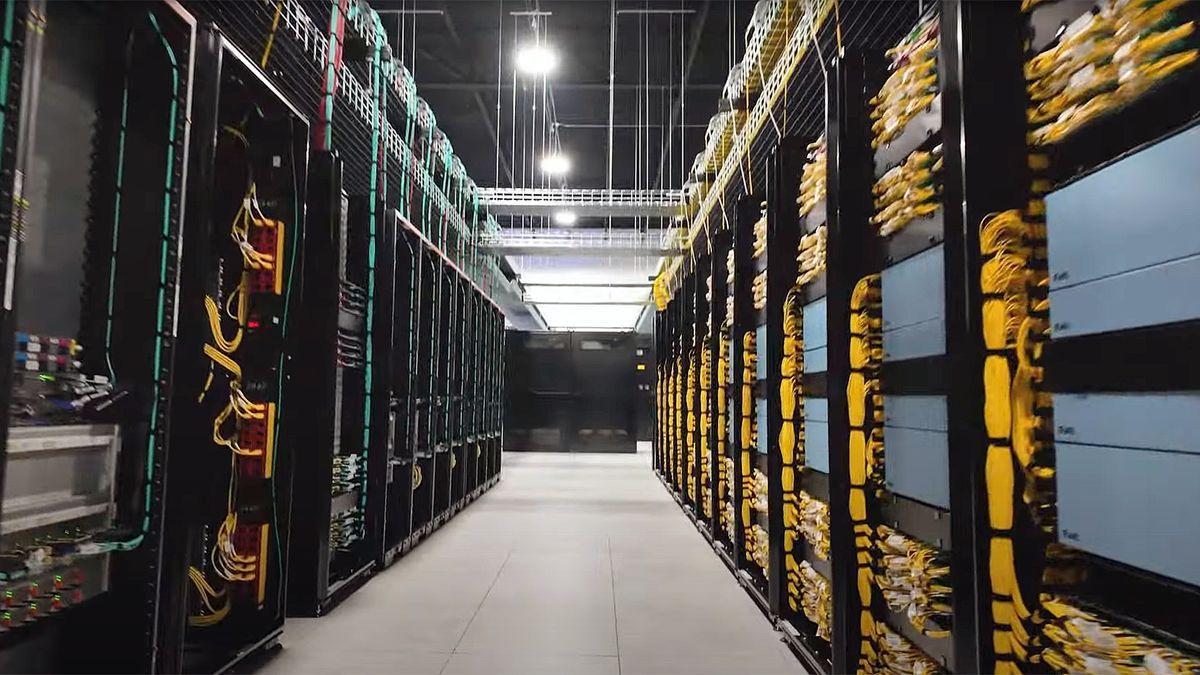
Recent Highlights



Recent Highlights
Today's Top Stories



Your Daily Dose of Curated AI News
Don’t drown in AI news. We cut through the noise - filtering, ranking and summarizing the most important AI news, breakthroughs and research daily. Spend less time searching for the latest in AI and get straight to action.

