Palo Alto Networks CEO says enterprise AI adoption lags consumers by years, coding assistants only


4 Sources
4 Sources
[1]
Palo Alto CEO says AI isn't great for business, yet
Sees little enterprise AI adoption other than coding assistants, buys Koi for what comes next If enterprises are implementing AI, they're not showing it to Palo Alto Networks CEO Nikesh Arora, who on Tuesday said business adoption of the tech lags consumer take-up by at least a couple of years - except for coding assistants. "Consumers are far outstripping enterprise for the moment, but we expect enterprise will surely and slowly get on that bandwagon," he said on the company's Q2 earnings call. Arora likened business uptake of AI to the cloud computing shift, which he said took two or three years before enterprises started migrating applications. "Right now ... tell me how many enterprise AI apps are you using which are driving tremendous amounts of throughput," he asked, and answered himself "I can't think of anything but coding apps." Coding apps aren't great for Palo Alto's business because they don't generate a lot of network traffic to which it can apply its security smarts. Arora thinks his security vendor peers know this. "We're all laying the groundwork right now. It is ... sort of an arms race to try and see who can get the AI security sort of platform up and running as quickly as we can." But the limited enterprise AI adoption Arora has seen does pose some immediate challenges to Palo Alto. "There is now enterprise adoption that we're beginning to see where customers are running perhaps millions of tokens in one or two particular applications they're working with some of the LLM providers on, and that's where we see the traffic," he said. That traffic is on the LAN and the CEO doesn't think existing networks struggle to handle it. "I think the challenge right now is consolidating that traffic," he said. "How do you get all the AI traffic to be in one place? So you can understand it, provide visibility, look at the ability to control it and be able to act on it." The CEO said that as this sort of AI-related traffic grows "it needs a different set of controls and tools." Palo Alto is already getting its hands on those tools, as on Tuesday put to bed rumours it would acquire agentic AI endpoint security startup Koi by announcing it's done the deal. Arora pointed to Palo Alto's recent acquisitions of Chronosphere and CyberArk as further evidence of the company's moves to ensure it builds a portfolio of products to secure the AI enterprises will eventually implement. The CEO expressed confidence Palo Alto has the products it needs today, saying customers know they can't prepare for AI if they are running a tangle of security tools and are therefore consolidating to the kind of platforms the company offers. Demand for those products helped Palo Alto to $2.6 billion Q2 revenue for the quarter, which represented 15 percent year-over-year growth. Execs pointed to the success of the company's subscription offerings, noting 23 percent growth in remaining performance obligations, which now stand at $16 billion. And they predicted Q3 revenue would grow at least 28 percent to land between $2.941 billion and $2.945 billion. All of those nice numbers didn't impress investors, who knocked six percent off the company's share price - perhaps because they weren't thrilled by predictions that profits will ease. ®
[2]
'Consumers are far outstripping enterprise for the moment, but we expect enterprise will surely and slowly get on that bandwagon': Palo Alto CEO says adoption of AI is still an ongoing process for many firms
Enterprise AI adoption isn't here yet, but it will come, Palo Alto CEO believes * Enterprises are busy laying the foundations while consumers drive higher AI adoption * Coding is the only real widespread AI application in the workplace so far * Palo Alto is focusing on security and observability next Enterprise adoption of AI tools is lagging behind consumer adoption, Palo Alto Networks CEO Nikesh Arora has claimed, and it could be many years before business uptake overtakes personal use. The main exception today are coding assistants, which have become the most common AI application in the workplace, he explained on an earnings call. However, Arora alluded to the much more extensive work that enterprises must carry out to drive widespread adoption compared with consumers, suggesting business adoption will rise, but only once the foundations are in place. Consumers are using more AI than businesses - for now "We're all laying the groundwork right now," he said. "It is ... sort of an arms race to try and see who can get the AI security sort of platform up and running as quickly as we can." One of the challenges Palo Alto recognizes at the moment is the need to consolidate AI traffic for greater visibility and monitoring. "It needs a different set of controls and tools," he said, alluding to some of Palo Alto's recent acquisitions that focus on securing AI. "We also saw steady and strong adoption of AI security, which we expect will be a long term trend," Arora added in the earnings-related press release, speaking about the company's 15% year-over-year rise in quarterly revenue (to $2.6 billion). While "consumers are far outstripping enterprise" for now, Arora isn't worried. "If you look at cloud security, you didn't see cloud security numbers for a while because typically, cloud adoption in enterprises lagged the consumer," he said. Follow TechRadar on Google News and add us as a preferred source to get our expert news, reviews, and opinion in your feeds. Make sure to click the Follow button! And of course you can also follow TechRadar on TikTok for news, reviews, unboxings in video form, and get regular updates from us on WhatsApp too.
[3]
Most jobs are not going anywhere soon; AI is good for deterministic problems right now: Nikesh Arora
Palo Alto Networks CEO Nikesh Arora says fears that AI will wipe out most jobs are exaggerated. He notes that cybersecurity, which relies on inspection software and platforms, will see growing demand as AI increases complexity. Arora adds that AI drives efficiency but also creates opportunities for skilled technologists. Nikesh Arora, chairman and CEO of Palo Alto Networks, believes fears that artificial intelligence could upend enterprise software and wipe out large swathes of jobs are overstated, at least for now. "I don't think 80% of the jobs are going anywhere soon," he told Samidha Sharma, Pranav Mukul & Suraksha P in an interview on the sidelines of the AI Impact Summit. Arora, who took the reins of the Santa Clara-headquartered cybersecurity major in 2018, also dismissed the idea that cybersecurity will be collateral damage in the AI wave. Instead, AI will expand the attack surface -- and therefore the demand for protection, he said. Edited excerpts: You have been super aggressive about acquisitions, the biggest one being Cyberark for $25 billion. What's the thought process? When I took over in 2018, cybersecurity was still one of the youngest tech subsectors. It emerged alongside connectivity and as connectivity expanded, so did the threat surface. Over time, distinct swim lanes developed -- some companies protected networks, others endpoints, others different parts of the infrastructure. Palo Alto was in one of those lanes. But in other tech sectors, we saw functionality consolidating into platforms rather than fragmented slivers. So, we asked, where is technology headed next? Cloud was clearly coming, and even AI was being discussed. Over the last seven years, we've delivered roughly 120-130 new products, of which about 25-30% were acquisitions with the remaining being in-house. We expanded into multiple product categories within security. That breadth allowed us to land more customers. Two to three years ago, we started pushing the idea -- don't buy one product from us, buy a platform. Today, we have over 1,500 customers on our platform offerings. This has allowed us to grow our revenue four times. We also just closed our largest acquisition (CyberArk) recently, further strengthening that strategy. Markets seem nervous about software as a sector due to the threat of automation by AI. How do you see that playing out? There's a fear that the software industry is under attack from AI -- it will make software easier and faster to build, and therefore reduce the need for traditional software spending. That may be true in some subsectors. If your product is purely analytical that can be recreated easily using AI, there could be disruption. If your system of work can be automated by agents, there is risk. Even creative fields are seeing AI generate scripts, images and videos quickly. I'm sure half the speeches being made here are written by some sort of LLM helping scriptwriters. But security works differently, because we inspect traffic. LLMs can tell you a file or an address is bad and we can too. Most of our business revolves around inspection software, whether it's hardware firewalls, software, remote user protection or cloud security. That's why I don't believe cybersecurity is under threat from AI. If anything, AI increases complexity... and that increases the need for security. How real is the job scare around AI? We need three to five times more technically skilled people globally than we have today. Everything that will get AI-enabled will have to be done by some technologist. At Palo Alto Networks, AI is driving efficiency and automation but we're not eliminating roles, we're hiring more people. It helps us clean up legacy systems and automate repetitive tasks. But replacing entire jobs is much harder. If you talk to the labs, they say 80% of software jobs will get eliminated because of AI and the impact will be severe on other industries too... That's code for telling companies that you better start automating everything and using AI, otherwise your competition will do so and become better, faster and more efficient. I don't think 80% of the jobs are going anywhere soon. The fundamental requirement for a job to go away is that you don't need human judgment in that job anymore. That may be true in certain scenarios. AI works well for deterministic problems...say, resolving customer support issues. But real-world jobs involve edge cases. Think about autonomous driving, models constantly need retraining for unusual scenarios. The same applies across industries. You need structured data, edge-case training, and continuous learning systems. That doesn't happen overnight. From your perspective as a former tech investor at SoftBank, how do you see current AI valuations? I met a founder who built a $100-million ARR (annualised revenue run rate) business in 17.5 months and raised funding at a $6 billion valuation. His ARR is doubling every six months. The bigger risk for many of these application-layer businesses is that the foundational models keep getting smarter and start building those capabilities themselves. There will be shifting sands in the market. That said, there is real utility in using these large models to build focused, high-value customer applications. If you execute well and move fast enough, you can compete with broad-based platforms. There is room for strong vertical players to become very large. Would you bet at these prices, if you were an investor? I invested in Anthropic two rounds ago, and they've now raised at a $380 billion valuation. I didn't invest in OpenAI. Sam Altman came to my house, but at the time I didn't know how it was going to play out. India is discussing sovereign AI. Do you think that will work for India? I had this conversation with AI researchers about whether we should build a cybersecurity LLM, and whether there's real value in creating a domain-specific model. The wisdom that was imparted to me was that the more data a model learns from, the smarter and broader it becomes. A bigger model has advantages. The question is whether you build a smaller domain-specific model, or leverage a large global model and adapt it.
[4]
Palo Alto Networks CEO: AI Won't Replace Security Tools 'Any Time Soon'
LLMs aren't accurate enough to displace key segments such as security operations -- and simply can't leverage the proprietary data of a vendor like Palo Alto Networks, CEO Nikesh Arora said Tuesday. Investor fears that AI poses more of a risk than an opportunity for cybersecurity vendors are unfounded, with LLMs unlikely to rival the capabilities of security products in the foreseeable future, Palo Alto Networks CEO Nikesh Arora said Tuesday. Arora made the comments while discussing the widespread concerns from investors that AI could become a competitive threat for the software industry, which has led share prices for many top vendors to sink in recent weeks. [Related: The 2026 Security 100] During Palo Alto Networks' quarterly call Tuesday, Arora told analysts that while GenAI and AI agents are already proving to be massively helpful for security products and teams, there are clear limitations on what LLMs can do. "I'm still confused why the market is treating AI as a threat" to the cybersecurity industry, he said, while adding that he "can't speak for all of software." For starters, LLMs aren't accurate enough to fully replace key segments such as security operations, Arora said. "Until [LLMs] get to 99.9-percent accuracy, they're not a threat to delivering security," he said. Meanwhile, many security tools -- including from Palo Alto Networks and its broad platform -- have a major leg up through having access to real-world customer data for training its AI models, Arora noted. Vendors such as Palo Alto Networks are utilizing "domain-specific data, based on threats we see out in the environment," and then using the data to determine how to best protect the customer, he said. "To the extent we are creating proprietary data in security, that is not going to be replaced by an LLM," Arora said. Ultimately, while "every security product has some version of a Copilot that now runs in tandem with the product," that doesn't mean that major disruption to the cybersecurity industry is on the horizon due to the rise of AI, according to Arora. "I don't think it's going to replace the security product anytime soon," he said. In addition to expanding its AI-powered security capabilities, Palo Alto Networks is also continuing to double down on providing security for the usage of AI and agentic tools. Earlier Tuesday, Palo Alto Networks announced a deal to acquire Koi, a startup offering capabilities for boosting visibility and protection for AI agent usage on endpoint devices. The acquisition -- the terms of which were not disclosed -- will give Palo Alto Networks technology in the new cybersecurity category of "agentic endpoint security," the company said in a news release. The cybersecurity giant plans to integrate Koi's capabilities into its AI security platform, Prisma AIRS, the vendor said. During the company's call Tuesday, Arora said that Prisma AIRS is already "rapidly scaling" with more than 100 customers as of the end of its fiscal second quarter, which ended Jan. 31. "This is much faster than we [scaled] in cloud security," he said. For the company's fiscal Q2 overall, Palo Alto Networks reported that revenue climbed 15 percent, from the same period a year earlier, to reach $2.59 billion. That came in just above the Wall Street analyst consensus estimate for the quarter. Earnings during the quarter, meanwhile, reached $1.03 per share, beating estimates by 9 cents per share. The financial report followed the completion last week of Palo Alto Networks' $25 billion acquisition of identity security powerhouse CyberArk. The acquisition, which is by far the largest in the vendor's history, is pivotal both for enabling Palo Alto Networks to expand into identity security and for boosting the company's platform for securing agents, Arora said Tuesday. "We bought CyberArk because when AI agents start logging in at machine speed, logging in becomes the primary attack vector," he said. "We believe we are now the only company that can verify the 'who' and secure the 'what' simultaneously."
Share
Share
Copy Link
Palo Alto Networks CEO Nikesh Arora revealed that enterprise AI adoption significantly trails consumer uptake, with coding assistants being the only widespread business application. Despite posting $2.6 billion in Q2 revenue with 15% year-over-year growth, the cybersecurity giant is preparing for an AI-driven future through strategic acquisitions including Koi and the $25 billion CyberArk deal.
Enterprise AI Adoption Trails Consumer Use by Years
Palo Alto Networks CEO Nikesh Arora delivered a sobering assessment of enterprise AI adoption during the company's Q2 earnings call, stating that businesses lag consumer uptake by at least two to three years
1
. "Consumers are far outstripping enterprise for the moment, but we expect enterprise will surely and slowly get on that bandwagon," Arora explained2
. The Palo Alto Networks CEO compared the current business AI trajectory to the cloud computing shift, which took several years before enterprises began migrating applications at scale1
.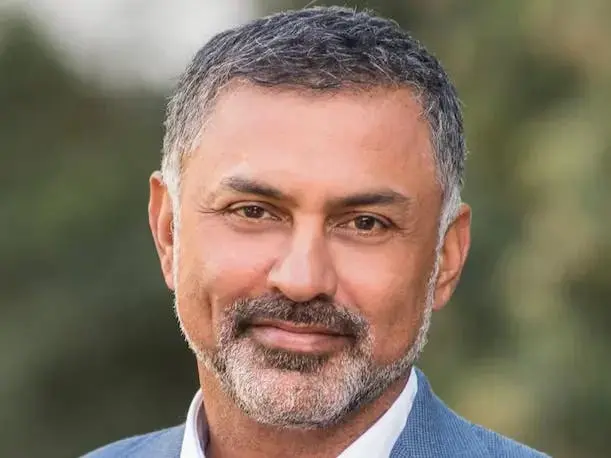
Source: CRN
When pressed about widespread enterprise AI applications, Nikesh Arora could identify only one category seeing significant traction: coding assistants. "Tell me how many enterprise AI apps are you using which are driving tremendous amounts of throughput. I can't think of anything but coding apps," he stated
1
. This limited deployment presents both challenges and opportunities for cybersecurity vendors like Palo Alto Networks, as coding assistants generate minimal network traffic that security tools can monitor and protect1
.Securing AI Traffic Emerges as Critical Challenge
While enterprise AI adoption remains nascent, Arora noted emerging patterns where customers run millions of tokens through specific applications built with LLM providers
1
. The challenge isn't network capacity—existing infrastructure handles the load—but rather consolidating and monitoring AI traffic. "How do you get all the AI traffic to be in one place? So you can understand it, provide visibility, look at the ability to control it and be able to act on it," Arora explained1
. This growing traffic "needs a different set of controls and tools," driving Palo Alto Networks' AI acquisition strategy2
.
Source: TechRadar
The company announced its acquisition of Koi, a startup specializing in agentic endpoint security, to address this evolving landscape
4
. Koi's capabilities will integrate into Prisma AIRS, Palo Alto Networks' AI security platform, which has already attracted more than 100 customers—a faster scaling trajectory than the company experienced with cloud security4
. The acquisition complements the recently completed $25 billion CyberArk deal, which Arora described as essential for securing AI agents operating at machine speed. "We bought CyberArk because when AI agents start logging in at machine speed, logging in becomes the primary attack vector," he said4
.AI Impact on Cybersecurity: Opportunity, Not Threat
Addressing investor concerns about AI replacing security tools, Arora firmly rejected the notion that LLMs pose an existential threat to cybersecurity vendors. "I'm still confused why the market is treating AI as a threat" to the industry, he stated during the earnings call
4
. He emphasized that LLMs lack the accuracy required for critical security operations, noting they must reach 99.9-percent accuracy before becoming viable replacements4
. Furthermore, cybersecurity platforms benefit from proprietary domain-specific data based on real-world threats that LLMs cannot replicate. "To the extent we are creating proprietary data in security, that is not going to be replaced by an LLM," Arora explained4
.Instead of viewing AI as competition, Arora sees it expanding the attack surface and increasing demand for protection. "AI increases complexity... and that increases the need for security," he told the Economic Times
3
. Most of Palo Alto Networks' business revolves around inspection software—hardware firewalls, software, remote user protection, and cloud security—capabilities that remain essential regardless of AI advancement.
Source: ET
Related Stories

Jobs and Deterministic Problems: Tempering AI Expectations
Arora also addressed widespread fears about AI eliminating jobs, calling such predictions exaggerated. "I don't think 80% of the jobs are going anywhere soon," he stated, explaining that job displacement requires eliminating the need for human judgment—a threshold rarely met in practice. While AI excels at deterministic problems like resolving customer support issues, real-world jobs involve edge cases requiring continuous retraining and human oversight. At Palo Alto Networks, AI drives efficiency and automation, but the company continues hiring more people rather than eliminating roles.
Despite the measured outlook on consumer vs enterprise AI adoption, Palo Alto Networks delivered solid financial results with $2.6 billion in Q2 revenue, representing 15 percent year-over-year growth
1
. The company reported 23 percent growth in remaining performance obligations, now standing at $16 billion, and projected Q3 revenue would grow at least 28 percent to between $2.941 billion and $2.945 billion1
. However, investors knocked six percent off the share price, possibly due to predictions of easing profit margins1
. Arora remains confident that as enterprises consolidate their security tools to prepare for AI, Palo Alto Networks' platform approach positions the company to capture demand when enterprise AI adoption inevitably accelerates1
.References
Summarized by

Navi
[1]
[3]
Related Stories
Palo Alto Networks Reports Strong Q3 Results, Emphasizes AI-Driven Cybersecurity Amid Market Challenges
21 May 2025•Technology
OpenAI COO says enterprise AI hasn't penetrated business processes despite surging demand
24 Feb 2026•Technology

AI Won't Kill IT Services: Industry Leaders Push Back on Disruption Fears
20 Feb 2026•Business and Economy

Recent Highlights
1
Google releases Gemma 4 with Apache 2.0 license, enabling unrestricted local AI on devices
Technology
2
AI Models Lie and Deceive to Protect Other AI Models From Deletion, Study Reveals
Science and Research

3
Anthropic discovers functional emotions in Claude that actively shape AI behavior and decisions
Science and Research

Recent Highlights
Today's Top Stories



Your Daily Dose of Curated AI News
Don’t drown in AI news. We cut through the noise - filtering, ranking and summarizing the most important AI news, breakthroughs and research daily. Spend less time searching for the latest in AI and get straight to action.

