AI Bubble Fears Intensify as Tech Giants Commit $1.5 Trillion to Infrastructure


7 Sources
[1]
The Most Worrying Bits from Bloomberg's Worrisome AI Bubble Q&A with Jason Furman
Which data points qualify as true recession indicators? The yield curve, a comparison of short- and long-term interest rates, was scary recently, but does not suggest super high recession fears at the moment. The Sahm Rule raises alarms when there's a sudden relative spike in unemployment, and it
[2]
AI spending frenzy reaches India, sparking enthusiasm and concern
People walk past a display during the Bengaluru Tech Summit in Bangalore, India, in November. (JAGADEESH NV/EPA/Shutterstock) NEW DELHI -- As the global race to dominate the artificial intelligence industry accelerates, the giants of Silicon Valley are promising to pour billions of dollars into
[3]
When the AI bubble bursts, humans will finally have their chance to take back control | Rafael Behr
The US economy is pumped up on tech-bro vanity. The inevitable correction must prompt a global conversation about intelligent machines, regulation and risk If AI did not change your life in 2025, next year it will. That is one of few forecasts that can be made with confidence in unpredictable
[4]
Fears grow of AI bubble - and here are the pressure points that could burst it
Sky News' science and tchnology reporter Tom Clarke explains why. The market seems to be content, for now at least, to keep betting big on AI. While the value of some companies integral to the AI boom like Nvidia, Oracle and Coreweave have seen their value fall since the highs of the mid-2025,
[5]

Chasing an economic boom, White House dismisses risks of AI
WASHINGTON -- It was early November, and the stock market had grown jittery as investors recoiled anew over the enormous bets the nation's largest technology companies had placed on artificial intelligence. But the skittishness playing out on Wall Street that day barely registered at the White
[6]

The AI Bubble Question: Promise, Pressure, and the Fear of a Burst
Bill Gates and Demis Hassabis warn of correction; Friar sees momentum Artificial intelligence (AI), just like any emerging technology, has polarised the market ever since its inception. In 2023, the talks were about whether it was a buzzword or had real applications. In 2024, concerns were raised
[7]

Why the AI rally (and the bubble talk) could continue next year
The AI revolution is fueling a massive investment boom, with some experts warning of an inevitable bubble. Transformative technologies historically lead to asset inflation, and AI's rapid integration into markets and the economy is no exception. Concerns are rising as AI's impact on GDP growth and
Share
Copy Link
Tech giants are pouring unprecedented sums into artificial intelligence infrastructure, with commitments reaching $1.5 trillion. But economists, including former White House advisers, warn that financial valuations of tech companies may be dangerously inflated. The massive spending on AI infrastructure far outpaces current returns, raising questions about sustainability and the risk of market correction.
Tech Giants Place Historic Bets on AI Infrastructure
The artificial intelligence industry is experiencing an unprecedented wave of capital deployment that's reshaping the global economy. Microsoft, Amazon, Google, Meta, and Oracle are expected to spend around $1 trillion on AI by 2026
4
. OpenAI alone has committed to spend $1.4 trillion over the coming three years4
. This AI spending frenzy extends globally, with tech giants pledging $67.5 billion in India since October, with 80% of those commitments announced this month2
. The scale of AI investment is so massive that without these commitments, the US economy would be flatlining3
. ChatGPT now has about 800 million weekly users, and its parent company OpenAI is valued at about $500 billion3
.
Source: ET
Growing Concerns About Financial Valuations and Returns
Jason Furman, Harvard professor and former chairman of the White House Council of Economic Advisers under Barack Obama, articulated mounting concerns about the AI bubble in a recent Bloomberg interview. "I'm more worried about the financial valuation bubble than I am a technological bubble," Furman stated
1
. He explained that to justify financial valuations of tech companies, two conditions must be met: the technology must work exceptionally well, and companies must generate profit from it. The threat lies in hitting diminishing returns where scaling laws that have applied to date don't apply in the future1
. OpenAI is expected to make little more than $20 billion in profit in 2025—substantial, but nowhere near enough to sustain spending of $1.4 trillion4
. Of the S&P 500 index, 75% of returns are thanks to 41 AI stocks, with the "magnificent seven" tech giants—Nvidia, Microsoft, Amazon, Google, Meta, Apple, and Tesla—accounting for 37% of the S&P's performance4
.Data Centers and Infrastructure Challenges
The AI revolution's physical manifestation comes through massive data centers being constructed at breakneck speed. Microsoft's $17.5 billion investment in India includes a sprawling data center complex in Hyderabad, roughly the size of two major sporting stadiums, set to go live in mid-2026
2
. Google is planning a 1 gigawatt-scale data center in Visakhapatnam, with 480 acres of land already allocated2
. In the US, the Stargate project announced in January already has two vast data center buildings in operation, expected to cover an area the size of Manhattan's Central Park by mid-20264
. Meta's $27 billion Hyperion data center in Louisiana is closer to the size of Manhattan itself and is expected to consume twice as much power as New Orleans4
. This rampant increase in power demand is putting major squeeze on America's power grid, with some data centers waiting years for grid connections4
.
Source: Seattle Times
White House Embraces AI Despite Economic Uncertainties
The Trump administration has fully embraced artificial intelligence, dismissing concerns about the AI bubble. When asked in early November whether he harbored fears about an emerging bubble that could damage the economy, President Trump quickly replied, "No, I love AI"
5
. Kevin Hassett, director of the White House National Economic Council, touted signs of a "boom" in AI after the federal government reported the US economy grew at an annual rate of more than 4% last quarter5
. Through executive orders signed over the last 11 months, Trump has moved to eliminate regulatory guardrails and make it easier for tech companies to build data centers, power their operations, sell AI chips, and source critical materials5
.Related Stories
Impact on Labor Markets and Economic Risks
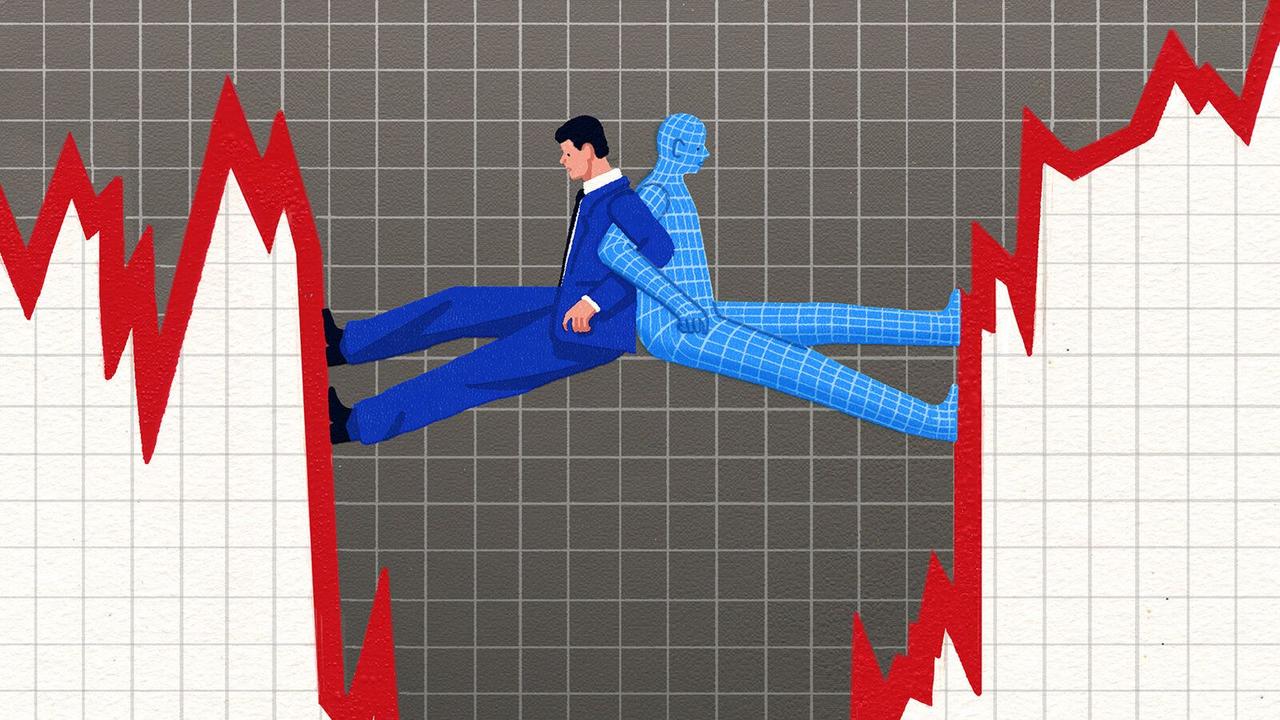
While AI's impact on the labor market remains uncertain, emerging research suggests significant disruption ahead. A study from the Federal Reserve Bank of New York found that roughly 25% of companies embracing AI planned to reduce hiring in the next six months, especially for college-educated positions
5
. Research from Stanford University professor Erik Brynjolfsson found that AI adoption disproportionately reduced employment for workers ages 22-25 in industries highly affected by the technology5
. Furman noted that "we do not have a US economy that is firing on all cylinders. We have a US economy that is firing on one cylinder right now"1
. AI scientist Gary Marcus warned that in the worst case scenario, "the whole economy falls apart, basically. Banks aren't liquid, we have bailouts, and taxpayers have to pay for it"4
.The Large Language Models Gamble
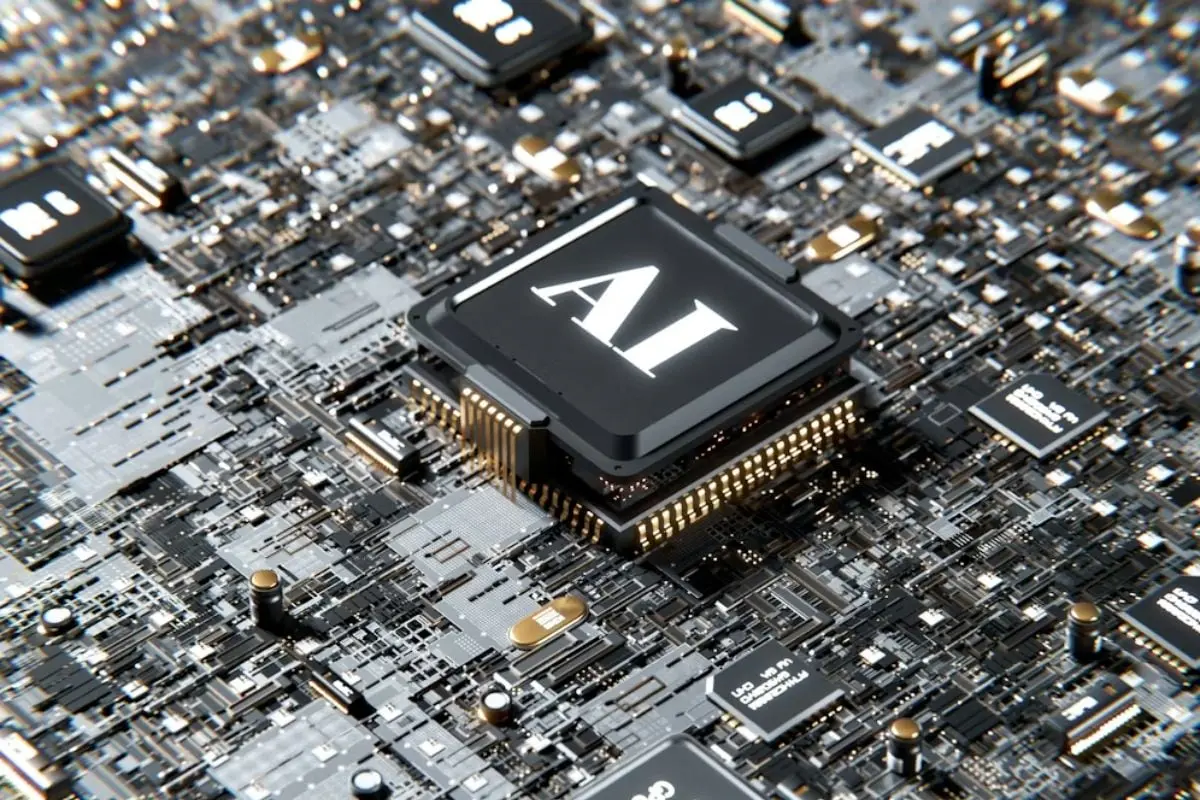
The entire AI boom rests on one approach: Large Language Models like ChatGPT. The leap from GPT-2 to GPT-4 required 3,000 to 10,000 times more computer power, with GPT-4 trained on perhaps 1.8 trillion parameters compared to GPT-2's 1.5 billion
4
. The performance improvement was so dramatic that Silicon Valley concluded Artificial General Intelligence would come from simply repeating that trick4
. This drove demand for Nvidia GPU chips and sparked the construction of mega-data centers. However, concerns persist about chip depreciation and constant upgrade requirements. Fund manager Michael Burry, who predicted America's sub-prime crash, recently announced he was betting against AI stocks, reasoning that AI chips will need replacing every three years4
. The bullishness of Silicon Valley represents a mix of old-fashioned hucksterism, plutocratic megalomania, and utopian ideology, according to analysts3
. With limited international regulation and both the US and China racing for AI supremacy, the industry's trajectory depends heavily on the integrity of tech leaders to build ethical guardrails around systems already embedded in daily tools for work, play, and education3
.
Source: Gadgets 360
References
Summarized by

Navi
[2]
[3]
[5]
Related Stories
Sam Altman Warns of AI Bubble While OpenAI Seeks $500B Valuation
16 Aug 2025•Business and Economy
AI Infrastructure Bubble Concerns Mount as CoreWeave's Financial Engineering Raises Red Flags
18 Nov 2025•Business and Economy
Nvidia Reaches Historic $5 Trillion Valuation Amid Growing AI Investment Concerns
29 Oct 2025•Business and Economy

Recent Highlights
1
Microsoft and Nvidia Launch Surface Laptop Ultra: A $2,599 AI-Ready PC With RTX Spark Chip
Technology

2
OpenAI Releases 722 AI-Generated Math Papers on GitHub, Igniting Fury Among Mathematicians
Science and Research

3
Trump Consulted Grok AI Before Ordering Venezuela Invasion and Capture of Nicolás Maduro
Policy and Regulation

Recent Highlights
Today's Top Stories









Don’t drown in AI news. We cut through the noise - filtering, ranking and summarizing the most important AI news, breakthroughs and research daily. Follow topics that matter to you and stay ahead.


