AI Won't Kill IT Services: Industry Leaders Push Back on Disruption Fears


8 Sources
[1]
News of IT Services' Death Is Greatly Exaggerated
We are seeing a spate of disruptive headlines and predictions around the demise of IT services. With the progress made by AI, specifically in software development, it is easy to assume that traditional IT services are on their way out. This narrative is fundamentally flawed. Yes, AI-driven
[2]
Threat to large IT firms 'overblown', Cognizant's AI chief says amid Anthropic-driven disruption
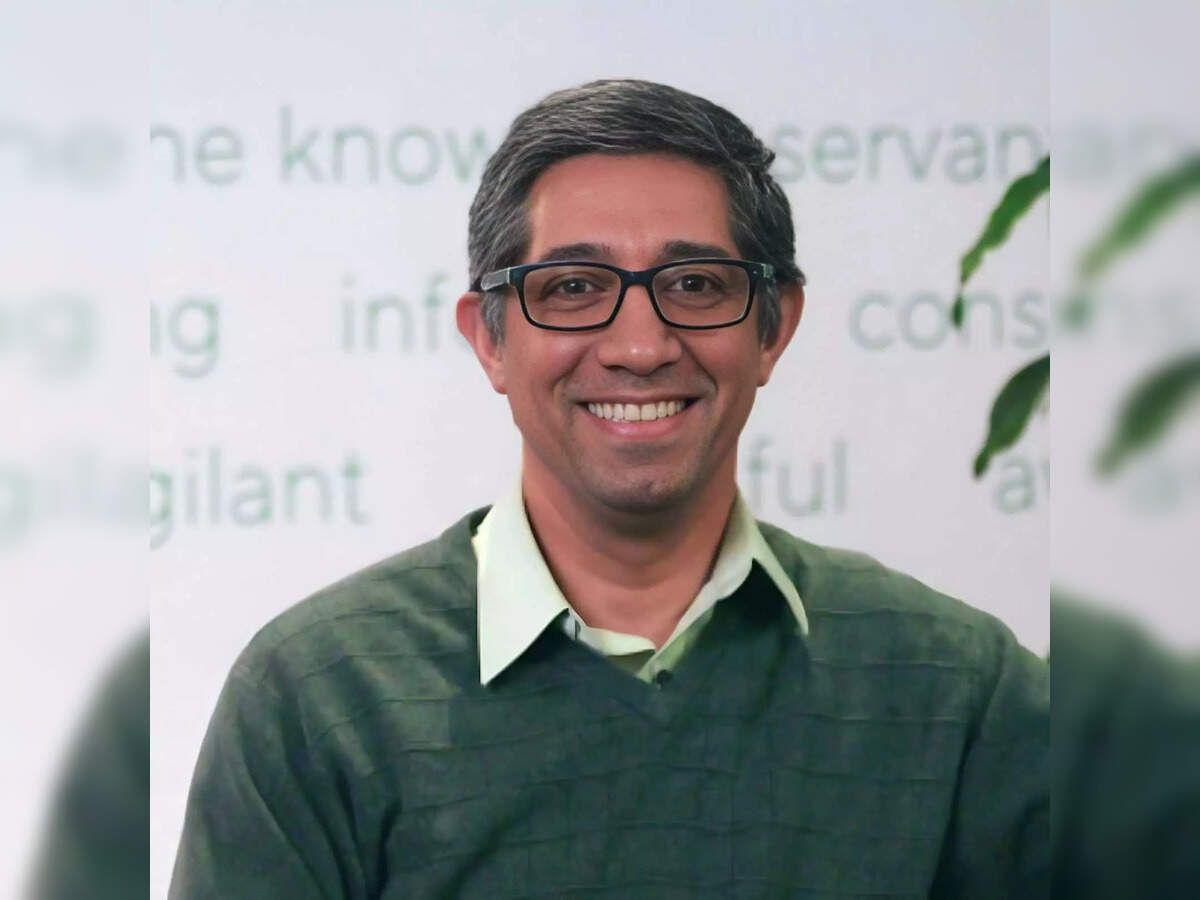
MUMBAI, Feb 26 (Reuters) - Fears that new artificial intelligence tools could replace large IT services firms are "overblown" as clients still need help deploying and scaling the technology, Babak Hodjat, chief AI officer at Cognizant (CTSH.O), opens new tab, told Reuters in an
[3]
Threat to large IT firms 'overblown', Cognizant's AI chief says amid Anthropic-driven disruption
Cognizant, which generates about 30% of its code through AI and aims to reach 50%, is not worried about automation eliminating entry-level jobs. CEO Ravi Kumar S said during the company's earnings call earlier this month that it hired 25,000 fresh graduates in 2025, and expects to exceed that in
[4]
As AI panic grips IT services stocks, Anand Mahindra weighs in on possible impact scenarios, cites famous Mark Twain quote: 'Reports of my death are greatly exaggerated'
In recent days, markets have been swinging wildly in response to a fictional AI scenario that imagines a 2028 where coding tools make software production almost as cheap as electricity. The ripple effects, from shrinking IT exports to potential IMF involvement, set off alarm bells about the future
[5]
The Future of IT Services: A Rebuttal to Vinod Khosla's Predictions
Introduces Vasu AI Coach, LE AI Interviewer and LE AI Quality Compliance Specialist under LE AI, its proprietary AI infrastructure for global education and careers Ashok Soota founder and executive chairman of Happiest Minds Technologies Vinod Khosla stated that IT services and BPO roles will
[6]
'Bas Karo Yaar. Limit Hoti Hai': Fund manager slams AI doomsday narrative for IT services and recession prediction
Gurmeet Chadha, Managing Partner and CIO at Complete Circle, has pushed back against what he sees as excessive alarmism around artificial intelligence's potential impact on IT services players and overall and its impact on the economy. In his view, the narrative has swung from AI disrupting IT
[7]
AI services a real opportunity for IT to adapt, move fast
Vinod Khosla says AI could transform the world into an era of abundance, where people need not work and can pursue their passions. He warns that India's IT services industry must adapt quickly to offer AI services globally or risk obsolescence. The country's talent and cost advantages create a
[8]

Threat to large IT firms 'overblown', Cognizant's AI chief says amid Anthropic-driven disruption
MUMBAI, Feb 26 (Reuters) - Fears that new artificial intelligence tools could replace large IT services firms are "overblown" as clients still need help deploying and scaling the technology, Babak Hodjat, chief AI officer at Cognizant, told Reuters in an interview. Automated AI tools from startups
Share
Copy Link
Industry leaders including Cognizant's AI chief and Anand Mahindra are pushing back against predictions that AI will eliminate IT services firms. While AI is transforming how work gets done, experts argue that enterprises still need human expertise for deployment, integration, and orchestration. The debate intensifies as some predict IT services will vanish by 2030, while others see AI creating more demand, not less.
AI Drives Demand for IT Services, Not Replacement
The narrative that AI will eliminate IT services is fundamentally flawed, according to industry leaders responding to recent predictions about the sector's demise. Babak Hodjat, chief AI officer at Cognizant, told Reuters that fears of AI replacing IT services are "overblown" as enterprises still need help deploying and scaling the technology
2
. While AI tools from startups such as Anthropic have stirred concerns about disruption in business models globally, including India's traditionally labor-intensive IT services industry, the reality is more nuanced. AI-driven automation deflates the unit cost of technology work, but it also inflates the volume and complexity of that work even faster, creating net growth in demand for IT services rather than contraction1
.
Source: ET
Cognizant, which generates about 30% of its code through AI and aims to reach 50%, hired 25,000 fresh graduates in 2025 and expects to exceed that number in 2026
3
. This hiring surge directly contradicts predictions of widespread job displacement and signals confidence in the sector's growth trajectory. The company's Nasdaq listing and forecast of annual revenue above Wall Street estimates, backed by strong demand as businesses adopt AI into their workflows, further validates this optimism.Human Expertise Remains Essential for AI Orchestration
Enterprises are far from being able to rely on a single, all-purpose AI agent, according to Hodjat, whose work helped power Apple's Siri voice assistant. Most clients still need help engineering, integrating, and governing AI systems. "That mapping is our job, it does not come just automatically out of the box," he explained
2
. While AI agents write code faster and cheaper, coding represents roughly a third of any delivery effort. The rest—specifications, architecture, cross-team coordination, platform integration, testing, and project governance—still demands human judgment1
.Context engineering will emerge as the highest-value discipline in enterprise AI. Agents are only as good as the context pipeline feeding them, including structured data, unstructured enterprise knowledge, business rules, and tacit knowledge that lives in people's heads and resists codification
1
. IT services firms already hold this raw material through deep familiarity with their clients' processes, data architectures, and operational logic. Almost all of Cognizant's clients have already tried to work with AI agents but acknowledged they need deployment support within their systems for returns3
.Industry Leaders Counter Extinction Predictions
Anand Mahindra weighed into the debate, citing Mark Twain's famous quote: "Reports of my death are greatly exaggerated." He acknowledged that AI will pressure service providers but emphasized that the most capable firms may become more central than ever
4
. Mahindra highlighted that enterprises will still need secure data foundations, seamless system integration across legacy and cloud systems, compliance oversight, and mission-critical reliability. The differentiator going forward will be the ability to manage risk and deliver "Scale at Speed" rather than simply supplying manpower.
Source: ET
Ashok Soota, founder and executive chairman of Happiest Minds Technologies, directly rebutted Vinod Khosla's predictions that IT services and BPO roles will vanish within five years. Soota argued that such predictions ignore the lessons of history on how technology has always evolved to create newer opportunities
5
. He sees AI as a catalyst for accelerating growth, enhancing productivity, and driving innovation across enterprises. IT services will remain essential in customizing solutions for diverse industries and ensuring enterprises innovate faster and achieve superior business outcomes.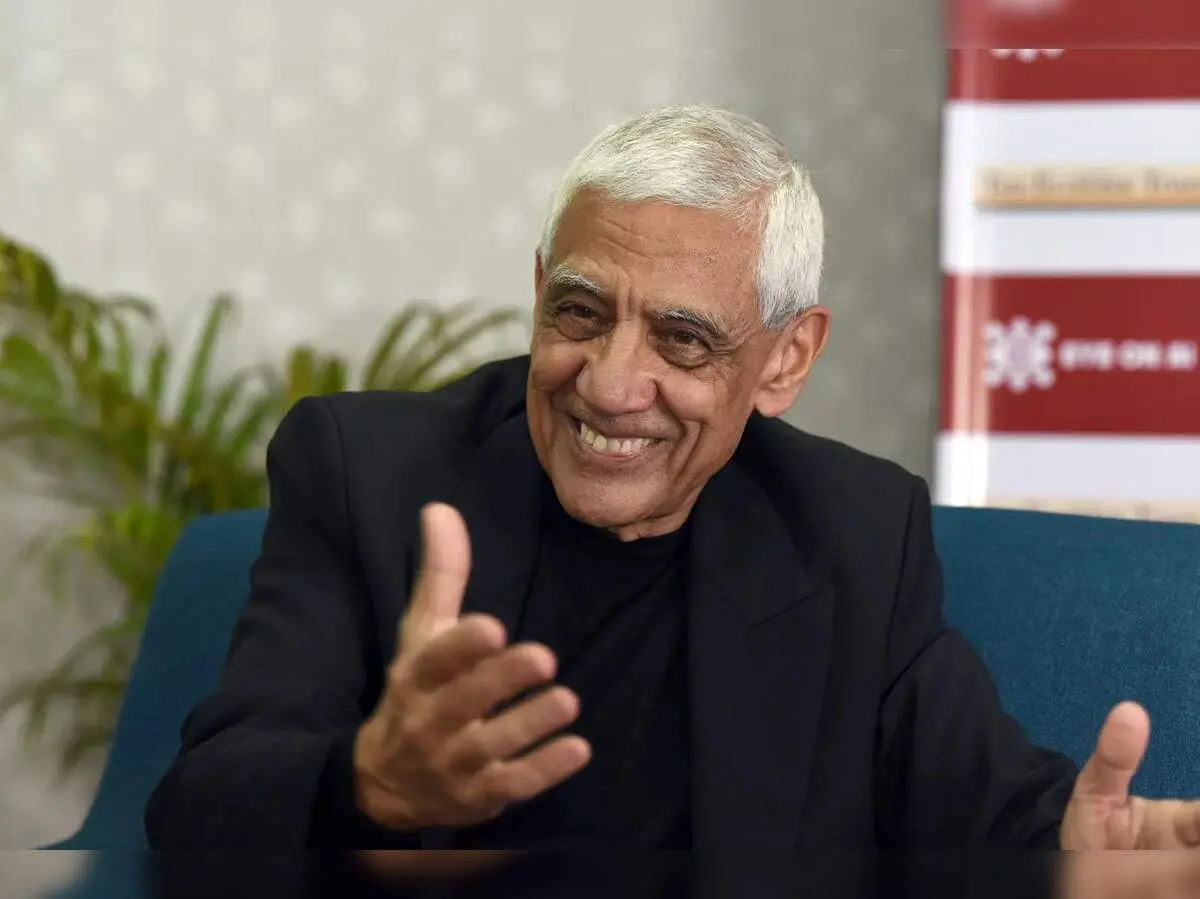
Source: ET
Related Stories
Winners and Losers in the AI-Driven Transformation
Not every IT services firm will capture this growth. The winners will be those that build proprietary AI platforms, invest in domain expertise, and shift to outcome-based delivery. The losers will be those still selling labor arbitrage by the hour
1
. Services firms that pivot decisively toward AI orchestration and outcome-driven models will not only survive but remain extremely relevant in the evolving tech landscape4
.The threat to IT firms is real but selective. While some job cuts have occurred—WiseTech Global laid off nearly a third of its workforce as it integrates AI, and TCS announced 12,000 job cuts last year—the overall trend points toward transformation rather than elimination
2
. Rivals Tata Consultancy Services and Wipro have maintained that rapid AI adoption will boost, rather than shrink, demand for software service providers. The gap between AI's technical capability and its enterprise adoption is enormous, and it's a gap that requires human expertise to close. As the gap widens between frontier AI and practical enterprise needs, so does the relevance of IT services firms capable of bridging it.References
Summarized by

Navi
[1]
[2]
[3]
Related Stories
Anthropic's AI legal tool triggers massive sell-off in software stocks across Europe and India
03 Feb 2026•Business and Economy

Anthropic and OpenAI launch rival joint ventures to deploy AI models at scale for businesses
04 May 2026•Business and Economy
AI disruption triggers $100 billion market value erosion in Indian IT sector as foreign investors flee
06 Mar 2026•Business and Economy
Recent Highlights
1
Microsoft and Nvidia Launch Surface Laptop Ultra: A $2,599 AI-Ready PC With RTX Spark Chip
Technology

2
OpenAI Releases 722 AI-Generated Math Papers on GitHub, Igniting Fury Among Mathematicians
Science and Research

3
Trump Consulted Grok AI Before Ordering Venezuela Invasion and Capture of Nicolás Maduro
Policy and Regulation

Recent Highlights
Today's Top Stories









Don’t drown in AI news. We cut through the noise - filtering, ranking and summarizing the most important AI news, breakthroughs and research daily. Follow topics that matter to you and stay ahead.


