UAE and Qatar join Pax Silica, Trump's US-led coalition to secure global AI supply chains


5 Sources
5 Sources
[1]
UAE bolsters economic ties with US by joining AI supply chain program
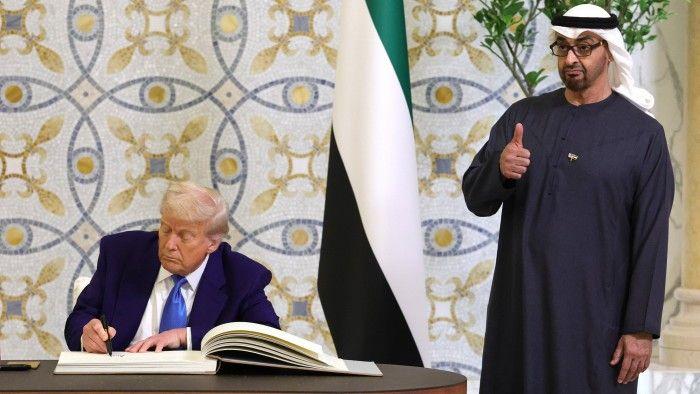
ABU DHABI, Jan 14 (Reuters) - The United Arab Emirates on Wednesday joined a U.S.-led initiative to secure AI and semiconductor supply chains, dubbed Pax Silica, further strengthening economic ties with the United States. The programme is a key pillar of the Trump administration's economic statecraft strategy to reduce dependence on rival nations and strengthen cooperation among allied partners. The group also includes Australia, Britain, Israel, Japan, Qatar, Singapore and South Korea. "Ultimately we want to focus on the arteries of the supply chain, primarily logistics, the muscle of the supply chain, via industrial capacity, and the fuel of the supply chain, primarily capital and energy," U.S. Undersecretary of State for Economic Affairs Jacob Helberg told Reuters. "And we view the UAE as a comprehensive partner that can make meaningful and important contributions in all three of those areas." Helberg invited the UAE on behalf of President Donald Trump and Secretary of State Marco Rubio to a ministerial level meeting on critical minerals in Washington next month, which he said would include a "large group" of countries. The UAE has been spending billions of dollars to become a global AI hub, looking to leverage its strong relations with Washington to secure access to U.S. technology, such as some of the world's most advanced chips. It has also a multibillion-dollar deal to build one of the world's largest data centre hubs in Abu Dhabi with U.S. technology. Asked whether Trump's threat to impose a 25% tariff on U.S. trade by countries - a group including the UAE - that do business with Iran would affect the U.S.-UAE relationship, Helberg said he was "very confident in the strength and depth of America's relationship with the UAE". While Gulf neighbour Qatar is part of the Pax Silica programme, regional heavyweight Saudi Arabia, which also harbours ambitions to evolve into a global AI hub, is not. Helberg said he held an initial round of discussions with Riyadh on Tuesday but that the U.S. and Saudi Arabia had also already negotiated a very substantial bilateral AI deal. Reporting by Rachna Uppal; editing by Mark Heinrich Our Standards: The Thomson Reuters Trust Principles., opens new tab
[2]
Trump Administration Wants to Achieve 'Pax Silica' Through AI. Here's What That Means
The Trump administration is rapidly expanding an initiative to secure the global AI and tech supply chains. Led by the U.S., six countriesâ€"Israel, Singapore, Japan, South Korea, Australia and the United Kingdomâ€"came together last month to form a coalition meant to safeguard the supply of silicon that is critical to most tech applications including AI. The effort is meant to span all levels of the supply chain, from critical minerals, energy and advanced manufacturing to semiconductors, AI infrastructure, and logistics. "It's meant to be an operational document for a new economic security consensus," undersecretary of economic affairs Jacob Helberg told Reuters on Sunday. "We encourage efforts to partner on strategic stacks of the global technology supply chain, including, but not limited to, software applications and platforms, frontier foundation models, information connectivity and network infrastructure, compute and semiconductors, advanced manufacturing, transportation logistics, minerals refining and processing, and energy," read a declaration signed by member countries. Although there are only seven countries in total that have signed on to the declaration, Helberg signaled that both Qatar and the United Arab Emirates will be joining the framework this coming week. The Trump administration has also engaged in discussions over the initiative with the European Union, Canada, and Taiwan. The program is called Pax Silica, modeled after Pax Romana, Latin for Roman Peace. "Silica" is related to "Silicon" in English, but that part is not Latin. The term describes a two-century-long period of relative political stability and economic prosperity in Ancient Rome as the empire, led by tyrannical emperors, doubled in size through notable bloody conquests, going on to eventually include a quarter of the world's population at the time. At the heart of this Pax Silica initiative is worries over an AI supply chain dominated by China. China controls roughly 90% of the world's supply of rare earth, a group of elements that are crucial for building the computer chips used in smartphones and AI systems. Last year, China leveraged this power by clamping down on rare earths exports in response to Trump's tariff measures against Beijing. The counter measures hit the global tech industry hard, and gave China's Xi Jinping an upper hand in trade talks with Trump. In response, the United States has led calls for a reduced dependence on Chinese critical minerals, something that treasury secretary Scott Bessent will also reportedly push for as he hosts top finance officials from the EU, Canada, Japan, the U.K., Australia, India, Mexico, and South Korea this week. While holding a near monopoly on critical elements, China is also focused on rapidly expanding its overall global influence, particularly when it comes to key infrastructure, tech, and AI. The effort started roughly a decade ago through the Belt and Road Initiative, an ambitious infrastructure investment project meant to strengthen China's trade ties and influence abroad. Last year, Chinese officials indicated a similar approach to artificial intelligence development as they called for the establishment of a global AI cooperation organization focused on open-source communities and joint research but centered in Shanghai, under Chinese terms and values. “By aligning our economic security approaches, we can start to have cohesion to basically block China’s Belt and Road Initiative â€" which is really designed to magnify its export-led model â€" by denying China the ability to buy ports, major highways, transportation and logistics corridors," Helberg told Politico last month. But while beating China in the global AI race is the Trump administration's primary goal, it's not the only one. State Department's economic security strategy is based on "four pillars," Helberg said in a press briefing following the Pax Silica summit: rebalancing trade, reindustrializing America, securing supply chains, and stabilizing conflict zones via economic solutions "from the sub-Saharan Africa to the Middle East." The last of these pillars makes the two latest alleged additions to the Pax Silica crew notable: Qatar and UAE, two of the most influential Arab nations. While the UAE normalized ties with Israel in 2020 under Trump's Abraham Accords and the two now have a trade relationship, Israel's offensive in Gaza has somewhat cooled these ties. And while Qatar is a key mediator in Israel-Hamas negotiations, it has no formal diplomatic ties with Israel and any cordial relations were put under further strain after Israel bombed the Qatari capital Doha in September 2025.
[3]
Qatar and UAE to join U.S.-led effort to bolster technology supply chain
Jan 11 (Reuters) - Qatar and the United Arab Emirates will soon join a U.S.-led initiative to secure AI and semiconductor supply chains, Undersecretary of State for Economic Affairs Jacob Helberg told Reuters in an interview. The addition of those two countries is notable given the Middle East's history of political divisions and reflects a U.S.-led effort to bring Israel and Gulf states into the same technology-focused economic framework. The program, dubbed Pax Silica, seeks to safeguard the full technology supply chain, including critical minerals, advanced manufacturing, computing and data infrastructure. It is a key pillar of the Trump administration's economic statecraft strategy to reduce dependence on rival nations and strengthen cooperation among allied partners. "The Silicon Declaration isn't just a diplomatic communiqué," Helberg said. "It's meant to be an operational document for a new economic security consensus." The group including Israel, Japan, South Korea, Singapore, Britain and Australia. Qatar is expected to sign the Pax Silica declaration on Jan. 12, followed by the UAE on Jan. 15. Unlike traditional alliances, Helberg said, Pax Silica is a "coalition of capabilities," with membership driven by the industrial strengths and companies of each country. Helberg said he hopes the initiative can help accelerate the Middle East's economic transition away from energy dependence, toward a more diversified, technology-driven economy. "For the UAE and Qatar, this marks a shift from a hydrocarbon-centric security architecture to one focused on silicon statecraft," he said, The moves come against the backdrop of The Future Minerals Forum, a government‑led global minerals and supply chain conference hosted by Saudi Arabia that will bring together senior officials, industry leaders and investors in Riyadh from January 13‑15. Helberg said the Pax Silica group will focus this year on expanding membership, building strategic projects to secure supply chains and coordinating policies to protect critical infrastructure and technology. The group met in Washington last month. Helberg said he hopes it will meet a few times this year. He said discussions are under way on projects that could modernize trade and logistics routes, including the India-Middle East-Europe Corridor, using advanced U.S. technology to boost regional integration and expand America's economic footprint. U.S. and Israeli officials plan to launch a Pax Silica-linked Strategic Framework, including the "Fort Foundry One" industrial park in Israel to accelerate projects. AI cooperation will also be discussed, with a memorandum of understanding tentatively planned for January 16. Reporting By Jarrett Renshaw; Editing by Sergio Non and Alistair Bell Our Standards: The Thomson Reuters Trust Principles., opens new tab
[4]
Qatar joins US-led AI supply chain coalition that includes S. Korea, Japan - The Korea Times
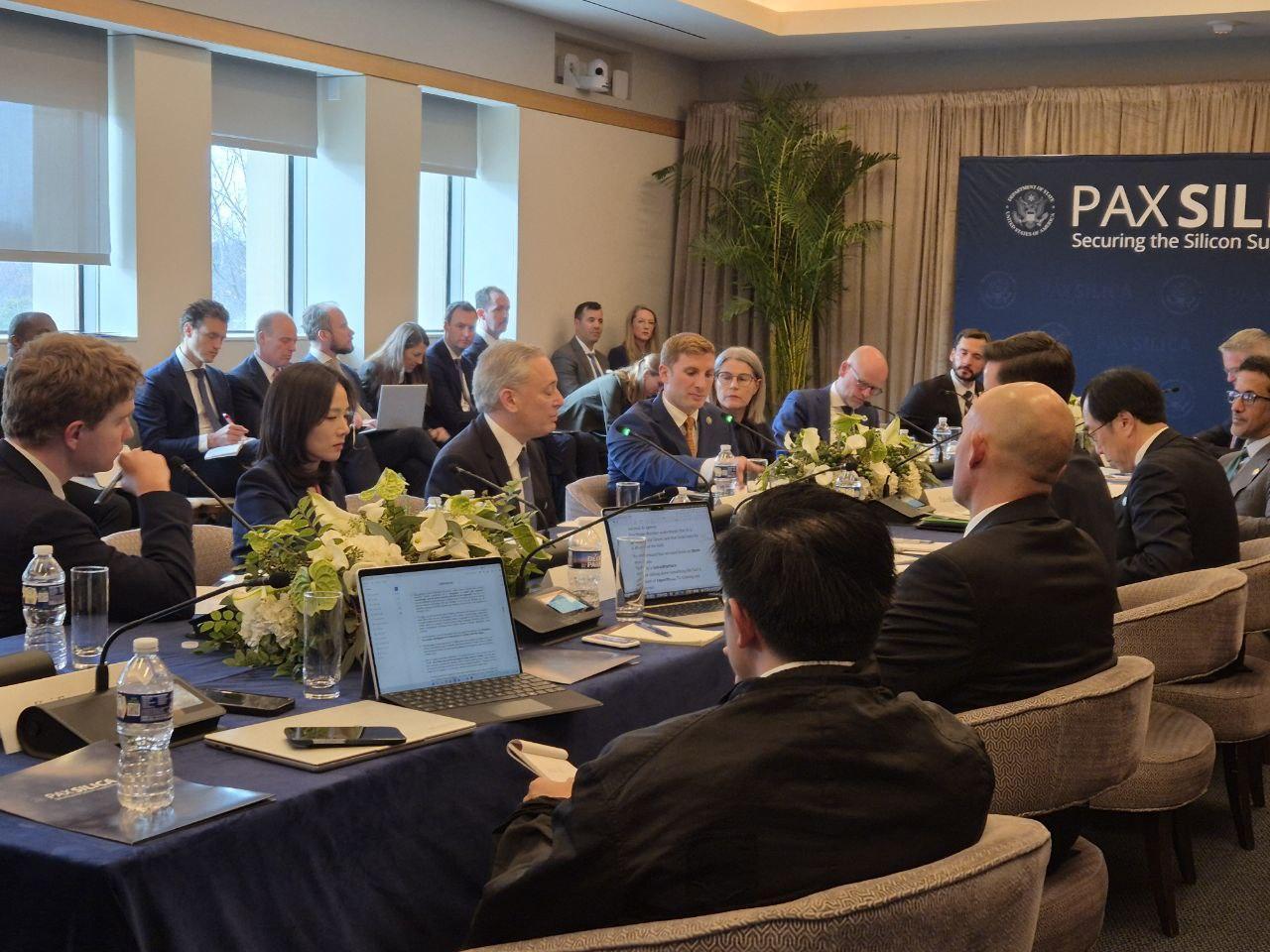
WASHINGTON -- Qatar on Monday signed a document to participate in a U.S.-led coalition for supply chain cooperation on artificial intelligence (AI), critical minerals and other areas, joining South Korea and six other signatories to the group. The State Department said that Under Secretary of State for Economic Affairs Jacob Helberg and Qatar's Minister of State for Foreign Trade Affairs Ahmed bin Mohammed Al-Sayed signed Doha's accession to "Pax Silica," an economic security initiative that was launched last month as Washington seeks to counter China's growing heft in advanced technologies. With Qatar's entry, the coalition now consists of eight members: the United States, South Korea, Japan, Australia, Britain, Israel and Singapore. "Together, the United States of America and Qatar affirm a new geopolitical consensus that economic security is national security, and national security is economic security," the department said in a media note. "Qatar's leadership and commitment to investing in secure energy, advanced technology, and critical minerals supply chains make it an indispensable partner in this effort, placing Qatar in the vanguard of nations that will drive the next stage of global economic growth," it added. The grouping comes as U.S. President Donald Trump's administration is pushing to enhance America's global "AI dominance," ensure stable supply chains for critical minerals and counter China's control over those strategically vital resources, amid an intensifying rivalry between the two superpowers. Pax Silica draws from the Latin "pax", which means peace, stability and long-term prosperity, while silica refers to the compound refined into silicon, a chemical element key to the computer chips that enable artificial intelligence, according to the State Department.
[5]
Qatar, UAE align with US, Israel on AI and chip security
Image credit: Getty Images Qatar and the United Arab Emirates will soon join a US-led initiative to secure AI and semiconductor supply chains, Undersecretary of State for Economic Affairs Jacob Helberg told Reuters in an interview. The addition of those two countries is notable given the Middle East's history of political divisions and reflects a US-led effort to bring Israel and Gulf states into the same technology-focused economic framework. The program, dubbed Pax Silica, seeks to safeguard the full technology supply chain, including critical minerals, advanced manufacturing, computing and data infrastructure. It is a key pillar of the Trump administration's economic statecraft strategy to reduce dependence on rival nations and strengthen cooperation among allied partners. "The Silicon Declaration isn't just a diplomatic communiqué," Helberg said. "It's meant to be an operational document for a new economic security consensus." The group The group including Israel, Japan, South Korea, Singapore, Britain and Australia. Qatar is expected to sign the Pax Silica declaration on Jan. 12, followed by the UAE on Jan. 15. Unlike traditional alliances, Helberg said, Pax Silica is a "coalition of capabilities," with membership driven by the industrial strengths and companies of each country. Helberg said he hopes the initiative can help accelerate the Middle East's economic transition away from energy dependence, toward a more diversified, technology-driven economy. "For the UAE and Qatar, this marks a shift from a hydrocarbon-centric security architecture to one focused on silicon statecraft," he said, The moves come against the backdrop of The Future Minerals Forum, a government‑led global minerals and supply chain conference hosted by Saudi Arabia that will bring together senior officials, industry leaders and investors in Riyadh from January 13‑15. Helberg said the Pax Silica group will focus this year on expanding membership, building strategic projects to secure supply chains and coordinating policies to protect critical infrastructure and technology. The group met in Washington last month. Helberg said he hopes it will meet a few times this year. Read: UAE to launch first Centre of Excellence for Artificial Intelligence He said discussions are under way on projects that could modernize trade and logistics routes, including the India-Middle East-Europe Corridor, using advanced US technology to boost regional integration and expand America's economic footprint. US and Israeli officials plan to launch a Pax Silica-linked Strategic Framework, including the "Fort Foundry One" industrial park in Israel to accelerate projects. AI cooperation will also be discussed, with a memorandum of understanding tentatively planned for January 16.
Share
Share
Copy Link
The United Arab Emirates and Qatar have joined Pax Silica, a US-led coalition focused on securing AI and semiconductor supply chains. The Trump administration's economic security initiative now includes eight nations and aims to reduce dependence on China while strengthening economic ties among allied partners across critical minerals, semiconductors, and data infrastructure.
UAE and Qatar Join US-Led Coalition for AI Supply Chain Security
The United Arab Emirates officially joined Pax Silica on Wednesday, following Qatar's entry earlier this week, marking a significant expansion of the US-led coalition focused on securing AI and semiconductor supply chains
1
. The Trump administration's economic security initiative now comprises eight nations—the United States, United Arab Emirates, Qatar, Israel, Japan, South Korea, Singapore, Australia, and Britain—working together to safeguard global technology supply chains from critical minerals to advanced manufacturing3
.
Source: Korea Times
Undersecretary of State for Economic Affairs Jacob Helberg emphasized that Pax Silica represents "an operational document for a new economic security consensus" rather than just a diplomatic communiqué
2
. The initiative targets three core areas: the arteries of the supply chain through logistics, the muscle via industrial capacity, and the fuel through capital and energy. Helberg described the UAE as "a comprehensive partner that can make meaningful and important contributions in all three of those areas"1
.Strengthening Economic Ties Through Silicon Statecraft
The addition of Qatar and the United Arab Emirates signals a strategic shift for Middle Eastern nations from hydrocarbon-centric economies toward technology-driven growth. "For the UAE and Qatar, this marks a shift from a hydrocarbon-centric security architecture to one focused on silicon statecraft," Helberg stated
3
. Both Gulf nations have invested billions to become global AI hubs, with the UAE pursuing multibillion-dollar deals to build one of the world's largest data center hubs in Abu Dhabi using US technology1
.
Source: Reuters
The Trump administration invited the UAE to a ministerial-level meeting on critical minerals in Washington next month, which will include a "large group" of countries, further strengthening economic ties between the nations
1
. This supply chain cooperation extends beyond diplomatic gestures—US and Israeli officials plan to launch a Pax Silica-linked Strategic Framework, including the "Fort Foundry One" industrial park in Israel, with a memorandum of understanding tentatively planned for January 16 .Counter China Strategy and Critical Minerals Dominance
At the heart of this initiative lies concern over China's control of roughly 90% of the world's rare earth supply—elements crucial for building computer chips used in smartphones and AI systems
2
. China leveraged this dominance last year by clamping down on rare earths exports in response to Trump's tariff measures, hitting the global tech industry hard and giving Beijing an upper hand in trade negotiations2
.
Source: Reuters
The Pax Silica framework aims to reduce reliance on rival nations by coordinating policies to protect critical infrastructure and technology across semiconductors, AI infrastructure, and logistics
4
. The Silicon Declaration signed by member countries encourages efforts to partner on strategic stacks spanning software applications, frontier foundation models, information connectivity, advanced manufacturing, minerals refining, and energy2
.Related Stories

Coalition of Capabilities and Future Expansion
Unlike traditional alliances, Pax Silica operates as a "coalition of capabilities," with membership driven by the industrial strengths and companies of each country
5
. The Trump administration has engaged in discussions with the European Union, Canada, and Taiwan about joining the framework2
. Notably absent is Saudi Arabia, despite the kingdom's ambitions to become a global AI hub, though Helberg indicated initial discussions occurred in Riyadh and that the US and Saudi Arabia had already negotiated a substantial bilateral AI deal1
.Helberg outlined that the Pax Silica group will focus this year on expanding membership, building strategic projects to bolster technology supply chain security, and coordinating policies across member nations
3
. Discussions are underway on projects to modernize trade and logistics routes, including the India-Middle East-Europe Corridor, using advanced US technology to boost regional integration5
. The group, which met in Washington last month, plans to convene several times this year to advance AI and chip security objectives3
.References
Summarized by

Navi
[4]
[5]
Related Stories
US launches Pax Silica Initiative with 8 nations to secure AI supply chain and counter China
12 Dec 2025•Policy and Regulation

US Approves $1 Billion AI Chip Export Deal to Gulf Nations in Strategic Pivot
20 Nov 2025•Policy and Regulation

US and UAE Forge Landmark AI Partnership: Massive Data Center and Chip Access Deal Announced
14 May 2025•Business and Economy
Recent Highlights


Recent Highlights
Today's Top Stories








Your Daily Dose of Curated AI News
Don’t drown in AI news. We cut through the noise - filtering, ranking and summarizing the most important AI news, breakthroughs and research daily. Spend less time searching for the latest in AI and get straight to action.

