US Approves $1 Billion AI Chip Export Deal to Gulf Nations in Strategic Pivot


4 Sources
[1]
US Reaches AI Chip Sale Agreement With G42 in Win for UAE Firm
The US has approved sales of tens of thousands of advanced AI semiconductors to the Emirati AI firm G42 and regional rival Humain of Saudi Arabia, in a major boost for both Gulf nations' ambitions to become formidable players in the technology. Each company is slated to receive AI chips with the
[2]
U.S. greenlights AI chip exports to Gulf tech giants after Saudi Crown Prince's Washington visit
The U.S. has approved sales of advanced Nvidia chips to Saudi Arabia's HUMAIN and the United Arab Emirates' G42, authorizing the state-backed firms to buy up to 35,000 chips, worth an estimated $1 billion. The approval of these chip exports marks a major reversal for the U.S., which had previously
[3]
The Middle East is AI's geopolitical test
Why it matters: Allowing these deals is part of a strategic effort to ensure Saudi Arabia and other countries in the Middle East adopt U.S. technology rather than AI systems from China. Driving the news: Tech companies used Wednesday's U.S.-Saudi Investment Forum and this week's D.C. visit of
[4]
U.S. approves sale of 70,000 AI chips to UAE and Saudi Arabia, WSJ reports By Investing.com
Investing.com -- The U.S. Commerce Department plans to approve the sale of up to 70,000 advanced artificial-intelligence chips to companies in the United Arab Emirates and Saudi Arabia, marking a significant development for these Middle Eastern nations in the AI sector, The Wall Street Journal
Share
Copy Link
The US Commerce Department has approved the sale of 70,000 advanced AI chips to UAE's G42 and Saudi Arabia's Humain, marking a major policy shift to counter China's influence in the Middle East while supporting Gulf nations' AI ambitions.
US Approves Landmark AI Chip Deal with Gulf Nations
The United States has approved the sale of 70,000 advanced artificial intelligence chips to state-backed companies in the United Arab Emirates and Saudi Arabia, marking a significant policy reversal and strategic pivot in the global AI competition. The Commerce Department confirmed that G42, an Emirati AI firm, and Humain, Saudi Arabia's government-backed AI venture, will each receive chips equivalent to 35,000 of Nvidia's GB300 processors, the company's most advanced offering
1
.
Source: Bloomberg
The deal, valued at approximately $1 billion, represents a dramatic shift from the Biden administration's restrictive approach to AI chip exports
2
. Previously, the US had imposed stringent export controls to prevent advanced American technology from reaching China through Gulf Arab intermediaries.Strategic Partnerships Emerge Across Tech Industry
The approval has catalyzed a wave of major technology partnerships between US companies and Gulf nations. During the US-Saudi Investment Forum and Crown Prince Mohammed bin Salman's Washington visit, several landmark agreements were announced
3
.Elon Musk's xAI signed a framework agreement with Humain to build low-cost GPU data centers in Saudi Arabia and deploy Grok models throughout the country. Nvidia announced plans to deploy up to 600,000 GPUs across Saudi Arabia and the US over three years, focusing on both physical AI applications and Arabic language AI development.
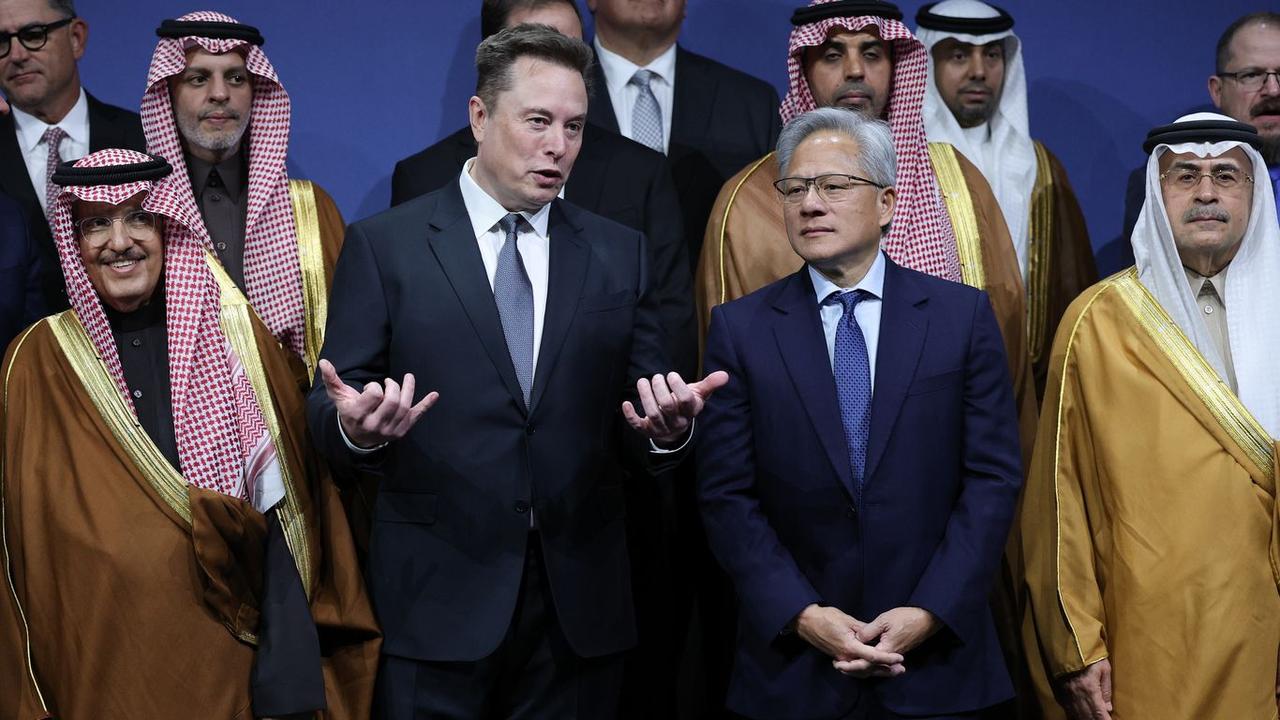
Source: Axios
AMD and Cisco are collaborating with Humain to deliver up to 1 gigawatt of AI infrastructure by 2030, while Qualcomm will establish an AI engineering center in Riyadh as part of a partnership to deploy 200 megawatts of data center capacity. Amazon Web Services will work with Humain to deploy up to 150,000 AI accelerators for an "AI Zone" in the Saudi capital
3
.Geopolitical Implications and Security Measures
The chip export approval is part of a broader strategic effort to ensure Middle Eastern countries adopt US technology rather than Chinese AI systems. Paul Triolo, partner and global AI policy lead at Albright Stonebridge Group, noted that given constraints on US energy supplies that could create bottlenecks in domestic AI data center buildouts, the Middle East has emerged as a key technology hub
3
.The Commerce Department has imposed rigorous security and reporting requirements on both companies, overseen by the Bureau of Industry and Security. These measures are designed to prevent the advanced chips from benefiting China or reaching sanctioned entities like Huawei
4
.Related Stories

Economic Diversification and Energy Advantages
Both Saudi Arabia and the UAE are leveraging these partnerships as part of broader economic diversification strategies. Saudi Arabia has targeted $40 billion in AI investments under its Vision 2030 plan, while the UAE has been backing its homegrown G42 initiative, which has shifted from Chinese partnerships to US collaborations with companies like Microsoft and OpenAI
3
.The region's significant energy capacity represents a major draw for US companies seeking to rapidly expand AI infrastructure. Greg Allen, senior advisor at the CSIS Wadhwani AI Center, emphasized that both countries are investing massively in AI and using their financial resources and ability to rapidly build electrical infrastructure to attract a major share of the booming AI data center construction market.
Ongoing Concerns and Monitoring
Despite the strategic benefits, some China hawks remain concerned about potential risks associated with these massive Middle East deals. The sensitivity of the issue is compounded by the fact that both the UAE and Saudi Arabia maintain close ties to Beijing and rely on telecommunications infrastructure built by Huawei and other Chinese firms
3
.The Trump administration's decision to approve these exports reflects a broader strategy to "promote continued American AI dominance and global technological leadership," according to the Commerce Department statement
2
. The deals follow discussions between President Trump and leaders of both countries, with conversations continuing during Crown Prince Mohammed bin Salman's recent Washington visit.References
Summarized by

Navi
[2]
Related Stories
Trump's Middle East Visit Sparks $600 Billion AI Investment Surge
14 May 2025•Business and Economy

Trump's AI Chip Deals with Gulf States Spark National Security Concerns
16 May 2025•Policy and Regulation

Saudi Arabia's $600 Billion AI Push: Nvidia and AMD Partnerships Spark Global Tech Race
14 May 2025•Technology
Recent Highlights



Recent Highlights
Today's Top Stories



Don’t drown in AI news. We cut through the noise - filtering, ranking and summarizing the most important AI news, breakthroughs and research daily. Follow topics that matter to you and stay ahead.


