AI Demand Drives RAM Prices to Record Highs as Memory Shortage Threatens Device Market in 2026


9 Sources
9 Sources
[1]
Global RAM Shortage Will Raise Smartphone Prices in 2026, Analysts Say -- But How Much?
Expertise Smartphones | Gaming | Telecom industry | Mobile semiconductors | Mobile gaming The insatiable demand for more generative AI is spiking prices in computer parts, which could roll into pricier smartphones next year. Years of cryptocurrency mining have elevated the prices of computer parts such as graphics cards. So it's not surprising to see this trend continue with the rise of generative AI and its unrelenting need for more computing power. What the consumer tech world didn't expect was an increase in demand for memory, which has led to a tight market in consumer RAM for PCs in recent months. That ripple effect has extended beyond computing to impact the smartphone industry as well. Rather than the memory sticks that slot into PC motherboards, smartphones use specialized RAM that's miniaturized to fit in handsets. However, with memory production shifting to meet the demand for massive orders from data centers that handle AI workloads, the gen AI rush is driving up prices for all types of RAM. And this isn't just a temporary mismatch in supply and demand -- it could be a permanent shift in the world's silicon wafer capacity, according to a mid-December report from the market intelligence firm International Data Corporation (IDC). Phone-makers weathered the economic turmoil of tariffs by absorbing costs, but analysts predict it'll be a different story in 2026 -- and cost increases will likely be passed on to consumers. Don't miss any of our unbiased tech content and lab-based reviews. Add CNET as a preferred Google source. "In the case of the upcoming memory crisis, this is something that will hit the market hard, especially to [phone-makers] playing in the low end where margins are extremely tight," said Nabila Popal, senior research director at market intelligence firm International Data Corporation (IDC). "Those vendors will have almost no choice but to pass the increased cost to consumers." How much more expensive will phones get next year? The low end of cheap phones will likely see the biggest fluctuations. Popal expects prices in this category to spike by at least 5-10%. That's because memory makes up 15-20% of the material costs of cheaper phones, which is a higher proportion than that of pricier premium phones (around 10-15%), according to the most recent IDC report. In response, phone-makers will shift their mix of products toward the higher end, selling more expensive handsets that have higher margins, Popal predicts. This memory crisis has been disruptive enough to alter IDC's prediction of average phone prices in 2026, swinging from a slight decline to a 2% increase. While this is likely to lead to a decline in units shipped next year, increased prices are expected to drive the overall smartphone market to a record high value of $578.9 billion, according to an IDC report released in early December. Aside from raising handset prices, the memory shortage could lead phone-makers to change course from expanding the amount of RAM in their product configurations to maintaining or even reducing it. In the third quarter of 2025, over 51% of smartphones shipped had at least 8GB of RAM or more, said Francisco Jeronimo, vice president of client devices at IDC; that number rises to nearly 93% for handsets priced at $400 or above. "In 2026, entry-level and mid-range smartphones may revert to 4GB RAM configurations to preserve price in price-sensitive markets," Jeronimo said. The 8-GB threshold is significant, as it's roughly considered a baseline requirement for running on-device generative AI features, such as Galaxy AI and photo features on the Google Pixel series. While phones can and do run hybrid and fully cloud-based gen AI services, such as ChatGPT, sending requests to and from data centers results in lag time before people receive answers to their queries, and they aren't usable when underground or beyond cell service. The memory shortage has likely stalled any plans to pack the most premium phones with memory to boost AI performance, with 24GB of RAM or higher configurations scrapped for the foreseeable future, Jeronimo predicts. The upper limit on top-tier handsets is likely to be 16GB, and "Pro" variants may even revert down to 12GB to protect margins and avoid price hikes. The extent to which these impacts are detrimental depends on the duration of the memory shortage. But the shock to consumer wallets will likely lead them to wait longer to replace their phones, especially in parts of the world where handsets are bought wholesale. In markets like the US, where phones are more commonly bought on installment plans lasting two to three years, people won't see as much of a hit to their monthly bills.
[2]
IDC warns PC market could shrink up to 9% in 2026 due to skyrocketing RAM pricing -- even moderate forecast hits 5% drop as AI-driven shortages slam into PC market
Memory shortages are expected to have a serious impact on the PC and smartphone market. The International Data Corporation (IDC) has published a new update to its device market outlook, and the message is blunt: things are getting worse. Under newly-reported pessimistic scenarios, shipments of PCs could shrink by up to 9% in 2026, with a more moderate scenario showing a 5% shrinkage in the market. These figures have been revised from a 2.5% drop, which was recently published in IDC's November forecast. Since then, the global memory shortage, which began accelerating in mid-October, has intensified beyond what IDC originally modeled. While the firm isn't formally rewriting its official forecast entirely, it's now laying out scenarios that are notably more pessimistic than what it projected just a few weeks ago. The underlying driver is the same force distorting much of the tech industry in late 2025: AI infrastructure. Memory demand from hyperscalers has surged so aggressively that DRAM and NAND production has been structurally redirected away from consumer devices and toward high-margin enterprise components like high-bandwidth memory and dense DDR5. This is an economically rational choice on the part of memory manufacturers, but IDC is clear that this isn't a typical boom-and-bust cycle; it's a strategic reallocation of silicon capacity that could persist for years, not quarters. For smartphones, the impact is real but uneven. Memory represents a meaningful share of handset bill-of-materials costs, especially in the mid-range, where margins are already thin. IDC warns that OEMs are likely to respond with higher prices, reduced specs, or both, reversing a decade-long trend of bringing flagship-class memory configurations downmarket. As a result, IDC now sees downside risk of a global smartphone market contraction in 2026 -- potentially as steep as 5% in a pessimistic scenario -- alongside an increase in average selling prices and longer replacement cycles. It's the PC market where IDC's revised outlook feels most disruptive, though. The memory shortage is colliding with two major industry forces at once: the Windows 10 end-of-life refresh cycle and the much-touted push toward "AI PCs." Vendors are already signaling broad price increases as DRAM and SSD costs climb, and IDC now estimates that PC average selling prices could rise by as much as 6-8% under a pessimistic scenario. Unit shipments, meanwhile, could decline nearly 9% year-over-year, which is a significant downgrade from November's already negative -2.4% forecast. Larger OEMs like Dell, HP, Lenovo, and ASUS are expected to weather this environment better than smaller vendors thanks to scale, inventory leverage, and long-term supply agreements. Smaller regional brands, white-box builders, and DIY system builders are far more exposed, particularly in gaming PCs, where high memory configurations are standard, and cost sensitivity is high. IDC suggests this dynamic could shift market share further toward major OEMs, even if the overall market shrinks. There's a particular irony in how this environment intersects with the industry's AI PC narrative. IDC defines an AI PC simply as a system with an NPU, but in practice, these machines also demand more RAM. Microsoft's Copilot+ requirements alone set a 16GB floor, and many premium designs are targeting 32GB or more. The problem is that memory is precisely the component becoming most scarce and expensive. Just as vendors are trying to upsell consumers on AI-branded systems, the economics of building those systems are deteriorating. Compounding that tension is the fact that the AI PC marketing push has not produced the growth vendors hoped for. User enthusiasm has been muted, and frustration with the rapid, often forced integration of AI features -- particularly in Windows 11 -- is increasingly visible. In that context, higher prices for AI PCs look less like an upgrade opportunity and more like a tax on features many buyers didn't ask for. A 9% downturn might not seem apocalyptic, but it's pretty severe. During the global financial crisis in 2009, the PC market dropped 11.9% -- the sharpest decline in history, at that time. The only worse event happened a couple of years ago in the post-pandemic period due to market saturation, and the industry is still reeling from that near 15% drop. Moreover, it's happening when the market should be booming; normally, 2026 would be a major growth year due to the Windows 10 support cliff, as well as the AI PC wave. Instead, IDC's conclusion is cautious but unmistakable: what began as an AI infrastructure boom is now reshaping consumer hardware markets in unintended ways. Memory scarcity is tightening supply, inflating prices, and forcing vendors to rethink product roadmaps at exactly the wrong moment. 2025 was already tough for the PC market, with GPUs scarce on the ground and little else to convince buyers to upgrade their perfectly serviceable machines.
[3]
Thanks AI! Smartphone Prices Could Rise by up to 8% Due to AI Chip Demand, Says Analyst
If you're interested in buying a budget-conscious, lower-end Android smartphone in 2026, particularly from value-focused manufacturers like Xiaomi or Oppo, industry analysts have some bad news. A new report from IDC predicts that the immense pressure on DRAM production, an essential ingredient in all smartphones, is set to continue in 2026. Due to the AI boom, chip production that would otherwise have gone to smartphones, PCs, or other consumer electronics is now increasingly going to fuel AI data centers. IDC thinks that smartphone average selling prices could rise by 3% to 5% in the moderate scenario, or by 6% to 8% in its pessimistic scenario. IDC thinks that the total smartphone market could contract by 2.9%, while in its pessimistic downside scenario, it could contract by as much as 5.2%. The trend is predicted to hit low-end manufacturers the hardest -- for example, vendors such as TCL, Transsion, Realme, Xiaomi, Lenovo, Oppo, Vivo, Honor, or Huawei. As these vendors generally operate with fairly low margins, IDC believes they will have "no choice" but to pass the costs on to consumers. Meanwhile, if you're more interested in opting for a higher-end smartphone such as an Apple or Samsung model, you may be somewhat insulated against the negative impacts of the AI chip boom. IDC notes that Apple and Samsung have large cash reserves and long-term supply agreements that will allow them to secure their memory supply 12 to 24 months in advance. On the other hand, both smartphone giants will likely hold off from giving their new flagship models RAM upgrades in 2026, opting to stick to 12GB for their Pro models rather than increasing to 16GB. In addition, IDC thinks the current flagship Apple and Samsung models will fail to see previous levels of price erosion after the introduction of the new-generation models. The AI chip demand boom is predicted to spare few victims in the consumer technology space, with the PC market also set to be hit hard. IDC thinks that PC average selling prices may rise by 4% to 6% in its moderate scenario, and by up to 6% to 8% in its pessimistic scenario. The largest vendors, with the highest overall sales, are likely to be the best insulated from rising RAM prices, while smaller, regional "white box" vendors are likely to be hit the hardest. Console gamers are also set to feel the negative impacts of the AI boom. Nintendo-focused analysts predicted earlier this month that spiraling DRAM prices could mean high production costs for Switch 2 cartridges will continue to limit which games see a fully physical release.
[4]
AI demand pushes 4TB DDR5 RAM prices to Porsche and Range Rover levels
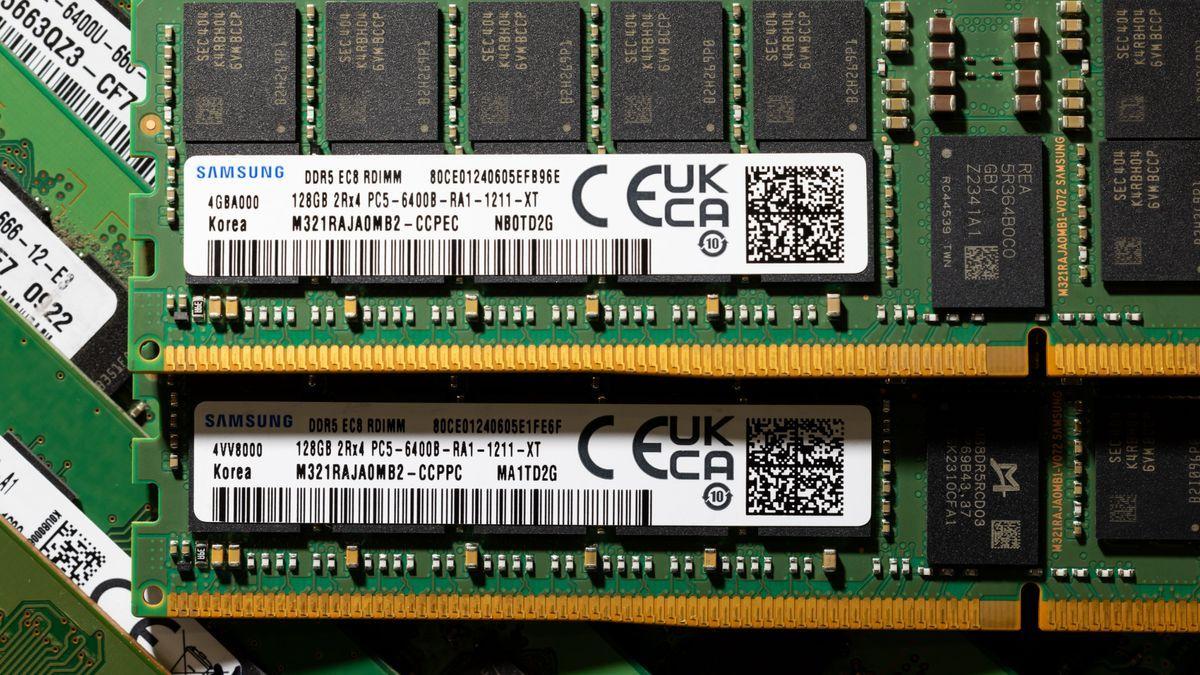
Serving tech enthusiasts for over 25 years. TechSpot means tech analysis and advice you can trust. WTF?! DRAM prices have seen a steep rise in recent months, primarily driven by surging demand for high-bandwidth memory from AI data centers. The situation has gotten so bad that some high-end server memory kits now cost more than luxury SUVs and sports cars. Nemix, an American company supplying memory and storage devices to US government agencies and contractors, has listed a 4TB DDR5 PC5-51200 memory kit on its website for an eye-popping $77,000. The kit comprises 16 modules of 256 GB ECC RDIMMs running at 6400 MT/s with a CAS latency of 52. The same memory modules are listed on Amazon in multiple configurations, starting at $99 for a single 64GB DIMM. At the high end, the 2TB kit is listed for a whopping $38,999. It includes eight 256GB modules with the exact same specifications as the 4TB and 64GB kits. Another 2TB kit, in 8 x 128GB configuration, is listed at $45,999. For perspective, the insane prices for the memory kits are higher than what you'd pay for the Porsche 718 Cayman or the Range Rover Evoque, which start at around $75,000 and $49,000, respectively. Even the Defender 110 costs around $64,000 in the base trim before dealer-level discounts and incentives. The Nemix memory kits cited above are designed for ultra-high-end servers, so they're probably not the best yardsticks to judge consumer RAM prices. However, according to the reliable Amazon price tracker CamelCamelCamel, the 2TB kit on Amazon was listed at $32,997.49 on November 30, meaning it surged around 20 percent in less than a month. It is worth noting that the current crisis primarily affects DDR5 memory, with DDR4 modules still available at relatively more affordable prices. For example, a Nemix 2TB (8 x 256GB) DDR4 kit is listed for $13,468 on Amazon, while a single 256GB module is priced at $1,698. The AI boom has driven DRAM prices to record highs this year, and with PC OEMs and system builders panic-buying memory, the trend is expected to continue well into 2027. According to a recent study by IDC, PC and smartphone prices could jump around 8 percent next year if the shortages continue.
[5]

Why you need to buy your next PC right now (before prices explode in 2026)
Ever since he got his first smartphone, the legendary Nokia 6600, back in 2005, Goran became obsessed with technology. This obsession had only gotten worse after he received his first gaming PC a couple of months later. He fell in love with video games in the early '90s, shortly after embarking on his gaming journey with the Sega Master System II and SNES. Since then, he has built dozens of PCs, played thousands of games, and authored hundreds of articles about PC hardware, gaming hardware, and video games. He knows everything there is to know about the PC gaming and PC hardware space, and while his console gaming knowledge isn't as comprehensive, he considers himself a console veteran. Goran has almost a decade of experience writing about tech and video games for numerous web publications including TechSpot, TechPowerUp, and EsportsHeadlines. He has been writing for How-To Geek since December 2022. When he isn't gaming or deciding which component of his PC to upgrade next, you can find him strolling around Novi Sad while listening to music and contemplating what to play next. If you're thinking about buying a new laptop or desktop, a GPU, a phone, or building a PC, I recommend doing it sooner rather than later. Thanks to AI, the price of memory has spiked, and it's only a matter of time before every device that packs a lot of memory (or storage) is affected. HTG Wrapped 2025: 24 days of tech 24 days of our favorite hardware, gadgets, and tech Posts 4 By Will Verduzco The RAM-pocalypse is upon us Every AI company, from OpenAI to Google, Amazon, and Meta, is racing to build as many AI data centers as possible. These data centers are packing tons of GPUs, but they also need mountains of memory and storage. This has skyrocketed global demand for memory (RAM) and storage (mostly SSDs), sending RAM prices into the stratosphere and triggering a global memory shortage. If OpenAI alone could soon devour up to 40% of global DRAM output, things get much worse when you factor other AI companies into the equation. Unfortunately, there are only a handful of companies -- Samsung, SK hynix, and Micron -- that manufacture chips used in RAM sticks and SSDs, and they can't shell out enough chips to satisfy demand. The catch is that they don't plan to ramp up RAM nor storage production anytime soon, and even when they do, we shouldn't expect a massive supply increase. This paints a pretty bleak picture for the next year. If the demand doesn't deflate soon, RAM prices will remain astronomical, and could even get higher. SSDs are mostly fine, for now, but the RAM-pocalypse is slowly spilling over to storage. As DRAM chips bring in more cash, manufacturers are shifting their production lines toward increased memory-chip output while winding down the manufacture of NAND chips used in SSDs. While it's now too late to buy RAM at anything resembling a normal price, you should buy an SSD as soon as possible if you need more storage. Every device that packs memory and storage will likely be affected Now, the problem is that a ton of electronic devices pack a lot of memory and storage. From laptop and desktop PCs, to GPUs, to gaming consoles, to handheld PCs, to phones and tablets. Since prices are rising across the board, the regular consumer in the market for RAM or storage isn't the only one affected. Due to being outbid by AI behemoths, major laptop and prebuilt PC vendors are planning to raise prices soon. Dell has already announced that it will increase the prices for business customers by up to 30%, and Lenovo is likely to follow in early 2026. HP will either adjust prices or reduce the amount of memory in its laptops, or both. ASUS and Acer both plan to pass the burden to consumers, and multiple system integrators, including MAINGEAR and CyberPowerPC, have already hiked prices of their prebuilt desktop PCs. Graphics card prices had finally reached normal levels, but then AMD raised prices of its GPUs, and now there are rumors that NVIDIA will reduce the production of its RTX 5000 GPUs in 2026 by up to 40% due to memory shortages. It looks like the GPU market's waters are churning again; we can expect further price hikes stemming from memory shortages and a reduced supply of consumer GPUs to hit sometime in 2026. Phones and tablets won't be spared either. Not only will 2026 phone models (as well as laptops) come with less memory, especially budget models, but they will also be up to 10% more expensive to produce. As always, the regular people will likely be the ones to foot the bill. Oh, I almost forgot about gaming consoles. The Nintendo Switch 2 RAM prices have risen by more than 40%, while the console's storage has increased by 8%, leading to a massive drop in Nintendo shares. At the moment, Nintendo doesn't plan to increase prices, but if this trend continues, the Switch 2 might get more expensive in 2026. Sony and Microsoft expect memory alone to account for more than 35% of the bill of materials for their consoles, which could lead to price increases for the PS5, PS5 Pro, and Xbox Series X and S. This doesn't bode well for Microsoft, since the company has increased the price of the Xbox Series consoles multiple times during 2025. Related Skyrocketing RAM prices were just the beginning -- these 3 PC components are next Is now the last chance to upgrade your PC? Posts 3 By Monica J. White The prices won't stabilize anytime soon The worst part of the RAM-pocalypse is that it likely will not end anytime soon. SK Hynix, one of the three major memory and storage chip manufacturers, forecasts that RAM shortages will not ease up until 2028. Micron shuttering its consumer memory and storage brand, Crucial, so the company can fully focus on business customers, is another bleak sign. It shows that we, the regular consumers, aren't the primary -- or even secondary -- market for storage and memory manufacturers. AI companies come first, large businesses are served second, while the consumer market has to settle for the leftovers. How-To Geek Report Unlock your tech-savvy potential and master the digital world with How-To Geek. Subscribe How-To Geek Report Unlock your tech-savvy potential and master the digital world with How-To Geek. Subscribe By subscribing, you agree to receive newsletter and marketing emails, and accept Valnet's Terms of Use and Privacy Policy. You can unsubscribe anytime. Even when memory and storage production finally ramps up, AI firms and other business clients will continue having precedence over the consumer market. In other words, even after the global memory and storage supply stabilizes, whenever that may be, there's a good chance that prices won't ever return to pre-RAM-pocalypse levels. Buy that device or component as soon as possible What I'm trying to say is that you should buy the device you're eyeing sooner rather than later. Whether it's a laptop, a prebuilt desktop, a GPU, a tablet, or a phone, you should snag it as soon as possible, because next year you might not only pay more for it, but also end up with less RAM or storage, or both. When it comes to PC building, the current situation is especially ironic. While now's the best time to purchase most PC components, RAM is so darn expensive that it can devour all the savings you might score on other components -- and then some -- and GPU prices could soon soar for the nth time since 2017, this time due to memory crunch and reduced production. If you really need a new desktop PC, build it as soon as possible. The RAM-pocalypse won't end anytime soon, and memory prices will likely continue the upward trend well into 2026. While now is a pretty bad time to build a PC, tomorrow will be worse.
[6]

Memory loss: As AI gobbles up chips, prices for devices may rise
Idaho-based Micron Technology is one of the world's top makers of RAM chips and it's benefited from increase demand. Charlie Litchfield/ASSOCIATED PRESS/FR164915AP hide caption The world has a memory problem, thanks to artificial intelligence. The explosion in AI-related cloud computing and data centers has led to so much demand for certain types of memory chips that now there's a shortage. The imbalance is expected to start affecting prices of all sorts of products powered by technology. "I keep telling everybody that if you want a device, you buy it now," said Avril Wu, a senior research vice president at TrendForce, a Taiwan-based consultancy that tracks markets for computer components. "I myself bought an iPhone 17 already," The chips are known as RAM, or random access memory, and are crucial to making sure that things like smartphones, computers and game consoles run smoothly. Chips allow you to keep multiple tabs open in browsers, for instance, or watch videos without them being choppy. Wu said TrendForce's data indicates that demand for RAM chips exceeds supply by 10% - and it's growing so fast that manufacturers are having to shell out a lot more to buy them each month. Wu said this quarter alone, they're paying 50% more than the previous quarter for the most common type of RAM, known as DRAM - dynamic random access memory. And if producers want the chips sooner, they're paying two to three times more. Wu expects DRAM prices to rise another 40% in the coming quarter, and she doesn't expect the prices to go down in 2026. AI data centers require huge amounts of memory to accompany their cutting-edge graphics processing unit (GPU) microprocessors that train and operate AI models. "AI workloads are built around memory," said Sanchit Vir Gogia, CEO of the tech advisory firm Greyhound Research. What's more, AI companies are spending billions of dollars constructing data centers at warp speed around the world. It's the reason why Gogia says the demand for these chips isn't just a cyclical blip. "AI has changed the nature of demand itself," he said. "Training and inference systems require large, persistent memory footprints, extreme bandwidth, and tight proximity to compute. You cannot dial this down without breaking performance." Idaho-based Micron Technology is one of the world's top makers of RAM and it's benefited from this increase in demand. It reported better-than-expected quarterly earnings last week on the back of higher memory chip prices. CEO Sanjay Mehrotra said the company expected the market to remain strong, as the AI boom continues apace. "We believe that the aggregate industry supply will remain substantially short of the demand for the foreseeable future," he said on a webcast after the earnings report. Chipmakers like Micron have shifted production to meet as much of the lucrative AI-related demand for high-end memory as they can, according to analysts. That translates into fewer chips for other segments of the market - personal computers, mobile phones, games and consumer products like TVs. And that means higher costs. Dell Technologies Chief Operating Officer Jeff Clarke noted the higher costs on an earnings call on Nov. 25. For PC's, he said "I don't see how this will certainly not make its way into the customer base." Analysts say there is no short-term fix. Tech consultant Wu said the memory chip industry faces a significant bottleneck. By the end of 2026, she said, chip makers will have maxed out how much they can expand production in their current facilities. She said the next new factory expected to come online is being built by Micron in Idaho. The company says it will be operational in 2027. Expect suppliers to keep raising prices for the foreseeable future, Wu said.
[7]

Framework raises DDR5 RAM prices again with per GB price hike
Case in point: modular PC maker Framework just announced yet another price hike on DDR5 RAM components. Framework says that it's charging customers "as close as possible to the actual purchase prices we have with our suppliers," and that it will now be charging roughly $10 per gigabyte. Why? Demand for memory hardware, as a result of the AI boom, has led to a global memory shortage, which has in turn forced companies like Framework to raise their prices. Earlier this month, we reported that Samsung had warned its manufacturing partners that it was doubling prices on DDRM RAM, and laptop makers like Lenovo, Dell, and HP have all warned of looming price increases in the new year. The most recent price hike from Framework adds $10 per GB for the 8GB, 16GB, and 32GB options, with prices going up even higher for RAM modules 48GB and up. And, again, this is yet another price increase on top of previous "price adjustments." The Verge provided some examples of Framework's new memory pricing, with 8GB of RAM increasing from $60 to $80. Consumers will now pay $160 for the 16GB option instead of the previous price of $120. And 32GB of RAM now costs $320, up from $240. The price increase really becomes substantial when you get to the larger memory options. In June, for example, 48GB of RAM cost $240. Now? A whopping $620. And, as Framework itself says, it doesn't look like the memory shortage is getting better next year. "All indications we've received from suppliers is that prices will continue to increase going into early 2026," the company wrote in a blog post on its website. "We have absorbed and continue to absorb some of the price increases to be able to offer this new pricing, but it is very likely we'll need to adjust module prices again within the next month." In fact, without a major disruption, the AI industry will continue to affect the global memory supply well into 2027. Unfortunately for laptop and smartphone shoppers, in many cases, these memory-related price increases follow inflation and tariff-related price hikes from earlier in 2025.
[8]

Memory Crisis & RAM Shortages - Here's Everything You Need to Know About the New Trouble For Gamers, Courtesy of AI
PC manufacturers are now struggling to keep up with consumer RAM requirements 2025 was appearing to end on a promising note for the PC industry, given that we saw decent progress across all segments, such as CPUs and GPUs. However, as Q4 approached, significant trouble began to emerge for gamers. This time, the AI frenzy brought it in, and we'll discuss how ahead; but for now, it's essential to realize that the industry is undergoing a 'DRAM supercycle,' which appears to be gobbling up consumer memory, and bringing large-scale shortages. The AI sector is in dire need of compute power, and with that, manufacturers like NVIDIA and AMD are giving their all to ensure that demand is fulfilled. One way to achieve this is by advancing architectures, which is why AI chip manufacturers are operating on an annual product cadence. Interestingly, out of all the elements of a chip that are being upgraded with each iteration, such as process node, chip layout, and designs, HBM (high-bandwidth memory) has played a significant role. To develop frontier models like GPT-5.2, workloads need a place to store model weights, and for that, HBM is required. Now, the reason we mention HBM here is that it has been the dominant source of DRAM consumption over the past few months. According to estimates, producing 1 bit of HBM consumes approximately 300% (3 times) the wafer capacity required to produce 1 bit of DDR5. And, unlike DDR5, HBM comes with lower yields since it requires complex packaging, which means that more DRAM wafers would be needed to produce HBM modules at a comparable rate to consumer memory. Chip manufacturers cannot ignore the importance of HBM modules, which is why development around the technology has been consistent, with iterations over the years, from HBM3 to HBM3E, and now to next-generation HBM4/4E. More importantly, for suppliers like Samsung and SK hynix, it is actually more profitable to have their production lines dedicated towards AI customers, given that contract prices of HBM are soaring rapidly, and producers are in dire need of capitalizing on the demand. Apart from just HBM, data centers also require other DRAM products, such as DDR5 RDIMMs for server CPUs and MCRDIMMs/MRDIMMs to address the memory bandwidth bottleneck. And, given the scale of data center development, the demand for DRAM has grown significantly, to the point that it is reported that AI will consume 20% of the total DRAM production in 2026, and this figure could even increase further, given the scale of AI buildout. Given how significantly constrained DRAM production lines are, PC manufacturers are struggling to secure capacity, which is ultimately forcing them to take drastic measures. Vendors like Lenovo have previously relied on their DRAM inventory to sustain market pricing; however, given that shortages are expected to continue for several quarters ahead, manufacturers have no choice but to raise product prices. One of the largest PC suppliers, Dell, was reported to be planning a price hike, which could increase the cost of hardware by hundreds of dollars in the future. Interestingly, for consumers opting for higher memory configurations, this would now require a significant price increase. Here were the price increases that were reported across a variety of products: Similarly, companies like ASUS and Acer were also reported to be bumping up PC pricing to cope with memory shortages, and according to Acer's Chairman, Jason Chen, the BoM (Bill of Materials) for several products within Acer's portfolio has risen dramatically, leaving no choice but to increase prices to ensure consistent supply. Small-scale manufacturers like Framework are also looking to increase the cost of upgrading RAM on existing configurations, indicating a widespread "price hike" wave approaching gamers. We managed to speak with one of the largest system integrators, MAINGEAR, about how memory shortages are affecting the supply chain. According to CEO Wallace Santos, consumers shouldn't wait for their PC upgrades, as the situation is expected to deteriorate further in 2026. Here's what he specifically disclosed: We've already seen DRAM prices skyrocket due to the shortages and are holding off those price changes for our customers as long as we can. For consumers that are interested in getting a new PC or upgrading their current system's GPU, SSD or RAM, they should consider shopping now and looking for offerings that have not seen price increases yet. Estimates from market researcher IDC also indicate that memory prices will be a significant concern for the PC industry, which is why shipments are expected to decline by 4.9% in the coming year. As for PC manufacturers, they are left with three of the following options on how to deal with memory shortages: The situation is becoming increasingly tense for manufacturers, and since DRAM shortages aren't expected to improve in the near future, we can only expect trouble for gamers moving forward. This is probably the most essential part of this coverage, which discusses how PC gamers should react to the ongoing shortages. The first and foremost strategy to adopt is not to succumb to 'FOMO' when purchasing RAM, especially if you are currently upgrading your existing RAM capacity. Gamers currently utilizing 8 GB or 16 GB memory modules should stick with them for a few months until we navigate our way out of these shortages. Jumping on RAM upgrades at this point would mean 'splurging extra' on upgrades that could wait. While this might sound unusual, purchasing a pre-built PC might be the best option right now if you are looking for a complete system, as they are currently retailing for prices that haven't factored in memory shortages. Large-scale OEMs will offer attractive pre-built PCs, which will come with decent RAM configurations, and that could be one of the options gamers could consider if building a custom PC isn't a priority. If the above options don't sound like something for you, another route could be looking towards the used DDR5/DDR4 memory markets, since, unlike GPUs, RAM sticks are much more durable, and it's pretty hard to sell counterfeit modules, unless, of course, you don't test them out. In this way, you could probably negotiate for a price that is an improvement from what's available in the retail markets, but expecting to get a bargain would be difficult, given how mainstream the topic 'memory shortage' has become. Estimates suggest that the memory shortages could persist until 2027 or even 2028, but current predictions are uncertain due to the fluctuating supply chain dynamics. Suppliers like SK hynix are scrambling to increase production capacities, yet building new facilities could take years to have a meaningful effect. This hub page will serve as your go-to source for information about the memory situation. As we conclude, it's essential to stay informed and united in such challenging times, and to understand how the PC market is reacting to the DRAM shortages, to make the wisest purchasing decisions.
[9]

Your next phone could cost 40% more with half the RAM, thanks to AI boom
Have you ever come across a post on social media where people rant about the drastic increase in prices of consumer RAM and SSD storage? It's not just noise; the numbers back it up. Take the CORSAIR Vengeance RGB PRO SL DDR4 32GB kit, for instance, in the US. For the first half of 2025, this RAM sat comfortably around USD 70 (Rs. 6,270 approx.), but as stock dried up in Q4, prices skyrocketed to USD 218 (Rs. 19,525 approx.) by December. That represents a staggering 211% surge in just six months, meaning builders are now paying triple for the exact same hardware they could have bought in July. Memory isn't a luxury component; it's the backbone of every modern computing device, including mobile devices and AI compute units. The same RAM and storage chips inside your PC or smartphone decide how smoothly apps load, how long tasks stay in memory, and how well your device multitasks. And because of these price hikes due to increased demand for storage, there's a high chance that your next smartphone/laptop will likely cost more and deliver less. The memory chip has become the silent casualty of artificial intelligence's relentless appetite for computing power. As we get used to integrating AI into everyday tasks, and as most companies like Google and Perplexity offer their best AI products completely free for a limited time, this shift has become inevitable. However, all of this comes at a cost that is now indirectly taking shape. Welcome to the memory crisis of 2025, where the AI revolution eating through data centers is now devouring your wallet. Behind every ChatGPT query and every AI image generation lies an insatiable hunger for high-bandwidth memory (HBM). HBM uses 3D-stacking technology to layer multiple DRAM dies on top of each other, used primarily in high-performance computing (HPC), artificial intelligence (AI) accelerators, and advanced graphics cards. Memory manufacturers, like SK Hynix and Micron, have made a calculated pivot away from consumer products, and the numbers are staggering. By the end of 2024, the DRAM industry allocated approximately 250,000 wafers per month, representing 14% of total capacity, to HBM production, a dramatic surge from just 93,000 wafers monthly at the end of 2023. According to TrendForce, HBM's revenue share within DRAM skyrocketed from 8.4% in 2023 to 20.1% by late 2024. SK Hynix leads this transformation with HBM production capacity exploding from 30,000 wafers annually in 2023 to a targeted 170,000 wafers in 2025. Samsung has ramped to approximately 150,000 wafers per month by the end of 2025, while Micron tripled its capacity from 20,000 to 65,000 wafers monthly. The economics are irresistible for manufacturers: HBM commands premium prices and profit margins that dwarf traditional DDR5 chips. Micron made this strategy explicit in December 2025 by announcing it would exit the consumer memory business entirely under its Crucial brand. The consequences hit consumers with brutal force. In the United States, contract prices for 16GB DDR5 chips skyrocketed nearly 300% in Q4 alone, while retail kits like the Team T-Force Vulcan surged from $82 to $310. This financial devastation isn't limited to the US or the newest DDR5 standard. Remember the CORSAIR Vengeance RGB PRO SL from our introduction? Indian consumers are facing an identical nightmare. In May 2025, that same kit cost around Rs. 10,750 (USD 120 approx.). By December, it had nearly tripled to a staggering Rs. 29,796 (USD 332 approx.), mirroring the broader Indian market, where even standard 16GB DDR5 modules climbed from Rs. 4,000 to over Rs. 12,500. Major PC manufacturers didn't absorb these costs; they passed them directly to consumers. Dell announced 15-20% price increases starting mid-December 2025 across its entire lineup. Lenovo notified customers that all current prices would expire on January 1, 2026, citing memory shortage and AI growth. Smartphones face an even more insidious problem: shrinkflation. Counterpoint Research projects smartphone average selling prices will jump 6.9% in 2026, while memory prices could rise another 40% through Q2 2026. Counterpoint Research says, DRAM price surges have already increased low-, mid- and high-end smartphone BoM costs by around 25%, 15% and 10%, respectively. We are expecting further cost impacts in the 10%-15% range through Q2 2026. But here's the twist: you'll pay more for less. TrendForce reports low-end phones will revert to just 4GB RAM in 2026, down from the 6-8GB standard. The number of phone models offering 12GB RAM has dropped approximately 40%, while 8GB models declined around 50%. Budget phones face material cost increases of 20-30%, with the bill of materials (BOM) potentially rising 8-15% above current levels by mid-2026. Industry forecasts offer zero comfort. SK Hynix predicts the memory shortage will persist through late 2027, while Micron CEO Sanjay Mehrotra expects tight memory markets past 2026. OpenAI's Stargate project alone is projected to require up to 900,000 DRAM wafers monthly by 2029, approximately double the current global monthly HBM output. Building new production capacity requires a minimum of two years, meaning relief won't arrive until 2027 or 2028. For consumers, the message is clear: budget significantly more for any tech purchase in 2026. The AI boom reshaping data centers isn't just a tech industry story; it's reaching into your pocket, one memory chip at a time. Views from Fissal Oubida, General Manager of Lexar, a leading memory solution provider,
Share
Share
Copy Link
The AI infrastructure boom is creating a global RAM shortage that could reshape consumer electronics markets in 2026. IDC warns that smartphone prices may spike 5-10% for budget models, while the PC market faces a potential 9% contraction. Memory manufacturers are redirecting production from consumer devices to high-margin AI data center components, creating a supply crisis that analysts say could persist for years.
AI Infrastructure Boom Triggers Global Memory Crisis
The relentless expansion of AI data centers is creating a memory shortage that threatens to disrupt consumer electronics markets throughout 2026 and beyond. As companies like OpenAI, Google, Amazon, and Meta race to build AI infrastructure, their insatiable AI demand for DRAM and high-bandwidth memory is redirecting silicon wafer capacity away from consumer devices
1
2
. The International Data Corporation (IDC) warns this isn't a typical boom-and-bust cycle but rather a strategic reallocation that could persist for years, fundamentally altering the economics of smartphones, PCs, and other consumer electronics2
.
Source: Wccftech
Memory manufacturers Samsung, SK hynix, and Micron are prioritizing high-margin enterprise components over consumer-grade memory, creating a supply crunch that has already pushed some server memory kits to astronomical prices. A 4TB DDR5 memory kit now costs $77,000, more than a Porsche 718 Cayman, while prices for 2TB configurations have surged 20% in less than a month
4
. This diversion of chips to AI data centers represents an economically rational choice for manufacturers but creates severe downstream consequences for device makers and consumers.
Source: How-To Geek
Smartphone Price Increase Hits Budget Models Hardest
The global RAM shortage is poised to drive significant smartphone price increases in 2026, with budget devices bearing the brunt of the impact. IDC predicts that entry-level phones could see prices spike by at least 5-10%, as memory comprises 15-20% of material costs for cheaper handsets compared to 10-15% for premium models
1
. Value-focused manufacturers like Xiaomi, Oppo, Realme, and TCL, which operate with thin margins, will have "no choice" but to pass increased costs to consumers, according to Nabila Popal, senior research director at IDC3
.
Source: PC Magazine
In moderate scenarios, average selling prices could rise 3-5%, while pessimistic forecasts suggest increases of 6-8%
3
. This memory shortage has already altered IDC's 2026 predictions, swinging from a slight decline to a 2% increase in average phone prices. Despite potential unit shipment declines, the overall smartphone market is expected to reach a record high value of $578.9 billion due to higher prices1
. The crisis may also force manufacturers to reduce RAM configurations, with entry-level and mid-range devices potentially reverting to 4GB from the current standard of 8GB or more1
.PC Market Decline Threatens Industry Recovery
The PC market faces even more severe disruption, with IDC warning of a potential 9% contraction in shipments during 2026 under pessimistic scenarios, while moderate forecasts project a 5% decline
2
. This represents a dramatic revision from November's forecast of a 2.5% drop, as skyrocketing RAM pricing accelerated beyond initial projections. The timing is particularly problematic, as the memory crisis coincides with the Windows 10 end-of-life refresh cycle and the industry's push toward AI PCs, which should have driven growth rather than contraction2
.Dell has already announced price increases of up to 30% for business customers, with Lenovo expected to follow in early 2026
5
. HP is considering either adjusting prices or reducing memory in its laptops, while ASUS and Acer plan to pass costs to consumers. System integrators including MAINGEAR and CyberPowerPC have already raised prices on prebuilt desktop PCs5
. Higher PC average selling prices could rise 4-6% in moderate scenarios and 6-8% in pessimistic ones, with larger OEMs like Dell, HP, Lenovo, and ASUS better positioned to weather the storm than smaller regional vendors and white-box builders2
.Related Stories

AI Chip Demand Creates Paradox for AI PCs
The AI infrastructure boom has created a bitter irony for the consumer technology industry. Just as vendors attempt to upsell consumers on AI PCs featuring neural processing units and enhanced capabilities, the economics of building these systems are deteriorating rapidly
2
. Microsoft's Copilot+ requirements set a 16GB memory floor, with many premium designs targeting 32GB or more, but memory is precisely the component becoming most scarce and expensive. User enthusiasm for AI-branded systems has been muted, and frustration with forced integration of AI features in Windows 11 is increasingly visible, making higher prices look less like an upgrade opportunity and more like an unwanted tax2
.The 8GB RAM threshold is particularly significant for smartphones, as it's considered the baseline requirement for running on-device generative AI features like Galaxy AI and Google Pixel photo capabilities
1
. Premium flagship phones from Apple and Samsung are unlikely to receive RAM upgrades in 2026, with manufacturers scrapping plans for 24GB configurations and limiting top-tier handsets to 16GB, while Pro variants may revert to 12GB to protect margins1
3
. Apple and Samsung's large cash reserves and long-term supply agreements provide some insulation, allowing them to secure memory supply 12 to 24 months in advance, though they won't escape unscathed3
.References
Summarized by

Navi
[3]
Related Stories
AI Demand Triggers Component Shortage as Dell and Lenovo Plan 15% Price Increases for Servers
03 Dec 2025•Business and Economy

AI Demand Drives Memory Prices to Record Highs, Impacting Consumer Tech Market
31 Oct 2025•Business and Economy

AI Demand Triggers Memory Crisis: DRAM Prices Surge 50% as Supply Chain Buckles
23 Oct 2025•Business and Economy
Recent Highlights



Recent Highlights
Today's Top Stories



Your Daily Dose of Curated AI News
Don’t drown in AI news. We cut through the noise - filtering, ranking and summarizing the most important AI news, breakthroughs and research daily. Spend less time searching for the latest in AI and get straight to action.

