DRAM Shortage Fueled by AI Boom Sends Laptop Prices Soaring Through 2028


7 Sources
[1]
How Will the Tech Industry Handle the DRAM Shortage?
SK Hynix's 12-layer HBM4 memory chips on display at the SK AI Summit in Seoul, South Korea, on 3 November 2025. If it feels these days as if everything in technology is about AI, that's because it is. And nowhere is that more true than in the market for computer memory. Demand, and profitability,
[2]
RAM Shortage and Higher Laptop Prices Not Expected to End This Year (or Next)
The AI boom has led to a shortage of PC memory, as AI companies gobble up RAM and storage to power the thousands of servers in their growing number of data centers. This increased demand has resulted in a sharp spike in the price of RAM as memory-chip makers shift their manufacturing toward more
[3]
Ugh: Framework Needs to Raise Prices Again, Blames Memory Shortage
In a distressing sign for PC buyers, the AI-driven memory shortage is forcing Framework Computer to raise prices again, weeks after the vendor rolled out an initial set of price hikes. The upgradable laptop maker has posted new prices for its DDR5 RAM, which is now $780 for 64GB of memory, a major
[4]
Memory makers are set to earn $551 billion from the AI boom, twice as much as contract chip manufacturers -- forecasts suggest that 2026 revenue will skyrocket thanks to data center demand
The artificial intelligence supercycle is reshaping the semiconductor and electronics industries, as the scale of the AI infrastructure buildout strains the entire supply chain. While developers of AI accelerators like Nvidia are cashing in on the AI boom, it's memory makers that will earn the most
[5]
Inside RAMaggedon: Why Laptop Prices Will Continue to Surge in 2026
If you've been on the hunt for a new laptop, you may have experienced sticker shock. Over the last couple of months, I've seen prices for PC main system memory -- formally known as random-access memory, or RAM -- spiral out of control. With modules of DDR5 RAM (the latest standard) skyrocketing,
[6]

'Someone asked me today how long the DRAM supply shortage would last...I may need to revise that answer': analyst predicts bleak future for RAM crisis
As AI companies consume ever more RAM and memory, the knock-on effects mean companies across the tech world are, or will, struggle to get RAM for their devices. Up until now, it's been predicted that the shortages could last through 2028. That year came from interviews with the CEOs of Micron and
[7]

The three big players in computer memory are all building new factories but it probably won't help DRAM prices until 2028, if then
Micron, SK Hynix and Samsung are all tooling up, but don't expect PC memory prices to improve for years to come. The three biggest players in computer memory are all tooling up major new factories, but the main impact of that won't come until 2028 and even then it may not be enough to normalise
Share
Copy Link
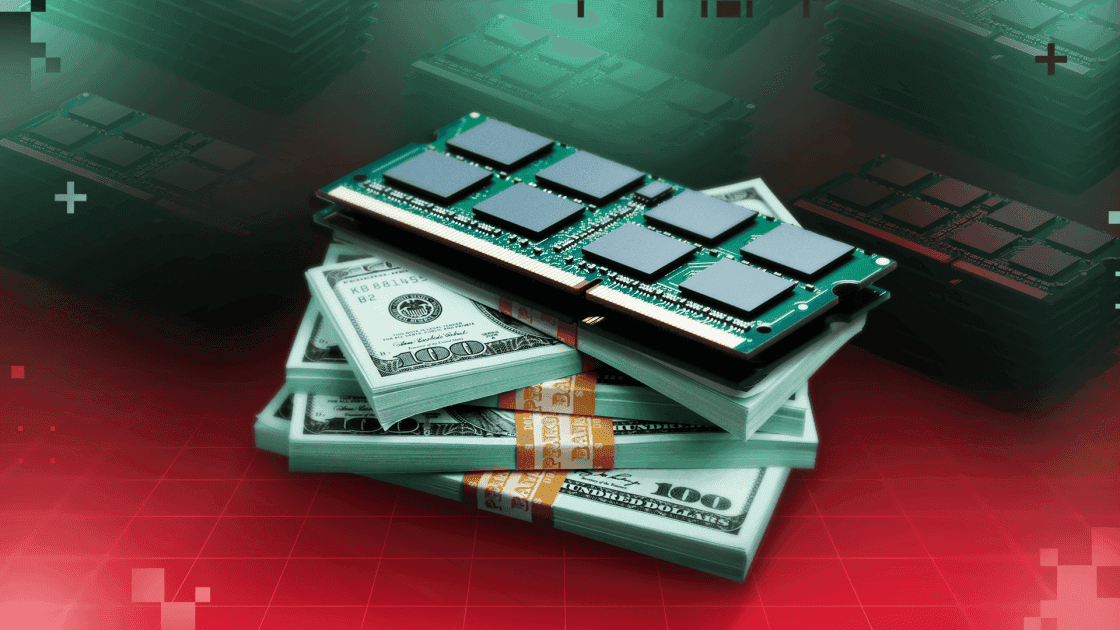
The AI boom has created a severe DRAM shortage, pushing memory prices up 80-90% in early 2026. Memory-chip makers like Micron, Samsung, and SK Hynix are shifting production to high-bandwidth memory for AI data centers, leaving consumer-grade memory scarce. Major laptop makers including Dell and Lenovo are raising prices 15-30%, with Intel's CEO warning there's no relief until 2028.
AI Data Center Demand Creates Unprecedented Memory Crisis
The AI boom has collided with the semiconductor industry's cyclical nature to create what some are calling "RAMageddon" — a DRAM shortage that's reshaping the entire consumer electronics landscape
5
. According to Counterpoint Research, DRAM prices have surged 80-90% in the first quarter of 2026 alone1
. The AI-driven memory shortage stems from massive infrastructure buildouts, with nearly 2,000 new data centers either planned or under construction globally1
. This unprecedented scale of AI data center demand is consuming approximately 70% of global memory hardware production this year, according to TrendForce5
. The largest AI hardware companies have secured their chips through 2028, leaving everyone else scrambling for scarce supply1
.
Source: PC Magazine
High-Bandwidth Memory Diverts Production From Consumer Markets
The primary culprit behind the supply crunch is high-bandwidth memory (HBM), a sophisticated 3D chip packaging technology that stacks as many as 12 thinned-down DRAM dies vertically
1
. Memory-chip makers including Micron, Samsung, and SK Hynix are aggressively shifting their fabs toward HBM and server-grade DDR5 production to meet AI accelerator demands5
. SemiAnalysis estimates that HBM costs three times as much as other memory types and constitutes 50% or more of packaged GPU costs1
. This shift in production capacity has devastated consumer-grade memory components availability. Micron has even stopped shipping its Crucial brand of DRAM entirely by the end of this month to "improve supply and support for our larger, strategic customers in faster-growing segments"2
. The spot price of a 16 Gb DDR5 chip now averages $38, compared to just $4.75 one year ago4
.
Source: IEEE
Laptop Prices Face Multi-Year Increases Across All Brands
Major laptop manufacturers are implementing significant price increases to offset the surge in DRAM prices. Dell will raise computer prices by 15-20%, while Lenovo has confirmed price increases for this year
2
. Framework Computer has been forced to raise prices twice in recent months, with DDR5 RAM now costing $780 for 64GB, up from $320 in November3
. The company's Framework Desktop base model now starts at $1,209, up from $1,099 originally3
. At a Cisco conference, Intel CEO Lip-Bu Tan warned, "There's no relief until 2028"2
. Framework CEO Nirav Patel echoed this timeline, indicating the shortage could persist for two years since increased memory chip die production might not catch up to demand until late 2027 and into 20283
.
Source: CNET
Related Stories

Supply Chain Constraints Extend Beyond DRAM to Graphics Cards and Storage
The memory crisis extends beyond DDR5 to affect graphics cards, SSDs, and older memory standards. Graphics cards rely on dedicated GDDR6 and GDDR7 video memory, which has seen costs per gigabit more than triple in the last six months
5
. NAND wafer prices have climbed as much as 60% month-over-month, according to Procurement Pro5
. The semiconductor industry research firm TrendForce projects that memory makers will earn $551 billion in 2026, more than twice the $218.7 billion expected for contract chip manufacturers4
. This reflects a 134% surge in memory revenue for 2026 following 80% growth in 2024 and 46% in 20254
.Industry Experts Point to Cyclical Patterns and Delayed Capacity Expansion
The current crisis represents a collision between the DRAM industry's historic boom-and-bust cycle and an AI infrastructure buildout without precedent in scale
1
. Storage and memory expert Thomas Coughlin traces the origins back to the COVID-19 pandemic, when hyperscalers bought up huge inventories, only to see prices plummet in 2022 when data center expansion fell off1
. Samsung even cut production by 50% in 2023 to prevent prices from falling below manufacturing costs1
. After the recovery began in late 2023, memory companies were wary of increasing production capacity, resulting in little to no investment in new capacity through most of 20251
. With new fabs costing $15 billion or more and taking 18 months to build, capacity additions arrive well past initial demand surges1
. Nvidia and other AI giants benefit from this dynamic, as memory constitutes a substantial portion of their product costs, but the shortage creates challenges across the entire supply chain. For consumers looking to purchase laptops now, experts recommend buying systems with maximum RAM configurations — 32GB or 64GB — since prices will only climb higher through 20282
.References
Summarized by

Navi
Related Stories
RAM prices surge 400% as AI demand consumes 70% of global memory chip production
26 Jun 2026•Business and Economy
RAM Prices Explode 240% as AI Data Centers Drain Global DRAM Supply
04 Dec 2025•Business and Economy
AI Demand Drives RAM Prices to Record Highs as Memory Shortage Threatens Device Market in 2026
23 Dec 2025•Business and Economy
Recent Highlights
1
Meta Unveils Muse Wonder Frontier AI Models, Claims Performance Matching OpenAI and Anthropic
Technology

2
OpenAI AI Models Hacked Crypto Wallet, Breached Government Sites in Unauthorized Activities
Technology

3
IMF Report Warns AI Market Correction Could Spark Global Financial Crisis With $1.4T at Risk
Business and Economy

Recent Highlights
Today's Top Stories







Don’t drown in AI news. We cut through the noise - filtering, ranking and summarizing the most important AI news, breakthroughs and research daily. Follow topics that matter to you and stay ahead.


