Republicans Drop Trump's Push to Block State AI Laws from Defense Bill After Party Split


6 Sources
6 Sources
[1]
Republicans drop Trump-ordered block on state AI laws from defense bill
A Donald Trump-backed push has failed to wedge a federal measure that would block states from passing AI laws for a decade into the National Defense Authorization Act (NDAA). House Majority Leader Steve Scalise (R-La.) told reporters Tuesday that a sect of Republicans is now "looking at other places" to potentially pass the measure. Other Republicans opposed including the AI preemption in the defense bill, The Hill reported, joining critics who see value in allowing states to quickly regulate AI risks as they arise. For months, Trump has pressured the Republican-led Congress to block state AI laws that the president claims could bog down innovation as AI firms waste time and resources complying with a patchwork of state laws. But Republicans have continually failed to unite behind Trump's command, first voting against including a similar measure in the "Big Beautiful" budget bill and then this week failing to negotiate a solution to pass the NDAA measure. Among Republican lawmakers pushing back this week were Rep. Marjorie Taylor Greene (R-Ga.), Alabama Gov. Sarah Huckabee Sanders, and Florida Gov. Ron DeSantis, The Hill reported. According to Scalise, the effort to block state AI laws is not over, but Republicans caved to backlash over including it in the defense bill, ultimately deciding that the NDAA "wasn't the best place" for the measure "to fit." Republicans will continue "looking at other places" to advance the measure, Scalise said, emphasizing that "interest" remains high, because "you know, you've seen the president talk about it." "We MUST have one Federal Standard instead of a patchwork of 50 State Regulatory Regimes," Trump wrote on Truth Social last month. "If we don't, then China will easily catch us in the AI race. Put it in the NDAA, or pass a separate Bill, and nobody will ever be able to compete with America." If Congress bombs the assignment to find another way to pass the measure, Trump will likely release an executive order to enforce the policy. Republicans in Congress had dissuaded Trump from releasing a draft of that order, requesting time to find legislation where they believed an AI moratorium could pass. "Widespread" movement blocked Trump's demand Celebrating the removal of the measure from the NDAA, a bipartisan group that lobbies for AI safety laws, Americans for Responsible Innovation (ARI), noted that Republicans didn't just face pressure from members of their own party. "The controversial proposal had faced backlash from a nationwide, bipartisan coalition of state lawmakers, parents, faith leaders, unions, whistleblowers, and other public advocates," an ARI press release said. This "widespread and powerful" movement "clapped back" at Republicans' latest "rushed attempt to sneak preemption through Congress," Brad Carson, ARI's president, said, because "Americans want safeguards that protect kids, workers, and families, not a rules-free zone for Big Tech." Senate Majority Leader John Thune (R-SD) called the measure "controversial," The Hill reported, suggesting that a compromise that the White House is currently working on would potentially preserve some of states' rights to regulate some areas of AI since "you know, both sides are kind of dug in." $150 million war over states' rights to regulate AI Perhaps the clearest sign that both sides "are kind of dug in" is a $150 million AI lobbying war that Forbes profiled last month. ARI is a dominant group on one side of this war, using funding from "safety-focused" and "effective altruism-aligned" donor networks to support state AI laws that ARI expects can be passed much faster than federal regulations to combat emerging risks. The major player on the other side, Forbes reported, is Leading the Future (LTF), which is "backed by some of Silicon Valley's largest investors" who want to block state laws and prefer a federal framework for AI regulation. Top priorities for ARI and like-minded groups include protecting kids from dangerous AI models, preventing AI from supercharging crime, protecting against national security threats, and getting ahead of "long-term frontier-model risks," Forbes reported. But while some Republicans have pushed for compromises that protect states' rights to pass laws shielding kids or preventing fraud, Trump's opposition to AI safety laws like New York's "RAISE Act" seems unlikely to wane as the White House mulls weakening the federal preemption. Quite the opposite, a Democrat and author the RAISE Act, Alex Bores, has become LTF's prime target to defeat in 2026, Politico reported. LTF plans to invest many millions in ads to block Bores' Congressional bid, CNBC reported. New York lawmakers passed the RAISE Act this summer, but it's still waiting for New York's Democratic governor, Kathy Hochul, to sign it into law. If that happens -- potentially by the end of this year -- big tech companies like Google and OpenAI will have to submit risk disclosures and safety assessments or else face fines up to $30 million. LTF leaders, Zac Moffatt and Josh Vlasto, have accused Bores of "pushing "ideological and politically motivated legislation that would 'handcuff' the US and its ability to lead in AI," Forbes reported. But Bores told Ars that even the tech industry groups spending hundreds of thousands of dollars opposing his law have reported that tech giants would only have to hire one additional person to comply with the law. To him, that shows how "simple" it would be for AI firms to comply with many state laws. To LTF, whose donors include Marc Andreessen and OpenAI cofounder Greg Brockman, defeating Bores would keep the opposition out of Congress, where it could be easier to meddle with industry dreams that AI won't be heavily regulated. Scalise argued Tuesday that the AI preemption is necessary to promote an open marketplace, because "AI is where a lot of new massive investment is going" and "we want that money to be invested in America." "And when you see some states starting to put a patchwork of limitations, that's why it's come to the federal government's attention to allow for an open marketplace, so you don't have limitations that hurt innovation," Scalise said. Bores told Ars that he agrees that a federal law would be superior to a patchwork of state laws, but AI is moving "too quickly," and "New York had to take action to protect New Yorkers." Why Bores' bill has GOP so spooked With a bachelor's degree in computer science and prior work as an engineer at Palantir, Bores hopes to make it to Congress to help bridge bipartisan gaps and drive innovation in the US. He told Ars that the RAISE Act is not intended to block AI innovation but to "be a first step that deals with the absolute worst possible outcomes" until Congress is done deliberating a federal framework. Bores emphasized that stakeholders in the tech industry helped shape the RAISE Act, which he described as "a limited bill that is focused on the most extreme risks." "I would never be the one to say that once the RAISE Act is signed, we've solved the problems of AI," Bores told Ars. Instead, it's meant to help states combat risks that can't be undone, such as bad actors using AI to build "a bioweapon or doing an automated crime spree that results in billions of dollars in damage." The bill defines "critical harm" as "the death or serious injury of 100 people or at least $1 billion in damages," setting a seemingly high bar for the types of doomsday scenarios that AI firms would have to plan for. Bores agrees with Trump-aligned critics who advocate that the US should "regulate just how people use" AI, "not the development of the technology itself." But he told Ars that Republicans' efforts to block states from regulating the models themselves are "a silly way to think about risk," since "there's certain catastrophic incidents where if you just said, 'well, we'll just sue the person afterwards,' no one would be satisfied by that resolution." Whether Hochul will sign the RAISE Act has yet to be seen. Earlier this year, California Governor Gavin Newsom vetoed a similar law that the AI industry worried would rock their bottom lines by requiring a "kill switch" in case AI models went off the rails. Newsom did, however, sign a less extreme measure, the Transparency in Frontier Artificial Intelligence Act. And other states, including Colorado and Illinois, have passed similarly broad AI transparency laws providing consumer and employee protections. Bores told Ars in mid-November that he'd had informal talks with Hochul about possible changes to the RAISE Act, but she had not yet begun the formal process of proposing amendments. The clock is seemingly ticking, though, as Hochul has to take action on the bill by the end of the year, and once it reaches her desk, she has 10 days to sign it. Whether Hochul signs the law or not, Bores will likely continue to face opposition over authoring the bill, as he runs to represent New York's 12th Congressional District in 2026. With a history of passing bipartisan bills in his state, he's hoping to be elected so he can work with lawmakers across the aisle to pass other far-reaching tech regulations. Meanwhile, Trump may face pressure to delay an executive order requiring AI preemption, Forbes reported, as "AI's economic impact and labor displacement" are "rising as voter concerns" ahead of the midterm elections. Public First, a bipartisan initiative aligned with ARI, has said that 97 percent of Americans want AI safety rules, Forbes reported. Like Bores, ARI plans to keep pushing a bipartisan movement that could scramble Republicans from ever unifying behind Trump's message that state AI laws risk throttling US innovation and endangering national security, should a less-regulated AI industry in China race ahead. To maintain momentum, ARI created a tracker showing opposition to federal preemption of state AI laws. Among recent commenters logged was Andrew Gounardes, a Democrat and state senator in New York -- where Bores noted a poll found that 84 percent of residents supported the RAISE Act, only 8 percent opposed, and 8 percent were undecided. Gounardes joined critics on the far right, like Steve Bannon, who warned that federal preemption was a big gift for Big Tech. AI firms and the venture capitalist lobbyists "don't want any regulation whatsoever," Gounardes argued. "They say they support a national standard, but in reality, it's just cheaper for them to buy off Congress to do nothing than it is to try and buy off 50 state legislatures," Gounardes said. Bores expects that his experience in the tech industry could help Congress avoid that fate while his policies like the RAISE Act could sway voters who "don't want Trump mega-donors writing all tech policy," he wrote on X. "I am someone with a master's in computer science, two patents, and nearly a decade working in tech," Bores told CNBC. "If they are scared of people who understand their business regulating their business, they are telling on themselves."
[2]
Another bid to block state AI regulation has failed...for now | TechCrunch
The latest bid to squeeze a ban on states regulating AI into an annual defense bill has reportedly been rejected after facing bipartisan pushback. House Majority Leader Steve Scalise (R-LA) said Tuesday that Republican leaders would look for "other places" to include the measure - an effort that President Trump has supported - according to The Hill. The proposal to preempt states from enacting their own AI regulation came months after GOP lawmakers sought to include a 10-year moratorium on state AI laws in Trump's tax and spending bill earlier this year. The provision failed then due to strong resistance from both parties. Silicon Valley has supported such measures, arguing that state regulations create an unworkable patchwork of rules that could stymy innovation. Critics argue that most state AI legislation is focused on safety, transparency, and consumer protections, and in the absence of federal AI laws that perform those tasks, blocking states from regulating would be effectively handing over control to Big Tech with no oversight. Scalise reportedly acknowledged that the defense bill was not the place to include such a provision, and echoed Trump's previous calls to introduce the ban as a separate bill. A leaked draft executive order signals Trump is considering taking matters into his own hands, though those efforts have reportedly paused for now.
[3]
Trump's push to overrule AI regulation falters as Republicans split
Lawmakers say states are in a better position to react more quickly An important conflict is playing out over whether the National Defense Authorization Act (NDAA) should block state-level AI regulations, and President Trump is pressuring Republicans to include a nationwide ban on state AI laws in the NDAA. Trump argues that a single federal standard would be necessary in avoiding a "patchwork of 50 State Regulatory Regimes." In a Truth post, the President wrote: "Overregulation by the States is threatening to undermine this Major Growth 'Engine'... If we don't, then China will easily catch us in the AI race." A draft executive order being considered by Trump would see states that impose 'restrictive' AI rules penalized with limited broadband funding. Republican lawmakers have generally opposed overriding state laws, citing states' rights and federalism. More than 200 state lawmakers have urged Congress to reject AI pre-emption, arguing that states are better positioned to act quickly on emerging tech issues. "A blanket prohibition on state and local AI and automated decision-system regulation would abruptly cut off active democratic debate in statehouses and impose a sweeping pause on policymaking at the very moment when communities are seeking responsive solutions," they wrote. Democrats have warned against giving Big Tech a "multi-year holiday" from state oversight. They warned that the proposed federal pre-emption measure would block states from addressing AI's emerging risks, leaving children, workers, critical infrastructure and the environment at risk. Despite a 99:1 vote rejecting the change, Trump has since been criticized for siding with Big Tech. "Put it in the NDAA, or pass a separate Bill, and nobody will ever be able to compete with America," Trump concluded in the Truth post.
[4]
The big GOP plan to overhaul U.S. AI rules is hitting a wall
The United States Capitol building is seen in Washington D.C., United States, on November 11, 2025. (Celal Gunes/Anadolu via Getty Images) A GOP plan in Congress to bar states from regulating AI is fizzling out again. President Donald Trump revived an effort to enact a state-level moratorium on AI regulations last month, saying in a social media post that "We MUST have one Federal Standard instead of a patchwork of 50 State Regulatory Regimes." But there's little sign that Republican lawmakers will coalesce anytime soon around including the measure in the National Defense Authorization Act, the annual must-pass defense spending bill. An earlier attempt to include the state-level AI regulation ban fell out of the GOP's so-called "Big Beautiful Bill" after blowback from hardline conservatives and AI companies like Anthropic. The Republican-controlled Senate overwhelmingly voted to strip it from the broader tax-and-spending legislation which ultimately became law on July 4. This time, the ban didn't even clear the lower chamber as it once did. House Majority Leader Steve Scalise told reporters on Tuesday afternoon that the NDAA "wasn't the best place for this to fit." He added, "We're still looking at other places, because there's still an interest." The development prompted cheers from opponents of the measure. "Good. This is a terrible provision and should remain OUT," said Sen. Josh Hawley of Missouri in an X post. Other critics included GOP Rep. Marjorie Taylor Greene of Georgia, who argued to keep a fence on the federal government's authority over state lawmaking. "States must retain the right to regulate and make laws on AI and anything else for the benefit of their state," she said in a Nov. 20 social media post. The White House remains all-in on promoting AI development and it could revisit the state moratorium in 2026, given the intense interest Trump -- and AI heavy hitters such as OpenAI -- have displayed on the subject. Last month, Trump signed an executive order designed to pave the way for laboratories associated with the Department of Energy to collaborate with tech companies on using AI to advance medical research.
[5]

Hawley applauds decision to drop AI-related provision from defense bill
Sen. Josh Hawley (R-Mo.), a leading Senate critic of the threat he says the artificial intelligence (AI) poses to American workers and impressionable teenagers, is applauding a preliminary decision by House GOP leaders to drop a provision barring states from regulating AI from the annual defense bill. "Good. This is a terrible provision and should remain OUT," Hawley posted on X, responding to a report that the provision preempting states from regulating AI will not be including in the National Defense Authorization Act, which is expected to pass before Christmas. President Trump has led the push for a moratorium on state regulation of AI, arguing there should be one federal standard, even though Congress and other policymakers in Washington have made little progress toward reaching consensus on nationwide regulations. House Majority Leader Steve Scalise (R-La.) told reporters Tuesday that the defense bill "wasn't the best place for this to fit" and added that House GOP leaders are "still looking at other places" to attach the controversial moratorium on state AI regulations. Other conservative populists have lashed out against the effort to stop states from regulating AI, warning the emerging technology endangers kids and teenagers and threatens to supplant many American workers. "There should not be a moratorium on states rights for AI. States must retain the right to regulate and make laws on AI and everything else for the benefit of their state. Federalism must be preserved," Rep. Marjorie Taylor Greene (R-Ga.), a leading MAGA voice, posted on X. Senate Majority Leader John Thune (R-S.D.) noted that the issue of stopping states from regulating AI deeply divides Republicans on Capitol Hill. "That's controversial," he said. "I think the White House is working with senators and House members ... to try and come up with something that works but preserves states' rights." Asked if compromise language might be drafted, Thune said: "I don't know. We'll see. ... Both sides are kind of dug in."
[6]
Scalise says GOP leaders 'looking at other places' for AI preemption as NDAA push stalls
House Majority Leader Steve Scalise (R-La.) said Tuesday that Republican leaders are "looking at other places" to include a measure that would block state AI laws after running into difficulties adding the provision into an annual defense bill. The push to include AI preemption in the National Defense Authorization Act (NDAA), an effort backed by President Trump, has split Republican lawmakers in recent weeks amid final negotiations over the legislation. "We need to find a place to do it," Scalise told reporters. "[It's] an important bill, but it's a bill that you have to build a separate coalition on. And if you can add it, that's great, but that wasn't the best place for this to fit." "But we're still looking at other places because they're still an interest," he continued. "You know, you've seen the president talk about it." GOP lawmakers previously sought to include a 10-year moratorium on state AI laws in Trump's tax and spending bill earlier this year, but the provision was stripped out amid resistance from fellow Republicans. House Republican leaders renewed the push in late November, eyeing the NDAA as a potential vehicle for the preemption provision. They once again faced pushback from members of their own party, including Rep. Marjorie Taylor Greene (R-Fla.), Alabama Gov. Sarah Huckabee Sanders and Florida Gov. Ron DeSantis. Trump jumped into the debate and urged Congress to pass a ban on state AI laws as part of the NDAA or as a separate bill. He also appeared to be considering an executive order to target state AI measures, but lawmakers reportedly urged the president to hold off as they continued efforts to include it in the must-pass defense bill. The White House and its allies have argued that preemption is necessary in order to avoid a patchwork of state laws that could weigh on innovation as the U.S. competes with China for dominance over the technology. "There's still an interest in making sure that you don't have states like California that wreck the ability to innovate in artificial intelligence, similar to what Europe did to wreck their innovation," Scalise said Tuesday. "AI is where a lot of new massive investment is going," he continued. "You're seeing companies invest in $5 billion, $10 billion, $20 billion, real money. We want that money to be invested in America." "And when you see some states starting to put a patchwork of limitations, that's why it's come to the federal government's attention to allow for an open marketplace, so you don't have limitations that hurt innovation," he added. Earlier Tuesday, Senate Majority Leader John Thune (R-S.D.) also appeared skeptical about the preemption provision's chances. "That's controversial, as you know," he told reporters. "So, I mean, I think the White House is working with senators and House members for that matter to try and come up with something that works but preserves states' rights. ... Right now, as you know, both sides are kind of dug in." Emily Brooks and Alex Bolton contributed.
Share
Share
Copy Link
President Trump's effort to insert a 10-year moratorium on state AI laws into the National Defense Authorization Act has failed after facing resistance from within his own party. House Majority Leader Steve Scalise confirmed Republicans are now searching for alternative legislative paths, while critics celebrate the preservation of states' rights to regulate emerging AI risks.
Trump's Federal Preemption Effort Collapses in Defense Bill
A Donald Trump-backed attempt to block state AI laws has failed once again, as Republicans removed the controversial measure from the National Defense Authorization Act (NDAA)
1
. House Majority Leader Steve Scalise told reporters Tuesday that the defense bill "wasn't the best place for this to fit," acknowledging that Republicans are "still looking at other places" to advance the measure2
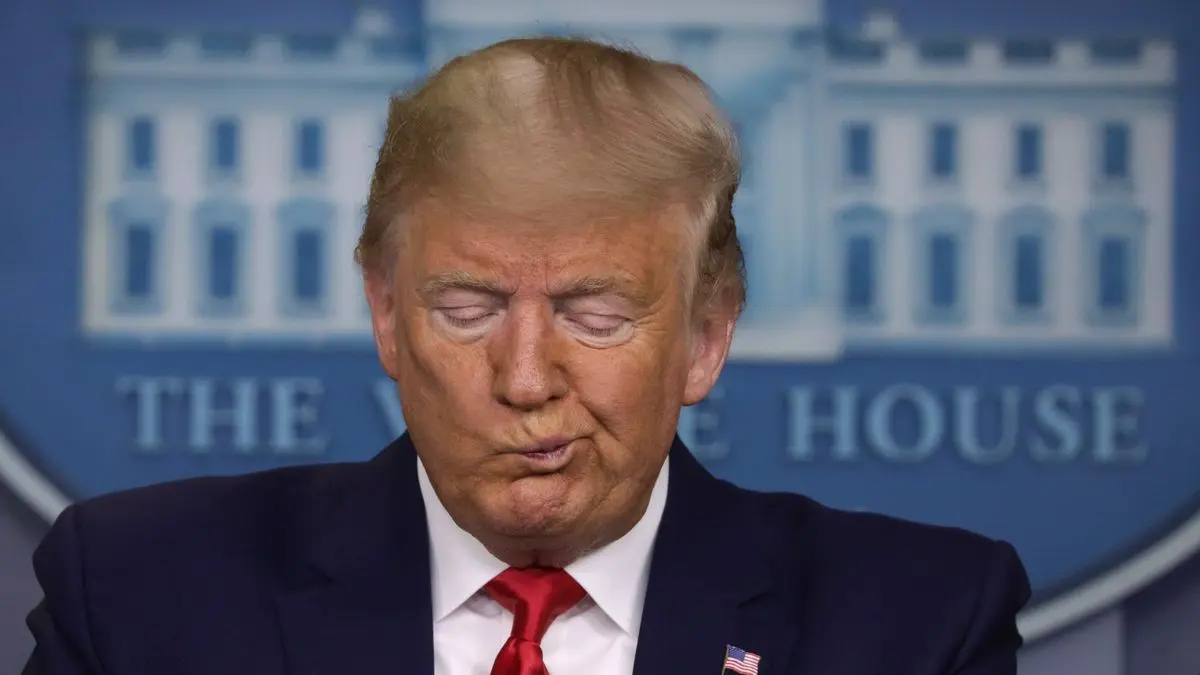
. The proposal would have established a single federal standard preventing states from regulating AI for a decade, a priority Donald Trump has repeatedly emphasized on Truth Social3
.
Source: TechRadar
For months, Trump has pressured the Republican-led Congress to implement federal preemption, arguing that a patchwork of regulations across 50 states threatens innovation and America's competitive position against China. "We MUST have one Federal Standard instead of a patchwork of 50 State Regulatory Regimes," Trump wrote last month, warning that "If we don't, then China will easily catch us in the AI race"
1
. This marks the second failed attempt after a similar provision was stripped from the "Big Beautiful" budget bill earlier this year following a 99-1 Senate vote4
.Bipartisan Opposition Derails Republican Strategy
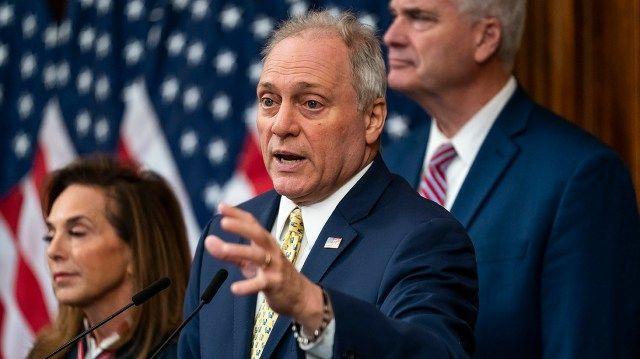
The collapse of Donald Trump's push exposed deep divisions within the Republican party over states' rights and federalism. Notable critics included Rep. Marjorie Taylor Greene, Alabama Gov. Sarah Huckabee Sanders, and Florida Gov. Ron DeSantis, who argued against limiting state authority
1
. Sen. Josh Hawley of Missouri, a leading Senate critic of AI's impact on American workers and teenagers, posted on X that "This is a terrible provision and should remain OUT"5
.
Source: The Hill
More than 200 state lawmakers urged Congress to reject the block on state AI laws, arguing that states are better positioned to act quickly on emerging technology issues. "A blanket prohibition on state and local AI and automated decision-system regulation would abruptly cut off active democratic debate in statehouses and impose a sweeping pause on policymaking at the very moment when communities are seeking responsive solutions," they wrote
3
. Senate Majority Leader John Thune called the measure "controversial," noting that "both sides are kind of dug in"5
.$150 Million Lobbying War Shapes AI Regulation Debate
Behind the legislative battle lies a $150 million lobbying war between competing visions for AI regulation
1
. Americans for Responsible Innovation (ARI), backed by safety-focused and effective altruism-aligned donor networks, leads efforts supporting state AI laws that can be passed faster than federal regulations. The group celebrated the removal from the NDAA, noting the measure "had faced backlash from a nationwide, bipartisan coalition of state lawmakers, parents, faith leaders, unions, whistleblowers, and other public advocates"1
.
Source: Quartz
On the opposing side, Leading the Future (LTF), backed by Silicon Valley's largest investors, advocates for preventing states from regulating AI and prefers a federal framework. Silicon Valley has consistently argued that state regulations create an unworkable patchwork of rules that could stymie innovation
2
. Critics counter that most state AI legislation focuses on safety, transparency, and consumer protection, and that blocking states from regulating would effectively hand control to Big Tech oversight with no safeguards2
.Related Stories

Executive Order Looms as Legislative Path Narrows
If Congress fails to find another legislative vehicle, Trump will likely release an executive order to enforce the policy
1
. A leaked draft executive order signals Trump is considering unilateral action, though those efforts have reportedly paused while Republicans search for alternative paths2
. The draft order would penalize states imposing restrictive AI rules with limited broadband funding3
.The White House remains committed to promoting AI development and could revisit the state moratorium in 2026, given the intense interest from Trump and AI companies like OpenAI
4
. Meanwhile, state-level action continues: New York's RAISE Act awaits Governor Kathy Hochul's signature, which would require companies like Google and OpenAI to submit risk disclosures and safety assessments or face fines1
. LTF has targeted the act's author, Alex Bores, planning to invest millions in ads to block his 2026 Congressional bid, underscoring how the battle over AI regulation extends beyond immediate legislative fights into future electoral contests .References
Summarized by

Navi
Related Stories
GOP Proposes 10-Year Ban on State AI Regulation in Budget Bill
13 May 2025•Policy and Regulation

Senate Rejects Ted Cruz's AI Regulation Moratorium in Overwhelming Vote
28 Jun 2025•Policy and Regulation
Proposed Moratorium on State AI Regulations Sparks Debate in US Congress
22 May 2025•Policy and Regulation

Recent Highlights
1
OpenAI Releases GPT-5.4, New AI Model Built for Agents and Professional Work
Technology
2
Pentagon's Anthropic showdown exposes who controls AI guardrails in military contracts
Policy and Regulation

3
Anthropic challenges Pentagon supply chain risk label in court over AI usage restrictions
Policy and Regulation

Recent Highlights
Today's Top Stories







Your Daily Dose of Curated AI News
Don’t drown in AI news. We cut through the noise - filtering, ranking and summarizing the most important AI news, breakthroughs and research daily. Spend less time searching for the latest in AI and get straight to action.

