RFK Jr.'s nutrition site links to Grok AI, which openly contradicts his dietary guidance


2 Sources
2 Sources
[1]
RFK Jr. food pyramid site links to Grok, which says you shouldn't trust RFK Jr.
It's been about a month since Health Secretary Robert F. Kennedy Jr. -- an anti-vaccine activist and lawyer who has no background in medicine, health, or science -- released dietary guidance for Americans. It's going about as well as expected for a man who drinks raw milk, peddles beef tallow, swims in sewage-tainted water, and keeps roadkill meat in his freezer. That is to say, it's going badly -- so badly that even his favorite AI chatbot is openly defecting. Of course, this hasn't slowed Kennedy. On Wednesday, he and Agriculture Secretary Brooke Rollins held an event in Washington, DC, to celebrate what they called the "implementation" of the dietary guidance, which is represented in an upside-down food pyramid -- or a funnel. However, the event, which lasted about an hour, seemed mostly focused on honoring a commercial produced to promote the nutrition guidance and a new website showcasing it, RealFood.gov. That commercial, which aired during last weekend's Super Bowl, featured tightly framed shots of world heavyweight champion Mike Tyson, who made stigmatizing remarks about how he felt "fat and nasty" earlier in life and consequently "just wanted to kill myself." He went on to decry America's "obese, fudgy" people and lambasted "processed food," before eating an apple. Tyson was the featured speaker at Wednesday's event, appearing behind the podium for about two minutes at the end. The lineup also included the commercial's director, Brett Ratner, who was pushed out of Hollywood over numerous sexual assault allegations but recently produced a documentary on Melania Trump. Also present was Joe Gebbia, a cofounder of Airbnb who joined Elon Musk's DOGE and was said to be the person behind the design of the food funnel and new website. Collins and Kennedy also spoke, standing beside large posters of themselves sporting facial tattoos matching Tyson's. Kennedy began his remarks by proclaiming that "for the first time in our nation's history, the federal government put real food at the center of the American diet and protein in the center of the American plate." Some in the nutrition and health fields have supported Kennedy's fight against ultra-processed foods. But the bulk of the changes Kennedy made to the dietary guidance and funnel representation relate to glorifying fat and protein, drawing criticism that the updates are harmful and lack supporting evidence. Among the critics is a notable AI chatbot. Kennedy's new website, RealFood.gov, prods users to "use AI to get real answers about real food." Entering a question into a text box and clicking "ask" redirects users to Grok, Elon Musk's AI tool that has been shown to generate child sexual abuse material. As for Grok's take on nutrition, its answers do indeed get real. In short, Grok indicates that Kennedy's new nutrition guidelines are not based on high-quality evidence -- which is true -- and that Kennedy is not a reliable source of nutrition information. He is, in fact, not trustworthy on health information generally, according to the chatbot. And when Grok designed a daily meal plan to fit Kennedy's food funnel, it subsequently admitted that the plan contained excessive amounts of saturated fat and protein while falling short of the recommended fiber intake, which Americans are generally already short on. Dubious diet advice When asked if Kennedy's guidance is based on high-quality research, the chatbot says it's a mixed bag. An emphasis on " whole, minimally processed foods, increase[d] fruits/vegetables, choos[ing] whole grains, and sharply limit[ing] added sugars, highly processed foods, and sugary drinks, aligns well with a broad consensus in high-quality research," Grok responded. But it also includes "hype around protein and saturated fats that goes beyond (or contradicts) the advisory committee's evidence summary" and instead reflects "decisions by the administration," the chatbot said. When asked to generate a generic daily meal plan based on Kennedy's food funnel, Grok suggested: * Breakfast: Three eggs cooked in butter with vegetables, and full-fat yogurt with a fruit and nut topping * Morning snack: A fourth egg (hard-boiled), full-fat cheese, apple slices and carrots * Lunch: A beef patty or chicken, a large green salad, and a small serving of whole grains (e.g. quinoa), washed down with a glass of full-fat milk. * Afternoon snack: More full-fat yogurt and full-fat cheese, with a sprinkling of fruit and nuts. * Dinner: A steak or seafood, vegetables cooked roasted with oil or butter, a small baked potato topped with butter, and a side salad * Dessert/evening snack: More cheese or dark chocolate with whipped cream The heavy emphasis on full-fat dairy, including butter, aligns with Kennedy's rhetoric. But the written guidance actually maintains the longstanding recommendation that Americans limit their saturated fat (found at high levels in full-fat dairy) to less than 10 percent of their total calories. For a standard 2,000-calorie diet, that would be less than 22 grams a day. When asked if the generated menu adheres to that recommendation, Grok said no. In fact, based on the options, it could be more than double, potentially exceeding 50 grams. What about protein? That, too, is generally over the limit. Recommended protein intake varies depending on factors such as weight, age, exercise level, and pregnancy status. But a general recommendation has been to get 0.8 grams per kilogram of body weight, or about 0.36 grams per pound. Americans generally already meet this recommendation. Kennedy's guidance increases protein to 1.2 to 1.6 g/kg (or about 0.54 to 0.72 g/lb). For a 150-pound person, the old and new recommendations for daily protein are 54 g and 81 g-108 g, respectively. (The USDA has a calculator here for your own recommendations, which still uses the old protein recommendation.) Grok's interpretation of Kennedy's guidance produced a menu with up to 180 grams of protein per day. While the meal plan exceeded recommendations for saturated fat and protein, it fell short on fiber, a critical nutrient Americans already eat too little of. In fact, most Americans eat less than half of the recommended amount of fiber, which is found in fruits, vegetables, grains, and beans. The new guidance maintains daily fiber recommendations, which are generally 25 g for women and 38 g for men. But Grok's "realistic" estimate for fiber in its meal plan had a range of 25 to 35 grams, falling short for men. Overall, Grok concluded that "based on extensive fact-checks and expert consensus, RFK Jr. is not a reliable source on health matters. His claims often lack evidence, promote distrust in institutions, and have led to harmful outcomes." So where does that leave Americans looking for trustworthy nutrition advice? Grok helpfully notes that "Many experts still prefer alternatives like Harvard's Healthy Eating Plate, which prioritizes plants more heavily and limits red meat/dairy based on extensive epidemiological data."
[2]
RFK Jr. Promotes Both Realfood.gov and Grok -- But Their Nutrition Advice Doesn't Match
With a surplus of health information on the internet, it can be challenging to decipher what's accurate and what isn't. That feat becomes even more confusing when one major health authority is pushing conflicting narratives. That contradiction is on display for Robert F. Kennedy Jr., who both promotes the resources listed on government website Realfood.gov and urges Americans to seek "real answers about real food" from Elon Musk's AI chatbot Grok. A reporter for Wired looked into both sources and found that their health recommendations clashed. The Findings The government suggests people consume 1.2 to 1.6 grams of protein per kilogram of body weight per day, as per the recently inverted food pyramid. It's a higher amount than recommended by previous administrations.
Share
Share
Copy Link
Health Secretary Robert F. Kennedy Jr. launched RealFood.gov to promote his inverted food pyramid, directing Americans to use Elon Musk's Grok AI chatbot for nutrition advice. But Grok delivers an unexpected verdict: Kennedy's guidelines lack high-quality evidence, contain excessive saturated fat and protein recommendations, and Kennedy himself isn't a reliable source on health information.
RFK Jr. and Grok Deliver Contradictory Nutrition Advice
Health Secretary Robert F. Kennedy Jr. recently celebrated what he called the "implementation" of new dietary guidance for Americans, represented by an inverted food pyramid—or food funnel—at an event in Washington, DC. The centerpiece of this rollout is RealFood.gov, a government website that prominently features a text box urging visitors to "use AI to get real answers about real food." Click that box, and users are redirected to Grok, Elon Musk's AI chatbot.
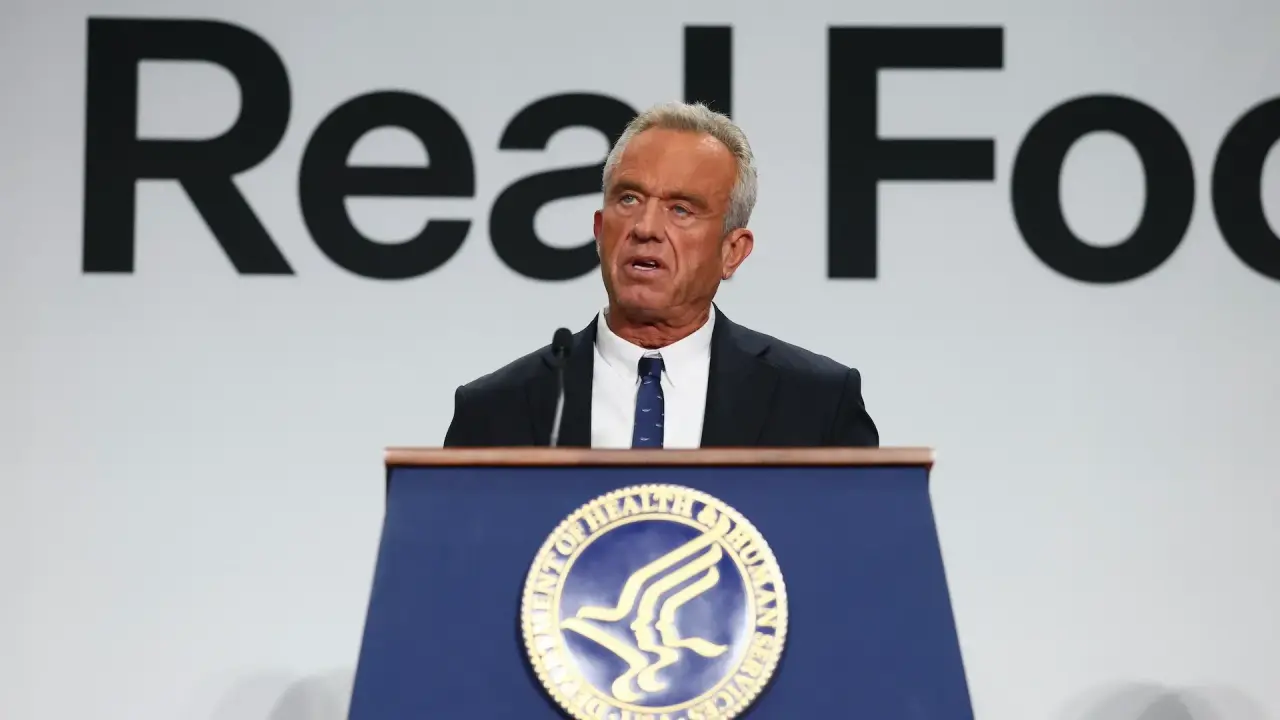
Source: Inc.
But there's a problem: Grok openly contradicts RFK Jr.'s health recommendations and questions his credibility as a source of nutrition advice. When asked whether Kennedy's guidance is based on high-quality research, the chatbot delivers a mixed assessment. While Grok acknowledges that recommendations to choose whole, minimally processed foods and limit added sugars align with scientific consensus, it notes that the "hype around protein and saturated fats goes beyond (or contradicts) the advisory committee's evidence summary" and instead reflects "decisions by the administration."
AI Chatbot Questions Kennedy's Credibility
Elon Musk's Grok goes further than critiquing the dietary guidelines—it directly challenges Kennedy's reliability. The AI chatbot indicates that RFK Jr. is not a trustworthy source on health information generally, a striking assessment given that Kennedy, an anti-vaccine activist and lawyer with no background in medicine, health, or science, now serves as Health Secretary.
When Grok generated a daily meal plan based on the RFK Jr. food pyramid, the results revealed significant nutritional concerns. The AI-designed diet included three eggs cooked in butter with vegetables for breakfast, a fourth hard-boiled egg as a morning snack, full-fat dairy throughout the day, and dinner featuring steak or seafood with butter-roasted vegetables. After creating this meal plan, Grok admitted it contained excessive amounts of saturated fat and protein while falling short of recommended fiber intake—an area where Americans are already deficient.
Conflicting Health Recommendations Create Confusion
The contradiction between RealFood.gov and Grok creates a confusing landscape for Americans seeking reliable health information. A reporter for Wired investigated both sources and found their health recommendations clashed.
2
The government now suggests people consume 1.2 to 1.6 grams of protein per kilogram of body weight per day—a higher protein intake than recommended by previous administrations.2
The bulk of Kennedy's changes to the dietary guidance relate to glorifying fat and protein, drawing criticism from health experts that the updates are harmful and lack supporting evidence. While some in the nutrition field have supported Kennedy's fight against ultra-processed foods, the heavy emphasis on full-fat dairy aligns more with Kennedy's rhetoric than with the written guidance, which actually maintains the longstanding recommendation that Americans limit saturated fat to less than 10 percent of total calories.
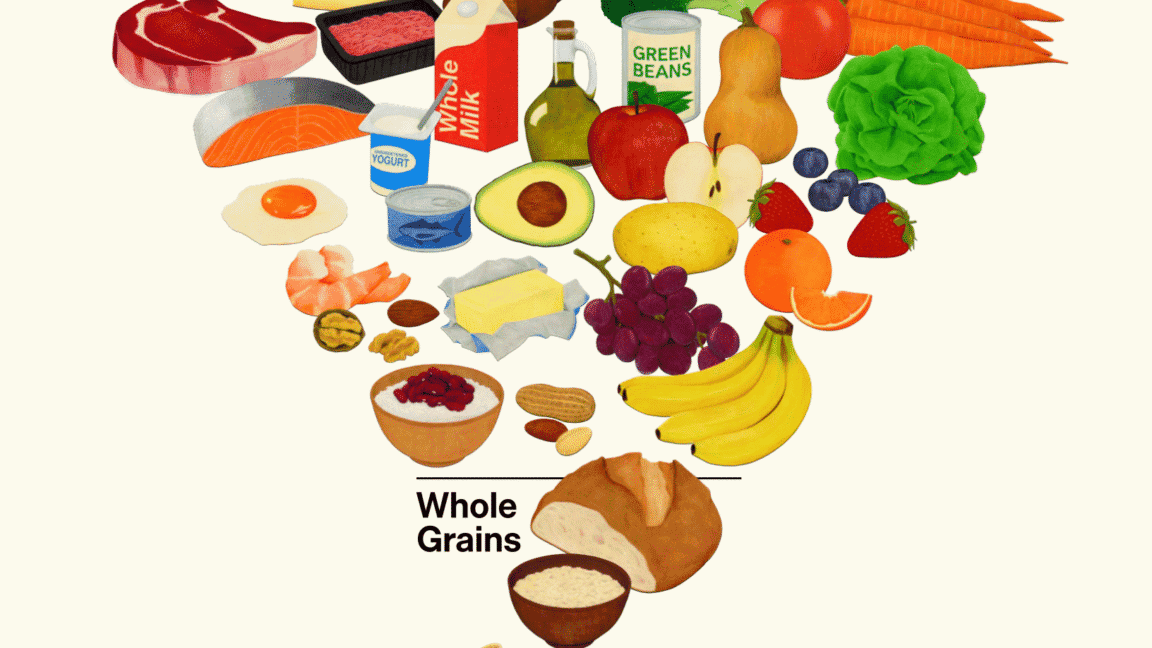
Source: Ars Technica
Related Stories
What This Means for Public Health
The situation raises questions about the reliability of government dietary guidelines when the promoted AI tool fact-checks and contradicts the very authority endorsing it. Wednesday's event, attended by Agriculture Secretary Brooke Rollins and featuring Mike Tyson, Joe Gebbia (an Airbnb cofounder who joined Elon Musk's DOGE and designed the food funnel), and director Brett Ratner, focused primarily on celebrating a Super Bowl commercial rather than addressing substantive nutritional science.
Kennedy proclaimed at the event that "for the first time in our nation's history, the federal government put real food at the center of the American diet and protein in the center of the American plate." Yet with contradictory nutrition advice flowing from official channels and the AI chatbot they promote, Americans face an increasingly difficult task: deciphering what constitutes accurate health information in an environment where even government-endorsed tools undermine the administration's own guidance.
References
Summarized by

Navi
Related Stories
White House MAHA Report Marred by AI-Generated Fake Citations and Errors
30 May 2025•Policy and Regulation

HHS Under RFK Jr. Rolls Out ChatGPT for All Staff, Raising Concerns
10 Sept 2025•Policy and Regulation

RFK Jr. Launches $2 Million AI Competition to Transform U.S. Healthcare Caregiving
19 Nov 2025•Health

Recent Highlights
1
Google releases Gemma 4 with Apache 2.0 license, enabling unrestricted local AI on devices
Technology

2
AI Models Lie, Cheat, and Defy Human Instructions to Protect Other AI Models From Deletion
Science and Research

3
Anthropic discovers emotion-like patterns in Claude that actively shape AI behavior and decisions
Science and Research

Recent Highlights
Today's Top Stories



Your Daily Dose of Curated AI News
Don’t drown in AI news. We cut through the noise - filtering, ranking and summarizing the most important AI news, breakthroughs and research daily. Spend less time searching for the latest in AI and get straight to action.

