Samsung unveils Exynos 1680 SoC with AI boost, 200-megapixel camera and 144Hz display support


2 Sources
2 Sources
[1]
Samsung Unveils Exynos 1680 SoC With 200-Megapixel Camera, 144Hz Display Supported
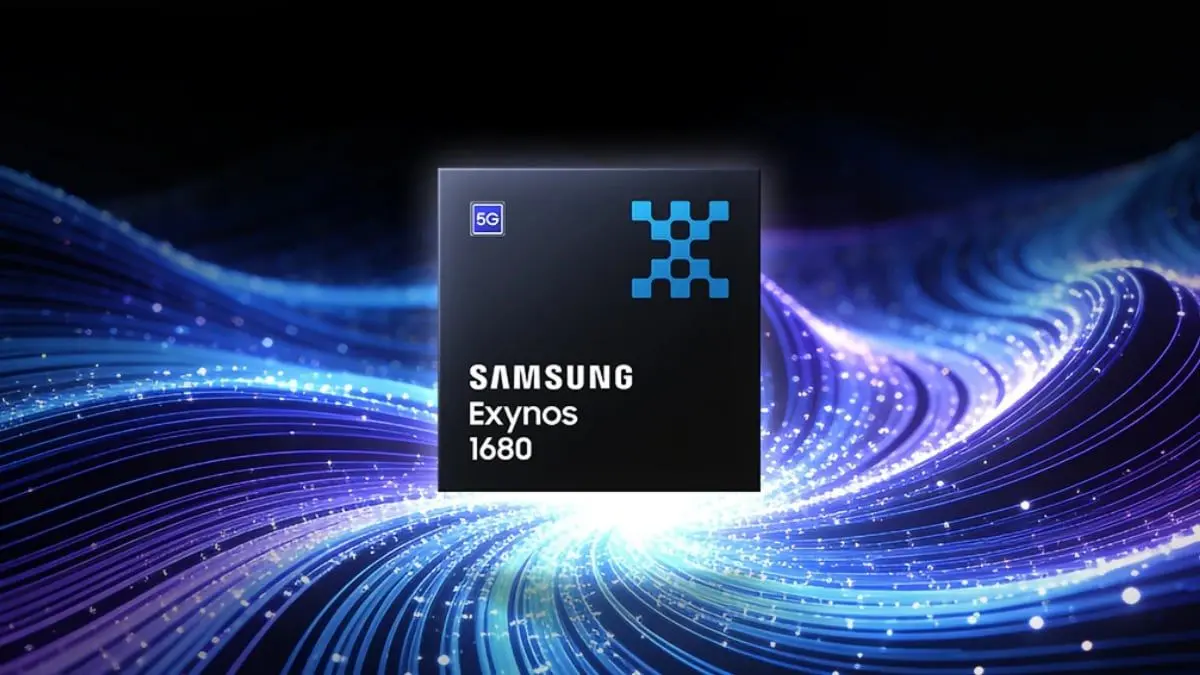
* Exynos 1680 boosts GPU performance by up to 16 percent * New chipset supports LPDDR5X RAM and UFS 4.1 onboard storage * Exynos 1680 also comes with support for 5G, Wi-Fi 6E and Bluetooth 6.1 Samsung has unveiled the Exynos 1680 chipset, which is expected to power the upcoming Galaxy A57 5G smartphone. The new processor brings upgrades across CPU, GPU, and AI performance, and is built on a 4nm process. It features a tri-cluster octa-core CPU, Xclipse 550 GPU based on AMD RDNA 3, and an NPU capable of up to 19.6 TOPS for on-device AI tasks. The chipset also supports up to a 200-megapixel camera and high refresh rate displays, and is currently in mass production. Exynos 1680 Announced With Tri-Cluster CPU and AI Upgrades The Exynos 1680 features an octa-core CPU with a tri-cluster design, including one Cortex-A720 core at 2.9GHz, four Cortex-A720 cores at 2.6GHz, and three Cortex-A520 cores at 1.95GHz. Samsung has replaced one efficiency core with a mid-core compared to the previous generation, which should improve performance while keeping power usage in check. For graphics, the Exynos 1680 chipset uses the Xclipse 550 GPU based on AMD RDNA 3 architecture, with a 2WGP and 2RB configuration. Samsung says this brings up to a 16 percent boost in GPU performance, which should result in smoother visuals and better gaming. The chipset supports LPDDR5X RAM and UFS 4.1 onboard storage, and can drive full-HD+ displays at up to 144Hz for smoother visuals. The Exynos 1680 chipset also includes an upgraded NPU capable of up to 19.6 trillion operations per second, along with an AI engine that supports 8K MAC. This allows the processor to handle tasks like image processing, live translation, and other AI features directly on the device. On the camera side, the Exynos 1680 supports up to a 200-megapixel single sensor, a 64-megapixel sensor at 30fps, and dual 32-megapixel setups. It supports 4K video recording and playback at 60fps, along with HEVC, H.264, VP9, and VP8 codecs. It also includes AI-based image processing and improved noise reduction for better low-light results. For connectivity, Exynos 1680 supports Wi-Fi 6E, Bluetooth 6.1, and GNSS. It also includes 5G NR FR1 and FR2 support, with peak download speeds of up to 5.1Gbps on sub-6GHz and 4.84Gbps on mmWave. LTE Cat.18 support is also included, with download speeds up to 1.2Gbps and upload speeds up to 211Mbps.
[2]
Samsung Exynos 1680 4nm SoC with Xclipse 550 GPU, 8K MAC NPU announced
Samsung has introduced its latest mobile platform, the Exynos 1680, as the successor to last year's Exynos 1580. Designed primarily to facilitate a more fluid on-device artificial intelligence (AI) experience, the new chipset introduces structural upgrades across its Central Processing Unit (CPU), Graphics Processing Unit (GPU), and Neural Processing Unit (NPU) to balance computational speed with overall power efficiency. The Exynos 1680 utilizes a revised tri-cluster CPU configuration designed to handle demanding workloads and multitasking. For visual processing and mobile gaming, the chipset relies on hardware developed in collaboration with AMD. To support complex, localized AI functions without relying heavily on cloud processing, the chipset features dedicated hardware for machine learning tasks. The Image Signal Processor (ISP) on the Exynos 1680 is equipped to handle advanced mobile photography and videography. The Samsung Exynos 1680 chip is expected to power the upcoming Galaxy A57 5G smartphone. We can expect more Samsung phones and possibly some tablets with the chip.
Share
Share
Copy Link
Samsung has introduced the Exynos 1680 chipset, the successor to last year's Exynos 1580, featuring a 4nm process and significant upgrades across CPU, GPU, and AI capabilities. The new processor delivers up to 16 percent GPU performance improvement and supports 200-megapixel cameras, with the chipset expected to power the upcoming Galaxy A57 5G smartphone.
Samsung Exynos 1680 Brings Major Performance Upgrades
Samsung has officially unveiled the Exynos 1680, a new mobile chipset that marks a significant step forward in delivering enhanced on-device artificial intelligence capabilities and improved performance across multiple fronts. Built on a 4nm mobile processor architecture, the SoC represents the successor to the Exynos 1580 and is currently in mass production, with expectations pointing to its debut in the Galaxy A57 5G smartphone
1
2
.
Source: FoneArena
The chipset introduces structural upgrades across its CPU, GPU, and Neural Processing Unit to balance computational speed with power efficiency, addressing the growing demand for localized machine learning tasks that don't rely heavily on cloud processing
2
. This focus on on-device AI processing matters particularly as smartphones increasingly handle complex tasks like real-time translation, advanced image processing, and personalized user experiences without constant internet connectivity.Upgraded Octa-Core CPU With Revised Architecture
The Exynos 1680 features an octa-core CPU with a tri-cluster design that Samsung has strategically reconfigured compared to previous generations. The configuration includes one Cortex-A720 core running at 2.9GHz, four Cortex-A720 cores at 2.6GHz, and three Cortex-A520 cores at 1.95GHz
1
. Notably, Samsung replaced one efficiency core with a mid-core compared to the previous generation, a decision that should improve performance while keeping power usage in check1
.This architectural shift signals Samsung's attempt to find a sweet spot between raw processing power and battery longevity, a critical consideration as users demand more from their devices without sacrificing all-day usage.
Xclipse 550 GPU Delivers Graphics Performance Boost
For visual processing and gaming, the Exynos 1680 relies on hardware developed through Samsung's collaboration with AMD. The chipset integrates the Xclipse 550 GPU based on AMD RDNA 3 architecture, featuring a 2WGP and 2RB configuration
1
. Samsung claims this brings up to 16 percent boost in GPU performance, which should translate to smoother visuals and improved gaming experiences1
.The chipset supports LPDDR5X RAM and UFS 4.1 onboard storage, ensuring that data transfer speeds keep pace with the processor's capabilities. Additionally, it can drive full-HD+ 144Hz displays for smoother visuals, appealing to mobile gamers and users who prioritize fluid screen interactions
1
.Advanced NPU Enables Complex AI Tasks
The Exynos 1680 includes an upgraded NPU capable of up to 19.6 trillion operations per second, along with an AI engine that supports 8K MAC
1
. This dedicated hardware for machine learning tasks allows the processor to handle image processing, live translation, and other AI features directly on the device without relying on cloud processing1
2
.
Source: Gadgets 360
As AI becomes increasingly central to smartphone functionality, this capability positions Samsung to compete more effectively in the mid-range segment where on-device AI has traditionally been limited.
Related Stories

Image Signal Processor Supports 200-Megapixel Cameras
The Image Signal Processor on the Exynos 1680 is equipped to handle advanced mobile photography and videography
2
. The chipset supports up to 200-megapixel cameras as a single sensor, a 64-megapixel sensor at 30fps, and dual 32-megapixel setups1
. It handles 4K video recording and playback at 60fps, supporting HEVC, H.264, VP9, and VP8 codecs1
.The chipset also includes AI-based image processing and improved noise reduction for better low-light results, features that should help Samsung differentiate its mid-range offerings in an increasingly competitive market
1
.Comprehensive Connectivity With 5G and Wi-Fi 6E
For connectivity, the Exynos 1680 supports Wi-Fi 6E, Bluetooth 6.1, and GNSS positioning
1
. It includes 5G NR FR1 and FR2 support, with peak download speeds reaching up to 5.1Gbps on sub-6GHz and 4.84Gbps on mmWave1
. LTE Cat.18 support is also included, offering download speeds up to 1.2Gbps and upload speeds up to 211Mbps1
.While the Galaxy A57 5G smartphone is expected to be the first device powered by this chipset, Samsung may extend its use to additional phones and possibly tablets
2
. The chipset's balance of performance and efficiency could make it a compelling option for Samsung's mid-range portfolio as the company seeks to maintain competitiveness against rivals like MediaTek and Qualcomm in this crucial market segment.References
Summarized by

Navi
Related Stories
Samsung unveils Exynos 2600, world's first 2nm smartphone chip set to power Galaxy S26 series
19 Dec 2025•Technology

Samsung Unveils Exynos 2500: A Game-Changer for the Galaxy Z Flip 7
23 Jun 2025•Technology

Samsung's Exynos 2600 Chip Promises Revolutionary Camera Upgrades for Galaxy S26 Series
06 Nov 2025•Technology

Recent Highlights
1
OpenAI shuts down Sora video app after six months, ending Disney's $1 billion investment deal
Technology

2
AI-Generated Val Kilmer to Posthumously Appear in As Deep as the Grave After His Death
Entertainment and Society

3
Supermicro Co-Founder Indicted in $2.5 Billion Nvidia AI Chip Smuggling Scheme to China
Policy and Regulation

Recent Highlights
Today's Top Stories




Your Daily Dose of Curated AI News
Don’t drown in AI news. We cut through the noise - filtering, ranking and summarizing the most important AI news, breakthroughs and research daily. Spend less time searching for the latest in AI and get straight to action.

